A shelf that pulls away from the wall, gathers a sticky film beside the range, or leaves every mismatched mug on display can make a small kitchen harder to live with. The practical test is not simply whether shelves hold dishes: it is whether the wall, brackets, and shelf material form a reliable load path while the exposed contents remain easy enough to clean and orderly enough to live with. Open shelving trades cabinet capacity and concealment for immediate access, so the right assessment separates high-use items that benefit from visibility from grease-prone, bulky, breakable, or infrequently used items that are usually better protected behind doors.
So, are open shelves practical in a kitchen? Yes, but only in the right location and for the right contents. Use them selectively in a compact room rather than replacing every upper cabinet, because a mixed kitchen with open shelves and closed storage usually gives you access without turning maintenance into a daily styling exercise.
Key Takeaways
- Open shelves work best for frequently used dishes that can be washed or wiped easily.
- Safe load depends on the full path from shelf to bracket, fastener, wall, and structural support.
- Grease, steam, dust, and heat make placement beside a range a poor default.
- A small run of shelves paired with closed cabinets controls clutter and protects fragile items.
Are open shelves practical in a kitchen? Start with the real trade-off
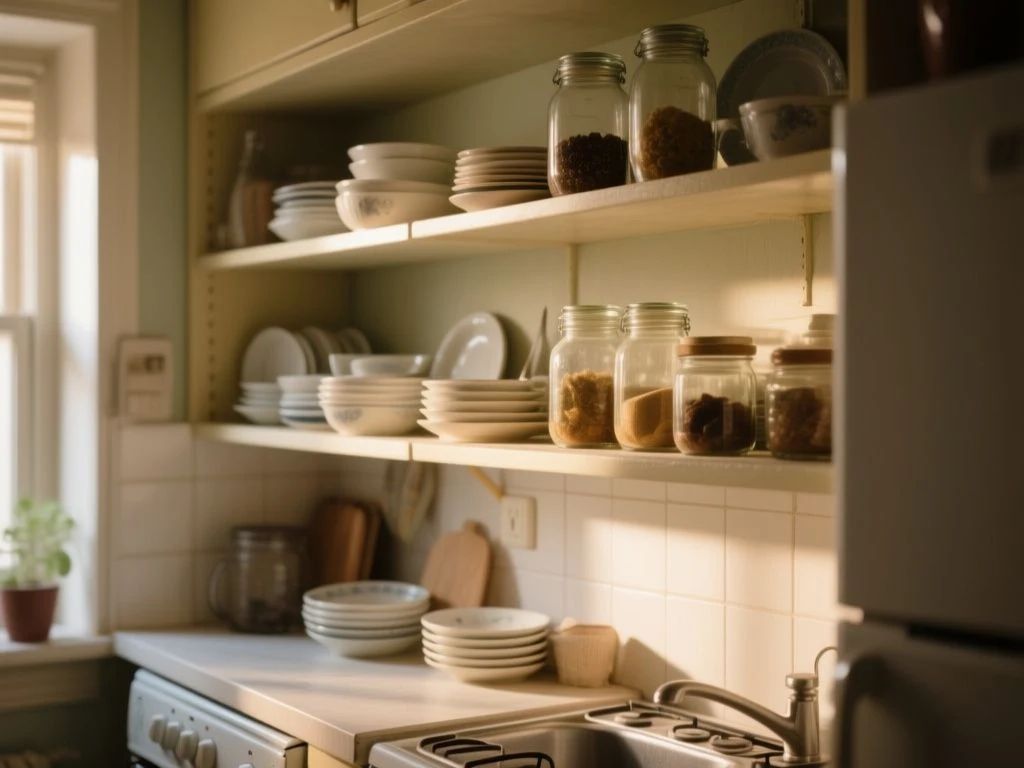
Open shelving means storage without a door across the front. Brackets may be ornamental or concealed, and the visual effect can range from a deliberately designed display to a row of everyday plates. The difference is rarely the shelf alone; wall construction, spacing, lighting, cooking habits, and the amount of spare storage all change the result.
Open shelves are practical when the contents are used often enough to justify their exposure and the surrounding wall is easy to clean. Upper cabinets remain more forgiving for items that are awkward, rarely used, or visually noisy. In a small kitchen, that distinction matters because every exposed object contributes to the room’s visual density.
Open kitchen shelving is most useful when visibility shortens a routine task without adding a major cleaning task. A stack of daily plates or a few glasses can be reached quickly; a crowded collection of serving bowls can become a permanent display that needs rearranging before the counter looks calm.
Everyday dishes and glassware
Everyday dishes can work well on open shelves if the shelf sits away from direct cooking residue and the pieces are stable when removed one-handed. Glassware requires more care because breakable items should not be placed where a shoulder, appliance door, or passing child can strike them. Heavy objects belong low or in more secure storage, especially in homes with children, pets, or vibration from nearby appliances.
Use the shelf for the items that genuinely earn the space. A small group of plates, bowls, or drinking glasses may support a clear dish and glassware storage zone. Seasonal platters, spare appliances, and rarely used serving pieces are usually better behind a cabinet door.
Open shelves versus upper cabinets
Upper cabinets offer concealed capacity and reduce the amount of exposed surface that needs cleaning. Open shelves offer quicker visual access but give up some protection and can make a narrow wall feel busy if every inch is filled.
For a fuller comparison of concealed and exposed storage, see how open shelving compares with closed storage in a real home. The practical answer is often a combination: doors for reserve stock and fragile pieces, shelves for the few objects used repeatedly.
Closed upper cabinets protect contents from everyday airborne residue more effectively than open shelves because cabinet doors create a physical barrier. That does not make open shelving impractical; it sets a boundary for where open shelving earns its keep.
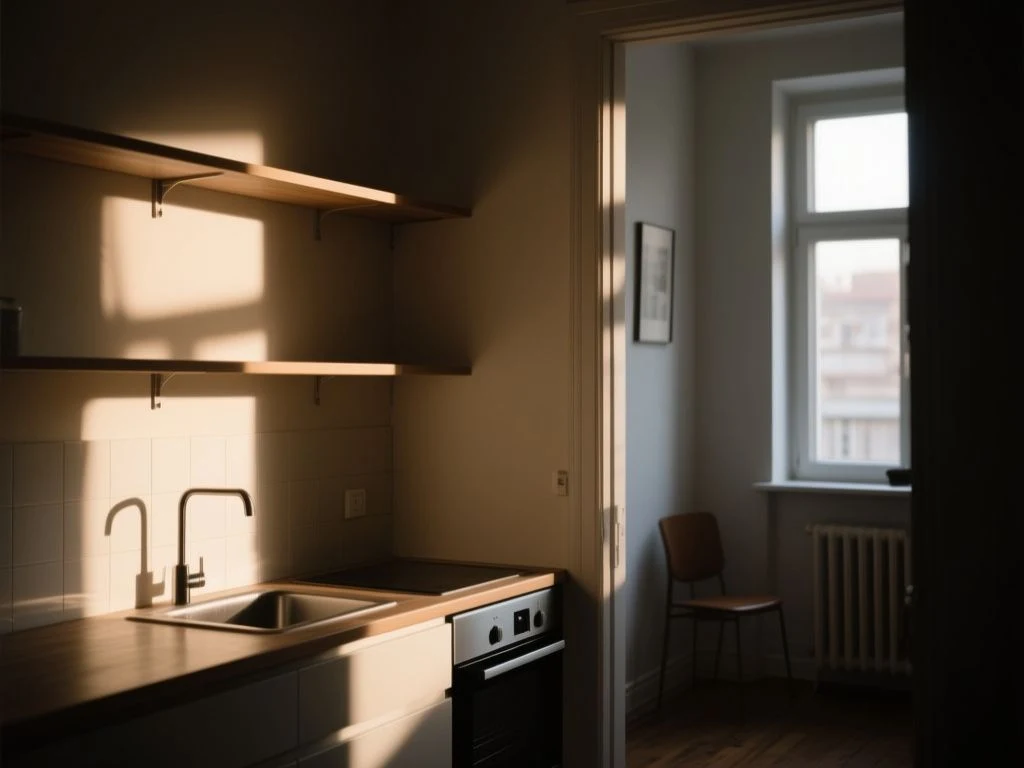
Causes of failure: load, walls, and shelf materials
The common mistake is treating a kitchen shelf as a flat board attached to a decorative fitting. A loaded shelf is a small structural system. Its safe load depends on span, shelf thickness, material, bracket spacing, and the way fasteners transfer weight into wall studs or another structurally suitable substrate.
Drywall anchors alone may be inadequate for heavily loaded shelves. The listing for an anchor or bracket may state a capacity, but that figure does not automatically describe your finished installation. The wall condition, fastener arrangement, shelf span, and position of the load all affect the result.
How much weight can a kitchen shelf hold?
There is no responsible universal weight figure for an open kitchen shelf without the shelf dimensions, material, bracket design, spacing, fastener type, and wall construction. A short, thick shelf supported close to structural framing is a different problem from a long shelf attached only to wallboard.
A kitchen shelf’s safe load is determined by the weakest part of its complete support path, not by the shelf material alone. Put dense objects nearer the supports rather than concentrating them at the center of a long span. If the shelf will carry stoneware, cast cookware, or a large stack of serving dishes, plan the support before choosing the finish.
Choosing shelf material honestly
Solid hardwood can provide a substantial visual surface, but the listing must still be checked for thickness, span, and finish. Cabinet-grade plywood is a practical material for a clean, stable shelf when its edges are finished properly. Medium-density fiberboard, or MDF, can produce a smooth painted surface, yet exposed edges and unsealed areas are vulnerable to moisture and should not be treated casually in a sink zone.
Tempered glass can suit a light display, but glassware and dense crockery require a support plan suited to the glass itself. Stainless steel handles kitchen moisture and is easy to wipe, although it creates a more utilitarian look. A polyurethane finish can make a compatible wood surface easier to clean, but finish does not turn an unsuitable shelf, damaged edge, or weak mounting point into a safe one.
Choose a washable surface near food preparation areas, and inspect every cut edge. The shelf material should not absorb routine splashes simply because the top surface looks sealed.
Brackets and the load path
Brackets on open shelves are commonly categorized as ornamental or concealed. Concealed brackets can create a quieter appearance, but the hidden hardware still needs a sound connection into the wall and a shelf designed to receive it. Ornamental brackets remain visible and can help communicate where the support sits, though appearance should never substitute for a structural connection.
Wall studs provide a strong fixing point when their location suits the shelf plan. A French cleat can distribute a load along a wall when the cleat, shelf, and wall attachment are designed as a matching system. Toggle bolts can be useful in some hollow-wall situations, but their suitability depends on the actual load and the hardware instructions; they are not a blanket solution for a heavily loaded dish shelf.
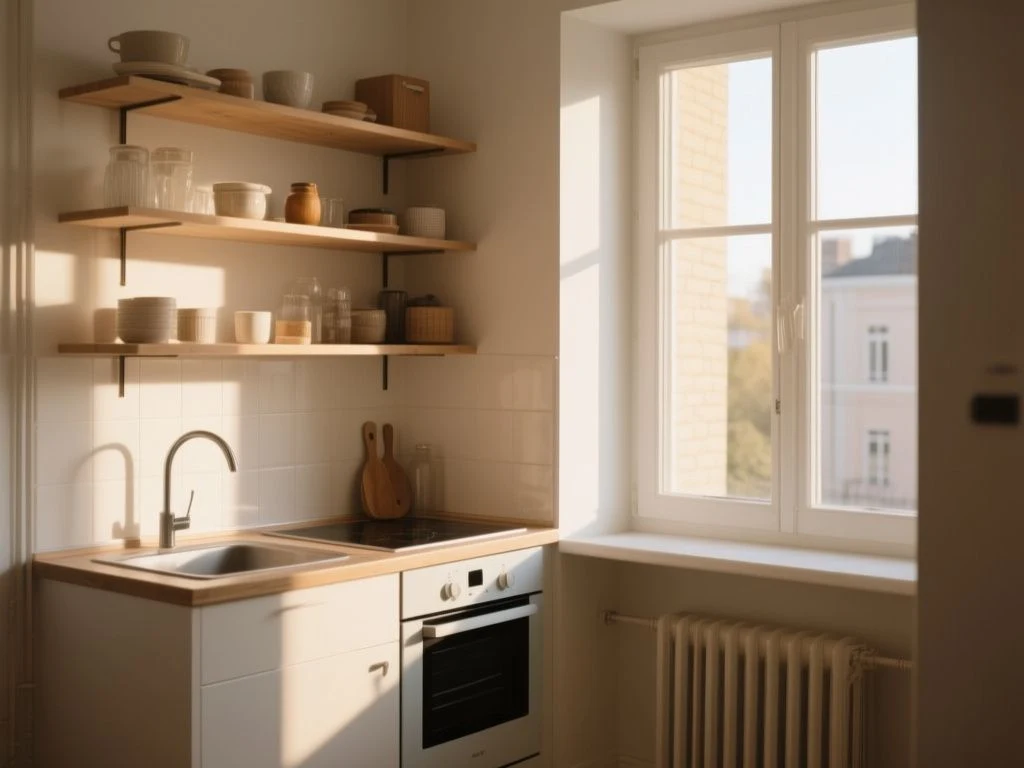
Solutions for drywall, plaster, tile, and masonry
Mounting method must follow the wall, not the mood board. Drywall, plaster, tile, and masonry have different drilling and anchoring needs, and a backsplash can hide the most important question: whether the fastener is reaching a structurally suitable layer behind the finish.
Drywall and plaster
Locate wall studs before fixing a shelf intended for dishes. If the planned brackets do not line up with studs, the installer must select a fastening system rated for the intended load and compatible with the wall construction. A drywall anchor that works for a light frame is not automatically suitable for a long shelf loaded with crockery.
Plaster may chip or loosen around a drilled hole, especially where the surface is old or already damaged. Drill carefully, avoid relying on a loose surface layer, and confirm what lies behind the plaster before selecting the fastener. The visible wall finish is only one part of the support assembly.
Drywall and plaster shelves need anchoring decisions based on the substrate behind the finish, not on the paint color or surface appearance.
Tile and backsplash areas
Drilling through tile can damage the backsplash or fail to provide a secure structural connection if the fastener stops in the tile or a weak layer behind it. The shelf plan should account for grout lines, tile thickness, the wall behind the tile, and the bracket’s fixing pattern.
Do not assume that a backsplash automatically makes a shelf installation stronger. A shelf may need to pass through tile into framing or another suitable substrate, and the drilling method must match the tile. A damaged backsplash is expensive to correct, while a shelf that loosens can damage both wall and contents.
Masonry
Masonry requires hardware intended for the actual masonry type and a drilling method that does not leave a loose or oversized fixing hole. The installer should verify the wall material before loading the shelf. If the wall is uncertain, professional installation is sensible, particularly above a work surface where falling dishes could injure someone or damage appliances.
Safety guidance for household products and injury risks is published by the U.S. Consumer Product Safety Commission; its general safety information is a useful reference when shelf placement overlaps with child-safe kitchen storage. Hardware instructions remain essential because a government safety body does not approve your particular wall assembly.
Preventive measures for grease, dust, moisture, and clutter
Open shelves expose their contents to airborne dust, cooking residue, and moisture. That exposure is manageable in a calm, low-residue zone, but it becomes frustrating beside a range or under a strong source of steam. Cleaning frequency and the choice of a washable finish determine whether the arrangement remains practical.
Placement beside a range, cooktop, sink, or dishwasher
Shelves beside a range or cooktop can collect grease. Heat and combustible-material concerns may also apply, so the installation must respect the appliance manufacturer’s clearance requirements and applicable local codes. A shelf that looks attractive in a drawing may be a poor choice if it sits in the path of rising cooking residue or close to hot surfaces.
Kitchen ventilation and grease control help, but they do not make an exposed shelf maintenance-free. Keep grease-prone ingredients and absorbent decorative objects away from the cooking zone. A washable stainless steel or properly finished surface may be easier to maintain than an unfinished porous board, but location still comes first.
The sink and dishwasher create a different problem: splashes, steam, and wet hands. Open shelves can work nearby if the shelf edges and finish tolerate routine moisture and the stored items are allowed to dry fully. MDF with an exposed edge is a poor choice for a wet location. A sealed, cleanable surface is more sensible.
Open shelves beside a range require clearance and cleaning planning because cooking residue can settle on both the shelf and its contents. Check the appliance manual and local requirements before fixing anything near heat.
Dust and grease compared with closed cabinets
Dishes on an open shelf can become noticeably dustier or greasier than dishes behind a closed door, especially in a kitchen that fries, sears, or produces frequent steam. The effect depends on location and cooking habits, so an open shelf far from the range will not behave like one directly beside it.
Use daily dishes on exposed shelves and keep seldom-used pieces protected. Wipe the shelf surface and the stored items as part of normal kitchen cleaning rather than waiting for a visible film. Smooth, washable finishes reduce the effort; textured surfaces and intricate brackets create more places for residue to collect.
Visual clutter and reorganizing
Open shelves are easier to use than cabinets for objects you reach for repeatedly because the contents are visible and accessible. They are less forgiving when every item is a different color, shape, or height. The result can be visual clutter rather than useful display.
Keep one role per shelf zone. A dish shelf should not also become a storage line for packets, spare cords, small appliances, and paperwork. If countertop organization is already difficult, adding exposed storage may move the clutter upward rather than solve it.
Open shelves require a consistent storage habit because every stored object remains part of the room’s visible composition. A mixed plan with closed upper cabinets or glass-front cabinet doors gives you a place to hide items that do not belong in view.
Planning a small kitchen with open shelves and cabinets
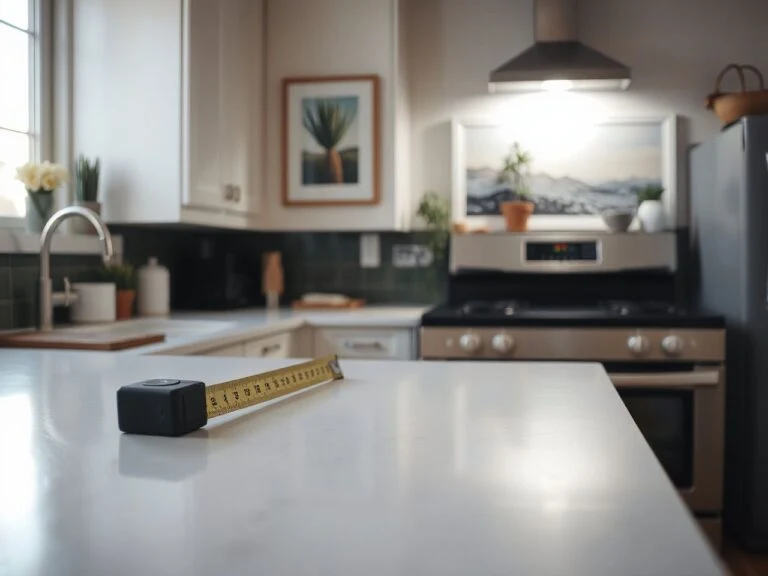
Small rooms reward restraint. Before choosing a shelf, measure the doorway, wall width, appliance clearances, backsplash, and the path used to carry dishes from the dishwasher to their storage zone. A shelf that blocks a cabinet door or makes a narrow passage feel tighter is a poor bargain, even if it holds the intended dishes.
Choose the storage zone before the style
Map the kitchen by task. Everyday plates should sit near the place where they are unloaded or used. Glassware should not occupy the most vulnerable corner if the room has a busy passage. A shelf near the preparation area can hold items used there, provided it remains away from direct splash and grease.
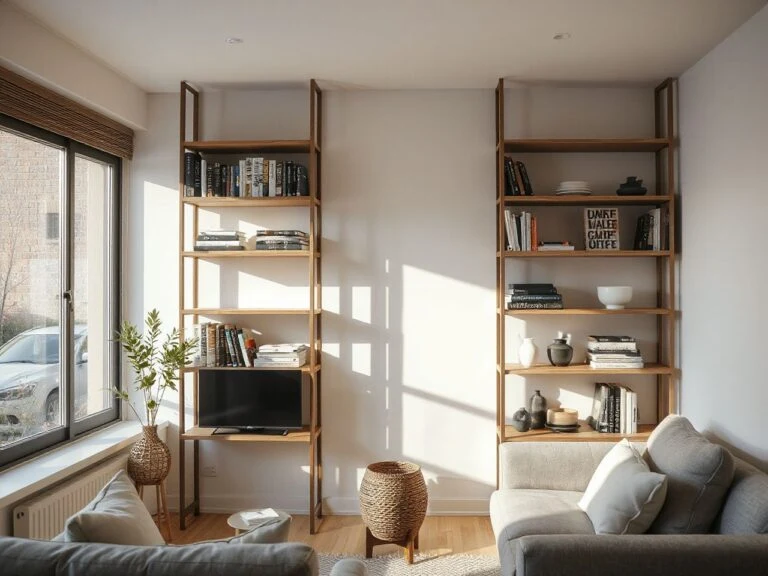
Do not fill every open wall. One deliberate shelf run may provide the visibility you want while leaving closed cabinets to carry the less attractive workload. The same principle applies to a small kitchen with open shelves and cabinets: use exposure for access, and use doors for volume and concealment.
Our guide to open shelving versus upper cabinets for 2026 can help frame that decision, but the right answer still depends on your wall, storage habits, and clearance needs.
Plan spacing without pretending there is one correct number
Kitchen open shelving spacing should follow the objects and the wall rather than a universal rule. Measure the tallest item you intend to store, allow room to remove it without scraping the shelf above, and check how the arrangement looks from the doorway. Keep the shelf line visually related to nearby cabinet tops, windows, or backsplash features where possible.
Leave enough working room for cleaning and for hands to reach the rear of the shelf. Very tight spacing makes objects difficult to remove; very generous spacing can waste a small wall and encourage tall, unstable stacks. The correct gap is the one that suits the actual contents and still permits comfortable access.
Cost over time and repair risk
Open shelves can cost less than a full run of cabinetry in some layouts, but a simple price comparison misses installation, wall repair, refinishing, hardware replacement, and damaged dishes. A shelf that needs a stronger wall connection may require more planning than its appearance suggests.
Closed cabinets also have maintenance demands, including hardware and door adjustments, but they protect contents and hide visual disorder. Open shelves shift some of that burden to regular wiping and reorganizing. Shelves suit storage roles that genuinely benefit from exposure rather than solely reducing initial work.
Open shelving can be economical only when the installation suits the wall and the exposed contents do not create extra cleaning or replacement work. The cheapest-looking option is not necessarily the least expensive arrangement to live with.
Common mistakes and a practical decision process
The most common planning errors are predictable. Shelves are placed too close to grease, loaded without checking the support path, filled with rarely used objects, or chosen before the wall and appliance clearances are understood.
Use this decision sequence
- Define the job. Write down which daily items the shelf will hold and which items should remain behind doors.
- Inspect the wall. Identify studs, plaster, drywall, tile, masonry, backsplash layers, and any hidden services that must not be drilled into.
- Plan the support. Match bracket spacing, shelf span, thickness, material, and fasteners to the intended load.
- Check the heat and moisture zone. Compare the location with the appliance manufacturer’s clearance requirements and assess splash, steam, and grease.
- Test the view. Use painter’s tape or paper shapes to check the shelf line from the doorway, worktop, and main circulation path.
- Decide what stays closed. Reserve protected storage for heavy, fragile, bulky, infrequently used, or visually distracting items.
- Plan maintenance. Choose a washable finish and accept that exposed contents will need periodic wiping and reorganization.
These steps prevent the most expensive kind of mistake: finishing a wall and discovering that the shelf cannot safely carry the objects it was meant to store. They also keep a decorative decision tied to how the kitchen actually works.
When open shelving is the wrong choice
Open shelves are a poor fit if the proposed location is directly beside a range, if the wall cannot support the intended load, or if the household needs concealed storage for safety and order. They may also frustrate cooks who dislike frequent dusting or who use many grease-producing methods.
A closed upper cabinet, glass-front cabinet door, or a small shelf placed farther from the cooking zone can preserve some visual access without exposing every dish. There is no design prize for making all storage open.
The ASTM International site explains how voluntary technical standards are developed; consult the relevant hardware and material instructions rather than assuming a shelf has a universal rating. For installation safety, local requirements and the appliance manufacturer’s documentation take priority.
Frequently Asked Questions
Are open shelves practical for everyday dishes and glassware?
Yes, if the shelves sit outside the main grease and splash zones and the contents are used often. Plates and a limited number of glasses benefit from visibility, while rarely used serving pieces usually belong behind doors. Keep breakable or heavy items low and secure, particularly in homes with children, pets, or a busy circulation path.
How do I mount open shelves securely through tile or on drywall?
First identify the wall construction behind the finish. Drywall, plaster, tile, and masonry require different drilling and anchoring approaches. Locate studs where possible, and do not treat drywall anchors as automatically adequate for a heavily loaded dish shelf. Drilling through tile can damage the backsplash or fail to create a structural connection, so confirm the substrate and hardware before drilling.
Do open kitchen shelves need more cleaning than upper cabinets?
Usually, exposed shelves need more visible maintenance because airborne dust, cooking residue, and moisture can reach both the shelf and its contents. The amount varies with placement and cooking habits. A washable finish, distance from the range, effective ventilation, and a limited collection of daily-use dishes make the arrangement easier to manage than a crowded display of rarely used objects.
Are open shelves practical in a kitchen beside a range?
A shelf beside a range can collect grease and may raise heat or combustible-material concerns. Check the appliance manufacturer’s clearance requirements and applicable local codes before installation. That location suits a material and arrangement that can be cleaned easily, and protected storage or a shelf farther from the cooking zone is generally preferable.
What keeps open shelves from sagging or pulling away from the wall?
Control the complete load path: shelf span, thickness, material, bracket spacing, fastener choice, and connection to studs or another suitable substrate. Keep dense objects near supports rather than concentrating them at the center of a long span. Recheck for movement after loading, and remove weight if the shelf, bracket, or wall shows signs of loosening.
Open shelves are practical when they solve a specific access problem without creating a larger cleaning, safety, or storage problem. Measure the doorway, inspect the wall, respect the heat zone, and let the contents decide how much of the kitchen should remain open.