
A nightstand that’s too high or too low can make it hard to reach a glass, lamp switch, or phone. Measure the usable height beside the finished bed, not just the furniture’s advertised height. The usable height depends on the actual sleeping surface, floor conditions, and anything on the mattress. When choosing a nightstand, consider reach, lighting, outlets, storage, and clearance together. A piece can look proportionate but still be inconvenient or unsafe to use.
Key Takeaways
- Measure from the floor to the finished top of the mattress, including the bed frame, foundation, mattress, and topper.
- Place the nightstand top flush with the mattress or no more than 2 inches above it.
- Check the installed relationship, outlet access, headboard clearance, lamp reach, drawers, and floor stability before final assembly.
What does nightstand height mean beside a finished bed?
Nightstand height describes the relationship between its top and the finished sleeping surface. It’s not just the number listed on a furniture tag. The ideal is a tabletop level with the mattress surface or raised by no more than 2 inches.
That measurement starts at the floor and ends at where the sleeper actually rests. Include the bed frame, box spring or foundation, mattress, and any topper. A thicker mattress or added topper changes the relationship, even if the nightstand stays in the same position.
Measure the bed as it will be used
Make the bed complete first to remove guesswork when positioning the table. Place the foundation, mattress, and topper on the bed frame. Then measure to the top of the finished sleeping surface with a tape measure held straight up from the floor.
A mattress can compress or change height over time, so the usable relationship should be checked rather than treated as permanently fixed. A mattress that settles can leave a once-level tabletop noticeably high beside the bed.
- Measure the floor beside the bed rather than relying on a room plan.
- Check the mattress top at the side where the sleeper reaches.
- Include bedding layers only if those layers remain under the sleeper during normal use.
- Record the result before assembling or anchoring the nightstand.
Both the bed frame and box spring influence nightstand placement because they add to the bed’s finished height. A tall headboard changes visual balance, but it doesn’t replace the mattress as the main reference.
Use the tabletop as the practical reference
A level or nearly level tabletop keeps common bedside objects within a natural reach from a lying or seated position. A substantially lower nightstand can force a deep reach toward the floor, while a substantially higher one can make a lamp switch, medication, glasses, or a drink harder to grasp securely.
Reach is more important than how it looks in a showroom. A nightstand might seem balanced with a tall headboard but still place the surface too high above the hand.
How do I choose a nightstand height that works with my bed?
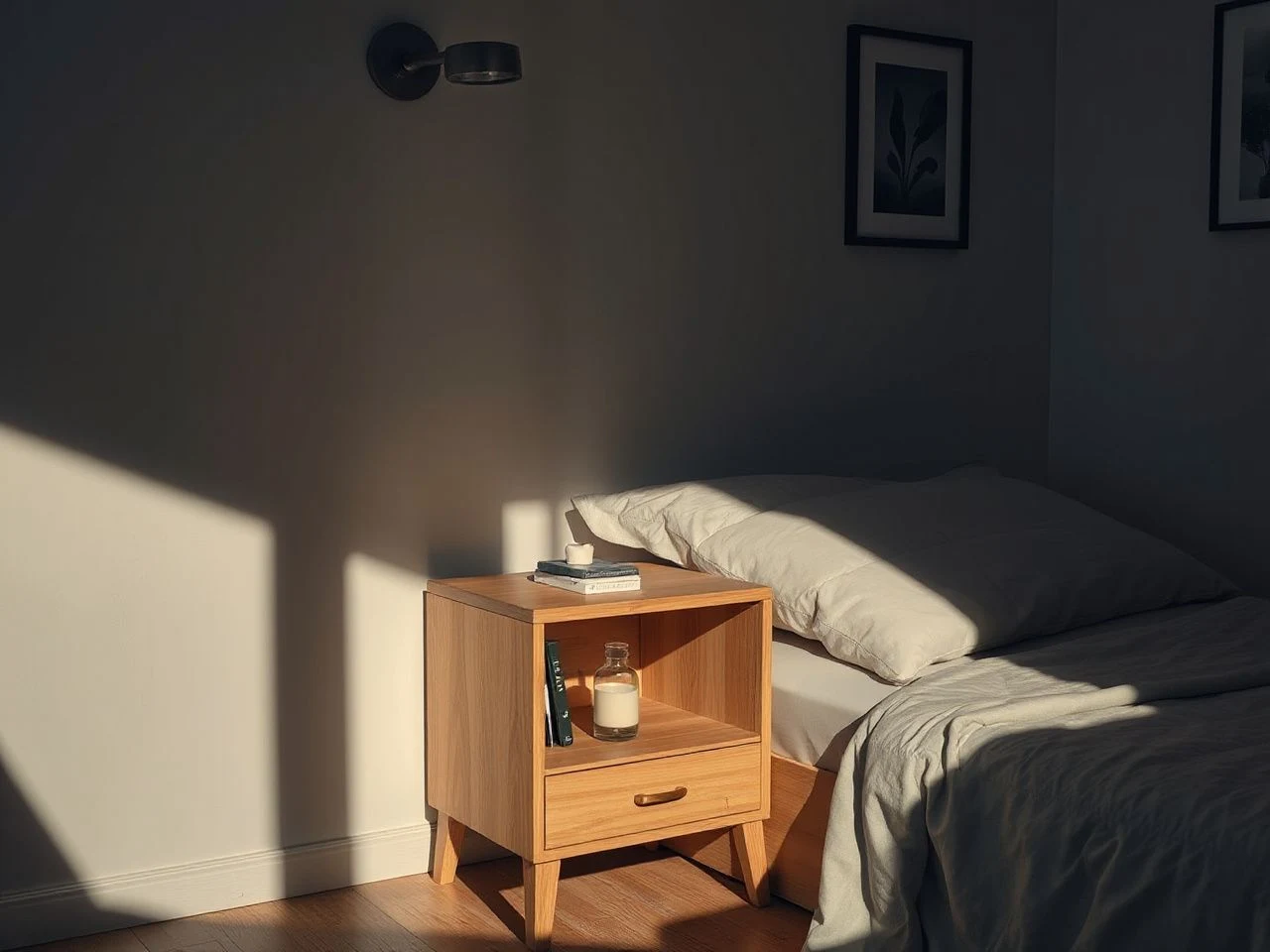
Choose a nightstand height by comparing the assembled tabletop with the top of the finished mattress. Then adjust for reach, lighting, outlets, storage, and clearance. A level tabletop is the simplest starting point. A tabletop no more than 2 inches above the mattress can also work.
Step 1: Measure before assembly
Use a tape measure, a straight edge, and a small level if the floor appears uneven. Measure the bed height at the side where the nightstand will stand. The floor may not be perfectly consistent across the room.
Next, compare that measurement with the table’s actual assembled height. Do not use the carton, a furniture label, or the height of an unassembled side panel as the final reference. The top surface is what controls reach.
The finished sleeping surface includes the bed frame, foundation, mattress, and topper. A nightstand chosen based only on the bed frame can end up too low once the mattress is in place.
Step 2: Account for mattress thickness
Mattress thickness changes the correct nightstand relationship because the sleeper reaches from the mattress surface rather than from the floor or bed frame. Adding a topper raises that surface, so the nightstand may need to be raised, repositioned, or accepted as slightly lower.
Use the assembled mattress as the reference instead of guessing from the mattress specification. The measurement that really matters is the height visible beside the finished bed.
A thicker mattress can also change how a bedside lamp looks beside a headboard. Check both the functional reach and the sightline from the bed before fixing the table in place.
Step 3: Check the wall, outlet, and headboard
The nightstand should leave the wall outlet accessible, avoid pressing into the headboard, and keep a clear path around the bed. The neatest room setup is one where the table fits against the wall or headboard without trapping cords or forcing furniture forward.
Hold the nightstand where it will stay before tightening any hardware. Check behind the table, on the side facing the bed, and from the doorway. Even a small shift can reveal an outlet that might be hidden or a drawer that could hit the headboard.
A nightstand shouldn’t block a wall outlet because blocked access can turn a simple charging task into a daily struggle. Make sure to consider the outlet’s location, cord direction, and lamp base when checking the height.
Step 4: Test the lamp and storage
Place the bedside lamp on the actual tabletop and reach for its switch from the bed. If the lamp is too tall, it might seem right in height but put the switch out of easy reach or create an awkward sightline.
Open every drawer and door while standing beside the bed. Hardware should move smoothly without hitting the headboard, wall, lamp cord, or the knees of someone sitting there.
For more insight into storage, proportions, and room fit, use this Nightstand Buying Guide: Getting It Right the First Time along with the height check. The guide can help with furniture choices, but the final bed measurement still determines the tabletop height.
What problems happen when a nightstand is too tall or too short?
A nightstand that’s too tall or too short makes everyday bedside actions more difficult. It can also disrupt the visual line between the bed and the wall. The best approach is to assess reach and clearance together rather than just adjusting the tabletop.
Problems caused by a nightstand that is too tall
A high tabletop can put the lamp switch within easy reach but make it harder to grab a glass or phone from bed. It can also clash with the headboard, creating a stepped look that feels crowded instead of neat against the wall.
- The lamp shade or switch may sit too high for comfortable use.
- A drawer may open toward the sleeper’s arm rather than below it.
- The tabletop can cover or crowd a wall outlet.
- The furniture may visually overtake a low headboard.
Accessibility needs special attention. Someone with limited reach, reduced balance, or who prefers to sit may need the tabletop set where controls and essentials can be reached without twisting or leaning sharply. An extra 4–6 inches of height might work for taller individuals, but reach and stability should still be checked in the finished room.
Problems caused by a nightstand that is too short
A low nightstand sends the hand downward. It can make a lamp, drink, glasses, or medication harder to reach. The lower surface may also sit visually beneath the main line of the mattress. That can leave the bed and table feeling disconnected from the wall arrangement.
A short table isn’t automatically wrong. It can work when the bed is low, the lamp is compact, and the drawer can be reached without strain. The finished relationship between pieces matters more than whether it’s called a nightstand or a side table.
Nightstand height influences bedroom accessibility because reach, drawer position, and switch placement all change together. A table that works well for one sleeper might not suit someone who uses the bed from a seated position or needs clear space beside the mattress.
Consider the cost of getting the relationship wrong
An incorrect height can lead to costly modifications or replacements if the table can’t be adjusted, the lamp no longer fits comfortably, or an outlet becomes hard to access. Measure first because fixing a height issue later is usually more difficult than preventing it.
Pressboard and wood are primary substances used in the construction of nightstands. That material distinction matters during modification: drilling, trimming, or changing a leg can affect the finished surface and the drawer alignment, so alterations should follow the manufacturer’s instructions.
How are floating and freestanding nightstands measured?
A floating nightstand is measured from its installed position. A freestanding nightstand is measured from the floor, after considering floor level and adjustable feet. Both should finish beside the mattress at a practical tabletop height.
Floating nightstand height
Mark the mounting position on the wall, install the support as instructed, and measure from the floor to the top of the surface. Don’t measure the cabinet on the floor and assume the wall will line up exactly.
A floating table can create a very clean wall line because the floor doesn’t interrupt the visual edge. Still, the wall, mounting hardware, outlet, headboard, and drawer opening all influence whether it works in daily use.
Check the installed table from the bed, not just from standing height. A floating nightstand might look perfect from across the room but be too high for a sleeper to reach.
Freestanding nightstand height
A freestanding nightstand relies on the actual floor beneath it, including any slope or unevenness that can change the tabletop. Adjustable feet can help keep it stable and aligned with the mattress by correcting a rocking table.
Set the table in its final spot, then gradually adjust the feet and check the top with a level. After leveling, recheck the distance from the tabletop to the mattress because raising one corner can change the visual relationship and drawer operation.
Adjustable feet should stay firmly seated and need checking if the nightstand shifts. Also, check the drawer hardware after moving it, since a changed angle can affect how smoothly a drawer opens or if the front lines up evenly with the frame.
Keep the wall visually clean
A clean wall finish isn’t just about pushing the nightstand tight against the wall. Leave the outlet accessible, keep cords from forcing a gap, and ensure the headboard doesn’t push the table out of line.
Stand at the bedroom entrance and look at the vertical line of headboard, mattress, tabletop, and lamp. Then, from the pillow, check again. The first view tests proportion; the second checks function.
How should lighting, outlets, and storage affect nightstand height?
Lighting, outlets, and storage influence nightstand height because each feature fits in the same small zone beside the mattress. A tabletop works well only if the lamp switch, charging cord, drawer, and wall outlet are all within reach.
Bedside lamp placement
A bedside lamp should sit securely on the tabletop with its switch easy to reach from bed. If the lamp’s too tall for the surface, changing the table height might not fix the issue since the shade, switch, and headboard can still compete for space.
Test the lamp in place before final assembly. Make sure the shade doesn’t block the headboard. Check if the bulb or switch is within reach. Verify the cord can reach the outlet without pulling the nightstand away from the wall.
For small rooms, this guide to bedside lamps that suit small nightstands can help determine lamp size after setting the tabletop height. The lamp size should support the furniture’s measured position, not make the bed fit the lamp.
Wall outlet and charging access
A wall outlet should be reachable and visible enough for regular use. A taller nightstand might hide the outlet, while a lower one can leave a cord exposed across the tabletop or down the wall.
Route the cord so it’s not pinched behind the table or against the headboard. If the outlet is directly behind the furniture, move the nightstand only after confirming the new position keeps the tabletop aligned with the mattress.
The U.S. Consumer Product Safety Commission publishes household and furniture safety information at CPSC.gov, so consult that government body for current guidance on furniture hazards rather than relying on a room photograph or informal advice.
Drawers and bedside storage
Drawer storage should open toward the space beside the bed without hitting the headboard or blocking movement. The drawer’s placement can feel inconvenient if the handle is too high, too low, or blocked by the mattress edge.
Open the drawer from the position where it will be used. Check the top, middle, and bottom of the opening. Also, inspect the hardware for looseness if the table has shifted.
Furniture made of pressboard or wood can show alignment shifts when moved or leveled. Follow the maker’s care instructions for tightening drawer hardware. Avoid forcing a drawer that no longer runs squarely.
Small rooms and narrow clearances
In a narrow bedroom, depth and movement are just as important as height. The table shouldn’t block the path around the bed. Its corner shouldn’t create a collision point near the mattress.
If the space is tight, check ways to fit bedside storage into a narrow room after measuring the finished bed. A small footprint can’t make up for a tabletop that blocks an outlet or makes the lamp hard to reach.
How can you verify nightstand height before final assembly?
You can verify nightstand height before final assembly by placing the finished tabletop beside the bed and testing reach, lighting, outlets, drawers, and clearance. A temporary test often gives a more accurate idea than just reading a furniture label.
Use a simple room check
Place a stable temporary surface beside the bed at the intended tabletop level. Use a flat board supported by suitable objects, or mark the level on the wall without putting weight on an unstable setup.
- Lie or sit on the bed as the sleeper will use it.
- Reach for the lamp switch, phone, glasses, and drink.
- Look behind the proposed table for the wall outlet.
- Open the intended drawer path and inspect the headboard edge.
- Walk around the bed and check for blocked movement.
The CPSC advises consumers to pay attention to furniture stability and tip-over hazards; current household safety information is available through the U.S. Consumer Product Safety Commission. A height check does not replace safe installation or the instructions supplied with the furniture.
Recheck after leveling and bedding
Do the final check after adjusting the feet, installing the drawer fronts, placing the lamp, and adding the topper or bedding. Each change can affect how the space beside the bed works practically.
A nightstand that shifts should be leveled again before adjusting the drawer hardware. A loose foot or misaligned drawer can turn a good height into a frustrating daily setup.
Use headboard proportions without losing function
The headboard helps establish visual scale, but the mattress remains the functional reference for tabletop height. A tall headboard may permit a taller-looking bedside composition, while a low headboard may favor a quieter line beside the wall.
Keep the tabletop flush with the mattress or no more than 2 inches above it unless a specific reach requires a different setup. An extra 4–6 inches can help for someone tall, but check the lamp, outlet, and storage needs too.
The Bottom Line
Nightstand height should be judged against the finished sleeping surface, including bed frame, foundation, mattress, and topper. A tabletop level with the mattress or no more than 2 inches above usually makes the best starting point for reach, lighting, and visual balance.
Measure a floating table from where it’s installed and level a freestanding one on the actual floor. Check that the wall outlet, headboard, lamp, drawers, and path around the bed are still usable. A clean wall arrangement should also be reachable when you’re in bed.
Frequently Asked Questions
Should a nightstand be taller than the mattress?
A nightstand can be level with the mattress or raised by no more than 2 inches. That range keeps lamps, switches, glasses, and drinks close to the sleeper’s reach. A taller table may suit a person of exceptional stature, for whom an additional 4–6 inches can help. The outlet, headboard, drawer, and lamp still need to stay accessible.
Does mattress thickness change the right nightstand height?
Yes. Mattress thickness affects the finished sleeping surface, so compare the table height with the mattress and any topper in their actual position. Measure from the floor to the top of the complete bed, not just the bed frame or foundation. Mattresses can also compress or change height over time, so occasional checks are a good idea.
Is a floating nightstand measured differently from a freestanding one?
Yes. For a floating nightstand, measure from the floor to the top of its installed surface because its wall position determines the final height. For a freestanding nightstand, measure after placing and leveling it on the actual floor. Adjustable feet can fix rocking or unevenness, but the tabletop should be checked again against the mattress after adjusting.
Can the wrong nightstand height affect a bedside lamp or wall outlet?
Yes. A tall table might block or crowd a wall outlet and put a lamp switch beyond easy reach. A low table could leave the lamp and stored items too far below the mattress. Test the lamp, cord route, outlet, drawer, and reach from bed before fixing the furniture in place. The Nightstand Buying Guide: Getting It Right the First Time can help with the wider furniture check.