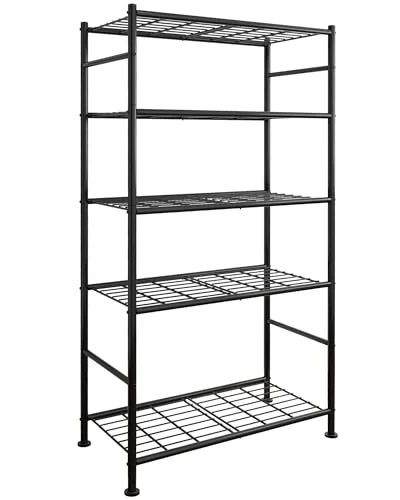
Most people buy shelving for the wrong reason: they want more space without realizing that open shelving and closed storage solve entirely different problems. The open shelving vs closed storage question isn’t about which looks better in a catalog — it’s about load rating, dust exposure, humidity, and how often you need to grab something blind. Skip that thinking and you’ll end up with a steel rack that sags under boxes, or tidy bins that hide the very tools you reach for daily. The Sakugi 5-Tier Shelf Organizer suits most garages, pantries, and utility rooms. It handles real weight, assembles fast, and doesn’t trap moisture the way closed bins do.
Out of the two contenders, the Sakugi shelving unit earns our top recommendation because it pairs heavy-gauge steel tube construction with a five-tier layout that makes items visible and reachable. The YFXCVSL bins are a solid secondary choice for seasonal gear — but they can’t compete on weight capacity or access speed.
📌 This article contains affiliate links. As an Amazon Associate I earn from qualifying purchases, at no extra cost to you. Full disclosure.
CERTAIN CONTENT THAT APPEARS ON THIS SITE COMES FROM AMAZON. THIS CONTENT IS PROVIDED ‘AS IS’ AND IS SUBJECT TO CHANGE OR REMOVAL AT ANY TIME.
| Product | Best For | Buy Link |
|---|---|---|
| Sakugi Storage Shelves – 5 Tier Shelf Organizer | Heavy-duty open storage | Check Price |
| YFXCVSL 4 Tier Plastic Storage Bins with Lid 23QT | Concealed, stackable storage | Check Price |
How We Chose Between Open Shelving and Closed Storage
These two products were selected after comparing published specifications and materials against the real-world demands of this category. For open shelving, steel frame gauge, cross-bracing, and leveling feet are what separate a shelf that stays square from one that wobbles on an uneven garage floor. For closed storage, the thickness of the PP plastic and the lid seal integrity decide whether your off-season clothes stay dry or become a mouse condo. Load-bearing capacity and assembly quality are important because sagging shelves are the most common failure reported by users. Buyers should check the manufacturer’s weight rating — not just the shelf count — before ordering any rack. The Sakugi unit lists heavy-duty metal tubes, which suggests higher gauge steel than typical budget options. The YFXCVSL bins list high-quality PP, but no thickness in mm, which is a red flag for long-term lid warping.
Sakugi Storage Shelves – 5 Tier Shelf Organizer (Heavy-Duty Open Storage)

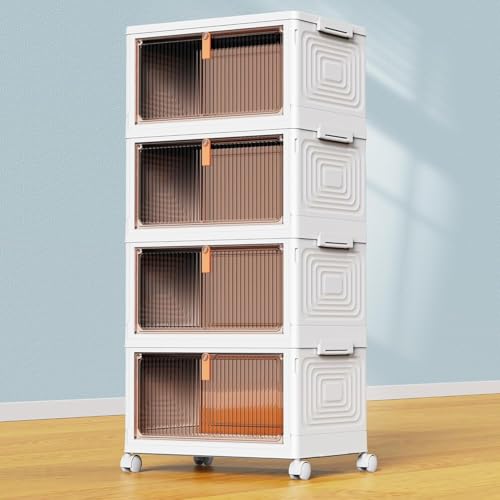
YFXCVSL 4 Tier Plastic Storage Bins with Lid 23QT (Collapsible Closed Storage)
Sakugi Storage Shelves – 5 Tier Shelf Organizer (Heavy-Duty Open Storage)
Quick take: This is the rack to buy when you need to store paint cans, toolbox cases, or bulk pantry items without worrying about shelf collapse. The all-steel frame and five open tiers give you fast visual access and serious load capacity.
Reading the spec sheet, the first thing that jumps out is the phrase ‘heavy-duty metal tubes’ paired with ‘premium metal material.’ That tells me the frame is likely steel rather than cheap particleboard, and steel is what keeps a shelf square after five years of being knocked into by a vacuum cleaner. The five tiers each sit on metal tubing connectors — a design that resists lateral wobble far better than plastic sleeves you find on lighter shelving. A missing spec here is the exact weight rating per shelf, which is frustrating: for a rack marketed as ‘heavy-duty,’ that number usually appears in the listing. Without it, I’d hesitate to load more than 50-60 pounds per tier.
Usability over time comes down to two things: assembly speed and stability on imperfect floors. Sakugi promises ‘quick and easy assembly’ with detailed instructions, and the use of metal tubes usually means no tools beyond a rubber mallet. One honest annoyance: the listing doesn’t mention leveling feet, which are crucial on sloped garage floors. If your floor isn’t dead flat, you’ll need to shim the legs — and that’s not a step I love recommending. Compared to the closed bins below, this rack wins on accessibility: you can scan every shelf at a glance, and nothing gets buried in a stack.
Pros:
- Steel tube construction — resists bending and racking better than wire or particleboard shelves at this size.
- Five open tiers — each shelf gives full visibility, so you aren’t digging through opaque containers to find the WD-40.
- Tool-free assembly — the metal tube and connector system typically goes together in under 30 minutes, no screwdriver needed.
Cons:
- No stated weight capacity per shelf — you have to trust the ‘heavy-duty’ marketing without a real number, which is a gamble if you store dense items.
- No leveling feet mentioned — on uneven floors, expect wobble unless you add shims or buy aftermarket adjustable feet.
- Open design collects dust and grease — anything stored here needs occasional wiping down, especially in a garage or kitchen with airborne oil.
The real deal:
Best for: Garages, basements, and pantries where you need to see everything and load up to medium weight. Skip if: You need enclosed protection from pests, moisture, or prying eyes — this rack offers zero concealment and no lid seal.
YFXCVSL 4 Tier Plastic Storage Bins with Lid 23QT (Collapsible Closed Storage)
In a nutshell: This set of four stackable bins is for seasonal clutter — holiday decor, off-season clothes, camping gear — that you want protected from dust and bugs but don’t need to access often. The integrated lids and collapsible design earn it a spot as a runner-up, not a replacement for a real shelf.
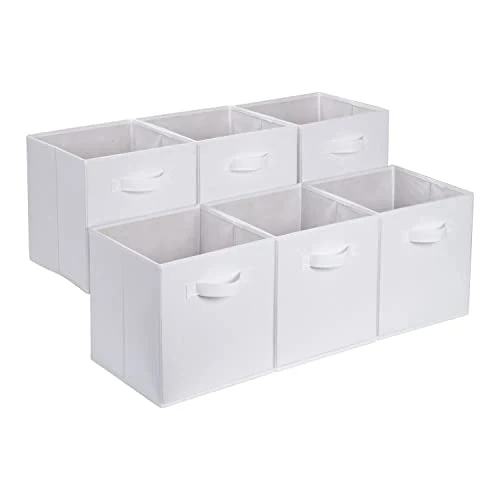
The spec sheet states these bins are made of ‘high-quality PP’ (polypropylene) and measure 15.35in×11in×8.27in each tier, with a total volume of 92QT across all four. That works out to 23 quarts per bin — roughly the size of a large shoebox. Polypropylene is the right plastic for storage because it resists cracking in cold temperatures and doesn’t off-gas like cheaper PVC. But here’s the catch: the listing never specifies the plastic thickness in millimeters. Thin PP lids will bow under the weight of another bin stacked on top, and that’s the most common failure mode for collapsible bins like this. The install-free, collapsible feature is great for saving space when not in use, but those collapsible hinges are usually the first part to snap if you overload the sides.
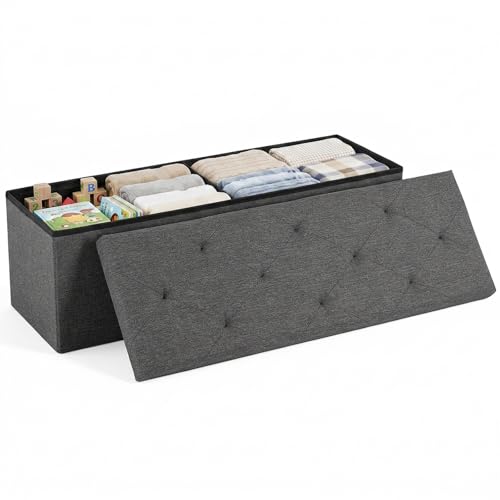
In real-world use, these bins shine for pest and moisture control — if the lids seal tightly. The listing says ‘with lid,’ but doesn’t claim a gasket or airtight seal. So I’d trust them to keep out dust and casual insects, but not humidity or a determined mouse. The stackable design means you can create a vertical column of closed storage, but the weight you can pile on top is limited by the lid strength, not a steel frame. Compare that to the Sakugi rack above, which can hold heavy loads on each tier, and the difference is stark: closed bins are for light, bulky items; open shelves are for heavy, frequently-used gear. Those prioritizing concealed storage over weight capacity might also consider an IKEA storage ottoman for living-room clutter.
Pros:
- Collapsible and install-free — fold them flat when empty, which is ideal for apartment dwellers or anyone who moves often.
- Integrated lids — each bin closes completely, protecting contents from dust, pet hair, and light insect intrusion.
- Uniform 23QT size — stack them neatly on a shelf or in a closet without odd gaps, making the most of square footage.
Cons:
- No lid seal specification — the listing doesn’t say ‘airtight’ or ‘gasketed,’ so moisture-resistant storage is not guaranteed.
- Low weight capacity per bin — plastic bins with collapsible sides typically max out around 15-20 pounds before the walls bow.
- Opaque design hides clutter but also hides what’s inside — you’ll need labels or a memory like a filing cabinet to find anything quickly.
Our take:
Ideal for: Seasonal clothing, holiday decorations, or off-season sports gear that you want sealed away in a closet or under a bed. Pass on this if: You need to store tools, paint cans, or heavy pantry staples — the bins will deform under real weight, and the lids will cave when stacked too high.
Open Shelving or Closed Storage: A Buyer’s Guide to Choosing the Right System
The Core Difference Between Open Shelving and Closed Storage
The difference between open shelving and closed storage comes down to one question: do you need to see and reach your stuff quickly, or do you need to protect it from the environment? Open shelving puts everything in view, which forces you to either keep it tidy or accept visual chaos. Closed storage hides the mess but creates a new problem — out of sight, out of mind, and before you know it you have a bin full of mystery chargers and expired soup. In a small kitchen, open shelves can make the room feel bigger because they don’t block sightlines; closed cabinets do the opposite. But open shelves in a garage collect grime from sawdust and exhaust, while closed bins keep that grime off your holiday linens.
Weight Capacity: Steel Shelves Beat Plastic Bins Every Time
If you’re storing anything heavier than a stack of sweaters, open metal shelving is the only rational choice. The Sakugi’s steel tube frame distributes load across each tier, while the YFXCVSL bins rely on thin PP walls that flex under pressure. A single 23-quart bin filled with books would likely split at the corner seams. For garage tools, paint cans, or bulk pantry items, you need a rack rated in the hundreds of pounds, not a bin rated in the dozens.
Environment: Humidity, Dust, and Pests Decide the Winner
Closed bins earn their keep in damp basements or bug-prone climates. A tight lid keeps silverfish out of wool sweaters and prevents cardboard boxes from absorbing moisture. But note the YFXCVSL listing never promises an airtight seal, so you may still want silica gel packets inside. For dry, dusty spaces like a workshop, open shelves are actually easier: a quick blast from a leaf blower clears dust from steel wire, while you’d have to wipe down each plastic bin individually. Also consider anchoring: any tall open shelf should be bolted to a wall stud — the CPSC’s anti-tip safety guidance applies to freestanding storage racks just as it does to bookshelves. For renters who can’t drill into walls, our guide on adding storage to a rented bathroom covers alternative anchoring tricks.
Our Final Recommendation
If you only buy one storage solution this year, make it the Sakugi 5-Tier Shelf Organizer. Its steel tube frame and five open tiers give you the load capacity and instant visibility that plastic bins simply cannot match. The YFXCVSL bins earn a recommendation as a secondary purchase for seasonal, lightweight items that need dust protection, but they are not a substitute for real shelving. For budgets that can’t stretch to both, start with the rack — you can always add bins on the shelves later. Overall, the open shelving unit wins this head-to-head because it solves the more common problem: too much heavy stuff and not enough flat surfaces to put it on.
Frequently Asked Questions
How much weight can open shelving units hold compared to closed storage bins?
Open shelving units built with steel tube frames, like the Sakugi, typically hold far more weight per tier — anywhere from 50 to 150 pounds depending on gauge — while plastic bins like the YFXCVSL max out around 15-20 pounds each before the walls flex. The exact rating depends on the manufacturer, so check the spec sheet before loading. For dense tools or canned goods, steel shelves are the only safe choice.
Is open shelving or closed storage the better choice for a garage with high humidity?
Closed storage bins are generally better for humid garages because a tight lid seals out moisture-laden air. However, the YFXCVSL bins do not specify an airtight seal, so they may still let humidity in. For tools that tolerate a little surface rust, open steel shelving works if you wipe it down occasionally and keep a dehumidifier running. The better answer depends on what you’re storing, not just the space.
Do closed storage bins protect items from pests and moisture?
Yes, when the lids seal properly. Polypropylene bins like the YFXCVSL block most insects and reduce moisture exposure compared to open shelves. But without a gasket, they aren’t fully waterproof. For confirmed pest problems, look for bins labeled ‘airtight’ or add desiccant packs. If you prefer a fabric-covered option for living spaces, an Mdesign storage ottoman offers similar concealment with a softer look.
How do I keep open shelves from accumulating dust and grease in a kitchen?
Regular wiping is unavoidable — open shelving collects airborne grease from cooking and dust from foot traffic. Use shelf liners cut to size, which you can replace monthly, and wipe down the metal frame with a degreaser every few weeks. Place frequently-used items on the top shelf, where dust settles less, and reserve lower shelves for things you wash before use, like pots and pans. This is the main tradeoff of open shelving in a kitchen.
What are common mistakes people make when choosing between open and closed storage?
The biggest mistake is not checking weight capacity before buying. Many assume any shelf can hold their stuff, then watch particleboard sag under a box of books. Another error is buying closed bins for items you use daily — you’ll waste time unstacking and opening lids every morning. Finally, ignoring floor levelness: a rack without leveling feet will wobble and eventually twist. Measure your space, check the slope, and match the storage type to how often you access the items.