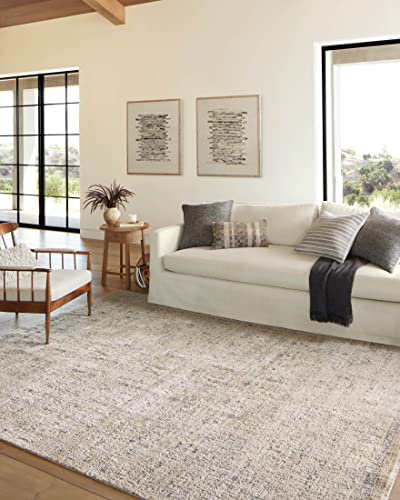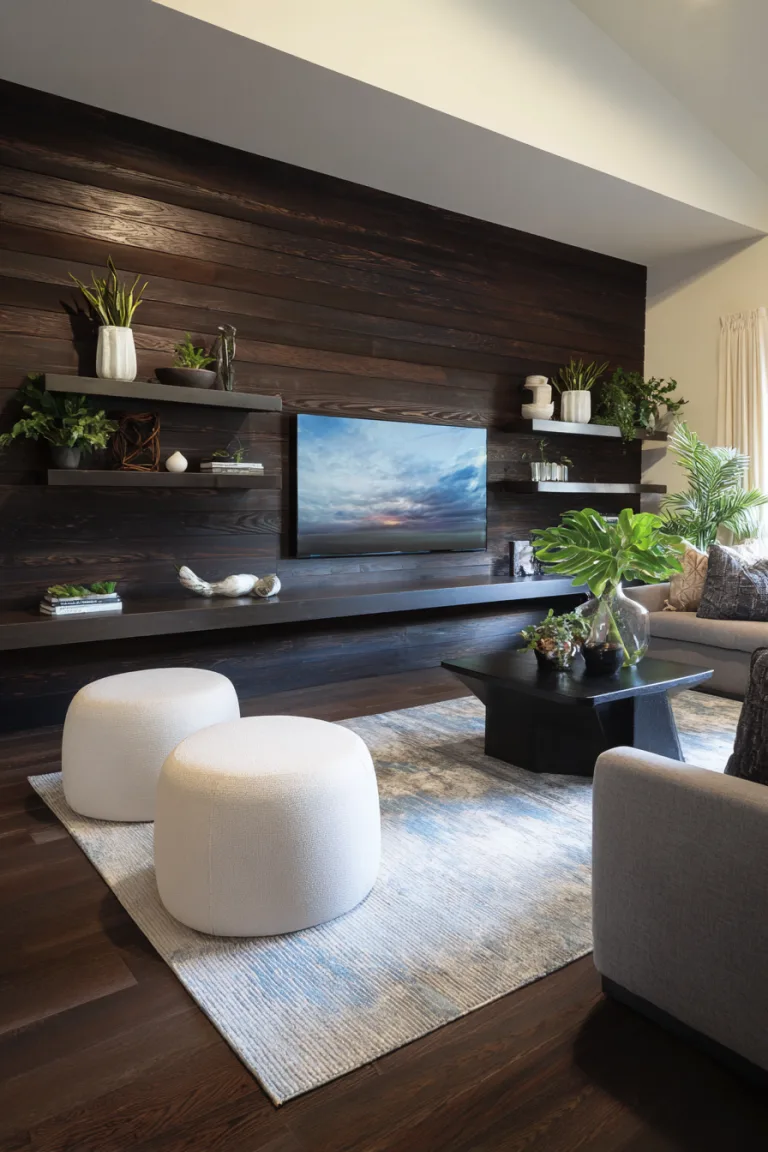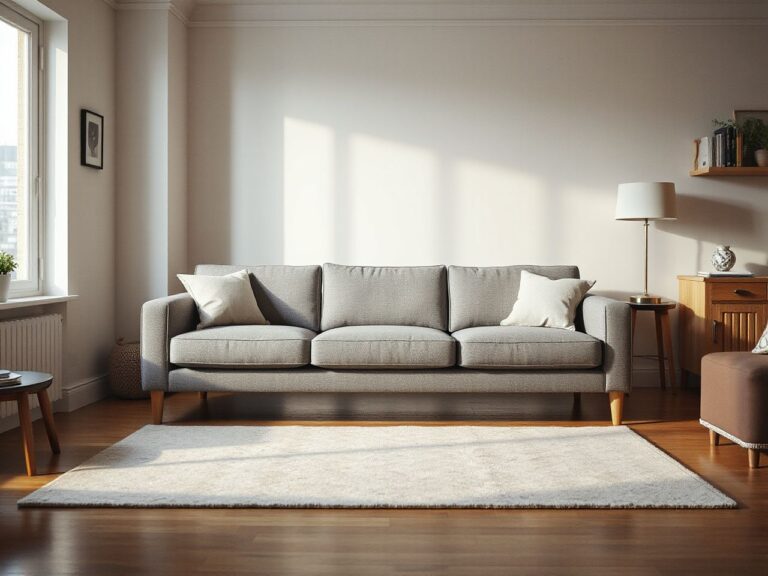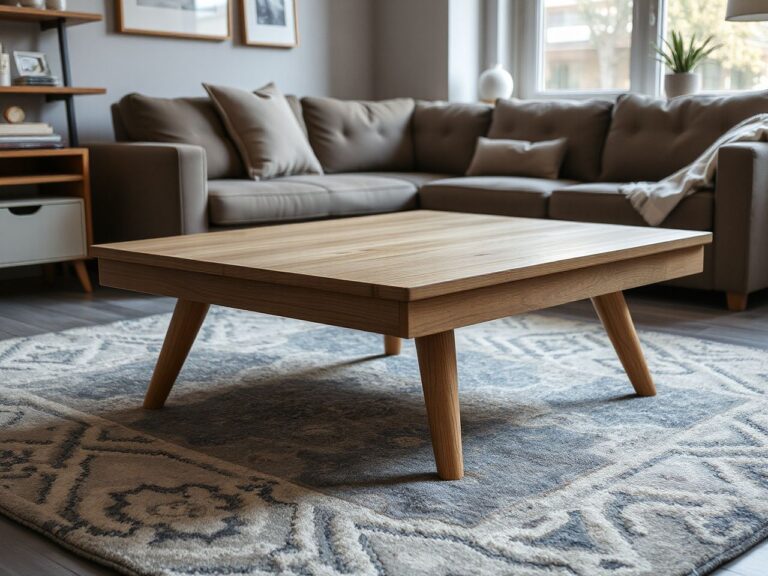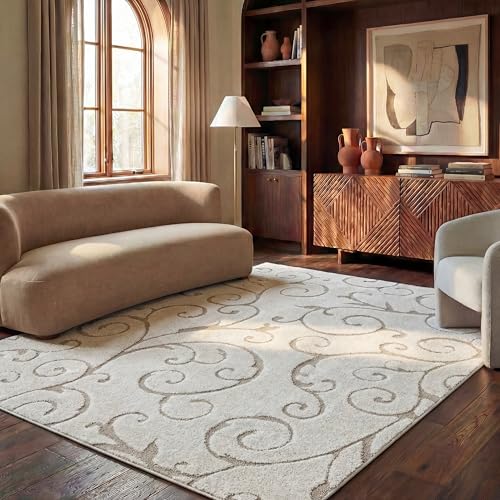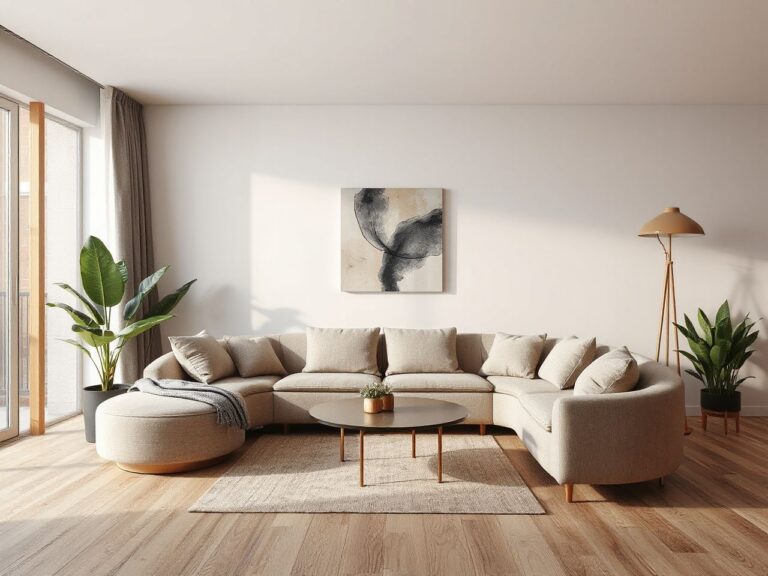
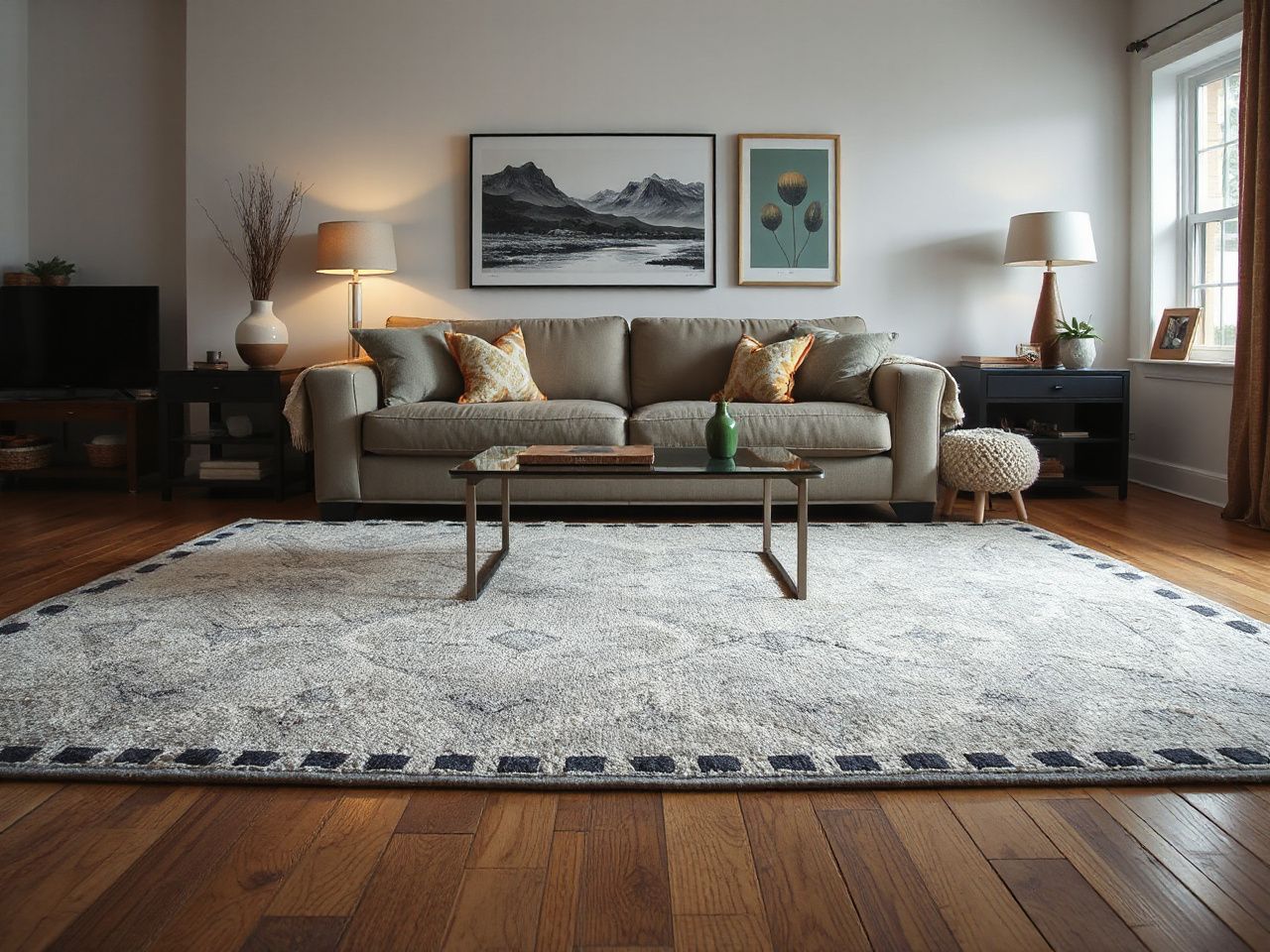
Could choosing the wrong rug size make a well-arranged living room feel unfinished? The right rug size for a living room is decided mainly around the seating group first, with the sofa, chairs, and coffee table seen as one visual unit. Instead of sizing the rug from the room’s floor area alone, consider the furniture layout. The main difference is between sizing a rug for the room and sizing it for the seating group: the best layout usually anchors the furniture rather than just filling open floor space. An experienced guide also considers door swings, vents, traffic paths, rug edges, and floor compatibility as placement factors, not afterthoughts.
Key Takeaways
- Size the area rug around the sofa, chairs, and coffee table before judging the open floor.
- Use a full-furniture or front-legs placement, but keep every seat visually connected.
- Test the footprint with painter’s tape before committing to an area rug.
- Protect the floor by matching the rug pad to the rug backing and flooring.
How do I choose a rug size for living room seating?
A living room rug should anchor the seating group, leave enough clearance for doors and vents, and keep its edges out of the main walking paths. The furniture footprint is more important than the room’s total floor area because the rug’s purpose is to connect the pieces people use together.
Step 1: Measure the furniture footprint
Start with a tape measure and record the outside edges of the sofa, sectional sofa, accent chair, and coffee table as they sit in the intended furniture layout. Don’t measure only the sofa. A rug that reaches the sofa but leaves an accent chair floating outside the visual group can make the room feel divided.
Place the coffee table inside the same imagined boundary as the seating. It shouldn’t look like it’s sitting on a small island of fabric while the sofa and chairs stay disconnected around it. A good test is to trace the seating group from above: the rug should give the eye a clear area that includes the main pieces, even if some furniture legs are on the floor.
A seating group needs a rug wide enough to relate the sofa, chairs, and coffee table to each other. That relationship matters more than filling every visible part of the room.
Step 2: Choose a placement style
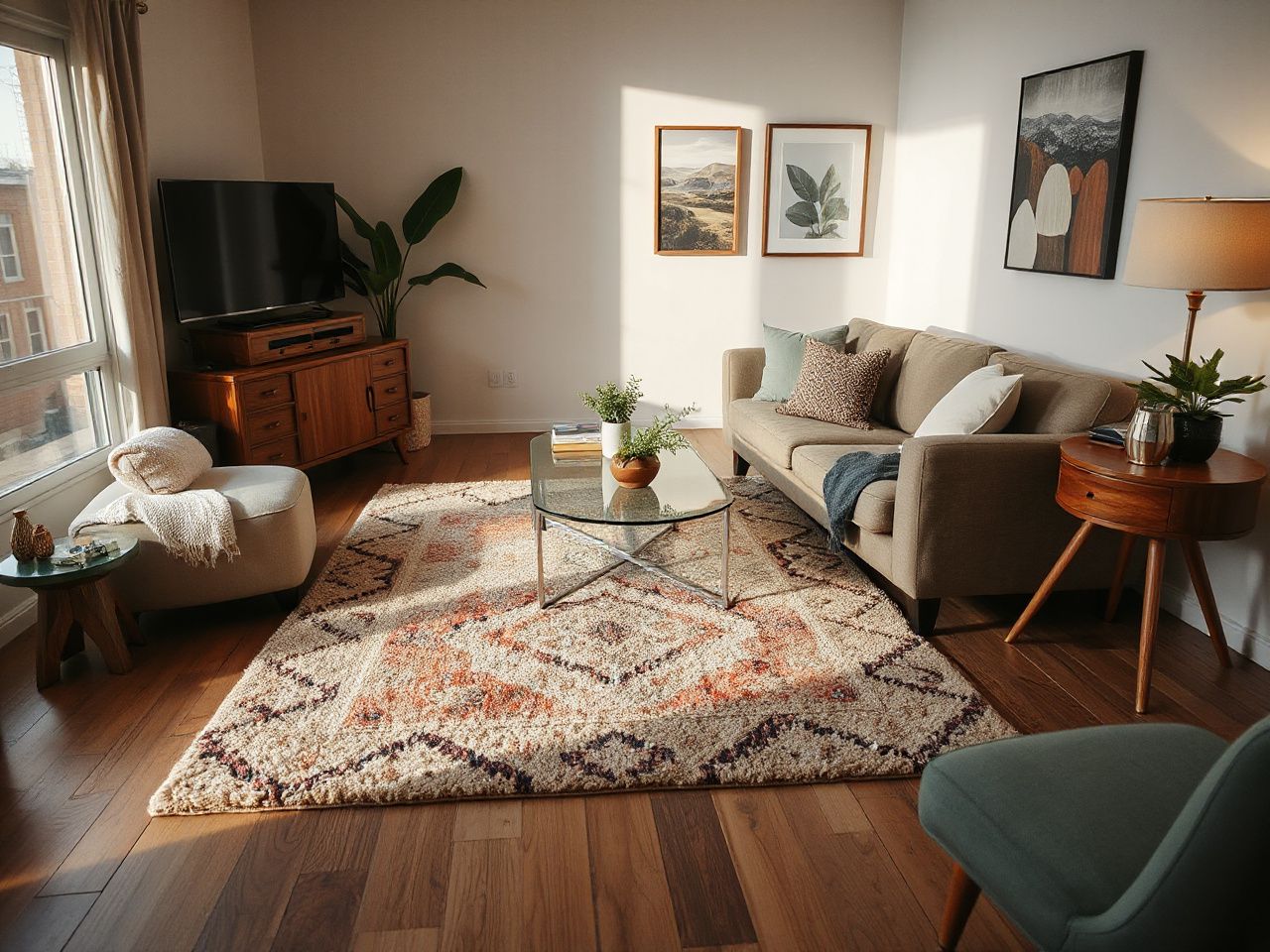
Most living rooms work with one of two placement options: all major seating on the rug, or the rug reaching under the front legs of the furniture. The first creates a more unified zone, while the second can show more of the flooring and fit a tighter space.
- All furniture on the rug: Use the rug as the foundation for the entire seating arrangement. This requires enough width and length for the sofa, chairs, and coffee table to sit comfortably within the same area.
- Front legs on the rug: Let the rug extend beneath the front legs of the sofa and chairs while the back legs remain on the floor. Keep the coffee table fully related to the rug so the center of the arrangement does not look detached.
- Small seating group: A compact arrangement may need a smaller area rug, but the rug should still reach the main seating rather than stopping in front of the coffee table.
Only placing the coffee table on the rug often creates the disconnected look people want to avoid. The fabric then becomes an isolated center instead of an anchor.
Step 3: Account for room shape and orientation
Room shape changes how a rug should be placed even if two living rooms have similar floor areas. A long rectangular room might need the rug aligned with the sofa and traffic flow, while a more open or irregular shape might call for a footprint that follows the seating arrangement instead of the walls.
Sectional sofa placement needs special attention because the long side and return side create a clear orientation. A rug should sit beneath the central seating zone and extend far enough to connect the return without forcing an edge into a walking route. The chaise or return should not make the rug appear too short on one side.
A sectional sofa benefits from a rug aligned with its inside corner and coffee table rather than a rug centered only on the room’s walls. The inside corner is the visual center of the seating arrangement.
What measurements help with a living room rug?
A measuring tape, a floor plan, and painter’s tape provide enough information to judge a living room rug footprint before purchase. A steel tape is the safer choice for a long span because fabric tapes can stretch by an inch or more across a 12-foot distance.
Measure the room and the seating area separately
Measure the room wall to wall, then measure the furniture grouping independently. The room measurement tells you how much open floor surrounds the rug. The furniture measurement tells you whether the rug will actually connect the seating.
For a 12×15 living room, an 8×10 or 9×12 rug can work while maintaining 18-24 inches of bare floor in all directions. Those figures describe a useful relationship between rug and room, not a rule that overrides doors, vents, furniture, or traffic paths.
| Living room reference | Rug or clearance figure | How to use it |
|---|---|---|
| Room example | 12×15 | Use as a reference for a larger living room footprint. |
| Rug option | 8×10 | Can leave visible floor around a 12×15 room. |
| Rug option | 9×12 | Can create broader seating coverage in the same room example. |
| Bare floor | 18-24 inches | Use as a visible-floor reference around the rug in the room example. |
A 90-inch sofa centered across the 10-foot side of an 8×10-foot rug leaves 15 inches of rug space at either end. That example shows why the sofa’s position matters as much as the label on the rug. A rug can be technically large enough but still look unbalanced if the seating is shifted too far to one side.
Mark the footprint before buying
Painter’s tape is the simplest way to test a rug’s outline on the floor. Mark each corner, place the coffee table and seating in their intended positions, and walk around the arrangement as you normally would.
- Check whether a door can open without striking the rug or catching a raised edge.
- Stand at the room entrance and assess whether the rug looks connected to the seating.
- Walk around the sofa and sectional to identify a path that crosses a rug edge.
- Look for heating vents that would be covered by the marked footprint.
- Check whether the tape line makes the room feel crowded or leaves the coffee table isolated.
Painter’s tape reveals proportion before the rug is in the room. The test also makes it easier to shift the seating group, rather than forcing the finished room to accommodate an unsuitable footprint.
A taped rug outline should be judged from the room entrance and from the seats, not only from above on a floor plan. The visible relationship between rug edge and furniture controls the room’s sense of balance. Measure the opening first.
Use visible floor as a design choice
Some exposed floor around an area rug helps define the rug as a deliberate zone. Too much exposed floor can make the rug look unrelated to the seating. Too little can make the arrangement feel cramped or interfere with doors and vents.
Hardwood flooring deserves particular attention because the visible border becomes part of the composition. In a dining room, the reference point is 18 inches of hardwood floor around the rug’s perimeter. But a living room should be judged primarily by furniture grouping and clearance rather than by transferring a dining rule unchanged.
Visible floor should frame a living room rug without becoming the main subject. The right amount depends on the furniture footprint, room shape, and usable walking space. Enamel won’t rust.
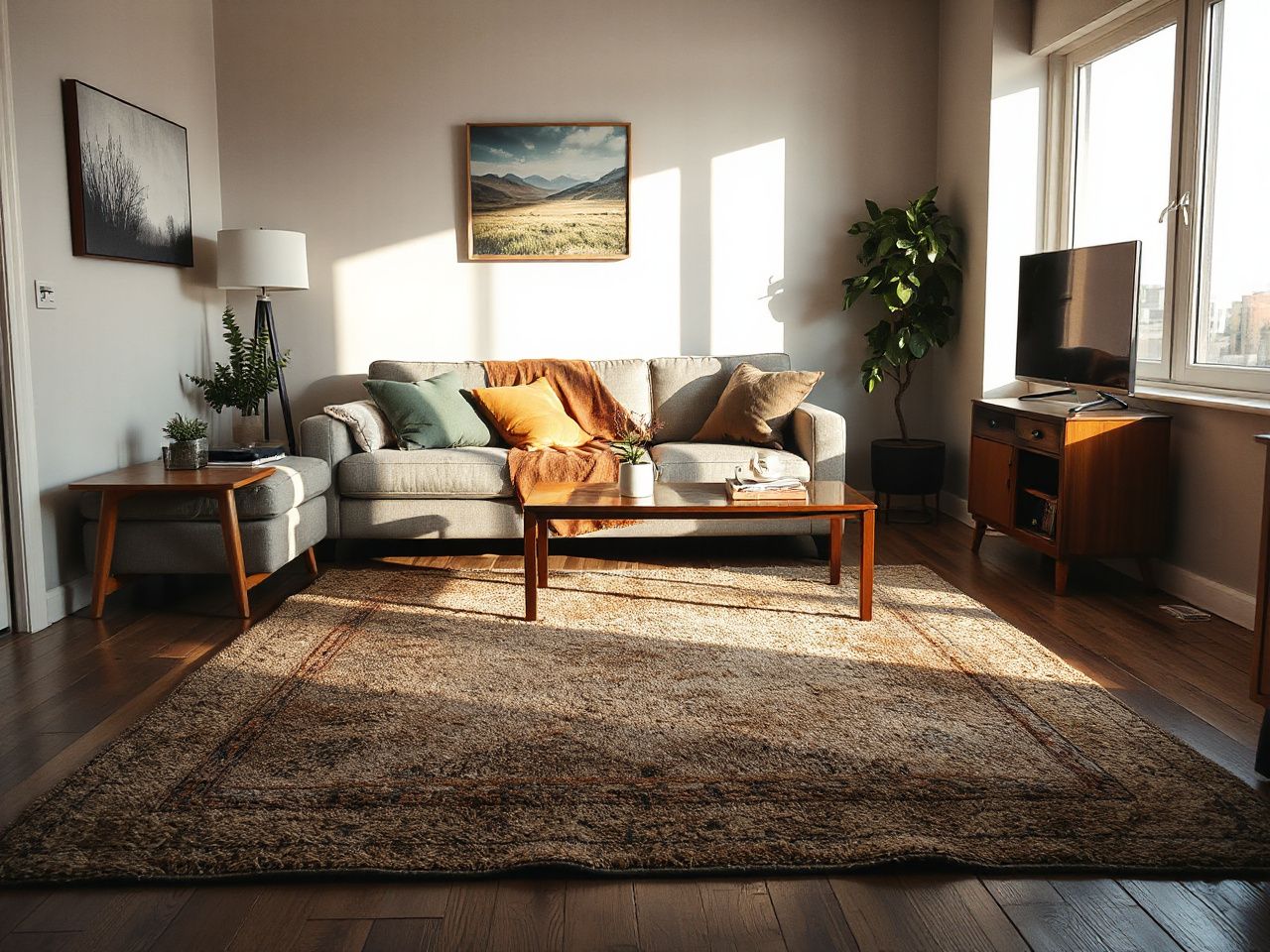
Should the rug sit under all the seating or only the front legs?
The rug may sit under all the seating or only under the front legs. Still, every major seat should read as part of one connected group. Full coverage gives the clearest anchor. Front-leg placement can work when a larger rug would crowd a doorway or reduce circulation.
When all seating can sit on the rug
Place the sofa, accent chair, sectional, and coffee table fully on the rug when the room has enough open floor for the rug to extend beyond the furniture. This makes the rug boundary easy to read and gives the seating a single foundation. Check the warranty length.
A full-furniture layout can be especially effective in an open-plan room. The rug identifies the living area without relying on walls. It becomes a visual boundary between the seating zone and adjacent areas.
Full-furniture rug placement creates the strongest visual connection when there’s enough clearance around the complete seating group. The furniture should remain stable and natural, not pushed inward just to fit the rug.
When front-leg placement makes sense
Front-leg placement works best when the room is narrow or the sofa sits near a wall. A larger rug might interfere with the main walking path. The front legs should sit securely within the rug’s boundary, and the coffee table should stay clearly connected to the same surface.
Don’t use front-leg placement as an excuse to leave an accent chair completely outside the arrangement. If the chair is part of the conversation area, the rug should reach it or the chair should be moved so the group still feels intentional.
Front-leg rug placement only works when the sofa and main seats stay visually connected to the coffee table. A rug that reaches one chair but stops before another can split the seating group.
Why a small rug can make the room feel disconnected
A small rug often makes a seating area look disconnected because the rug becomes a separate object under the coffee table instead of a base for the furniture. The eye reads the sofa and chairs as one group, then encounters a much smaller fabric shape that does not reach them.
Moving the coffee table closer to the sofa doesn’t always fix the issue. The better solution might be changing the rug’s size, adjusting the chairs, or using front-leg placement so the furniture and rug share a clear boundary.
For more layout ideas, the principles in Modern Living Room Design Ideas: What to Know in 2026 can help connect rug placement with the room’s overall arrangement rather than treating the rug as just an accessory.
Where should a living room rug stop?
A living room rug should stop before door swings, heating vents, and main walking paths. It should be large enough to anchor the seating group. Rug edges are placement limits, not details to fix after arranging the furniture.
Keep doors and vents clear
Open every nearby door fully before finalizing the rug’s placement. The rug shouldn’t block the door from opening, catch beneath it, or create a raised edge where the door meets the floor.
Heating vents need an unobstructed position. Mark the vent on the floor before placing painter’s tape. If the marked area covers the opening, revise the rug outline.
A living room rug that blocks a door or heating vent is placed incorrectly. Even if the furniture looks balanced, function defines the space’s limits.
Protect the main traffic path
Walk the routes between the room entrance, sofa, adjoining spaces, and doors. If a rug edge lands in a main walking path, shift the rug or move the furniture. This prevents people from stepping repeatedly across raised or curling edges.
A path crossing the rug can be fine if the rug lies flat and the transition feels natural. But an edge that underfoot catches attention or forces people to step around furniture is a problem.
The U.S. Consumer Product Safety Commission provides consumer safety information through CPSC.gov, including guidance relevant to household trip hazards. A clear walking path remains the practical test for rug placement in a busy living room.
Choose a rug shape that follows the room
A rectangular rug is not always the best choice for a living room. Rectangular rugs usually relate easily to sofas and rectangular coffee tables, but a round or differently shaped rug may suit a compact conversation area, curved furniture, or a room whose architecture does not follow a simple rectangle.
Shape should follow the furniture grouping and available clearance. A round rug still needs to connect the main seats and coffee table. An unusual outline doesn’t eliminate the need to protect doors, vents, and walking paths.
Rug shape should support the room’s furniture arrangement instead of just copying the wall shape. The best choice makes the seating group read as a single, unified area.
How should a rug pad protect the rug and floor?
A rug pad needs to be compatible with both the rug backing and the flooring underneath. For hardwood floors, the wrong pad or backing interaction can affect the floor surface.
Match the pad to the surfaces
Read the rug and pad care instructions before putting one on hardwood, finished wood, tile, or other surfaces. The pad should sit flat, stay within the rug’s outline, and avoid creating a raised edge that could catch a foot or door.
Don’t assume one pad works for every rug and floor combination. Check the backing, floor finish, cleaning method, and placement area to be sure.
A compatible rug pad helps keep an area rug in position while separating the rug from the floor beneath it. The manufacturer’s instructions remain the controlling source for surface compatibility.
Plan for cleaning and eventual replacement
Rug size affects cleaning because a larger footprint puts more material in the area that receives foot traffic, furniture pressure, and dust. The bigger the rug, the more important it becomes to confirm that the rug can be lifted, cleaned, and returned without disrupting the entire room.
Placement impacts replacement costs, even if no price is assigned. Rugs that go beneath heavy furniture may need more moving during cleaning or replacement, while smaller rugs are easier to remove but might not hold the furniture in place.
Cleaning access is part of rug sizing. Leave enough space around furniture to lift, inspect, and maintain the rug without making the whole seating area impossible to move.
Prevent sliding and curling through placement
Start with a clean, suitable surface and follow the rug and pad instructions for installation. Keep the rug flat during the taped-footprint test, and check every edge before regular use.
If an edge curls, don’t hide it under a traffic path or treat it as decorative. Recheck the rug’s placement, the pad’s fit, and nearby door clearance before relying on the arrangement.
A rug edge that curls into a walking path is a placement problem. It should be corrected before the room is considered finished. Floor protection and movement control are part of the layout, not separate chores.
How can rug size support the room’s overall style?
Rug size supports style by giving the sofa, chairs, and coffee table a coherent base. This is true before colour, pattern, and texture are considered. A correctly scaled rug can make a simple room feel intentional. A beautiful rug at the wrong scale can weaken the furniture layout.
Coordinate with the room without copying every shape
Use the rug to define the seating area. Other elements should support that boundary. Wall colour, window treatments, accent walls, and decorative objects can relate to the rug. They don’t have to follow the same visual language exactly.
For a broader styling plan, see contemporary living room decor ideas after the rug footprint is settled. Size should be decided before pattern and colour distract from placement.
A rug’s colour can’t fix a footprint that leaves the seating disconnected. Proportion is key because it controls how furniture relates to the floor.
Use the room’s floor as part of the composition
Hardwood flooring can act as a visible frame around the rug. This works especially when the rug doesn’t cover most of the room. Keep the exposed floor intentional and consistent around the main edges where the room allows it.
Irregular clearance can still work when a doorway, fireplace, vent, or furniture arrangement requires it. The key is to make the irregularity look purposeful rather than accidental. It should feel deliberate.
Exposed flooring should support the rug’s boundary. It shouldn’t expose a narrow strip that creates a visual snag. Painter’s tape makes that distinction easy to judge before the final piece arrives.
Keep the rug connected to the room’s focal point
Point the rug toward the seating and the room’s main focal point, like a fireplace, media unit, or view. A rug that faces away from the furniture can make the layout seem divided, even if its size looks right.
A fireplace or media unit may affect where the sofa goes, but the rug still needs to include the conversational center. Don’t center the rug on a wall if it leaves the seats and coffee table outside its visual boundary.
A living room rug should reinforce the direction in which people sit, talk, and move. The furniture grouping remains the anchor for that decision.
What should I check before committing to a rug?
Check the taped footprint, seating coverage, door swings, heating vents, traffic paths, floor type, and cleaning access before committing. Doing so in this order stops a decorative choice from hiding a practical issue.
- Mark the outline: Use painter’s tape to show the full rug boundary.
- Place the furniture: Set the sofa, sectional, accent chair, and coffee table against the outline.
- Check the view: Judge the arrangement from the entrance and from the main seats.
- Walk the room: Follow every route to doors and adjacent spaces.
- Open doors: Confirm that door swings do not catch the rug.
- Inspect vents: Keep heating vents clear of the footprint.
- Check the floor: Confirm that the rug pad suits the rug backing and flooring.
- Plan maintenance: Make sure the rug can be lifted, cleaned, and eventually replaced without an unreasonable furniture shuffle.
A rug footprint that passes all eight checks is more useful than one based on room dimensions alone. The final choice should anchor the furniture while keeping paths clear.
Color and wall treatment can follow after placing the rug and furniture. A guide to accent wall ideas for a living room makes more sense once the room’s visual zone is set.
The Bottom Line
Choose a living room rug around the sofa, sectional, accent chair, and coffee table, then use the room’s open floor to check proportion rather than letting the walls dictate the entire decision. Full-furniture placement creates a strong anchor, while front-leg placement can preserve circulation when the larger footprint would interfere with doors, vents, or walking paths. Painter’s tape and a compatible rug pad turn the choice into a practical layout test.
Frequently Asked Questions
What is the right rug size for living room seating?
The right rug size connects the sofa, chairs, and coffee table while keeping doors, vents, and main walking paths open. Measure the furniture footprint first, then test full-furniture and front-leg placement with painter’s tape. A rug that fills the open floor but stops short of the seating might be less effective than a smaller one that properly anchors the group.
Should a sofa sit fully on a living room rug?
A sofa can sit fully on the rug if there’s enough clearance around the whole seating area. Front-leg placement works too if the back legs stay on the floor and the rug reaches the coffee table and main seats. What matters most is visual connection: the sofa should relate to the rug, not just the table.
How much floor should remain visible around a living room rug?
Use exposed floor as a proportion check, not as an automatic rule for every room. For a 12×15 living room, an 8×10 or 9×12 rug can maintain 18-24 inches of bare floor in all directions. Door swings, heating vents, sectional orientation, and traffic paths may require a different placement even when the room has similar dimensions.
What rug placement works best with a sectional sofa?
Align the rug with the sectional’s inside corner and central seating area, then extend it toward the coffee table and the main seats. Avoid centering the rug only on the room’s walls if that leaves the sectional return disconnected. Tape the outline first and walk around the chaise or return to ensure the rug edge does not land in a main traffic path.
How do I stop a large rug from sliding or damaging hardwood flooring?
Use a rug pad that is compatible with both the rug backing and the specific flooring beneath it. Follow the care instructions for both surfaces. Keep the rug and pad flat, inspect the edges, and correct curling before the rug sits in a walking path. Hardwood flooring should remain part of the compatibility check rather than an afterthought.