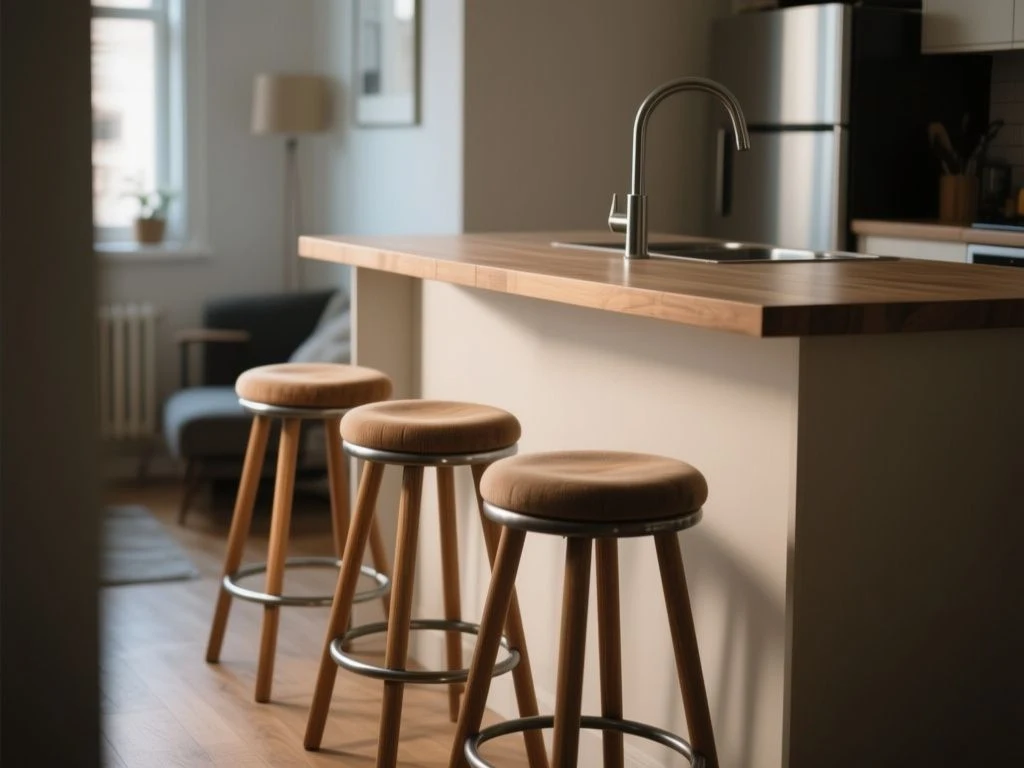
A poorly chosen stool can block a kitchen route, trap your knees beneath the counter, or start rocking long before the seat looks worn. The useful distinction is between the stool’s nominal category and its actual fit: seat height, underside clearance, footrest position, and the counter’s construction determine whether a stool works in a particular kitchen. A sound guide also treats stability, cleanability, repairability, and floor protection as part of the specification, because a comfortable stool can still fail when its joints loosen, upholstery absorbs spills, or its base interferes with circulation. This bar stool buying guide starts with the tape measure, not the showroom label.
Key Takeaways
- Measure from the finished floor to the lowest underside obstruction before choosing a seat height.
- Judge comfort through knee clearance, footrest position, seat depth, and circulation space rather than appearance alone.
- Include cleaning, joint maintenance, replacement glides, upholstery repair, and floor protection in the ownership decision.
Beginner: Start With the Actual Kitchen, Not the Label
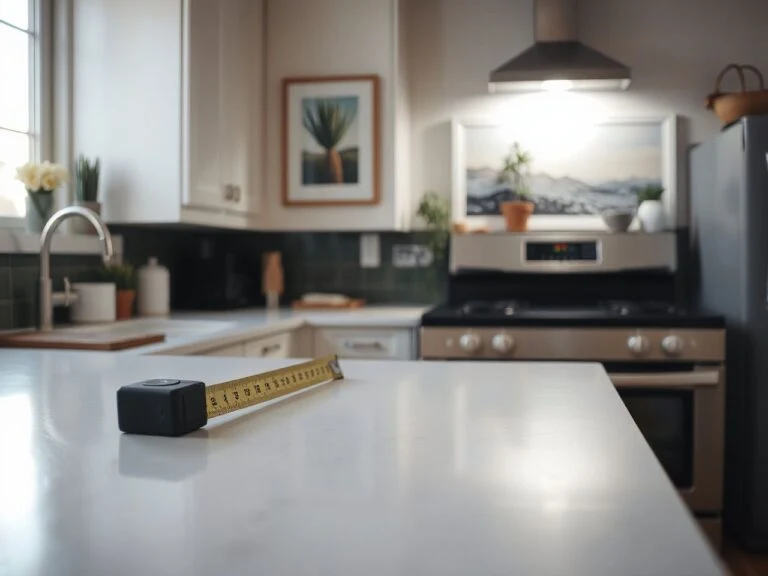
Height names are useful shorthand, but they are not fully standardized. A listing may call a stool counter height or bar height while the usable seat height differs from the number your island requires. Measure the finished floor to the counter surface, then measure the finished floor to the lowest point under the counter. Include an apron, support rail, drawer front, decorative trim, or cabinet projection in that second measurement.
Step 1: Identify the seat height you need
A counter-height stool commonly has a seat height of 24 inches (61 cm). Kitchen counters may also use a stool around 26 inches (66 cm), so the label alone cannot settle the choice. A traditional bar stool is commonly listed at 30 inches (76 cm), while extra-tall seating for a high pub table may reach 36 inches (91 cm).
The useful figure is the distance from the finished floor to the top of the seat. Compare that figure with your counter and underside measurements. A typical dining chair seat is about 18 inches (46 cm), which explains why moving a dining chair to an island often leaves the sitter too low for comfortable food preparation or conversation.
Counter height and bar height describe common categories, not a guarantee of fit. The finished floor, counter surface, seat cushion, and underside obstruction determine whether a stool belongs in a particular kitchen.
Step 2: Calculate usable clearance beneath the counter
Seat-to-counter clearance affects knee movement, posture, and how easily a person can pull in or leave. Do not measure only to the flat countertop. Measure to the lowest underside feature directly above the seating position, especially on a peninsula with a thick edge, enclosed cabinet, or structural rail.
A seat can have the correct nominal height and still feel cramped if the cushion rises into the counter’s underside. Armrests make the issue more demanding because the arms must pass below the counter overhang or remain outside it. If the arms cannot enter the available space, the stool may need to sit farther back, reducing the walking route behind it.
Countertop overhang and knee clearance also depend on the island’s construction. Furniture-grade plywood, solid hardwood, and other counter supports can create different underside shapes even when the visible counter surface sits at the same height. Record the lowest obstruction, not the most generous opening.
Step 3: Check the kitchen’s circulation before selecting a silhouette
Lay out the stool positions with painter’s tape on the floor. Mark the front edge of the counter, the center of each intended seat, and the outermost point of the stool base or legs. Then walk the kitchen traffic path with the stools pulled out as they would be during a meal.
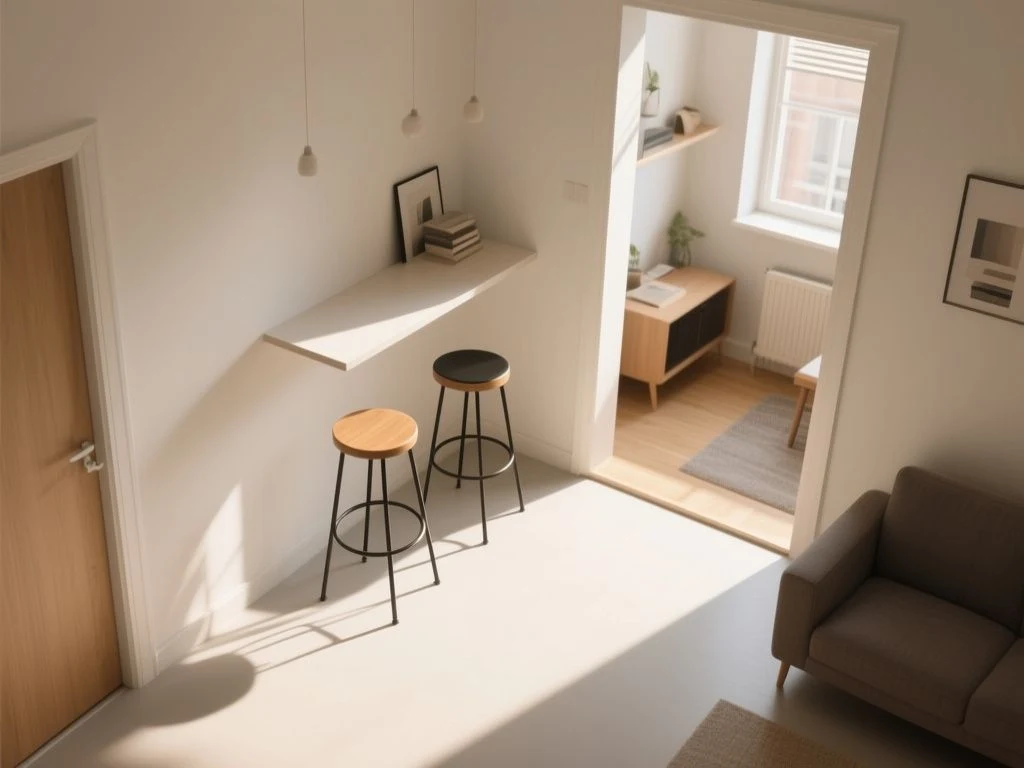
Backless stools usually disappear beneath an overhang and suit compact kitchens where visual and physical clearance matter. Stools with backs provide more support for a full meal, but their back frames remain in the room when nobody is seated. A backless stool is not automatically better for a small kitchen; the right choice depends on storage depth, sitting time, and the route behind the island.
Kitchen seating needs enough room for the user’s knees, the stool’s base, and people passing behind it. A stool that fits under the counter can still obstruct a doorway or narrow traffic path when occupied.
Our comparison of bar stools and counter stools is useful if the height labels still seem interchangeable after measuring.
Intermediate: Judge Comfort, Stability, and Movement
Footrests are structural parts of the stool
A footrest supports the lower legs and helps prevent the feet from dangling during a full meal. Its position matters as much as its presence. The rail should be easy to find without forcing the toes around a front leg, and its attachment should not create a sharp contact point or a toe-catching projection.
Footrests also receive repeated load. A thin decorative bar may look suitable while offering poor support, and a low rail can change the user’s posture. Inspect how the rail meets the legs or frame, whether the attachment is exposed, and whether the surface could damage a shoe or scrape a floor if the stool is dragged.
A footrest is a comfort and structural feature, not merely decoration. Its location should support the user’s feet without becoming a trip or toe-catching hazard.
Seat shape and depth affect a full meal
A narrow round seat may tuck away neatly, but it offers less support for a long breakfast or dinner. A broad seat with a shaped front edge can distribute contact more comfortably, provided the depth does not push the sitter too far from the counter. The seat should let the sitter approach the work surface without leaning forward throughout the meal.
Armrests can improve support, although they need clearance beneath the counter and room beside neighboring stools. A curved back can support the torso, while a tall or rigid back may occupy more visual and physical space than a small kitchen can spare. Compare the stool with a dining chair by asking how long people sit and how often the seat must disappear under the island.
High-resilience polyurethane foam is a common seating material. The listing should identify the foam, cushion construction, and upholstery separately; a foam label does not tell you how the cover will handle cooking grease, spilled drinks, or repeated cleaning.
Swivels add convenience and additional failure points
A swivel can help a seated person turn toward a conversation or exit without pulling the entire stool across the floor. That movement is useful at a peninsula where the approach angle is limited. It can also make a stool easier to misalign with the counter, particularly if the seat rotates after somebody stands.
Swivel hardware introduces moving parts that can loosen, squeak, or pinch fingers. Children and older adults may find an unexpectedly rotating seat less predictable than a fixed frame. Examine the return action if one is listed, the fasteners holding the mechanism, and the gap around the rotating parts. A listing that says swivel but does not describe the hardware leaves repairability uncertain.
Stability comes from the base, joints, and footprint
A stable stool keeps its center of support under the user as the sitter climbs on, shifts position, or reaches toward the counter. Wide leg spread, a well-braced frame, and secure joints generally matter more than visual weight alone. A tall narrow base gives the stool a smaller footprint and can be less forgiving of side loading.
Casters are usually a poor fit for a kitchen island unless the surrounding layout specifically requires movement and the floor can tolerate it. Loose joints, swivels, and casters introduce movement that can make a stool harder to control. Tall seating also deserves extra care where children or older adults use it.
Stability cannot be established from upholstery or a product photograph. Read the construction description, inspect the joint layout, and treat missing load or stability information as an unanswered question rather than a promise.
ANSI/BIFMA X5.1 describes general-purpose office seating requirements, but an office seating reference does not automatically certify a household bar stool for every use. EN 1728:2014 describes furniture seating strength and durability test procedures; the manufacturer must identify the test scope if a listing claims compliance.

Intermediate: Choose Materials for Cleaning and Repair
Hard surfaces simplify daily kitchen care
Polypropylene is practical for a busy kitchen because a non-absorbent molded surface can be wiped rather than treated like fabric. Powder-coated steel can provide a hard frame finish, but inspect the edges, welds, and contact points where chips or exposed metal could become a floor problem. Solid hardwood brings a repairable frame material, while the finish still determines how spills and cleaning affect the surface.
Furniture-grade plywood can form a strong seat shell or frame component when properly constructed, though the exposed edge and finish deserve attention. The material name alone does not reveal the quality of the joint, the thickness, or the protection around cut edges. A complete listing should explain the parts rather than using one attractive material term for the entire stool.
Polypropylene is easier to wipe than absorbent upholstery, but every surface still needs cleaning instructions that match its finish. Avoid assuming that a water-resistant cover tolerates every household cleaner.
Upholstery requires a realistic cleaning plan
Full-grain leather can be wiped and repaired differently from woven fabric, but it still needs care suited to the finish. Upholstery with high-resilience polyurethane foam may feel supportive while the cover remains the part most exposed to spills. Ask whether the cover removes, whether the manufacturer specifies a cleaning method, and whether replacement covers or reupholstery are possible.
In a kitchen, stain resistance is useful only when it is paired with a clear care routine. A textured fabric can hold crumbs in seams, while a deeply tufted cushion creates more places for grease and moisture to remain. Smooth, accessible surfaces are usually easier to maintain than decorative channels that cannot be wiped clean.
The listing does not establish fire performance merely by naming a foam or fabric. BS 5852:2006 defines ignition testing for upholstered seating using flaming and smoldering sources, while BS 7176 addresses ignition resistance requirements for upholstered furniture in non-domestic environments; a buyer should look for the stated standard and scope rather than infer compliance from the material.
Floor protection belongs in the specification
Furniture glides protect the floor only when their material suits the surface and remains attached. Hard floors can show scratches from grit trapped beneath a glide, while soft or rough foot ends can catch instead of sliding. A metal frame may need a replaceable pad, and a swivel base may require a different contact solution from a four-leg frame.
Ask whether replacement glides are available before buying a stool that will move every day. The real ownership cost includes new glides, fastener replacement, reupholstery, and repair to a damaged floor. A low initial price can lose its appeal if the stool cannot be serviced or its feet mark an expensive surface.
Replaceable furniture glides can extend a stool’s useful life and reduce floor damage when the original contacts wear. The manufacturer does not always list the glide material or replacement process, so those omissions belong in the decision.
Advanced: Plan for Accessibility, Maintenance, and Long-Term Ownership
Accessible seating needs room beyond the seat
Accessible seating involves more than finding a suitable seat height. The route to the seat, clear floor space, knee clearance, and the relationship between the counter and the user all matter under the ADA Standards for Accessible Design. A stool with a high step, narrow approach, arms that block transfer, or a base that intrudes into the route may be unsuitable even if its dimensions appear attractive.
A kitchen island or peninsula should be assessed as a complete setting. Keep the approach clear, check the underside for knee and footroom, and consider whether a fixed stool can be reached without turning through a tight traffic path. Accessibility is a layout decision as much as a furniture decision.
Accessible kitchen seating requires clear approach space and knee clearance, not merely a seat that reaches the counter. The stool and the surrounding island must work together.
Prevent squeaks, rocking, and loose joints
Squeaking often indicates movement at a joint, a swivel mechanism, a footrest attachment, or a contact point between the stool and floor. Rocking may come from uneven legs, a loose fastener, a bent frame, or a floor that is not level. Do not cure every noise with lubricant; lubricant can attract grit or reach upholstery, while a loose joint needs the correct fastener adjustment.
Check every accessible fastener during assembly and again after the stool has settled into use. Tighten only as the construction allows, because overtightening can strip a threaded insert or damage a wood component. If a leg remains short after tightening, a replacement glide is safer than forcing the frame into alignment.
A rocking stool should be removed from service until the cause is identified, particularly if the frame or swivel is loose. The manufacturer does not state a repair procedure unless the listing includes one, so preserve the assembly instructions and ask about replacement parts before discarding them.
Compare stools with dining chairs and adjustable-height seating
Dining chairs suit a dining table because their typical seat height is about 18 inches (46 cm). They may work at a low table, but a counter needs a taller seat and a clear relationship between the sitter’s knees and the underside. A fixed bar stool gives a defined height and often stores neatly, while an adjustable-height stool can serve more than one surface.
Adjustable seating adds a mechanism, a wider range of possible positions, and another group of parts that may need maintenance. The lowest and highest settings still need to match the counter, foot support, and surrounding route. A gas-lift or threaded adjustment should not be treated as a substitute for measuring the finished space.
Fixed stools are easier to assess because the seat height remains known. Adjustable stools offer flexibility, but their mechanism, base width, and operating clearance become part of the kitchen plan.
Use the specification sheet as a maintenance document
Before paying, save the listing and assembly instructions. Record the seat height, overall footprint, material claims, upholstery care, fastener type if stated, and whether replacement glides or covers are available. The same record helps if a stool begins to squeak or the floor contact needs replacing.
Do not treat a missing measurement as a small detail. If the listing gives a category but omits the actual seat height, ask for the usable measurement from the finished floor to the top of the seat. If the manufacturer does not list the underside clearance, compare your measured opening with the seat, arms, and support frame rather than guessing.
Repairability has value in a small home because replacing one worn part creates less waste and less delivery trouble than replacing an entire set. A stool with accessible joints, replaceable glides, and serviceable upholstery may remain useful after its first cover or foot contact wears out.
How to Make the Final Decision
Use a written fit check before comparing colours. Start with the finished floor and counter measurements, then evaluate the underside obstruction, seat height, footrest, seat depth, and clearance around the stool. Only after those points work should style become decisive.
- Measure: Record the floor-to-counter height, floor-to-lowest-obstruction height, and the available approach route.
- Match: Compare the actual seat height rather than trusting counter-height or bar-height wording.
- Assess: Check footrest position, base footprint, joint construction, swivel movement, and armrest clearance.
- Maintain: Confirm cleaning instructions, replacement glides, reupholstery options, and access to fasteners.
- Protect: Match furniture glides to the floor and test the stool’s pulled-out position against kitchen traffic paths.
Two stools with the same nominal height can behave differently because their cushions, frames, footrests, and underside profiles differ. The best decision is the one that leaves a clear route, supports the feet, permits knee movement, and remains serviceable after ordinary kitchen wear.
For adjacent room-planning decisions, the same measurement-first approach applies to choosing a bathroom mirror without creating fit and installation problems. A decorative object still has to respect the room around it.
Stool ownership includes the space the furniture occupies, the surfaces it touches, and the parts that eventually need service. A careful bar stool buying guide therefore ends with the kitchen layout and maintenance plan, not the product photograph.
Frequently Asked Questions
How do I know whether I need a counter-height stool or a bar-height stool?
Measure from the finished floor to the counter surface and to the lowest underside obstruction. A counter-height stool is commonly listed at 24 inches (61 cm), while a bar stool is commonly listed at 30 inches (76 cm); kitchen counters may also use a 26-inch (66 cm) stool. Compare actual seat height, not the category label, because labels are not fully standardized.
How much space should be between the seat and the underside of the counter?
There is no single useful clearance figure without the counter and stool measurements. Measure to the lowest apron, rail, drawer, or cabinet obstruction and check whether knees can move without the seat or arms pressing into it. A stool can match the counter height and still be uncomfortable if the underside blocks the sitter’s legs or forces the stool too far back.
Are backless stools better for a small kitchen?
Backless stools usually store more discreetly beneath an overhang, which helps a compact kitchen, but they provide less torso support during a full meal. A stool with a back may be more comfortable for longer sitting while consuming more visual and physical space. Compare the pulled-out footprint, traffic path, seat depth, and expected sitting time before choosing the silhouette.
Can a swivel seat cause problems?
Swivels can help users turn toward conversation or leave without dragging the frame. The mechanism also adds moving parts that can loosen, squeak, rotate unexpectedly, or create pinch points. Check the hardware description, the surrounding gap, and the stool’s behavior when turned. Fixed seating is simpler where children or older adults need a more predictable seat.
What makes a bar stool stable instead of wobbly?
Stability depends on the footprint, leg spread, bracing, joint security, and the condition of the floor contacts. A tall narrow base can be less forgiving than a broader frame, and a loose footrest or swivel can introduce movement. Review the construction details, keep the assembly hardware accessible, and replace worn glides instead of compensating for a damaged frame with an improvised shim.
How should I compare a bar stool with an adjustable-height stool?
A fixed stool offers a known seat height and fewer moving parts. An adjustable stool can suit different surfaces, but its mechanism, base footprint, operating clearance, and lowest and highest positions all need checking. Neither option removes the need to measure the finished floor, counter surface, underside obstruction, foot support, and surrounding route.