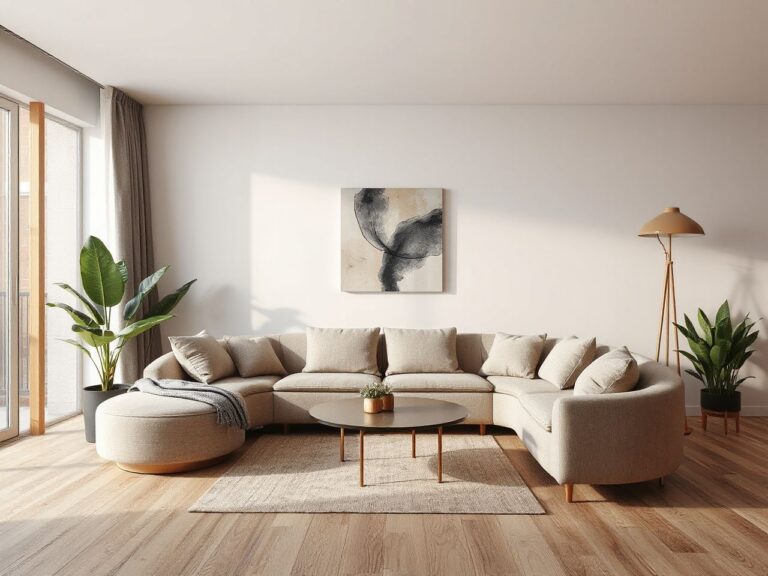
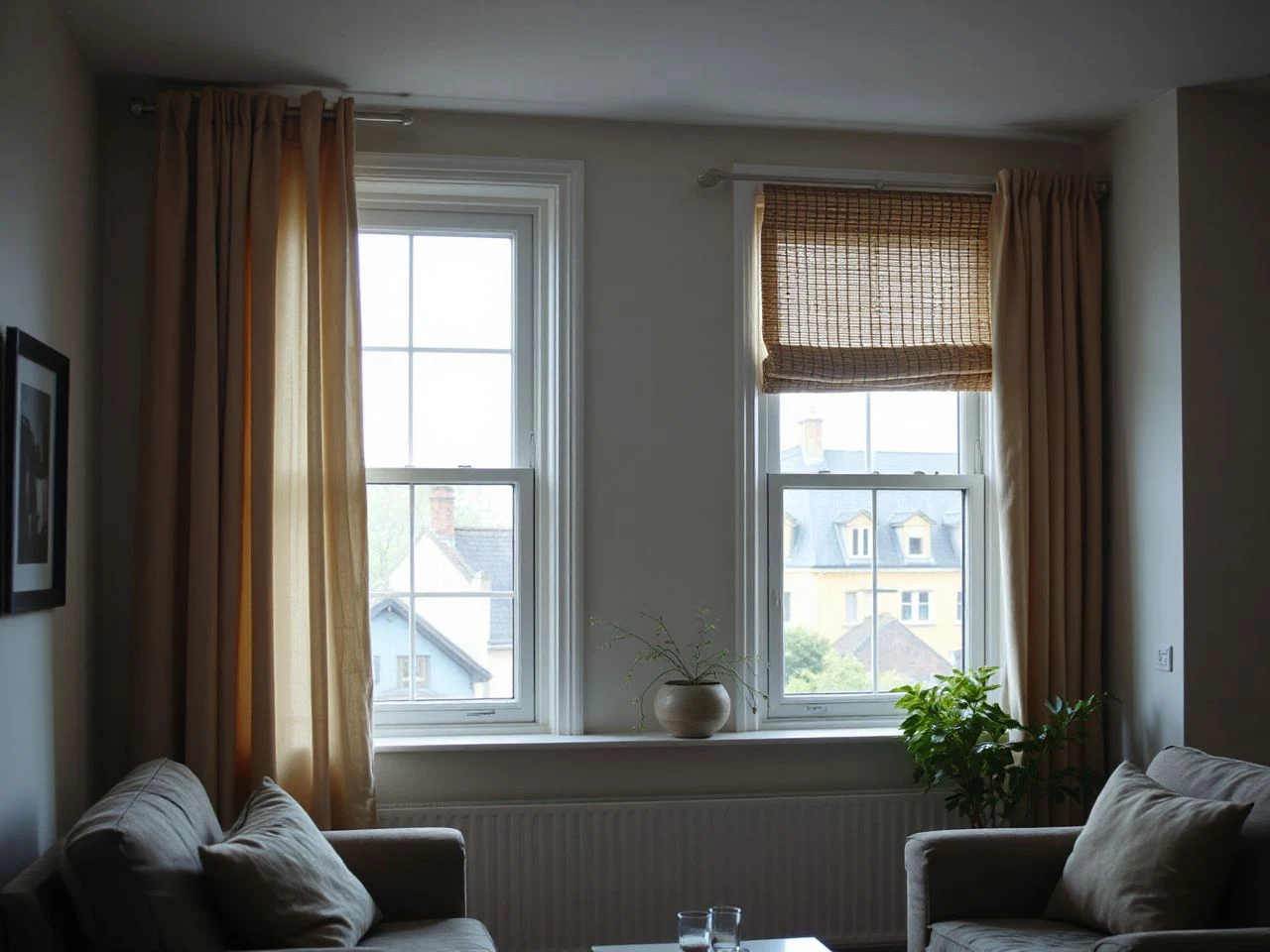
The prettiest window treatment is often the wrong one. Evaluate each living-room treatment by the combination of light control, privacy by day and night, window geometry, operating safety, and visual fullness rather than by appearance alone. The key distinction is between a treatment that merely covers glass and one that is correctly sized, mounted, lined, and layered to manage glare, heat, privacy, and the room’s proportions. That distinction matters even more in a rental, where every bracket, anchor, and adhesive decision must come off the wall cleanly.
For most living rooms, I would begin with the window’s behavior rather than a decorating style. Roller shades suit a tidy, low-profile look; Roman shades bring fabric and softness; cellular shades add an insulating layer; and curtains can correct awkward proportions when the rod is installed without damaging trim. For a broader look at the practical differences, see this curtains-versus-blinds guide.
Key Takeaways
- Choose by glare, privacy, window shape, safety, and visual fullness before choosing a color or pattern.
- Inside mounts look contained but can reveal gaps; outside mounts cover more glass but need clearance from trim, handles, radiators, and furniture.
- Renters should favor reversible mounting, removable hardware, and treatments that can be cleaned without replacing the whole window covering.
Beginner: Choose the treatment by the room’s problem
Start with curtains, shades, or blinds
Curtains are the strongest choice when a living room needs softness, height, or adjustable side coverage. Pinch-pleat draperies create a more formal line, while simple panels can support a relaxed room. The rod and fabric, however, create more visual weight than a shade, so the installation must be planned around the window trim and the renter’s wall-repair limit.
Shades consist of a single fabric panel or woven wood material that moves up and down to control light and privacy. Roller shades have a clean profile and suit rooms where the window should recede. Roman shades display gentle folds and lack visible rear cords, giving a tailored appearance without the broad sweep of drapery. Cellular shades use a honeycomb design that captures air in separate cells, adding an insulating layer at the window.
Blinds use horizontal or vertical slats that can be adjusted to redirect light. Wood blinds bring a more architectural surface, while vertical styles can make sense across a wide opening or sliding glass door. Shutters can also provide a built-in appearance, but a renter should examine the installation method and the likely wall or frame repairs before choosing them.
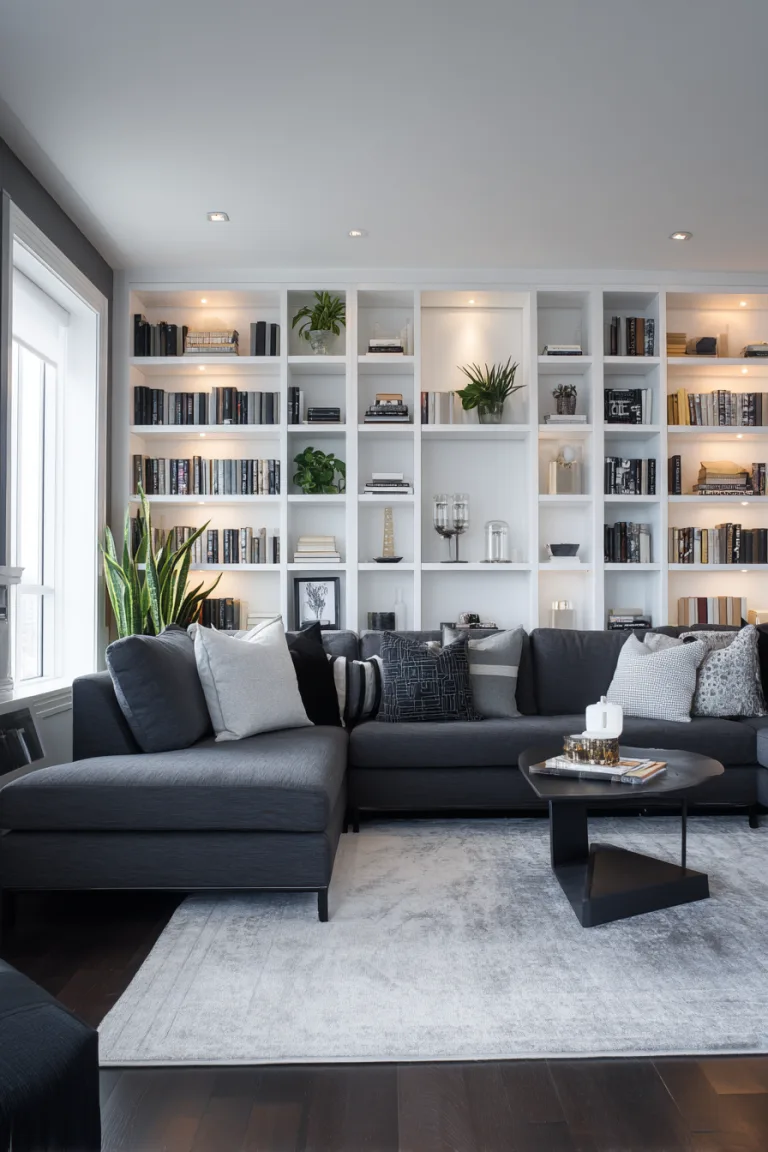
Roller shades offer a low-profile way to control glare without adding the visual bulk of full drapery. That makes them a sensible starting point for a small room, a narrow window, or a space where the sofa already supplies strong texture.
Match privacy to the time of day
Sheer, light-filtering, room-darkening, and blackout are different descriptions. Sheer fabric softens daylight and preserves a bright mood, but it offers limited privacy after sunset when interior lights are on. Light-filtering fabric reduces the harshness of daylight while allowing some brightness through. Room-darkening lining blocks more light, and blackout performance depends on the fabric as well as the gaps at the sides, top, and bottom.
Blackout curtains are not automatically necessary in a living room. Room-darkening lining is often more appropriate when the goal is to reduce television glare, afternoon brightness, or reflected light without making the room feel closed during the day. Blackout fabric becomes more useful when the room doubles as a sleeping space, contains light-sensitive artwork, or needs stronger control than lining alone can provide.
Privacy also changes with direction. A treatment that looks private in daylight may reveal silhouettes at night. Layering a light-filtering shade with curtains gives a renter two settings without requiring a permanent change to the glass.
Use solar screen fabric with clear expectations
Solar screen fabric can limit glare and solar heat while generally preserving some outward visibility. It can help protect upholstery, flooring, and artwork from fading, but the open view comes with a privacy limit: solar screen fabric does not provide full nighttime privacy.
Solar screen fabric reduces daytime glare while preserving some outward visibility, but it does not provide full nighttime privacy. Pairing it with curtains or another privacy layer is the more complete answer for a street-facing living room.
Coordinate with furnishings without matching every surface
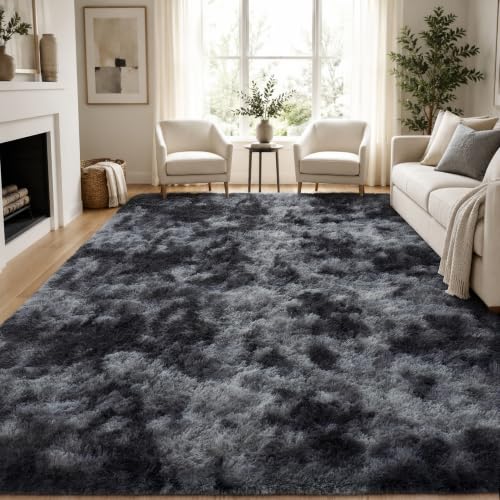
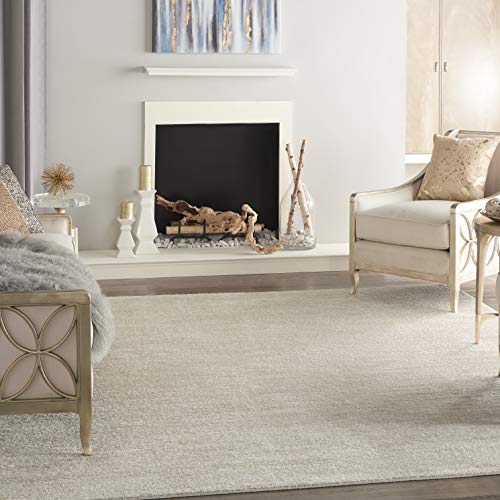
A window treatment should relate to the sofa, rug, and other living-room furnishings through color temperature, texture, or pattern scale rather than exact duplication. A woven wood shade can echo a jute rug or timber furniture. A quiet Roman shade can let a patterned sofa lead. Pinch-pleat draperies can repeat a small color from the rug without copying its design.
Keep the wall in view before adding more pattern. A treatment with strong folds, trim, and a large motif can compete with an accent wall, so the room may need either quieter fabric or fewer decorative layers. These accent wall ideas for a living room are useful context when the window and wall are both intended to be focal points.
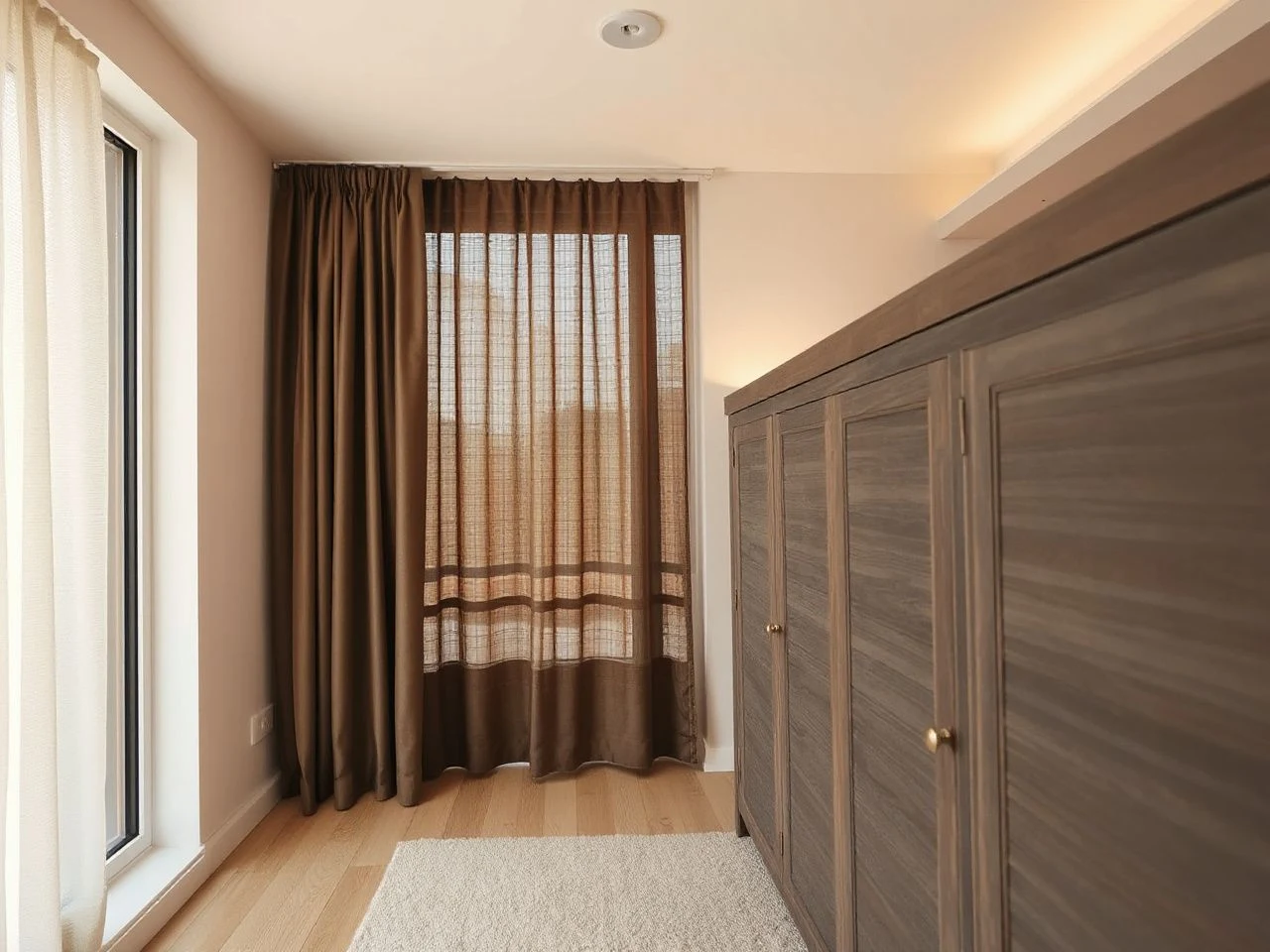
Intermediate: Measure and mount for a renter-friendly result
Step 1: Record the window geometry
Measure the width and height of the glass, the full frame, and the available wall around it. Record the measurements at more than one point because frames can be irregular. Note handles, locks, trim, radiators, nearby shelves, and the position of the sofa. A wide picture window may need separate shade sections, a continuous drapery line, or a combination of panels and shades.
Bay windows need special attention because each section sits on a different plane. A single straight rod may collide with the side returns or leave awkward gaps. Individual shades can follow the geometry more neatly, while drapery may work if the rod system clears the corners and does not force fabric into the glass.
Unusually shaped windows should not be forced into a standard rectangle simply for visual consistency. A treatment can cover the usable portion while leaving a fixed upper section uncovered, or it can use curtains to frame the opening rather than trace every angle.
Step 2: Decide between an inside and outside mount
An inside mount sits within the window frame. It keeps the treatment contained and can preserve trim, but it requires sufficient frame depth and may expose light gaps or irregularities around the glass. Handles and locks can also interfere with the shade or blind.
An outside mount sits on the frame or wall around the opening. It can improve coverage and make a window appear larger, but the treatment must clear trim, handles, radiators, and nearby furniture. For a renter, the key question is not only how the finished window looks; it is also where the brackets can be fixed and how those holes can be repaired later.
Inside mounts reveal the window’s gaps and irregularities, while outside mounts require clearance from trim, handles, radiators, and furniture. That trade-off should be settled before fabric or color enters the decision.
Step 3: Choose reversible hardware carefully
Check the lease before drilling. If drilling is allowed, use the smallest suitable fasteners and keep the original hardware in a labeled bag. If drilling is restricted, consider tension-based options only where the window and treatment design genuinely support them. Adhesive hooks can fail under the pull of heavy fabric, repeated operation, or heat, and a failed mount can damage paint more severely than a small, deliberate screw hole.
Removable adhesive should never be treated as a universal solution. Follow the product’s stated surface and load limits, clean the wall as directed, and remove the strip according to its instructions rather than pulling the bracket outward. A renter-first installation is one that can be reversed slowly, with the wall protected during removal.
Step 4: Check visual fullness and alignment
Curtains often look uneven because the rod is not level, the panels are not the same length, or the fabric has not been arranged consistently. A rod that is too narrow leaves the panels covering the glass even when they are open, reducing daylight and making the window look smaller. A rod that is too low can make the room feel compressed.
Use a level for the rod and check the finished hem against the floor or sill from several positions in the room. Let fabric relax according to its care instructions before making final judgments. If the treatment is lined, the face fabric and lining may hang differently, so a careful arrangement matters more than a quick installation.
A level rod and evenly arranged fabric are essential for curtains that close fully and hang with a balanced appearance. Fullness is a visual function as well as a fabric quantity: sparse panels can make a broad window look unfinished, while excessive fabric can crowd a narrow room.
Step 5: Plan around heat and electrical components
Keep curtains and shades clear of heat sources, electrical components, and cooking areas. Radiators can affect both clearance and fabric care, while electrical components should remain accessible and unobstructed.
Window insulation, drafts, and low-emissivity glazing can change how much work the treatment must do. A shade may manage glare while the window itself handles much of the heat control. Avoid using a curtain to conceal a radiator or block an air path simply because the fabric looks better there.
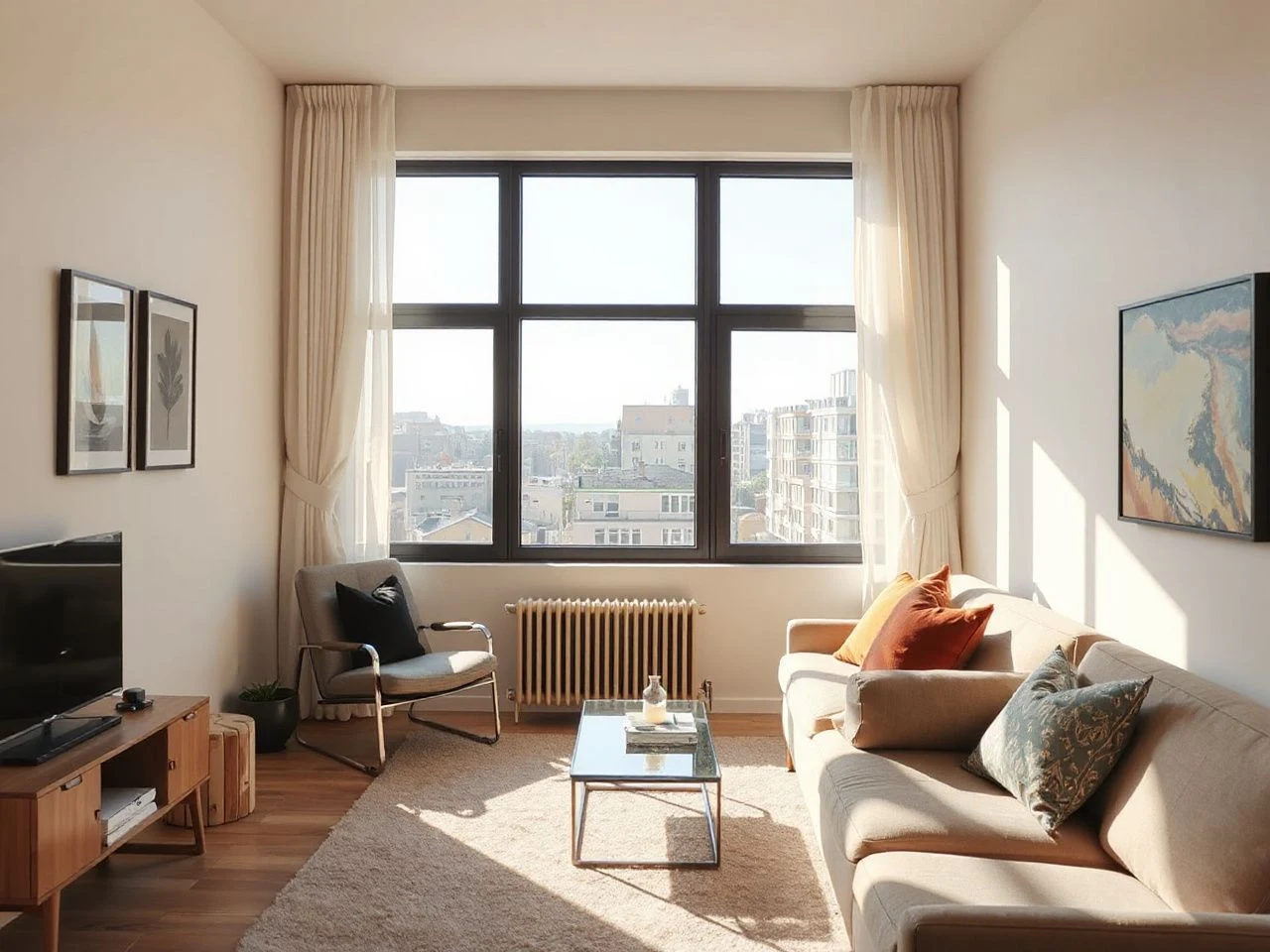
Advanced: Solve difficult light, privacy, and safety problems
Strong afternoon sun
Strong afternoon sun calls for a layered plan rather than a darker color chosen by eye. Solar screen fabric can reduce glare and solar heat while retaining some outward visibility. Add curtains for nighttime privacy and for periods when direct sunlight is uncomfortable. A light-filtering shade may be enough in a room where preserving brightness matters more than deep dimming.
Sun exposure can fade upholstery, flooring, and artwork even when glare is reduced. Rotate vulnerable furnishings where possible, use a lining suited to the desired light level, and avoid assuming that a dark fabric automatically provides better protection. The listing or care label should state the fabric’s light-control category; if it does not, the claim should not be guessed.
Wide windows and picture windows
Wide windows put extra emphasis on weight, operating access, and visual scale. A large expanse of curtain may provide softness, but a renter should confirm that the rod support points can be installed without striking hidden services or damaging delicate trim. Separate roller shades or cellular shades can divide the opening into manageable sections, though the seams may remain visible.
For a picture window, outside-mounted curtains can frame the opening and preserve the view when open. A shade inside the frame can control glare without covering the surrounding wall. The right solution depends on whether the window’s main problem is heat, privacy, glare, or an awkward proportion.
Bay windows and unusual shapes
Bay windows reward a section-by-section plan. Cellular shades can follow separate panes and add an insulating layer at each opening. Woven wood shades bring texture but should be checked for operating space and frame depth. Curtains can soften the outer edge of the bay, but a single rod may not follow the angles cleanly.
Arched, angled, or tall windows may need a fixed treatment on the unusual portion and an operable treatment below. Avoid covering a feature simply to make every window in the room identical. Consistency can come from the fabric, color, or headrail rather than from forcing the same operating style onto different geometry.
Child and pet safety
Corded window coverings can create strangulation hazards for young children and pets. The U.S.
Favor cordless designs or controls positioned out of reach, and keep beds, cribs, climbing furniture, and pet access away from operating cords. Motorization can remove an exposed operating cord, but it does not remove the need to secure loose wires, keep controls inaccessible where appropriate, or follow the installation instructions.
Cordless or inaccessible controls are the safer direction for living rooms used by young children and pets. Safety should be settled before visual coordination because a beautiful treatment is a poor choice if its operating hardware creates a foreseeable hazard.
Cleaning and maintenance
Fabric curtains should be cleaned according to their care label. Do not assume that lining, pleats, interlining, or a delicate finish can tolerate the same method as an unlined panel. Regular low-force dust removal can prevent buildup, but avoid aggressive scrubbing that may distort folds or pull at the header.
Woven shades need gentle dusting or a soft brush attachment used without pressing into the weave. Moisture can affect natural-looking materials, so spot-clean only when the care instructions allow it. Wood blinds should be dusted carefully and kept away from excess moisture; a damp cloth is not automatically suitable for every finish.
Roller shades and cellular shades also need care instructions checked before cleaning. A vacuum attachment can be useful only at a low setting and with a clean, soft brush. Do not bend cellular cells, soak fabric, or pull on the operating edge while cleaning.
Cleaning instructions matter because fabric, lining, woven material, and wood finishes do not share the same moisture tolerance. In a rental, replaceable dusting tools and gentle care are preferable to a treatment that needs frequent specialist handling or becomes damaged after one incorrect wash.
Long-term replacement and maintenance
Maintenance cost is shaped by the treatment’s complexity, not only by its initial material. A simple roller shade has fewer fabric layers to arrange, while lined drapery may need more careful cleaning and storage. Woven materials can require gentler care, and slatted blinds can demand attention to individual surfaces and operating components.
Replacement is also affected by window geometry. A standard-sized treatment may be easier to move to another room or home, while a custom-shaped bay or unusually wide opening can be tied closely to the current rental. I favor treatments that can be removed intact, labeled by window, and stored without crushing or bending their operating parts.
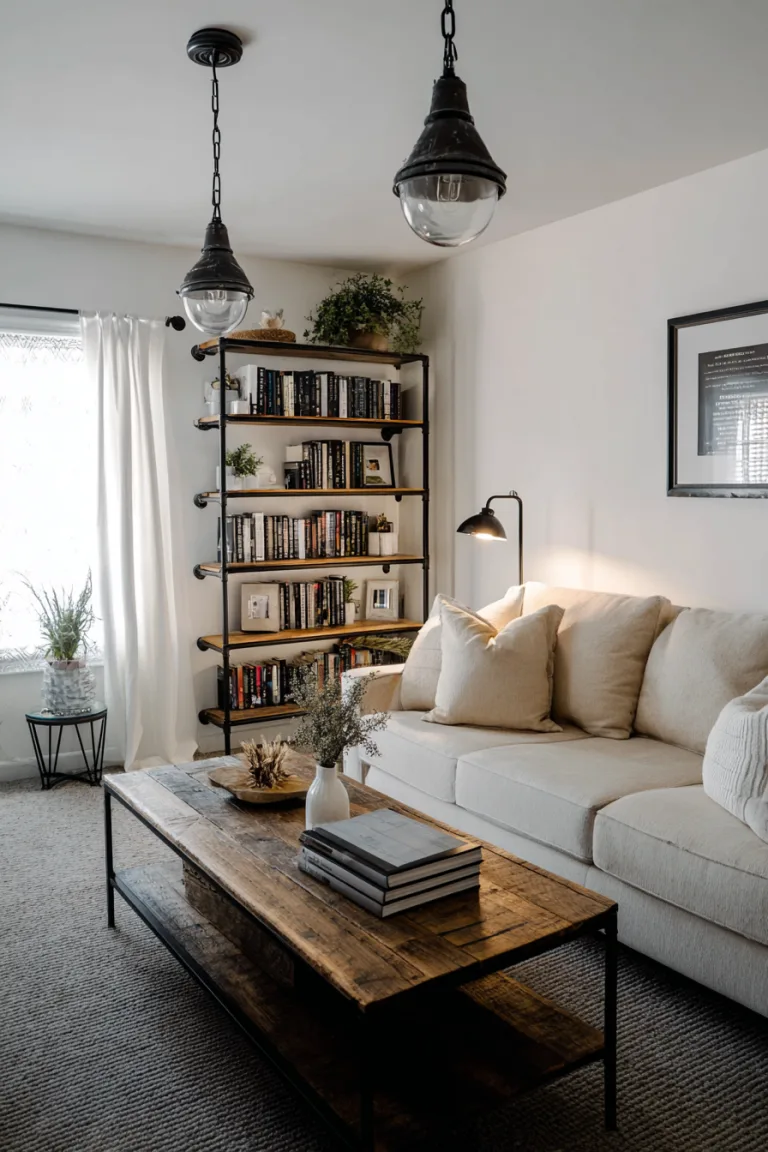
For a room with a quiet sofa and textured rug, a simple shade can keep maintenance modest. In a more formal room, pinch-pleat draperies may justify their care needs because the fabric supplies much of the room’s character. The choice should be deliberate rather than driven by a photograph.
Preventive measures for a room that still looks right later
Make light control part of the lighting plan
Living-room lighting and window treatments work together. A sheer or light-filtering layer can preserve daytime brightness, while a second layer controls glare during television viewing or late afternoon sun. Avoid selecting the treatment under showroom lighting alone; inspect the fabric near the window at different times of day if the home allows.
Dark rooms do not always need brighter curtains. A pale room-darkening lining, a solar screen shade, or a partially open woven shade may control the problem without making the window feel heavy. The room’s wall color, floor tone, and existing furnishings all affect how much visual darkness the treatment introduces.
Keep the installation removable
Before mounting, photograph the original window and trim. Save existing screws, brackets, caps, and hardware in a labeled container. Use painter’s tape to mark bracket positions, but do not treat tape as a structural support. At move-out, remove the treatment slowly, fill permitted holes with the appropriate repair material, and follow the lease’s instructions for touch-up paint.
Do not mount into trim simply because it is convenient unless the lease and the trim condition permit it. A cleanly removed wall bracket is easier to repair than split molding or chipped finish. Renter-first decorating means accepting a slightly less ambitious treatment if it protects the security deposit.
Prevent uneven curtains and incomplete coverage
Use the same reference point for every measurement. Record whether a measurement describes the glass, the frame, or the wall opening. Mark the left and right panels separately if the window is not centered in the wall. A treatment that is technically the right size can still look wrong if it is centered on the glass while the furniture is centered elsewhere.
Allow the curtain rod, shade cassette, or blind headrail to clear handles and locks. Check that the opened fabric does not block the glass more than intended. For a sofa near a window, leave enough operating space for the treatment rather than pressing furniture against the fabric.
Most living-room window mistakes begin with measuring the glass while ignoring the frame, hardware, wall, furniture, and radiator around it. A complete measurement record prevents more errors than a late decorative adjustment.
Use style as the final filter
Modern window treatments for a living room often rely on clean roller shades, restrained Roman shades, or simple panels. Modern farmhouse rooms can accept woven texture and relaxed fabric, while a more traditional room may support pinch pleats or wood blinds. These modern farmhouse living-room ideas show how texture can be coordinated without making every surface match.
Earth tones can make woven shades and natural-looking fabrics feel connected to the rest of the room, but color should still be tested against the actual daylight. For broader style direction, the guide to living-room styles in 2026 can help narrow the visual language before mounting hardware is selected.
My own rule is simple: choose the least permanent treatment that solves the real problem. A removable, correctly sized shade with a second fabric layer is often more successful than an elaborate installation that looks impressive but creates wall damage, poor privacy, or difficult maintenance.
Frequently Asked Questions
How do I choose between curtains, shades, and blinds for a living room?
Choose curtains for softness, height, and flexible side coverage; choose shades for a compact profile and direct light control; choose blinds when adjustable slats and a more structured surface suit the room. Cellular shades add an insulating layer, Roman shades add folds, and roller shades keep the window visually quiet. Start with glare, privacy, window geometry, and mounting limits before choosing a style.
Which window treatment gives privacy without making the room feel dark?
Light-filtering shades, sheers, or solar screen fabric can preserve daytime brightness while reducing views into the room. Solar screen fabric generally preserves some outward visibility and limits glare, but it does not provide full nighttime privacy. Add curtains or another privacy layer for evening use. Room-darkening lining is suitable when glare needs stronger control without automatically choosing full blackout coverage.
Are blackout curtains necessary in a living room?
No. Blackout curtains make sense when a living room doubles as a sleeping space, contains sensitive artwork, or needs very strong light control. Room-darkening lining is often enough for television glare and late-day brightness. Remember that blackout performance depends on the fabric and on gaps at the sides, top, and bottom, so the mounting design matters as much as the label.
What works best for a wide, bay, or unusually shaped window?
Wide windows may suit separate shades, continuous drapery, or a combination of both, depending on operating access and support points. Bay windows usually benefit from treatments planned for each pane or from a rod system that follows the angles. Unusual windows can use a fixed treatment on the irregular section and an operable treatment below. Do not force every opening into one rectangular solution.
Are cordless or motorized window treatments safer around children and pets?
Cordless or inaccessible controls address the exposed-cord hazard associated with corded window coverings. Current guidance from the U.S. Motorization still requires safe wire placement and suitable control storage. Keep furniture away from operating areas so children and pets cannot climb toward controls.
Living-room treatments should earn their place through function, proportion, and reversibility. A renter does not need to accept bare glass, glare, or poor privacy simply to protect the walls. Measure the whole setting, select the light-control level honestly, mount with the frame and furniture in mind, and choose a treatment that can leave the home as cleanly as it arrived.