Modern farmhouse living rooms work when they don’t try to be either style at full strength. The finishes lean rustic — reclaimed wood, aged leather, natural fiber — but the layout, hardware, and color choices stay clean and current: matte black metal, straight lines, and a neutral palette that doesn’t get busy. Miss that balance and a room slides into either a themed cabin or a plain builder-grade box with a barn door bolted onto it.
The 15 ideas below are grouped by the elements that actually carry the look — wall treatments, furniture pairings, hardware, and layering — along with the practical details (spacing, sizing, budget-friendly swaps, and common mistakes) that decide whether an idea holds up in a real room rather than just in a photo.
1. Shiplap Accent Walls with Contemporary Furniture
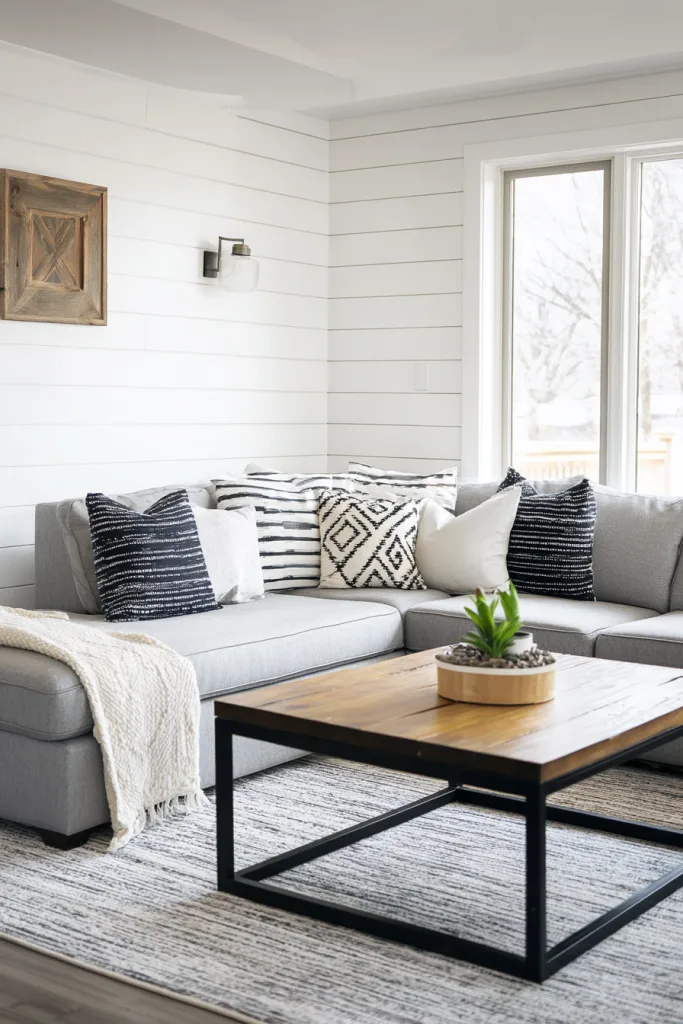
Real shiplap is a tongue-and-groove board, usually 5 to 8 inches wide, installed horizontally with a visible routed groove or slight overlap between boards that creates the shadow-line look the style is known for. Most builds today use pre-primed MDF or engineered plank instead of real lumber — it costs less, won’t split or show knots, and takes paint evenly. Keep the boards white or a soft warm white rather than stained wood, which reads more traditional-farmhouse than modern. Reserve shiplap for a single wall; running it around the whole room pushes the look toward a cabin rather than a living room. Pair the wall with a low-profile sofa or sectional in charcoal, navy, or another saturated solid, plus a coffee table with straight metal legs — the contrast in texture is what keeps the pairing from looking like two different rooms glued together.
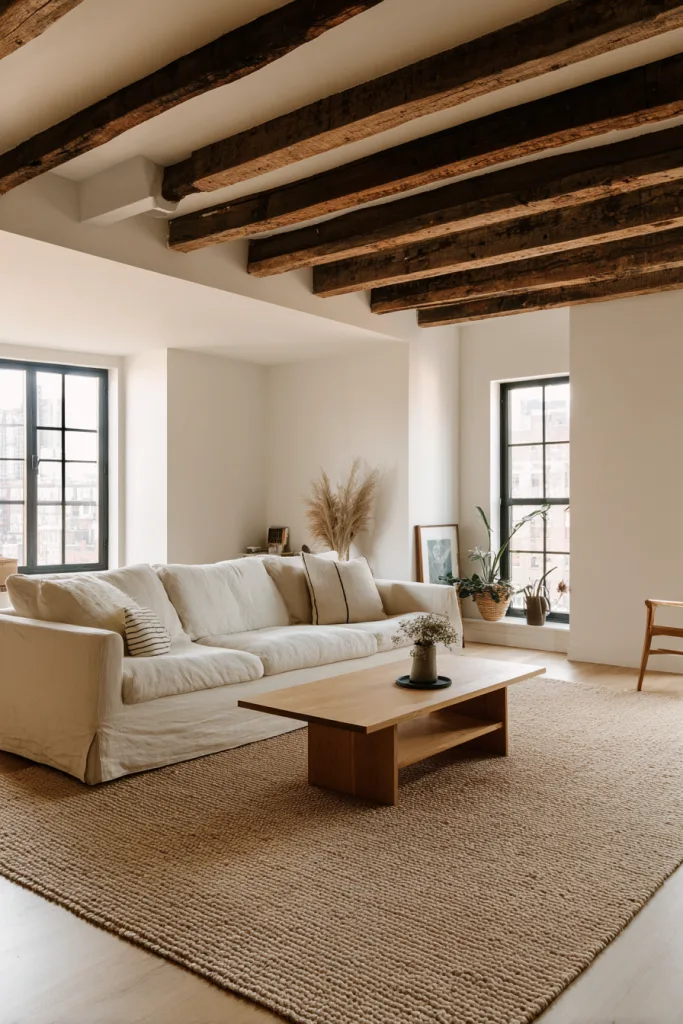
2. Exposed Wooden Beams with Minimalist Decor
Ceiling beams read as either structural or decorative, and it matters which one you’re getting: a true structural beam is load-bearing and part of the original framing, while a decorative beam is added afterward purely for the look. Real reclaimed wood beams are heavy — often a few hundred pounds each — and typically need a structural engineer to confirm the ceiling can carry that weight, plus a crew to install them. Faux beams made from lightweight polyurethane solve both problems: they install with adhesive and screws into blocking, weigh a fraction of solid timber, and are close to indistinguishable from real wood once stained or painted. Either way, keep everything under the beams simple — white or cream walls, furniture with plain silhouettes, and only a few accessories — so the ceiling stays the focal point instead of competing with a busy room below it.
3. Vintage Leather Furniture with Modern Lighting
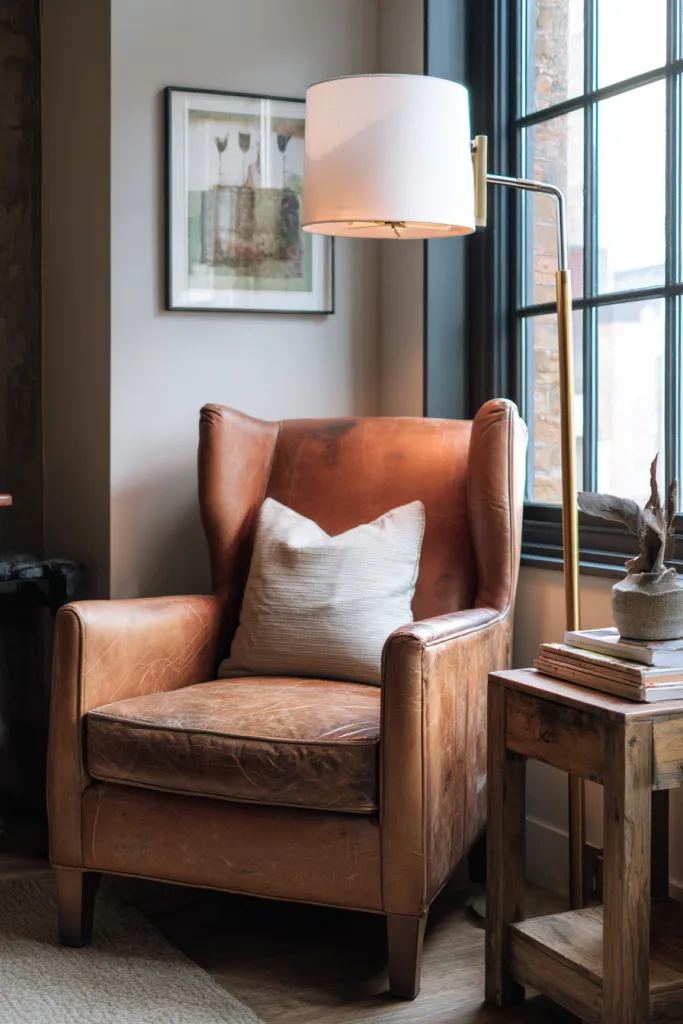
Aged or distressed leather — full-grain or top-grain aniline leather takes on a genuine patina rather than just scuffing — pairs well with lighting that’s unmistakably current: a geometric black pendant, a brass-accented floor lamp, or a sculptural table lamp. That material contrast is what sells the pairing, so avoid ornate or claw-foot leather frames, which pull the vignette toward traditional rather than modern farmhouse. Leather costs more upfront than a comparable fabric sofa, but it wears in rather than out — scuffs and creases become part of the character instead of damage — which makes it a reasonable long-term buy for a heavily used room. Soften the leather’s weight with a linen or wool throw in a neutral tone, and keep the lighting fixtures matte black or brass rather than chrome, which skews the vignette industrial-modern instead of farmhouse.
4. Neutral Color Palettes with Natural Textures
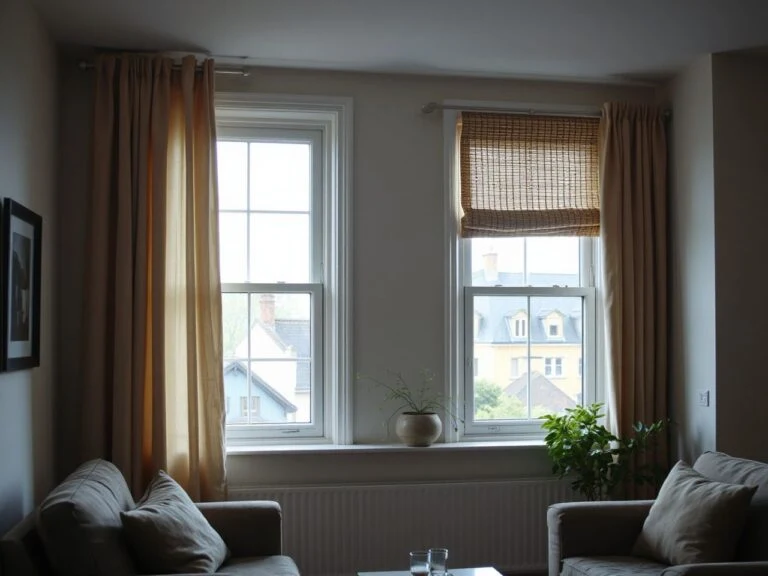
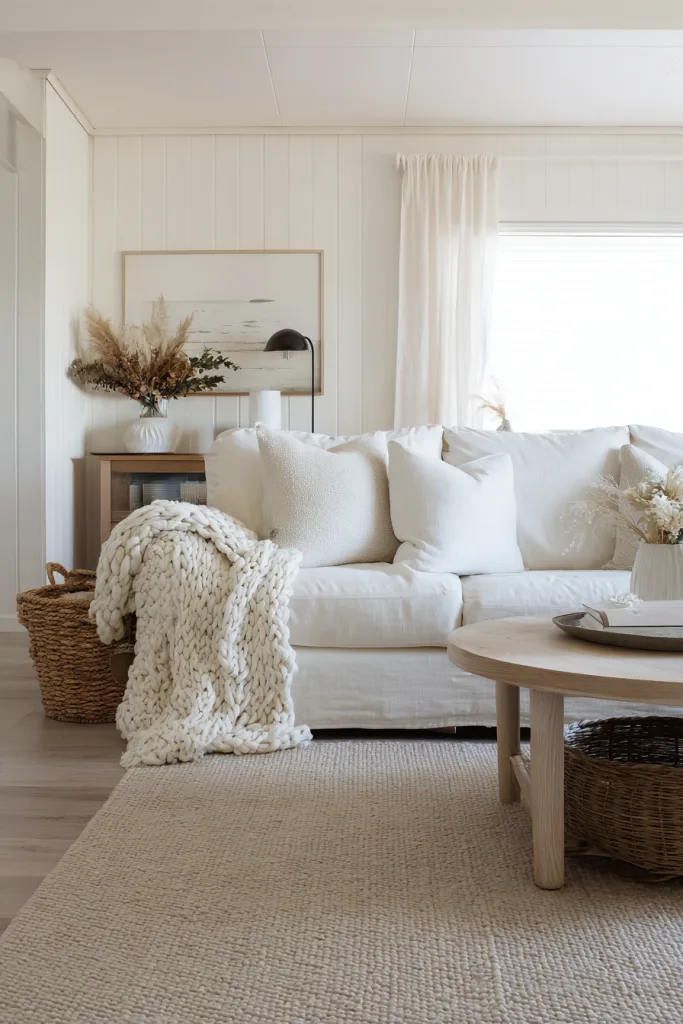
Build the palette from three or four neutrals — white, cream, greige, and a warm gray — rather than a single flat white, so the room has tonal depth before any furniture goes in. Layer texture on top of that base: a jute or sisal rug, linen curtains, a woven basket for storage, and at least one chunky knit throw. Natural-fiber rugs are inexpensive relative to wool but shed fibers for the first few weeks and aren’t as soft underfoot, which is exactly why many people layer a smaller, softer rug on top in the seating area. The combination that reads most “modern farmhouse” is smooth against rough — a painted coffee table next to a nubby wool throw, or a smooth ceramic lamp base on a rough-hewn wood console — rather than an all-smooth or all-rustic room.
5. Barn Doors as Room Dividers
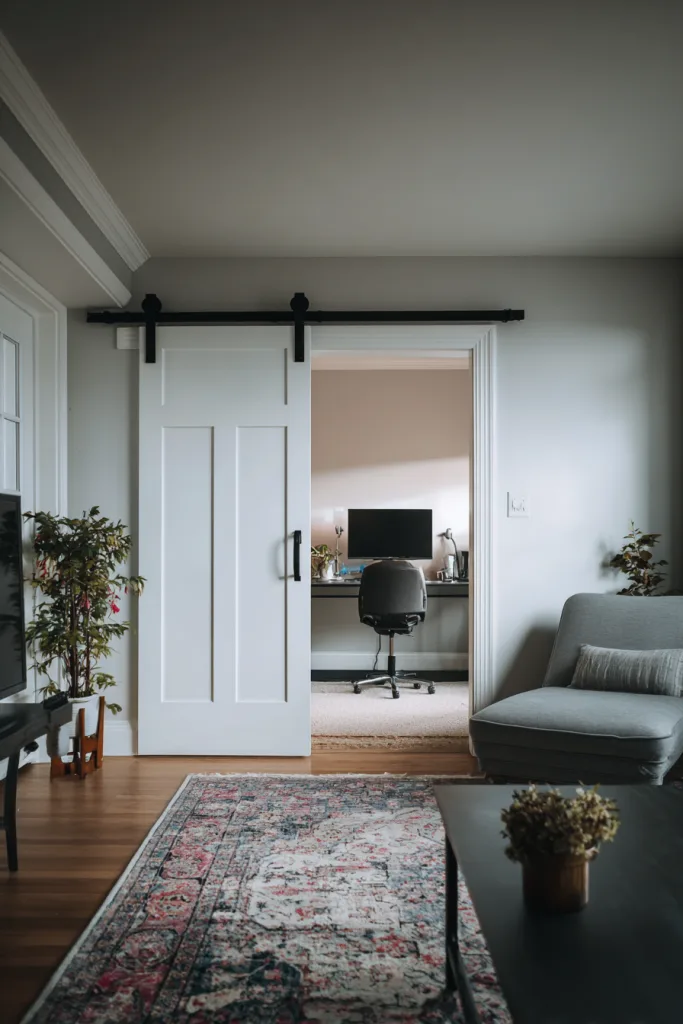
A sliding barn door needs a track roughly twice the width of the door opening, since the door has to slide fully clear of the opening — measure that wall space before committing to the idea. Standard interior slab doors run 24 to 36 inches wide, and a heavier reclaimed-wood door needs a higher weight-rated track and rollers than a standard hollow-core door, so check the hardware’s rated capacity rather than assuming one track fits every door. Hollow-core doors often need a solid-wood reinforcing strip added where the hardware mounts, since the mounting screws otherwise have nothing solid to bite into. Choose a distressed or whitewashed finish for a softer look, or a flat black door for a bolder statement. Either way, black metal rail and hardware is the detail that ties a barn door into a modern farmhouse room — bright chrome or brass reads more traditional.
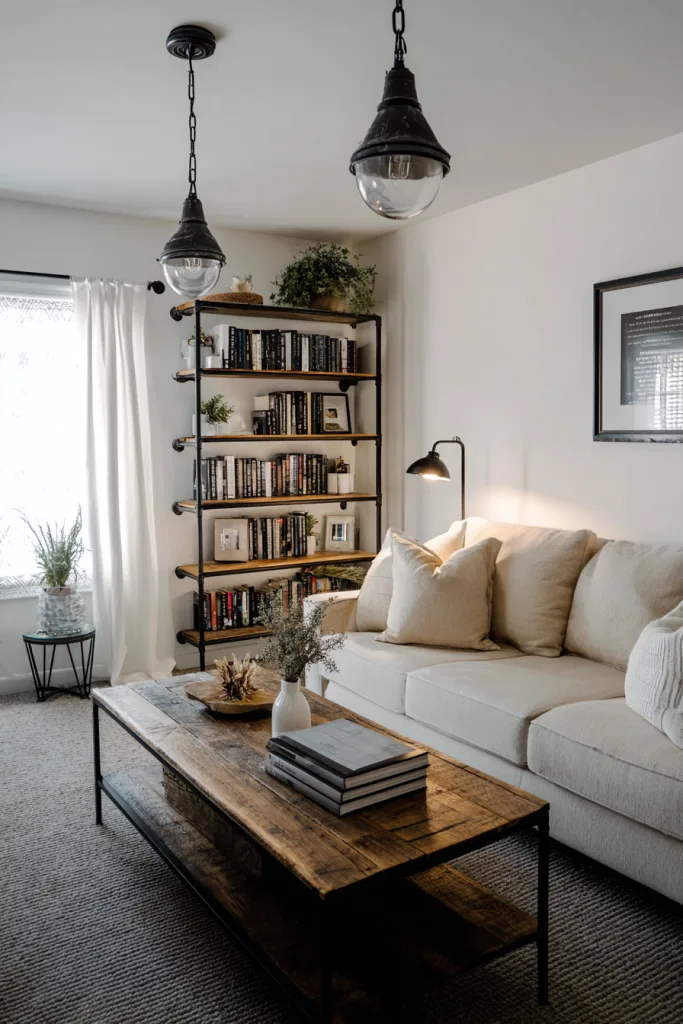
6. Industrial Elements with Rustic Wood
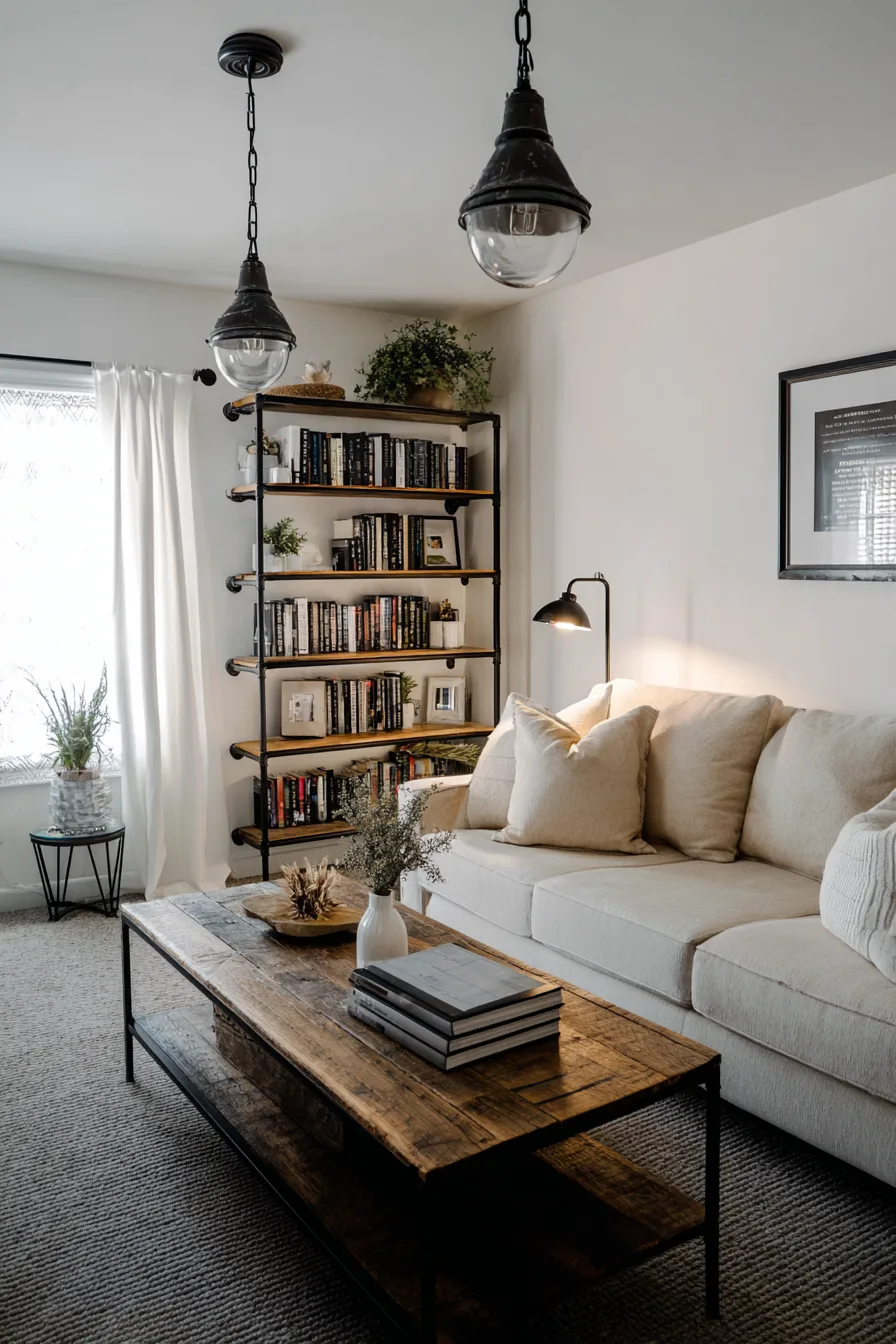
Metal-and-wood pairings work best when one material clearly leads: black pipe shelving or a factory-style pendant light paired with a single reclaimed or live-edge wood surface, rather than mixing several metal finishes and several wood tones in the same view. Pipe shelving is genuinely load-bearing when installed into wall studs, but a common installation mistake is anchoring only into drywall — for anything heavier than paperbacks and small decor, locate studs or use rated anchors instead. Keep the metal finish consistent, matte black or dark bronze, so it reads as one material family, and let the wood carry the warmth through a single reclaimed beam mantel, a live-edge shelf, or a wood coffee table. This pairing works especially well in open-concept spaces where the living room needs to visually connect to an adjacent kitchen or dining area without repeating the exact same materials.
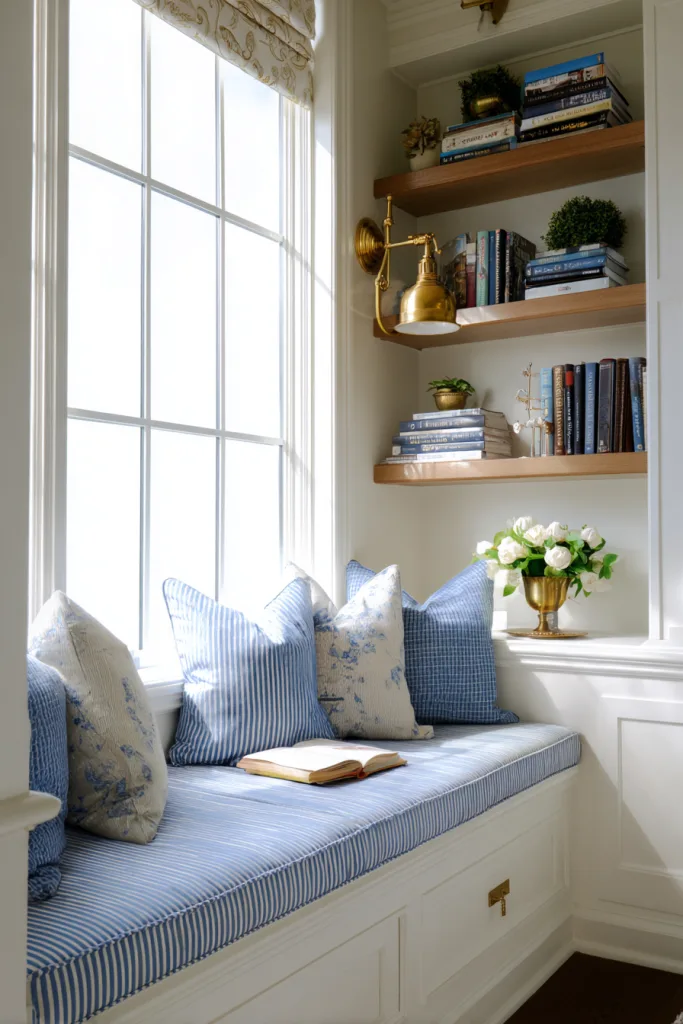
7. Cozy Reading Nooks with Built-In Storage
A comfortable window seat cushion is typically 18 to 20 inches deep, deeper if you want to pull your legs up onto it, and sits at a standard seat height of about 17 to 19 inches — roughly matching a dining or accent chair. Build the storage underneath with hinged lids or pull-out drawers: hinged lids are cheaper and simpler to build, while drawers are easier to access if the seat gets used often. Use a bead-board or painted-panel front to match the room’s millwork rather than exposed plywood, which reads unfinished. Add a bolster or a full-depth cushion rather than a thin pad; anything under about 3 inches will compress and feel like sitting on a bare bench. This is one of the most efficient ways to add real seating and storage to a small living room without adding floor-standing furniture.
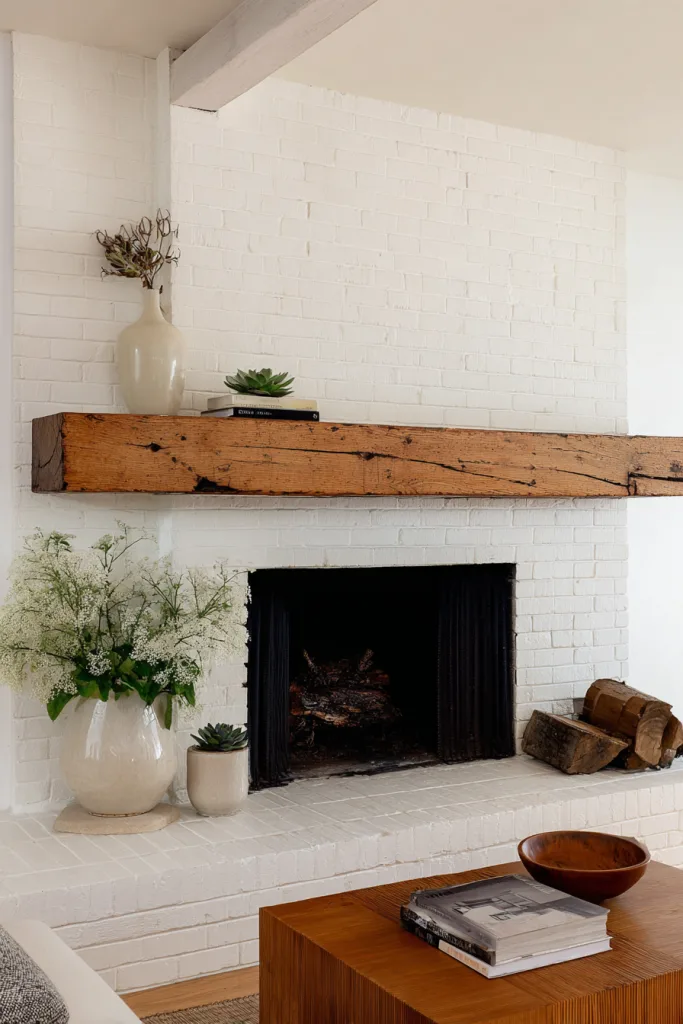
8. Statement Fireplaces with Modern Mantels
Local building codes set a minimum clearance between a wood mantel and the firebox opening below it, and the exact distance depends on how far the mantel projects from the wall — a deeper mantel needs more vertical clearance. Check with a fireplace installer or your local code office before finalizing the height rather than copying a photo’s proportions exactly, since it also depends on your firebox and fuel type. Once the height is set, keep the mantel simple: a single thick wood slab in a weathered or painted finish reads more modern-farmhouse than a carved traditional profile. Surround the firebox in shiplap, stacked-stone veneer, or large-format tile for texture, and style the mantel with two or three objects at varied heights rather than a matched, symmetrical pair — asymmetry is what keeps it from looking like a hotel lobby display.
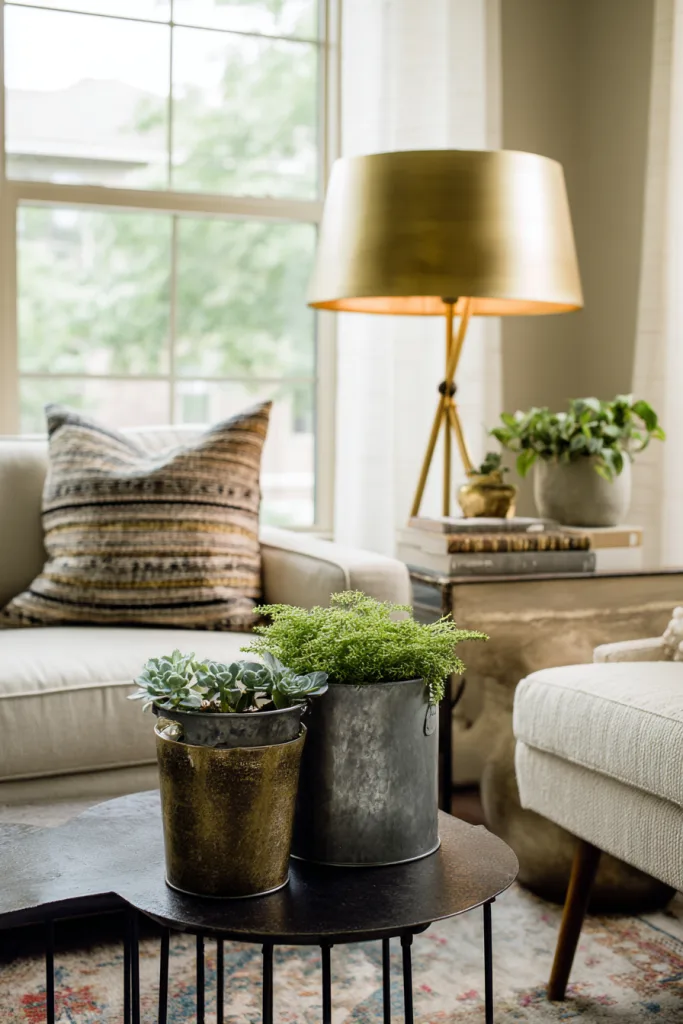
9. Mixed Metal Finishes for Visual Interest
Matte black is the defining hardware finish in modern farmhouse rooms — on window frames, door hardware, light fixtures, and drawer pulls — and it reads noticeably more contemporary than the warm, all-brass or all-oil-rubbed-bronze hardware used in traditional farmhouse interiors. Add a second metal, usually warm brass or copper, in a smaller dose: a lighting fixture, a few drawer pulls, or a mirror frame. Two metal finishes is a safe rule of thumb, three at most if the third is used very sparingly (a single galvanized planter, for example); beyond that a room starts to look unplanned rather than intentionally layered. Matching every metal finish to a single one is the opposite mistake — an all-brass or all-black room loses the depth that mixing metals is meant to create.
10. Vintage Textiles and Modern Patterns
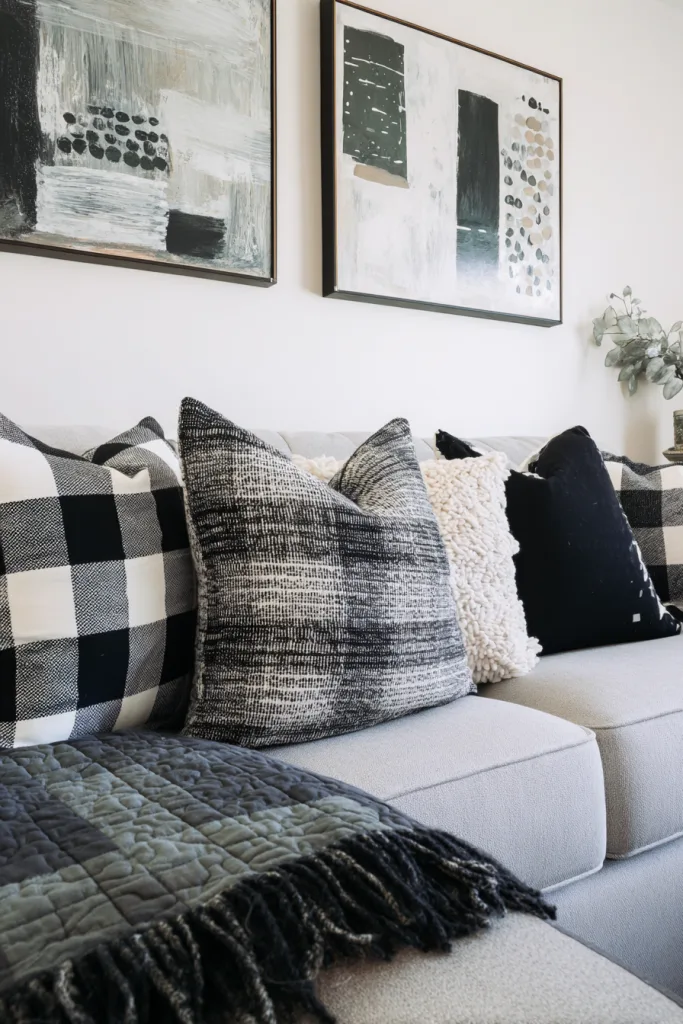
Classic farmhouse patterns — gingham, ticking stripe, and buffalo check — mix well with a single modern geometric pattern as long as they share a color family; put them all on a cream-and-charcoal palette, for example, rather than introducing a third, unrelated color scheme. Use the vintage pattern in smaller doses, like a folded quilt as a throw or a couple of pillow covers, and let one larger modern piece, such as an abstract print or a solid-color rug, anchor the room. A genuinely old quilt is a nice detail but can be fragile for daily use as a throw; a reproduction or a newer quilt in a similar pattern holds up better to regular handling and washing. The goal is a room that looks gathered over time rather than matched from a single collection, so resist buying a coordinated bedding-and-curtain set in the same print.
11. Natural Wood Coffee Tables with Modern Legs
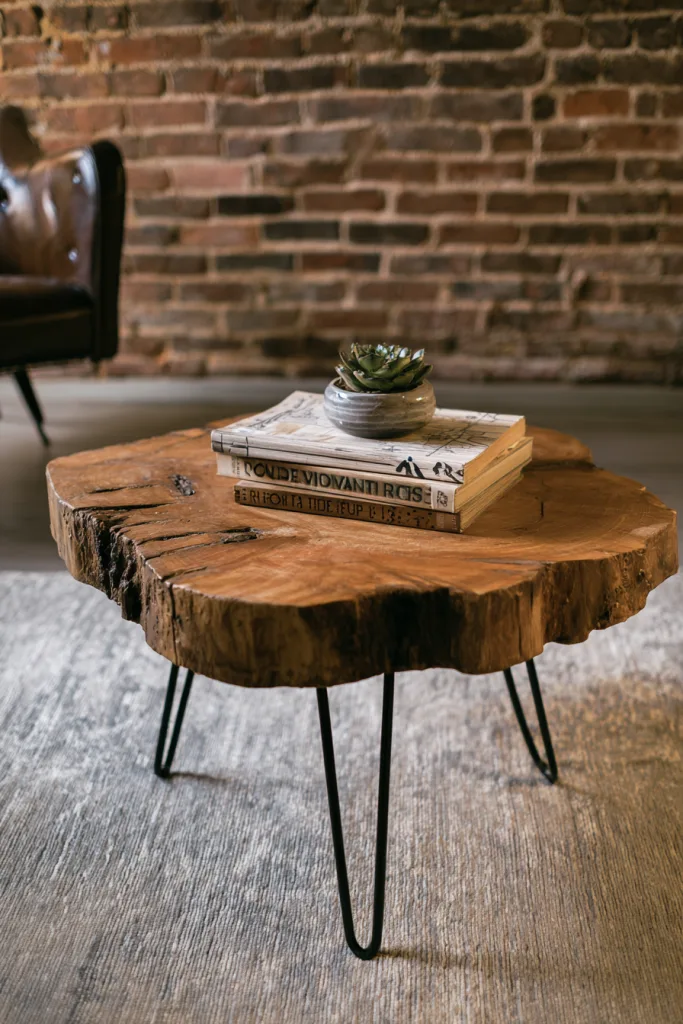
A coffee table’s standard height is 16 to 18 inches — roughly level with or slightly below the seat cushions around it — and hairpin legs, the classic pairing for this look, are typically sold in exactly that height range. Look for a solid wood or reclaimed-wood top rather than a wood-veneer top if the table will see regular use; veneer chips and shows wear at the edges faster than solid wood does. Three-legged hairpin bases cost less but are less stable than four-legged versions, which matters more for a large or heavy tabletop like a live-edge slab. Pair the wood top with black or raw-steel legs rather than chrome, which pulls the piece toward mid-century modern instead of farmhouse. Style it with a stack of books, a low ceramic bowl or candle, and a small plant — leave at least a third of the surface empty so the table still functions as a table.
12. Gallery Walls with Farmhouse Art
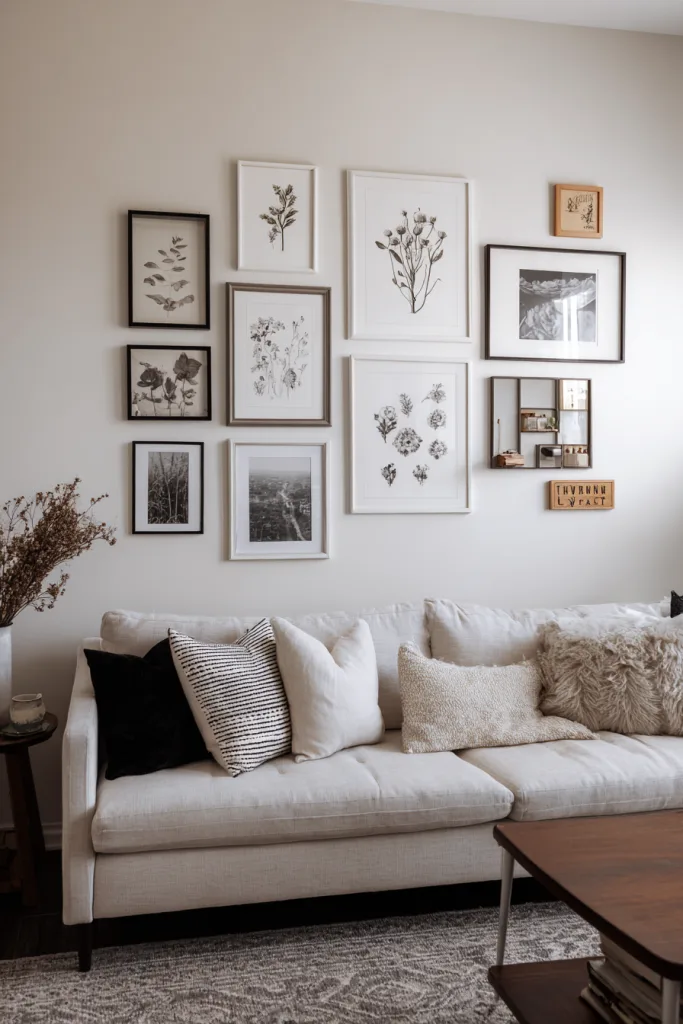
Hang the center of each frame, or the visual center of the whole arrangement, at roughly 57 to 60 inches from the floor — the standard eye-level height used in galleries and homes alike — and leave 2 to 3 inches between frames so the grouping reads as one composition instead of a cluttered wall. Mix frame sizes but keep the frame color or material consistent, all black, all white, or all natural wood, since that’s what visually unifies a mismatched set of prints, photos, and objects. Lay the arrangement out on the floor first, or tape paper templates to the wall, before drilling any holes; it’s the only reliable way to catch an off-balance layout before it’s permanent. Include one or two three-dimensional pieces, like a small wood sign or a set of metal letters, to keep the wall from looking like a flat print shop.
13. Layered Area Rugs for Texture and Warmth
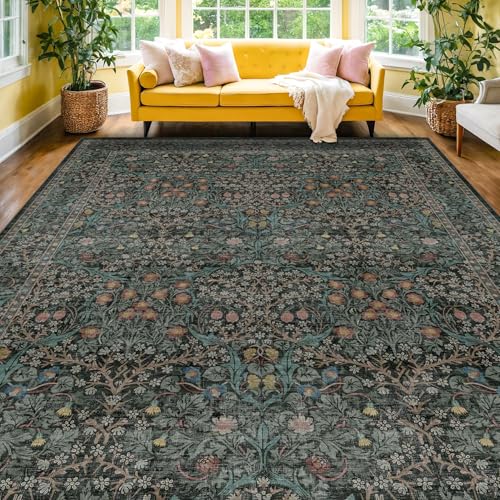
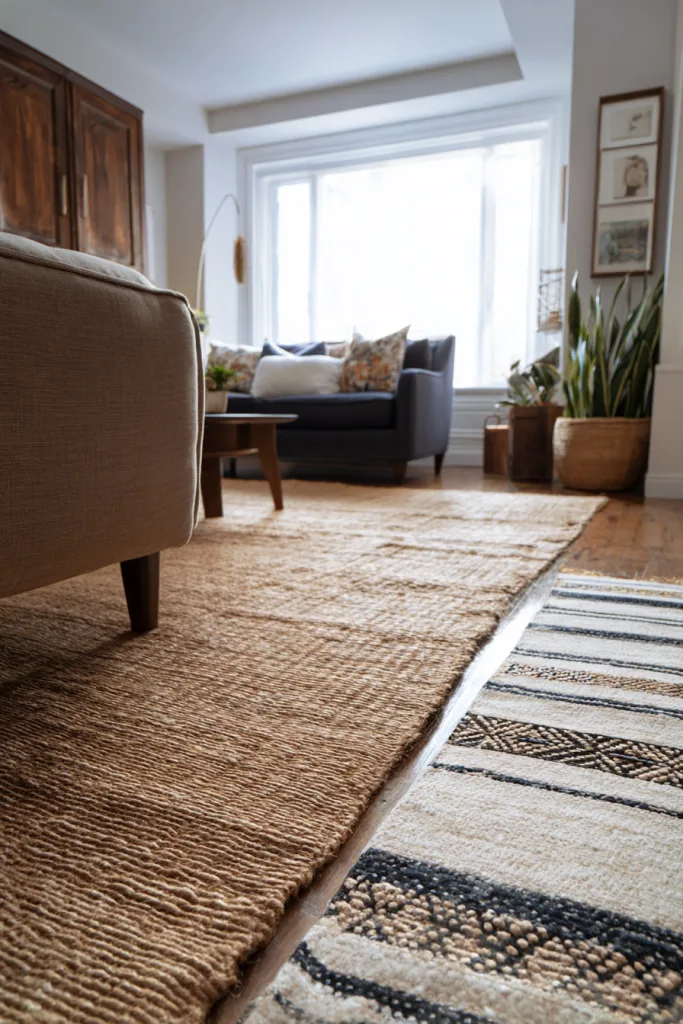
Start with a large jute or sisal rug sized for the room — as a rule of thumb, the front legs of your main seating pieces should land on the rug, not off its edge, or the arrangement looks disconnected from the floor. Layer a smaller printed or patterned rug on top, offset or centered, to add color without covering the whole floor in pattern. Jute and sisal are inexpensive and durable but rough underfoot, which is exactly why a softer rug layered on top earns its place in the seating area. This is also one of the more budget-flexible ideas on this list: the base rug is a one-time cost, and the top layer can be swapped seasonally or whenever you want to refresh the room’s palette without touching the furniture.
14. Open Shelving with Curated Displays
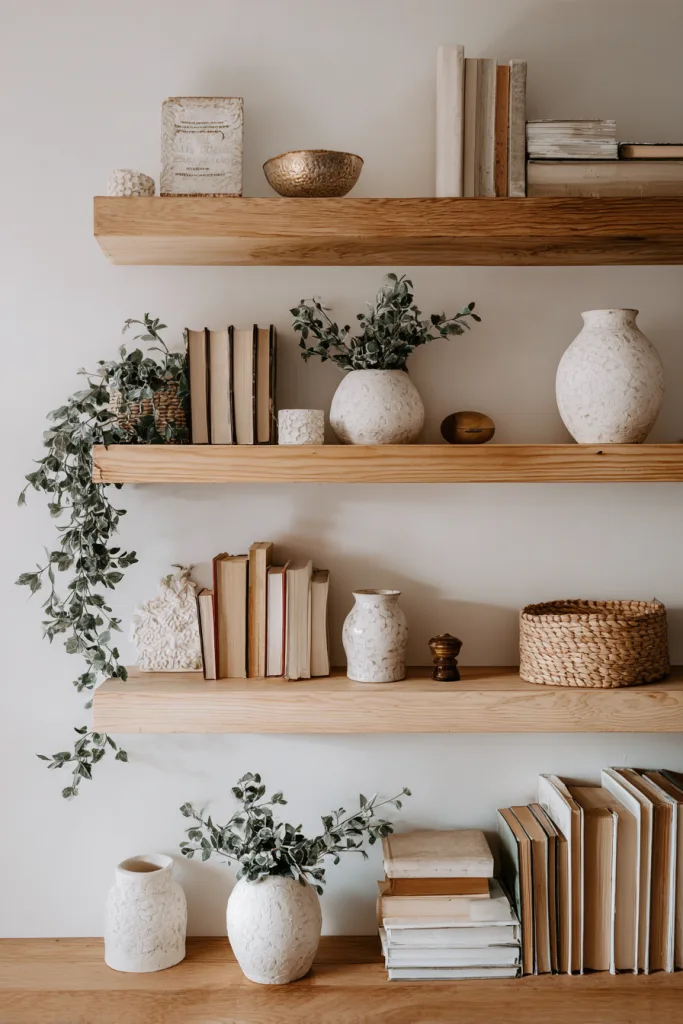
Group objects in odd numbers — three tends to look more intentional than two or four — and vary height within each grouping so the eye moves rather than lands flat. Mix at least one functional item, like books or a stack of bowls, with decorative pieces so the shelf earns its keep rather than reading as a display case. A standard floating shelf, if it isn’t supported by a bracket at both ends, tends to sag under real weight once it spans more than about 30 to 36 inches; for a longer run, add a discreet center bracket or accept a shorter shelf. Leave visible breathing room between groupings rather than filling every inch — a shelf packed edge to edge reads cluttered no matter how nice the individual objects are. White-painted shelves recede into the wall and let the objects be the focus; natural wood shelves add their own visual weight to the arrangement.
15. Comfortable Seating with Farmhouse Fabrics
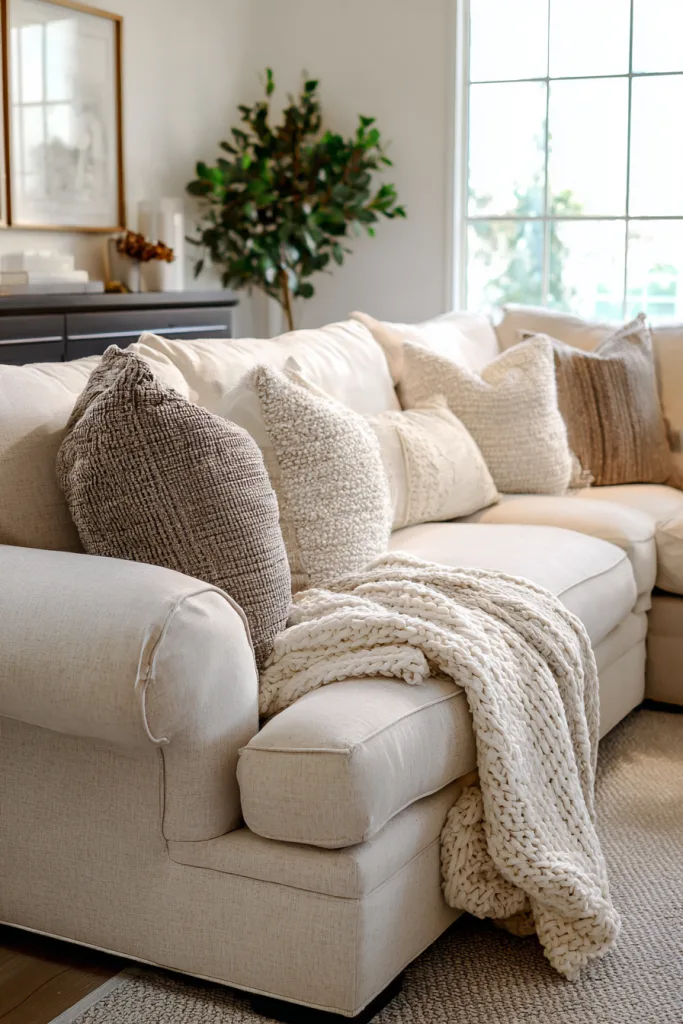
For upholstery that holds up to daily use, look for a durability rating of at least 15,000 double rubs on the fabric’s Wyzenbeek abrasion test — most furniture retailers list this figure on the product spec sheet, and it’s a reasonable way to compare two similar-looking fabrics rather than judging by feel alone. Linen and cotton canvas are the classic farmhouse choices, but a linen blend with some synthetic fiber content resists wrinkling and staining better than pure linen while keeping the same look. Stick to a neutral base color for the largest pieces, like the sofa or sectional, and add pattern through pillows and throws, which are far cheaper to replace than reupholstering a couch when your taste shifts. A performance fabric, treated or woven to resist stains and moisture, is worth the small upcharge in a household with kids or pets, since it holds up to spills without a slipcover.
Bringing It Together
Few real living rooms use all fifteen of these ideas at once, and that’s fine — the modern farmhouse look works better as a handful of well-executed choices than as a checklist. Start with whichever structural element is hardest to change later, such as a beam, a shiplap wall, or a barn door opening, and build the furniture, textiles, and hardware around it, rather than starting with accessories and hoping the bones fall into place.
The rooms that read as genuinely modern farmhouse, rather than a themed stage set, tend to keep the rustic materials — reclaimed wood, aged leather, natural fiber rugs — to one or two features per room, backed by a clean neutral palette and consistent black metal hardware throughout. That restraint is what separates the look from a costume version of itself.
Frequently Asked Questions
How much does it typically cost to add modern farmhouse elements to a living room?
It depends heavily on which ideas you choose. Paint, textiles, and DIY shiplap or open shelving can refresh a room for roughly $500 to $1,500. A moderate update — professional shiplap installation, a barn door, new furniture — typically runs $2,000 to $5,000. A full renovation with custom built-ins, real reclaimed beams, and high-end furniture can run $5,000 and up. Get a quote from a local contractor before budgeting for anything structural, since regional labor costs vary widely.
Does modern farmhouse style work in a small living room?
Yes — light wall colors, furniture with exposed rather than skirted legs, and vertical shelving all help a small room feel less crowded. Multi-functional pieces, like a storage ottoman or a built-in window seat, add function without adding footprint. The main adjustment for a small space is scale: oversized rustic pieces, like a heavy reclaimed coffee table or a sprawling gallery wall, can overwhelm a small room even if the same piece looks right in a bigger one.
What’s the most common mistake in modern farmhouse decorating?
Overdoing the rustic side of the pairing — shiplap on every wall, reclaimed wood on every surface, and no clean modern element to balance it. That tips a room toward a themed cabin rather than modern farmhouse. The style depends on restraint: a couple of rustic, textural features balanced against clean lines, a neutral palette, and matte black hardware.
How do I keep a modern farmhouse room from feeling dated in a few years?
Put the budget into pieces that are expensive or difficult to change later — a neutral sofa, wood flooring, black window and door hardware — and use inexpensive, easy-to-swap pieces like pillows, throws, and small decor to follow current trends. A cohesive neutral palette ages better than a heavily themed room, since it gives you room to update details without redoing the whole space.