Small bedrooms are moving away from crowded furniture schemes and toward calmer, more deliberate layouts. The key distinction in decorating small bedrooms is between usable floor area and perceived visual space: a room can fit many items on paper yet feel cramped when circulation, sightlines, and visual weight are ignored. Plan the fixed constraints first—door and window swings, heating, outlets, and walking routes—then use consistent colour, vertical storage, and layered lighting to make the remaining space work harder without treating pale paint or mirrors as substitutes for a functional layout.
Key Takeaways
- Plan the route to the door, windows, radiator, wardrobe, and bed before choosing decorative pieces.
- Furniture scale and visual mass matter as much as the number of items in the room.
- Use one considered colour family, vertical storage, and layered LED lighting to reduce visual noise.
- Secure shelves, mirrors, curtains, cables, and tall furniture properly, especially in a rented or shared home.
Beginner: Plan the room before decorating
A small bedroom needs a layout before it needs a style. Start with a simple plan of the room, marking the door swing, window opening, radiator, outlets, fitted storage, and any route needed to reach them. The drawing does not need to be architectural; a sheet of paper or a phone note is enough if the fixed obstacles are accurate.
Place the bed first because the bed determines nearly every remaining decision. A centrally positioned bed on the most prominent wall can create symmetry and allow access from both sides, but that arrangement is only useful if it leaves a clear route to the door and does not obstruct a radiator, window, or wardrobe. In a very narrow room, placing the bed with one long side against a wall may preserve circulation, even though the arrangement is less symmetrical.
Step 1: Mark the non-negotiable routes
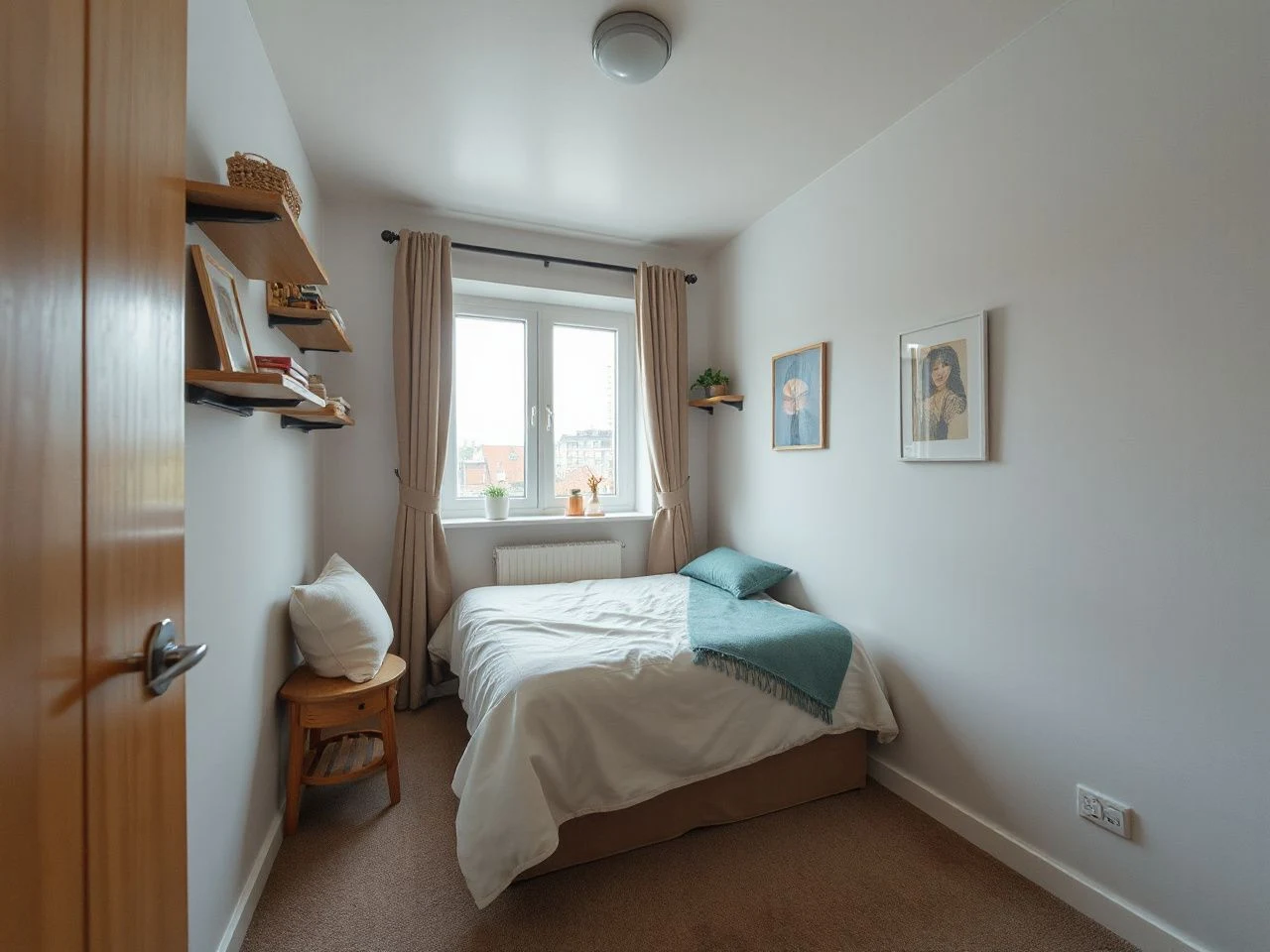
Walk through the room mentally from the entrance. The route to the bed should remain usable, and the door should open without striking furniture. Windows need enough access for opening, cleaning, and ventilation. Radiators should not be boxed in by a bed, deep chest, or heavy curtain arrangement.
A small bedroom still needs a clear route to the door and usable access to windows, wardrobes, radiators, and other essential features.
For a second perspective on circulation, read this guide to common small-bedroom layout mistakes. The useful test is simple: stand at the doorway and look toward the bed. If the first view is a chair back, a tall cabinet, or a tangle of cables, the room will usually feel more crowded than its floor area suggests.
Step 2: Choose furniture by scale, not by category
Furniture count is only part of the problem. A deep dresser, oversized upholstered headboard, or broad bedside table can consume perceived floor area even when the measurements technically fit. Slim legs, open space beneath a piece, and a restrained profile tend to make the floor more visible.
Furniture scale matters as much as furniture count in a small bedroom. A single deep item can make a room feel tighter than several shallow pieces arranged with a clear route between them.
Use the bed as the visual anchor, then question every additional piece. A narrow shelf may handle books, a lamp, and a glass of water without the bulk of a full nightstand. An open hanging rail can replace a large wardrobe where the room allows it, though clothing remains visible and needs regular editing. For very small bedrooms, a large wardrobe and chest of drawers may be less practical than a smaller combination of hanging and folded storage.
Couples sharing a compact room need to agree on access as well as storage. A bed that allows only one person to get in and out can work in a single-occupant room but create daily friction for two adults. If both sides cannot remain accessible, protect the clearer side for the person who needs the most frequent route to the door or storage.
Step 3: Test the layout before fixing anything
Use folded blankets, cardboard boxes, or painter’s tape to mark the footprint of proposed furniture on the floor. Leave the temporary layout in place while carrying laundry, opening drawers, changing bedding, and reaching the window. Those ordinary actions reveal problems that a plan often misses.
Do not fix shelves or wall lights until the bed, bedside position, and curtain movement are settled. A change of only one furniture piece can alter the safe position of a mirror, the reach of a cable, or the opening arc of a window.
Intermediate: Use colour and pattern to expand visual space
Colour can unify a small room, but pale paint alone cannot repair a blocked route or oversized bed. Compare lightness and undertones rather than choosing the palest sample by instinct. The NCS, or Natural Colour System, gives a useful vocabulary for comparing how colours lean warm, cool, muted, or strong, which helps prevent a grey that looks blue beside one window and beige beside another.
Should the room use one colour or an accent wall?
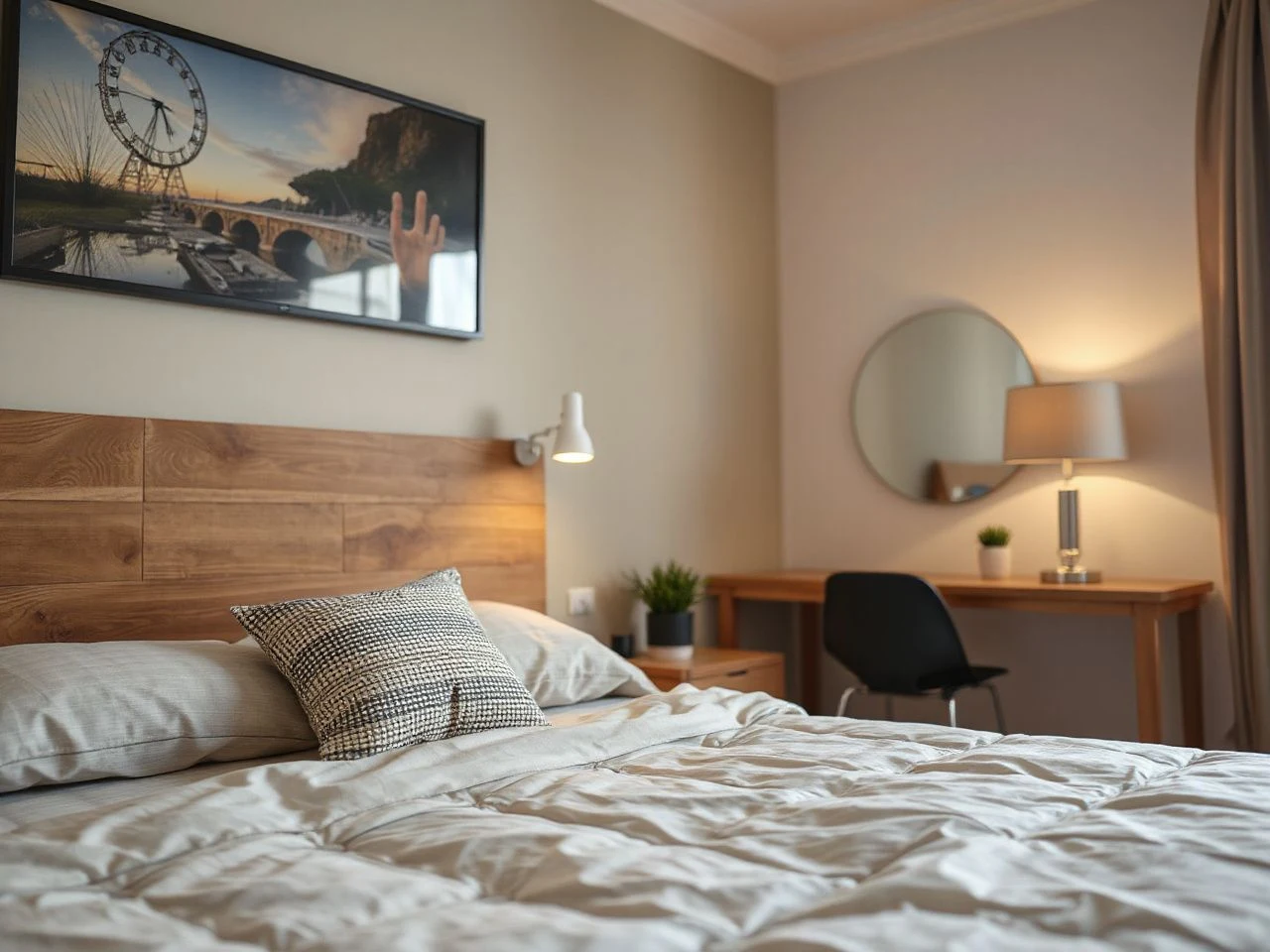
One colour family across walls, trim, and selected furniture can make boundaries less abrupt. A single print used consistently across surfaces can also give the impression of greater continuity, provided the pattern is not competing with every object in the room. The aim is a connected field of colour rather than a room with many hard visual stops.
An accent wall can work when it gives the bed a clear anchor and the remaining walls stay quiet. It may make the room feel shorter if placed on the wrong end of a long, narrow plan, so judge the wall from the doorway and from the bed. A darker tone behind the headboard is a deliberate composition, not a rule for every small room.
A consistent colour family reduces visual breaks, while a carefully placed contrast can define the bed without adding furniture. The right choice depends on sightlines, window light, and the amount of pattern already present.
Choose paint for the room you actually ventilate
Low-VOC acrylic-latex wall paint is a practical option for a bedroom because routine cleaning and repainting are part of the room’s long-term workload. Low odour does not mean no ventilation is needed. Open suitable windows and follow the paint manufacturer’s instructions during application and drying, particularly in a small enclosed room.
Washable, breathable textiles are useful for bedding and curtains because they can be cleaned without turning the room into a display of fragile surfaces. OEKO-TEX STANDARD 100 textiles are another specification a reader may choose to check when selecting bedding or curtains, but the label does not remove the need to wash fabrics according to their care instructions.
Keep the ceiling and trim relationship intentional. A similar tone can make the room feel continuous, while a strong white contrast can create a sharper outline. Neither is automatically larger-looking; the effect depends on the room’s natural light and the number of competing edges.
Use mirrors as controlled reflections
A mirror can make a small bedroom appear more open when it reflects a window, a light-coloured wall, or a calm part of the room. Mirrors positioned opposite or next to a window can spread reflected daylight, but a mirror facing a cluttered rail or an unmade bed simply doubles the visual noise.
Place the mirror where it serves a daily purpose without narrowing the route. A full-height mirror on a clear wall can be more useful than several small decorative mirrors, but its weight and fixing method must suit the wall. In a rental, a freestanding mirror may avoid drilling, though it still needs a stable position away from the main walking route.
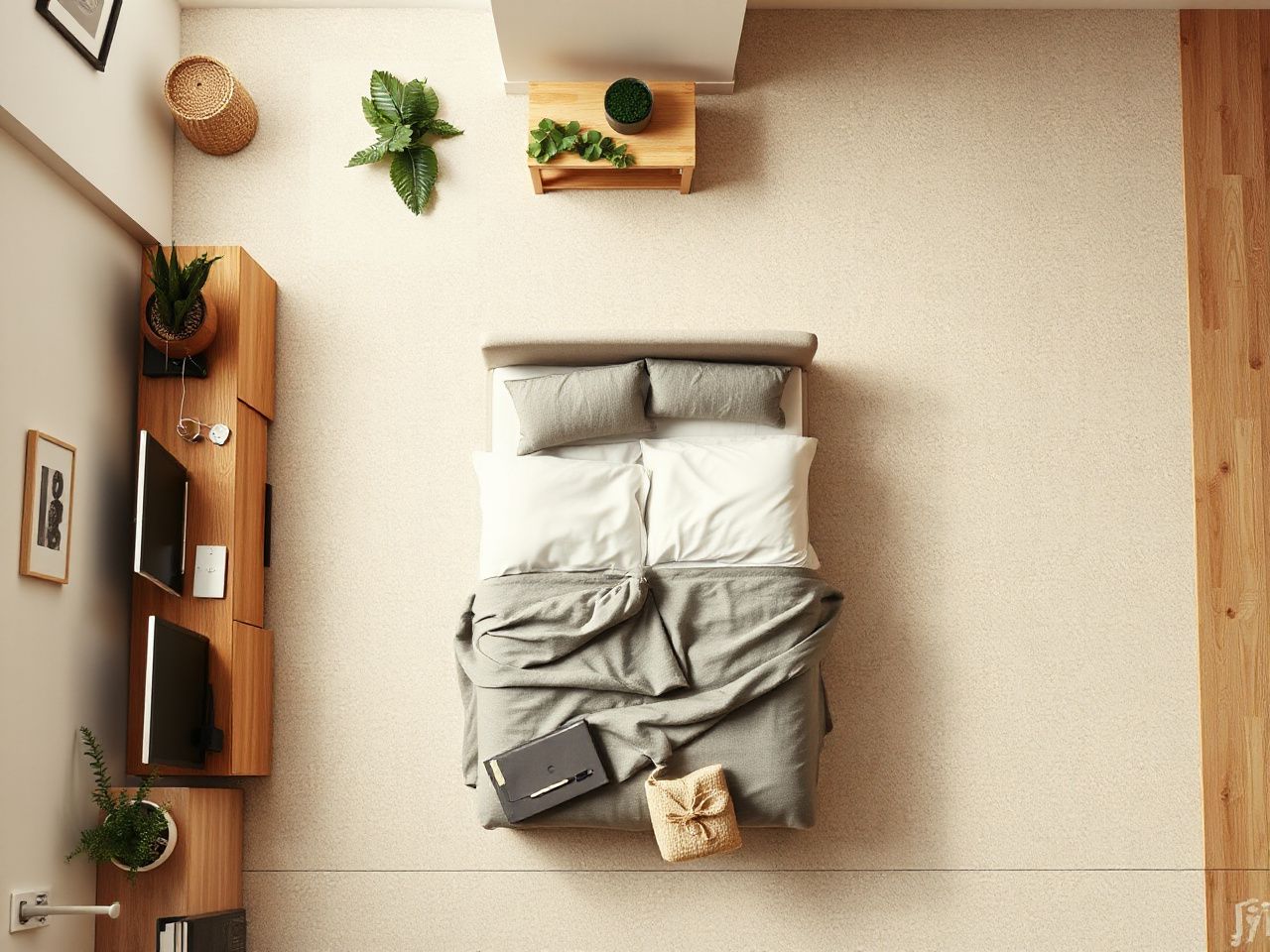
Intermediate: Add storage without adding visual weight
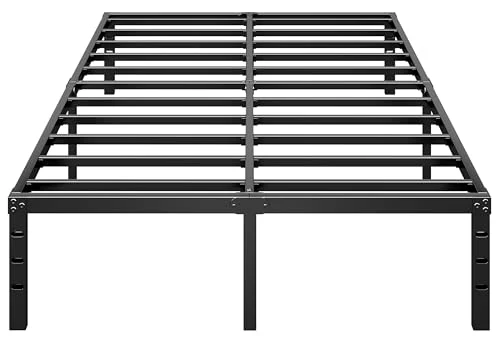
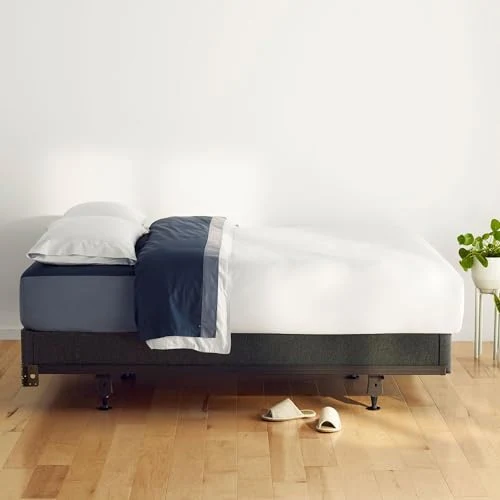
Storage should follow the room’s vertical surfaces and the bed’s unused volume before another bulky cabinet enters the plan. A divan bed with compartments for bedding and linens can keep seasonal items out of sight, while a bed with accessible space beneath it may support boxes that can be removed without moving the frame. The listing or construction details matter: storage is only helpful if the compartments remain reachable after the bed is positioned.
Compare freestanding, wall-mounted, and built-in storage
Freestanding storage is the easiest arrangement to revise. It can move when the bed changes position, and repainting the room does not require dismantling a fixed system. Its weakness is visual and physical bulk; a deep carcass may consume the same route that the storage was meant to improve.
Wall-mounted storage keeps more floor visible and can provide a useful place for books or folded items. The wall structure and fixing method become part of the furniture’s safety. Shelves should be fixed to suitable wall structure with appropriate anchors, and the load should match the hardware instructions rather than an optimistic guess.
Built-in storage uses awkward corners efficiently and can look calm because its boundaries are planned with the room. It creates more ongoing work if access to outlets, skirting, radiators, or pipework has been ignored. Repairs and repainting also become less convenient when a large fixed unit covers the wall.
FSC-certified plywood or solid wood can be specified for custom shelving where material sourcing and repairability matter. The certification describes the material’s forest-sourcing chain; it does not prove that the shelf has been fixed correctly or that the wall can carry the intended load.
Make the bed and walls do more work
Wall lights beside the bed, or lights integrated into a headboard, can preserve bedside surface area. A narrow ledge may be enough for the items used at night, while a shallow wall-mounted shelf can hold books without creating a new obstruction at floor level.
Storage works hardest when each zone has a clear job. Keep frequently used items within easy reach, put occasional items higher or beneath the bed, and remove anything that has no defined place. This approach also makes cleaning easier because the floor remains more accessible.
A small bedroom storage system should reduce movement through the room rather than create more doors, handles, and corners to navigate. The most useful storage is the storage that can be reached without shifting the bed or blocking the route to the door.
Account for assembly and maintenance
Flat-pack storage deserves a hardware-first inspection. Check the back panel, corner joints, shelf pins, wall straps, and instructions for the correct anchor type before committing to the final position. If a tall unit can tip, secure it according to the manufacturer’s instructions and the structure of the wall.
Do not improvise with a screw simply because it fits a pilot hole. Plasterboard, masonry, timber, and other wall structures require different fixing approaches, and the supplied hardware may not suit every surface. If the instructions do not state the appropriate fixing for the wall, the safe answer is to identify the wall structure before loading the shelf.
Freestanding pieces usually create the least repair work after a repaint, while wall-mounted and built-in systems need more planning around holes, dust, and access. That trade-off is more important than a perfectly styled photograph.
For wider ideas about using a compact home efficiently, these small-space decorating principles provide useful context without replacing the bedroom’s own circulation plan.
Advanced: Build a layered lighting and safety plan
A single ceiling fixture leaves shadows beside the bed and can make a small room feel harsh at night. Layered lighting gives the room separate levels: general light for dressing and cleaning, focused light for reading, and a softer source for winding down.
Choose light for sleep and colour accuracy
Warm light is not a substitute for good placement. A bedside reading lamp should illuminate the book without shining directly into the other person’s eyes, while general light should reach the wardrobe and floor. Wall-mounted fixtures can free the bedside surface, but their cables and switches still need a planned route.
LED lamps and dimmer switches must be compatible. A dimmer that does not match the lamp can produce flicker, poor dimming, or an annoying failure to reach the intended low-light setting. Check both the lamp and dimmer specifications before installation rather than assuming every LED circuit behaves alike.
Layered bedroom lighting gives a small room separate settings for cleaning, dressing, reading, and resting. The lighting plan should support the layout, not force furniture into an awkward position simply to reach an outlet.
Manage cables and curtains carefully
Keep cables away from the walking route and do not let a charging lead cross the path to the door. Use the shortest practical route, secure loose cable where appropriate, and keep adapters accessible rather than burying them behind a bed. A cable that disappears behind furniture may still be difficult to inspect or unplug.
Curtain hardware must be fixed to suitable structure, especially if the fabric is heavy or the curtain is opened frequently. Keep curtains clear of heaters and do not allow fabric to interfere with the window’s usable opening. The room needs ventilation as well as privacy.
Secure shelves, mirrors, and tall furniture
Every tall cabinet, narrow shelf, and large mirror should be assessed for stability before the room is styled. Fixings need to match the wall structure, while anti-tip hardware should be used where supplied or required by the furniture instructions. The U.S. Consumer Product Safety Commission publishes safety information on furniture tip-over hazards, making its guidance a useful reference when securing tall bedroom furniture.
Do not position a heavy mirror where it can strike the bed or door if a fixing fails. Avoid placing shelves above the sleeping position unless the fixing system, wall structure, and load are properly considered. Decorative objects should not sit where they can fall into the route or onto the bed.
Safety checks are part of decorating, not an unwelcome interruption. A room with fewer pieces but poorly fixed shelves is less successful than a room with more storage that is correctly secured and easy to inspect.
Rental-friendly decorating without permanent changes
A rented bedroom can gain character through textiles, movable lighting, freestanding storage, and artwork that does not require drilling. Use a rug only if it leaves the route to the door clear, and choose curtains with hardware already allowed by the property agreement. A removable cover, loose headboard panel, or freestanding mirror can change the room’s focal point without altering the walls.
Before using adhesive hooks or strips, read the rental agreement and the fixing instructions. Wall condition, paint type, humidity, load, and removal method affect whether a supposedly temporary fixing leaves damage. Do not hang a heavy mirror or shelf from a fixing that is intended only for light decoration.
Colour can enter through bedding, curtains, a washable throw, and a small piece of art. Keep the walls quiet if repainting is not allowed, then use one repeated tone to connect the textiles. A consistent palette usually creates more calm than a collection of unrelated small accessories.
Rental decorating should remain reversible without becoming disposable. Choose pieces that can move to another room, pack flat, or serve more than one function after the tenancy ends.
Common decorating mistakes that make a bedroom feel smaller
Filling every empty surface
Empty space is part of the layout. A bare section of floor beside the bed helps reveal the route, while a clear wall gives the eye somewhere to rest. Small decorative items multiply quickly, particularly on open shelves and bedside surfaces.
Choosing furniture from photographs alone
Photography can disguise depth, door clearance, and the visual weight of upholstery. Check the actual footprint, the direction of doors and drawers, and the space needed to use the item. A shallow piece with visible floor beneath it may serve better than a handsome but deep cabinet.
Blocking the window or radiator
A bed or dresser may fit in front of a window, but that does not mean the arrangement works. Access for ventilation, cleaning, curtains, and maintenance remains necessary. Radiators also need clear surrounding space rather than a large piece pushed directly against them.
Using one harsh overhead lamp
Bright light from above can cast shadows around the bed and make walls feel stark. Add task and ambient sources, then check dimmer compatibility if the circuit is being altered. Lighting should change with the room’s use.
Assuming pale means spacious
Pale paint cannot correct poor circulation, and a white room can feel cold if its undertones fight the daylight. Compare samples in the actual room at different times, using the NCS vocabulary of lightness and undertone to describe what you see. Add texture through breathable textiles rather than covering every surface with decoration.
Ignoring the hardware
Flat-pack furniture is often judged by its finish, but the hardware determines whether the structure can be assembled, adjusted, and secured as intended. Missing dowels, unsuitable anchors, loose back panels, or omitted anti-tip parts are reasons to stop and resolve the construction before loading the furniture.
Frequently Asked Questions
What is the first step in decorating small bedrooms?
Start by mapping fixed constraints: the door swing, window opening, radiator, outlets, fitted storage, and route to the door. Position the bed around those facts, then test the arrangement with tape or temporary boxes before buying or fixing anything. A room can feel larger after furniture is removed from a route, even if the wall colour remains unchanged.
Is one colour better than an accent wall in a small bedroom?
One colour family usually produces the calmest visual field because it reduces abrupt boundaries. An accent wall can work when it clearly anchors the bed and does not shorten an already narrow room. Compare undertones and lightness using NCS terminology, and judge samples in the actual room. Colour should support circulation and furniture scale rather than attempt to disguise a blocked route.
Where should a mirror go in a small bedroom?
Place a mirror where it reflects a window, a light-coloured wall, or an uncluttered view. A position opposite or beside a window can spread reflected daylight, while a mirror facing a crowded rail doubles the mess visually. Secure the mirror to suitable wall structure or use a stable freestanding design, and keep it out of the door and main walking routes.
How can I add storage without making the room feel crowded?
Use the bed’s available storage and vertical wall space before adding a deep floor-standing cabinet. Wall-mounted shelves can preserve visible floor area, while a narrow hanging rail may replace a bulky wardrobe if exposed clothing will be kept orderly. Compare freestanding, wall-mounted, and built-in systems by access, fixing method, cleaning, repainting, and future repairs rather than appearance alone. Keep tall furniture secured against tipping.
What lighting does a small bedroom need besides a ceiling fixture?
Add a reading or task light beside the bed and a softer ambient source for evening use. Check that LED lamps and dimmer switches are compatible before installation, because mismatched components can flicker or dim poorly.
How can renters decorate a small bedroom without drilling or painting?
Use movable furniture, freestanding mirrors, textiles, removable artwork where permitted, and plug-in lighting. Read the rental agreement before using adhesive fixings, and never hang a heavy mirror or shelf from hardware intended only for light decoration. Keep the palette connected through bedding and curtains, then preserve a clear route to the door and access to the window.
Good small-bedroom design is a sequence of decisions, not a pile of tricks. Protect circulation first, control visual weight second, and use colour, storage, lighting, and textiles to support those foundations. My assembly-sceptic rule remains simple: inspect the hardware, respect the wall, and never let a polished finish persuade you that a bad layout is working.