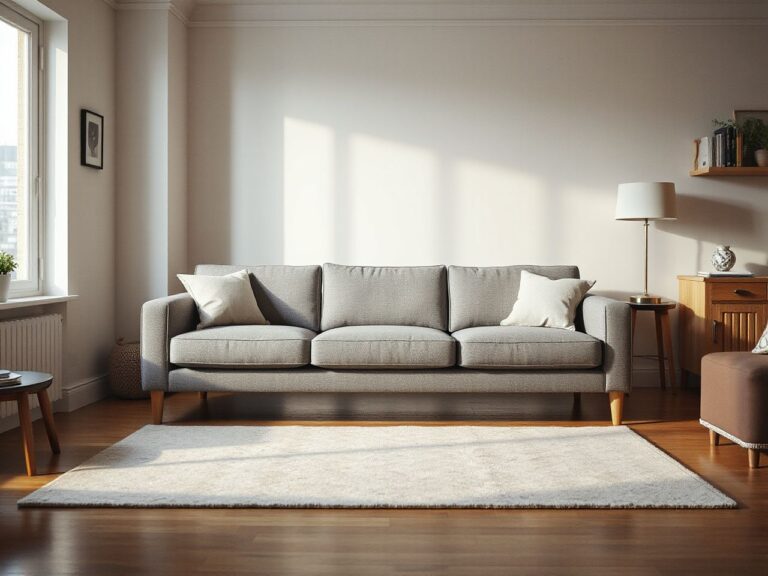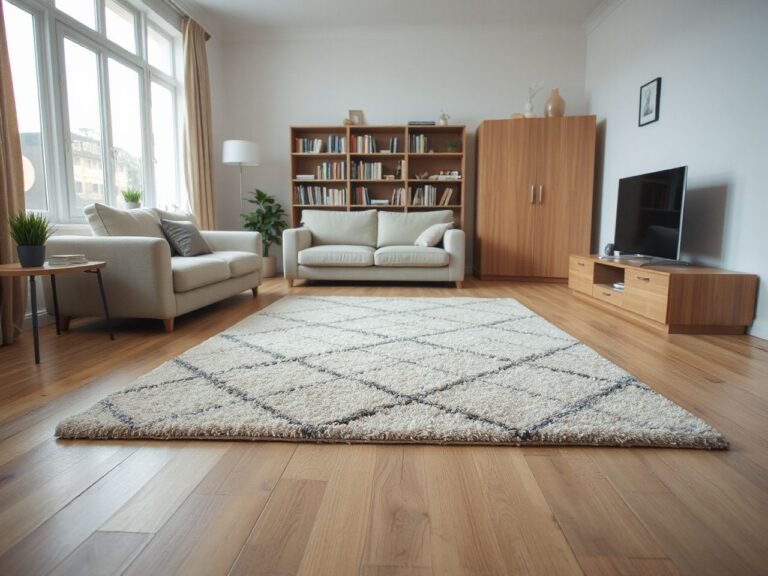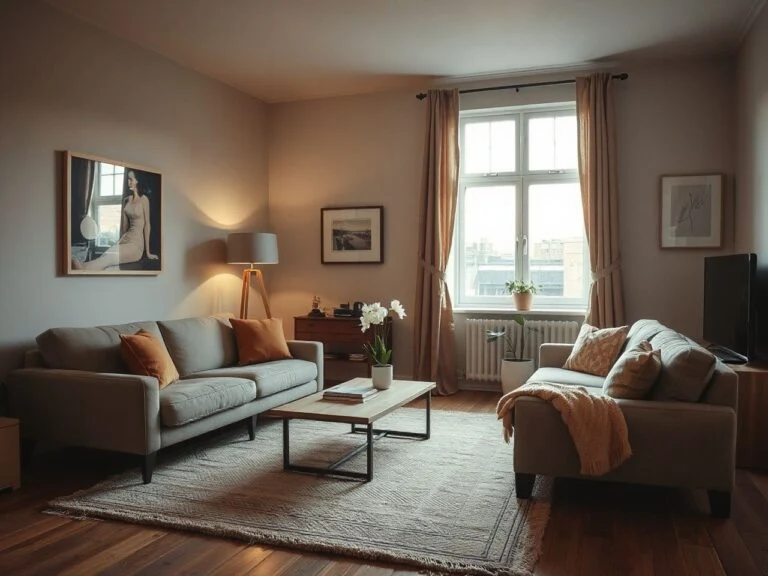
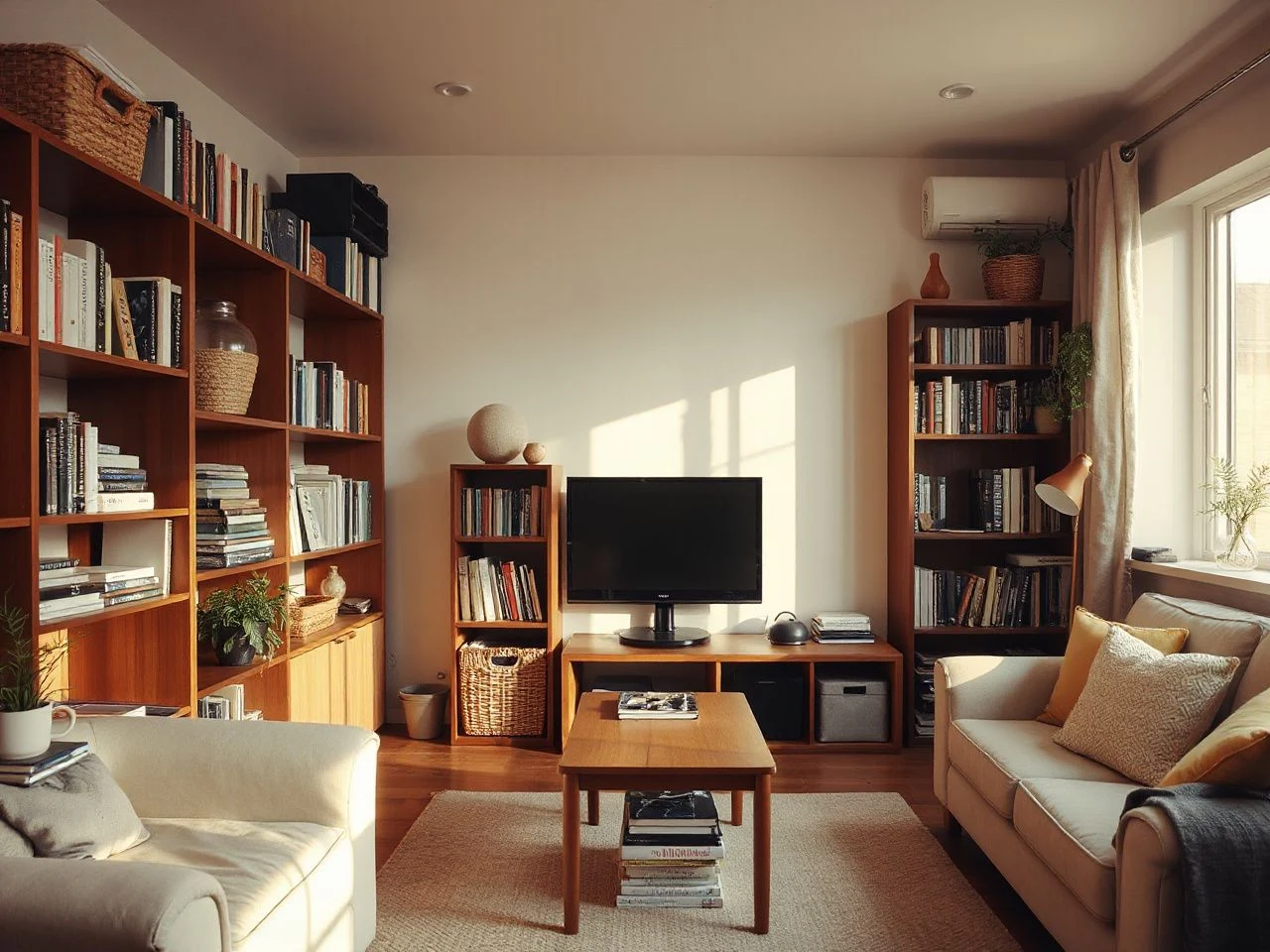
Ignoring movement and access can leave a living room looking tidy while doors, windows, outlets, and everyday routines become awkward to use. Effective living room organization separates visible presentation from practical access: closed storage can contain visual noise, while open storage should display only items that are used or intentionally styled. The layout should be built around movement and routines first, then assigned storage zones, because adding containers without changing where items are used usually recreates the same clutter.
The doorway comes before the sofa. A beautiful cabinet that cannot pass through the entrance, or a deep console that narrows the route across the room, is a poor solution before style even enters the discussion.
Key Takeaways
- Plan walkways, doors, windows, heating equipment, and daily routines before choosing storage.
- Use closed storage for visual noise, open shelving for selected items, and low storage for heavy belongings.
- Give every frequently used item a nearby home, then maintain the system with short, regular resets.
Step 1: Read the room before adding storage
Map movement and access
Start at the doorway and trace the routes people actually take. Mark the path to seating, windows, the television, adjoining rooms, and any frequently used cabinet or outlet. A storage piece belongs beside a route only if it leaves that route comfortable and clear.
Living room storage should preserve access to walkways, doors, windows, heating equipment, and household emergency routes. Furniture that blocks a window may also make window treatments difficult to operate, so review what to check before arranging living room window treatments before committing to a large piece.
A clear route is more valuable than a decorative arrangement that requires people to turn sideways or move an ottoman each time they cross the room. In a small living room layout, storage depth matters as much as storage width because a shallow piece may preserve movement where a deeper one creates a pinch point.
Check the doorway and the final position
Measure the doorway, turns, stair landings, and the intended wall before admiring any sofa, cabinet, or shelving unit. The usable route includes the door opening and the space needed to turn the item, not only the straight distance between the entrance and the room.
Large furniture should be considered in relation to the room and its delivery route. A piece that fits the wall but cannot pass through the doorway is not a practical choice.
Use paper, masking tape, or folded cardboard to mark the footprint on the floor. Walk around the outline with a basket, open a nearby door, operate the window, and check whether the television controls remain reachable. These simple tests expose problems before storage becomes part of the room.
List what the room must hold
Make a list before buying or building anything. Separate daily items from occasional items, then identify belongings that do not belong in the living room at all.
- Daily items: remotes, reading material, chargers, blankets, toys, and pet accessories.
- Occasional items: guest linens, seasonal decorations, games, and entertaining pieces.
- Sentimental items: objects that need protection but do not need daily access.
- Misplaced items: paperwork, clothing, dishes, and tools that need homes elsewhere.
Rarely used items do not automatically deserve living room storage. If an object is seasonal or sentimental, store it farther away where its low access frequency does not compete with daily essentials.
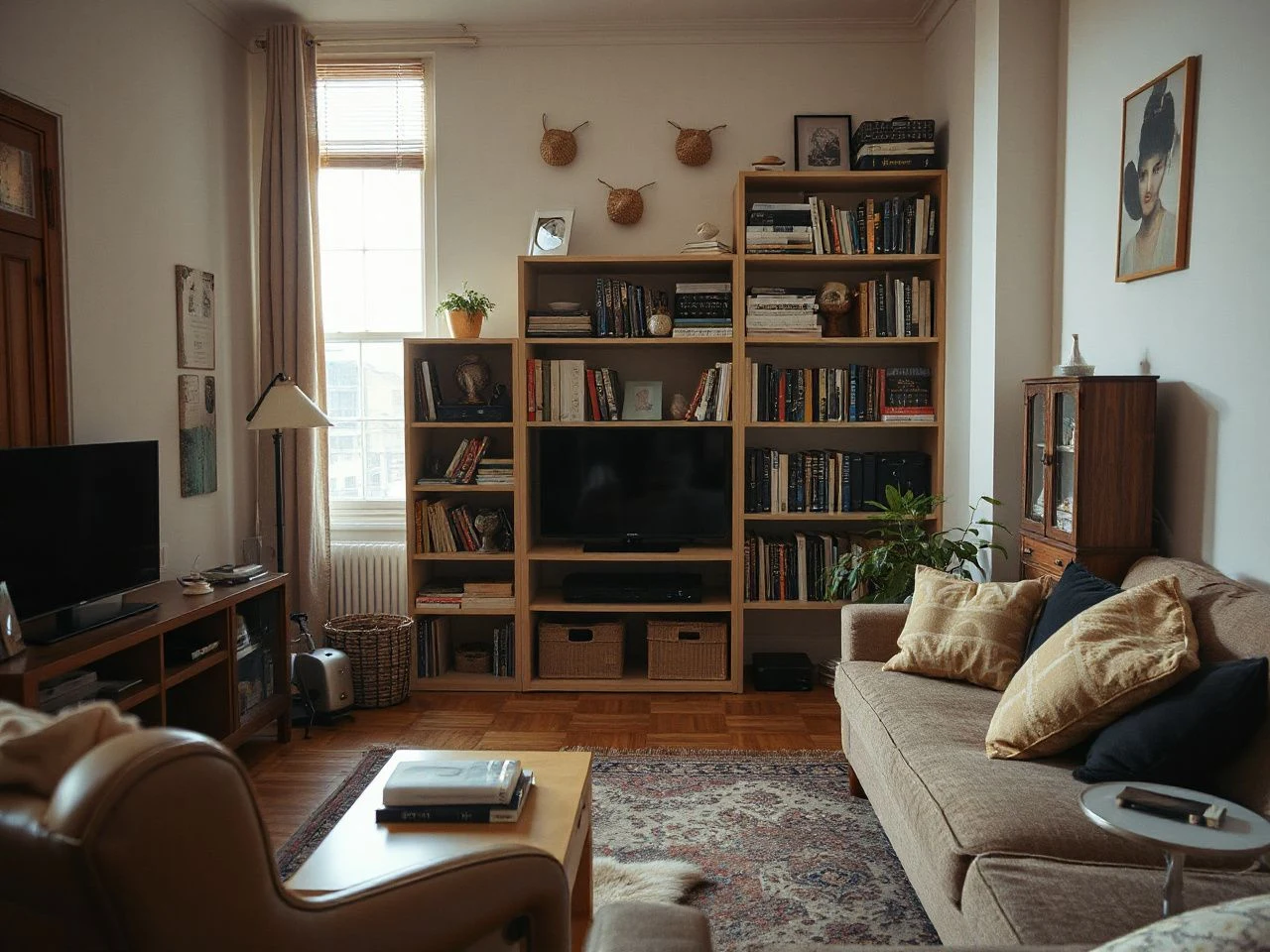
Step 2: Match storage to the way the room is used
Choose closed or open storage with intention
Closed storage cabinets are useful for items that create visual noise, have irregular shapes, or are used often enough to need a nearby home but not often enough to remain on display. Doors also allow the visible room to stay calmer without requiring every object inside to be arranged attractively.
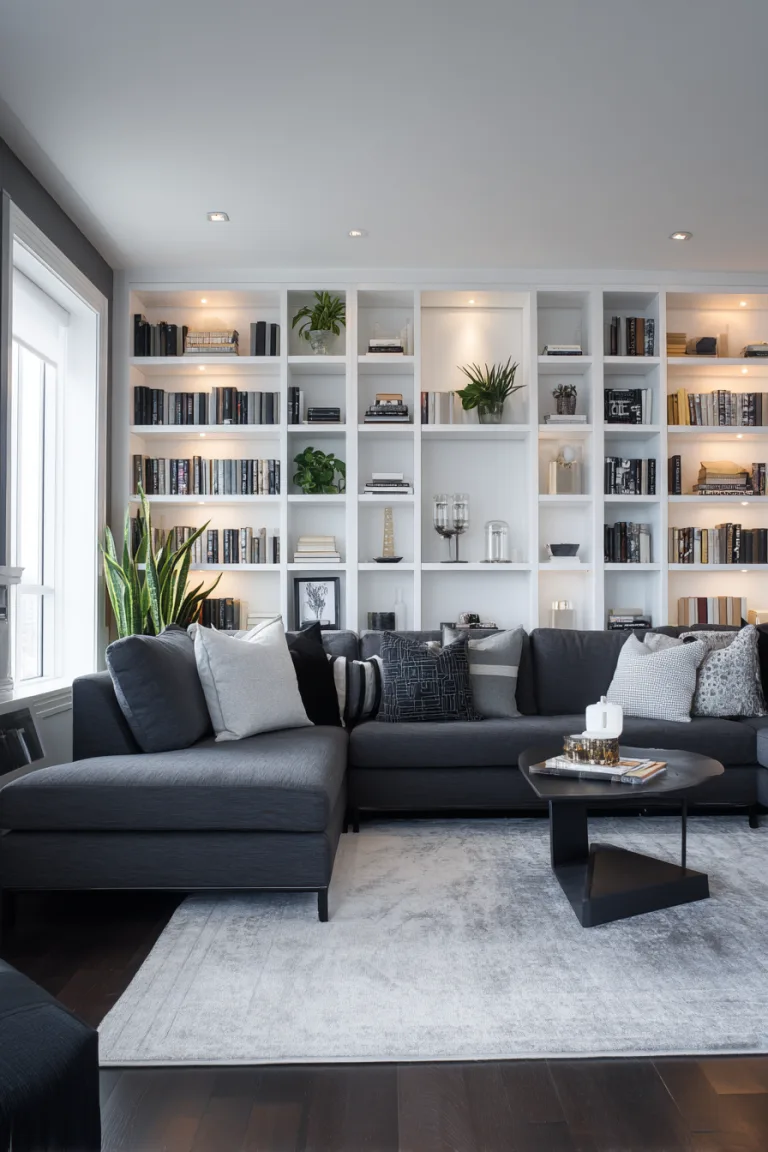
Open shelving works best when the contents are used or intentionally styled. A shelf filled with unrelated objects becomes another surface to manage, while a shelf with a clear purpose can hold books, a small collection, or a few items that support the room’s character.
Open shelving displays its contents every day, so the shelf itself becomes part of the room’s visual composition. Closed storage hides visual noise, but it still needs an internal system or clutter simply moves behind the doors.
Use a mixed approach when the room serves several purposes. Open shelving can hold selected books, closed cabinets can contain cables and games, and a storage ottoman can keep blankets close to the seating area without adding another tall object to the walls.
Assign zones by frequency of use
Storage should follow the distance between an item and the action that uses it. Remotes need a home beside the seating position, blankets belong near the sofa or chair where they are used, and charging equipment should stay close to the devices it serves.
Daily items need easy access, while seasonal and sentimental items can be placed farther away. This principle prevents a cabinet near the sofa from becoming a random holding area for everything that has no other home.
- Seating zone: remotes, reading material, blankets, and small personal items.
- Media zone: devices, controllers, cables, manuals, and charging equipment.
- Display zone: books and decorative objects that deserve visibility.
- Entry zone: items that arrive in the room and need to leave it, such as bags or mail.
Labeling is optional, but clear categories are not. A basket marked by purpose can help children return toys, while drawer dividers can separate remotes, batteries, charging leads, and small controls without requiring a search.
Use furniture that performs more than one task
Multifunctional furniture earns its place when the second function reflects a real routine. A storage ottoman can provide seating, a footrest, and a place for blankets, while a media console can contain equipment and keep the television area visually grounded.
Nesting tables add occasional surface area when pulled out and can also work as an end table. Keep their movement path clear so the extra surface can be used without pushing into a walkway.
A storage bench can help near a window or wall, but its lid and surrounding floor need enough practical clearance. A sofa arm table may hold a drink or remote, yet it should not become a permanent pile of chargers, papers, and unopened mail.
Consider upkeep before committing
Every storage approach creates maintenance. Open shelving needs visible dusting and editing, closed cabinets need occasional sorting, baskets need emptying, and cable management sleeves may need adjustment when equipment changes.
Ongoing cost is not only the purchase price. It can include installation, replacement hardware, repairs, cleaning materials, and the space lost when a storage piece makes the room harder to use. A simpler arrangement that stays accessible may require less upkeep than a complicated collection of containers.
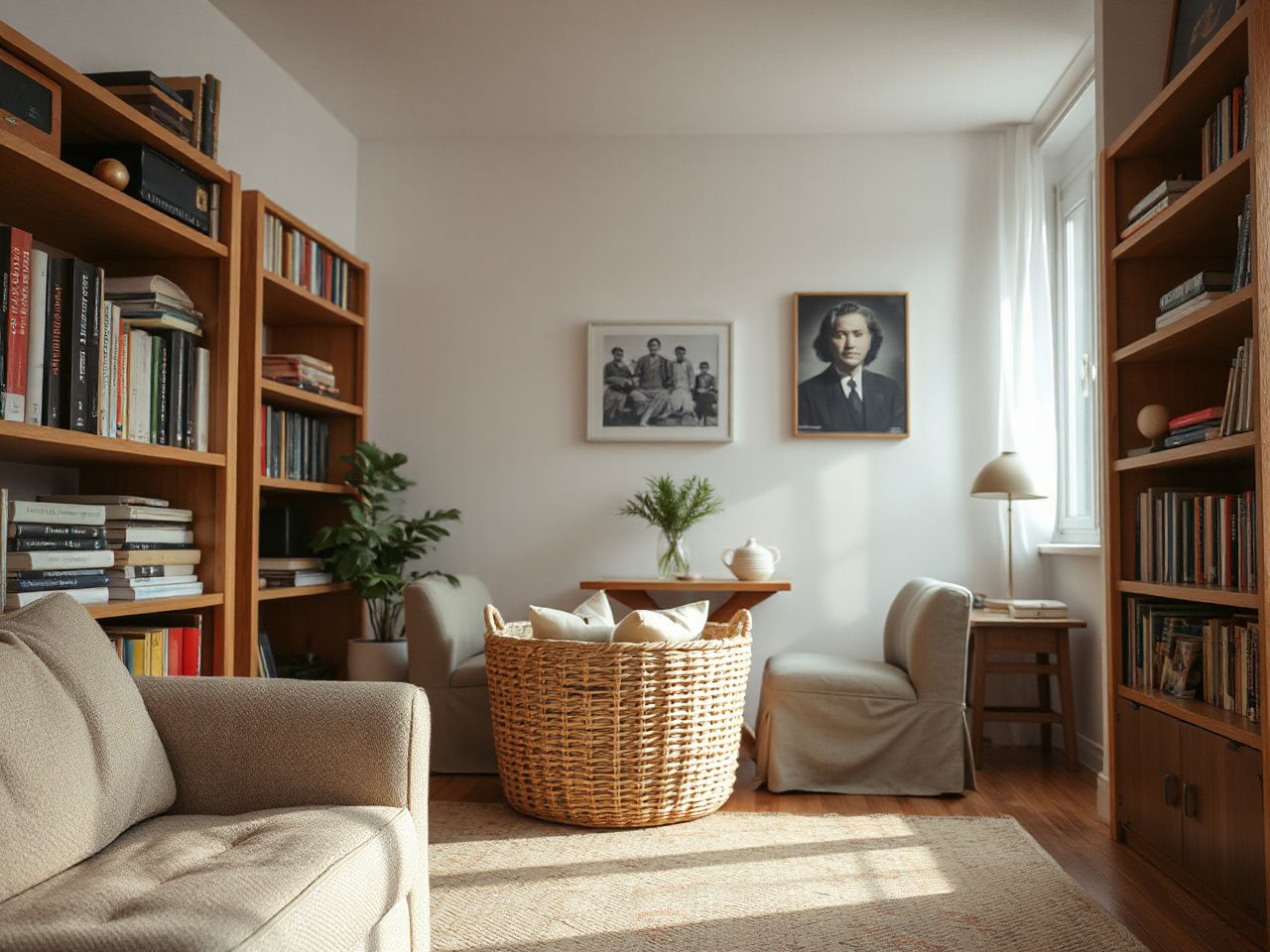
Step 3: Organize the contents by category
Books and displayed objects
Sort books by how they are used before sorting them by appearance. Frequently read books belong where they can be reached without a stool or a large rearrangement, while reference or sentimental books can occupy less accessible shelving.
Color-coding books can create a strong visual effect, but it can also make a particular title harder to locate. Use color as a styling choice only after the practical grouping works.
Leave visual breathing room around displayed objects. A shelf looks intentional when the contents have a clear relationship to one another, not when every available section is filled.
Remotes and small controls
Remotes disappear when they have no fixed home or when several controls look alike. Use one nearby tray, drawer section, or small basket, then return each remote to that location after use.
Drawer dividers can separate television controls from game controllers and charging leads. The goal is recognition at a glance, not a complicated filing system that takes longer to maintain than the search itself.
A couch caddy can work when the sofa arm is the natural drop point, but it should hold only the items used there. If it becomes a general pocket for mail, toys, and cables, move those categories to their proper zones.
Blankets, pillows, and soft furnishings
Blankets do not need to be folded into a formal stack if that method discourages returning them. A loose, contained arrangement in a basket or storage ottoman can make retrieval and resetting easier.
Limit throw pillows to the number that allows people to sit without moving a pile first. Store extras in a cabinet or another room rather than treating the sofa as permanent storage.
Soft items should remain dry, clean, and easy to inspect. A container that is difficult to open will encourage blankets to remain on the floor or over the arm of a chair.
Toys, pet items, and shared clutter
Shared rooms need storage that children and pet owners can use without constant adult intervention. Place everyday toys in open baskets at an accessible height, while small or delicate items can go into closed storage when supervision matters.
Pet toys need a contained zone that does not compete with remotes or clean blankets. A washable basket or a dedicated cabinet section can keep the category visible without spreading it across the room.
Children’s storage works best when the return path is obvious. Fewer broad categories are often easier to maintain than many narrow ones, especially during a quick evening reset.
Rarely used and sentimental items
Sentimental objects deserve protection, but the living room is not automatically the right place for every keepsake. Keep a sentimental item in the room when seeing it adds meaning and its storage does not displace something used every day.
Seasonal decorations can move to a remote storage area once their season ends. The living room should support current life rather than act as a permanent archive.
Step 4: Make electronics and shelving safe to use
Route television cables without creating a hazard
Electronics need ventilation, accessible controls, and cable routing that does not create a tripping hazard. Leave controls reachable rather than burying equipment behind decorative objects or a tightly packed cabinet.
Begin by identifying every cable and its destination. Separate power leads from signal and charging cables by purpose, then route them along the back or side of the media console using cable management sleeves where they can remain contained and visible for maintenance.
Do not run loose cords across a walkway or under a rug as a shortcut. A cable route that looks tidy from the sofa can still create a snag point near a doorway, chair, or frequently used passage.
Keep ventilation openings unobstructed and avoid packing equipment into a space that was not designed to hold it. The controls and connection points should remain accessible enough for routine use, cleaning, and troubleshooting.
The U.S. Consumer Product Safety Commission provides consumer safety information at cpsc.gov, including guidance relevant to household products and hazards. Consult the equipment manual as well as current government guidance whenever a cable route, power connection, or installation raises a safety concern.
Secure tall storage
Tall shelving and cabinets should be secured to the wall where they could tip, especially in homes with children or pets. Wall anchors must suit the wall and the furniture hardware, so follow the furniture instructions rather than treating a general-purpose fastener as universal.
Heavy items belong in low storage, and shelves or cabinets should not be overloaded beyond their intended capacity. Place dense books and equipment lower, then reserve higher shelves for lighter objects that are not likely to fall during ordinary use.
The Consumer Product Safety Commission offers safety guidance for furniture tip-over prevention through its official website. Check the wall, the fixing points, and the furniture instructions before anchoring anything, and seek qualified help if the installation is beyond your confidence.
Mount shelves with the wall in mind
Mounted shelving requires a relationship between the shelf, its brackets, and the wall. The shelf width must not exceed 1.4 times the bracket’s width and must not exceed 1.2 times the bracket’s height.
For extended shelves, the gap between each bracket should not surpass four times the shelf breadth. When mounting a shelf to a concrete wall, the screw must penetrate the surface to a depth of at least one-tenth the shelf width.
These figures apply to the verified mounting guidance available for this article, but the wall material, fastener, shelf construction, and intended load still matter. Never use a stated proportion as permission to overload a shelf.
Step 5: Build a system that stays organized
Reset the room by route, not by appearance
A reset should return objects to their zones, remove items that belong elsewhere, and restore the main walking routes. Start with the floor and seating because those areas reveal whether the arrangement supports daily life.
Use a small sorting group for items leaving the room. A basket for items that belong elsewhere prevents repeated trips, while a separate surface for decisions keeps uncertain objects from returning to the nearest shelf.
Cleaning routines should include the tops of cabinets, open shelves, baskets, media consoles, and the floor beneath storage. Dust and crumbs collect in different ways depending on whether the storage is open, enclosed, raised, or placed directly on the floor.
Prevent the return of clutter
A living room keeps becoming cluttered when the storage location is farther from the action than the floor, sofa arm, or nearest flat surface. Move the home closer to the point of use before adding another container.
Containers do not correct a routine that has nowhere to end. If mail enters through one door, give it a temporary sorting point near that route; if chargers are used beside the sofa, give them a nearby cable zone instead of expecting them to travel across the room.
Review the system after the room has been used normally. If one basket fills with unrelated items, its label or location may be wrong. If a cabinet stays empty while the coffee table remains crowded, move the category rather than blaming the people using the room.
Make visual order intentional
Repeat a small number of visual ideas across the room instead of displaying every object that needs a home. A calm arrangement can use books, framed pieces, baskets, and useful objects, but each category needs a boundary.
Closed storage is especially helpful beside visually busy media equipment. Open shelving can then carry a smaller selection of books or decorative objects without competing with exposed cables, controllers, and spare accessories.
Color, texture, and shape can support a room’s style after the practical categories are working. For broader direction, review contemporary living room decor ideas that balance display and daily use rather than using storage as a substitute for a design plan.
Review the system at sensible intervals
Reset high-use zones often enough that objects do not become a permanent layer on the floor or sofa. Review closed cabinets and open shelves less often, but do so whenever a season, household routine, or technology setup changes.
Decluttering works best as a decision about use, not as a hunt for empty containers. Remove, relocate, or store items according to how often they serve the room.
A living room organization system remains useful when its storage zones match real routines and its reset requires little thought. If maintenance feels like a separate project every day, simplify the categories or move the storage closer to where the objects are used.
Frequently Asked Questions
How do I choose storage that fits the way my living room is used?
Observe where objects land and what people reach for during ordinary use. Put daily items near the relevant seating, media, or entry zone; reserve less accessible storage for seasonal and sentimental belongings. Check the doorway, turning points, windows, heating equipment, and emergency routes before selecting the final position. Storage should support movement first and appearance second.
Is open shelving or closed storage better for living room organization?
Neither is universally better. Open shelving suits items that are used or intentionally styled, while closed cabinets contain visual noise and irregular objects. A mixed arrangement usually works well when the media area, books, blankets, and personal objects have different needs. Keep heavy items low, avoid overloading shelves, and secure tall units where they could tip.
What is the best way to manage television cables and charging cords?
Identify each cable and its destination, then route cords along the back or side of the media console with cable management sleeves where appropriate. Keep controls accessible, preserve ventilation around electronics, and avoid loose cables across walkways or under rugs. Review the equipment manual and the U.S. Consumer Product Safety Commission guidance at cpsc.gov when installation or power routing is uncertain.
Why does my living room keep becoming cluttered after I organize it?
The storage location may not match the routine. A container placed far from the sofa will not reliably collect remotes or blankets, and a cabinet that is hard to open will encourage items to remain on visible surfaces. Move storage closer to the action, reduce unnecessary categories, and create a clear destination for objects that belong in another room. A short reset then becomes maintenance rather than a full reorganization.