
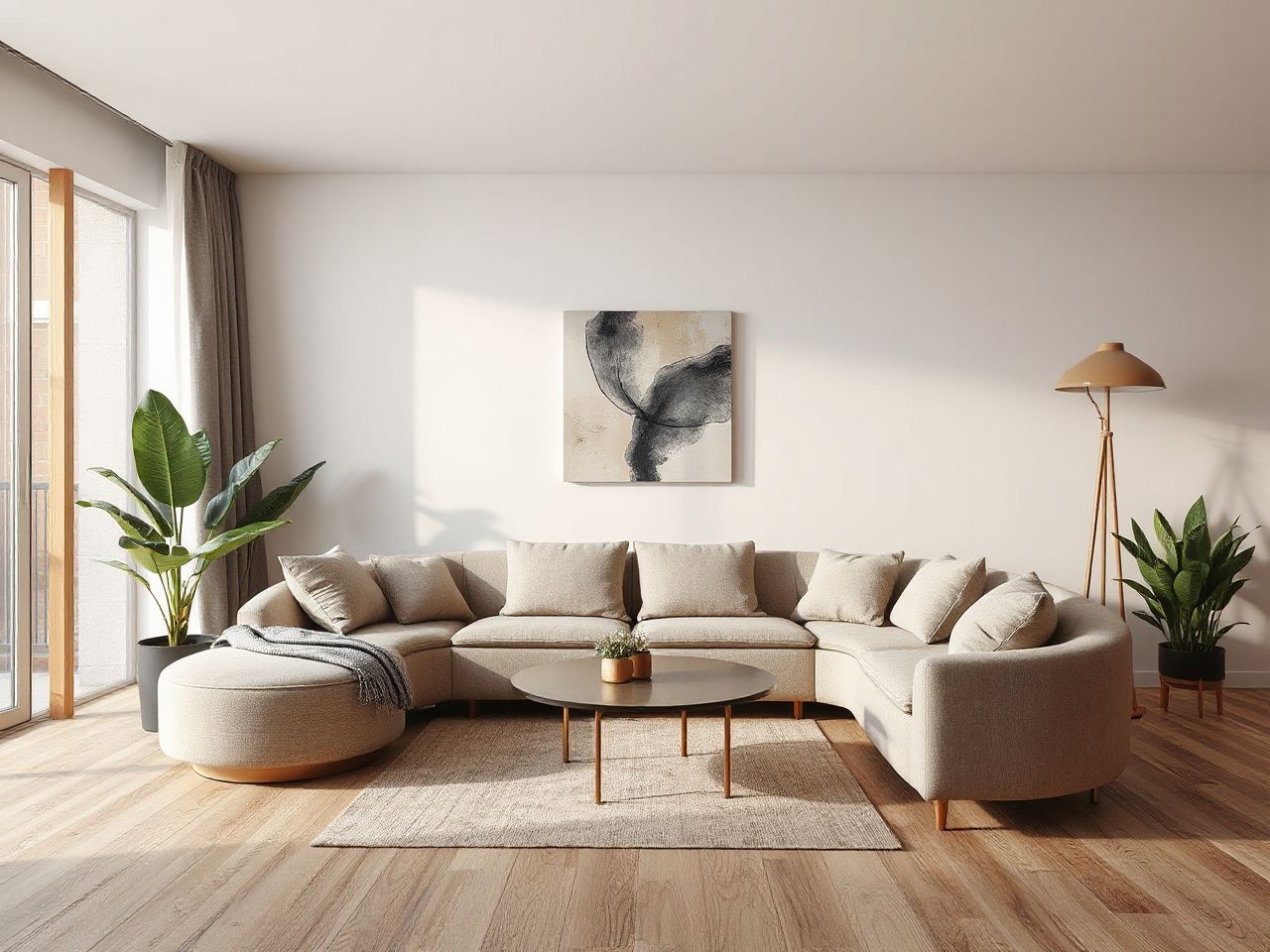
Good living rooms work before they look fashionable.
The useful distinction is between a style’s underlying structure and its trend signals: proportions, layout, materials, and lighting create the room’s identity, while paint colors, textiles, art, and small decor can carry the current look. A strong guide should compare styles by their visual language and practical demands, then show how to layer a trend onto an existing room instead of treating every trend as a full-room renovation. That is the sensible way to approach trending living room styles in 2026, especially if the room already contains furniture you like.
I am Daniel Brooks, Home Decor and Interiors Editor, and I judge a fashionable room by its structure first. Hardware is my usual test for flat-pack furniture; in a living room, the equivalent test is circulation, scale, and the way lighting has been planned. A curved sofa or sculptural lamp cannot rescue a room that blocks the main walking path.
Key Takeaways
- Japandi, Scandinavian, organic modern, and mid-century modern overlap, but their shapes and references differ.
- Update flexible layers such as paint, textiles, art, and lighting before replacing expensive furniture.
- Match bouclé, rattan, untreated wood, and Venetian plaster to the demands of children, pets, spills, and humidity.
- Furniture scale, clear circulation, glare control, and layered lighting matter more than a style label.
How to Read Trending Living Room Styles
Separate structure from signals
A room’s structure includes its proportions, furniture arrangement, focal point, materials, and lighting plan. Those decisions tend to remain useful after a particular color or pattern loses attention. Trend signals are easier to change: a jewel-tone cushion, a playful painted cabinet, a bold wallpaper, or a new arrangement of art.
Furniture layout determines how a living room functions before decoration begins. A clear walking route should connect the room’s main entrance with its other useful areas, while seats should face one another or share a focal point rather than point randomly toward the television. The exact arrangement depends on the room, so copying a photograph rarely works as neatly as expected.
Furniture scale determines whether a living room feels settled or crowded. A large sofa can dominate a compact room, while undersized seating can make a generous room feel unfinished. Marking the footprint of furniture with paper or removable tape is a practical way to judge proportions before moving heavy pieces.
What is actually trending
Current living rooms are moving toward softer shapes, warmer minimalism, richer materials, and rooms that look assembled rather than ordered as a matching set. Curved sofas, tactile upholstery, sculptural light fixtures, layered antiques, mismatched furniture, and more informal seating arrangements all fit that direction.
Book drenching is another strong visual move. A wall-to-wall built-in bookcase treated as one continuous architectural feature gives storage a much larger presence than a freestanding shelf. The effect can be calm if the surrounding furniture is restrained, but it can also make a small room feel visually dense, so the wall’s scale and daylight deserve careful attention.
Maximalist rooms use jewel tones such as deep greens, purples, and golds, alongside bold wallpaper, metallic details, and varied textures. The look has personality, but it needs a hierarchy. If every surface demands attention, the room stops feeling layered and starts feeling noisy.
Which ideas age well
Styles with a clear visual structure usually outlast styles built around one highly recognisable accessory. Warm wood, useful storage, comfortable seating, restrained shapes, and layered lighting can support changing colors and artwork for years. A dramatic wallpaper or heavily coordinated upholstery has a shorter visual life, even when the workmanship is sound.
Ageing well does not mean choosing a blank room. A vintage chair, an unusual lamp, a patterned rug, or a painted cabinet can give the room a point of view. The sensible distinction is to place changeable taste in changeable elements and reserve permanent effort for the room’s structure.
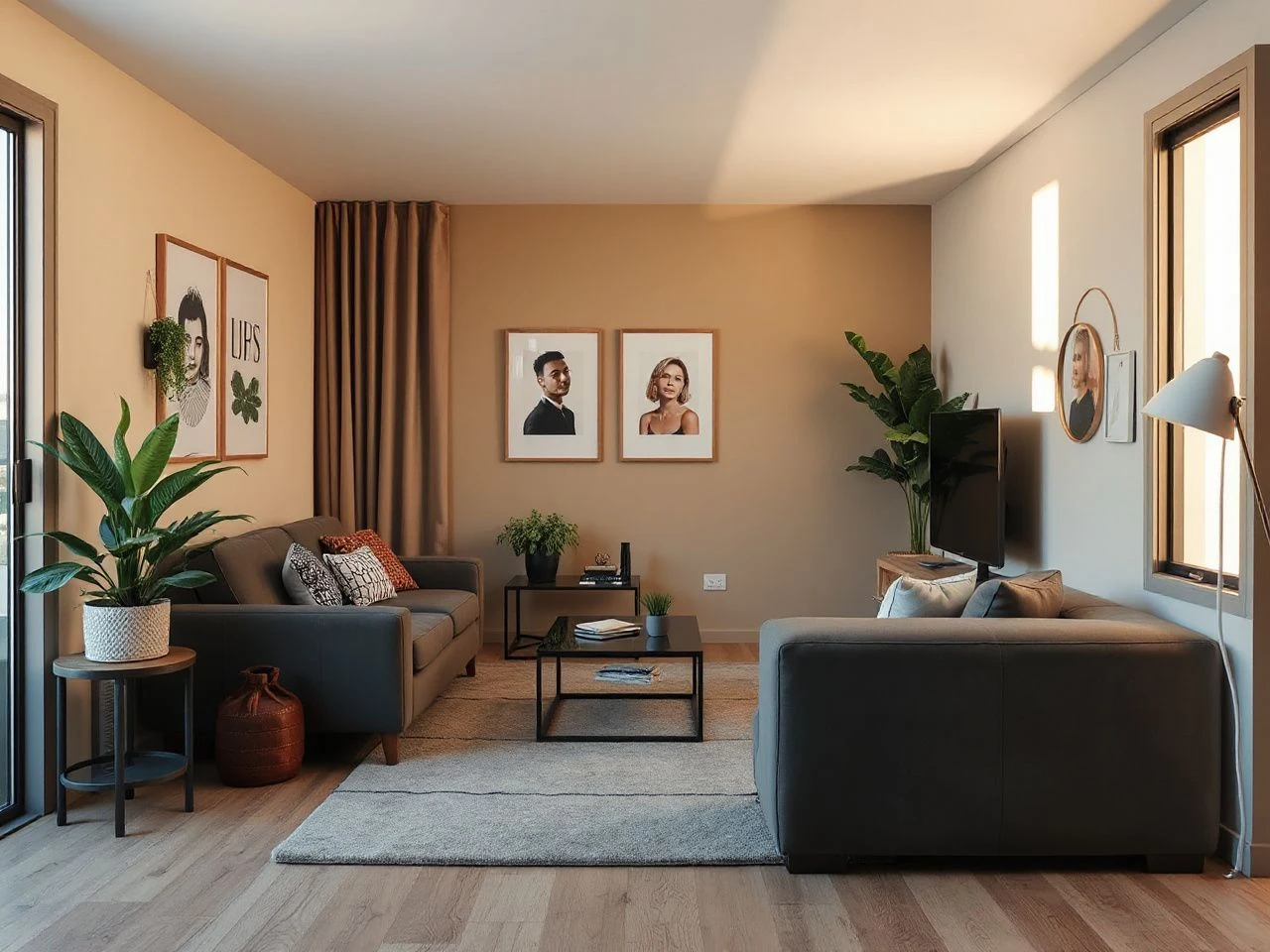
Beginner: Choose a Style That Fits the Room
Start with architecture, daylight, and circulation
Natural light changes how colors and surfaces read throughout the day. A room with limited daylight can become heavy if every wall, textile, and large piece of furniture is dark or strongly patterned. A bright room can accept deeper tones, but glare from windows may make glossy surfaces and reflective metallic details uncomfortable.
Architecture should guide the direction rather than act as a restriction. A room with strong original details can take modern furniture without losing its character. A plain rectangular room may benefit from a stronger focal wall, a large artwork arrangement, or built-in storage that gives the space an anchor.
Clear circulation matters more than decorative symmetry in a working living room. Leave the most direct route through the room open, keep furniture from pinching doorways, and check that drawers, cabinet doors, and reclining seats can operate without collisions.
Understand the related style labels
Japandi combines Japanese restraint with Scandinavian simplicity. Its rooms tend to use quiet palettes, low visual clutter, natural materials, and furniture with disciplined forms. The mood is pared back, but it should not become empty or overly coordinated.
Scandinavian design generally places more emphasis on lightness, practical comfort, pale or warm neutrals, and uncomplicated furniture. Soft textiles can stop the room from feeling stark. The best versions leave enough open space for the room to breathe.
Organic modern uses modern foundations with natural textures and softer shapes. Curved seating, wood, stone-like surfaces, woven details, and earthy colors often create its visual language. The room should still have a clear line of sight and a deliberate focal point; organic does not mean shapeless.
Mid-century modern brings a stronger furniture reference through tapered forms, clean lines, expressive wood, and carefully chosen color. It can combine with organic modern successfully when the wood tones and scale are related. Conflict appears when every piece has a different leg shape, finish, or visual era.
These labels overlap because they share restraint, natural materials, and edited palettes. Their differences sit in historical reference, furniture forms, and the degree of minimalism. A room can borrow from two of them without becoming a themed set.
Combine two styles without visual conflict
Choose one style as the structural base and let the second appear through accents. Mid-century modern furniture can supply the structure, while organic modern enters through a curved lamp, a textured rug, a wood accessory, or a plant. Repeating one material or shape helps the combination feel deliberate.
Use color as a bridge rather than assigning one color to each style. A warm neutral wall can connect walnut furniture with woven seating. A restrained palette also gives mismatched furniture room to coexist, provided the pieces share a similar scale or finish.
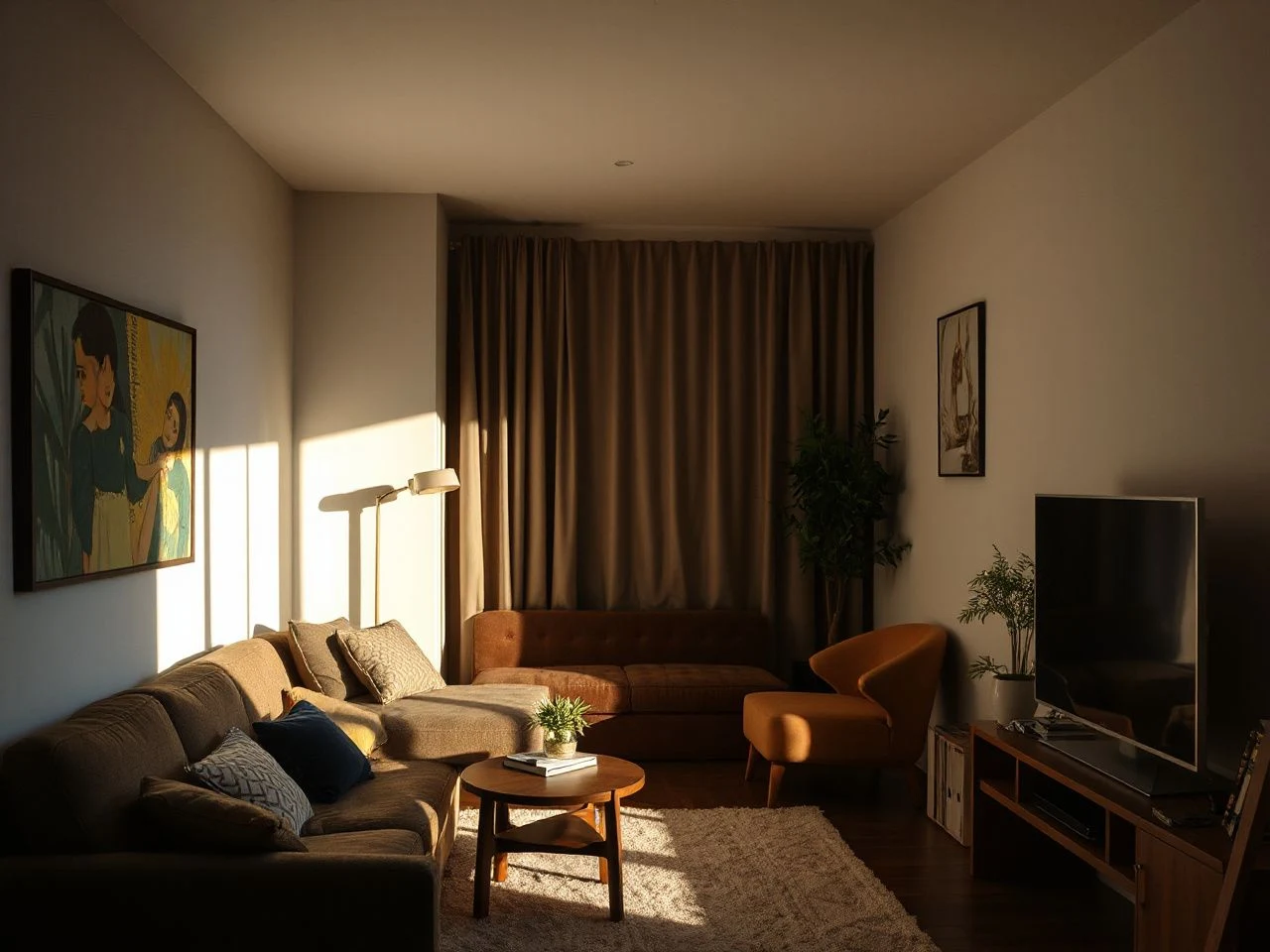
Intermediate: Build a Current Room in Layers
Update an existing room gradually
Start by removing items that no longer serve the room. A crowded arrangement makes every new trend look like additional clutter. Next, assess the sofa, storage, rug, and lighting separately rather than deciding that the entire room needs replacement.
- Map the layout. Mark the furniture footprints and walking routes with removable tape.
- Correct the largest imbalance. A sofa that overwhelms the room or a rug that leaves the seating group disconnected deserves attention before small decor.
- Improve the lighting layers. Combine ambient light with task and accent sources instead of relying on one ceiling fixture.
- Change the visual surface. Paint, art, curtains, cushions, and a throw can shift the room’s mood without altering its structure.
- Add character carefully. Introduce a vintage piece, a plant, a patterned textile, or a sculptural fixture only after the main composition works.
Layered lighting adds warmth and depth because different sources perform different visual jobs. Ambient light fills the room, task light supports reading or another focused activity, and accent light draws attention to art, shelving, or architectural features. Sconces, chandeliers, and sculptural floor lamps can serve as visual objects as well as sources of light.
Layered lighting gives a living room more control than a single overhead fixture. Keep glare in mind when placing lamps near screens, reflective tables, or windows, and use light sources at different heights so the room does not appear illuminated from one flat plane.
Use color without making a themed room
Color-drenching can make walls, trim, and sometimes built-in storage read as one architectural volume. The approach suits rooms where a strong envelope is more useful than a collection of small accent walls. It also requires discipline with artwork and furniture, because too many competing colors can break the intended calm.
Warm earth tones remain an adaptable foundation for organic modern and Japandi rooms. For a focused treatment of that palette, see this guide to creating a cozy earth-tones living room. A deeper green, muted clay shade, or warm neutral can support both vintage and contemporary pieces without forcing every object to match.
An accent wall should have a reason to exist. It can mark a fireplace, frame a sofa, or create a backdrop for art and shelving. If the wall is chosen only because one surface feels empty, the result may look disconnected. These living room accent wall ideas are most useful when treated as layout decisions rather than paint samples alone.
Introduce the trend signals selectively
Twin armchairs can create a formal rhythm, but they need enough room to sit comfortably within the circulation plan. Daybeds add a relaxed note and support the current preference for comfort, yet their length and visual weight must suit the room. A large, comfortable daybed can become the focal point in a generous space; in a compact room, it may leave too little room for movement.
Double-dressed windows, with more than one window treatment layer, add softness and visual depth. The arrangement should still respect the window’s operation and the room’s available wall space. Rattan textures can warm a neutral room through a chair, screen, basket, or pendant, but repeating woven material on every surface makes the scheme feel staged.
Playful painted cabinetry works best when the color supports the room’s broader palette. Kitschy upholstery can bring humor and personality through one chair or small seating piece rather than covering the whole room. Layered antiques and mismatched furniture feel convincing when there is a shared thread such as wood tone, color temperature, shape, or scale.
Make small rooms feel considered
Small living rooms benefit from visual openness, but that does not require a colorless design. Keep the main walking route obvious, use storage vertically where the architecture allows it, and avoid filling every open corner with a small object. A compact room often looks more generous when a few pieces are given space around them.
A sculptural light fixture can provide a focal point without taking floor area. Curved forms may soften a tight arrangement, but curves still need clearance. The shape alone will not solve furniture that is too large.
Advanced: Judge Materials and Maintenance Honestly
Bouclé and textured upholstery
Bouclé brings a soft, nubby surface that suits curved furniture and warm minimalism. Its raised texture also gives spills, crumbs, pet hair, and snagging more places to become visible or troublesome. In a room with children, pets, or heavy daily use, check the care instructions and decide whether the texture fits the household before treating it as a neutral choice.
Texture changes maintenance. Vacuuming with a suitable upholstery attachment, dealing with spills promptly according to the fabric instructions, and avoiding rough contact are sensible habits, but the manufacturer’s care guidance remains the authority for a particular textile. A smooth upholstery fabric may be less visually expressive but easier to live with.
Rattan and wood
Rattan adds warmth and airiness, especially in chairs, baskets, screens, and lighting. Its woven surface gathers dust in ways a flat painted surface does not, so regular gentle cleaning matters. Rattan should also be considered in relation to humidity and direct moisture rather than treated as a carefree decorative texture.
Untreated wood has an honest appearance, but spills and changing humidity can matter more than they would on a sealed surface. The listing or care guidance should explain the finish and cleaning method. If that information is missing, do not assume that a natural appearance means the material needs no protection.
Venetian plaster and decorative walls
Venetian plaster creates depth through a hand-finished, softly varied surface. It is a commitment to the wall itself, so it belongs with the permanent or difficult-to-change decisions rather than the seasonal layer. Test the color and sheen in the actual room before applying it broadly, because daylight can change how subtle variations appear.
Humidity, spills, furniture movement, and wall repairs should be part of the decision. A delicate finish behind a sofa may remain visually calm, while a busy family route can expose marks more readily. The room’s use should have more influence than a photograph’s mood.
Maintenance cost over time
A trend-led room can cost more over time when its key features are delicate, difficult to repair, or expensive to change. The issue is not only the initial outlay; replacement textiles, refinishing, specialist wall work, and the labor of changing a strong visual scheme can add pressure later.
A more timeless room usually places its visual character in paint, movable textiles, artwork, vintage pieces, and lighting that can be repositioned. That approach still allows expressive choices. It simply protects the most difficult elements from short-lived fashion.
Material maintenance should be judged against the household’s daily use, not against a showroom photograph. Children, pets, spills, humidity, and heavy traffic can turn a beautiful finish into a constant source of work if they were ignored at the planning stage.
Use biophilic design with restraint
Biophilic design can appear through indoor plants, natural materials, views, and organic shapes. Plants add life to a room, but they also bring watering, fallen leaves, soil, and placement considerations. Grouping a small number of plants near suitable light can look more intentional than scattering them across every surface.
Natural materials do not automatically create a calm room. Too many woven textures, wood tones, and irregular forms can flatten the composition because nothing acts as a visual pause. Keep some smooth or quiet surfaces so tactile details have room to register.
Advanced: Avoid the Showroom Effect
Why trendy rooms can look flat
A room looks flat when every surface has a similar tone, finish, or scale. Warm neutrals can become dull if the only variation is color. Add contrast through a difference in texture, height, shape, or sheen rather than simply adding more objects.
Showroom rooms also tend to lack evidence of use. A stack of books, a piece of art with an irregular relationship to the furniture, or a chair placed for actual conversation can make the composition feel personal. The goal is not clutter; the goal is signs that the room was arranged for living rather than only for photographing.
Memphis design offers a useful warning here. Its playful geometry and high-contrast spirit can be exciting, but a small dose is easier to live with than a complete themed package. One geometric side table, graphic artwork, or expressive textile may be enough to introduce the reference without overwhelming the architecture.
Let antiques and mismatched furniture breathe
Layered antiques work because objects with different histories can create depth. They need a quiet background and some empty space around them. If every surface holds a small decorative object, the room loses the contrast that makes individual pieces visible.
Mismatched furniture should not mean random furniture. Repeat something between pieces: a warm wood note, a rounded edge, a dark metal detail, or a related upholstery color. That repeated element acts as the connection between otherwise different forms.
Use permanent decisions carefully
Permanent or difficult-to-change decisions include built-in storage, major wall finishes, large lighting installations, and furniture that dominates the room. Flexible decisions include cushions, throws, small tables, artwork, paint, and some window treatments. Keep trend signals concentrated in the flexible group whenever possible.
A wall-to-wall bookcase can provide valuable storage and architectural presence, but book drenching is a major visual commitment. Painted cabinetry has a similar effect. Both ideas deserve a layout plan, not an impulse response to a photograph.
For rooms that need to serve more than one purpose, circulation becomes even more important. A guide to modern farmhouse living room ideas that actually work can help readers assess how warmth, storage, and informal seating interact, but the same rule applies across styles: the room must support its real activities.
Check furniture safety information
Furniture stability and household product safety guidance can change by product type and jurisdiction. The U.S. Consumer Product Safety Commission provides public safety information for household furnishings, so consult its current guidance when a room includes tall storage or furniture that may need anchoring.
For technical information about voluntary furniture-related standards, the ASTM International site explains the role of consensus standards. Do not treat a style photograph or a seller’s short description as proof that a particular item meets a safety requirement.
Frequently Asked Questions
Which living room styles are trending in 2026, and which are likely to age well?
Japandi, organic modern, Scandinavian design, mid-century modern, layered antiques, informal layouts, curved seating, rattan textures, and richer maximalist palettes are all useful directions. The ideas most likely to age well are the structural ones: good scale, comfortable seating, useful storage, layered lighting, and a clear palette. Apply stronger trends through textiles, art, paint, and small furniture rather than every permanent surface.
What is the difference between Japandi, Scandinavian, and organic modern living rooms?
Japandi is the most restrained of the three, combining Japanese discipline with Scandinavian simplicity. Scandinavian rooms usually emphasize lightness, practical comfort, and uncomplicated forms. Organic modern rooms use a modern base with softer curves, natural textures, earthy color, and irregular visual detail. The categories overlap, so the distinction comes from proportion, shape, reference, and how much visual editing the room requires.
How can I make a living room look current without replacing everything?
Begin with the layout and remove clutter before buying or changing anything. Then adjust flexible layers: paint, cushions, throws, artwork, lamps, curtains, and a rug. Add one strong signal such as a sculptural light, rattan texture, painted cabinet, or vintage chair. Keep the sofa, storage, and major lighting changes only if they fit the room’s scale and circulation.
Are bouclé, rattan, untreated wood, and Venetian plaster practical for family rooms?
They can be practical, but each demands a clear maintenance decision. Bouclé may show crumbs, pet hair, and snags; rattan needs careful dusting and consideration of moisture; untreated wood may need more protection from spills; Venetian plaster can make wall marks and repairs more visible. Review the care instructions and compare them with the household’s traffic before choosing the finish.
How do I combine mid-century modern and organic modern furniture?
Use mid-century modern pieces as the structural base, then introduce organic modern softness through curved forms, natural textures, plants, and earthy color. Keep one connecting thread, such as a related wood tone or restrained palette. Avoid giving every item a different leg style, finish, or historical reference. A single expressive piece is usually more convincing than a room divided equally between two themes.
Why does a trendy living room sometimes look cluttered or like a showroom?
Clutter appears when every surface carries equal visual weight and the furniture has no clear hierarchy. A showroom effect appears when the room is too coordinated and offers no signs of personal use. Create contrast with empty space, varied heights, one or two irregular objects, and seating arranged for conversation. The room should have a focal point, but not every object should compete to become one.
How should limited natural light affect a style choice?
Limited daylight calls for care with dark colors, heavy patterns, and highly reflective surfaces. Use warm, layered lighting rather than relying on one ceiling source, and test paint or plaster samples in the room at different times of day. Pale Scandinavian or quiet Japandi elements may help preserve visual openness, while a deeper accent can still work if the surrounding surfaces provide balance.
Can a small living room use curved sofas or daybeds?
Yes, but the footprint must be tested before purchase or installation. Curved furniture can soften a compact layout, while a daybed can provide relaxed seating and a strong focal point. Both can also consume more usable space than their photographs suggest. Mark the outline on the floor, check the main walking route, and confirm that doors, drawers, and windows remain usable.
How should I approach a bold wallpaper or maximalist color palette?
Give the bold element a clear job: frame a seating group, define a reading corner, or support a built-in wall. Deep greens, purples, golds, metallic details, and varied textures can create depth, but the room needs quieter surfaces to prevent visual fatigue. Balance strong color with simple furniture shapes and leave some open space between decorative layers.
What is the simplest way to choose a living room color scheme?
Start with a color already present in a permanent element, such as flooring, an existing sofa, or architectural trim. Select a supporting neutral, then choose one accent color for art or textiles. Test the relationship in the room’s daylight and artificial light. If the palette works with the furniture you intend to keep, it is more useful than a scheme copied from an isolated photograph.
Should I use biophilic design in a low-maintenance living room?
Use biophilic design as a material and shape direction if plant care is inconvenient. Wood, woven textures, organic curves, natural colors, and artwork depicting nature can bring related qualities without adding watering duties. If you do use plants, group them where light and access make care realistic. A neglected display will weaken the room’s overall appearance rather than improve it.
How can I research living room ideas without copying a complete photograph?
Break each reference image into decisions: layout, furniture scale, lighting layers, wall treatment, color, texture, and decorative density. Borrow one or two decisions that suit your own architecture and existing furniture. A room can use the mood of a reference while keeping its own proportions. That method also makes gradual updates more affordable and less wasteful than replacing an entire scheme.