Start with the doorway width.
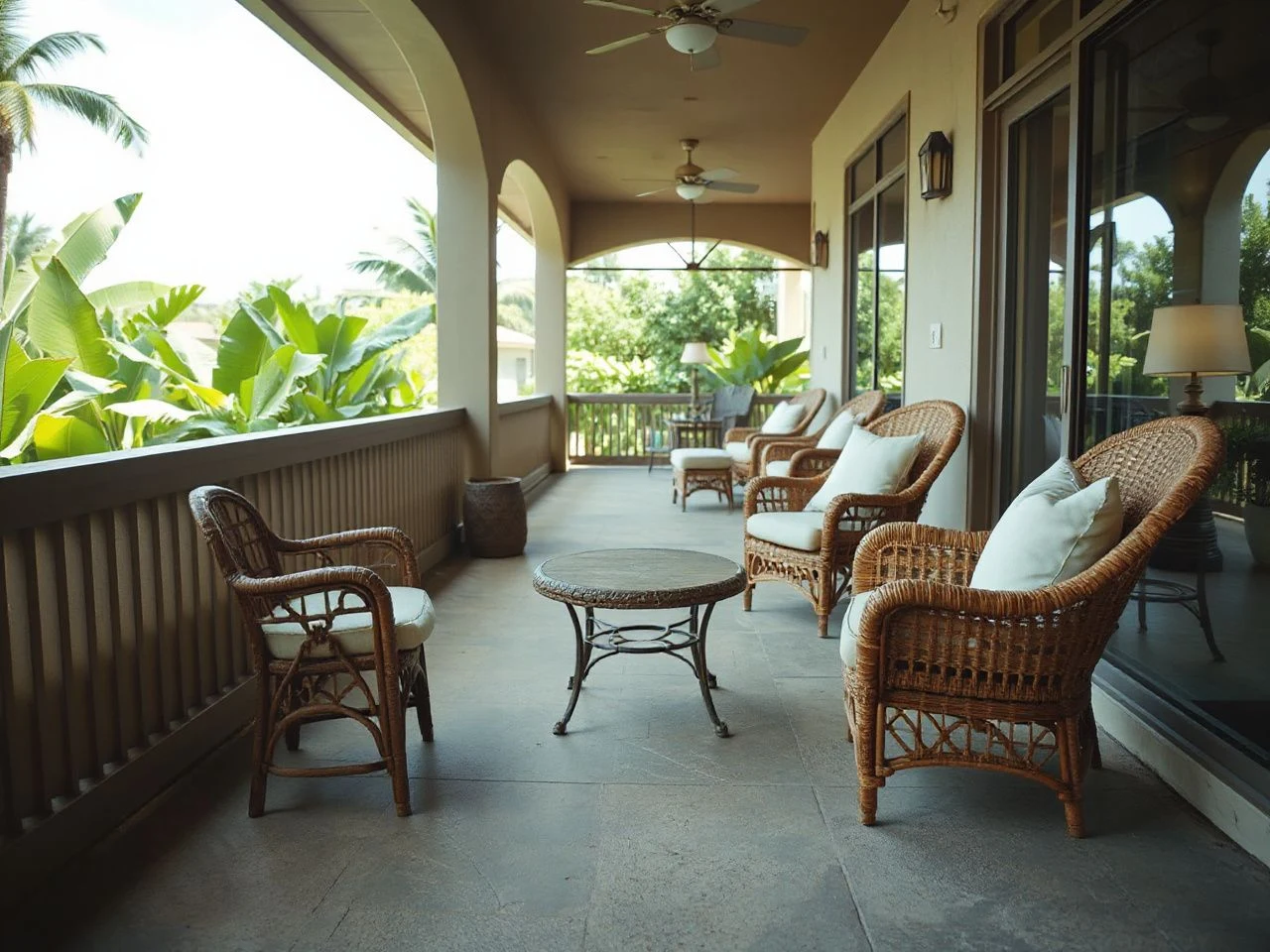
The important distinction for lanai furniture is exposure rather than the label outdoor: a screened, roofed lanai may protect against direct rain while still holding humid air, receiving strong reflected sun, and admitting salt-laden moisture. A useful guide therefore evaluates the complete setup—frame, finish, upholstery, cushion filling, airflow, drainage, flooring, and wind movement—because the weakest component usually determines how well the furniture functions.
That approach changes the room from a collection of attractive pieces into a usable outdoor living space. Measure the route first, then study the enclosure, floor, shade, and ventilation before choosing a style.
Key Takeaways
- Lanai exposure can include humidity, reflected sun, salt air, wind-driven rain, and UV light.
- Frames, finishes, cushions, drainage, and airflow must work together.
- Clear doors, screens, walkways, and drying space matter as much as appearance.
- Breathable covers and regular cleaning help limit trapped moisture and surface damage.
What Makes Lanai Furniture Suitable for the Space?
Furniture intended for an enclosed living room usually assumes a relatively stable indoor environment. A lanai does not offer that consistency. Even a roofed enclosure may admit salt-laden air, bright reflected light, damp breezes, and wind that shifts lightweight objects.
Suitable furnishings therefore need a coordinated response to the room. The frame should tolerate the exposure, the finish should suit the air and sunlight, the upholstery should release moisture, and the arrangement should leave enough room for movement and drying.
Start with the exposure map
Stand at the entrance and identify where light, rain, and wind reach the floor. A screen enclosure may soften direct rain while still allowing moisture to move sideways. Nearby tropical plants can also add dampness if their containers remain wet or restrict air movement.
Salt air deserves attention near a coast, even where rain rarely reaches the cushions. Salt residue can remain on metal and painted surfaces, then attract moisture. A simple care plan should include visual checks for dull film, spotting, surface discoloration, or early corrosion.
A screened lanai is not necessarily weatherproof. The roof and screens change exposure; they do not remove humidity, sunlight, wind, or salt air.
Compare the whole furniture system
Look beyond the visible weave or fabric. A chair can have a suitable outer material but still hold water in its cushion or expose a vulnerable frame beneath the finish. A table may appear stable until a gust catches its surface.
- Frame: Check how the structure meets the floor and whether joints are exposed to standing moisture.
- Finish: Look for a surface that can be cleaned without leaving residue that holds grit or salt.
- Upholstery: Examine seams, underside panels, and the way cushions sit against the frame.
- Filling: Ask how easily the cushion can release water rather than assuming the cover tells the whole story.
- Base: Confirm that feet or furniture glides suit the lanai flooring and do not trap water underneath.
Furniture glides also affect drainage and movement. On a hard floor, unsuitable glides can scratch or allow a chair to slide during use. On textured flooring, they may catch and make repositioning awkward.
Use dimensions as a doorway test
A room plan is useful, but the delivery route comes first. Measure the doorway, turns, screen door opening, and the narrowest passage before admiring a large sofa. Record the sofa’s height, width, and depth in the orientation needed to pass through the opening.
One documented Lanai white wicker arrangement lists a sofa at 80w-36d-36h, a loveseat at 56w-36d-36h, and a chair at 29w-36d-36h. Its ottoman measures 27w-20d-18h, while the oval end table is 26w-19d-22h and the oval coffee table is 46w-27d-18h.
Those figures describe specific pieces, not a universal room plan. Use the same discipline for any layout: compare every listed dimension with the doorway and then leave room to turn the piece without striking screens, walls, or railings.
How Lanai Materials Age Under Sun, Moisture, and Salt Air
Materials do not fail in the same visible way. Teak can change color, metal can corrode or show white oxidation, and synthetic resin wicker can become brittle or discolored under prolonged sun exposure. Knowing the likely visual change makes maintenance easier to plan.
Synthetic resin wicker and natural rattan
Synthetic resin wicker is made for a more exposed setting than natural indoor wicker, but its outer surface still faces UV light, salt residue, and heat reflected from the floor. Inspect the weave for fading, brittleness, loose strands, or a rough surface. Cleaning removes residue; it cannot restore material that has already become brittle.
Natural rattan requires a more sheltered position and careful moisture management. The documented Lanai white wicker construction combines woven rattan and pole rattan, with mortise and joinery techniques and a wood frame with straps serving as the base for the decking. Those construction details explain why the underside, joints, and areas beneath cushions deserve inspection.
Natural rattan and wood-based frames need protection from persistent dampness. A covered location can help, but trapped moisture around joints and decking still needs airflow.
Teak and changing color
Teak may gradually shift from its original warm appearance toward a weathered gray. That change is a surface appearance issue rather than an automatic sign that the frame has failed. Decide whether the desired finish is the original color or a naturally weathered look before setting a care routine.
Leaving teak to weather naturally means accepting visible color change and keeping the surface free from accumulated dirt. Treating teak to retain its original color requires following the finish maker’s directions and maintaining the surface consistently. Mixing those goals creates a patchy result: some areas change while protected sections remain closer to the original tone.
Look closely at end grain, joints, and the underside of the frame. These areas can remain damp after the top looks dry, especially where a cushion or rug reduces air movement.
Powder-coated aluminum and stainless steel
Powder-coated aluminum suits a lanai where low weight and a finished surface matter, but the coating still needs protection from chips, abrasion, and salt residue. A damaged area exposes a weaker point in the overall finish, so avoid dragging tables or allowing gritty debris to remain beneath moving feet.
Stainless steel can resist corrosion better than ordinary unprotected metal, but salt air and residue still justify regular inspection. Corrosion may appear as discoloration, roughness, or staining around fasteners and joints. White oxidation on metal commonly appears as a pale, powdery or chalky deposit on a surface that has reacted with moisture. Remove loose residue using the care method approved for that finish, then address the source of repeated dampness.
Salt residue should be removed from metal before repeated moisture turns surface discoloration into a larger finish problem.
Solution-dyed acrylic and outdoor fabrics
Solution-dyed acrylic is commonly considered for exposed upholstery because the color is integrated through the fiber rather than relying only on a surface print. That does not make cushions immune to dampness, mold, dirt, or fading. The cover, seams, zipper area, filling, and underside remain part of the same moisture system.
A documented tropical fabric specification uses 100% spun polyester high-performance all-weather fabrics. Treat that description as a fabric detail, not proof that a cushion can remain wet or covered for long periods. Drying space still matters.
How to Arrange Lanai Furniture Without Blocking Airflow
A good outdoor living room layout supports movement first. The route from the house to the screen door, seating area, and outside edge should remain easy to read. Furniture that looks balanced on paper can feel crowded if a door needs to swing past an arm or if a chair blocks the only path to the screen.
Step 1: Protect access points
Mark the door swing and the opening of each screen panel. Keep sofa backs, table corners, and ottomans away from those operating areas. Do not use a side table to fill a narrow gap if it forces people to turn sideways or brush against the screen.
Doors and screens need usable clearance around their operating paths. If a large piece must sit near an opening, verify that cushions do not project farther than the rigid frame and that an ottoman can be moved without lifting it over another piece.
Step 2: Create an airflow route
Place the largest seating piece where it does not seal off the enclosure’s natural air path. Avoid pressing a sofa tightly against a screen, especially if its cushions touch the mesh and hold condensation or rain blown through the enclosure.
Leave room behind seating for inspection and cleaning. Airflow is also helped by separating damp cushions from walls, screens, and one another rather than stacking them in a closed corner.
Furniture placement affects drying because cushions and frames release moisture more slowly when surfaces touch or airflow is blocked.
Step 3: Keep the center useful
A coffee table should support the seating arrangement without becoming a fixed obstacle. The documented oval coffee table measures 46w-27d-18h; compare that footprint with the sofa, loveseat, and chair before placing it in the middle.
Use an ottoman as flexible seating or a footrest only if it can move out of the walking route. The listed ottoman size of 27w-20d-18h may fit a compact arrangement, but its actual clearance depends on the surrounding frame and door path.
Step 4: Stabilize light pieces
Lightweight furniture can shift, tip, or become a hazard during wind. Position pieces away from screen panels and doors, use stable glides suited to the floor, and keep loose cushions indoors or in appropriate storage when conditions become unsettled.
The U.S. Consumer Product Safety Commission provides furniture tip-over safety information, and its guidance is relevant when arranging tall or easily shifted pieces near circulation areas. Do not improvise a restraint that damages the frame, screen, or flooring.
For a broader planning reference, these backyard lanai ideas for shaping an outdoor living area can help connect seating, shade, plants, and walking routes without treating the room as a simple indoor lounge.
Preventing Damp Cushions, Mold, and Finish Damage
Cushions stay damp when water enters the cover, when humid air cannot circulate, or when the cushion rests against a wet frame or floor. The same issue can affect woven furniture and wood joints. Drying is a design task as much as a cleaning task.
Build in drainage and drying
- Lift cushions off wet flooring instead of leaving them flat on the ground.
- Separate cushions from screens, walls, and the rear of the frame so air can move around them.
- Stand or lean cushions in a way that exposes both the cover and underside to air.
- Open the lanai to moving air when conditions are suitable, while protecting furniture from fresh rain.
- Store cushions only when they are dry and the storage space itself is ventilated.
Quick-dry foam can help a cushion release water more readily than a filling that holds moisture, but the foam does not remove the need for airflow. A soaked cover, blocked underside, or sealed storage space can keep the complete cushion damp.
Quick-dry foam still needs ventilation because a wet cover and enclosed storage can delay drying.
Clean cushions without spreading the problem
Begin by removing loose soil with a soft brush or vacuum attachment suitable for the fabric. Spot-clean a small, less visible area with the method approved for the upholstery, then avoid saturating the filling unless the care instructions specifically permit it.
Rinse only as directed for the fabric and cushion construction. Dry cushions completely before returning them to the frame or placing them under an outdoor furniture cover. Odor, cool dampness, discoloration, and a cushion that feels heavier or less resilient are signs that moisture may still be present.
Care for wicker and wood
Use a soft brush to remove soil from synthetic resin wicker, including the underside and intersections where debris collects. Wipe away residue rather than leaving a wet film to dry in the weave. Natural rattan and wood require gentler handling because persistent dampness can affect the material and its joinery.
Check the wood frame with straps beneath the rattan decking. Look for darkened areas, loosened straps, softened edges, or a smell that remains after the surface appears dry. Those signs call for a closer maintenance review rather than another layer of surface cleaner.
Use covers at the right time
Outdoor furniture covers help reduce direct dust, sun, and rain exposure when they fit the piece and allow moisture to escape. A breathable cover is more useful than a tightly sealed one that traps damp cushions beneath it.
Never cover visibly wet furniture and assume the problem is solved. Remove the cover during suitable dry conditions so the furniture can air, and inspect the underside before covering it again. A cover should protect a dry setup, not create a closed pocket around moisture.
Plan maintenance by material
Low-maintenance does not mean maintenance-free. Powder-coated aluminum and synthetic resin wicker may require less attention to color and moisture than natural rattan or untreated wood, yet both still need cleaning and inspection. Teak asks you to choose between a weathered appearance and maintaining its original color. Metal requires attention to salt residue, coating damage, and oxidation.
Compare long-term upkeep by asking practical questions rather than focusing only on the initial appearance:
- Can the surface be cleaned without disassembling the frame?
- Can cushions be removed, aired, and stored separately?
- Will replacement fabric or filling be available if a cushion deteriorates?
- Does the finish show scratches, oxidation, or fading quickly in the intended position?
- Can a damaged component be repaired, or must the complete piece be replaced?
These questions reveal replacement costs without requiring an invented price. A material that needs more careful upkeep may still suit a sheltered lanai, while a low-maintenance frame may fail to solve a cushion-storage problem.
Check safety information and standards carefully
Safety claims should come from the organization responsible for the guidance, not from a vague label. The ASTM International site explains its role in developing voluntary consensus standards, so use the relevant manufacturer documentation and applicable standard information when a furniture claim refers to testing or performance.
For any restraint, anchoring method, or unusual installation near a wall, door, or screen, follow the hardware instructions and inspect the structure before attaching anything. The guide to anchoring furniture to a wall safely step by step is useful for understanding the planning questions, but the furniture and wall instructions remain controlling.
Beginner, Intermediate, and Advanced Lanai Planning
Beginner: make the room usable first
Begin with a small floor plan made from the dimensions listed for the actual pieces. Mark the doorway, screen panels, stairs, and any drainage points. Place the largest seating item only after the entrance route is clear.
Choose a simple care station nearby: a soft brush, suitable cloths, cushion storage, and a place where wet covers can dry. The station should not block the door or become a damp pile beside the seating.
Intermediate: match material to exposure
Divide the lanai into brighter, more protected, and more wind-exposed areas. Put materials that need greater shelter farther from direct sun and wind-driven rain. Place cushions where they can be removed easily rather than burying them beneath a table or against a screen.
Review the floor at the same time. Flooring that holds water changes how quickly feet, glides, and lower frames dry. Plants should support the room without narrowing the airflow route or adding persistent moisture beside cushions.
Advanced: create a repeatable inspection routine
Inspect the same areas in the same order: doorway route, screen contact points, cushion undersides, frame joints, fasteners, glides, and cover condition. A repeatable sequence makes small changes easier to notice before they affect the whole arrangement.
Record the finish goal for teak, the cleaning method for upholstery, and the storage location for cushions. This removes guesswork when weather changes or a piece moves to a brighter part of the enclosure.
Frequently Asked Questions
What makes lanai furniture different from indoor living-room furniture?
Lanai furnishings must account for humidity, UV exposure, reflected sun, salt air, wind, and occasional wind-driven rain. The frame, finish, upholstery, cushion filling, drainage, and airflow all matter. Indoor pieces may look suitable but can hold moisture, fade, or deteriorate if their materials and finishes were intended for a stable interior environment.
Why do lanai cushions stay damp after rain?
Cushions stay damp when water enters the cover, the filling holds moisture, or the cushion rests against a wet frame, screen, wall, or floor. Remove cushions when practical, separate them from surrounding surfaces, and expose the underside to moving air. Do not place damp cushions beneath a tightly fitted cover or into closed storage.
Should teak be left to weather or treated?
Both approaches can be intentional. Leaving teak untreated accepts a gradual change toward a weathered appearance while requiring ordinary cleaning. Treating the surface aims to retain the original color and requires following the finish instructions consistently. Select one visual goal and maintain the surface accordingly; alternating between approaches can create uneven color.
How can lightweight furniture remain stable in wind?
Keep lightweight pieces away from door swings and screen panels, choose glides suited to the flooring, and move loose cushions into suitable storage when wind increases. Do not attach improvised restraints to a screen or fragile frame. Tall or unstable pieces need particular care near walkways, and the CPSC provides furniture tip-over safety information for planning.
Which materials usually require the least ongoing maintenance?
Powder-coated aluminum and synthetic resin wicker generally simplify routine surface care compared with natural rattan or wood-based construction, but neither is maintenance-free. Salt, dirt, standing moisture, and UV exposure still affect appearance. Teak requires a clear choice about weathering, while metal needs inspection for coating damage, corrosion, and white oxidation.