Tile is usually the last decision made and the first one regretted in a walk-in shower remodel, because the choice affects more than looks: grout lines, tile size, and material all interact with water, slope, and daily cleaning long after installation day. Large-format tile (12×24 inches or bigger) means fewer grout lines to maintain, but it needs a very flat substrate underneath — even a slight dip in a shower wall or floor will show as lippage, or worse, cause a large tile to crack under foot traffic.
If the shower is curbless, with no raised threshold to step over, the floor also needs a linear drain and a sloped mortar bed — typically about a quarter inch of fall per foot, sloping toward the drain — which is a detail most design roundups skip entirely but that a tile installer needs to plan for from day one. The fourteen ideas below cover material, color, pattern, and layout choices for a walk-in shower, along with the practical trade-offs in maintenance, cost, and installation difficulty that decide whether an idea holds up under daily water exposure rather than just in a photo.
1. Serene Limestone Elegance
Limestone is a natural, porous stone, so every slab shows unique fossil texture and veining that a manufactured tile can’t replicate — no two installations look identical. That same porosity means it needs to be sealed after installation and resealed periodically, roughly once a year in a shower that sees daily use, though it depends on the specific stone and sealer, or it will absorb water and stain. Choose a honed, matte finish rather than polished for the shower floor and lower walls; honed stone has more surface texture and grips better underfoot when wet, while polished stone can be genuinely slippery. Limestone also etches, losing its finish and sometimes pitting, when it contacts acidic cleaners like vinegar or many general bathroom sprays, so budget for a pH-neutral stone cleaner as an ongoing cost, not just the sealer.
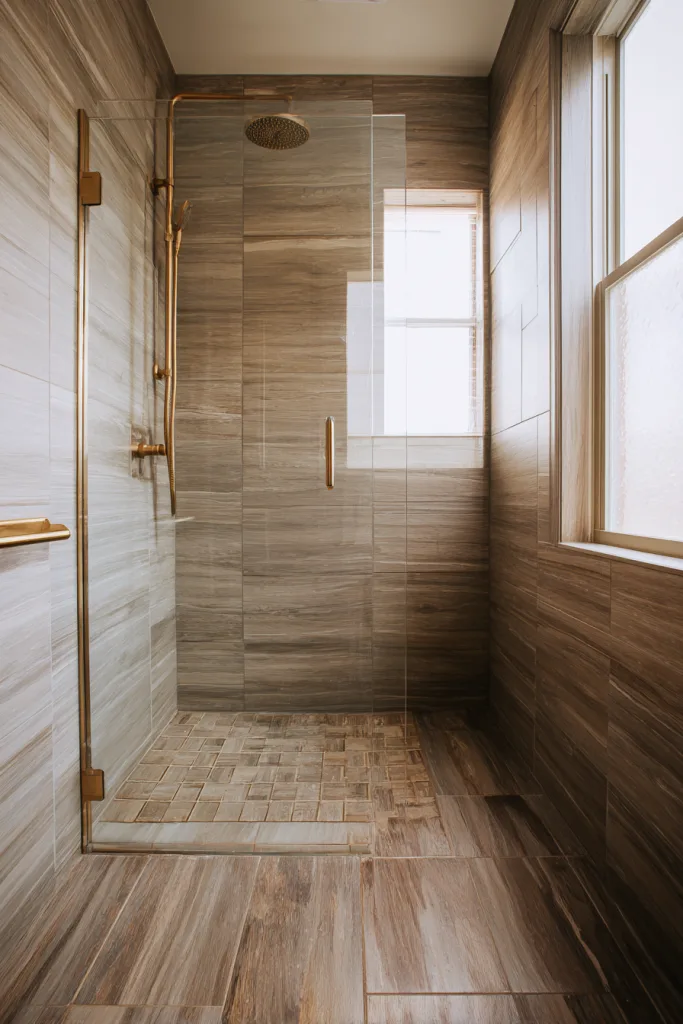
2. Wood-Look Warmth Without Worry
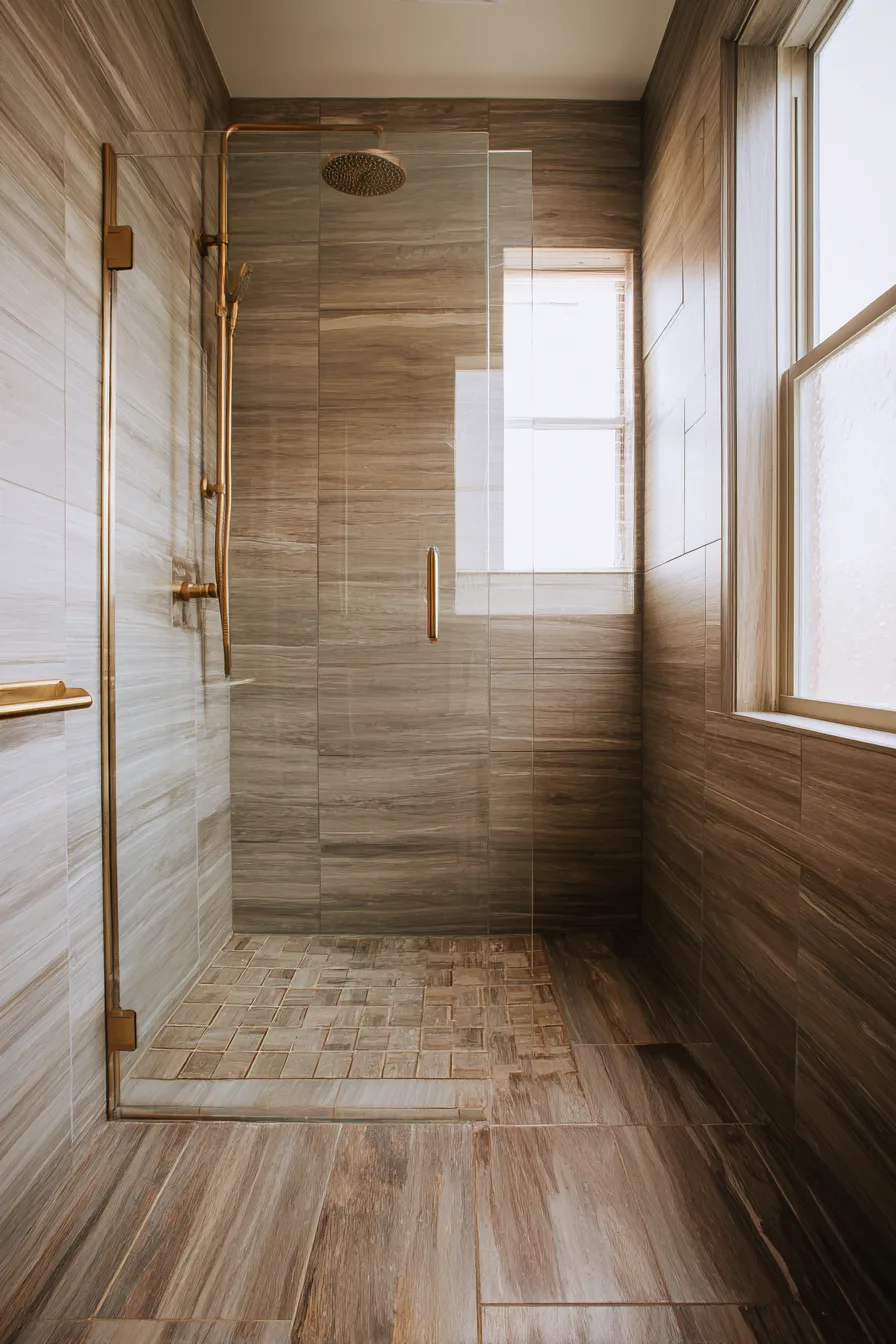
Wood-look tile is porcelain, not real wood, printed and textured to reproduce grain and knots down to a realistic texture you can feel underfoot. Because it’s porcelain, it doesn’t absorb water, warp, cup, or need any sealing — the failure modes that would rule out real hardwood in a shower simply don’t apply. Plank-format wood-look tile is typically laid in a running bond or herringbone pattern, the same way real wood flooring would be, which is part of what sells the illusion. Darker tones like walnut or espresso hide water spots and soap scum better day to day than pale oak tones, which show mineral deposits from hard water more visibly. It’s a genuinely practical way to get a warm, natural material look in a wet space where the real material wouldn’t survive.
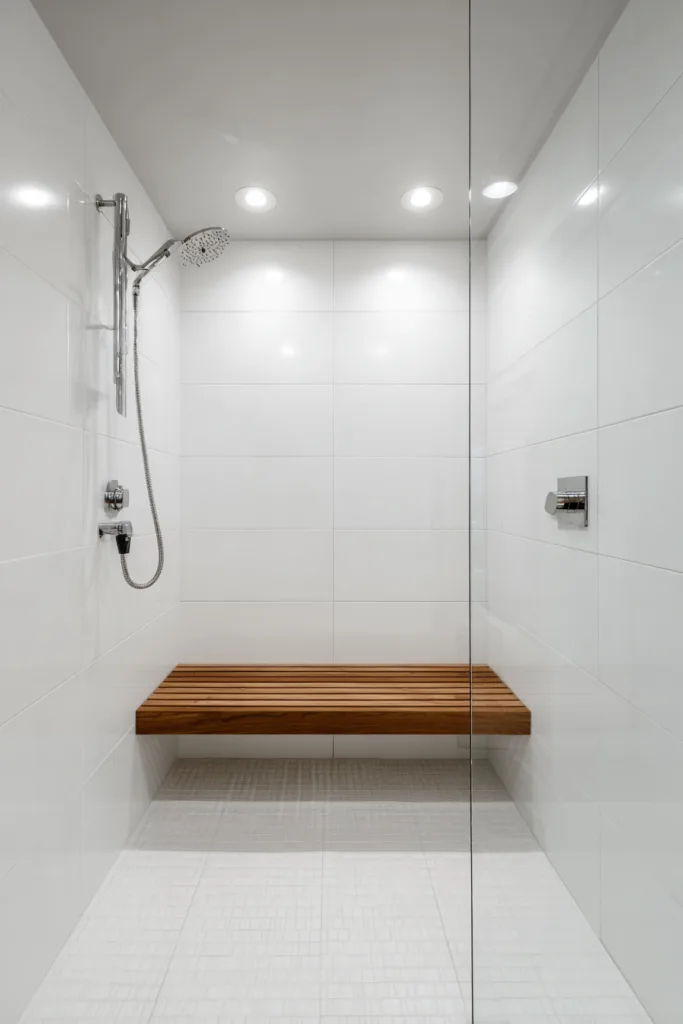
3. Minimalist Marvel in White
Large-format white tile, typically 12×24 inches or bigger, reduces the number of grout lines dramatically compared to a standard 4×4 or subway tile, which reads visually cleaner and gives a small bathroom less to compete with. The trade-off is installation: large tile needs a flatter substrate than small tile, since it can’t flex to follow a wavy wall or floor the way small tiles can, so budget for substrate prep if the existing walls aren’t true. Choose a matte finish over gloss for the shower floor, and consider it for the walls too — matte hides water spots and soap residue far better than a glossy surface, which shows every drop until it’s wiped down. White grout will show grime over time in a heavy-use shower; a light gray grout is a practical middle ground that still reads clean without the upkeep of pure white.
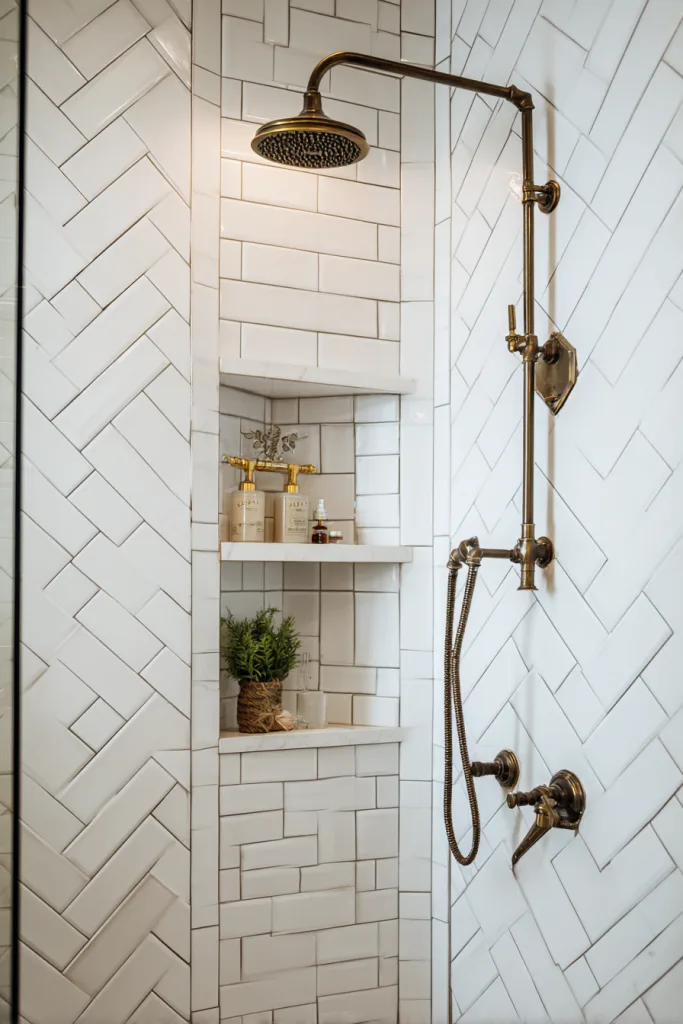
4. Creative Subway Patterns
The classic 3×6 subway tile can be laid in a running bond, the standard brick-offset look, or in a herringbone, vertical stack, or basketweave — the tile itself doesn’t change, only the layout. Patterned layouts like herringbone use noticeably more cut tile than a straight running bond, since every edge row needs an angled cut; budget roughly 15 to 20 percent extra material for waste on a herringbone or diagonal layout, and expect more labor time since each cut is measured individually. Grout color changes a pattern’s visibility more than almost any other choice: a contrasting grout, like dark grout with white tile, makes the pattern the star, while a grout that closely matches the tile lets the wall read as one textured surface. Precise, consistent spacing is what makes a patterned layout look intentional rather than uneven — insist on tile spacers throughout the installation.
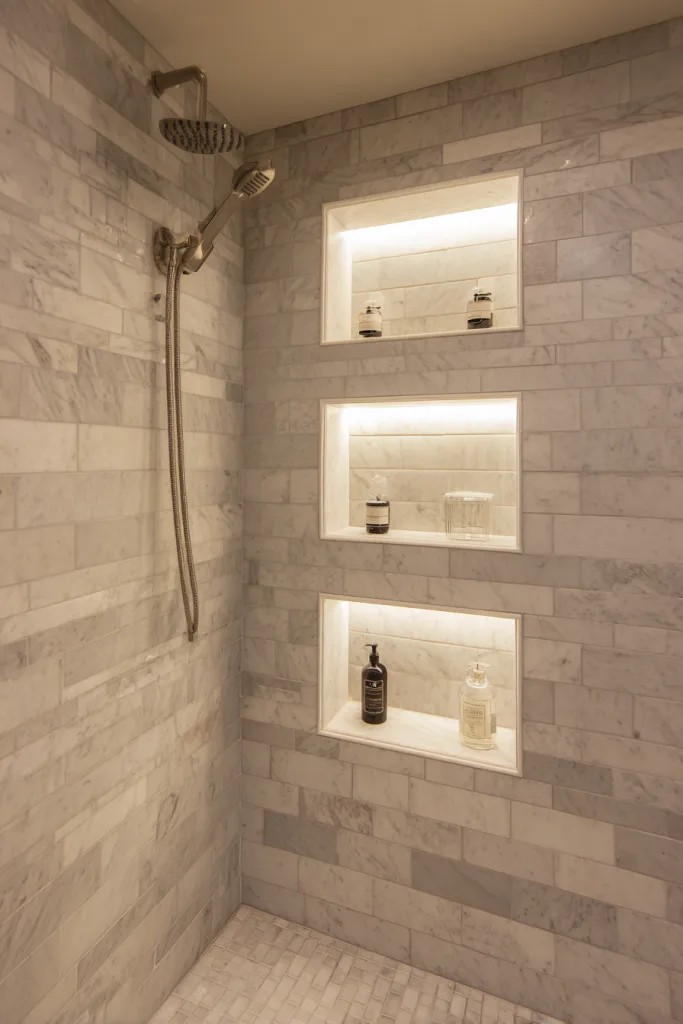
5. Functional Beauty with Built-Ins
A recessed shower niche has to be planned before the walls are closed up and tiled, not added afterward, because it needs its own waterproofing, typically a foam niche insert or a fully membraned box set into the stud wall, independent of the surrounding wall’s waterproofing. A tall, narrow niche, roughly 12 by 24 inches, suits bottles, while a shorter, wider niche fits soap and smaller items better; many showers use one of each rather than a single large opening. Slope the niche’s interior shelf slightly toward the front, the same logic as the shower floor, so water doesn’t pool inside it. Tiling the niche interior to match the surrounding wall keeps it visually quiet; using a contrasting tile or a mosaic accent turns it into a small design feature instead of a purely functional cutout.
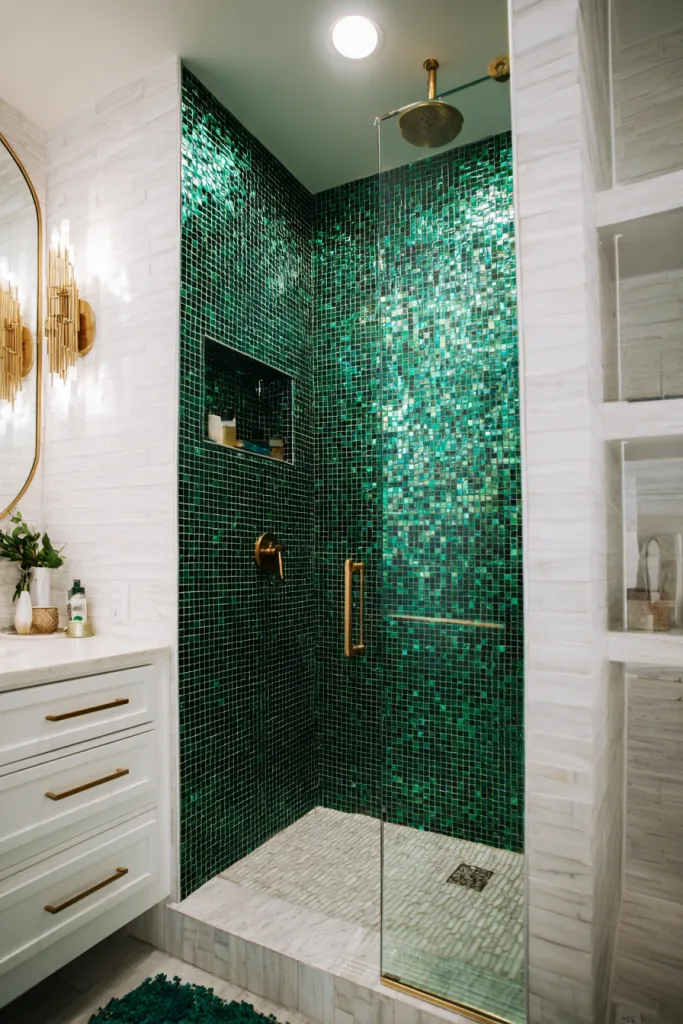
6. Bold Accent Wall in a Jewel Tone
A single accent wall, in a saturated jewel tone like emerald or deep blue, a bold pattern, or a contrasting material, concentrates the design risk onto one surface instead of four, which is why it reads as a deliberate choice rather than an overwhelming one. Place it on the wall most visible from the bathroom entrance or the wall directly opposite the shower entry, since that’s the sightline that actually gets seen day to day, not necessarily the wall behind the shower head. Keep the remaining walls in a plain neutral tile so they recede and let the accent wall do the work; repeating the bold color or pattern on a second wall usually reads as busy rather than intentional. Because it’s confined to one wall, an accent wall is also one of the more affordable ways to use an expensive tile — a premium tile is a much smaller expense when it only covers a quarter of the shower.
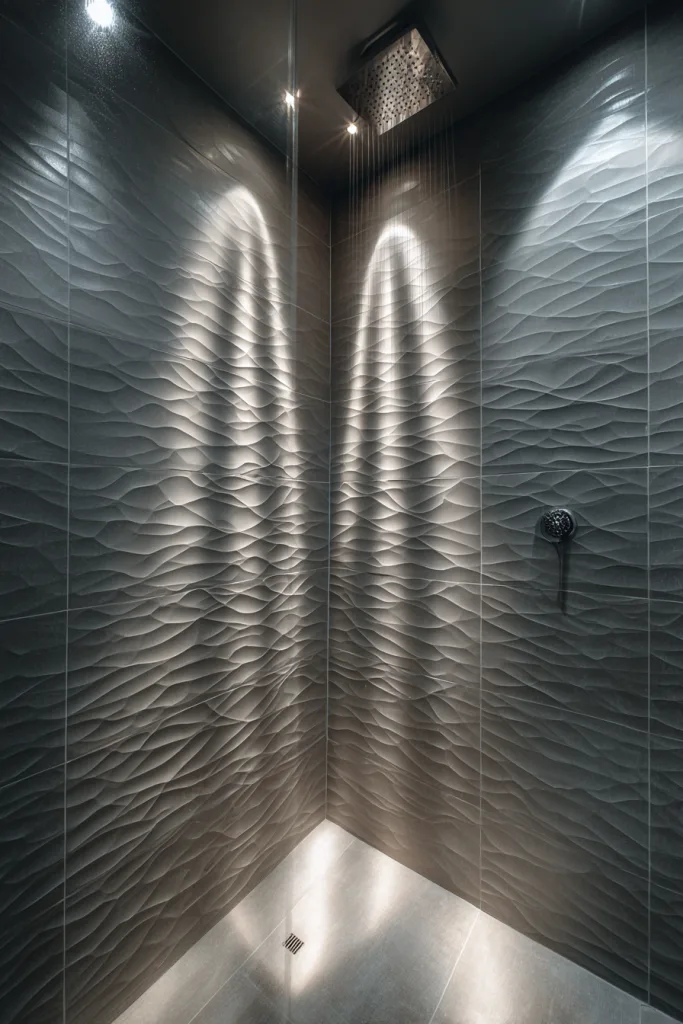
7. Dimensional Tile for Depth
Three-dimensional tile, whether scalloped, wave-patterned, or cut with a raised geometric relief, catches light differently depending on the time of day and the angle of your fixtures, creating shadow and movement that flat tile can’t produce. That same texture is the trade-off: raised and recessed surfaces collect soap scum and mineral deposits more readily than a flat tile and take more scrubbing to keep clean, so it’s a better fit for an accent wall than for tiling floor-to-ceiling. Precise alignment matters more with dimensional tile than with flat tile, since any inconsistency in the pattern is much more visible under angled light — this is one case where hiring an experienced installer is worth the added labor cost. Position a light fixture so it grazes the textured wall at an angle rather than lighting it head-on; that’s what actually brings out the shadow effect the tile is chosen for.
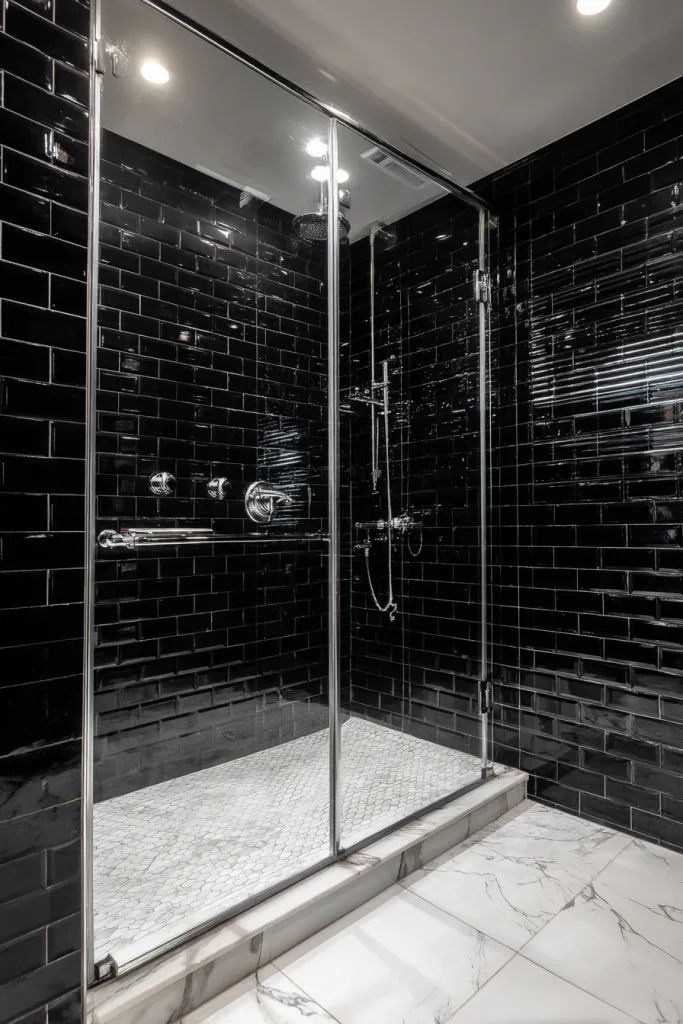
8. Bold with Black
Glossy black tile reflects light and can actually help a small shower feel less closed-in than a matte black finish would, since the reflections add a sense of depth; matte black, on the other hand, reads more subdued and hides water spots better day to day. Either finish shows hard-water mineral spots and soap scum more visibly than a lighter tile, simply because the contrast makes any residue stand out, so a squeegee used after every shower makes a real difference in how the tile looks a week later. Pair black tile with a glass shower door rather than a solid curtain, and keep the surrounding room’s lighting bright, since black absorbs rather than reflects ambient light and a dim black shower can feel more cave-like than dramatic. Using black as a floor or an accent band rather than covering every wall keeps the effect dramatic without making a small bathroom feel smaller.
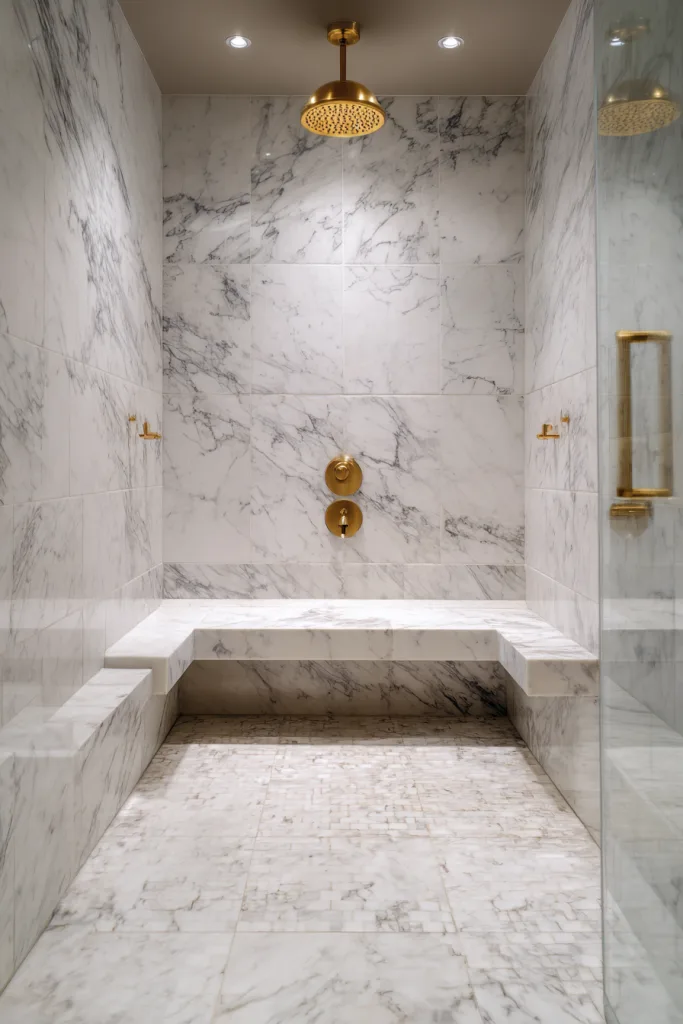
9. Luxurious Marble Touch
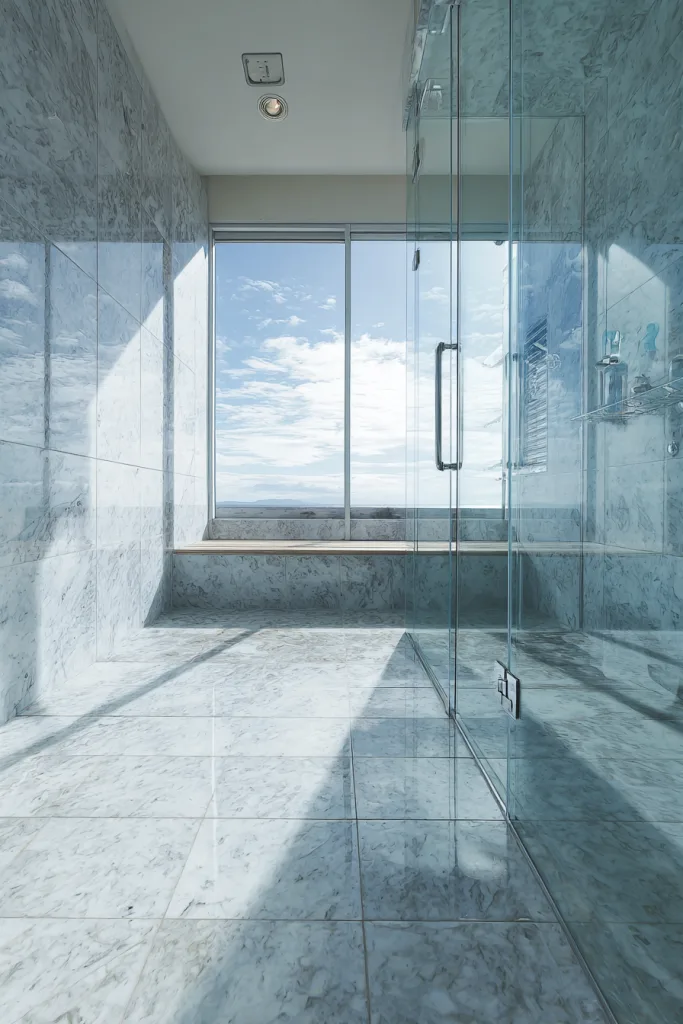
Marble is a natural stone, so it needs the same ongoing care as limestone: periodic sealing, and only pH-neutral cleaners, since vinegar, bleach, and most standard bathroom sprays will etch the surface and dull the polish permanently. Carrara and Calacatta are the two marbles most often used in showers; Calacatta typically costs more and has bolder, more dramatic veining, while Carrara has a subtler gray-veined pattern and is the more budget-friendly of the two. Large-format marble slabs or tiles minimize grout lines and let the natural veining read as a continuous pattern rather than being interrupted every few inches; book-matched slabs, mirrored pairs cut from the same block, take this further but cost significantly more. Marble is genuinely more maintenance than porcelain, so it’s worth being honest about how consistently you’ll reseal and clean it before committing a whole shower to it rather than an accent.
10. Geometric Elegance
Hexagon, diamond, and fish-scale shapes are the most common geometric tile profiles for showers, ranging from small mosaic-sheet formats an inch or two per side to large-format single hexagons over a foot across; the scale you choose should roughly match the room, with larger patterns in a spacious shower and smaller mosaic-scale geometry in a compact one. A monochromatic scheme, one color varying only in the tile’s natural shade variation, keeps a geometric pattern from feeling busy, while a two-tone layout makes the geometry itself the focal point. Consistent grout spacing matters even more with geometric shapes than with squares or rectangles, since any drift is immediately visible in a repeating pattern — this is a job for tile spacers and a patient installer, not a quick weekend DIY. Small geometric mosaic sheets are also one of the more practical ways to tile a curved or irregular area, like a shower floor around a linear drain, since the small pieces flex to follow the slope.
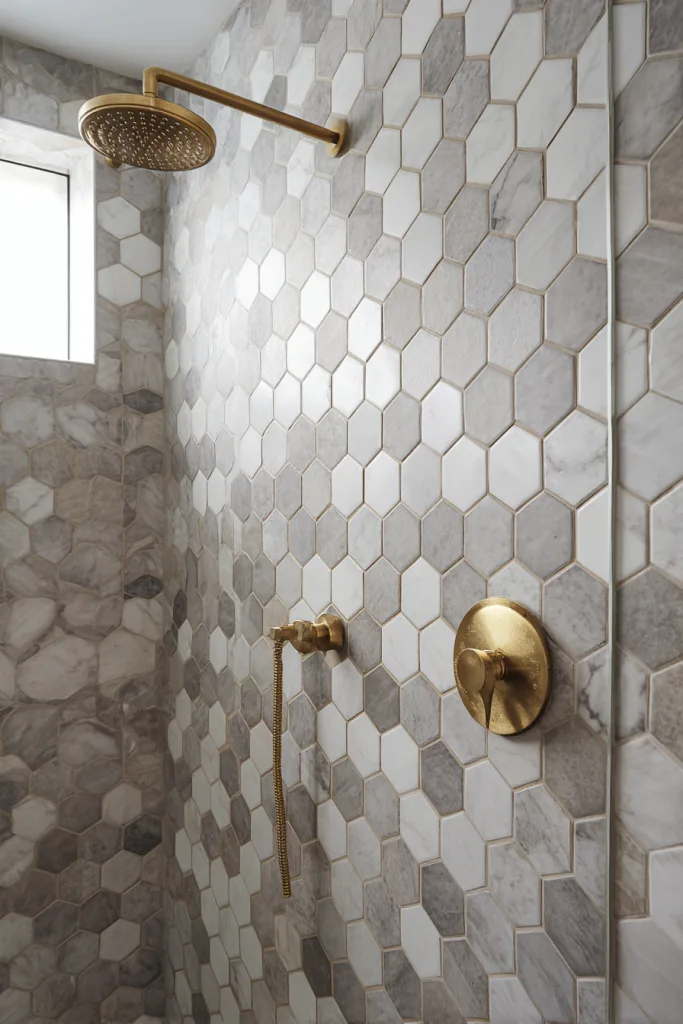
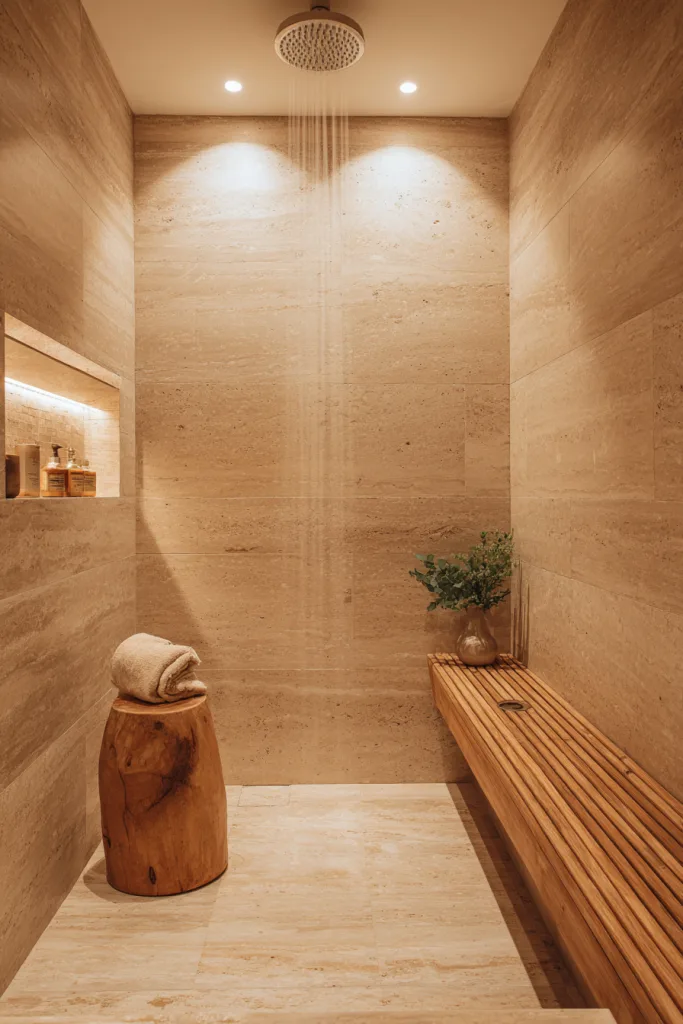
11. Earthy Tones for Tranquility
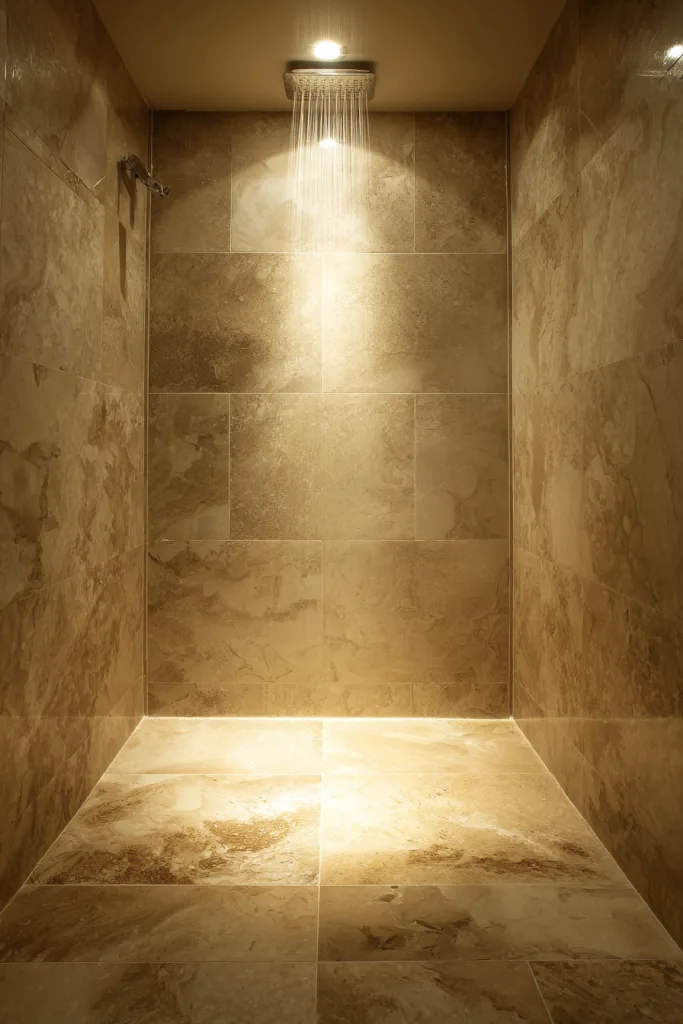
This is a color-and-tone choice more than a specific material: warm beige, taupe, and soft gray can come in porcelain, ceramic, or natural stone like travertine, and the finish you choose matters as much as the color. Travertine, a relative of limestone, has natural pits and a rougher, more matte texture that reads more organic than porcelain in the same color, but it carries the same porous-stone caveats of sealing, pH-neutral cleaners, and periodic resealing. If low maintenance matters more than authentic stone texture, a porcelain tile in a travertine-look finish gets a similar warm, earthy look without the sealing schedule. Layer two or three tones within the same warm-neutral family, such as a beige floor with a slightly darker taupe accent band, rather than a single flat color, which is what keeps an earth-tone shower from reading as plain.
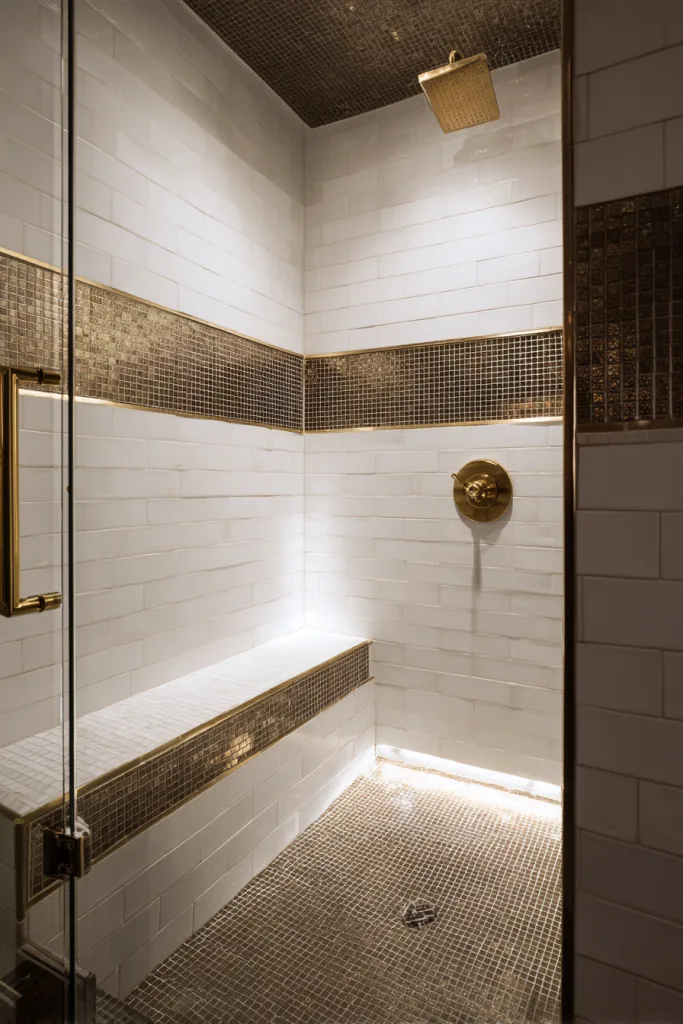
12. Modern Metallics
True metal tile is uncommon in showers for a practical reason: raw metal corrodes or tarnishes in constant moisture, so what’s usually sold as “metallic tile” is a glass or ceramic tile with a metallic glaze or a metal-leaf backing laminated behind glass, which is durable in water in a way solid metal isn’t. Gold, bronze, and copper finishes read warmer and more traditional, while silver and pewter tones lean more contemporary. Because these tiles are meant to reflect light, using them across a full wall can create a genuinely busy, hard-to-light space; a mosaic accent band or a single niche lined in metallic tile gets the glamour without overwhelming the room. Check the specific product’s water rating before buying — some metallic-finish tiles are rated for backsplashes but not constant shower exposure, and the finish can degrade faster in a wet, humid environment than in a kitchen.
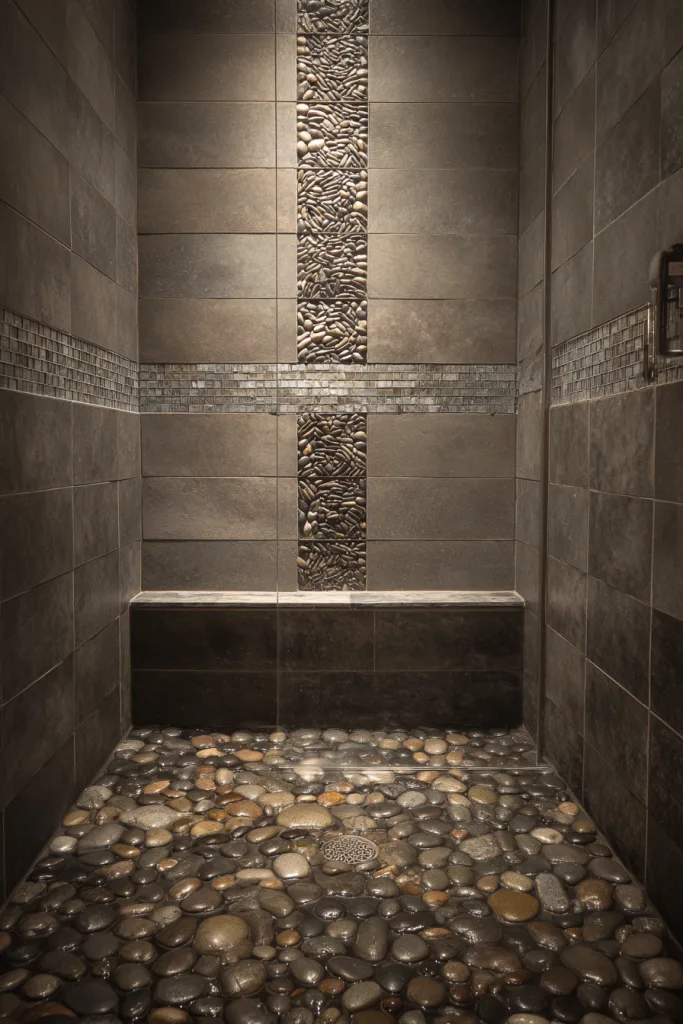
13. Mixing Materials Masterfully
Combining materials, such as stone with ceramic, glass mosaic with large-format porcelain, or a metal accent strip between two tile types, works best when the color palette stays consistent even as the material and texture change; matching colors across different materials is what keeps a mixed installation looking planned rather than accidental. Where two different materials meet, a metal edge trim, commonly an aluminum or stainless profile strip made for this purpose, gives the transition a clean, finished line and protects both tile edges from chipping. Leaving two tile edges butted directly against each other without a trim strip is a common amateur mistake that shows over time. Plan material transitions at logical breaks, like where a shower floor meets a wall or where a niche is framed, rather than mid-wall, where an unexplained material change reads as a mistake rather than a decision.
14. Open Feel with Glass Enclosures
A frameless glass shower door showcases the tile installation in a way a curtain or framed door doesn’t, since there’s no metal frame or opaque panel breaking up the view of the walls and floor — if you’re investing in a statement tile, a clear glass enclosure is what lets it actually be seen from the rest of the bathroom. Shower glass is required to be tempered safety glass in virtually every jurisdiction, since it breaks into small, rounded pieces rather than sharp shards if it fails; frameless panels typically run 3/8 to 1/2 inch thick to stay rigid without a frame supporting the edges. That thickness, along with the quality of the hinges and clamps, is what determines long-term performance — cheaper hardware can develop play or leak at the seals within a few years. A clear anti-limescale coating on the glass, sometimes applied at the factory and sometimes added after, meaningfully cuts down on water-spot buildup and how often you need to squeegee it to keep it looking clear.
Creating Your Perfect Shower Sanctuary
Tile is one of the more permanent choices in a bathroom, so it’s worth deciding on material and layout before falling in love with a specific color. Porcelain versus natural stone, for instance, changes not just the look but the ongoing maintenance and the substrate prep an installer needs to do. If the shower will be curbless, loop in a tile installer or waterproofing contractor early, since the linear drain and sloped mortar bed need to be planned before any tile goes on the wall.
Budget doesn’t have to mean choosing the cheapest tile throughout. Many of the ideas above work well as a single accent, such as a niche, a feature wall, or a band of geometric mosaic, paired with a more affordable field tile for the bulk of the shower, which puts the money where it’s actually visible rather than spreading it evenly across every surface. Whatever combination you land on, get a written quote that separates tile, labor, and waterproofing, since waterproofing in particular is easy to underestimate and expensive to fix after the fact.
Frequently Asked Questions
How much does it typically cost to tile a walk-in shower?
Cost depends heavily on tile choice, shower size, and local labor rates. As a rough guide, basic ceramic tile installation often runs $8 to $15 per square foot, while premium natural stone or detailed mosaic work can reach $25 to $50 or more per square foot. For a typical walk-in shower, all-in costs including labor and waterproofing commonly land somewhere between $1,500 and $8,000. Get quotes from local installers for an accurate number, and make sure waterproofing is itemized separately — it’s easy to underestimate and expensive to redo.
Which tile materials work best for shower floors?
Shower floors need good slip resistance and proper drainage more than they need one specific material. Textured ceramic or porcelain, honed (not polished) natural stone, and small mosaic tiles all provide better traction when wet than large, smooth, glossy tiles — the extra grout lines in a mosaic floor also add texture underfoot. Whatever tile you choose, the floor needs to be sloped toward the drain, roughly a quarter inch of fall per foot for a standard drain, or more precisely engineered if it’s a curbless shower with a linear drain. That slope is a waterproofing and structural detail, not a tile choice, so plan it with your installer before tiling starts.
How do I choose grout colors that enhance my tile design?
Matching grout to the tile color creates a seamless, larger-feeling surface, since the eye doesn’t register individual tiles as separate shapes. Contrasting grout, dark with light tile or vice versa, emphasizes the tile shape and any pattern, which is worth doing deliberately for something like herringbone or hexagon, but can look busy if that wasn’t the intent. For a shower specifically, consider upgrading to epoxy grout: it costs more than standard cement grout, but it resists staining and mildew growth far better in an environment that’s wet every day, which matters more here than on a kitchen backsplash.
What’s the best way to maintain different types of shower tile?
Porcelain and ceramic need only regular cleaning with a mild, non-abrasive cleaner — they don’t absorb water and don’t need sealing. Natural stone, including marble, limestone, and travertine, needs periodic resealing and a pH-neutral cleaner, since acidic or abrasive cleaners etch the surface over time. Glass tile shows water spots readily but wipes clean easily with a squeegee used right after each shower. Across all tile types, a squeegee habit and good bathroom ventilation reduce mineral buildup and mildew far more than any specific cleaning product.