What makes a master bedroom feel restful rather than merely furnished? A successful master bedroom balances visual calm with practical zoning: the bed anchors the composition, while lighting, textiles, and storage support different routines without competing for attention. Experienced decorating distinguishes coordinated repetition of color, material, or shape from matching every item, and treats scale, circulation, daylight, and maintenance as part of the design rather than as afterthoughts. These master bedroom decorating ideas begin with that distinction, then apply it to layout, color, lighting, textiles, and the hardware that keeps wall decor secure.
Key Takeaways
- Keep the bed as the visual anchor and protect clear circulation around it.
- Build a restful scheme through repeated colors, textures, and shapes rather than a matching furniture set.
- Use ambient, task, and accent lighting for different bedroom routines.
- Choose curtains, rugs, and upholstered pieces with cleaning, sunlight, moisture, and safety in mind.
Beginner foundations for master bedroom decorating ideas
Choose a style by mood, not by a shopping list
A restful style should describe how the room feels at night, not simply name a visual trend. Modern bedrooms can remain warm through soft wall paint, tactile bedding, and furniture with restrained shapes. An elegant room may use wall art and an upholstered headboard, but the composition still needs open space and quiet surfaces. A more traditional room can feel current when its colors repeat with restraint and its storage does not crowd the bed.
Start by writing three words that describe the intended atmosphere, such as calm, warm, or tailored. Remove any proposed item that supports none of those words. The exercise prevents a bedroom from becoming a collection of attractive objects with no common purpose.
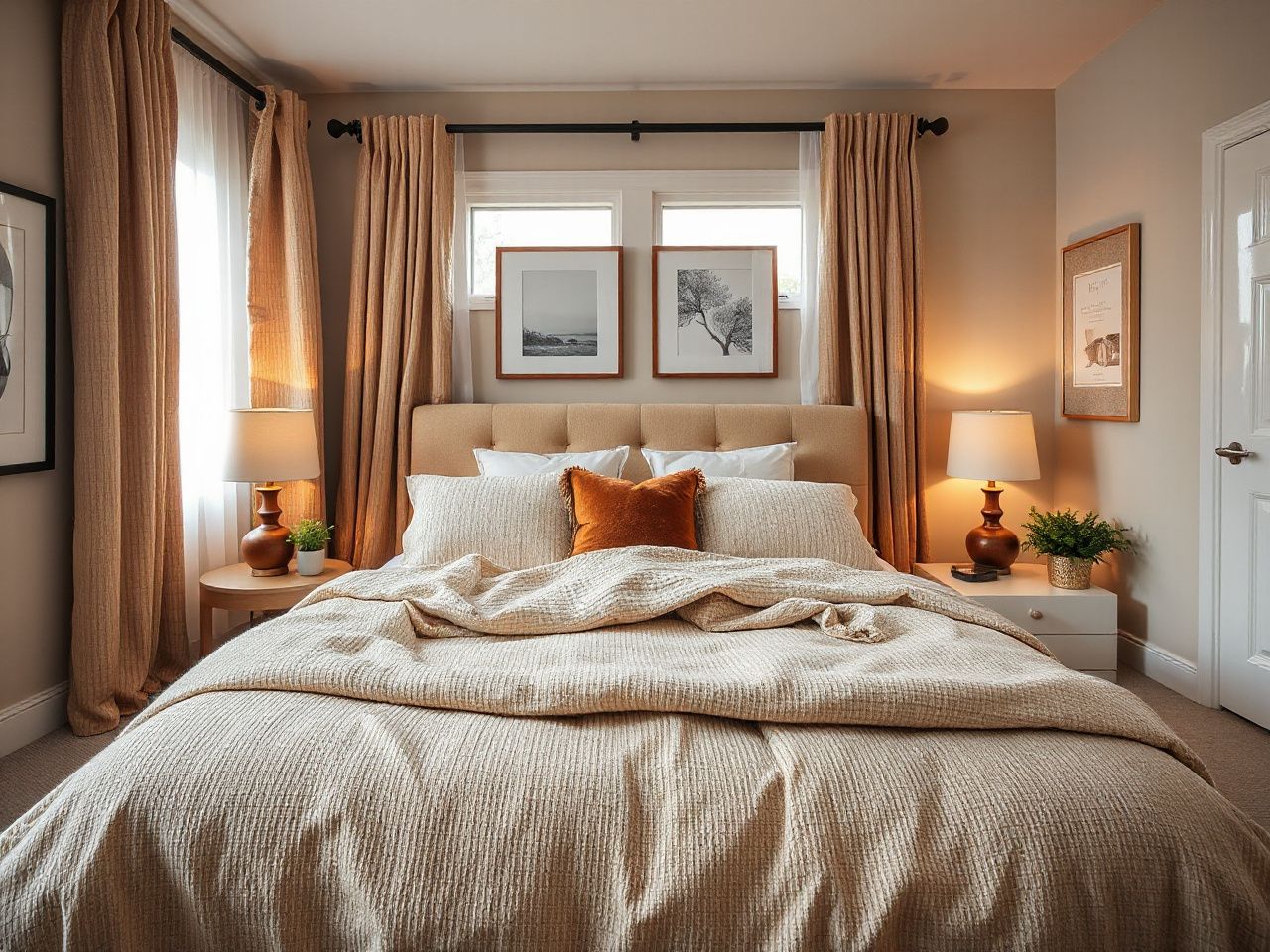
A restful bedroom style depends on repeated visual cues rather than identical furniture. Repeat one wall-paint undertone in the bedding, echo a bedside table shape in a lamp or frame, or carry a textile texture from the upholstered headboard into a cushion. The room will feel related without looking purchased as a single set.
Make the bed the visual anchor
The bed should be the first clear decision in the room. Place the bed where the mattress, bed frame, and headboard read as one composed unit, then arrange other pieces around it. A large master bedroom can hold a seating area, but that area should support the bed instead of becoming a competing focal point.
Bedside tables should relate to the bed in scale and should leave room for the practical objects used before sleep. Storage belongs where it supports dressing or changing routines, not where it interrupts the main view. A bedroom layout works best when the path from the entry to the bed, wardrobe, and bathroom feels direct rather than pinched.
Clear circulation is a design feature, not unused space. Rugs, cords, and low furniture must not create trip hazards, particularly near the sides and foot of the bed. The U.S. Consumer Product Safety Commission provides consumer safety information, so its guidance is a sensible reference when checking household hazards and secure placement.
Arrange furniture around real routines
List the actions that happen in the room: sleeping, reading, dressing, storing clothing, and perhaps sitting near a window. Assign a zone to each action before choosing decorative pieces. This approach is especially useful for couples, because two people may need separate reading light, bedside storage, or access to clothing without crossing the same path.
- Sleeping zone: Center the bed on the strongest wall or the clearest sightline, while keeping access to both sides where the room allows.
- Reading zone: Place a seat where a person can use it without blocking a wardrobe door or the route around the bed.
- Dressing zone: Keep mirrors and clothing storage near the dressing routine, rather than scattering them across the room.
- Display zone: Reserve wall art for areas that can be viewed comfortably and attached securely.
Large rooms often look empty because the furniture is pushed against the walls. Bring a seating arrangement or a low storage piece into the composition if circulation remains clear. Small rooms need the opposite discipline: let the bed do more visual work and remove furniture that does not support a daily activity.
Coordinate without buying a matching bedroom set
Matching every bedside table, dresser, frame, and lamp can flatten the room. Coordination is stronger when a few qualities recur. The repeated quality might be a warm color, a shared wood tone, a rounded silhouette, or a similar visual weight.
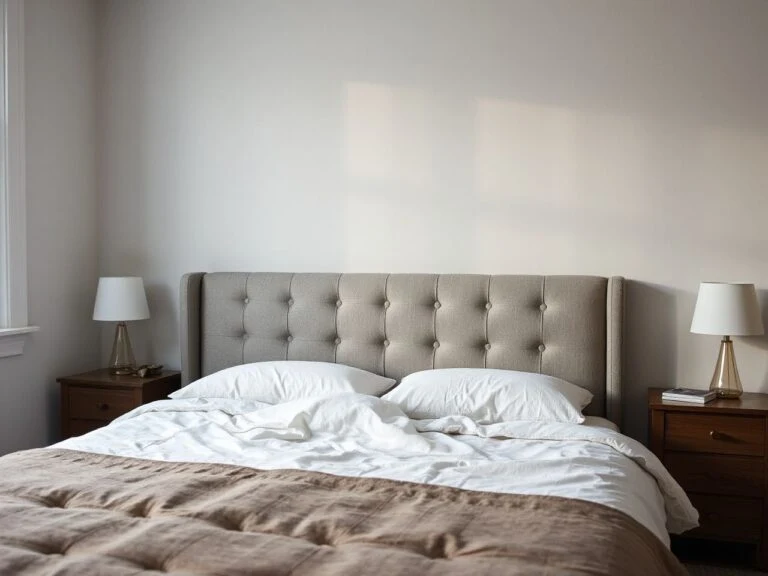
Use the bed frame as the starting reference. If the frame has a strong finish or shape, let the bedside tables remain quieter. If the frame is visually simple, wall art, bedding, or a sculptural lamp can provide interest. One dominant feature is easier to rest beside than several equally loud pieces.
Flat-pack furniture deserves a hardware-first inspection. Check that the fasteners are present, that panels meet cleanly, that cams or brackets seat properly, and that wall attachment parts suit the wall rather than being treated as optional extras. A smooth finish cannot compensate for loose joints or an unsecured tall storage piece.
Intermediate planning: color, pattern, and texture
Use color to create a quieter composition
Begin with the least changeable surfaces: wall paint, flooring, the bed frame, and any furniture that must stay. Then choose bedding, curtains, and wall art that relate to those surfaces. This order prevents decorative items from forcing a large repaint or making existing furniture appear disconnected.
A calm color plan usually has one dominant field, one supporting family, and a small amount of contrast. The contrast may come from dark bedside tables against lighter walls or from a deeper tone in the headboard. Keep the contrast in deliberate locations so the eye settles around the bed.
En suite bathroom coordination should be subtle. Carry a wall-paint undertone or a textile color into the bathroom accessories if the spaces are visible together, but do not force identical finishes across rooms. A bedroom and en suite can relate through tone while keeping different levels of pattern and texture.
Let pattern have a clear job
Pattern can define the bed, soften a window, or add movement to a chair. It becomes tiring when every surface asks for attention. Give the strongest pattern one main position, then use quieter textures or smaller-scale marks elsewhere.
Decorative bedding works well as a flexible layer because it can introduce color without fixing the entire room to one theme. Fold a patterned cover at the foot of the bed, use a quieter base beneath it, and let the wall and curtains provide visual breathing room. The exact arrangement matters less than preserving a clear hierarchy.
Pattern scale should respond to room scale. A large master bedroom can carry a substantial motif if the surrounding surfaces are calm. In a small bedroom, a bold pattern may still work, but it should be limited to a defined area rather than repeated across curtains, bedding, and wall art.
Use texture where color cannot do enough
Texture gives a room depth without adding more colors. An upholstered headboard, woven area rug, washed-looking bedding, or softly finished curtain can make a restrained palette feel complete. Texture is also useful when existing furniture must stay, because textiles can connect mismatched pieces without replacing them.
Soft surfaces need a maintenance plan. Curtains, rugs, and upholstered pieces collect dust and require regular cleaning, so fabric choices should suit the room’s dust, sunlight, and moisture conditions. A beautiful textile that cannot be reached, removed, or cleaned easily will gradually work against the room.
Choose the area rug by relationship to the bed
An area rug should visually connect the bed to the floor rather than appear as a detached island. A rug under the bed can define the sleeping zone in a large room. A rug at the foot can strengthen the bed’s anchor when the rug does not interfere with walking. A rug beside the bed can add softness where a larger placement would crowd the room.
Use the available floor area as the deciding factor. The rug should not catch on doors, cover a useful storage opening, or sit where its edge becomes a trip point. A rug pad or other stabilizing method must also be compatible with the floor and the rug; check the instructions supplied with both surfaces.
The best rug position is the one that supports circulation and makes the bed look grounded. No single placement works for every master bedroom, because the correct relationship changes with the bed position, room proportions, and furniture around it.
Advanced zoning: layered lighting and window treatments
Build three lighting layers
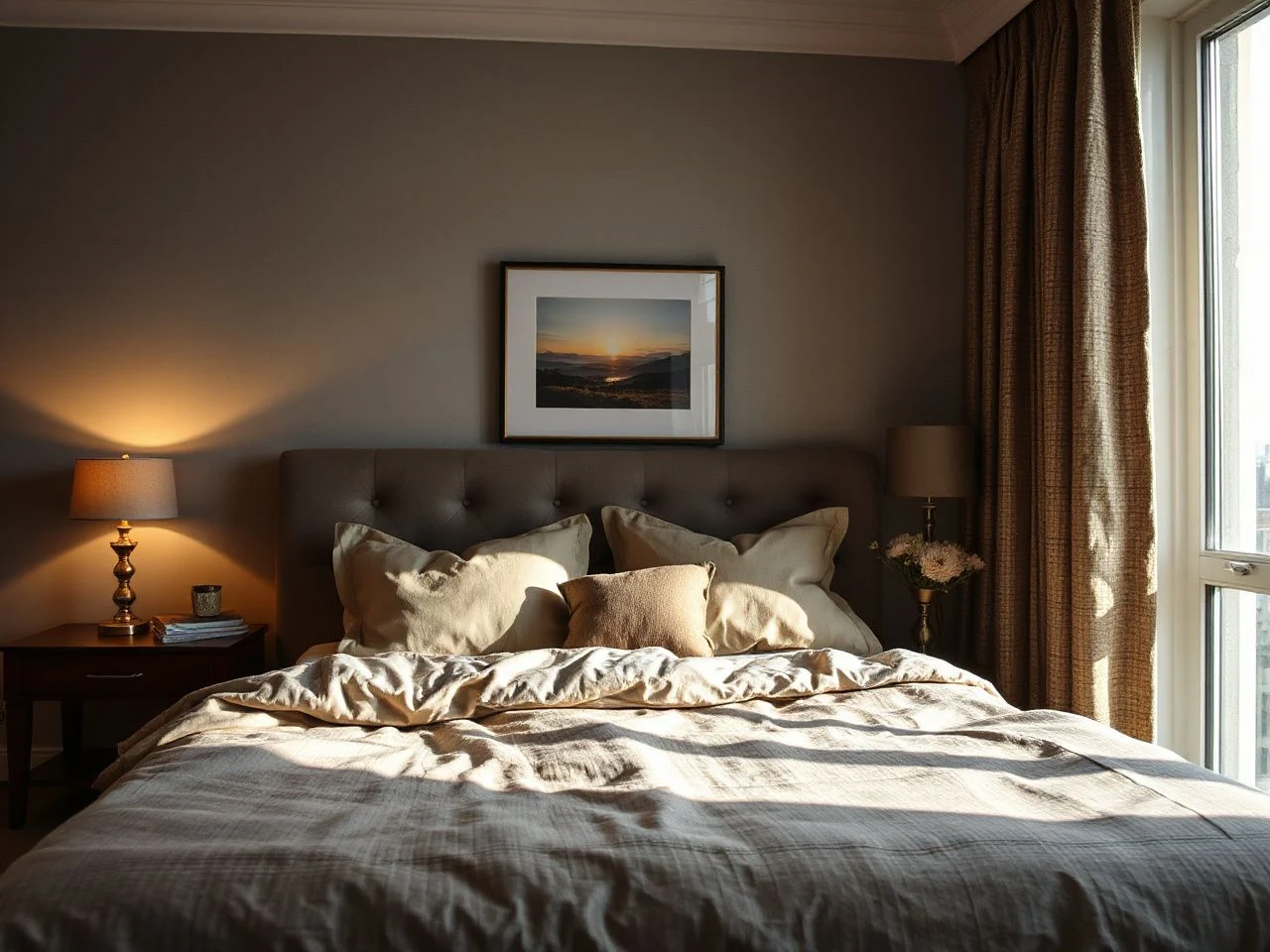
A single ceiling fixture rarely supports every bedroom routine. Layered bedroom lighting should include ambient, task, and accent sources so the room can shift from dressing to reading to winding down without relying on one harsh pool of light.
- Ambient lighting provides the room’s general illumination. A ceiling fixture or broad source belongs in this layer, but its placement should not make the bed the only brightly lit area.
- Task lighting supports reading, dressing, or finding items in storage. Place reading lights near the headboard and useful light near the dressing zone.
- Accent lighting draws attention to wall art, an architectural feature, or a textured wall. Keep the accent subtle enough that it does not compete with sleep routines.
Lighting fixtures must be compatible with their bulbs and intended placement. Read the fixture and bulb instructions rather than assuming that a familiar shape or socket makes every combination suitable. The ASTM International site explains the role of consensus standards, while the fixture’s own safety information remains the direct guide for installation and use.
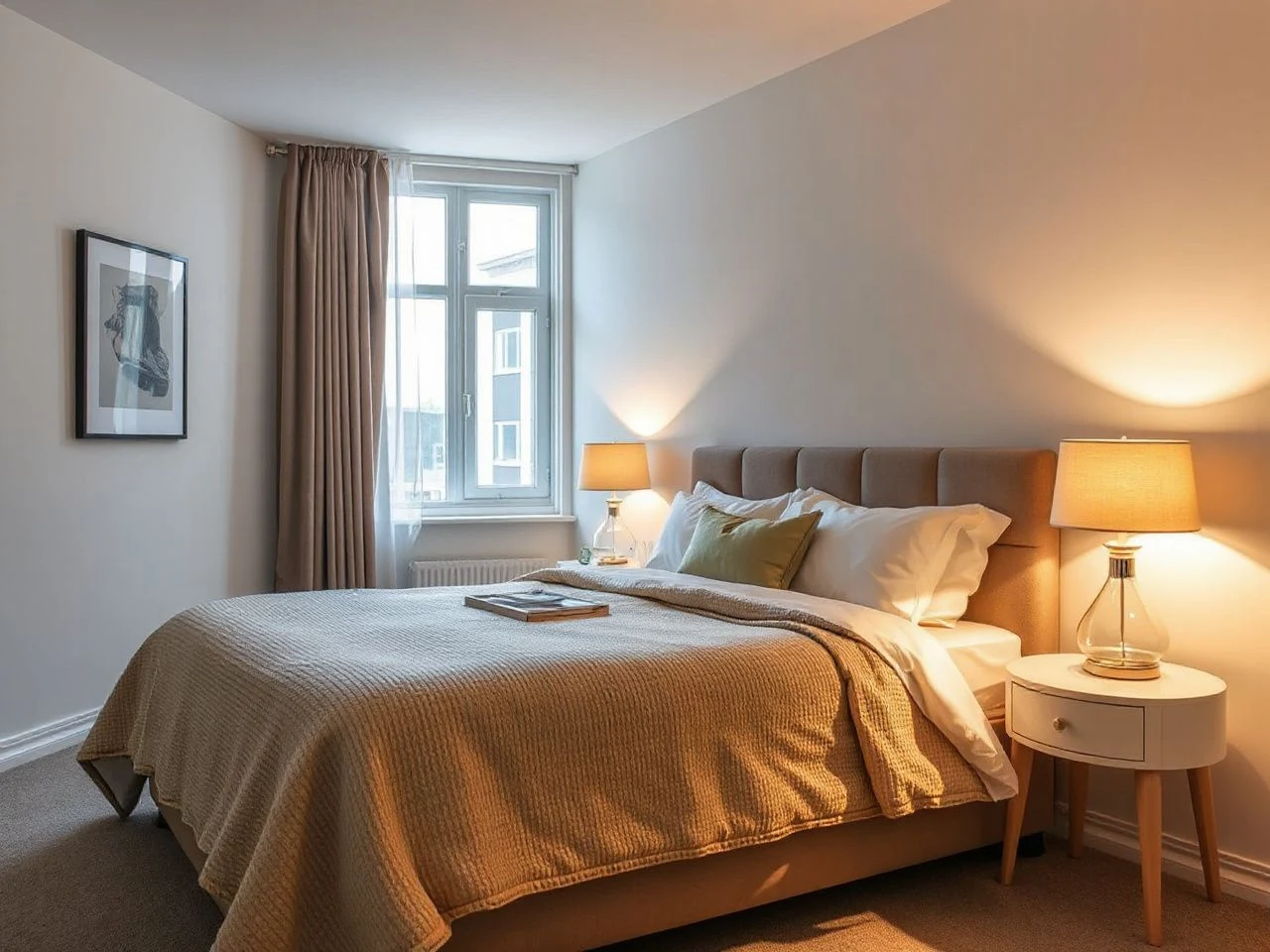
Bedside lighting should be judged from the pillow, not only from a standing view. The useful sign is controlled light where reading happens, with enough separation from the other side of the bed to prevent one person from lighting the entire room. Couples sharing a bedroom benefit from treating each side as a separate task zone.
Use curtains for light control and softness
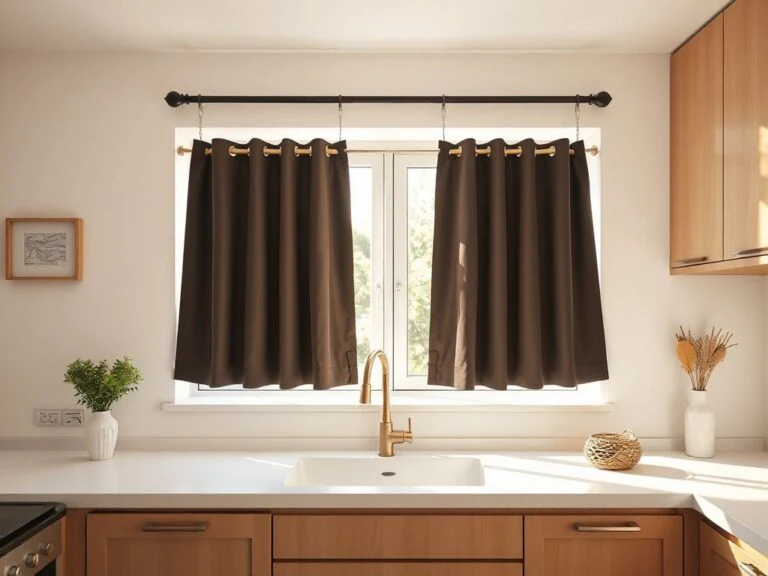
Blackout curtains can help control daylight in a bedroom, but their visual role matters too. A curtain treatment should relate to the wall paint and bed textiles without making the window look heavier than the bed. If the room has strong daylight, check how the fabric changes from morning to evening before committing to a dominant color.
Window treatments need regular cleaning, especially in rooms where open windows bring in dust or where fabric sits near moisture. Keep curtain hems clear of floor hazards and make sure cords cannot become a trip or entanglement risk. The room should feel softer after curtains are added, not harder to clean.
Secure wall art, mirrors, and shelves
Heavy mirrors, shelves, and artwork require secure wall attachment, particularly above or beside the bed. Identify the wall type, use suitable attachment hardware, and follow the instructions for the fixing system. A frame that looks carefully placed is still a poor design choice if its attachment cannot support its load.
Place wall art with the bed’s visual width in mind. A small piece above a large upholstered headboard can leave the wall feeling unfinished, while an oversized arrangement can make the bed appear crowded. Use the headboard, bedside tables, and wall width as one composition.
Flat-pack shelves and cabinets need the same scrutiny as freestanding pieces. Inspect the supplied brackets, screws, joining hardware, and instructions before deciding where the furniture belongs. A shelf beside a bed should not be treated as decoration until its attachment and load instructions have been followed.
Advanced solutions for difficult rooms
Make a large master bedroom feel warmer
A large room needs visual grouping rather than more objects everywhere. Center the bed within a clear sleeping composition, then create a separate seating or reading zone with a chair, small table, or lamp. An area rug can link the bed to the floor, while curtains and an upholstered headboard reduce the feeling of hard, disconnected surfaces.
Large empty walls often need scale, not clutter. Use wall art with enough presence for the wall, or create a composed grouping with consistent spacing and a shared color relationship. Leave some wall visible so the arrangement retains calm.
A large master bedroom feels warmer when furniture creates useful zones without blocking circulation. Grouping is more effective than filling every corner.
Make a small master bedroom comfortable
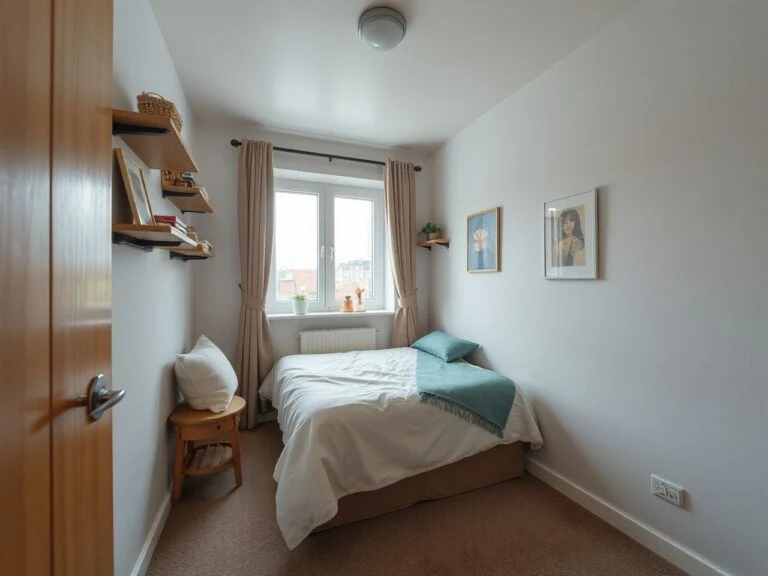
Small rooms benefit from a disciplined visual center. Keep the bed as the anchor, choose bedside tables that support actual use, and let wall-mounted or vertically arranged storage preserve floor space. Decorative bedding can add character without requiring another piece of furniture.
Use color continuity to make the room feel less fragmented. A curtain close to the wall-paint value, a rug that relates to the bed, and wall art with a limited palette can help the room read as one volume. Avoid placing every useful item in the walkway; comfort depends on movement as much as on storage.
For additional planning help, see the guide to decorating small spaces before choosing furniture and these practical rules for decorating small bedrooms. The same principle applies in both cases: remove visual and physical obstacles before adding decoration.
Improve a room when existing furniture must stay
Start with the bed textiles, wall paint, curtains, and lighting because these elements change the room’s visual field without requiring a complete furniture replacement. Repositioning the bed or rug may also correct a composition that feels accidental.
- Replace scattered color with one repeated textile or wall-art tone.
- Move lamps so the bedside zones support reading and evening routines.
- Remove small objects that collect on open surfaces but serve no daily purpose.
- Check the hardware on flat-pack pieces before disguising them with baskets or decorative objects.
- Use a rug or upholstered layer to connect furniture that does not match in finish.
A room often looks unfinished after the main furniture is installed because the vertical surfaces, lighting layers, and transitions between zones have not been resolved. The answer is not automatically more decoration. Finish the composition with scale, wall art, controlled light, and a clear relationship between the bed and floor.
Plan maintenance before choosing the final layers
Cleaning should influence the design from the beginning. Rugs need accessible edges, curtains need a practical cleaning route, and upholstered headboards need enough clearance for ordinary dust removal. Low furniture can look refined, but it becomes frustrating if the floor beneath it cannot be reached.
Dust, sunlight, and moisture affect fabrics differently, so choose textile finishes according to the room’s conditions rather than a photograph. In a cooler bedroom, the related guide on avoiding common mistakes that make bedrooms feel warm at night can help connect window treatment and airflow decisions to comfort.
Bookshelves also need editing. Certain home stagers label over 50 percent of shelving allocated to books as clutter, which is a useful reminder to leave breathing room instead of filling every available surface. The precise threshold matters less than the visible result: shelves should support the room’s calm rather than become a second focal point.
Keep safety within the design process
Bedroom design must account for egress and minimum-size requirements where legal bedroom status applies. Because requirements vary by location, check the authority that governs the property before treating a decorated room as compliant. Furniture should never obstruct the usable exit route.
Upholstered seating can also involve ignitability requirements. Testing for upholstered seating may be conducted using the methods in BS 5852: 2006; consult the relevant compliance information rather than assuming that a fabric’s appearance proves its suitability. The U.S. Consumer Product Safety Commission is another appropriate place to review household product safety information.
Secure attachment, clear floors, and compatible lighting are part of good decorating. A beautiful master bedroom remains successful only when its decorative choices support safe movement and ordinary maintenance.
Frequently Asked Questions
How do I choose a decorating style that will still feel restful?
Choose the mood first and the style label second. Limit the room to a restrained color relationship, one clear bed focal point, and a manageable mix of texture. Repeat a color, material, or shape across separate pieces instead of buying a matching set. The result will feel coordinated while leaving room for practical storage, layered lighting, and changes in decorative bedding.
Where should an area rug go in a master bedroom?
Place the rug where it visually grounds the bed and leaves circulation clear. Under-bed placement can define a large sleeping zone, while a rug at the foot or beside the bed may work better when floor space is limited. Check every edge for door clearance and trip risk. The rug should connect furniture to the floor, not become an obstacle between zones.
Why does a bedroom look unfinished after the furniture is in place?
The missing elements are often vertical scale, layered light, or a relationship between the bed and surrounding surfaces. Add wall art at a suitable scale, use ambient, task, and accent sources, and connect the bed to the floor with textiles. Before buying anything else, inspect circulation, empty walls, curtain proportion, and the hardware securing shelves or tall furniture.
For a restrained approach to costs and existing pieces, read the guide to bedroom changes that make a visible difference on a budget. The strongest result usually comes from correcting proportion, light, and clutter before adding another decorative object.