
Could the label on a sheet package be the least useful measurement in the room? The essential distinction is between nominal bed-size labels and the actual measurements that determine fit: mattress length and width govern the base size, while mattress thickness and added layers govern fitted-sheet pocket depth. A useful bed sheet dimensions chart therefore separates fitted-sheet, flat-sheet, and mattress dimensions and explains regional naming differences instead of treating every label as interchangeable.
I approach bedrooms from the lighting outward, so I care about the details that make a room feel orderly after the lamps are switched on. A fitted sheet that pulls loose or bunches in the middle ruins that calm faster than almost any decorative mistake. The guide below gives you a method for reading labels, measuring the bed, and checking fit without relying on a size name alone.
Key Takeaways
- Match the mattress length and width first, then check the full depth of every layer.
- A fitted sheet, flat sheet, and mattress have different measurements and should not be treated as identical.
- Regional labels vary, so measure the bed and confirm pocket depth before replacing sheets.
How to read a bed sheet dimensions chart
Start with the three measurements
A useful chart has separate entries for the mattress dimensions, the finished size of the fitted sheet, and the finished size of the flat sheet. Those entries answer different questions. Mattress dimensions describe the surface the sheet must cover. Fitted-sheet dimensions describe the fabric intended to wrap over that surface and down its sides. Flat-sheet dimensions describe a loose rectangle that sits over the bed with a drop at each side.
A mattress size label names a category, not a guarantee of identical construction. Twin, Full, Queen, King, and California King labels are not interchangeable, and a manufacturer or region may use a different name for a similar category. The written dimensions on the mattress, sheet packaging, or manufacturer specification deserve more trust than the large label alone.
A chart should distinguish mattress size from finished sheet dimensions because a bed-size label does not necessarily describe the sheet’s actual measurements. That sentence is the principle behind every reliable chart, including one expressed in inches or centimetres.
What the columns mean
Read a chart from the bed outward rather than from the package inward. Identify the mattress category, locate the mattress length and width, then look across to the sheet type. A fitted sheet should show a base size plus a pocket-depth range or a stated maximum depth. A flat sheet should show its own length and width, including the fabric available to hang over the sides.
- Mattress dimensions: the length, width, and thickness of the mattress itself.
- Fitted-sheet dimensions: the fabric size for the sleeping surface, side walls, and corner construction.
- Pocket depth: the side-wall measurement that must cover the mattress and any added layers.
- Flat-sheet dimensions: the loose sheet’s finished length and width, including its intended drop.
- Labels: names such as Twin, Full, Queen, King, or California King that need confirmation against measurements.
The chart may also list crib sheets, Twin XL sheets, pillowcases, duvets, or sheets intended for split mattresses. These are related items, not interchangeable substitutes. A duvet cover follows the dimensions of the duvet rather than the mattress, while a pillowcase follows the pillow rather than either sheet.
Why inches and centimetres can both appear
Manufacturers serving different regions may publish measurements in inches, centimetres, or both. A conversion can introduce rounding, so two labels that look nearly identical may still describe slightly different finished dimensions. Use one unit consistently while measuring, and compare the result with the manufacturer’s own chart rather than combining rounded figures from several sources.
Regional naming differences explain why a familiar size word may not settle the question. A Queen in one market may not match a named category used elsewhere, and manufacturer naming can add another variation. A measurement is the useful common language.
How to match a sheet size to your mattress
Step 1: Measure the mattress surface
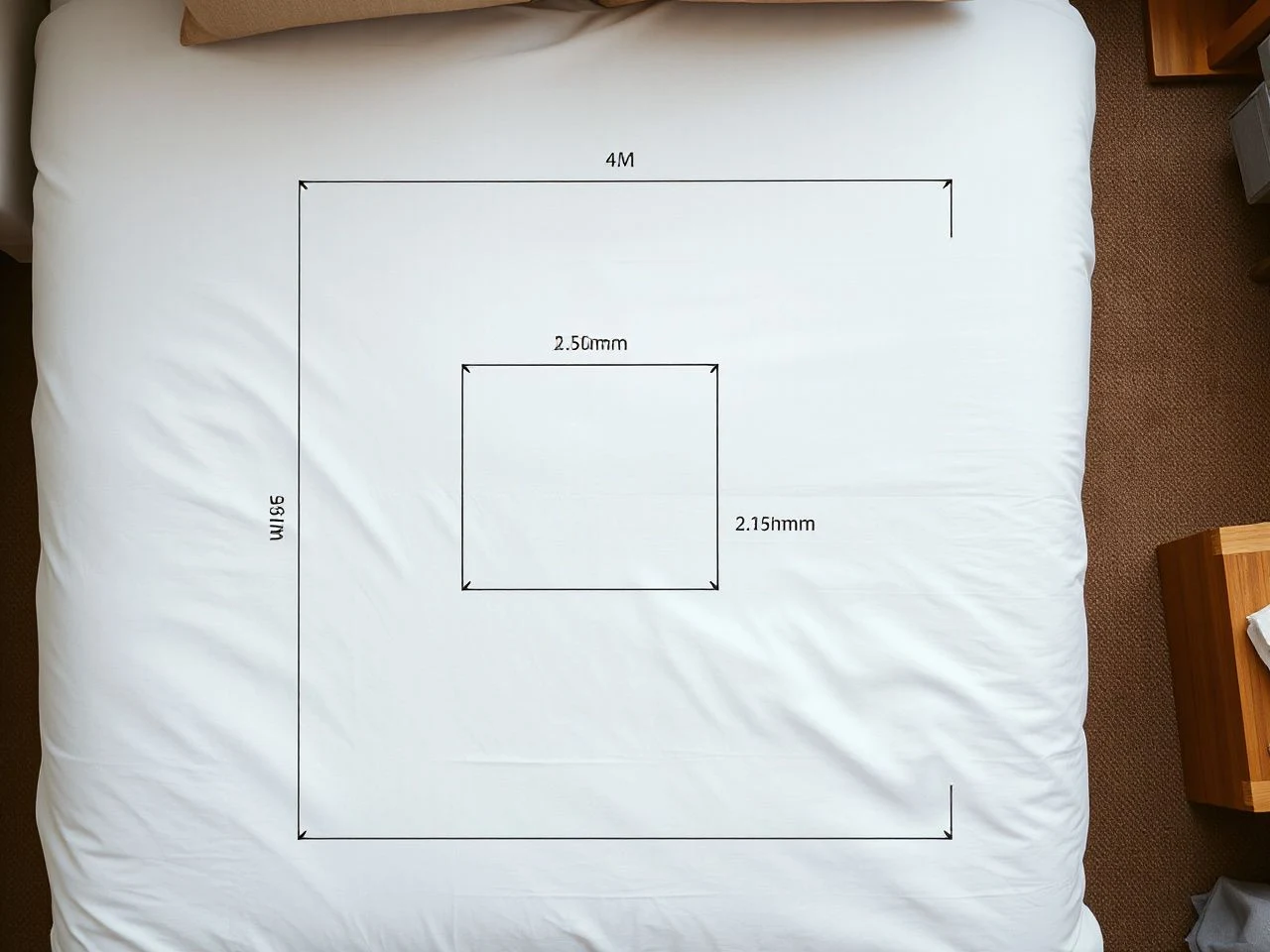
Remove the existing fitted sheet so the mattress edges are visible. Measure the sleeping surface from side to side and from head to foot. Record which direction is length and which is width; that small note prevents a King sheet from being compared to a California King sheet as if their orientation and shape were identical.
Measure the mattress thickness from its base to the highest point of its surface. Do not press down a pillowtop while measuring. The relevant figure is the height the fitted sheet must pass over, not a compressed height that disappears once the bed is made.
The mattress length and width determine the sheet’s base size, while the mattress thickness determines the pocket depth required. This separation makes the matching process far less confusing.
Step 2: Add every layer above the mattress
Measure or identify the thickness of the mattress protector and any mattress topper, then account for the part of each layer that the fitted sheet must cover. A topper changes the required pocket depth even though the mattress category has not changed. A modern pillowtop that includes a 3-inch topper requires an extra-deep pocket of 16 inches or more.
That figure is a useful warning rather than a universal answer. The correct pocket depth depends on the total stack, the sheet’s construction, and how much fabric must tuck beneath the mattress. A sheet that fits the bare mattress may pull away from the corners once a protector or topper is added.
Step 3: Compare the pocket depth, not just the bed name
Look for the sheet’s stated pocket depth and compare it with the total height you recorded. A fitted sheet needs enough side fabric to pass over the top layers and sit fully beneath the mattress. Too little depth creates tension at the corners. Excess fabric can also shift, especially if the elastic corner bands do not settle under the mattress.
Fitted sheets are designed with an additional 1–2 inches for mattress length and width so the corners can be covered. That allowance does not replace a pocket-depth check. Length and width solve one part of the fit; side-wall depth solves another.
Step 4: Check the corners on the made bed
After placing the sheet, inspect each corner rather than judging the fit from the centre alone. Elastic corner bands must sit fully beneath the mattress. The sheet should remain anchored as the bed is made, with no corner visibly riding up and no central ridge created by excess fabric.
A loose fitted sheet can bunch, pull free, or create an unsafe sleep surface. The visible signs are practical: exposed mattress at a corner, a band resting on the side instead of beneath it, diagonal wrinkles travelling toward the centre, or fabric that snaps back as soon as you smooth it.
Step 5: Confirm the bed’s construction
A mattress on a platform bed can present a different working height from one on a box spring, even if the mattress itself has the same label. The support system does not usually change the fitted sheet’s base dimensions, but it can change how easy the corners are to reach and how much room exists around the bed for tucking. A concise platform bed and box spring comparison can help you separate support height from sheet fit.
Split mattresses need special attention because the sleeping surfaces may move separately. A standard one-piece fitted sheet may not behave like a sheet designed for a split arrangement. Confirm the actual mattress layout before reading a chart as if the bed were one uninterrupted rectangle.

Bed sheet sizes and fit by sheet type
Fitted sheets
Fitted sheets wrap around the mattress and use elastic corner bands to stay in place. Their base size should correspond to the mattress length and width, while their pocket depth must accommodate the mattress, protector, and topper together.
A fitted sheet for a Twin bed cannot automatically serve a Full or Queen mattress simply because the fabric stretches. Stretching can move the corners out of position and leave the centre bunched. The same principle applies across Queen, King, and California King categories. Similar names do not make the surfaces interchangeable.
Crib fitted sheets demand a separate level of care. Crib sheets measure 28 by 52 inches, and a maximum pocket depth of 6 inches is standard for crib fitted sheets. A crib sheet that can be lifted by two fingers presents a suffocation or SIDS hazard, so the fit must be snug; the U.S. Consumer Product Safety Commission provides consumer safety information for products used around children.
Bed skirts and duvets are unsuitable for Crib-size beds because of safety concerns and compatibility problems. Crib and bassinet sheets should be treated as purpose-specific bedding, not as small versions of adult sheets.
Flat sheets
A flat sheet does not need to follow the mattress edges in the same way as a fitted sheet. The sheet lies over the sleeping surface and extends down the sides. Each side of a flat sheet features a drop measuring 15–22 inches.
That drop affects whether the sheet can be tucked neatly, especially on a thicker mattress or a bed with added layers. A flat sheet from one bed size may be usable on another bed if its finished width and length provide adequate coverage, but the bed-size label alone cannot establish that. Compare the actual sheet dimensions and decide how much side coverage you need.
A flat sheet can cross some bed-size categories only when its finished dimensions provide the required coverage. The result depends on the rectangle in front of you, not on a promise that every label is interchangeable.
Pillowcases
Pillowcases follow pillow dimensions and construction rather than mattress dimensions. They may appear in a sheet set because manufacturers group related bedding together, but a pillowcase does not confirm that the fitted sheet has the correct base size or pocket depth.
Check the pillowcase section separately. The same caution applies to duvet covers: a duvet cover must correspond to the duvet, and a duvet must suit the bed’s coverage needs. Do not use the duvet label as evidence that the fitted sheet fits the mattress.
Duvets and bed skirts
Duvets and bed skirts serve different purposes from fitted and flat sheets. A duvet covers the sleeper and may hang over the bed sides; a bed skirt covers the base or support area. Neither item resolves a fitted-sheet mismatch.
For a tidy room, I treat these as separate visual layers. The fitted sheet controls the foundation of the bed, the flat sheet controls the tucked edge, and the duvet controls the upper silhouette. A carefully placed lamp makes those layers easier to read, but it cannot compensate for the wrong measurements.
King, California King, and regional naming differences
Why King and California King sheets are different
King and California King are separate mattress categories with different proportions. A King sheet is intended for a King mattress, while a California King sheet is intended for a California King mattress. The names should never be treated as interchangeable shorthand.
Even if one sheet appears to cover the other mattress, its corner placement may be wrong. The fitted sheet can pull diagonally, leave one end exposed, or create excess fabric at the opposite end. A flat sheet may be more forgiving because it is a loose rectangle, but its finished dimensions still determine whether the side drop and end coverage are adequate.
King and California King fitted sheets are not interchangeable simply because both labels include the word King. Read the mattress dimensions and the sheet manufacturer’s category together.
Twin, Twin XL, Full, and Queen labels
Twin and Twin XL should be read as distinct categories. Twin XL sheets are made for a different mattress length, so a Twin label does not settle a Twin XL question. Full, sometimes called Double, also has its own category and should not be substituted for Queen merely because both mattresses may be used by one person.
Queen bed sheet dimensions charts often show the mattress category beside fitted-sheet and flat-sheet fields. Use that structure. The chart is helpful only if you compare like with like: mattress to mattress, fitted sheet to fitted sheet, and flat sheet to flat sheet.
Why the same label can fit differently
Two mattresses carrying the same size name can differ in thickness, surface shape, corner radius, or the amount of material added above the core. Manufacturers may also describe pocket depth and finished sheet size differently. A fitted sheet that fits one brand’s Queen mattress can pull loose on another brand’s Queen mattress if the total depth is greater.
Brand differences make measuring more valuable than guessing. Record the bare mattress height, add the protector and topper, then compare that total with the pocket-depth description. If the manufacturer does not list a clear finished measurement, ask for the sheet dimensions rather than relying on a photograph or size name.
Fixing poor fit and preserving dimensions
Why fitted sheets come off the corners
A corner usually comes loose for one of three practical reasons: the base length or width is wrong, the pocket depth is too shallow for the complete stack, or the elastic corner band is not fully beneath the mattress. A sheet can also shift when excess fabric gathers in the centre instead of lying evenly across the surface.
Begin with the corner that comes loose first. Pull the sheet back and inspect the side wall. If the fabric cannot reach beneath the mattress without strong tension, the pocket is likely too shallow. If the side wall reaches easily but the corner sits diagonally, recheck the mattress category and orientation.
Middle bunching points to a different problem from an exposed corner. Smooth the sheet from the centre toward each edge, then inspect whether the corners remain anchored. If the fabric repeatedly returns to the same ridge, compare the fitted-sheet dimensions with the mattress surface rather than adding more force to the tuck.
How washing and drying affect fit
Laundering can alter sheet dimensions through shrinkage or stretching. Fabric type and care instructions influence long-term fit, so read the care label before assuming that a sheet will keep its original dimensions. A fitted sheet that fits closely before washing may have less margin after shrinkage, while stretching can change how the corners settle.
Follow the stated washing and drying instructions, and compare the sheet’s fit after laundering with the original corner position. Do not compensate for a recurring mismatch by pulling the elastic harder. Elastic that is overstretched can make the sheet look secure for a moment while leaving the surface uneven.
Sheet fabric shrinkage can change a fitted sheet’s corner tension and pocket coverage after laundering. Care instructions are part of the fit decision, not an afterthought.
When replacement is justified
Poor fit should not be treated as a normal maintenance issue. Replace a sheet when it repeatedly pulls free, leaves part of the mattress exposed, or creates persistent bunching after the mattress and layers have been measured correctly. A sheet that fits only before washing can produce repeated replacement costs and wasted laundering.
There is no useful universal replacement schedule for a badly fitting sheet. The condition of the fabric, the reliability of the corners, and the ongoing effort required to remake the bed are better evidence. Choosing the correct size at the start reduces the cost of returns, premature replacement, and buying additional sheets to solve the wrong problem.
For a wider look at sheet types, care labels, and the practical details that sit around a chart, use the Bed Sheets Buying Guide: Complete Essentials for 2026. Fabric choice also affects how a sheet behaves after care, and the guide to choosing bed-sheet materials explains that decision without confusing it with mattress size.
Frequently Asked Questions about a bed sheet dimensions chart
How do I read a bed sheet dimensions chart?
Find the mattress category first, then separate the mattress dimensions from the fitted-sheet, flat-sheet, and pocket-depth entries. Match length and width to the mattress surface. Next, compare pocket depth with the combined height of the mattress, protector, and topper. Treat Twin, Full, Queen, King, and California King as separate labels until the written measurements confirm compatibility.
Will a fitted sheet fit if I use a mattress topper?
A fitted sheet may fit with a topper only if its pocket depth covers the mattress and every added layer while leaving enough fabric to sit beneath the mattress. A modern pillowtop with a 3-inch topper needs an extra-deep pocket of 16 inches or more. Measure the complete stack rather than assuming the original mattress size still gives enough side coverage.
Can I use a flat sheet from one bed size on another bed size?
Sometimes, but the bed-size label does not answer the question. Compare the flat sheet’s finished length and width with the receiving mattress and decide whether the available side drop is sufficient. Each side of a flat sheet has a drop measuring 15–22 inches. A loose flat sheet has more flexibility than a fitted sheet, but inadequate coverage will still leave an untidy or impractical result.
Why does my fitted sheet come off the corners or bunch in the middle?
Check the base size, pocket depth, and elastic corner bands in that order. The sheet may be too narrow or short, or the mattress and added layers may exceed its pocket depth. Elastic corners must sit fully beneath the mattress. Persistent central bunching suggests that the finished sheet dimensions do not suit the mattress surface, even if the package label appears correct.
How often should poorly fitting sheets be replaced?
No fixed interval answers that question. Replacement is justified when a sheet repeatedly pulls free, exposes the mattress, or bunches despite correct measuring and placement. Continued use can mean more remaking, extra laundering, returns, or replacement purchases. Compare the sheet’s condition and fit after care rather than replacing it simply because a calendar says so.
What is the difference between mattress dimensions and sheet dimensions?
Mattress dimensions describe the bed surface and thickness. Fitted-sheet dimensions include the surface, side walls, and corner construction, while flat-sheet dimensions describe a loose rectangle with a side drop. The two sets of figures are related but not identical. A sheet label can name the intended bed category without stating the finished fabric dimensions needed for a precise fit.
Are King and California King sheets interchangeable?
No. King and California King are separate categories with different proportions, so a fitted sheet made for one may pull diagonally or leave excess fabric on the other. A flat sheet may be more forgiving, but its finished length and width still matter. Match the sheet category to the mattress dimensions and confirm the pocket depth for fitted bedding.
What should I check for a crib sheet?
Crib sheets measure 28 by 52 inches, and a maximum pocket depth of 6 inches is standard for crib fitted sheets. The sheet must fit snugly; a crib sheet that can be lifted by two fingers presents a suffocation or SIDS hazard. Crib bedding is a separate category, and bed skirts or duvets are unsuitable for Crib-size beds.
A dependable chart is less about memorising labels than about separating the measurements that perform different jobs. Measure the mattress, include every added layer, check the pocket depth, and inspect the corners after laundering. Once those facts are clear, the bedroom becomes easier to finish: even the lighting reads better when the bed itself looks calm, level, and properly made.