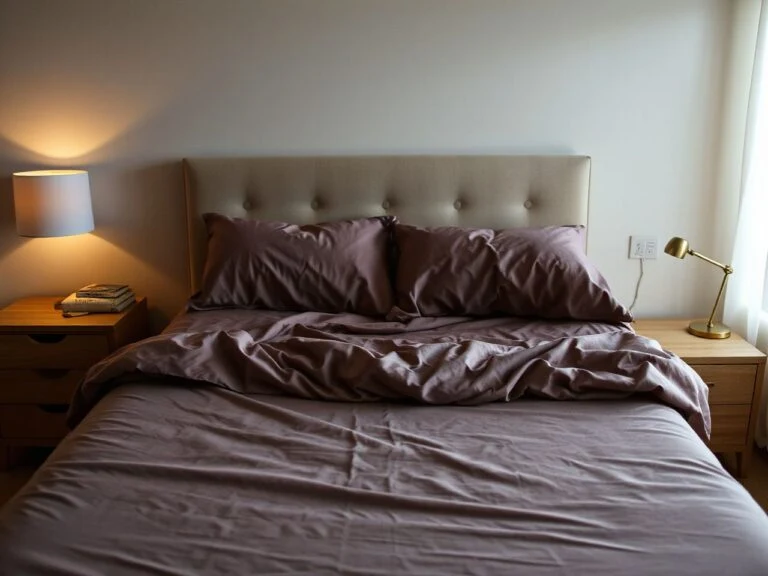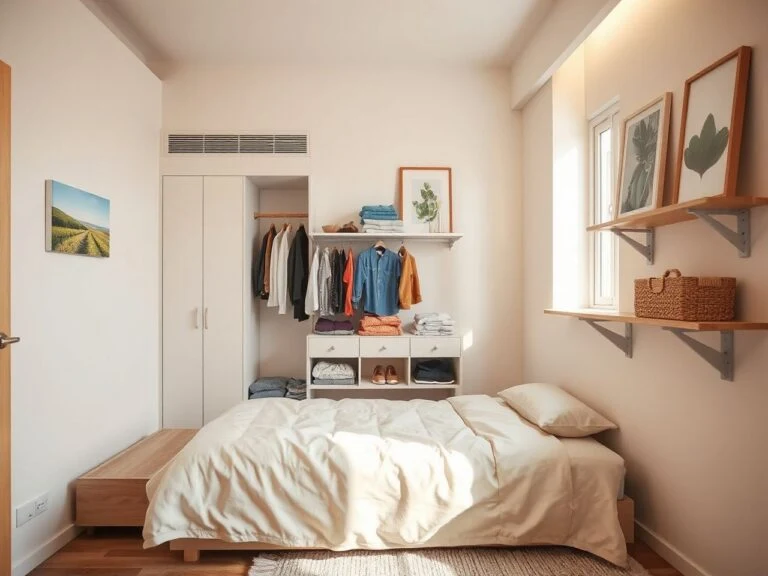
The thermostat reads 72°F, the AC has been going since dinner, and you’re still lying there at 2 AM with damp sheets and a racing mind. The hallway feels fine. The living room is pleasant. Your bedroom, though, is a sweatbox. Learning how to keep a bedroom cool at night means accepting that the number on your thermostat describes one room, not yours. Bedrooms collect afternoon sun, trap body heat from two sleeping adults, and — if your door stays closed — stop air from circulating for eight straight hours.
Here is the core distinction that changes everything: cooling a bedroom at night involves both temperature and humidity control. A fan only provides convective cooling on skin, which feels effective even though the room temperature does not actually drop. Effective strategies combine passive measures like shading and insulation with active ventilation and air conditioning, tailored to your local climate and sleep comfort. Treat temperature as a single dial and you will spin it endlessly without solving the problem. Treat heat and moisture as separate enemies and you start winning.
Key Takeaways
- A fan cools people, not rooms — it works by speeding up sweat evaporation, so turn it off when you leave.
- Blocking afternoon sun before it enters is the cheapest overnight temperature drop you can make, especially if you cannot drill holes.
- Indoor humidity above 60% makes any temperature feel several degrees hotter, and a dehumidifier often outperforms a fan for sleep comfort.
Why Your Bedroom Runs Hot While the Rest of the House Feels Fine
Different rooms have different heat loads. A west-facing bedroom absorbs direct afternoon solar gain for four or five hours, while an east-facing kitchen cools off by mid-morning. Then add the heat you and your partner generate — roughly 250 to 350 BTU per person per hour at rest, according to general engineering heat-load data from the U.S. Department of Energy. Two people, eight hours, closed door. That is a lot of body heat trapped in a small space with nowhere to go.
Electronics add to the load. A TV on standby, a laptop charging, a router blinking in the corner. Each one puts out a little heat, constantly, like tiny space heaters left on purpose. Unplug or move the ones you can. The difference is measurable if you have a hygrometer and thermometer running overnight — which is the first tool worth buying if you want to be serious about this.
The Humidity Problem No One Mentions
Humidity makes your body’s cooling system fail. Sweat evaporates off your skin to release heat, but when the air is already saturated, evaporation slows to a crawl. The heat stays in your body. You feel hot even at 70°F because the mechanism that normally keeps you comfortable has been disabled by moisture.
So the question is not only “why is my bedroom so hot at night even when the thermostat is low?” but also “why is the air so wet?” A bedroom that runs above 60% relative humidity will feel stifling no matter the temperature, and the EPA recommends keeping indoor humidity between 30% and 50% for comfort and mold prevention — a target that turns out to be exactly where sleep feels coolest, too.
The fix is often a dehumidifier, not an AC unit. A small dehumidifier pulling a pint of water out of the air overnight can make a 74°F bedroom feel like 69°F. It also lets you tolerate a higher thermostat setting, which means lower electrical costs. And as a renter, a dehumidifier sits on the floor and plugs into a wall outlet — nothing to mount, nothing to patch later.
Step 1 — Stop the Heat Before It Enters
The cheapest cooling upgrade is keeping sunlight off your windows and walls during the day. Solar radiation through a single unshaded west-facing window can raise a room’s temperature by 10 to 20 degrees. Shading it in the afternoon costs you nothing once the treatment is installed.
Window Film: The Renter’s First Move
Adhesive window film blocks a meaningful percentage of solar heat gain while still letting in light. Products like Gila window film are sold as a temporary, removable solution designed to peel off cleanly when you move out — making them suitable for rental properties. No drilling, no permanent modification, no security deposit argument at the end of the lease.
Installation is a two-person job if you want it to look right. Clean the glass thoroughly, cut the film slightly oversized, spray the glass with the provided solution, and squeegee bubbles out from the center. If you end up with a few small bubbles, leave them. They will fade as the film cures over several days, and chasing them with a credit card can scratch the surface.
Blocking heat at the window is also a lighting decision. The same film that cuts 60 to 70 percent of solar heat also dims the room, which changes how your wall colors read. That cross-over matters if you have invested in specific paint tones. A bedroom that shifts from warm cream to gray-cream under film is not the same room. If that bothers you, take a look at our piece on 15 bedroom paint colors that transform your space before committing to a film that will live on the glass for months.
Blackout Curtains, Properly Hung
A set of blackout curtains does double duty: they block daylight during afternoon naps and reduce radiative heat transfer after sunset. The key specification is the curtain’s thermal backing, not just its darkness. A white blackout curtain with a thermal lining blocks nearly as much heat as a dark one, and it reflects light back outside rather than absorbing it into the fabric.
For renters, mounting matters more than fabric. Tension rods inside the window frame work and come down without tools, but they leave a small gap at the top and bottom where heat sneaks around. If your lease allows it, a curtain rod mounted above the window and extending several inches past each side creates a better seal. Check your lease language before you pick up a drill. Some landlords allow curtain rods with anchors; some do not allow holes above six inches from the floor.
Blackout curtains also block the morning sun, not just the evening sun. The same east-facing window that is no problem at 5 PM is a heat lamp at 6 AM. Cover it while you sleep and the room stays cooler through the hottest part of the early day. If your wardrobe faces the same window, consider whether that furniture placement traps heat behind it — a topic we discuss in the dresser vs wardrobe comparison.
Step 2 — Move the Air You Have
Once the room is shaded, the next layer is ventilation. Your goal at night is to replace the hot, humid air in the bedroom with cooler, drier air from outside or from elsewhere in the home. This is where most people reach for a fan — and where most people misuse one.
Ceiling Fans: The CFM Number Actually Matters
A ceiling fan does not lower room temperature. It lowers perceived temperature by moving air across your skin, which accelerates sweat evaporation. A ceiling fan with a CFM rating above 5,000 moves enough air to cool occupants in a bedroom up to roughly 200 square feet. Below that, you are paying to spin a decorative propeller.
Ceiling fans are one of the few cooling tools priced by real performance. Higher CFM ratings on paper track roughly with more airflow at the blade tips. You do not need a ceiling fan with remote controls, Bluetooth, or color-changing lights to sleep better. You need a motor that moves a lot of air quietly, and you want to confirm the manufacturer’s decibel rating before install. A fan that cools but whines defeats the purpose at midnight.
Direction matters seasonally. In summer, the fan should spin counterclockwise to push air downward. In winter, switch it clockwise on low speed to pull cold air up and circulate warm air from the ceiling. Most ceiling fans have a small toggle switch on the motor housing. Climbing up there twice a year is worth it.
Renters face a real question here: can you install a ceiling fan in a room that lacks one? In many apartments the answer is no, because the electrical box in the ceiling is not rated to hold a spinning fixture. If a light fixture is present, a ceiling fan retrofit requires a fan-rated box and a solid mounting brace. If you cannot make that change, a box fan or tower fan on a shelf is the move.
Cross-Ventilation: The Box Fan Hack
If the outdoor temperature drops below your indoor temperature after sunset, the most effective way to ventilate a bedroom at night is to push air through, not just stir it around. Place a box fan facing outward in one window and open another window on the opposite side of the room. The outward-facing fan pulls stale air out, and the pressure difference sucks cooler outside air in through the second window.
Facing all fans inward feels refreshing but actually pressurizes the room. The air enters, mixes, and stays. Facing one fan out creates a true through-breeze, which is what you want. Opening windows introduces outdoor noise, allergens, and humidity — which is why this technique works best in dry climates and quieter neighborhoods. If outdoor humidity runs above 70% at night, leave the windows closed and use a dehumidifier instead.
The question of whether to run a fan or open the window at night depends on two numbers: the outdoor temperature and the outdoor dew point. If outside air is 75°F with a dew point of 55°F, open the window. If it is 78°F with a dew point of 68°F, close it and run a fan. The fan will cool you by evaporation; the window would just import more moisture.
Step 3 — Active Cooling When Passive Measures Are Not Enough
In climates where nighttime temperatures stay above the low 70s, passive shading and ventilation reach their limit. You need a machine that actively removes heat or moisture from the air. This is where the decision between a portable AC, a window unit, and a dehumidifier becomes the whole game.
Dehumidifiers: The Underrated Overnight Fix
For many hot sleepers, especially in humid regions, a dehumidifier is the better first purchase because it addresses the specific sensory problem that keeps people awake. A room at 72°F and 60% humidity feels warmer than a room at 76°F and 40% humidity. The dehumidifier lets you run the AC less while still feeling comfortable. It also dries the air enough that a simple fan becomes effective again, because evaporation can actually happen.
Dehumidifiers are measured by pints per day — how much water they remove from the air in 24 hours. A bedroom between 150 and 250 square feet needs a model in the 30 to 50 pint range for meaningful overnight impact, though smaller units still help in tight spaces. Empty the reservoir before bed, or connect a hose to the continuous drain if your unit supports it and a drain point is nearby.
Noise is the variable most people forget. Dehumidifiers have compressors, and compressors hum. A small, quiet unit placed in a corner or a closet with the door cracked open can lower humidity without keeping you awake. Check the decibel rating on the spec sheet before buying — anything under 50 dB is generally sleep-compatible. The listing will state it plainly, and if it does not, that absence is itself information.
Portable AC vs. Window Unit: A Renter’s Calculation
Portable air conditioners are the most requested cooling solution by renters because they fit in windows without permanent mounting. A window kit shoves into the lower sash with foam inserts and a bracket, and the whole setup comes out in minutes. No landlord approval needed in most leases, and nothing left behind when you move.
The tradeoff is efficiency. Portable AC units route their own compressor exhaust through a single hose out the window, which creates negative pressure. That negative pressure pulls warm outside air back into the room through every crack and gap, which means the unit works against itself. A window unit, by contrast, keeps the compressor outside the room entirely. The Department of Energy notes that window-mounted units are generally more efficient than portable ones, and the math is not close on a hot night.
If you have a double-hung window and your lease allows it, a window unit is the better performance choice. If your window opens sideways, you are stuck with a portable, because window units are built for vertical openings. If your lease forbids any window-mounted appliance, a portable unit with a vent kit may also be a problem — read the specific language. Some leases ban “projecting appliances” visible from outside.
BTU rating determines how much heat a unit can remove per hour. For a bedroom up to 200 square feet, 6,000 to 8,000 BTUs is generally sufficient, assuming average ceiling height and reasonable shading. An oversized unit cycles on and off too quickly and never dehumidifies properly. An undersized unit runs endlessly and still loses ground by 3 AM.
Running costs scale with usage. A portable AC drawing 1,100 watts costs roughly 15 to 25 cents per hour at average U.S. electricity rates, according to energy.gov. Over an eight-hour night, that is $1.20 to $2.00. Over a month, $36 to $60. Compare that against your tolerance for a warmer room plus a ceiling fan, and the tradeoff becomes a real budget line.
Programmable and Smart Thermostat Scheduling
If you have central air and a thermostat you control, schedule it. Setting the house to 75°F at 9 PM and 72°F at 11 PM costs less than holding 72°F from 5 PM onward. Your body’s natural temperature set-point drops in the evening, so a room that felt fine at dinner feels hot at midnight. Scheduling the thermostat to follow your sleep cycle, rather than holding one number all day, is the single biggest efficiency win for people who already have AC.
The ideal bedroom temperature for sleep lands between 65°F and 68°F for most adults, per guidance from the Centers for Disease Control and Prevention. That range is warmer than the “turn it all the way down” instinct but lands where your body’s core temperature naturally wants to settle. A room kept at 62°F can actually disrupt sleep in some people by triggering a shiver response later in the night.
Step 4 — What You Sleep On and Under
The last layer of the cooling stack is the one directly against your skin. Sheets, pillowcases, mattress pads, and blankets all trap or release heat differently. Choosing materials that breathe and wick moisture makes every other step more effective, because a cooler room does not matter if your bedding is holding heat against your body.
Sheets and Breathable Materials
Fabric choice matters more than thread count. Tencel fabric, made from eucalyptus wood pulp, wicks moisture away from skin faster than cotton and dries quickly when it does absorb. Linen is more breathable than cotton but sleeps rough until it softens after several washes. High-thread-count cotton sheets feel luxurious on the shelf and sleep warmer than low or medium thread counts, because tighter weaving traps more air close to the body.
Percale weave sheets sleep cooler than sateen. Percale is a simple over-under weave that creates a crisp, airy surface. Sateen uses a denser weave that feels smooth but holds more heat. If you sleep hot, percale cotton or Tencel is the starting point. Avoid jersey knit sheets entirely — the stretchy T-shirt fabric clings and insulates.
Pillowcases matter just as much as sheets. Your head releases substantial heat during sleep, and a pillowcase that traps that heat against your face will wake you up. Silk pillowcases are cool to the touch but do not breathe as well as percale cotton. A Tencel pillowcase splits the difference.
Mattress and Pillow Considerations
Gel-infused memory foam mattresses and toppers are marketed as cooling solutions, and they work — for the first hour. Gel pulls heat away from your skin on contact, but once the material reaches your body temperature, it stops moving heat. Memory foam generally sleeps hotter than traditional innerspring or latex, even with gel infusions, because the dense foam traps heat and conforms around your body. Cooling products like gel-infused mattresses add weight and may not suit everyone’s comfort, and they are difficult to flip or move in a rental.
Latex mattresses sleep cooler by a meaningful margin because latex has an open-cell structure that allows airflow through the material. The tradeoff is firmness and price — latex is firmer than most memory foam and costs more per size. If you are replacing a mattress anyway and sleep hot, a latex hybrid with a breathable cover is worth close attention. If you are not replacing the mattress, a breathable mattress protector made from cotton or Tencel is the cheaper intervention.
Seasonal Rotation and Bedding Layers
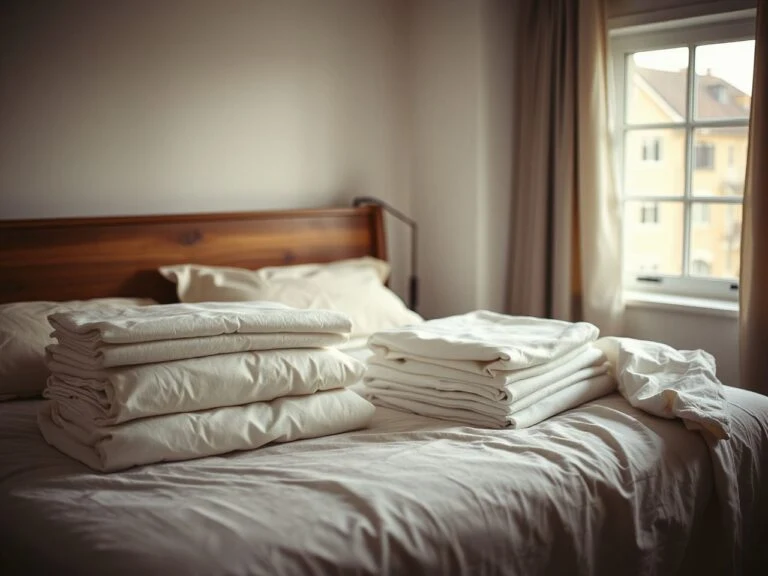
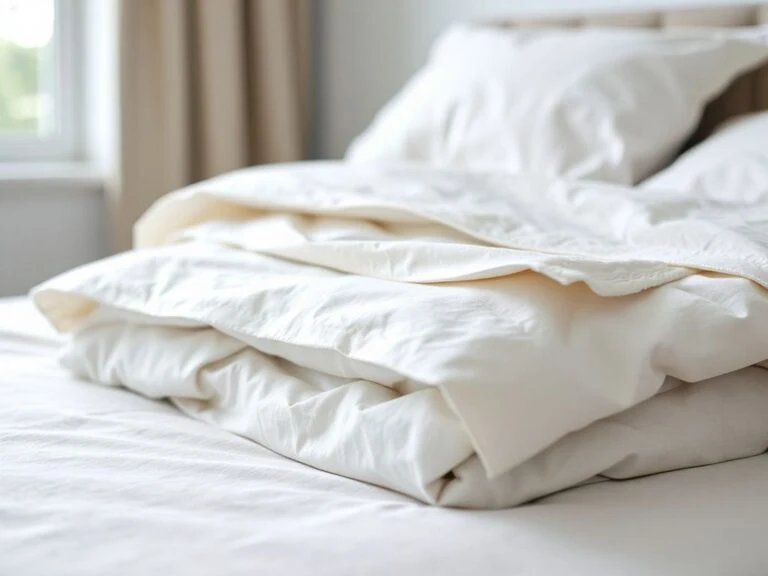
One blanket that works in January is the wrong blanket in July. Seasonal bedding rotation is not just about aesthetics — it is a real thermal decision. A heavyweight down comforter rated for cold nights will trap heat at 3 AM in summer even in an air-conditioned room. Swap it for a lightweight cotton or linen blanket during warm months, and keep the down comforter stored somewhere it will not compress — compressed down loses loft and becomes less effective in winter.
Layers beat single thick covers in a cool bedroom. Two thin cotton blankets allow you to shed or add a layer at 2 AM without waking fully. A single heavy blanket leaves you with one binary choice: covered or not. That fine-grained control matters more than most people realize, because body temperature fluctuates through the sleep cycle and a fixed blanket cannot follow it.
Cleaning, Maintenance, and the Long Game
Cooling equipment degrades when you ignore it. A ceiling fan with dust caked on the leading edges moves noticeably less air than a clean one. A portable AC with a clogged filter runs longer, removes less moisture, and pulls more electricity for the same result. How often should you clean your ceiling fan and AC filter? The filter on a portable or window unit should be checked every two weeks during cooling season, and cleaned or replaced when visible dust coats the surface. Furnace and central AC filters follow the same rhythm: check monthly, replace per manufacturer guidance, and more often if you have pets.
Ceiling fan blades catch dust quickly. Wipe them with a damp cloth every month during summer, or the airflow reduction becomes noticeable. A dirty fan also redistributes allergens around the room all night, which is the opposite of what you want on top of the comfort problem.
As a renter, the long game is about retrofit options that do not require landlord sign-off. Tension rods, removable film, freestanding dehumidifiers, plug-in fans. These all do the job without a single hole in a wall. The moment a solution requires cutting, drilling, or permanent wiring, it stops being a renter’s tool and starts being a neighbor’s problem you create for the next tenant. A bedroom that comes off the wall cleanly at the end of a lease is a strategy, not a limitation.
Frequently Asked Questions
Why is my bedroom so hot at night even when the thermostat is low?
Bedrooms collect heat from afternoon solar gain through windows, body heat from sleeping occupants, and electronics like chargers and standby devices. If the door stays closed, that heat has no escape path to the cooler hallway where the thermostat lives. A hygrometer reading above 60% relative humidity also makes the room feel hotter than the number suggests, because sweat evaporation slows in moist air.
Is it better to use a fan or open the window at night?
Check the outdoor temperature and dew point first. If outside air is cooler and drier than indoor air, open the window and use a box fan facing outward to pull a cross-breeze through the room. If outdoor humidity runs above 70%, close the window and use a fan alone. The fan will cool your skin through evaporation even though the room temperature stays unchanged.
How can I measure whether my windows are the heat problem?
Hold the back of your hand near the glass at mid-afternoon. If the glass feels noticeably warm to the touch, solar heat is entering. For a more precise reading, a small infrared thermometer pointed at the glass and the surrounding wall will show the temperature difference in degrees. Any gap larger than ten degrees between the glass and the room air means your windows need film, curtains, or both.
How much does it cost to run a portable AC overnight?
An 8,000 BTU portable air conditioner draws roughly 900 to 1,100 watts depending on the model. At the average U.S. residential electricity rate, that works out to about $1.20 to $2.00 per night for eight hours of continuous use. Over a month of nightly operation, expect $36 to $60 added to the electric bill, which is why pairing a portable AC with a dehumidifier and ceiling fan often reduces total cost while keeping comfort the same.
What are the best cooling sheets for hot sleepers?
Percale weave cotton is the classic choice — crisp, breathable, and widely available. Tencel sheets wick moisture faster and feel cool to the touch. Linen breathes well but sleeps rougher until washed repeatedly. Avoid sateen and jersey knit, both of which hold more heat close to the body. A pillowcase made from the same breathable material matters as much as the flat sheet, because the head releases a large share of body heat during sleep.
How can I insulate my bedroom to keep it cooler during summer?
Insulation works in both directions — it slows heat transfer whether the outside is hotter or colder. For renters, the accessible version is window treatment: thermal-backed blackout curtains, removable window film, and weatherstripping tape along window sashes and door gaps. These cut the hot air that leaks in around frames and block radiant heat before it reaches the room. Attic insulation above the bedroom is the permanent fix and a landlord’s responsibility, but removable perimeter sealing is yours to control.