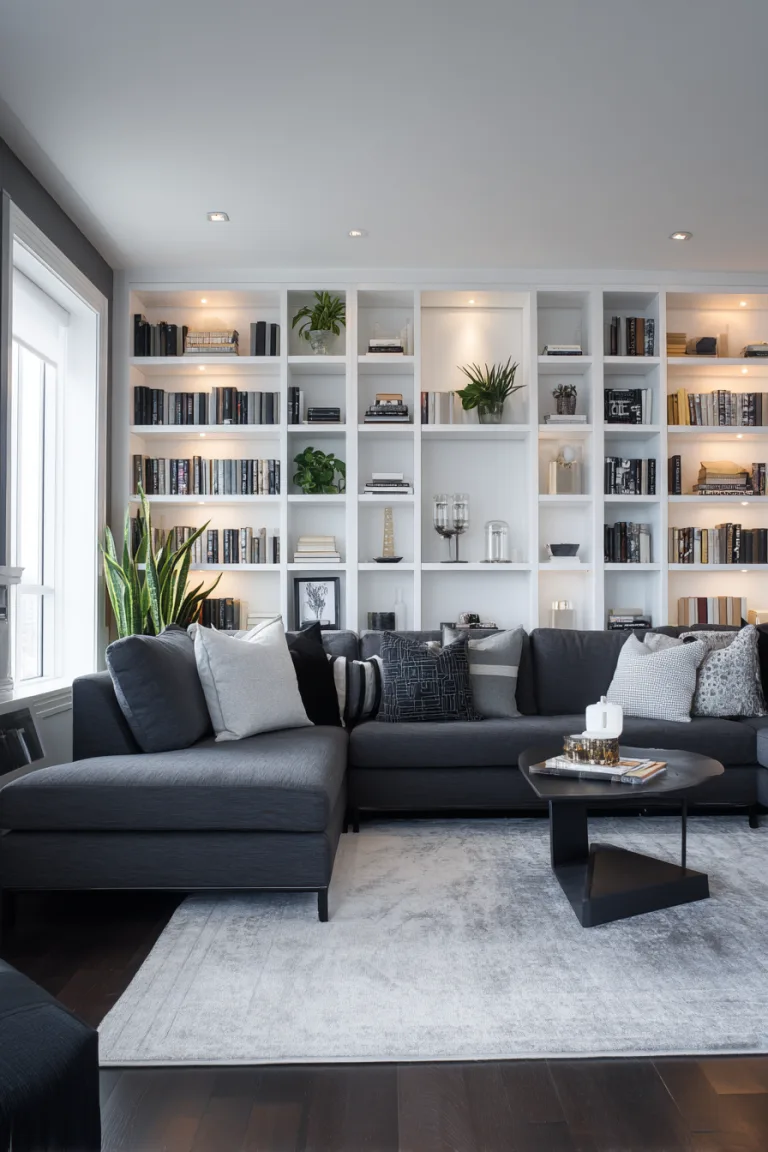
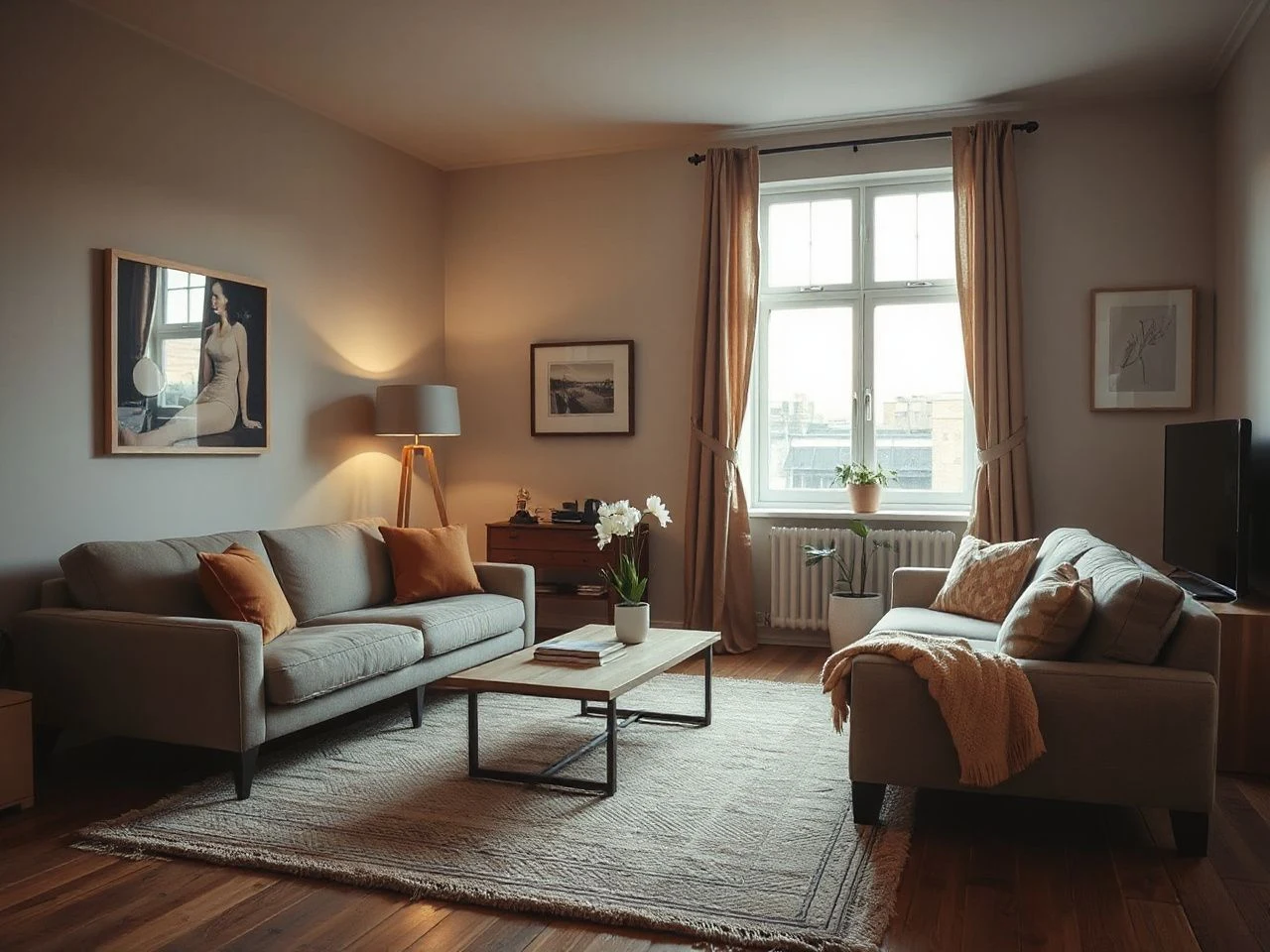
Can a living room look refined without becoming cold, awkward, or difficult to live in? The useful distinction is between contemporary appearance and contemporary function: clean silhouettes matter, but the room still needs comfortable seating, clear circulation, layered light, storage, and visual warmth. A convincing scheme balances smooth architectural surfaces with tactile textiles, natural materials, and a controlled mix of shapes instead of repeating one finish or treating minimalism as the absence of personality.
These contemporary living room decor ideas begin with the room itself rather than a shopping list. Read the daylight, note the door swings, inspect the walls and floor, and then judge every piece by its role. As Daniel Brooks, a Home Decor and Interiors Editor with a low tolerance for troublesome flat-pack hardware, I would also inspect how furniture is assembled before admiring its finish.
Key Takeaways
- Warm contemporary rooms rely on texture, natural wood, useful storage, and varied forms rather than an all-white or empty scheme.
- Furniture placement must account for walking paths, windows, radiators, doors, media equipment, and the room’s actual light.
- Good lighting, compatible textiles, secure furniture, and repairable construction protect the room’s appearance over time.
Beginner: Build a Contemporary Room Around Function
Start with the architecture and natural light
Contemporary style should respond to the building instead of hiding it. A bright room with broad windows may support deeper upholstery, blackened metal, and stronger artwork because daylight can carry visual weight. A darker room often benefits from pale natural wood, linen upholstery, softly reflective surfaces, and a limewash finish that adds variation without demanding a busy pattern.
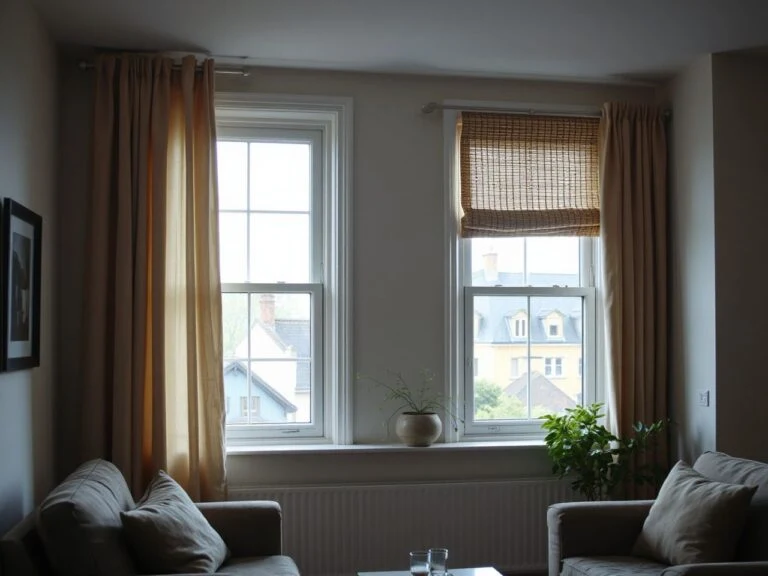
Observe the room at different points in the day before choosing a dominant wall colour. Note where daylight creates glare on a television, where a window makes one seat feel exposed, and where shadows collect behind furniture. Window coverings also affect the scheme, so the practical details in this guide to choosing living room window treatments belong in the early plan rather than as a final decoration.
Natural light changes how colour, texture, and reflective surfaces are perceived in a living room. A paint swatch that feels gentle near a shaded wall may look sharper beside a sunny window, while polished surfaces can throw glare toward seating or a screen.
Choose a layout before choosing a finish
Begin with the largest seating element. A modular sofa can define an open-plan living room, but its sections should support the room’s movement rather than form a barrier between the sitting area and a doorway. In a compact room, a sofa with a clear visual footprint may leave more useful space than several small chairs scattered around the perimeter.
Map the main walking paths with removable tape or simply mark them mentally from the door to the window, balcony, kitchen, and storage. Check the opening arc of every door. Include radiators, vents, outlets, media equipment, and the position from which a screen will be viewed. Furniture scale is a planning issue, not a styling detail.
- Keep the principal seats oriented toward conversation, daylight, or media without forcing people to cross directly through the seating group.
- Place a coffee table where every main seat can use it, while preserving a comfortable route around the table.
- Allow curtains, cabinet doors, drawers, and radiator airflow to work without being blocked by furniture.
- Use an area rug to join the seating group visually, but check that its edges do not catch feet or obstruct a door and vent.
Use a quiet base with tactile contrast
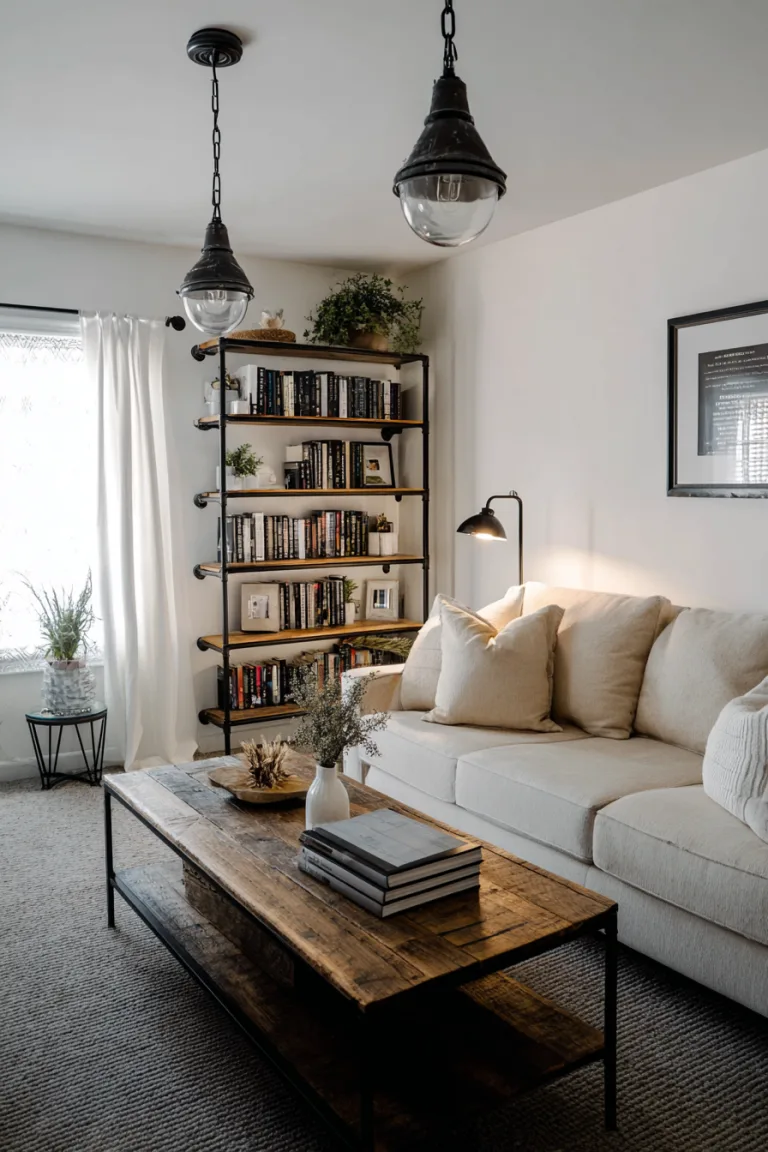
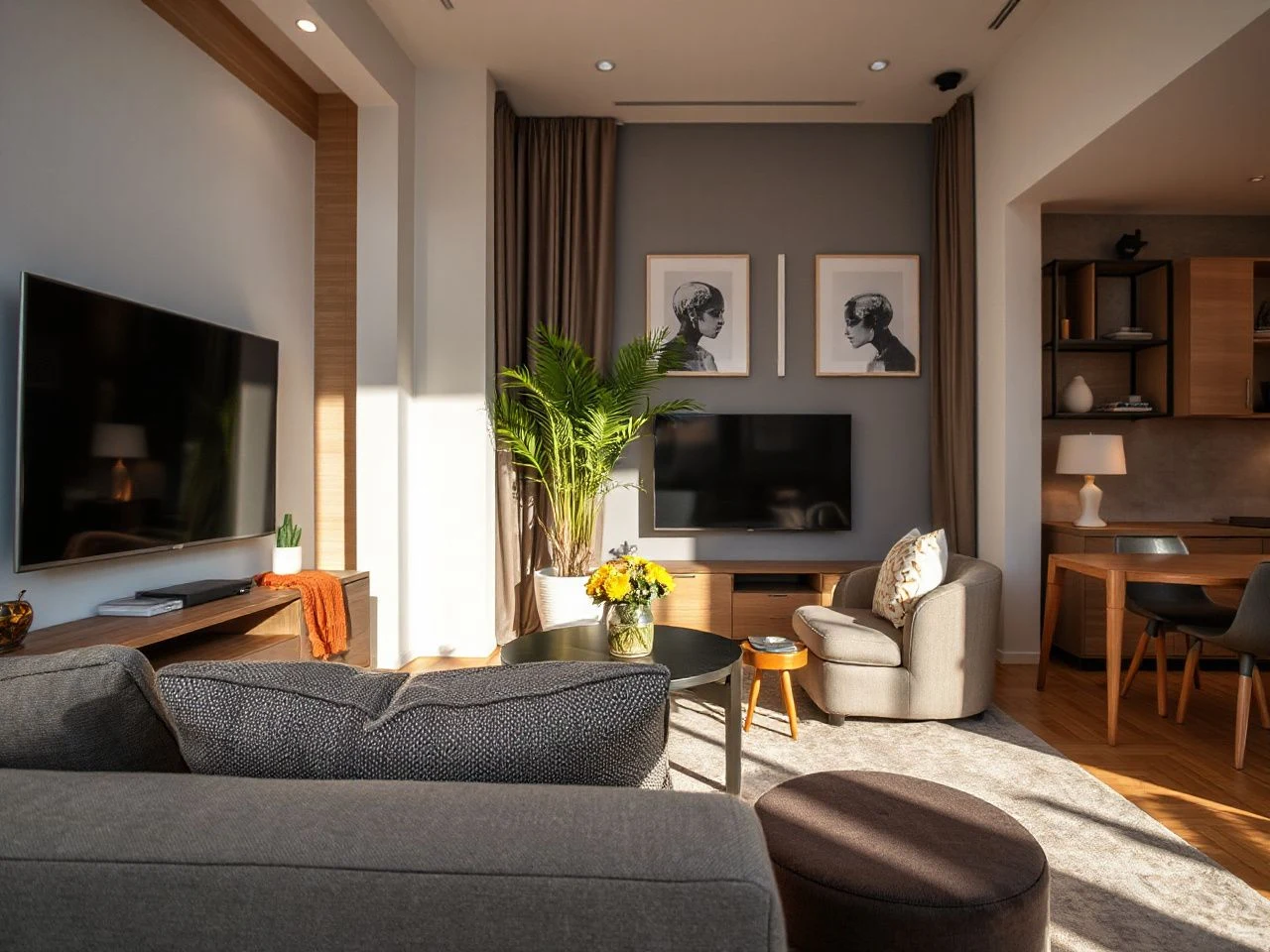
Contemporary does not mean all-white, empty, or strictly minimalist. A calm base can include warm white, clay, soft grey, earthy pink, olive, or a deep mineral tone. The room gains character through the relationship between surfaces: natural wood beside woven fabric, a matte wall beside a small reflective object, or linen upholstery against blackened metal.
Texture should be visible before the room becomes crowded. A woven throw, a substantial rug, a timber surface, and one tactile wall treatment may provide more warmth than a large collection of accessories. Personal objects still belong. Art, books, ceramics, and inherited pieces keep the room from resembling a staged showroom.
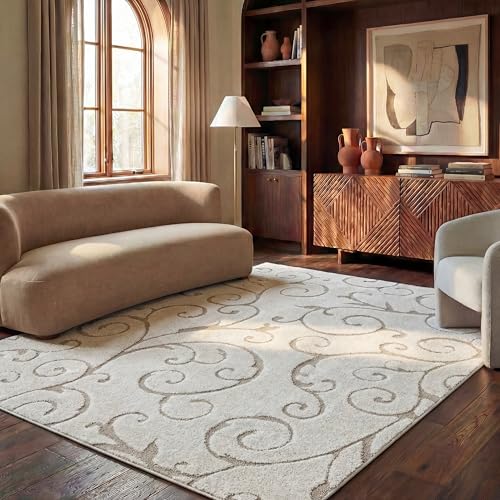
An area rug should connect the seating rather than appear as a small island beneath a central table. Judge the result from standing height and from each seat; the rug needs to support the arrangement, not compete with it.
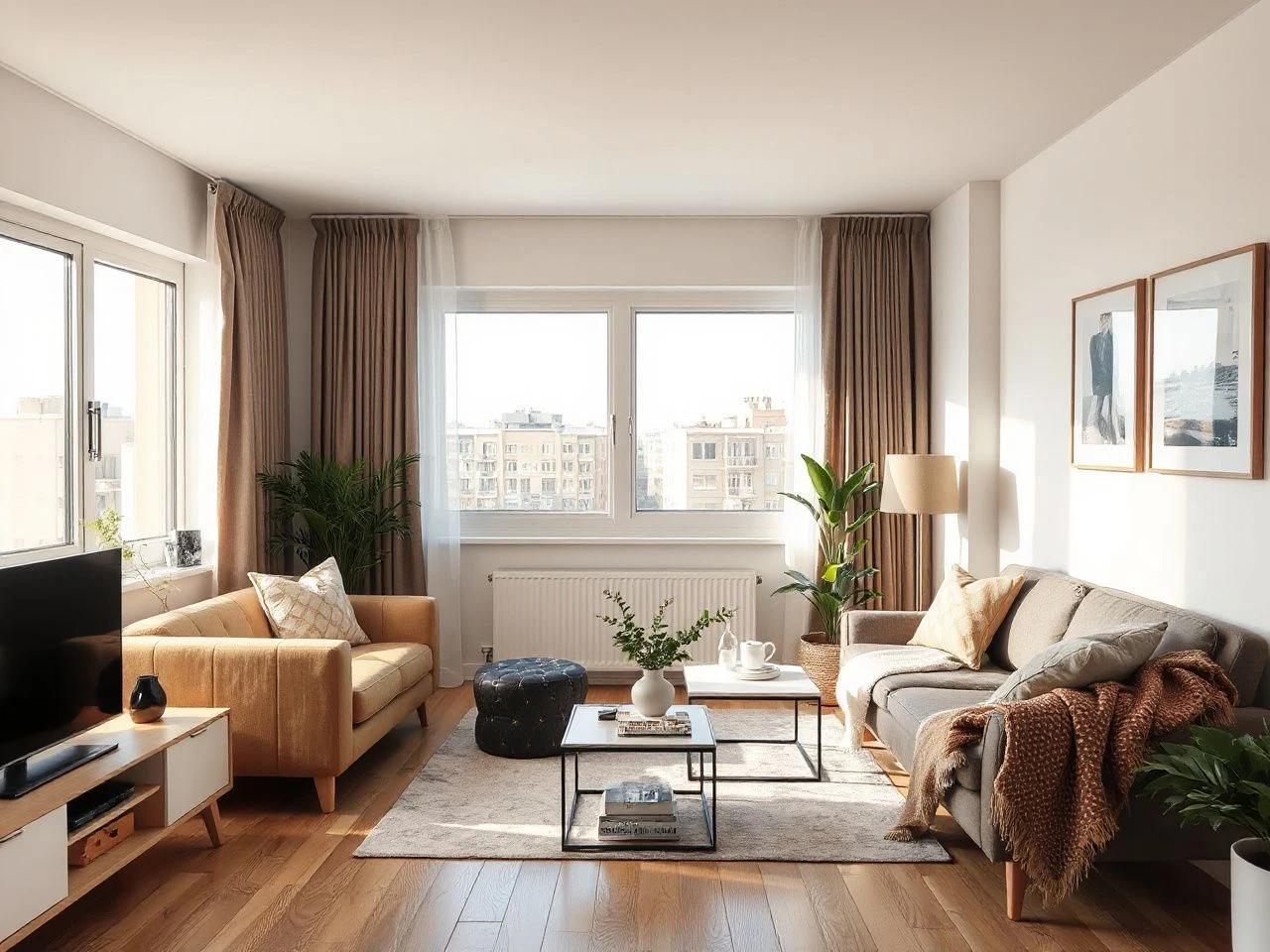
Contemporary Living Room Decor Ideas for Shape, Colour, and Material
Mix clean lines with curves
Clean-lined furniture gives a room order, while curved forms prevent that order from feeling rigid. A sculptural lounge chair can sit beside a straight sofa if the two pieces share a colour, material, or visual weight. The contrast works because the eye finds both structure and release.
Nesting coffee tables are useful in this kind of composition because their forms can read as one arrangement or separate surfaces when people need them. Their curves should not be repeated everywhere. One rounded chair, a curved table edge, or a circular artwork can be enough to soften a room built around rectilinear architecture.
Control colour without flattening the room
A contemporary palette can include colour and pattern without losing calm. Start with one dominant neutral, then repeat a quieter accent through a cushion, artwork, book spine, or small ceramic object. Graphic prints work best when their scale relates to the room and their colours echo something already present.
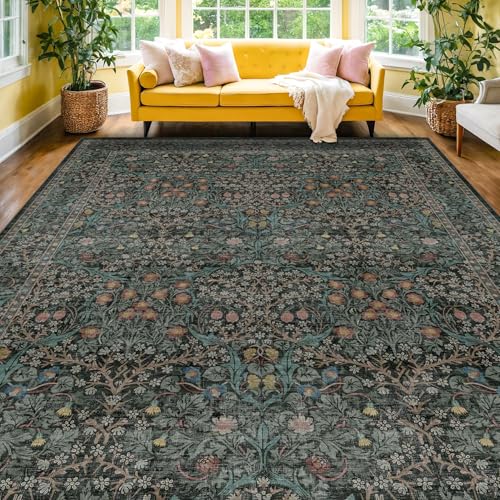
Earthy pinks, tobacco, rust, moss, and muted blue can bring depth to a restrained scheme. The key is distribution. A colour placed only once may look accidental, while a colour repeated in small, varied ways can make the room feel composed. Pattern also needs breathing room; a graphic rug beside graphic curtains and graphic upholstery can make the surfaces compete.
A statement artwork can anchor a wall, but it should relate to the furniture below it. A large blank wall does not require a crowded gallery. Affordable wall decoration can come from framed sketches, textile pieces, personal photographs, or a limewash finish that supplies movement without an additional object.
Understand contemporary, modern, minimalist, and transitional styles
Contemporary style describes a current approach that can borrow from several design languages. Modern style often refers to a clearer emphasis on crisp geometry, restrained ornament, and purposeful materials. Minimalist rooms reduce visual elements further, while transitional spaces combine traditional details with cleaner contemporary forms.
These labels overlap, so the useful test is visual behaviour. Does the room have room to breathe? Do the materials feel related? Can people sit, read, talk, store belongings, and move through the space without treating the furniture as a display? Function gives the style credibility.
Contemporary design can include personal objects, layered textures, and strong colour without becoming cluttered. The style depends on editing and relationship, not on removing every sign of daily life.
Intermediate: Make Lighting and Storage Work Harder
Layer ambient, task, and accent light
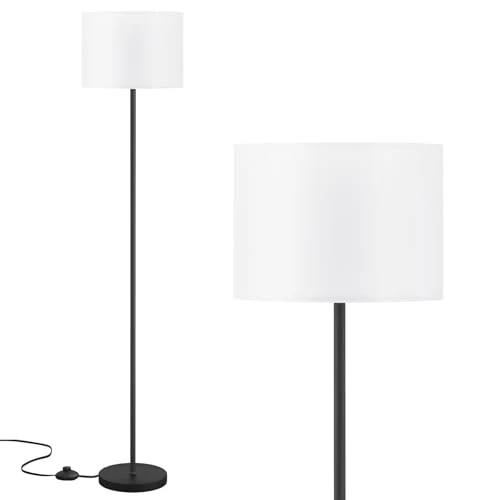
A single ceiling fitting rarely serves every activity in a living room. Ambient light supports general movement and conversation. Task light belongs near reading or craft areas. Accent light can draw attention to artwork, a textured wall, a plant, or an architectural feature.
Place each layer with glare and shadow in mind. A lamp aimed directly at a reflective screen can make viewing uncomfortable. A bright fitting behind a reader can cast a shadow over the page. Accent lighting placed too close to a glossy wall may create a hard reflection rather than a gentle wash.
- Use broad, comfortable ambient illumination so the room does not depend on one intense source.
- Place task lighting beside a reading chair or work surface, with the light directed toward the activity rather than into someone’s eyes.
- Use accent lighting sparingly to reveal artwork, shelving, natural texture, or a limewash wall.
- Check the room from seated eye level, because glare often appears only after a person settles into the space.
Modern lighting design becomes more convincing when the fittings themselves are part of the composition. A sculptural pendant may supply a focal shape, while discreet lamps keep the room usable after dark. Freestanding lighting should be placed where cords do not cross walking paths, and the fitting should be secured where its position or household activity makes that necessary.
The U.S. Consumer Product Safety Commission publishes guidance about furniture tip-over hazards, so tall storage and freestanding pieces should be assessed for stability and secured according to their instructions where necessary. Rugs also deserve attention: an unsecured edge can become a trip point, and a rug should not block a door or vent.
Plan storage as part of the architecture
Open shelving can display books and objects, but closed storage protects a calm visual field from daily clutter. A low media unit may keep the room grounded, while taller storage can use vertical space if it does not crowd a window or make a narrow room feel boxed in.
Storage hardware matters more than decorative labels. Check whether doors align, whether drawers move without rubbing, and whether the back panel sits securely. Assembly scepticism is practical here: a poorly supported shelf or an unclear fixing system can undermine the room long after the finish has stopped looking new.
Hide cables without making access impossible. Media equipment needs ventilation and reachable connections, while remote controls and chargers need a home that does not require dismantling the arrangement. The most attractive storage plan is the one that survives ordinary use.
Adapt the room for children, pets, and rented homes
Homes with children or pets need materials that suit the cleaning routine and traffic level. Durable does not have to mean visually heavy. A patterned textile can disguise small marks, removable covers can simplify maintenance, and rounded corners can make circulation feel less hazardous in a busy room.
Renters can create a contemporary mood through lighting, rugs, art, freestanding storage, and textiles rather than permanent construction. A limewash appearance may be suggested through removable wall treatments or layered artwork, subject to the tenancy agreement. Natural wood trays, linen panels, and a carefully chosen area rug add warmth without changing the building.
Rugs, upholstery, and wood finishes should be chosen according to daylight, cleaning habits, household traffic, pets, and existing materials. A finish that looks appealing in isolation may become a maintenance burden when it meets the actual routines of the home.
Advanced: Refine the Room and Protect Its Long-Term Use
Make awkward layouts feel deliberate
An awkward living room often has a chimney breast, a narrow passage, several doors, an uneven window arrangement, or a television position that seems to dictate everything. Begin by identifying the room’s strongest feature. It may be the window, the fireplace, a long wall, or the best route through the home.
Build the main seating arrangement around that feature, then solve the less attractive requirements with low storage, a screen mounted where permitted, or a sculptural chair that turns toward the group. Do not force perfect symmetry if the architecture is irregular. Balance can come from similar visual weight rather than identical objects.
In an open-plan arrangement, use the sofa, rug, lighting, and storage to mark the living zone without blocking the wider room. A modular sofa can create a boundary, but a low piece or a carefully placed chair may preserve sightlines more effectively. The living area should feel defined without becoming an obstacle course.
Keep hard surfaces from becoming harsh
Too many hard surfaces amplify visual severity even when the colour palette is restrained. Smooth flooring, a glass table, painted walls, metal lighting, and bare windows can leave the room feeling exposed. Add softness through an area rug, curtains, upholstery, cushions, and a few irregular natural forms.
Natural materials do not need to dominate. A wooden table, woven basket, stone object, or plant can interrupt a repeated manufactured finish. Biophilic interior design works here as a principle of connection to natural forms, not as a requirement to fill every surface with greenery.
Scandinavian living room style can offer useful lessons in daylight, pale timber, and practical simplicity, while cozy industrial rooms may use blackened metal and aged textures. Both approaches need softness. Without it, a restrained material palette can look unfinished rather than considered.
Think about upkeep before committing to the look
Every finish creates a maintenance task. Pale upholstery shows some marks quickly. Deep colours can reveal dust or fading near bright windows. Open shelving gathers visible debris, while highly textured surfaces may need more careful cleaning. The right choice depends on the household rather than a style rule.
- Check whether upholstery can be cleaned according to its care instructions before placing it in a high-traffic area.
- Use coasters and mats where wood finishes meet drinks, plants, or objects that may scratch.
- Keep rug edges flat and inspect their position after moving furniture or cleaning.
- Choose replaceable or repairable elements where practical, since a damaged cushion or loose handle should not force a complete redesign.
- Retain assembly instructions and spare hardware for flat-pack pieces, and label removed fixings during any move.
Long-term cost is more than the purchase price. A room can become expensive if its seating is difficult to clean, its hardware cannot be tightened, its lighting uses inaccessible fittings, or its storage fails to adapt to changing needs. I would rather see a modest, repairable arrangement than an impressive composition that depends on fragile parts and constant caution.
ASTM International develops voluntary consensus standards for materials, products, systems, and services, so readers checking technical claims about furniture or building products should look for documentation from the manufacturer and the relevant standards body rather than rely on a decorative label.
Use a simple editing test
Stand at the entrance and identify the first object that attracts attention. Then sit in the main seat and check the view toward the window, artwork, media equipment, and table. Finally, walk through the room carrying an everyday object. These views expose clutter, glare, awkward paths, and furniture that looked balanced only from one angle.
Remove anything that repeats an existing role without adding texture, function, or meaning. Keep the object that gives the room a sense of personality. A contemporary room should feel edited, not empty.
Practical Styling Plans for Different Rooms
For a small living room
Use fewer, more purposeful pieces. A compact sofa, one sculptural lounge chair, a small nesting table arrangement, and a correctly scaled rug can create a complete seating group without filling every corner. Keep taller storage against a less important wall and protect the clearest route through the room.
Light colours may help a small room feel open, but contrast still matters. Add depth with a darker lamp, a framed print, or natural wood. Wall-mounted or narrow storage can reduce floor clutter, while curtains hung to suit the window rather than the furniture can make the whole wall feel calmer.
For a long room
Divide the room by activity rather than placing every piece along the walls. One end can hold conversation seating, while another supports reading, music, or media. Use the rug and lighting to make each zone legible, then keep a clear line between them.
Perfect symmetry may look tempting in a long space, but repeated pairs can create a corridor effect. Offset a chair, vary table heights, or use artwork to balance the composition. The arrangement should guide movement rather than stop it.
For a room with traditional features
Let original mouldings, timber, fireplaces, or panelled doors provide the historical texture. Add contemporary pieces with crisp lines, restrained colour, and one or two curved forms. Traditional meets modern successfully when neither side is treated as a costume.
The same approach suits a modern farmhouse room: keep the practical warmth of natural materials, then edit the country references so the result does not become crowded. These modern farmhouse living room examples can help clarify how rustic texture and cleaner silhouettes may share a room.
For an earthy, quiet palette
Layer warm neutrals with clay, sand, olive, tobacco, or earthy pink. Add tonal artwork and natural wood so the room feels rich without relying on high contrast. A woven rug, linen upholstery, and matte ceramics can make a restrained palette feel tactile.
For more direction on balancing warm hues, the guide to an earth-toned living room offers a useful starting point. Keep the final scheme tied to your own daylight and existing floor, wall, and window colours.
Frequently Asked Questions
How can contemporary living room decor ideas feel warm instead of stark?
Use texture and material contrast before adding more decoration. Linen upholstery, natural wood, a woven area rug, soft window coverings, and warm layered lighting can soften clean architecture. Include personal books, art, and objects so the room has a lived-in point of view. A contemporary space feels warm when smooth surfaces are balanced by tactile materials and useful, comfortable furniture.
How do I arrange furniture so a contemporary living room stays open?
Start with the main route through the room, then place the sofa and chairs around conversation or media use without blocking doors, windows, radiators, vents, or storage. Use an area rug to join the seating group and inspect its edges for trip hazards. A low modular sofa can define an open-plan zone while preserving sightlines, provided its position does not interrupt circulation.
Can clean-lined furniture and curved shapes work together?
Yes. Treat the shapes as a controlled contrast rather than repeating both everywhere. A straight sofa can sit beside a sculptural lounge chair, while nesting coffee tables introduce a softer outline. Repeat one shared colour or material to connect the pieces. The room will feel composed if the curved form has enough visual space around it.
How should lighting work in a contemporary living room?
Use ambient lighting for general visibility, task lighting near reading or work areas, and accent lighting for artwork, textured walls, or architectural features. Check each source for glare on screens and reflective surfaces, and look for shadows cast across reading areas. Freestanding lights should not cross a walking path, and tall or unstable pieces should be secured where necessary.
What makes a contemporary living room look like a showroom?
Excessive matching, empty surfaces, rigid symmetry, and furniture chosen only for appearance can remove the signs of real life. Introduce varied materials, personal objects, useful storage, and seating arranged for conversation. Keep the palette edited, but allow one statement artwork, graphic print, novel chair, or unusual object to provide character without turning the room into a display of unrelated pieces.