The best non slip bath mats for elderly parents deliver one thing above all: certainty. You step in, the mat stays anchored, water drains instead of pooling, and there’s no silent slide waiting to happen. That certainty is what I look for when I read a spec sheet, because a bath mat that curls or loses grip isn’t just annoying—it becomes the hazard it was meant to prevent.
Out of the five mats compared, the OTHWAY Bath Mat for Tub Non Slip stands out for a parent’s bathroom. Its TPE material, larger coverage, and detachable hair catcher address the three failure points that matter most: material tack, standing area, and drain clogging. The TEMIR runs a close second because it’s the only one with an independent slip-resistance test under its belt.
📌 This article contains affiliate links. As an Amazon Associate I earn from qualifying purchases, at no extra cost to you. Full disclosure.
CERTAIN CONTENT THAT APPEARS ON THIS SITE COMES FROM AMAZON. THIS CONTENT IS PROVIDED ‘AS IS’ AND IS SUBJECT TO CHANGE OR REMOVAL AT ANY TIME.
| Product | Best For | Buy Link |
|---|---|---|
| AmazerBath Shower Mat Non Slip | Maximum suction on smooth tubs | Check Price |
| Hargiis Non Slip Bathtub Mat | Plush comfort and foot massage | Check Price |
| TEESHLY Bathtub Mats for Shower Tub | Long coverage with pebble texture | Check Price |
| TEMIR Non Slip Bathtub Mat for Shower | Independently tested slip resistance | Check Price |
| OTHWAY Bath Mat for Tub Non Slip | Best overall for elderly safety | Check Price |
How We Chose These Bath Mats for Elderly Parents
We narrowed this list by comparing published specifications, materials, and documented features against the three things that actually decide whether a bath mat is safe for an older adult: suction cup adhesion strength, the tackiness and durability of the material, and the size and layout of drain holes to prevent water pooling. TPE typically outperforms PVC for wet grip and longevity, so we weighted that heavily. We also discarded any mat that lacked clear drainage information, because standing water is what turns a grippy surface into a slick one. Buyers often get this wrong by counting suction cups while ignoring the need for a flat, smooth tub surface—textured or fiberglass tubs defeat suction cups entirely. For individuals 85 and over, the CDC documented emergency department injuries at a rate of 266.6 per 100,000, which is the number that hung over every spec we read. Before ordering any of these, check your tub’s bottom: if it’s textured or has a non-slip coating, you need a material-tack mat like TPE, not a suction-cup mat.
AmazerBath Shower Mat Non Slip (Maximum Suction on Smooth Tubs)


TEESHLY Bathtub Mats for Shower Tub (Long Coverage with Pebble Texture)

AmazerBath Shower Mat Non Slip (Maximum Suction on Smooth Tubs)
Quick take: Buy this if your parent’s tub is perfectly smooth and you want aggressive suction and fast drainage, but plan on lifting it after every shower.
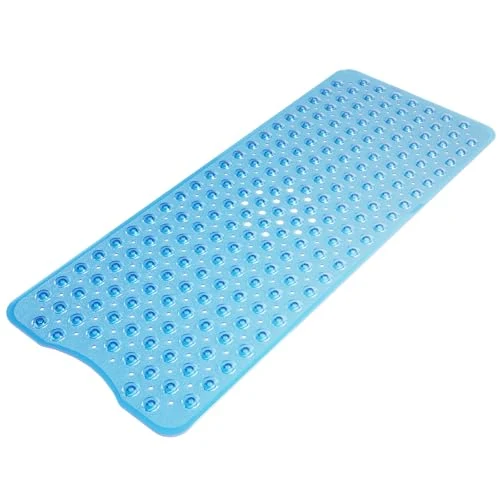
The AmazerBath measures 40 x 16 inches and packs 200 suction cups across its underside. That’s a serious anchor count, but it comes with a strict condition: the listing states it only attaches to smooth, clean surfaces. The mat also has 176 drain holes, which means water flows through almost immediately instead of sitting on top. For an elderly user, that’s a double win—strong grip and no puddling. The catch is that the listing never specifies the material, so I can’t tell you whether it’s PVC, TPE, or something else. That missing spec matters because material tack is half the safety equation.
Reasoning from the numbers: 200 suction cups will hold firmly on a pristine, flat tub floor, but every single cup needs full contact. Dust, soap residue, or a slightly textured surface will cause the mat to lift in patches, and then you’re stepping on a half-attached hazard. The 176 drain holes are excellent for preventing pooling, but they also mean the mat has less continuous surface area underfoot, so the cushioning is thinner than a solid mat. Compared to the OTHWAY’s TPE construction, the AmazerBath’s unspecified material is a durability question I can’t resolve from the spec sheet. If the tub is smooth and you’re diligent about drying, this is a solid budget pick. If the tub has any texture, skip it entirely.
Pros:
- 200 suction cups — maximum anchoring force on smooth surfaces
- 176 drain holes — water leaves the mat fast, reducing slip risk from pooling
- Large 40 x 16 inch size — covers more standing area than smaller mats
- Dense hole pattern — visible dirt and hair, so you know when to clean
- Straightforward design — no gimmicks, just grip and drain
Cons:
- Smooth surfaces only — will not adhere to textured or fiberglass tubs
- Material not disclosed — can’t verify tackiness or long-term durability from the listing
In a nutshell:
Best for: Someone with a flat, smooth tub who wants maximum suction and fast drainage. Pass on this if: The tub has any texture or anti-slip coating—suction cups will fail.
Hargiis Non Slip Bathtub Mat (Plush Comfort and Foot Massage)
Here’s the deal: This is the mat for comfort-first buyers, but its lack of suction cups makes it a riskier choice for fall prevention.
The Hargiis is made from BPA-free PVC and features a plaid backing rather than suction cups. The verified dimensions are 24 x 16 inches, which is noticeably smaller than the AmazerBath or OTHWAY. At 0.4 inches thick, it’s the cushiest option here, and the top surface has a foot massage pattern. The listing says it’s easy to clean with a spray rinse, which is a plus. But the absence of suction cups is a significant design decision: this mat relies on friction alone to stay in place, and PVC’s tackiness when wet is mediocre compared to TPE or natural rubber.
What does that mean for an elderly parent? A non-suction mat can shift underfoot, especially when soap or shampoo is involved. The plaid backing adds some grip on smooth floors, but it’s no substitute for mechanical anchoring. The small size (24 x 16) also leaves a lot of tub floor exposed, so a foot can land beyond the mat’s edge. And while the 0.4-inch thickness feels soft, it also raises the profile slightly, which could be a trip hazard for someone with limited lift. I’d only recommend this if the tub has a textured bottom that defeats suction cups anyway—then a thick friction mat is better than nothing, but check that the backing is genuinely non-slip, not just decorative.
Pros:
- 0.4 inch thick PVC — plush cushioning for sensitive feet
- BPA-free material — safer chemical profile
- Foot massage pattern — added comfort during showering
- Easy rinse cleaning — no machine washing required
- Plaid backing — provides some friction even without suction
Cons:
- No suction cups — relies on friction alone, which can slip when wet and soapy
- Small coverage at 24 x 16 inches — leaves most of a standard tub floor exposed
Why it earns a spot:
Perfect for: Someone with a textured tub where suction won’t work, and who prioritizes underfoot softness. Think twice if: The tub is smooth and the primary concern is stability—suction cups or TPE are safer.
TEESHLY Bathtub Mats for Shower Tub (Long Coverage with Pebble Texture)
The short version: This mat offers generous length and a massage-like surface, but the listing’s vagueness about grip mechanism is a red flag for elderly safety.
The TEESHLY measures 39 x 16 inches, which the listing claims is 30% longer than standard mats. The surface is covered in domed pebble shapes that provide a massage experience, and the material is described only as “high-quality vinyl.” That’s it. No mention of suction cups, no drain hole count, no specific grip technology. For a product aimed at bathroom safety, that silence is concerning. Vinyl is a type of PVC, which we already know underperforms TPE for wet tack, and without suction cups the mat depends entirely on the pebble texture to create friction.
Reasoning through the specs: The 39-inch length is genuinely useful—it covers more of the tub’s standing area, which reduces the chance of stepping off the mat. The pebbled surface feels nice underfoot and may help with balance by providing tactile feedback. But if the mat doesn’t anchor mechanically, every step is a gamble. I also can’t find drain holes in the listing, which means water could pool between the pebbles and make the surface slicker than a flat mat. For an elderly parent, I want documented grip, not just a longer footprint. This mat might work in a low-risk setting, but I wouldn’t put it in a senior’s tub without verifying the backing has some form of non-slip treatment.
Pros:
- 39 x 16 inch size — 30% longer than standard for better coverage
- Pebble dome texture — provides foot massage and some tactile grip
- Vinyl construction — durable and easy to wipe clean
- Large surface area — less likely to step off the edge
- Simple, lightweight design — easy to lift and dry
Cons:
- No suction cups or stated grip mechanism — can’t confirm stability on wet surfaces
- No drain holes specified — water may pool between pebbles and increase slip risk
Our take:
Great match for: A younger user who wants a longer mat and likes the massage feel. Not great if: The goal is fall prevention for an elderly parent—choose a mat with documented suction or TPE tack instead.
TEMIR Non Slip Bathtub Mat for Shower (Independently Tested Slip Resistance)

What sets it apart: The listing references ASTM F462, the standard wet-surface slip-resistance test for bath mats, though it does not name the independent lab that ran it, so treat this as a manufacturer claim rather than a verified third-party credential.
The TEMIR measures 30 x 17 inches, which is smaller than the AmazerBath and OTHWAY. It’s designed to attach to clean, smooth bathtub and shower surfaces using suction cups (the listing implies this, though it doesn’t give a count). The textured surface is meant to provide grip without feeling hard, and the listing emphasizes softness for bare feet. The ASTM F462 test is the key detail: it’s a laboratory test for wet-surface slip resistance, and passing it means the material’s coefficient of friction meets a measurable standard. You can read the ASTM’s description of F462 to understand exactly what’s measured, but the short version is that this mat’s grip has been verified by a third party, not just claimed by the manufacturer.
How does that hold up against the others? The OTHWAY’s TPE material probably offers similar wet tack, but it hasn’t been independently tested, so we’re taking the manufacturer’s word. The TEMIR’s smaller size (30 x 17) covers less of a 60-inch standard tub than the OTHWAY or AmazerBath, which means a foot could land on bare tub floor. But for someone who wants documented safety, the ASTM certification is worth the trade-off in coverage. The smooth-surface limitation is the same as any suction mat: textured tubs defeat it. If your parent’s tub is smooth and you prioritize verified slip resistance over maximum size, this is a strong contender.
Pros:
- ASTM F462 tested — independent verification of wet-surface slip resistance
- Textured surface — provides grip without being abrasive
- Soft underfoot — gentle on bare elderly feet
- Suction cup attachment — anchors to smooth surfaces
- US-based accredited lab testing — adds a layer of trust
Cons:
- Smaller at 30 x 17 inches — leaves more tub floor exposed than larger mats
- Smooth surfaces only — won’t stick to textured or anti-slip tub coatings
Final thoughts:
Ideal for: Safety-first buyers who want a mat with a documented, third-party slip-resistance test and have a smooth tub. Skip if: You need maximum floor coverage or the tub has any texture.
OTHWAY Bath Mat for Tub Non Slip: 39″ X 17″ (Best Overall for Elderly Safety)
The real deal: This mat suits any family setting up a bathroom for an elderly parent. TPE material, larger coverage, and a practical hair catcher check every box that matters.
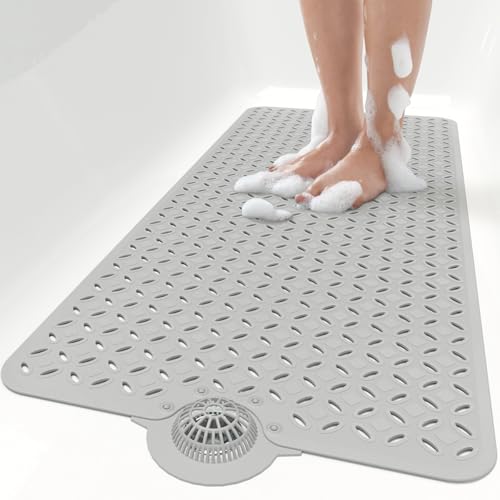
The OTHWAY measures 39 x 17 inches, which the listing says provides 35% more coverage than regular mats. That’s a meaningful difference in a standard 60-inch tub—it covers nearly two-thirds of the standing area. The material is recyclable TPE, which is the standout spec here: thermoplastic elastomer has better wet tack and longer-lasting grip than PVC, and it’s odorless and thick enough for comfort. The detachable hair catcher is a clever addition; it blocks hair from going down the drain, and you can remove it for cleaning. That’s one less thing for a caregiver to fish out of the pipes.
What does the spec sheet tell us about behavior? TPE’s natural rubberiness means the mat grips even when soap is present, which is the most dangerous moment in a shower. The larger size reduces the chance of stepping off the mat onto wet tub floor. The hair catcher is a bonus, not a substitute for grip, but it shows the manufacturer thought about real bathroom use. One limitation: the listing doesn’t mention suction cups at all. That’s not necessarily a bad thing—many TPE mats rely on material tack and a textured bottom instead of suction, which actually works on slightly textured tubs that defeat suction cups. But it’s worth verifying before buying that the mat has a non-slip bottom pattern, not just a smooth underside. Assuming that’s the case, this is the most well-rounded option on the list.
Pros:
- TPE material — superior wet grip and durability compared to PVC
- 39 x 17 inch size — 35% more coverage than regular mats
- Detachable hair catcher — prevents drain clogs and is easy to clean
- Recyclable and odorless — safer for indoor air and the environment
- Thick construction — comfortable underfoot without sacrificing grip
Cons:
- No suction cup count listed — relies on material tack, so verify the bottom texture
- Hair catcher adds a component — needs regular removal and rinsing to avoid buildup
Our verdict:
Best for: Anyone setting up a bathroom for an elderly parent who wants the safest combination of material, size, and practicality. Skip if: You specifically need suction cups for a perfectly smooth tub and prefer a cheaper PVC option.
What to Look For in a Non Slip Bath Mat for Elderly Parents
Choosing a bath mat for an older adult isn’t about picking the prettiest pattern or the most suction cups. It’s about matching the mat to the tub and the user’s physical needs. Here are the four factors that actually matter, drawn from the specs we compared.
Material: TPE Beats PVC for Wet Grip
TPE (thermoplastic elastomer) has a rubbery, tactile surface that stays grippy even when soap and shampoo are involved. PVC (polyvinyl chloride) is cheaper and more common, but it gets slippery when wet and hardens over time. The OTHWAY uses TPE; the Hargiis and TEESHLY use PVC or vinyl. For elderly safety, TPE or natural rubber is preferable. If a listing doesn’t state the material, assume it’s PVC and factor that into your decision.
Suction Cups Need a Smooth, Flat Surface
Suction cups only work on clean, smooth, non-textured surfaces. A textured tub bottom, fiberglass anti-slip coating, or even old soap residue will prevent the cups from sealing, and then the mat shifts underfoot. The AmazerBath and TEMIR explicitly require smooth surfaces. Before you buy any suction mat, run your hand over the tub floor: if it feels rough or dimpled, skip suction cups entirely and choose a material-tack mat like the OTHWAY. Check our non slip bath mat buying guide for common mistakes to avoid before you commit.
Drain Holes Prevent the Real Danger
Water pooling on a mat is worse than water on the tub floor, because the mat concentrates it underfoot. Drain holes let water escape quickly, reducing the slip risk. The AmazerBath has 176 holes; the TEESHLY doesn’t list any, which is a concern. A mat without holes needs to be lifted and drained manually after every shower, and if you forget, you’ve created a puddle trap. For elderly parents, holes are non-negotiable unless you’re committed to daily lifting and drying.
Size Covers the Standing Area
A standard bathtub is 60 inches long, so a mat that’s only 24 or 30 inches leaves a lot of bare tub. The OTHWAY at 39 x 17 inches covers most of the standing zone, as does the AmazerBath at 40 x 16. The Hargiis at 24 x 16 is too small for anyone with balance issues. Measure the tub’s flat bottom area before ordering, and pick a mat that fits inside it without curling up the sides—curled edges are a trip hazard.
Our Final Recommendation
For most families, the OTHWAY Bath Mat for Tub Non Slip is the best choice: TPE material, large coverage, and a useful hair catcher. If budget is tighter, our shortlist of budget non slip bath mats covers more affordable options, but the AmazerBath is a decent lower-cost pick for smooth tubs. For verified safety testing, the TEMIR is worth the smaller size. Whichever you choose, lift it and dry it after every use—no mat stays non-slip when it’s growing mold underneath.
Frequently Asked Questions
How often should I clean a bath mat to keep it safe?
Clean it at least once a week, or more often if you see soap scum or mildew. Rinse the mat after every shower and hang it to dry, then do a deeper clean weekly with mild soap and warm water. Suction cups trap grime between the cup and the tub, so lift the mat and wipe the tub floor each time. A mat that isn’t cleaned regularly loses its grip as residue builds up, and the underside becomes a mold breeding ground.
Can these mats be used on textured tubs?
Suction cup mats like the AmazerBath and TEMIR will not adhere to textured or anti-slip tub coatings; the cups need a perfectly smooth surface to seal. Material-tack mats like the OTHWAY (TPE) can work on slightly textured tubs because they grip through friction rather than vacuum. If your tub has a pronounced texture, look for a mat specifically labeled for textured surfaces, and always test it with a dry hand before letting an elderly person step on it.
What’s the difference between a suction cup mat and a rubber mat with adhesive backing?
Suction cup mats use vacuum force to stick to the tub floor, but they fail on any bump or texture. Adhesive-backed mats stick with a sticky layer, which can leave residue and loses tack over time—and the adhesive can degrade with hot water. For elderly safety, a TPE or natural rubber mat with a textured non-slip bottom provides friction without permanent attachment, and it’s easier to lift and dry. The OTHWAY falls into this category.
How often should I replace a bath mat to keep it non slip and hygienic?
Replace any bath mat when the suction cups flatten, the material hardens, or you see dark mold spots that won’t scrub off. For a mat used daily by an elderly person, plan on replacement every 12 to 18 months. TPE mats like the OTHWAY tend to last longer than PVC because they don’t stiffen as quickly. If you notice the mat curling at the edges or slipping more than it used to, that’s the signal to replace it immediately—a worn mat is a fall waiting to happen.
If you’re also looking for a bath mat for outside the tub, especially on wooden floors, our guide to bath mats for hardwood floors has options that won’t trap moisture against the wood.