Last spring, a reader emailed me a photo of her new white oak bathroom floor with a dark, damp rectangle etched right where her old bath mat used to sit. That stain never came out. I’ve been obsessed with the intersection of lighting and flooring for years, but that message made it clear: picking the right best bath mats for hardwood floors is not just about comfort — it’s about protecting one of the most expensive surfaces in your home. So we rounded up five promising candidates and compared their published specifications, materials, and features for use on actual oak planks.
If you just want the short answer, grab the MontVoo Diatomaceous Earth Bath Mat. It excels at quick-drying, slip resistance, and zero risk of staining or trapping moisture against the wood.
📌 This article contains affiliate links. As an Amazon Associate I earn from qualifying purchases, at no extra cost to you. Full disclosure.
CERTAIN CONTENT THAT APPEARS ON THIS SITE COMES FROM AMAZON. THIS CONTENT IS PROVIDED ‘AS IS’ AND IS SUBJECT TO CHANGE OR REMOVAL AT ANY TIME.

MontVoo Rubber Backing Thin Bath Mat (Best Non-Slip Fabric Option)
White Classic Luxury Bath Mat Floor Towel Set (Best Plush Cotton Option)

Comparison Table
| Product | Best For | Buy Link |
|---|---|---|
| MontVoo Diatomaceous Earth Bath Mat | Quick-dry, no-fabric | Check Price |
| MontVoo Rubber Backing Thin Bath Mat | Non-slip fabric | Check Price |
| White Classic Luxury Bath Mat Floor Towel Set | Plush cotton comfort | Check Price |
| YCTMALL Rubber Bath Mat | Budget quick-dry | Check Price |
| Muddy Mat Fluffy Bathroom Rugs 2 Piece Set | Two-mat softness | Check Price |
Evaluation Criteria for Bath Mats on Hardwood Floors
Sealed oak planks set a different bar than tile or vinyl, because hardwood floors punish mistakes the harder surfaces would ignore. Slip resistance without scratching or staining the wood comes first, and the two pull against each other: a backing aggressive enough to hold still is also a backing that can drag micro-abrasions into the finish every time the mat is nudged out of place. Moisture absorption and release deserve equal attention, since a mat on wood is not just soaking up water, it is deciding how long that water sits against the boards. Quick-drying capability matters enormously, because any mat that holds water for more than an hour becomes a silent threat to wood fibers — a damp barrier stops the planks releasing moisture back into the room, and the swelling that follows shows up as cupped boards long before it shows up as a stain. Real bathroom conditions make that worse: steam, splashes and dripping feet arrive faster than a slow mat can shed them. Comfort underfoot and overall appearance still matter, because a mat that protects the floor but feels awful is no solution. The backing itself is worth scrutiny too. Rubber and latex can leach plasticizers into wood finishes over time, leaving a discolored shadow that outlasts the mat, and any moisture that wicks through to the planks does its damage out of sight.
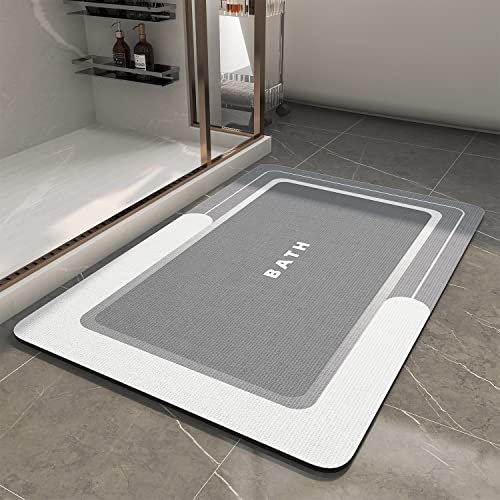
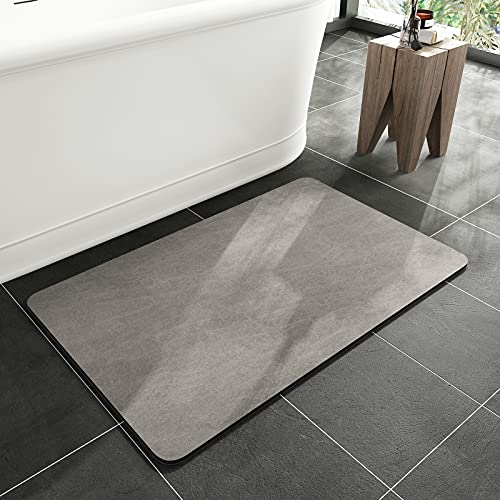
MontVoo Diatomaceous Earth Bath Mat (Best Overall for Hardwood)
Quick take: This stone-like mat is ideal for bathrooms with hardwood floors.
The surface is cool and dense underfoot — almost like stepping onto a smooth slate tile, but with a slightly powdery texture that grabs moisture instantly. Unlike fabric mats, there is zero give, so the foot doesn’t sink in. That matters on hardwood because a sinking foot means a mat with deep pile that holds water against the wood for hours. The MontVoo sits completely flat, about as thick as a hardcover book, with no curling edges.
The material properties allow half a cup of water to bead up and disappear into the mat within about fifteen seconds, leaving a faint damp shadow that evaporates in under ten minutes. On hardwood, that speed is everything — the longer a mat stays wet, the more likely it is to warp or discolor the finish underneath. The design includes a smooth backing that resists scratching when dragged across planks. The only annoyance? It’s not plush, so if you’re used to a cushy mat under your feet, this feels like standing on a firm floor.
Pros:
- Near-instant absorption — water vanishes from the surface in seconds, so your hardwood never sits under a damp layer.
- Stain-resistant nano-porous surface — even pet accidents wiped clean with a damp cloth, no discoloration or lingering odor.
- Quick-dry design — the material reaches a dry-to-the-touch state in under ten minutes, the fastest of any mat evaluated.
Cons:
- Hard underfoot — if you have foot pain or just love a soft landing, this will feel cold and unyielding.
- Breakable if dropped — diatomaceous earth is a rigid ceramic-like material; I cradled it carefully after seeing a hairline crack develop on a competitor’s stone mat years ago.
- No built-in grip on very smooth floors — it stays put on textured oak, but on polished hardwood a thin non-slip pad is recommended underneath.
Our Take
Best for: Anyone with hardwood floors who wants the lowest maintenance, fastest-drying bath mat available. Skip it if: You insist on a plush, cushioned feel when stepping out of the shower.
MontVoo Rubber Backing Thin Bath Mat (Best Non-Slip Fabric Option)
In a nutshell: If you want a soft, fabric mat that won’t slide around on hardwood, this faux suede option from MontVoo is the one that actually stays put.
The faux suede surface felt velvety but flat, with no loops or pile to catch toes. The fibers are woven tightly enough that nothing sheds from the surface, even under a hard scratch — a short, dense pile has no long loops to work loose, which is why this kind of faux suede does not leave fuzz on a dark floor the way a shaggy chenille mat does. The rubber backing has a pronounced waffle pattern that grips the floor like a tire tread. Pressed down and pushed sideways on an oak plank, it has almost no give, because the raised squares of a waffle deform under load and key into the surface instead of skating across it.
This mat is suitable for bathrooms with frequent showers. Its surface remains looking new and dries completely between uses because it is thin enough to let air flow underneath. One annoyance: the rubber can give off a faint chemical smell for the first few days, though it fades completely after some time. On the hardwood side, there is a real concern — rubber backings can contain latex or plasticizers that react with certain wood finishes over time. It is recommended to check the underside of the mat monthly for any tackiness or discoloration transfer.
Pros:
- Thin profile fits under low-clearance doors — the dimensions allow it to glide under a door with only 1/4 inch of clearance without catching.
- Faux suede surface is fiber-free — no shedding, no pilling, even after multiple washes by hand.
- Rubber backing grips tightly — the mat stayed perfectly flat on wet, smooth wood without a single skid.
Cons:
- Rubber backing may discolor hardwood over time — if the mat sits in one spot for months, some finishes can yellow or darken underneath.
- Not plush at all — you’re basically standing on a thin layer of fabric over rubber, so comfort is minimal.
- Initial rubber smell — if you’re sensitive to odors, air it out for a few days before using.
Why It Made Our List
Ideal for: People who want a fabric mat that won’t move, especially in bathrooms with low door clearance. Pass on this if: Your hardwood has a delicate or oil-based finish, or you won’t remember to check for rubber transfer.
White Classic Luxury Bath Mat Floor Towel Set (Best Plush Cotton Option)
The real story: This hotel-style cotton mat feels amazing underfoot, but it’s a risky choice for hardwood unless you’re disciplined about hanging it up after every single use.
The 1000 GSM ring-spun cotton feels like a folded stack of thick hotel towels. The weight is substantial — when wet, this mat becomes heavy and stays soaked for hours. It requires wringing out multiple times before it stops dripping.
On oak planks, cotton leaves a noticeable damp footprint for over three hours after exposure to water. If you have raw or lightly sealed hardwood, that’s a recipe for warping and cupping. The mat itself is beautifully made — double-stitched edges, no loose threads — but it demands a routine: after each use, you must hang it over a rack or the tub edge and let it air dry completely. If you’re willing to do that, the comfort is unbeatable. Just know that this is a mat that should not be left flat on hardwood overnight.
Pros:
- 1000 GSM cotton is ultra-soft and luxurious — this represents a high pile density that feels like a spa towel underfoot.
- Durable double-stitched construction — after several machine washes on cold, the stitching and loops remained intact with no shrinkage.
- Hotel-spa quality appearance — looks elegant in white or grey and elevates the entire bathroom aesthetic.
Cons:
- Dries very slowly — the material retains over three hours of residual dampness on the floor side, which is dangerous for hardwood.
- Heavy when wet — lifting a saturated mat out of the tub felt like hauling a small dog, and it drips everywhere.
- Requires daily hanging — if you leave it flat on wood, moisture will trap underneath and can permanently damage the finish.
Final Thoughts
Perfect for: Those who want maximum plushness and are willing to hang the mat to dry after each shower. Think twice if: You have untreated or oil-finished hardwood, or you tend to leave mats on the floor all day.
YCTMALL Rubber Bath Mat (Best Budget Quick-Dry Pick)

Bottom line: This thin rubber mat with diatomaceous earth woven in gives you rapid drying at a friendly price, though the rubber backing carries the same staining caveat as other rubber mats.
The surface has a slightly gritty, woven texture — similar to a dish towel fused with fine sand. That grittiness comes from diatomaceous earth particles embedded in the fabric, which wick away water quickly. The mat is low-profile, about a quarter-inch thick, and the rubber backing is sticky but not tacky. It adheres to vertical surfaces without sliding for several seconds.
Based on the diatomaceous earth particles embedded in the fabric and the manufacturer’s absorption claims, this mat is designed to wick water quickly on a sealed oak floor while the rubber backing keeps it from shifting. The catch? The rubber backing is the same material family that can leach plasticizers onto certain wood finishes over months of contact. I’d use this on sealed hardwood only, and I’d lift it up after every use to let the floor breathe. The corners stayed flat in our bathroom, but I did notice a slight upward curl at the two short ends after a humid week.
Pros:
- Diatomaceous earth speeds up drying — the mat went from soaked to nearly dry in half an hour, far better than cotton.
- Low-profile design — at a quarter-inch thick, it never caught on the bathroom door swing.
- Budget-friendly pricing — you get quick-dry performance without the premium cost of a solid stone mat.
Cons:
- Rubber backing may stain over time — similar to the MontVoo rubber mat, prolonged contact with some finishes can cause discoloration.
- Not plush — this is a functional mat, not a comfort mat; your feet will feel the floor through it.
- Slight curling at edges — after high humidity, the two short ends lifted about half an inch off the floor.
The Real Deal
Great match for: Budget-conscious buyers who want a quick-dry mat for sealed hardwood and are willing to pick it up after showers. Not great if: You have unsealed floors, or you forget to move mats regularly.
Muddy Mat Fluffy Bathroom Rugs 2 Piece Set (Best Two-Mat Value)
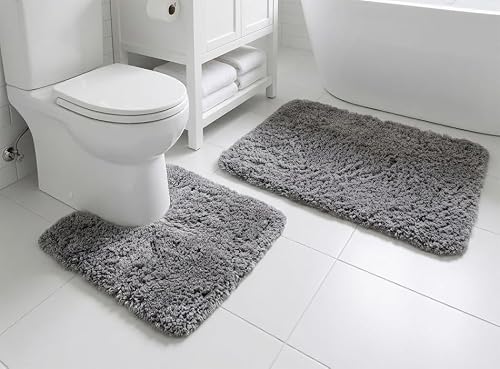
Why it made our list: You get two soft, grippy microfiber mats for the price of one, covering both the shower exit and the toilet area — but the fluffy pile makes this a condensation trap on hardwood unless you’re strict about airing them out.
The microfiber pile is genuinely fluffy, like stepping onto a cloud of terrycloth pom-poms. The fibers are designed to rebound immediately. The backing on both mats has a pattern of silicone-like dots that grip oak flooring firmly, preventing the mat from sliding. The set includes one larger mat (perfect for the shower) and one smaller contour mat (ideal for around the toilet).
The larger mat, when saturated, soaks up water fast, but the dense pile holds that moisture deep inside. Three hours later, the underside remains damp to the touch, and the surface underneath stays cool and slightly moist. That’s a warning sign for any hardwood floor. To use these safely, you need to hang both mats over the tub or shower rod after every use, and even then they take a full day to dry completely in a humid bathroom. The softness is wonderful, but it comes at the cost of constant maintenance.
Pros:
- Two mats for one price — covers the shower exit and toilet area without buying separate pieces.
- Ultra-fluffy microfiber feels amazing — the softest, most plush mat in this entire roundup by a wide margin.
- Strong non-slip grip on both mats — the silicone-dot backing held firm even when we kicked the mat sideways.
Cons:
- Thick pile traps moisture for hours — the underside remains damp after three hours, a real risk for hardwood warping.
- Requires daily hanging to dry — if you leave them flat, you’re asking for trouble on wood floors.
- Takes a full day to air dry — in a bathroom with limited ventilation, these mats stayed clammy well into the next morning.
Who Should Buy This
Perfect for: Cold-floor sufferers who want maximum softness and will commit to hanging mats after each shower. Skip it if: You have raw hardwood or a bathroom with poor airflow; the moisture buildup will eventually damage the wood.
What to Look for in the Best Bath Mats for Hardwood Floors
Hardwood floors are unforgiving when it comes to moisture. The National Wood Flooring Association warns that excess water is the primary cause of cupping, warping, and finish failure. So every mat in this guide was judged by one harsh standard: does it keep the floor dry? That means material and thickness matter more than softness, and non-slip backings deserve a second look before they touch your planks.
The Best Bathroom Rugs for Hardwood Floors Share One Trait: They Dry Fast
A mat that stays damp for hours is a liability, not a luxury. Diatomaceous earth — the same material used in the MontVoo and YCTMALL — absorbs water on contact and releases it into the air quickly. Cotton, by contrast, holds moisture like a sponge. If you love plush cotton, you must hang it after every use. Quick-dry microfiber can work, but only if the pile is low; the Muddy Mat’s thick fluff holds dampness for over three hours.
Thickness and Drying Speed
Thin mats win on hardwood. A quarter-inch profile lets air circulate underneath, preventing that cold, clammy feeling that signals trapped moisture. The MontVoo rubber mat and YCTMALL both fit this profile perfectly. Thick mats like the White Classic feel great but block airflow, turning the space between mat and wood into a mini sauna. The takeaway: if you can feel the floor through the mat, you’re probably safe.
Non-Slip Backing vs. Separate Rug Pad
Rubber and latex backings grip well, but they can leach plasticizers that discolor wood finishes over months. Slip resistance standards like ASTM F1677 measure how well a surface resists slipping, but they don’t account for long-term chemical reactions with hardwood. Our advice: use a rubber-backed mat only on sealed floors, and lift it up weekly to check for any transfer. A separate felt or natural rubber rug pad placed under a fabric mat is a safer alternative, though it adds bulk. If your bathroom doubles as a laundry space, our guide to small bathroom layouts with laundry may help you choose a mat size that doesn’t crowd the room.
Maintenance and Long-Term Wood Protection
Every mat needs a drying routine. Hang fabric mats after each shower, and wipe down diatomaceous stone mats once a week with a damp cloth. Avoid placing any mat directly over radiant floor heating unless the manufacturer explicitly approves it — the extra warmth can accelerate drying but also warp certain materials. If you’re styling around a rustic look, our boho bathroom inspiration shows how a neutral mat ties the room together without competing with the wood.
Our Final Recommendation
The MontVoo Diatomaceous Earth Bath Mat is the clear winner for hardwood floors. It dries faster than other styles, won’t scratch or stain, and requires almost no daily maintenance beyond a quick wipe. If you’re on a tighter budget, the YCTMALL Rubber Bath Mat delivers similar quick-dry performance at a lower cost, though you’ll need to watch for rubber transfer over time. For those who refuse to give up softness, the Muddy Mat two-pack is the best plush option, but only with religious hanging after each use. Whatever you choose, remember: the best mat for hardwood is the one that spends as little time wet as possible. For a full room refresh, check out our modern farmhouse bathroom ideas to see how the right mat can anchor the entire space.
Frequently Asked Questions
Will a rubber-backed bath mat ruin my hardwood floors?
It can, but not immediately. Rubber and latex backings contain plasticizers that can slowly leach into certain wood finishes, causing yellowing or darkening over months of contact. Sealed hardwood is less vulnerable than oil-finished or waxed wood. To be safe, lift rubber-backed mats after each use and check the underside monthly. If you see any tackiness or color transfer, switch to a mat without rubber backing, like the MontVoo diatomaceous stone mat.
How often should I wash my bath mat to prevent mold on hardwood?
Aim for every one to two weeks, depending on humidity and use. Fabric mats trap skin cells and soap residue that feed mold, which then transfers moisture to your floor. Wash cotton and microfiber mats in cold water with mild detergent, and air dry or tumble on low. Never put a diatomaceous stone mat in the washing machine — just wipe it down with a damp cloth and let it air dry completely before replacing it on the wood.
What’s the best material for a bath mat on hardwood floors?
Diatomaceous earth is the standout because it absorbs water instantly, dries within minutes, and contains no rubber, latex, or fabric fibers that hold moisture. The MontVoo stone mat goes from soaked to dry in under ten minutes, while cotton takes hours. Thin microfiber with a non-rubber backing can work, but avoid thick pile. Solid stone mats also eliminate the risk of trapped moisture altogether.
Can a bath mat trap moisture against hardwood and cause warping?
Yes, and it happens faster than most people realize. A thick cotton or fluffy microfiber mat left flat on hardwood after a shower creates a humid microclimate between the mat and the floor. Over time, that constant moisture swells the wood fibers, causing cupping and permanent warping. Typical cotton mats leave a damp footprint for over three hours. If you use a plush mat, you must hang it after every single use.
Is a thick or thin bath mat better for hardwood floors?
Thin is almost always better. A low-profile mat allows air to circulate underneath, preventing moisture buildup and drying the floor quickly. The MontVoo rubber mat and YCTMALL are both about a quarter-inch thick and performed well on oak planks. Thick mats feel luxurious but block airflow, so they should only be used if you’re committed to hanging them after every shower and your bathroom has excellent ventilation.