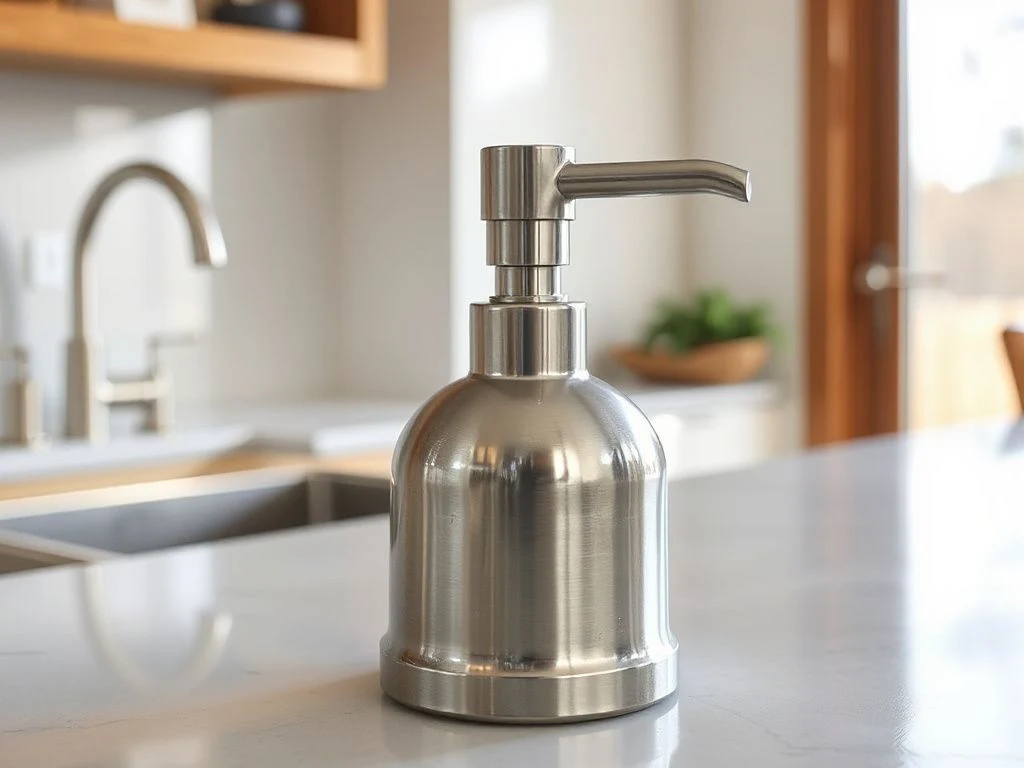
Does your bathroom counter look like a crime scene of smeared soap rings, dried drip trails, and a dispenser that quit pumping three months after you bought it? That failure usually starts with one bad decision, and it’s not the color you picked. The critical distinction a buyer must grasp is that the pump mechanism determines everything else: foam pumps require a specific soap dilution and are prone to clogging if misused, while liquid pumps handle a wider viscosity range but often suffer from dripping or nozzle residue. This single choice drives refill frequency, maintenance effort, and long-term reliability, so it should come before material, size, or sensor features in any soap dispenser buying guide you consult.
Key Takeaways
- Foam pumps demand diluted soap. Full-strength liquid soap will clog the aerating chamber within days, not weeks.
- Pump quality, not brand name, decides lifespan. A well-machined stainless pump can outlive three cheap plastic ones even under identical use.
- Sensor dispensers trade batteries for convenience. Factor in recharge cycles or AA replacement every 3–6 months depending on traffic.
- Wall-mounted units need the right anchors. Drywall alone cannot hold a full dispenser; tile requires a carbide bit and steady pressure.
The Pump Mechanism: The One Decision That Drives Everything
Before you look at a single dispenser on a shelf, settle the pump question. This is the mechanical heart, and getting it wrong means every other choice—the brushed nickel finish, the pretty glass reservoir—becomes irrelevant because the thing stops working. Two main types dominate the market: foam pumps and liquid pumps. They are not interchangeable.
Foam vs Liquid: A Viscosity Reality Check
Foam dispensers work by mixing air with soap inside a specialized chamber. That chamber has a mesh screen and a narrow passage. If you pour undiluted liquid soap into a foam dispenser, the viscosity is too high to pass through the screen cleanly. The soap dries inside the mesh, hardens, and blocks airflow. A blocked airflow means the pump piston moves but no foam comes out, and the user pumps harder, which can crack internal plastic parts. Cleaning industry guidance on hand soap formulations routinely notes that foam soaps are pre-diluted to a specific ratio, often around 1 part soap to 3 or 4 parts water. Liquid pumps, by contrast, push soap straight from the reservoir through a one-way valve and out the nozzle. They accept a wider range of viscosities, from watery castile soap to thicker gel hand wash. But that flexibility comes with a trade: the nozzle is open to air, so leftover soap in the tip dries out, forms a crust, and then the next pump fires that crust onto your sink before fresh soap follows.
The self-contained fact: a foam pump cannot process undiluted soap without clogging, while a liquid pump will eventually drip or crust no matter what soap you use. That is not a defect; it is the operating reality of each design.
How Pump Quality Determines Lifespan
Cheap liquid pumps share a failure pattern. The piston is a soft plastic rod inside a plastic cylinder, and the return spring is a thin metal coil that rusts after repeated contact with water and soap residue. When that spring corrodes, the button stays down or rises too slowly. The fix is usually replacing the whole pump head, which costs almost as much as the dispenser itself. Better pumps use a stainless steel spring and a ceramic or harder plastic piston, and some brands—like Simplehuman and OXO—engineer their pump heads to be user-replaceable without tools. The spec sheet will not always list spring material, but you can tell by weight: a pump head that feels dense and solid has metal inside; one that feels hollow and rattles does not. For a bathroom dispenser used maybe five to ten times a day, a well-made pump easily lasts five years or more. A poor one fails inside eighteen months. That difference is the real cost.
What This Means for Your Soap Choice
You cannot use any liquid soap in a foam dispenser. Period. The soap must be labeled as foam soap or specifically formulated for foaming. If you buy bulk liquid soap and dilute it yourself, aim for a final mixture that is roughly 20–25% soap to 75–80% water by volume, but test with a small batch first because castile soap behaves differently than detergent-based hand wash. Add the water slowly and stir gently to avoid excessive bubbles. For liquid dispensers, avoid soaps with exfoliating beads or heavy particles like ground walnut shell or pumice. Those particles lodge in the one-way valve and cause backflow or a stuck pump. Also skip thick gel soaps labeled “moisturizing cream wash” unless the pump head has an extra-wide intake tube. The pump has to work harder to lift viscous soap, which shortens the life of the return spring.
Materials, Size, and the Countertop You Actually Have
Small bathrooms punish large objects. A dispenser that looks elegant in a staged photo can hog half your usable sink ledge, and then every morning you knock it into the basin. Before you fall for a sculptural glass vessel, measure the clear space next to your sink. A dispenser base diameter of 2.5 to 3.5 inches fits most standard bathroom counters; anything over 4 inches belongs on a kitchen island, not in a 36-inch vanity. Height matters too: a tall slim dispenser often looks better in a small space than a short squat one because it keeps the visual line vertical, drawing the eye upward past the clutter. That thinking extends to your floor coverage decisions, which is why we wrote a full breakdown on bathroom rug versus bath mat sizing and layout for small bathrooms.
Stainless Steel vs ABS Plastic vs Glass
Stainless steel looks premium and resists corrosion, but it shows water spots like a mirror. If your bathroom has hard water, those spots etch into the surface over time. Choose brushed or matte stainless, not polished, to hide fingerprints. ABS plastic is the workhorse material; it is lightweight, shatterproof, and cheap, but it scratches easily and can yellow after years of hand soap exposure. Glass looks beautiful but breaks, and a broken glass dispenser over a tile floor is a serious safety hazard. For a family bathroom with kids, plastic or stainless is the only sane choice. For a guest bath that sees light use, glass can work—but place it on a soft trivet or felt pad so it never slides.
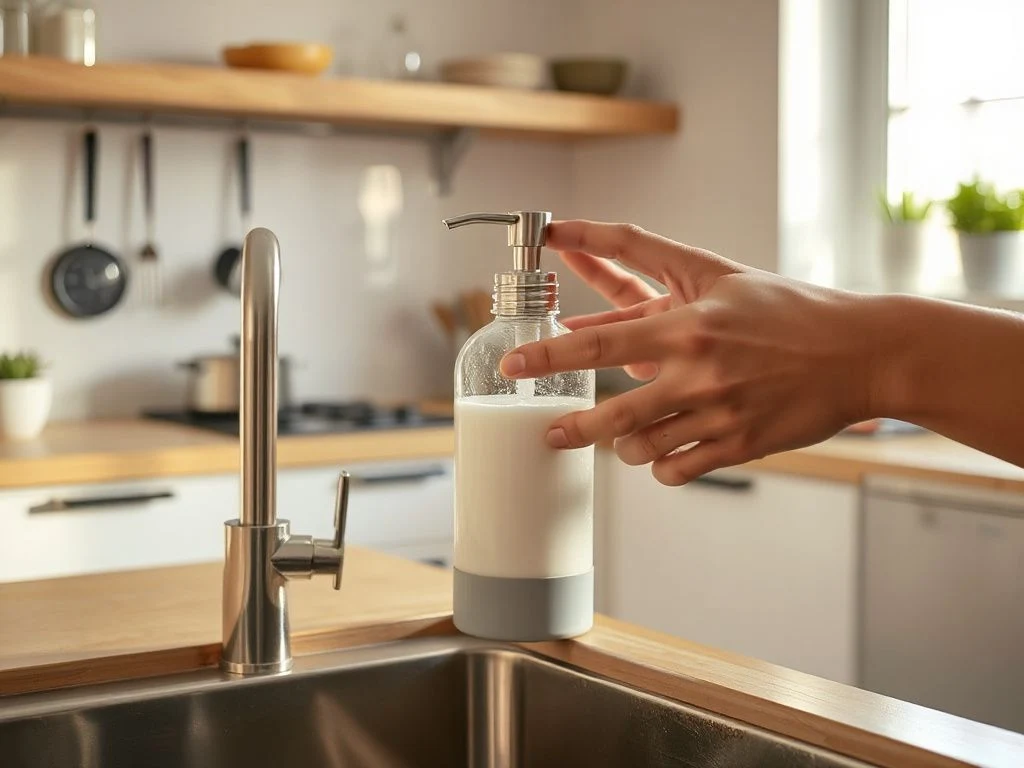
Umbra and OXO both make compact countertop dispensers from ABS with a rubberized base, which prevents sliding on wet porcelain. The base is not just an aesthetic choice; it is a functional piece that keeps the bottle in place when you pump one-handed with soapy fingers.
Footprint and Capacity
Capacity drives refill frequency. A standard countertop dispenser holds between 8 and 16 fluid ounces. An 8-ounce bottle in a household of two people, each washing hands four times a day, lasts roughly two to three weeks before needing a refill. That is not a huge chore, but every refill is a chance to spill soap on the counter. Larger 16-ounce bottles cut that frequency in half, but they also take up more visual space. For a truly tiny sink area, a wall-mounted dispenser frees the counter entirely—more on that later. Capacity also interacts with soap type: foam soap is mostly water, so a foam dispenser goes through volume faster than a liquid one even though each pump uses less actual soap.
Finish and Fingerprint Realities
Any dark, glossy finish—black chrome, oil-rubbed bronze, high-polish chrome—will show every fingerprint and dried soap splatter. A matte white plastic dispenser hides nothing but looks clinical. Brushed nickel, brushed stainless, and matte black hold up best in real bathrooms because the texture breaks up the reflection. If you are matching existing faucet finishes, note that “chrome” from one brand does not match “chrome” from another. Bring a sample of your faucet or a photo under the same lighting to the store. This detail matters far more than the brand name.
Sensor vs Manual: Sorting Through the Hype
Touchless dispensers promise hygiene, but a sensor dispenser in a home bathroom is not a hospital requirement. The real question is whether the convenience and reduced cross-contamination justify the battery and maintenance overhead. For a household with young kids or frequent guests, a sensor unit can reduce soap mess because no one has to touch a pump with dirty hands. For a quiet two-adult household, a manual pump is simpler and never runs out of battery at 7 a.m.
How Infrared Sensors Actually Work
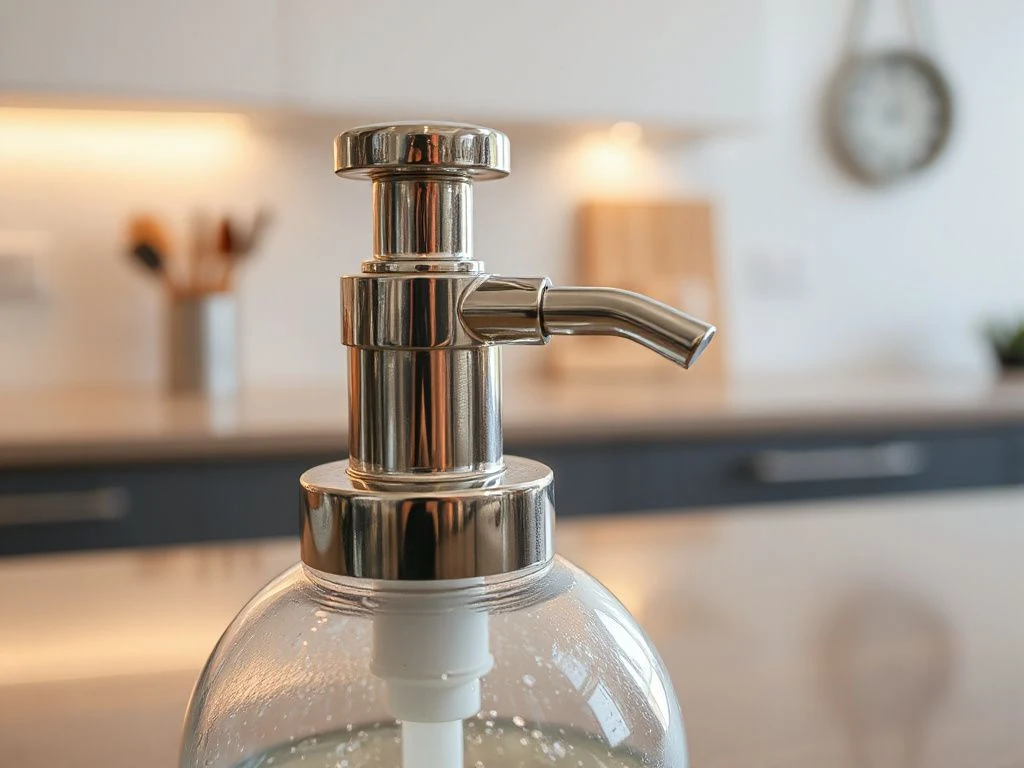
A sensor dispenser uses an infrared emitter and receiver pair mounted behind the nozzle. When your hand breaks the beam, the circuit closes and a small DC motor drives a peristaltic or piston pump. The whole action takes about 0.5 to 1 second. The sensor has a detection range typically between 2 and 6 inches, and it is calibrated to ignore ambient light changes. Cheap sensor units sometimes false-trigger when you reach for a towel or when a dark shirt passes by, because the IR threshold is set too broad. OXO and Simplehuman both publish their sensor response times and detection angles, which is a sign of a manufacturer that has actually tuned the circuit rather than copy-pasting a generic module.
Battery Life, Recharging, and Long-Term Cost
Most sensor dispensers run on 4 AA batteries or a built-in lithium-ion cell. AA batteries last 3 to 6 months with moderate use, depending on the motor efficiency. Built-in rechargeable cells need a USB charge every 1 to 3 months. Over five years, the batteries for a manual dispenser cost exactly $0. For a sensor unit, figure $10–20 in alkaline batteries or a replacement rechargeable cell if it dies after a few hundred cycles. That cost is small, but it is not zero, and it arrives at the worst time—when the dispenser blinks a red light and refuses to pump. If you choose a sensor dispenser, buy one with a low-battery indicator that gives at least a week of warning before shutting off.
Do Sensor Dispensers Waste More Soap?
The answer is: sometimes, but not for the reason you think. A manual pump dispenses a fixed volume per stroke—usually 0.8 to 1.2 milliliters for liquid, less for foam. A sensor unit dispenses a preset dose that is often adjustable via small dials or buttons, but the factory default tends to be generous to avoid user complaints of “not enough soap.” That generous default can be twice the volume of a careful manual pump. Many people also trigger the sensor twice out of habit, doubling the waste. The fix is to adjust the dose setting down to the minimum that still produces a decent lather, and to train users to hold their hand still for exactly one pump. So no, the sensor itself is not wasteful; the default settings and user behavior are.
Self-contained fact: a sensor dispenser with a fixed 1.5 mL dose and a manual pump with a 1.0 mL stroke will, under identical handwashing frequency, consume 50% more soap simply because the dose is larger. That number is adjustable on most mid-range units, but few people ever adjust it.
Integrating the Dispenser into Your Bathroom Design
A dispenser is not a standalone object; it sits next to your toothbrush holder, soap dish, and perhaps a small tray for jewelry or contact lens cases. If you are redoing the whole bathroom, the dispenser should match the finish of your Nourison area rug tones or the metal accents on your mirror and faucet. A brushed nickel dispenser next to a polished chrome faucet looks like a mistake even if both are “silver.” Pull one finish through the whole room: if your faucet is polished chrome, get a polished chrome dispenser or switch the faucet. The same principle applies to rug color underfoot; our West Elm area rug review covers how to match rug patterns to smaller bathroom fixtures, and the lesson is consistency over variety.
Installation, Maintenance, and Avoiding the Clog
Even a great dispenser fails if installed poorly or never cleaned. This section covers the long-game questions: wall mounting, cleaning, refill strategy, and the environmental math of disposable versus refillable.
Wall-Mounted Units: Drywall, Tile, and Anchors
Wall-mounted soap dispensers free up counter space, which is a small-space win. But they live on the wall permanently, so the mounting hardware must match the wall type. For drywall with no stud behind the desired spot, use zinc or steel toggle bolts. Each toggle rated for 25 pounds is enough; two toggles hold a full dispenser plus aggressive pumping force. For tile over drywall, drill through the tile with a diamond or carbide bit, then into the drywall, and install the toggle behind the drywall layer. The tile then acts as a spacer, and the anchor must be long enough to expand behind the drywall, not inside the tile hole. For solid plaster or masonry, use plastic expansion anchors or sleeve anchors. The hole spacing on the mounting bracket matters: measure it before drilling, and use a level. A wall-mounted dispenser installed even 2 degrees off-level will drip soap down the wall in a visible line.
Cleaning Your Dispenser Without Breaking It
Soap residue builds up in the nozzle, on the pump stem, and inside the bottle near the threads. To clean a manual dispenser, empty the soap, fill the bottle halfway with warm water, screw the pump back on, and pump water through until it runs clear. Repeat with a 50/50 mix of white vinegar and water to dissolve mineral deposits, then flush with clean water. Do not use boiling water; it can warp plastic pump internals and weaken the spring. For a foam dispenser, the mesh screen inside the pump head needs occasional rinsing. Soak the pump head in warm vinegar water for 15 minutes, then run warm water through it. If the foam quality degrades and you have already checked the soap dilution, the mesh is likely gummed up.
Refill Frequency and Dilution Charts
Refill frequency depends on three numbers: bottle capacity, dose per pump, and pumps per day per person. A typical person washes hands 5–8 times per day at home. A family of four using a 12-ounce liquid dispenser at 1 mL per pump will empty it in about 10–14 days. The same family using a foam dispenser at 0.3 mL of soap per pump (but more water volume) will use less actual soap but will need to refill the bottle more often because foam takes up more space per pump. That is why foam refill bottles often come in larger liquid volumes. If you buy bulk soap, store it in a cool, dark place; soap can separate or grow bacteria in a hot, humid bathroom cabinet.
Disposable vs Refillable: The Environmental Math
A disposable soap dispenser—the kind you buy pre-filled and toss when empty—generates a plastic bottle and pump head waste every few weeks. A refillable dispenser uses the same bottle for years, and you buy soap in larger containers or bulk refill pouches. The environmental difference is stark: one refillable dispenser plus one bulk refill container replaces roughly 24 disposable units per year for a family of four, based on the refill frequency math above. That is 24 fewer pump heads in a landfill. The upfront cost of a good refillable dispenser ($15–30) is recouped in about six months because bulk soap costs less per ounce than pre-filled bottles. The only caveat: if you buy a refillable dispenser that breaks in a year, you have not saved anything. So choose a brand with a replaceable pump head, not a fused unit.
Frequently Asked Questions
How do I choose between a foam and liquid soap dispenser?
Choose foam if you want less soap per wash, a richer lather, and are willing to use only foam-specific or properly diluted soap. Choose liquid if you want flexibility to use any hand soap, including thicker gels and castile soap, and you do not mind occasional nozzle crust. For households with kids, foam is less messy; for households with exfoliating soap users, liquid is safer.
How often do I need to refill a soap dispenser?
An 8-ounce bottle used by two adults lasts roughly 2–3 weeks; a 12-ounce bottle used by a family of four lasts 10–14 days. Foam dispensers need refilling more often by volume because each pump includes air. Keep a bulk refill bottle under the sink and check the level weekly to avoid the surprise of an empty pump on a busy morning.
How do I clean a soap dispenser without damaging it?
Rinse the bottle and pump with warm water, not boiling. Use a 50/50 vinegar-water mix to dissolve soap scum and mineral buildup, then flush thoroughly. Soak foam pump heads in warm vinegar water for 15 minutes if foam output weakens. Never use abrasive scrubbers on plastic or painted finishes; a soft toothbrush is enough for crevices.
What causes the pump to stop working and how can I fix it?
The three most common causes are a rusted return spring, a clogged one-way valve from thick soap or exfoliating beads, and a dried-out piston seal. For a rusted spring, replace the pump head. For a clogged valve, soak the head in hot water and pump it through. For a dried seal, a few drops of food-grade silicone lubricant on the piston can revive it, but that is a temporary fix.
Do sensor dispensers waste more soap than manual ones?
A sensor dispenser wastes more soap only if the dose setting is high or users trigger it multiple times per wash. Factory defaults often dispense 1.5 mL or more, while a careful manual pump delivers 0.8–1.0 mL. Adjust the sensor dose to the minimum that gives a good lather, and the waste disappears. The sensor itself is not inherently wasteful.