Buy curtains based on the window opening and you will end up with fabric that floats awkwardly above the floor like high-water pants. Order a single standard size without checking where the rod sits and you could block a baseboard heater or leave a six-inch gap. The question of what curtain length should I buy is not answered by the window at all. It is answered by the rod, the hardware, and the effect you want at the bottom edge.
Key Takeaways
- Measure from the top of the curtain rod to the floor, never from the window frame.
- Floor-length usually means the fabric stops 0.5 to 1 inch above the floor, while a puddle adds 2 to 4 inches.
- The same window can need 36 to 84 inches of curtain depending on rod height and bottom style.
- Windows over baseboard heaters require sill-length or apron-length panels that do not block heat flow.
The Measurement That Matters: Drop, Not Window Size
Most people get curtain length wrong because they measure the window itself. They note the height of the glass, add a few inches, and buy a panel that then hangs too short or too long. The critical distinction is between measuring the window itself and measuring the drop from the curtain rod to the floor. One tells you how much glass you have. The other tells you how much fabric you need.
Curtain length depends on three factors: where you mount the rod, what hardware connects the panel to the rod, and the visual effect you want at the bottom. Rod position alone shifts the required drop by a foot or more. Ring height adds another inch or two. The same window can need 36 inches of fabric for a sill-length café curtain or 84 inches for floor-length panels mounted near the ceiling. Choose the drop first, then add for installation height and style effect, never the other way around.
Why Rod Height Changes Everything
A rod mounted 4 inches above the window frame sits much lower than one mounted 6 inches below the ceiling. On a window with a 36-inch-tall glass area, the first rod might sit at 72 inches from the floor while the second sits at 90 inches. That is an 18-inch difference in required panel length before you even account for the bottom hem.
Higher rods make ceilings look taller and windows look larger. Lower rods keep the treatment modest and are easier to reach. Either way, the math starts at the top of the rod, not the top of the window.
Ring, Grommet, or Tab Top: The Hidden Inches
The hardware between fabric and rod consumes vertical space. A grommet panel starts its fabric just below the rod because the rod passes through the grommet itself. A pinch pleat panel hung from curtain rings loses 1 to 2 inches to the ring. Tab top panels lose the full length of the fabric tab, which can be 2 to 3 inches.
Always measure from the top of the rod to the floor, including the full ring height, not from the window frame. If you measure from the bottom of the rod instead of the top, you will buy panels that are 1 to 2 inches too short and end up with unwanted daylight at the hem.
Step-by-Step: Calculating Your Correct Panel Length
You do not need a decorator to get the math right. You need a metal tape measure, a pencil, and a decision about the bottom edge. Follow these steps in order and the number you land on will be correct.
Step 1: Decide the Bottom Effect
Do you want the fabric to touch the floor, hover just above it, or puddle onto it? Each choice changes the final length by a small but visible amount. Floor-touching is the most common for living rooms and bedrooms. A 0.5-inch hover is easier to keep clean and works well in high-traffic areas. Puddling adds 2 to 4 inches of fabric that break onto the floor and reads as formal.
Step 2: Mount the Rod at Its Final Height
Installing the rod before you measure removes guesswork. If you are replacing existing curtains, note where the old rod sat and decide if you want to move it. Standard placement is 4 to 6 inches above the window frame, but rooms with 8-foot ceilings often benefit from mounting the rod 6 to 12 inches above the frame, closer to the ceiling line.
Step 3: Measure from Top of Rod to Floor
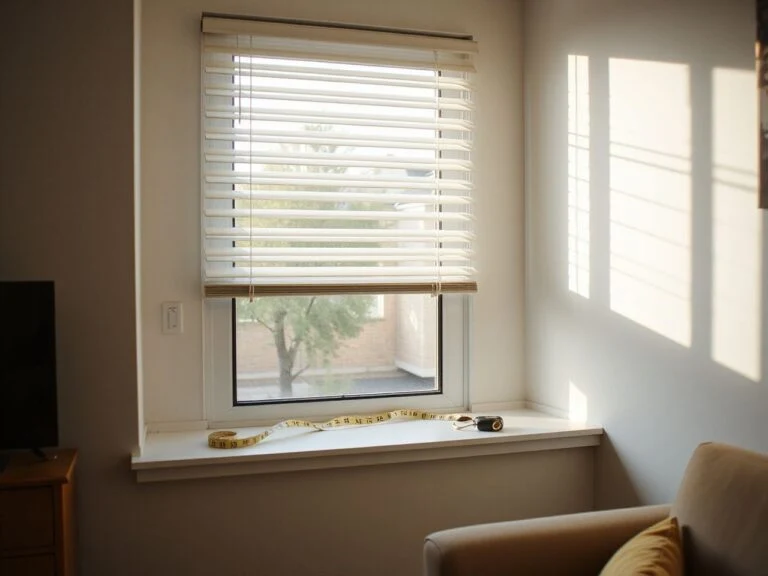
Hook the tape measure onto the top edge of the rod or the top of a curtain ring hanging on it. Let the tape fall straight to the floor. Record that number to the nearest quarter inch. This is your baseline drop. Do this at three points along the rod: center, left end, and right end. Floors are rarely perfectly level, and the longest measurement is the one that matters.
Step 4: Adjust for the Bottom Effect
Subtract 0.5 inch for a hover. Subtract nothing for a floor-touch. Add 2 to 4 inches for a puddle, depending on how much fabric you want breaking on the floor. If the rod sits above a baseboard heater, subtract enough so the fabric stops well above the heater top, usually 2 to 3 inches clearance.
Step 5: Round Up to a Standard Panel or Order Custom
Pre-made curtain panels come in common lengths: 63, 84, 95, 108, and 120 inches. If your adjusted drop falls between two sizes, buy the longer one and hem it. A panel that is 1 inch too long can be hemmed in minutes. A panel that is 1 inch too short cannot be stretched.
Curtain Length Styles and When Each Works
Four main lengths dominate home use. Each has a purpose, a room fit, and a measurement baseline. Choose the one that matches how you use the room, then adjust from the baseline drop you calculated above.
Floor-Length Curtains (Most Common)
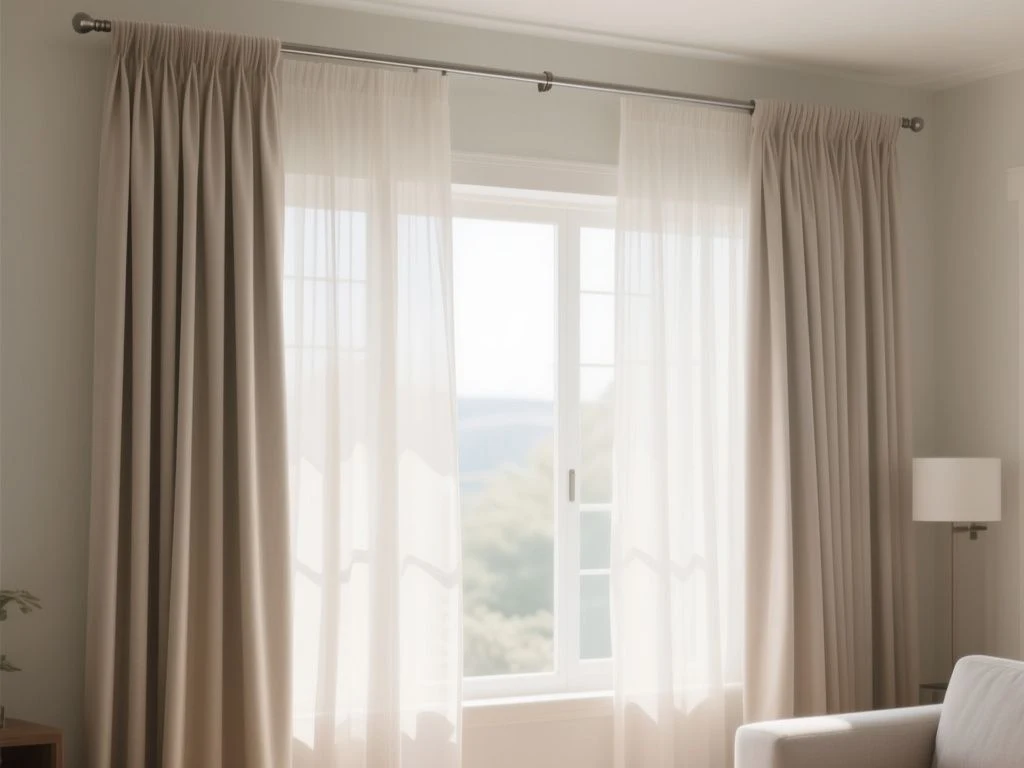
Floor-length means the fabric ends 0.5 to 1 inch above the floor. This length suits living rooms, dining rooms, and bedrooms where the curtain is a major visual element. It makes windows look taller and anchors the room. For most 8-foot ceilings, the baseline drop lands between 84 and 96 inches depending on rod height, so standard panels in those sizes work for many homes.
Sill-Length Curtains (Practical and Casual)
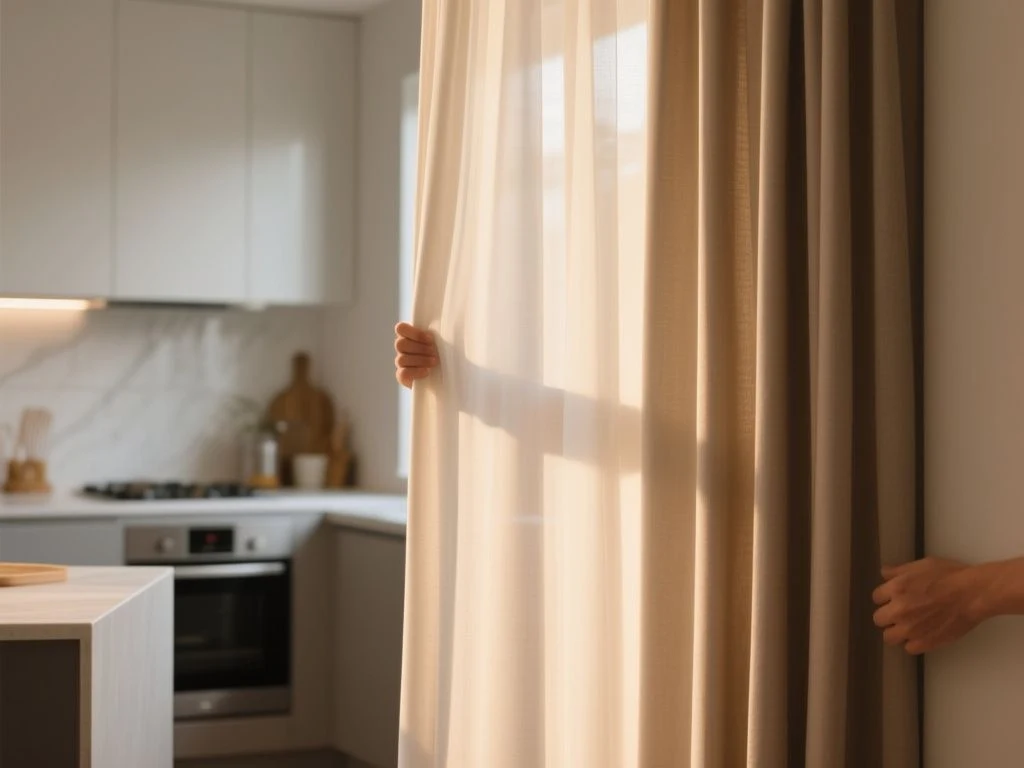
Sill-length curtains end at the bottom of the windowsill, usually 0.5 inch below it to hide the sill edge. They suit kitchens, bathrooms, and laundry rooms where long fabric would get wet, dirty, or interfere with counters. Sill-length panels also work for windows above radiators or baseboard heaters, because the fabric stops well above the heat source. Measure from the top of the rod to just past the sill, then add 0.5 inch for the return.
Apron-Length Curtains (The Middle Ground)
Apron-length curtains fall 3 to 6 inches below the windowsill but do not reach the floor. This length works in bedrooms with beds or dressers placed under windows, where floor-length panels would bunch behind furniture. It also works in casual dining areas. Apron length gives more coverage than sill length without the formal weight of floor-length fabric.
Puddle or Break Length (Luxe Effect)
Puddle length adds 2 to 4 inches of extra fabric that pools onto the floor. The fabric breaks unevenly, creating soft folds that read as high-end. This length requires a fabric with good drape, like linen or a heavy polyester blend, and it demands a clean floor because the fabric will collect dust. Puddle length is not practical for homes with pets, small children, or robot vacuums.
Curtain width matters just as much as length, but that is a separate calculation. In general, panels should be 2 to 2.5 times the width of the rod for proper fullness. The Utopia Towels shower curtain review covers a similar fullness principle for bathroom applications, where width and drop interact differently.
Room-Specific Length Decisions
A length that looks perfect in a living room can be a safety hazard in a bedroom or a cleaning nightmare in a kitchen. The room’s function overrides the style rule every time, especially in small spaces where every inch of fabric competes with furniture and heat sources.
Windows Above Baseboard Heaters or Radiators
Curtains should never block baseboard heaters or radiators. Fabric over a heat source wastes energy, risks scorching, and can be a fire hazard. For windows above baseboard heaters, choose sill-length or apron-length panels that stop at least 2 to 3 inches above the heater top. If you want a floor-length look, install a shallow shelf or deflector above the heater so the fabric falls behind it, but that adds complexity. The safer, simpler choice is a shorter panel.
Low Ceilings: Can Shorter Curtains Make a Ceiling Look Higher?
Shorter curtains do not make a ceiling look higher. The opposite is true. Mount the rod 6 to 12 inches above the window frame, then run floor-length panels from that higher rod down to the floor. The continuous vertical line of fabric draws the eye upward and visually stretches the wall. Sill-length or apron-length panels on a low ceiling make the window look squat and the wall look chopped up.
Kitchen and Bathroom Windows
Kitchens and bathrooms need shorter curtains for practical reasons. Steam, grease, and splashes shorten the lifespan of long panels. Sill-length or café curtains, which cover only the lower half of the window, work well. For bathroom windows, the same measurement logic applies as for shower curtains, though the mounting situation differs; if you deal with fabric clinging in a wet space, the guide on how to stop a shower curtain sticking to you explains the moisture dynamics that also affect window treatments near a tub.
In children’s rooms, avoid corded window coverings. The U.S. Consumer Product Safety Commission has long warned that exposed cords on blinds and shades can strangle young children, and the agency requires cordless options for many stock products sold in the U.S. Choose cordless or motorized designs for any window a child can reach, regardless of curtain length.
Fabric Drape, Shrinkage, and Final Length
Length printed on a package is a starting point, not a promise. Fabric behaves differently after hanging and washing, and those changes can shift the hem by an inch or more. A small-space realist checks the material content before trusting the label.
How Fabric Weight Affects Hang
Linen has a relaxed, slightly wrinkled drape and tends to stretch lengthwise when hung for weeks. Polyester holds its shape and resists stretching. Cotton drapes softly but can shrink 2 to 3 percent after the first wash. A 96-inch cotton panel can lose up to 3 inches in length. If you buy pre-made cotton curtains, wash and dry them before hemming so the final hem accounts for shrinkage.
Blackout and Lined Curtains: Length Adjustments
Blackout lining adds weight and stiffness. The extra weight pulls the fabric straighter, which means a blackout panel that touched the floor on day one will still touch the floor on day one hundred. That stability is good. But the stiffness also reduces the soft break of a puddle, so puddle length on a lined blackout panel looks more like a crisp fold than a soft pool. For blackout curtains, order the exact drop you measured with no extra puddle allowance.
Manufacturers test drapery fabrics for flammability under NFPA 701, a standard set by the National Fire Protection Association for textiles used in public spaces and many residential applications. Fabrics that meet this standard resist ignition from small flames, which matters for curtains hung near candles, fireplaces, or kitchens.
Common Mistakes and Pro Tips
Even careful measurers make the same errors. These are the ones that show up most often in small apartments and houses where every inch of wall space is spoken for.
- Ignoring the return. The return is the distance from the face of the rod back to the wall. If the rod projects 3 inches from the wall, the curtain falls behind the rod line and loses effective length. Measure from the rod face, not the wall.
- Buying two panels of different lengths. Some retailers sell panels in pairs, but others sell them individually. Check the package before you order.
- Assuming all windows in a room need the same length. If one window sits above a baseboard heater and another does not, the two can require different lengths. Consistency matters less than function.
- Forgetting the hem allowance. Pre-made panels often have a 2- to 4-inch hem you can let out or take up. Always check the hem depth before deciding a panel is too short or too long.
- Skipping the width calculation. A panel that is the correct length but too narrow will look skimpy. Curtain width should be 2 to 2.5 times the rod width for fullness. The Simplehuman shower curtain review discusses how rod width and panel width interact in a similar way for bathroom setups.
In every major section of this guide, one fact stands alone: the drop from rod to floor is the number that matters, and the window is almost irrelevant to it. Write that on a sticky note and put it on your tape measure.
Frequently Asked Questions
Should curtains just touch the floor or hover above it?
Most design guides recommend floor-touch or a 0.5-inch hover. Touching the floor looks intentional and blocks light at the bottom. A hover keeps the hem clean and is easier to vacuum around. Puddling, with 2 to 4 extra inches breaking on the floor, works only in formal spaces. Choose hover for high-traffic areas and floor-touch for bedrooms and living rooms.
What curtain length should I buy for a standard 8-foot ceiling?
For an 8-foot ceiling, mount the rod 4 to 6 inches above the window frame. The drop from rod to floor usually lands between 84 and 96 inches. Standard 84-inch panels work for rods mounted at 84 inches from the floor. If your rod sits higher, buy 95-inch panels and hem them. Always measure the actual drop before ordering, because window height and trim vary.
How much longer than the window should curtains be?
That depends on the rod height and the bottom style. On a 36-inch-tall window, sill-length curtains need about 40 to 45 inches of drop. Floor-length curtains on the same window might need 84 to 96 inches. The extra length beyond the window is determined entirely by the wall below the window and the rod position above it, not by the window’s own height.
Can I use shorter curtains to make a ceiling look higher?
No. Short curtains draw a hard horizontal line across the wall and make the ceiling look lower. To raise the visual ceiling, mount the rod 6 to 12 inches above the window frame and run floor-length panels from that height to the floor. The long vertical line of fabric is what makes the wall feel taller. Short panels only work in kitchens and bathrooms where function beats the optical trick.