
A current decorating shift puts more attention on daylight control, glare, privacy, and the way window coverings support a room’s lighting plan. As a Home Decor and Interiors Editor who fixes awkward rooms with lamps before moving furniture, I start with the window because changing daylight can alter the whole balance of a space. The useful distinction among different types of window blinds is not simply how each covering looks, but how its operating structure controls light, privacy, ventilation, and cleaning: slats and vanes can be adjusted, while continuous fabrics mainly raise, lower, or diffuse light. A sound guide should also separate the blind’s material from its format, because the same style can behave very differently in a humid room, a sunny room, a wide opening, or a home with children and pets.
Key Takeaways
- Blinds use movable slats or vanes, while shades use continuous fabric or material.
- Horizontal slats suit many ordinary windows; vertical vanes are often more practical across wide openings and glass doors.
- Material, moisture exposure, operating controls, and the desired level of daylight matter more than appearance alone.
How to Read the Different Types of Window Blinds
The word “blind” is often used for several related window coverings, but the construction tells you more than the label. Blinds usually contain rotating slats or vanes. Shades use a continuous panel, woven material, or fabric that raises, lowers, folds, rolls, or diffuses light as one surface.
That distinction affects the way a room feels during the day. A slatted covering can redirect daylight by changing the angle of its slats. A fabric shade generally offers a broader surface, so its light effect depends on the material and on how far the shade is raised or lowered.
A blind with movable slats gives more direct angle control than a continuous fabric panel. That makes slatted designs useful in rooms where privacy and daylight need frequent adjustment rather than a single fixed setting.
Blinds and shades are related but not identical
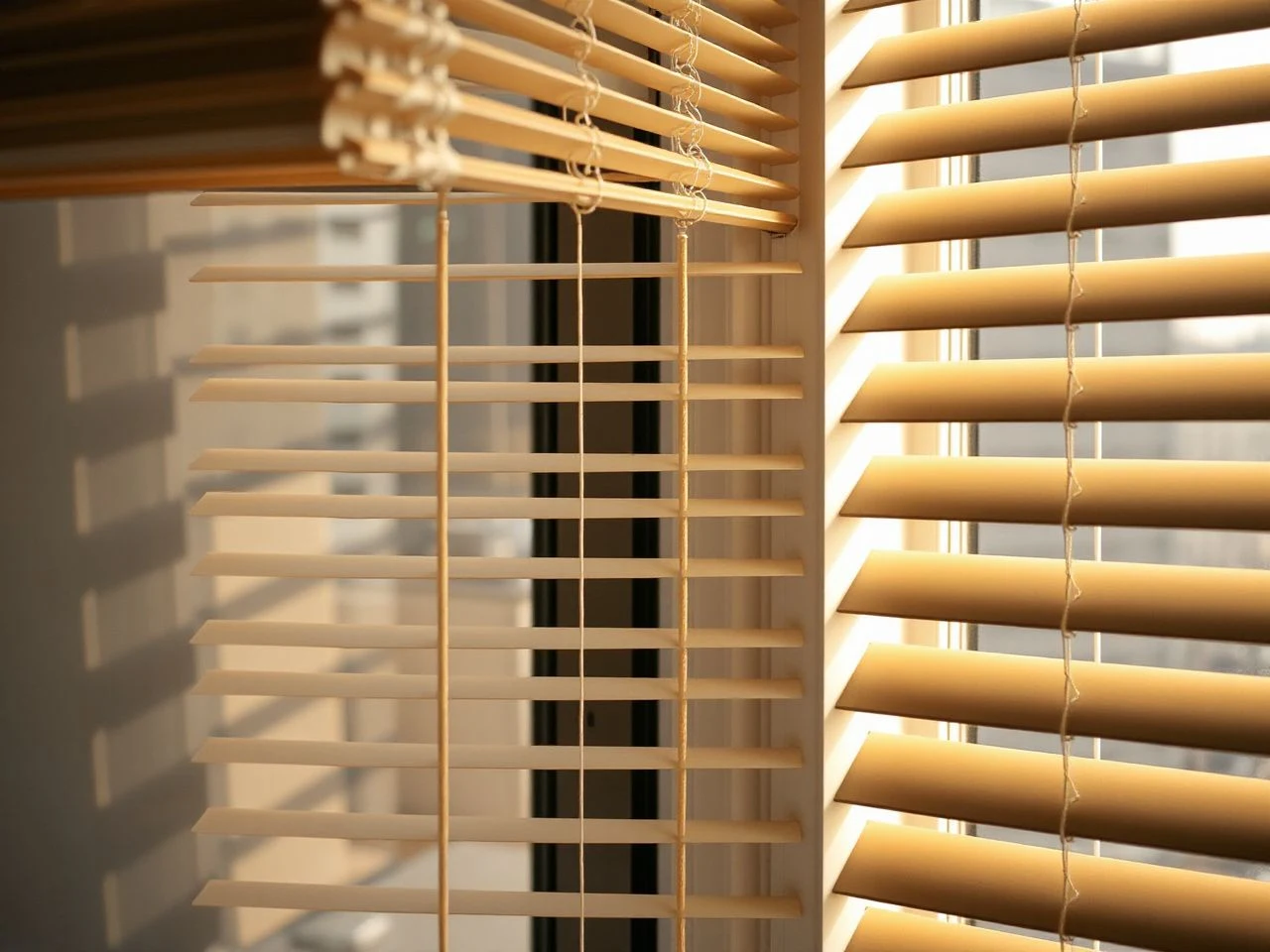
Venetian blinds, wood blinds, faux wood blinds, and metal blinds belong to the slatted family. Their headrail holds the upper operating parts, while the slats can be tilted and, in many designs, raised or lowered together. The tilt mechanism changes the angle of the slats, allowing the opening between them to change.
Roller blinds, Roman blinds, cellular shades, and bamboo shades are shade formats. A roller shade uses a single fabric panel wrapped around a tube. A Roman shade lifts by forming horizontal pleats. Cellular shades use a structured fabric form with spaces that capture air between the room and the window; single-cell and double-cell constructions are available.
The distinction also helps with terminology in a lighting plan. A room may need a shade for broad daylight diffusion and a lamp for evening warmth. Curtains and drapes can add another layer, but they do not replace the need to understand how the primary window covering moves.
Light filtering, room darkening, and blackout are separate goals
These terms should not be treated as interchangeable. Light-filtering coverings soften or reduce daylight while allowing some brightness through. Room-darkening materials reduce the amount of light entering the room more strongly. Blackout window coverings aim for a much darker result, but the finished effect also depends on gaps around the covering and the way the window is fitted.
For a living room, I usually begin by asking where the afternoon glare lands, then place lamps so the room still feels layered after the blinds close. For a bedroom, the question is more likely to be how much daylight should remain at rest and how much privacy is needed during the evening.
For a fuller room-by-room discussion, see Window Treatments for Living Room: What to Know First, especially if the window covering needs to work with floor lamps, table lamps, and curtains.
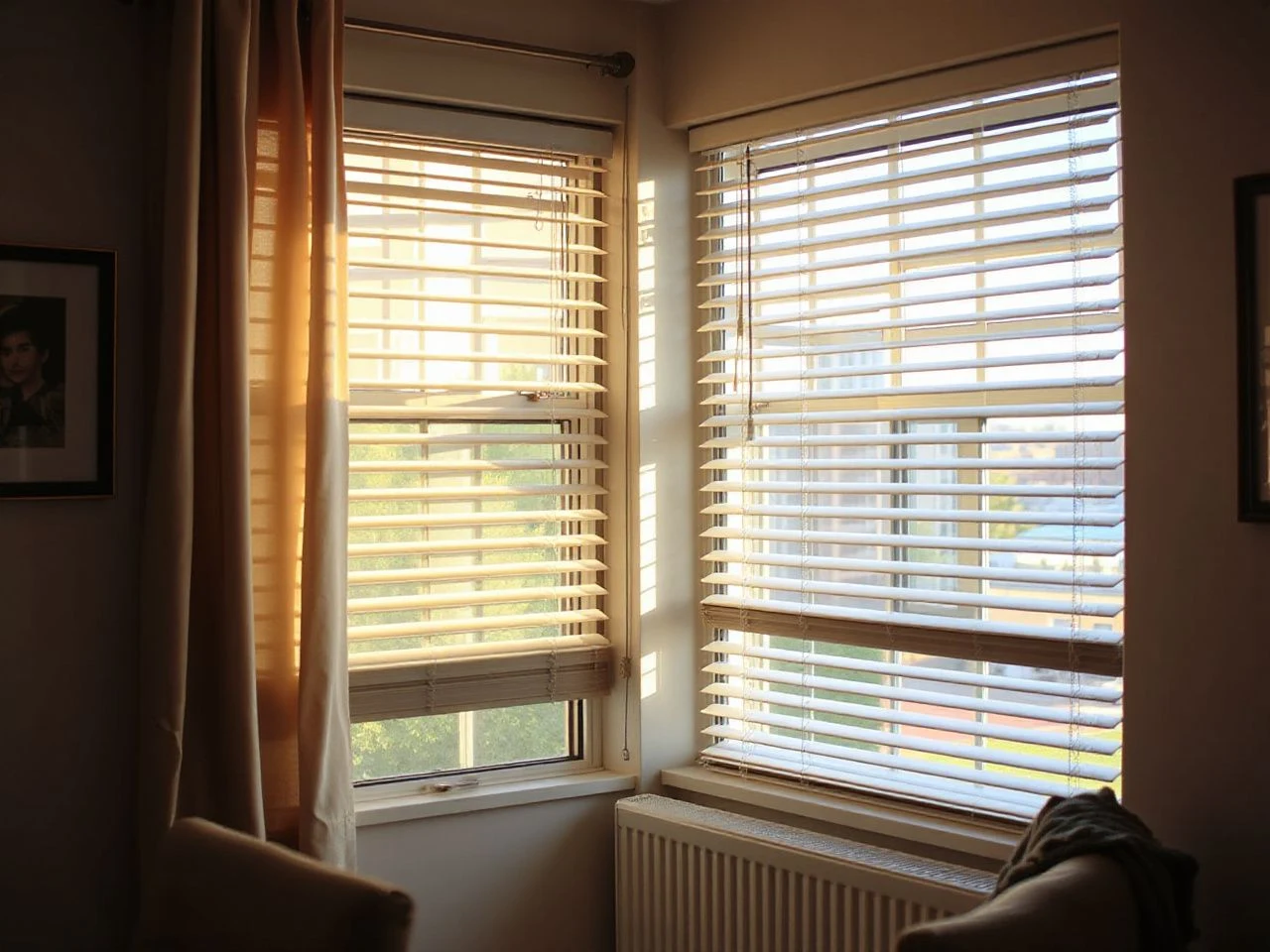
Horizontal Slatted Blinds: Venetian, Wood, Faux Wood, and Metal
Horizontal slats suit many standard windows because the slats run across the opening and can be tilted to alter the view and daylight. Venetian blinds are the familiar format, while wood, faux wood, and metal describe material choices within that format.
Venetian blinds
Venetian blinds use a series of horizontal slats connected to an operating system within the headrail. Tilting the slats changes how much light passes through and how clearly someone can see into the room. Raising or lowering the blind moves the slats as a group.
Slatted blinds need room around their moving parts. Objects placed close to the headrail or tilt mechanism can interfere with operation, and dust settles on the upper and lower faces of each slat. A soft duster or a dry, gentle cloth is a sensible first tool because it reaches the long surfaces without soaking the mechanism.
Real wood blinds
Real wood blinds use genuine hardwood such as cherry, oak, or basswood. The natural surface can bring visual warmth to a living room, study, or bedroom, especially where the window covering needs to sit beside timber furniture or warm lamp shades.
Untreated wood is a poor choice for a damp location because moisture can cause wood to warp or stain. A bathroom also needs a cleaning routine that avoids leaving liquid on the slats or around the headrail. The exact finish matters, so follow the manufacturer’s care instructions rather than assuming every wood surface can be wiped in the same way.
Untreated wood blinds can warp or stain in damp areas. That single material fact is enough to rule out a careless bathroom choice, even when the colour appears perfect in a showroom.
Faux wood blinds
Faux wood blinds are made to provide a wood-like appearance in a different material. Their suitability still depends on the exact construction and care instructions, so the name alone should not be treated as a complete moisture guarantee.
Use the room as the test. If condensation regularly reaches the window covering, look for a material described by its maker as suitable for that environment. Do not rely on a wood pattern to tell you how the blind will behave.
Metal blinds
Metal blinds are another horizontal slat format. Their clean lines can suit a kitchen, office, or modern living room, although the room’s lighting still deserves attention. A hard slatted surface may control daylight precisely, while a nearby lamp can soften the evening appearance of the window.
Metal slats can collect visible dust along their edges and horizontal surfaces. Clean them with a tool that does not bend the slats, and avoid forcing the tilt mechanism if the angle changes unevenly. A blind that becomes stiff deserves inspection rather than repeated pulling.
Continuous Shades: Roller, Roman, Cellular, and Bamboo
Shades use a continuous panel instead of individual slats. Their appearance is usually calmer across a broad fabric surface, but the operating result depends on whether the panel rolls, folds, gathers into a structured form, or remains woven.
Roller blinds
A roller blind is based on one fabric panel wrapped around a tube. The panel rolls up as the shade opens and unrolls as it closes, creating a straightforward visual plane across the glass.
Roller blinds can be useful where a clean window line matters. They are also easy to pair with curtains or drapes because the shade does not introduce a row of horizontal slats. The key decision is the fabric’s light behaviour: a light-filtering panel, a room-darkening panel, and a blackout panel produce different levels of daylight control.
For a bedroom, consider the amount of light that remains around the edges as well as the fabric itself. For a living room, a filtering panel may keep daylight present while reducing the harshness that makes a lamp or television screen difficult to use.
Roman blinds
Roman blinds use fabric designed to fold into horizontal pleats as the covering is lifted. The folds give the window a softer, more upholstered appearance than a roller format.
The fabric remains an important part of the decision. A textile that absorbs dust or shows marks will need more careful maintenance than a smooth surface. Damp rooms also require caution because some fabrics can stain or develop mildew when exposed to moisture.
Roman blinds create horizontal fabric pleats as they rise. That structure makes them visually distinctive, but it also means cleaning must account for folds rather than a single flat panel.
Cellular shades
Cellular shades use a formed structure that captures air in the space between the room and the window. Single-cell and double-cell construction options are available, so the shape of the shade should be checked rather than assumed from its name.
The layered structure can gather dust in places that are harder to reach than the face of a roller shade. Use a vacuum attachment gently, with the suction kept controlled enough that the fabric is not pulled out of shape. A dry cleaning method is a sensible starting point unless the manufacturer gives different instructions.
Bamboo shades
Bamboo shades use woven panels made from reeds, grasses, bamboo, and jute. Their irregular weave can bring texture to a dining room, living room, or bedroom, but the same texture may show dust more readily than a smooth panel.
Woven materials also need careful placement in damp areas. The room’s moisture level, ventilation, and the maker’s care instructions should guide the decision. If privacy matters after dark, check whether the weave leaves visible openings and plan a lining or second layer only if the product’s construction allows it.
Matching Blind Formats to Windows and Rooms
The window’s shape and movement should guide the format. A treatment that behaves neatly on a narrow, ordinary window may become awkward across a wide opening or a door that people use throughout the day.
Wide windows and sliding glass doors
Vertical blinds use vanes that run from top to bottom. That orientation is often more practical for wide windows and glass doors because the covering can move across the opening rather than requiring one broad field of horizontal slats.
Vertical vanes also suit openings that need a clear route through the door. The operating direction, stack position, and furniture nearby should be considered before installation. A floor lamp or console placed where the vanes need to travel can make daily use frustrating.
Vertical vanes are often more practical than horizontal slats across wide windows and glass doors. The format follows the opening, which can make movement and access easier to plan.
Unusually shaped windows
Oddly shaped windows need a format that follows the available space rather than forcing a rectangular visual block over it. The correct approach depends on the shape, operating access, and the desired privacy level.
Continuous fabric formats may suit some non-standard arrangements because the panel can be designed around the opening, while slatted formats may offer more useful angle control where the window has a strong glare problem. Exact suitability cannot be decided from a photograph alone; check the manufacturer’s available shapes and operating requirements.
Living rooms
Living rooms usually need a balance between daylight, privacy, furniture placement, and evening atmosphere. Venetian blinds allow angle changes during the day, while roller or Roman blinds can create a quieter surface that works well beside curtains.
I would settle the lamp plan before finalising the window covering. A table lamp near a reading chair, a floor lamp beside a sofa, or a low light near a media unit can prevent the closed blind from making the room feel visually heavy.
Readers planning a broader scheme can also review how curtains and blinds compare across different rooms before deciding whether the window needs one layer or a combination.
Bedrooms
Bedrooms need privacy and a chosen level of darkness. A roller or cellular shade can provide a broad surface, while slatted blinds allow the angle to be adjusted when some daylight is welcome.
Do not call every dark-looking fabric blackout. Light filtering, room darkening, and blackout describe different results. Check the product description and inspect the edges of the installation because side gaps can affect the finished darkness.
Bathrooms and damp rooms
Bathrooms and other damp areas require materials that tolerate moisture. Untreated wood and some fabrics can warp, stain, or develop mildew, so a material that looks attractive in a dry bedroom may be unsuitable beside a bath or shower.
Ventilation matters as much as appearance. Keep the covering from remaining wet, follow the stated cleaning method, and inspect the lower edge and folds for signs of moisture. If the fabric begins to smell musty or show marks that do not lift with the approved method, replacement may be more sensible than repeated wet cleaning.
Operating, Cleaning, Repairing, and Replacing Blinds
Most operating problems become easier to understand once the blind’s movement is separated into tilt, raise, and lower functions. Slatted blinds tilt by rotating their slats through the tilt mechanism. Raising and lowering moves the slats or vanes together through the headrail and operating system.
Why a blind becomes difficult to tilt
A tilt mechanism can feel stiff when dust, a shifted slat, or an obstruction interferes with movement. The safest first step is visual inspection. Look for a slat that sits out of line, an object touching the headrail, or a cord that is not following its normal path.
Do not force the control. Repeated force can turn a small alignment issue into a damaged operating part. If the slats remain uneven or the mechanism makes an unusual sound, stop using the blind and consult the maker’s repair guidance.
Why a blind becomes difficult to raise or lower
Raising or lowering can become difficult when the covering is obstructed, overloaded by an incorrect arrangement, or affected by wear in its operating parts. A fabric panel may also gather unevenly if it is not moving straight.
Check that furniture, handles, and nearby objects are not catching the blind. Keep hands clear of moving parts, and do not pull at an angle. If the covering is cordless or motorized, use the control provided for that format rather than adapting it with an improvised cord.
Cleaning slatted blinds
Slatted blinds collect dust across many individual surfaces, so cleaning works best when each slat is supported rather than bent. A soft brush, microfiber cloth, or suitable vacuum attachment can remove dry dust. Work gently from the headrail downward and avoid saturating the operating components.
Wood needs particular care because excess moisture can stain or warp it. Metal and faux wood surfaces may tolerate a different method, but the maker’s instructions still take priority. Never assume that a material’s appearance tells you how much water it can handle.
Cleaning fabric and woven shades
Roller shades have a broad panel that can be dusted with a soft tool. Roman shades need attention around the horizontal pleats, and cellular shades need gentle cleaning around their formed spaces. Bamboo shades have a woven surface where dust can settle between reeds, grasses, bamboo, and jute.
Start dry. Wet cleaning can leave marks, distort fabric, or introduce moisture where it cannot dry properly. If a stain remains, check the care label or manufacturer’s instructions before applying a household cleaner.
Ongoing costs without false precision
The ongoing cost of a blind is shaped by the format, material, operating parts, cleaning needs, and whether a damaged section can be repaired or the whole covering must be replaced. Slatted blinds have multiple moving parts that may need attention, while continuous shades can have a simpler visible surface but still depend on their tube, folds, fabric, or internal structure.
Cleaning costs can also differ. A smooth roller panel may be straightforward to dust, while textured bamboo, pleated Roman fabric, or cellular construction may require more careful handling. Ask the installer or manufacturer what can be replaced separately before assuming a small fault requires a complete new covering.
Child and pet safety
Accessible operating cords and cord loops can create a strangulation hazard for children and pets. The U.S. Consumer Product Safety Commission provides current consumer safety information about window-covering hazards, so use its guidance when assessing an existing blind or planning a child-safe window-covering design.
Choose controls that children and pets cannot easily reach, keep beds and furniture away from accessible cords, and follow the product’s installation instructions. A cordless or inaccessible control arrangement addresses the cord hazard, but it does not remove the need to secure the blind correctly or keep small children and animals away from moving parts.
Common Selection Errors to Avoid
A window covering can look right in a sample and still behave poorly in the room. The following errors come from treating appearance as the only decision.
Choosing the material before checking moisture
Bathrooms, kitchens, and other humid spaces put different demands on a blind than a dry living room. Untreated wood and some fabrics can warp, stain, or develop mildew. Check the room first, then select a material described as suitable for that exposure.
Confusing privacy with darkness
A covering can block a clear view while still admitting daylight. Another can make a room darker without providing the exact privacy effect desired after sunset. Decide whether the priority is daytime privacy, evening privacy, glare reduction, or darkness, then choose the structure and fabric accordingly.
Using horizontal blinds across every opening
Horizontal slats work well for many ordinary windows, but wide windows and patio or sliding doors often need a different movement pattern. Vertical vanes can travel across a broad opening and leave the door’s route easier to plan.
Ignoring the lamp plan
Window coverings change the room’s daytime brightness, but they do not create evening illumination. A bedroom may need a low, warm lamp after the shade is closed. A living room may need several light levels so the window does not become the only visual focus.
A good window treatment supports the room’s lighting plan rather than replacing it. I use that principle before choosing a colour, finish, or decorative layer.
Assuming every control works the same way
Slatted blinds tilt, raise, and lower through different movements. Roman shades fold as they rise. Roller blinds wrap around a tube. Cellular shades move as a structured fabric panel. Learn the normal movement before pulling harder on a control that feels unfamiliar.
For products with electrical or motorized operation, read the manufacturer’s operating and safety instructions. Do not add an unapproved control system or alter the mechanism to solve a fitting problem.
Frequently Asked Questions
Which type of blind gives the most control over light and privacy?
Slatted blinds generally give the most direct angle control because the slats can rotate through the tilt mechanism. Venetian, wood, faux wood, and metal formats can therefore adjust the view and daylight without raising the entire covering. A continuous shade may provide stronger broad-surface diffusion or darkness, but it does not adjust light angle in the same way.
What is the difference between blinds and shades?
Blinds usually use movable slats or vanes that tilt, raise, or lower. Shades use a continuous fabric or material panel. Roller shades wrap around a tube, Roman shades fold into horizontal pleats, cellular shades use formed spaces that capture air, and bamboo shades use woven panels made from natural materials.
Which blinds work for wide windows or patio doors?
Vertical blinds are often more practical for wide windows and glass doors because their vanes run from top to bottom and can move across the opening. The stack position, door handle, nearby furniture, and access route still need checking. Horizontal slats may suit a wide opening in some layouts, but the operating space should be confirmed first.
Are corded blinds safe around children and pets?
Accessible cords and cord loops can create a strangulation hazard for children and pets. Use the current guidance from the U.S. Consumer Product Safety Commission, keep furniture away from reachable cords, and consider cordless or inaccessible controls. The American Society for Testing and Materials is also a standards organisation whose published information can help readers identify relevant safety-standard work; product instructions remain essential.
Different types of window blinds make sense in different rooms because their structures do different jobs. Slats offer angle control, vertical vanes suit broad openings, and continuous shades create a single field of fabric or woven material. Once the room’s moisture, privacy, daylight, cleaning, safety, and lamp needs are clear, the choice becomes a design decision grounded in how the window actually operates.