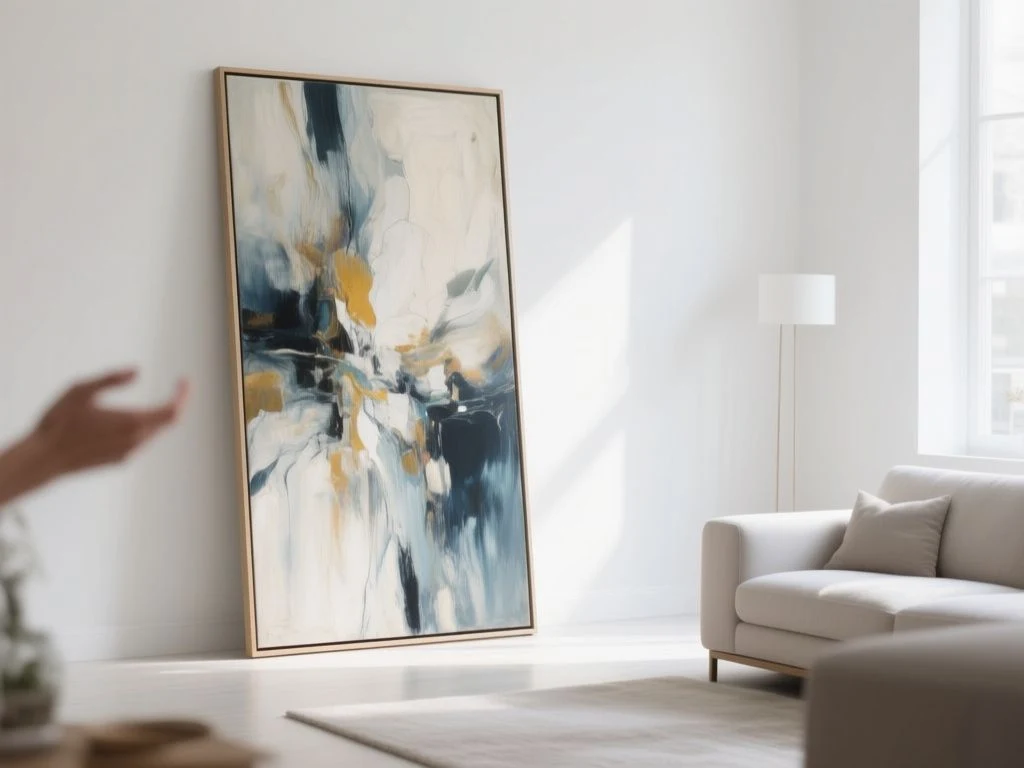
The frame cracks at the corner where the nail went through the wire. A heavy canvas falls onto the sofa, tearing the fabric before bouncing to the floor. The buyer measured neither the weight nor the wall studs, and the single sawtooth hanger gave way two months later. This is the most common wall art failure, and it has nothing to do with taste. A proper wall art buying guide starts before you click add to cart, because the hardware on the back of the piece matters as much as the image on the front.
Key Takeaways
- Check the substrate first. Archival pigment ink on acid-free cotton rag paper lasts decades; a poster on standard paper fades within two years under bright light.
- Weight decides the hardware. Pieces over 20 pounds must hang from a stud or a heavy-duty anchor rated double the art’s weight, never a single nail.
- UV protection is non-negotiable. Direct sunlight destroys colors even through window glass unless a UV-resistant coating or museum glass is in place.
- Gallery walls need consistent spacing. Keep 2–3 inches between frames and start from the largest piece to anchor the arrangement.
Understanding What You’re Actually Buying
A beginner focuses on the image and size. An experienced selector knows that the combination of archival pigment ink, acid-free paper, and a UV-protective coating dictates whether the art will look vibrant in five years. The sheen of the finish — matte vs gloss — changes how the piece reflects light and interacts with the room’s lighting. The weight of the canvas or framed piece dictates the hanging hardware, so planning installation before purchase saves significant hassle.
The Difference Between a Poster and a Giclée Print
A poster typically uses four-color offset printing on thin, acid-containing paper. The paper yellows, the ink fades, and the edges curl within a year or two. A giclée print uses archival pigment ink sprayed onto acid-free cotton rag paper at high resolution, often exceeding 300 dpi. The result is a print that can last 50–100 years under proper conditions. On paper, the difference is often invisible at first glance, but the construction tells the story: a poster feels flimsy, while a giclée on cotton rag has a heavier, textured hand.
The permanence of archival pigment ink is measured by standards such as ISO 11798, which rates printed materials for longevity and lightfastness. When a listing mentions “archival” or “pigment-based,” ask which standard the ink conforms to. If the seller cannot answer, treat it as a poster regardless of the price.
How to Judge Print Quality Without Seeing It in Person
The listing should name three things: the ink type (pigment, not dye), the paper or substrate (acid-free, preferably cotton rag), and the presence of a UV-resistant coating. If any one is missing, the price should reflect that. Matte finishes hide fingerprints and reduce glare but can look flat under directional lighting. Gloss finishes increase color saturation but turn into mirrors when a window or lamp faces them. Neither is better; the room decides.
A giclée print on cotton rag paper can last decades without yellowing, while a poster on standard paper may start to fade within two years under bright indoor light. This is not a guess; it is the observable difference between acid-free and acid-containing substrates.
Sizing and Scale: Getting the Math Right Before You Spend
The most common sizing mistake is buying too small. A 12×16 inch print above an 80-inch sofa looks like a postage stamp. The correction is simple but requires measuring before opening a shopping tab.
Measuring Your Wall Correctly
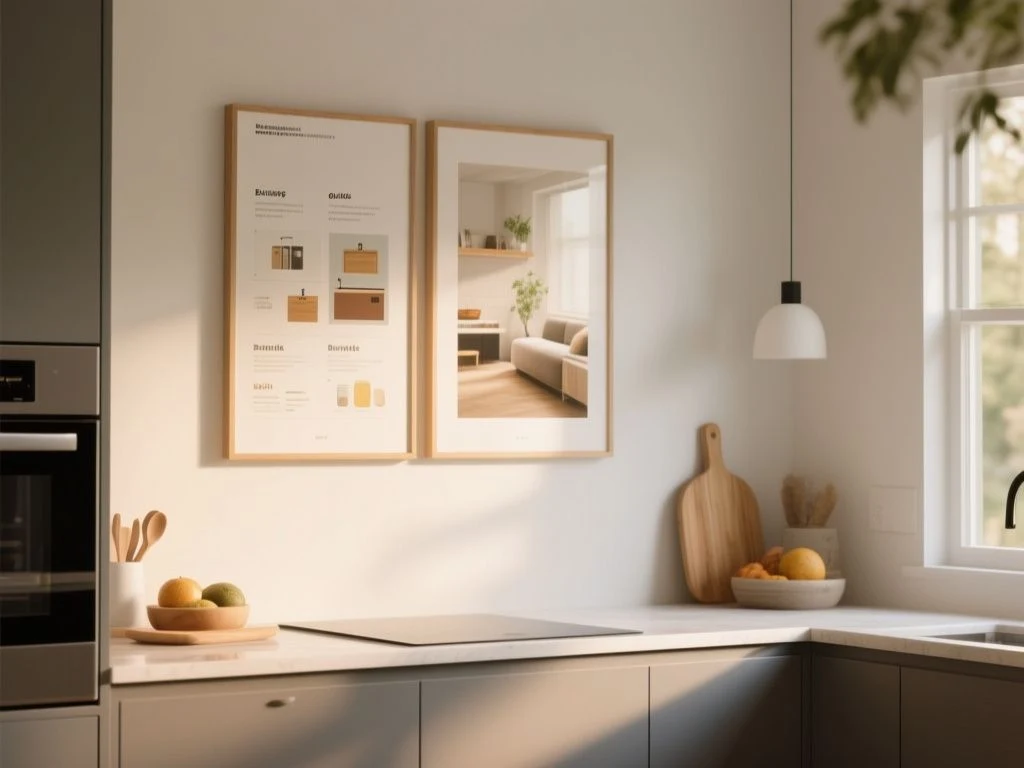
Mark the furniture width or the wall segment you intend to fill. The artwork should span 60–75% of that width. For a sofa 84 inches long, that means a piece between 50 and 63 inches wide. Multiply the wall height by 0.6 to get the target height. On a standard 96-inch wall, the art should sit between 58 and 72 inches tall, assuming it hangs alone without furniture below.
A piece 48 inches wide above an 84-inch sofa creates balanced proportion, leaving roughly 18 inches of breathing room on each side. That number comes from the 60–75% rule, and it prevents the “drowned by the wall” effect.
Size by Room Type
For a living room above a sofa or console, a single large piece between 40×60 and 48Ö72 inches works better than three small ones unless you intend a gallery wall. A bedroom above a queen headboard (60 inches wide) needs something around 36×48 inches. A hallway with narrow walls can take vertical pieces 16×40 inches. Always measure the wall, not the previous artwork.
Frame, Canvas, or Metal: The Construction of the Piece Itself
Here is where the assembly sceptic pays attention. The finish may look perfect, but the hardware and material thickness decide whether the piece survives its first year on the wall.
Gallery Wrap Canvas vs. Framed Print
A gallery wrap canvas stretches the printed canvas around a wooden stretcher bar, with staples on the back. The bar depth is the critical spec. 1.5 inches is the professional standard; anything thinner than 1 inch looks like a cheap import and tends to warp in humid rooms. Check that the corners are square and the canvas is pulled tight with no sag in the center. The listing should state the bar wood species — pine is common, but hardwoods like poplar resist warping better. If the species is not stated, assume softwood.
A framed print adds a rigid frame, often with a mat. The mat must be acid-free or the print will yellow behind the glass within a few years. The frame itself should be solid wood, not MDF wrapped in paper veneer. Look for FSC-certified wood, which guarantees the timber came from responsibly managed forests. The hanging hardware is the final check: D-rings screwed into the frame are far stronger than sawtooth hangers glued or stapled to the back.
Gallery wrap canvas with 1.5-inch bars can hang without a frame, but canvas thinner than 1 inch often looks cheap and warps over time. That is the construction rule, independent of the image quality.
Metal Prints and Specialty Substrates
A Chromaluxe metal print uses dye-infused aluminum, which is scratch-resistant and produces extremely vivid colors. The downside is the glossy surface reflects every light source in the room. If you have recessed ceiling lights or a window opposite the wall, a metal print can become a mirror. Matte metal finishes exist but reduce the color pop. For a dust-free environment like a kitchen or bathroom, metal prints are easier to wipe down than canvas, but they are heavier — a 30×40 inch metal print can weigh over 10 pounds.
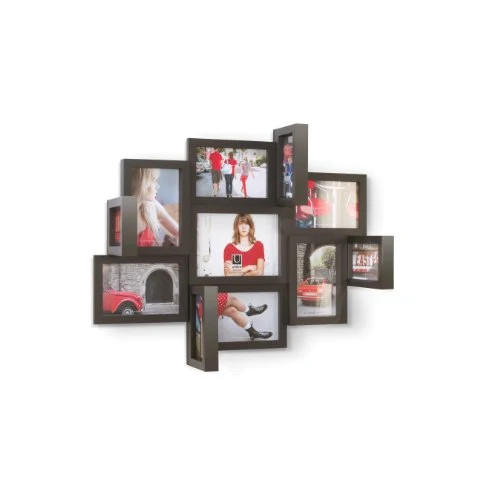
Before finalizing any option, our Umbra wall art review compares frames and canvases with a focus on the hardware and mounting systems included in the box, which is the detail most buyers skip.
How to Choose a Frame Color and Mat Width
The frame color should relate to the furniture, not the wall. A dark walnut frame against a white wall looks fine, but if the sofa is also dark, the piece may disappear into the corner. Medium-toned woods like oak or maple blend with most palettes. Black metal frames work with modern interiors but can feel cold in a traditional room. The mat width should be at least 2 inches; a narrower mat makes the piece look like a drugstore poster. Double mats (two layers of mat board) add depth but increase the frame’s overall weight, so check the final weight before choosing a mounting method.
Hanging Without Damaging Your Wall or Your Art
Installation is where most failures happen. The art did not fail; the hardware did. The weight of the piece determines everything.
Weight and Hardware: The Rules
A glazed framed print 24×36 inches can weigh 8–12 pounds. A large gallery wrap 48×60 inches often weighs 15–20 pounds. A metal print of the same size can exceed 25 pounds. The rule: pieces over 20 pounds must hang from a wall stud or use a heavy-duty wall anchor rated for at least double the art’s weight. A standard drywall screw or nail holds only 10–15 pounds in drywall alone, and that rating drops with vibration or if the hole is slightly enlarged.
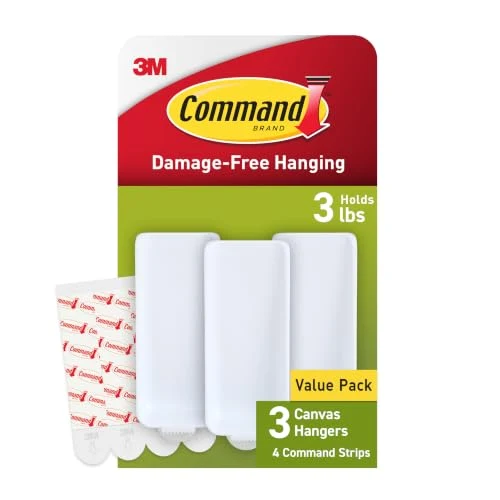
For pieces under 20 pounds, two D-rings and a braided steel wire are still better than a single sawtooth hanger. Two-point hanging keeps the frame level and distributes load. Use a stud finder to locate studs; if none align, use toggle bolts or SnapToggles rated for the weight. Check the anchor’s pull-out rating on the packaging. A piece over 30 pounds should never hang on adhesive strips, even those marketed for heavy weights, because adhesive strength degrades over time and with humidity. For a direct comparison of adhesive methods versus mechanical fasteners, our Command Strips vs Nails buying guide breaks down the weight limits and wall surface compatibility.
Pieces over 20 pounds should hang from a stud or a heavy-duty wall anchor rated for at least double the art’s weight. That single sentence will save more walls than any style advice.
Measuring, Leveling, and Single-Piece Placement
The center of the artwork should sit at 57–60 inches from the floor, which is average eye level. Measure the frame height, divide by two, add that to 57, and subtract the distance from the wire to the top of the frame. Mark that point on the wall. Always use a level — a bubble level or a phone level app — and check again after tightening the wire. Do not skip the level; a frame tilted 1 degree over 48 inches drops 0.8 inches at one end, which the eye notices instantly.
If you are hanging on a plaster wall, use a masonry bit for the anchor, not a standard drywall bit. Plaster crumbles under high-speed drilling. Pre-drill, then tap in the anchor. For brick or concrete, use a hammer drill and lead anchors.
Gallery Wall Arrangement Without the Chaos
Gallery walls fail when spacing is inconsistent or the arrangement has no anchor piece. Start with the largest frame, place it slightly off-center at eye level, then work outward. Keep 2–3 inches between frames on all sides. Use paper templates taped to the wall before drilling any holes; shift them until the negative space looks balanced. Mixing frame styles works only if they share one trait — same color, same material, or same mat width. A jumble of black, gold, and natural wood frames with no common element reads as clutter, not curation.
The distance between frames on a gallery wall should be consistent, typically 2–3 inches. That spacing prevents the arrangement from looking like a school hallway bulletin board.
Protecting Your Investment: Fading, Cleaning, and Maintenance
The piece is on the wall. The next threats are light and dust. Both are preventable, but only if you planned for them before purchase.
Preventing Fading and Discoloration
Direct sunlight causes fading, period. Even through double-pane glass, UV radiation breaks down dye molecules. A UV-resistant coating on the print blocks most of the harmful spectrum, but it is not armor. If the wall receives more than two hours of direct sun daily, either hang the art elsewhere or frame it behind museum glass, which filters over 99% of UV. The American Society for Testing and Materials publishes standards like ASTM D5383 for measuring lightfastness of art materials. Look for that standard on the product page when sun exposure is unavoidable.
UV-resistant coating blocks most of the light spectrum that causes fading, but even coated prints should not hang in direct sun for more than a few hours daily. Place the art on a north-facing wall if the room has large south windows, or install sheer curtains to diffuse the light.
Cleaning Canvas and Frames Without Damage
Canvas prints should never be cleaned with water. Moisture wicks into the cotton and causes mildew or warps the stretcher bars. Use a soft, dry microfiber cloth or a vacuum with a brush attachment on low suction. For framed pieces with glass, spray the cleaner onto the cloth, not directly onto the glass, so liquid does not seep under the frame edge and wick into the mat. Avoid ammonia-based cleaners on acrylic glazing; they cloud the surface. Dust the top of the frame monthly — dust falling from the frame onto the glass is the most common source of scratches.
The ongoing maintenance for wall art is minimal but non-negotiable: check the hanging wire and D-rings once a year for slippage or rust, especially in humid climates. A wire that has frayed by 20% should be replaced immediately. The frame may look fine, but the connection to the wall is the load-bearing part.
Frequently Asked Questions
What size wall art should I get for my living room?
Measure the width of the sofa or the wall segment above it. The artwork should span 60–75% of that width. For an 84-inch sofa, that means 50–63 inches wide. The height should be about 60% of the wall height, so a 96-inch wall takes art between 58 and 72 inches tall.
How do I know if a print is good quality?
Check the substrate and ink listing. Quality prints specify archival pigment ink on acid-free cotton rag paper with a UV-resistant coating. If the seller cannot name the ink type or the paper’s acidity, assume it is a poster. The paper should feel heavy and have a slight texture, not glossy magazine stock.
Can I clean a canvas print with water?
No. Water wicks into the cotton and causes mildew, and it can loosen the staples on the stretcher bars. Use a dry microfiber cloth or a soft brush vacuum. For stubborn dust, a barely damp cloth wrung out completely can be used, but dry the surface immediately with a towel. Never spray water directly on the canvas.
Do I need to use a level when hanging art?
Yes, always. Even a 1-degree tilt over a 48-inch frame is noticeable. Use a bubble level or a phone app, and check both horizontal and vertical planes. For gallery walls, level each frame individually after the arrangement is set, not just the first one.