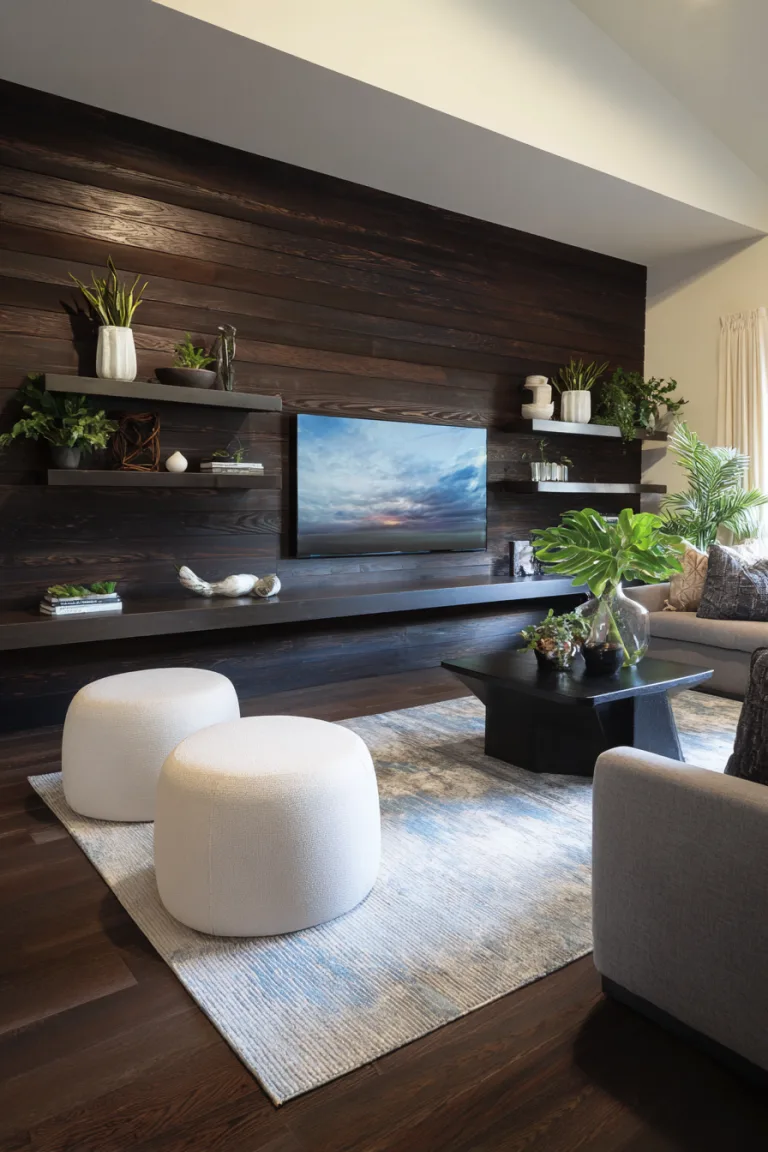
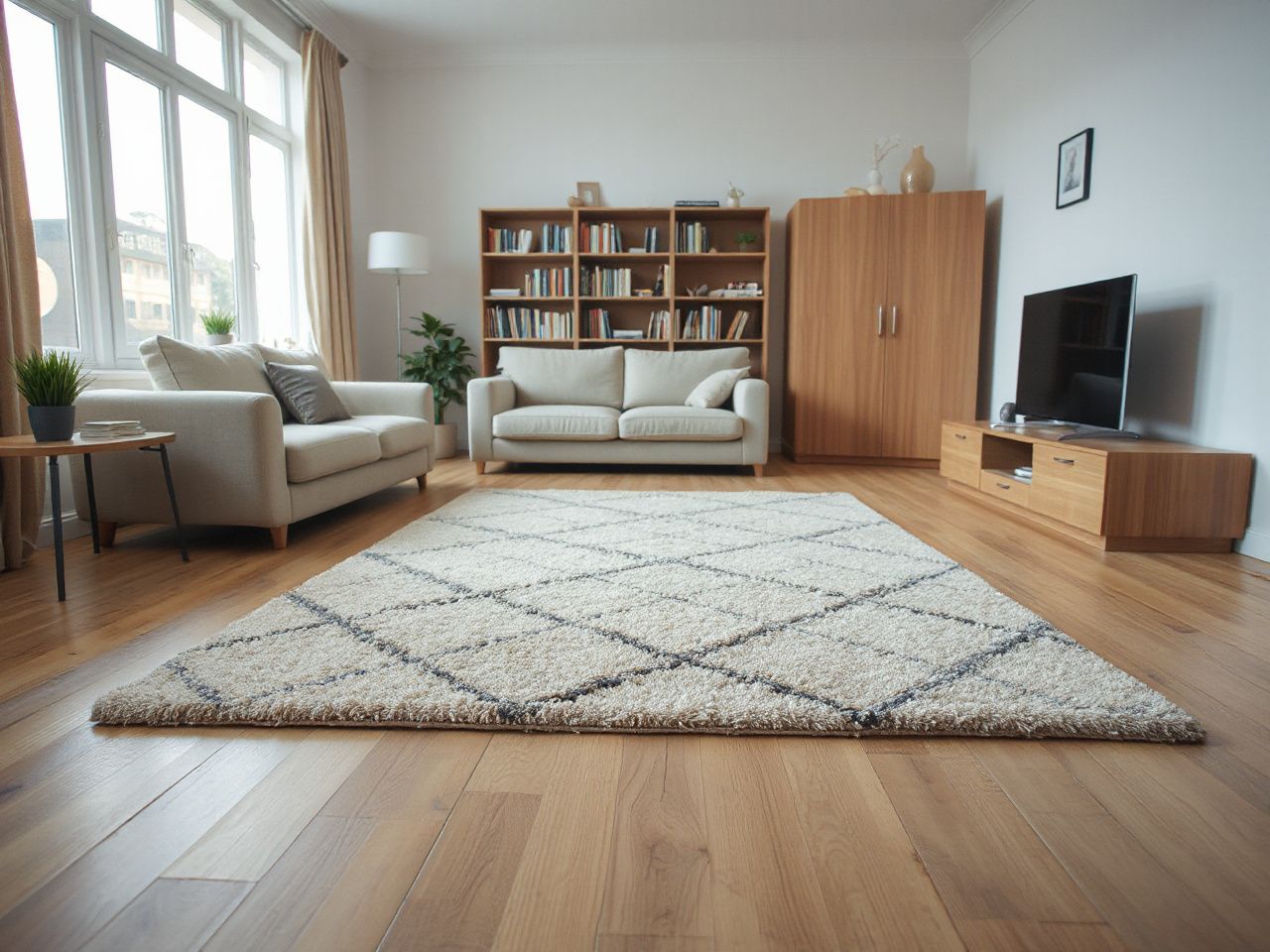
Living rooms are shifting toward softer, layered layouts, and area rugs now do more work than simply adding color beneath a coffee table. An effective area rug guide separates visual proportion from material performance: a rug can suit the room layout while still being unsuitable for the traffic, cleaning routine, or flooring beneath it. It also treats the rug, backing, pad, furniture, and floor as a connected system, because slipping, curling, staining, and floor damage often result from compatibility problems rather than the rug alone. This area rug buying guide starts with that system.
Key Takeaways
- Choose rug size by the furniture arrangement, walking paths, doors, and vents rather than by appearance alone.
- Match fiber, pile, backing, and cleaning needs to the room’s traffic, children, pets, and sunlight.
- A compatible rug pad can reduce sliding, protect flooring, improve comfort, and slow premature wear.
- Inspect the hardware of the setup first: backing, pad grip, edge binding, floor contact, and maintenance requirements matter as much as the finish.
Beginner: Build the Right Foundation
Step 1: Read the room before choosing the rug
Start with the living room’s fixed points. Note where the sofa sits, where chairs turn toward the conversation area, how people enter the room, and whether doors, vents, floor heating, or furniture legs occupy the proposed rug zone. A rug should support the layout, not force every piece of furniture into an awkward position.
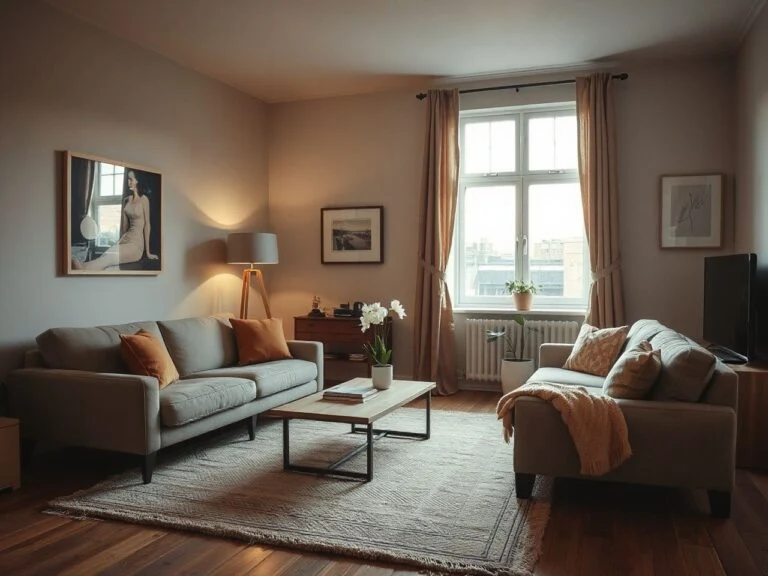
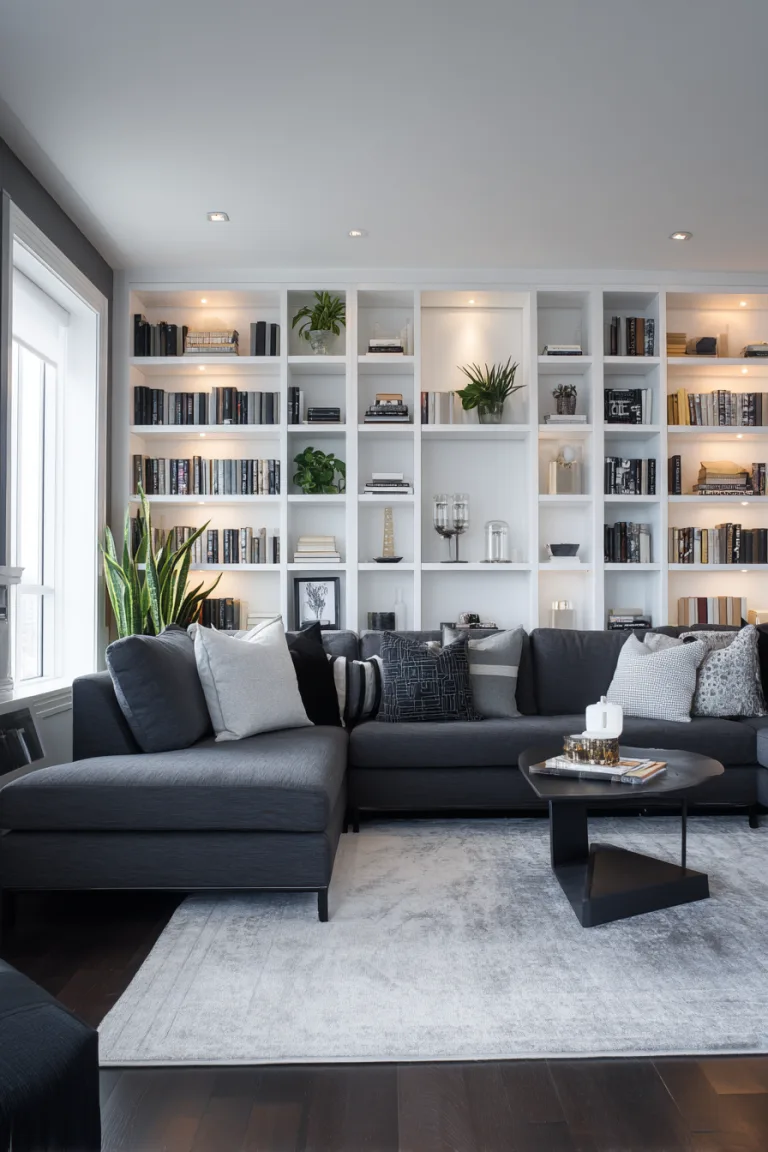
In a typical conversation area, the rug should relate clearly to the sofa and chairs. The front legs of the main seating can sit on the rug, or the entire seating group can sit within its boundaries if the room and rug allow it. A small rug floating only beneath the coffee table often makes the furniture look disconnected, especially when the sofa and chairs sit well outside its edges.
Furniture placement must account for rug movement, curled edges, door clearance, vents, and floor heating. A rug that looks correctly positioned in a photograph may become a trip point once a door swings across it or a chair repeatedly catches its edge.
Step 2: Choose size by the seating footprint
Do not begin with a favorite color or pattern. Mark the intended rug outline on the floor with painter’s tape, folded sheets, or another removable marker. Walk around the arrangement and check whether the front legs of the seating can sit comfortably on the marked area without blocking a doorway or leaving a narrow, unstable edge in a main path.
- For a compact seating arrangement: keep the rug large enough to visually connect the sofa and chairs, while leaving clear access around the furniture.
- For a larger living room: consider whether the seating group needs to sit mostly or entirely on the rug so the room does not appear divided into unrelated islands.
- For an open-plan room: use the rug to define the living zone, but keep its edges clear of kitchen work areas, door swings, and high-traffic transitions.
- For a narrow room: a runner-like proportion or a rectangular rug may follow the architecture more naturally than a broad square shape.
- For a curved seating arrangement: a round or irregular outline can echo the furniture, provided its edge does not create an awkward walking path.
A rug’s shape should support the room’s geometry and the furniture’s orientation. Rectangular rugs suit many sofa arrangements because they follow the long direction of the seating group; round rugs can soften a room dominated by straight lines, while irregular shapes require especially careful edge planning.
A living room rug should connect the main seating pieces instead of sitting like a small island beneath the coffee table. That relationship is more important than choosing a standard size by habit.
Step 3: Check the floor and backing together
Hardwood flooring, carpet, tile, and radiant-heated flooring each create different compatibility questions. Inspect the rug backing and any pad material before placing them together. Some rug backings, rubber materials, and adhesives can discolor, mark, or trap moisture against certain floors.
Hardwood deserves particular care because trapped moisture, unsuitable backing, or residue can affect the finish. A pad should be compatible with the flooring finish, and the underside should remain clean and dry. Tile may need more grip because a smooth surface can allow movement, while carpet may require a pad designed to keep the rug from shifting or developing ripples.
Radiant-heated flooring adds another checkpoint. Read the rug and flooring instructions for compatibility before covering a heated area, and do not assume that a natural fiber, synthetic fiber, backing, or pad is suitable simply because it feels thin.
The Consumer Product Safety Commission publishes consumer safety information that includes household fall and injury concerns, so its guidance is a useful reference when a rug sits across a main walking route. For material or product claims involving independent testing, look for information from a recognized body rather than treating a vague safety phrase on packaging as proof.
Beginner: Understand Fiber, Pile, and Construction
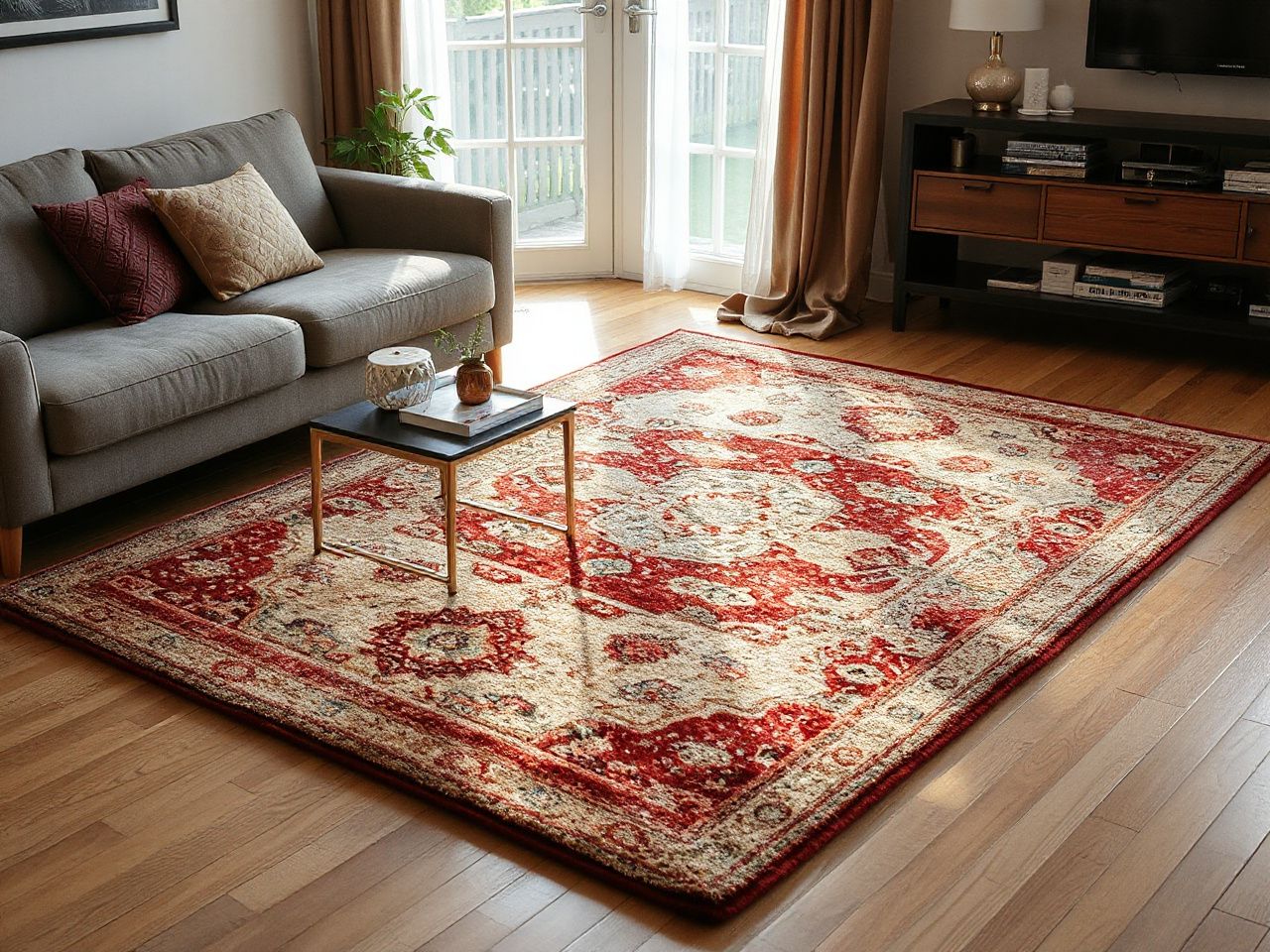
Step 4: Match the fiber to daily use
Fiber determines how the rug feels, responds to marks, and fits the cleaning routine. No material removes every maintenance concern, so start with the room’s actual demands rather than a fiber’s reputation.
- Wool: Wool offers strong durability compared with synthetic fibers and is good at trapping and concealing dirt. That can help a living room look composed between cleanings, but concealed dirt still needs to be removed. Wool may shed, and its response to moisture, stains, and sunlight differs from that of synthetic fibers.
- Cotton: Cotton often feels approachable and works well where a softer, lighter textile suits the room. Check the care instructions closely, especially if the rug will face frequent spills or repeated cleaning.
- Jute: Jute brings a dry, textured appearance that can support relaxed color and pattern coordination. Its texture and response to moisture make spill control and careful cleaning especially important.
- Polypropylene: Polypropylene is a synthetic option often considered for practical living spaces. The exact backing, pile, and care instructions still matter; fiber name alone does not tell you how the finished rug will behave.
- Nylon: Nylon is used in carpet binding, along with cotton, and may appear in rug construction or finishing details. Inspect the whole rug rather than judging the face fiber alone.
Children, pets, and frequent foot traffic increase the value of clear care instructions, stable edges, manageable pile, and a backing that suits the floor. Pet-friendly interior design also benefits from a pattern or color that does not make every bit of tracked soil visually dominant, but pattern cannot replace regular cleaning.
Wool can conceal dirt effectively, so a clean-looking wool rug still needs routine vacuuming. This is a useful distinction between visual performance and actual cleanliness.
Step 5: Select a pile that suits movement and cleaning
Low-pile rugs have shorter fibers and usually create less resistance for feet, furniture, and vacuum heads. They are often easier to place near doors, but the final result still depends on the rug’s backing and edge finish.
High-pile rugs feel deeper and softer, yet the extra height can affect door clearance, furniture stability, vacuuming, and ease of movement. A chair may not sit as steadily on a deep surface, and a robot or upright vacuum may not suit the pile or edge.
Flatweave rugs have little or no raised pile. Their lower profile can simplify transitions between floor surfaces, but a flatweave may move more easily if its pad and floor contact are poorly matched. Its construction also affects how edges lie and how spills travel through the textile.
Pile height is a design decision and a practical decision. Check clearance beneath doors, the stability of chairs, the path used by mobility aids, and the vacuum instructions before settling on a texture.
Step 6: Inspect binding and edges
Carpet binding most frequently consists of nylon or cotton, though other materials can be available. Binding protects the rug’s perimeter and affects how the edge meets the floor, so inspect it for loose threads, uneven tension, or a ridge that could catch a toe.
Look at the corners from floor level. A corner that lifts, rolls, or refuses to lie flat may become worse after furniture, foot traffic, or changes in humidity affect the textile. Furniture can hold an edge down, but it should not be used to hide a construction problem that remains in an exposed walking route.
Intermediate: Make the Rug and Room Work Together
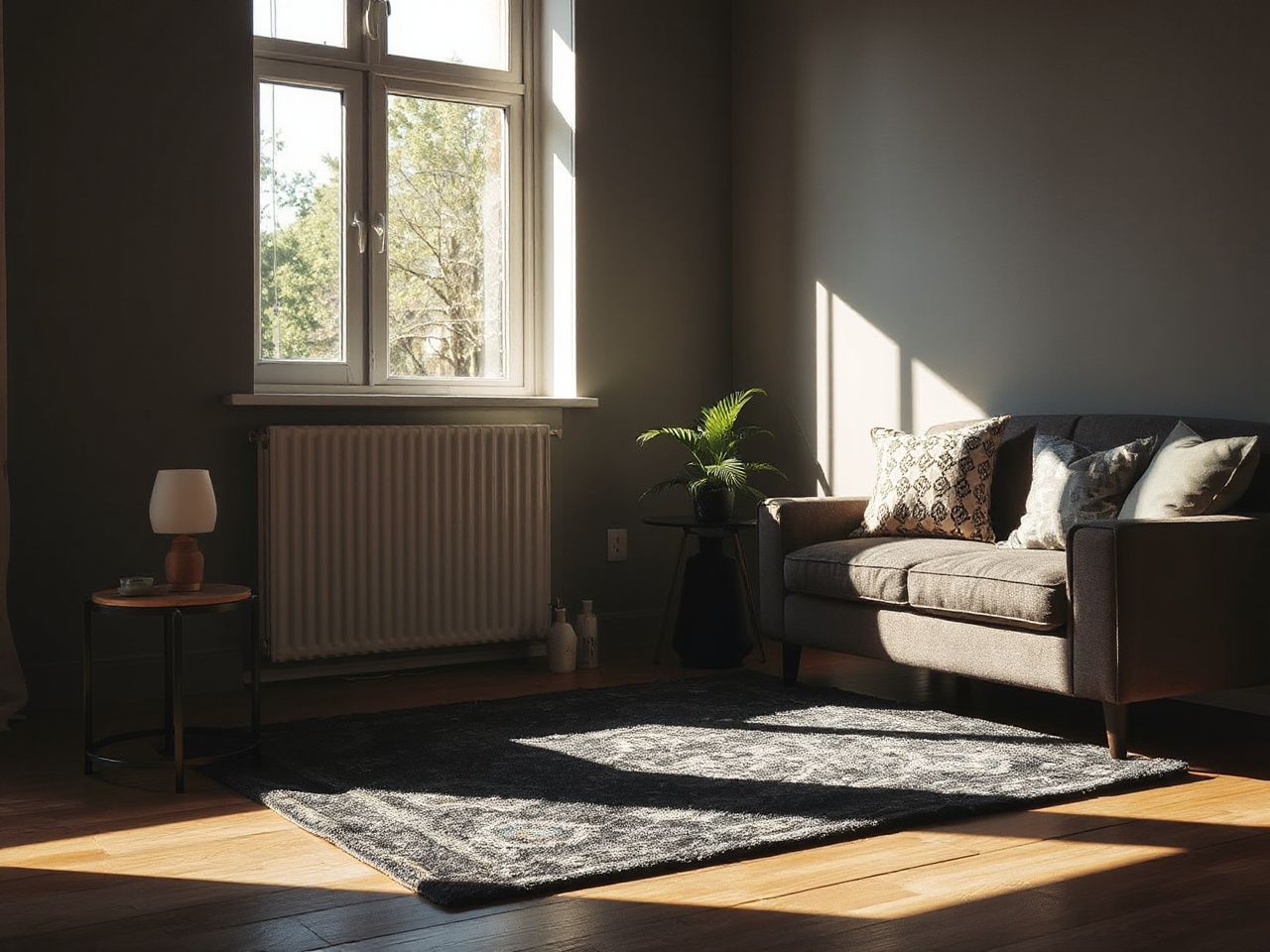
Step 7: Use color and pattern to create balance
Color should connect the rug to the room without requiring every object to match. Pull a quiet tone from the upholstery, curtains, wall art, or flooring, then decide whether the rug should remain restrained or become the strongest pattern in the space.
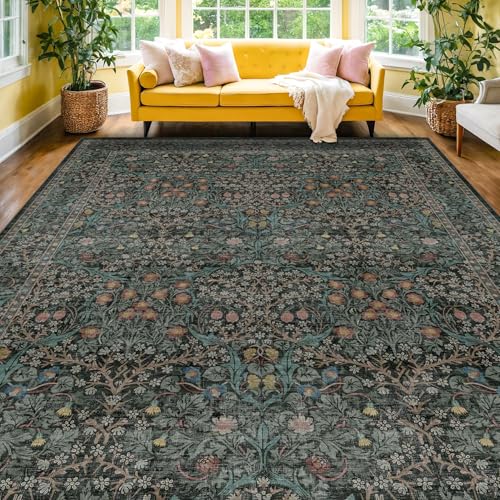
A patterned rug can disguise small marks and visual traffic better than a plain, very pale surface, but pattern scale must relate to the furniture. Large furniture usually needs enough visual room around it; a tiny, busy motif can make a large seating group feel unsettled. Conversely, an ornate rug beneath heavily patterned upholstery may create visual noise.
Dyes deserve attention because color can vary in appearance under daylight, warm lamps, and surrounding surfaces. Request or inspect a sample when possible, then view it near the actual floor and upholstery. A shade that seems neutral in isolation may read warm, cool, muted, or bright once placed in the room.
Color and pattern coordination should also account for sunlight. Natural fibers can respond differently to sunlight than synthetic fibers, so ask how the care information addresses prolonged exposure before placing a delicate-looking rug beside a bright window.
Step 8: Decide whether a rug pad is necessary
A rug pad can reduce slipping, protect the floor, improve comfort, and help prevent premature wear. The pad also affects the rug’s height, edge behavior, and feel beneath furniture, so it belongs in the layout calculation from the start.
Choose the pad by the flooring beneath it and the rug’s backing above it. Some rubber materials and adhesives can mark or discolor a floor, while an unsuitable pad may trap moisture. Hardwood flooring needs a pad compatible with its finish; carpet needs a pad that limits movement without creating ridges; tile needs attention to grip and edge stability.
A pad should not extend visibly beyond the rug. If the rug edge curls, the pad slips, or the rug forms waves after furniture is placed, remove the furniture and correct the foundation rather than adding objects on top of the problem.
The American Society for Testing and Materials develops voluntary consensus standards for materials and products, but a general reference to ASTM is not the same as proof that a particular rug or pad meets a specific requirement. Ask for the exact claim and supporting information if a seller uses standards language.
Step 9: Plan furniture clearance and walking routes
Place furniture so its legs do not sit directly on an unstable edge. Leave doors, vents, and floor-heating areas clear according to the relevant manufacturer instructions. A rug should define the room while allowing people to move naturally around the sofa and chairs.
Check the route from the entrance to the seating area, especially if children, pets, or older adults use it frequently. A loose corner in that route is more urgent than a minor mismatch in color. The same applies to a rug beside a frequently opened door: clearance is part of the purchase decision.
For readers comparing washable-style constructions, backing systems, or layered living-room layouts, the Ruggable Area Rug Review: Top Picks and Buying Guide offers a separate look at that category. Keep the focus on your room’s floor, care routine, and furniture arrangement rather than on a label alone.
Advanced: Maintain the Connected System
Step 10: Vacuum according to the rug’s construction
Read the care label before vacuuming. Check whether the manufacturer permits a beater bar, rotating brush, or only suction, and pay attention to the rug’s pile, fringe, binding, and backing. The wrong setting can pull fibers, disturb an edge, or damage a delicate surface.
- Secure loose cords and move small objects before cleaning.
- Vacuum slowly enough to remove soil without repeatedly dragging the rug across the floor.
- Use an attachment near fringe and binding if the main vacuum head catches them.
- Lift the rug when checking the floor beneath it rather than pulling aggressively on a corner.
- Clean beneath the pad as part of regular flooring protection.
Shedding can occur with some natural fibers, including wool, and loose fibers should be handled according to the care instructions rather than pulled by hand. Worn paths often develop where people repeatedly turn, stand, or walk; furniture placement can either spread traffic across the surface or concentrate it in one narrow line.
Vacuum settings should follow the rug’s care instructions because pile, binding, and backing do not all tolerate the same cleaning action. That rule protects the surface and the construction beneath it.
Step 11: Handle spills and moisture carefully
Act promptly when a spill occurs, but do not saturate the rug automatically. Blot according to the care instructions, keep rubbing controlled, and avoid introducing a cleaner that may affect the dye, fiber, or backing.
Natural fibers such as wool and jute can respond differently to moisture and stains than synthetic fibers. A rug that looks sturdy may still need a specialist cleaning method. Cotton, polypropylene, and nylon also require attention to the complete construction rather than assumptions based only on the fiber name.
Drying matters because moisture beneath a rug can affect the textile, pad, and floor together. Lift the rug only as far as the care instructions allow, check the underside and floor, and do not replace the layers until the contact surfaces are dry.
Step 12: Budget for upkeep, not only the initial purchase
Ongoing costs can come from professional cleaning, replacement pads, repaired edges, extra care after stains, and eventual replacement caused by concentrated wear. The exact amount depends on the rug, room, service, and floor, so avoid treating a low initial price as the full cost.
A pad may need replacing before the rug if it compresses, loses grip, breaks down, or no longer protects the floor. Edge repairs may become necessary if vacuuming, furniture, or foot traffic repeatedly catches the binding. Shedding can also increase the time spent cleaning, even when the rug remains visually attractive.
For a wider look at the comfort and construction decisions that affect daily use, see what actually matters before choosing a cozy area rug. The same principle applies here: softness is only one part of performance.
Step 13: Verify responsible labeling claims
If labor conditions matter to your purchase, look for the GoodWeave labeling scheme, which verifies the absence of child labor across North America and Europe. Treat that claim as a labeling question and check the mark and supporting information rather than relying on broad ethical language.
Responsible sourcing does not replace checking the backing, pad, pile, or care label. A rug can satisfy one purchasing concern while still being unsuitable for a particular floor or traffic pattern.
Preventive Measures: Avoid the Most Common Placement Errors
Small rug, disconnected furniture
A rug that sits only beneath the coffee table often leaves the sofa and chairs visually stranded. Move the rug outward if the room permits, or choose a shape that connects the seating group without blocking circulation.
Ignoring the underside
Shoppers often judge softness, color, and pattern while barely inspecting the backing. That misses the parts most likely to affect sliding, curling, floor marks, and pad compatibility.
Using a pad that changes the whole layout
A thick or poorly matched pad can raise the rug enough to catch a door or make a chair unstable. Test the full rug-and-pad layer before final furniture placement.
Placing a delicate texture in a demanding route
Jute, high pile, and some natural fibers may suit a quiet seating corner but require more careful handling in a path used constantly by people or pets. Put the hardest-wearing, easiest-to-maintain construction where the room actually demands it.
Choosing color without checking the light
View the rug in the room’s daylight and artificial light. Consider nearby upholstery, hardwood flooring, wall color, and large furniture before deciding whether the dye creates balance or visual competition.
Assuming all floors accept all backings
Backing, rubber, and adhesives can mark, discolor, or trap moisture against some floors. Confirm compatibility with the flooring finish and inspect the contact area during routine cleaning.
Frequently Asked Questions
How should an area rug relate to a sofa and chairs?
The rug should visually connect the seating arrangement. Position it so the front legs of the sofa and chairs can rest on it, or place the complete group on the rug when the room allows. Avoid leaving a small rug isolated under the coffee table unless the surrounding furniture still reads as one deliberate arrangement.
Which rug material suits a busy living room with children or pets?
Start with pile, backing, care instructions, and traffic rather than fiber name alone. Low-pile or flatweave construction may simplify movement and vacuuming, while pattern can make small marks less noticeable. Wool offers durability and can conceal dirt, but natural fibers may respond differently to moisture, stains, and sunlight than synthetic fibers.
Do I need a rug pad on hardwood flooring?
A compatible rug pad can reduce slipping, improve comfort, protect the floor, and help limit premature wear. Hardwood flooring requires attention to the finish because some rubber materials, adhesives, or unsuitable backings can mark, discolor, or trap moisture. Check the rug and pad instructions before installation, then inspect beneath the layers during cleaning.
Why does an area rug curl, slide, shed, or develop worn paths?
Curling may result from the rug, backing, storage, pad, furniture pressure, or floor contact. Sliding often points to an unsuitable or missing pad. Shedding can occur with some natural fibers, while worn paths develop where traffic repeatedly concentrates. Correct the foundation first, then follow the construction-specific care instructions rather than forcing the edge flat with heavy objects.