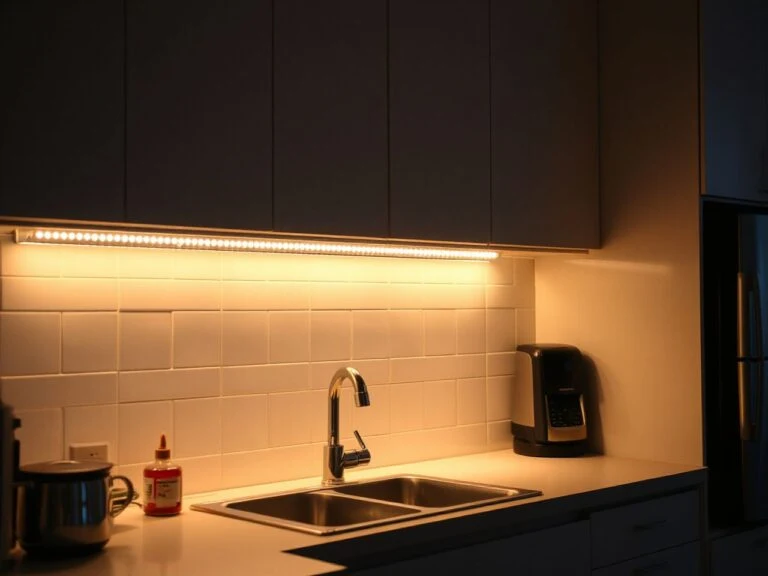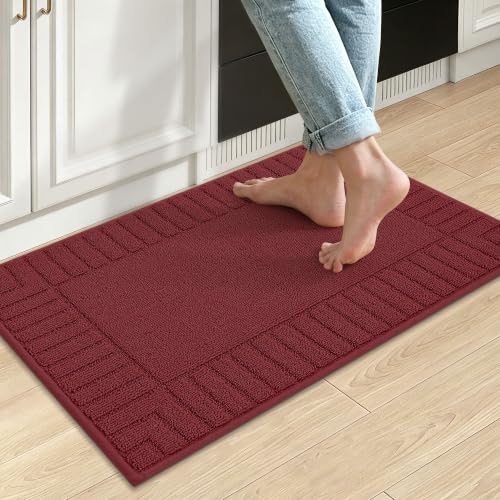
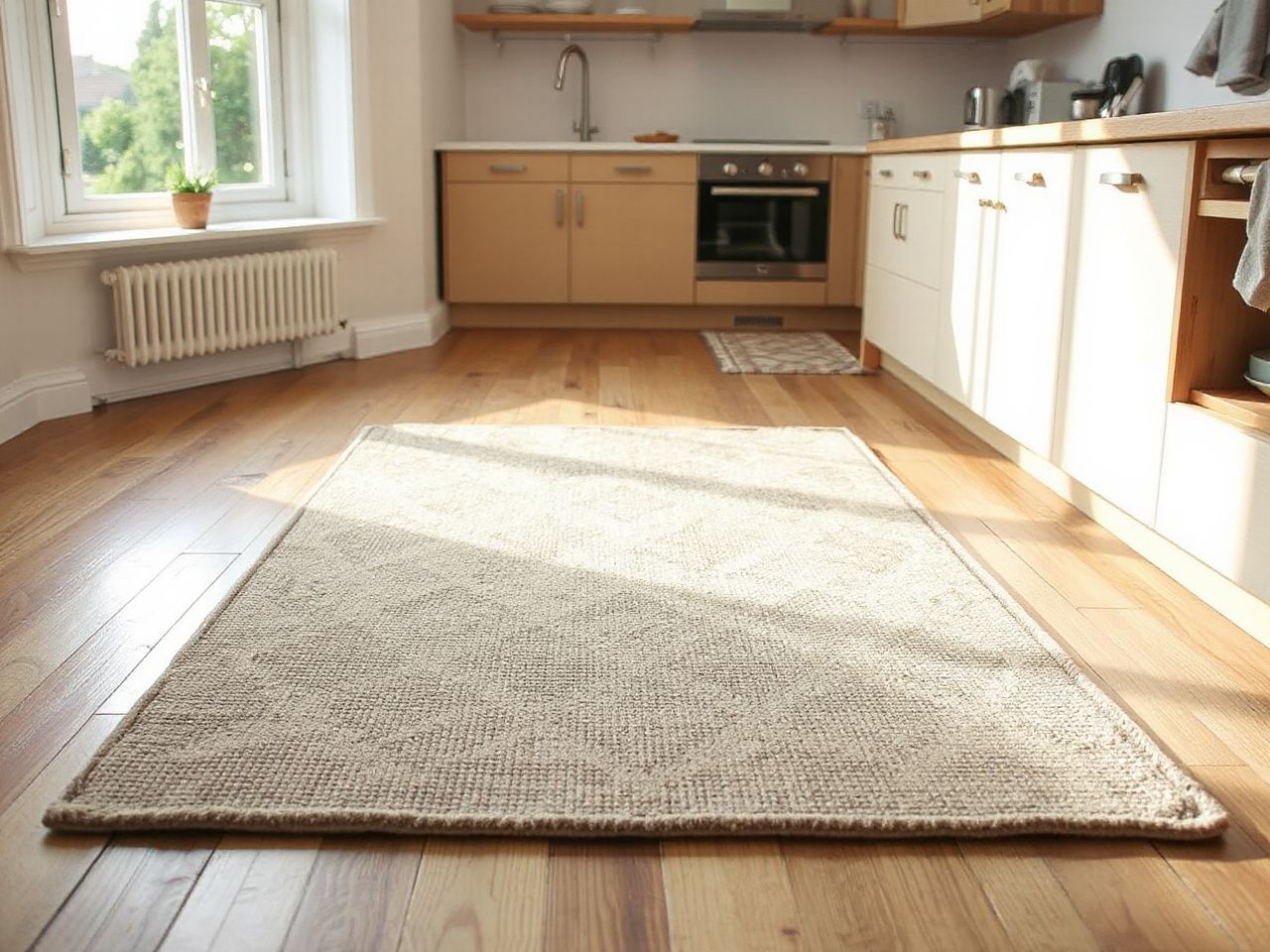
A 2.5’ x 7’ runner is the most frequently chosen size for a kitchen runner, but popularity does not make it suitable for every floor plan. The useful distinction in a kitchen rug is not softness or appearance alone, but how the pile, fiber, backing, and pad behave together around spills, crumbs, cabinet clearance, and repeated cleaning. A practical kitchen rug buying guide should assess the rug as part of a working floor surface, separating decorative placement from areas where sliding, moisture, grease, and obstructed doors create everyday problems.
Key Takeaways
- Choose a low-pile or flatweave surface when crumbs, spills, and cabinet clearance matter most.
- Measure the usable floor, not the whole kitchen, and keep doors, appliances, and walking paths clear.
- Use a compatible rug pad or non-slip backing only after checking the flooring beneath it.
- Plan for lifting, cleaning, and drying the rug; trapped moisture can create odors and floor problems.
Beginner kitchen rug buying guide: start with the working floor
A kitchen rug earns its place by staying manageable during ordinary tasks. A decorative rug in an open area has different demands from a runner beside the sink or a mat in front of a preparation surface. Renters should add one more test: the rug, pad, and cleaning method must leave the floor clean and undamaged when the textile is removed.
Step 1: Identify the rug’s job
Begin by marking the area where the rug would sit. A runner may soften a long passage between an island and cabinets, while a small rectangular mat may sit before a sink. A dining rug serves a different purpose because chairs must remain on the rug as they move.
A kitchen rug should not be treated as one universal category. Ask whether the surface needs to catch crumbs, protect a floor from splashes, reduce visual emptiness, define an open-plan zone, or provide a softer standing surface. The answer determines whether a low-pile rug, flatweave rug, washable rug, or decorative textile makes practical sense.
Step 2: Check the floor beneath it
Read the care information for the flooring before placing any backing or pad over it. The material, backing, and rug pad must be compatible with the floor so they do not stain, scratch, trap moisture, or leave residue. A renter-friendly setup is one that can be lifted regularly and inspected without relying on permanent adhesive.
Floor protection around sinks and work areas needs special attention because moisture can move below the rug. A rug that feels dry on top may still hold dampness beneath its backing. Lift the textile whenever the floor feels damp, looks discolored, or develops a smell.
Step 3: Check sliding before styling
A kitchen rug needs a surface and backing that resist sliding, especially near sinks, work areas, and paths between appliances. A rug with a non-slip backing may still need a separate rug pad if the backing does not grip the particular floor beneath it. The pad must fit the rug instead of extending beyond its edges.
Do not assume a heavy-looking textile will stay put. Movement can come from a smooth backing, a slick floor, moisture, crumbs under the rug, or a pad that does not match the floor surface. Place the rug, walk across it carefully, and inspect the corners and long edges before leaving it in a busy route.
Step 4: Keep cabinet doors and appliances free
Thick pile, loose fibers, and curled edges can interfere with cabinet doors, catch debris, and create tripping hazards. Open every nearby cabinet and appliance door after positioning the rug. The door should move without pushing, folding, or dragging the textile.
Keep a gap of no less than three inches separating cabinets from a runner rug. That clearance gives the door edge room to move and makes it easier to sweep along the cabinet line. If the rug repeatedly catches, the issue is a poor placement or unsuitable construction, not a styling detail to ignore.

Intermediate choices: pile, fiber, backing, and shape
The surface underfoot affects cleaning, door clearance, and how crumbs behave. The most comfortable-feeling rug is not automatically the most manageable kitchen rug. A renter should value a construction that can be lifted, cleaned, dried, and returned without complicated floor care.
Low-pile rugs and flatweave rugs
Low-pile rugs have less height for crumbs and loose food to settle into. They also reduce the chance that cabinet doors will catch the rug edge. A flatweave rug takes that profile further, with a relatively level surface that is generally easier to sweep or vacuum than a deeply textured textile.
Low pile does not remove the need to inspect the backing. A thin rug can still slide, curl, or trap moisture if the underside is unsuitable. Check the border, corners, and backing as carefully as the visible pattern.
Flatweave rugs suit kitchens where clearance and easy debris removal matter most. Their flatter construction can make them more practical beside cabinets and appliances than a thick pile.
Washable rugs
Washable rugs can be useful near sinks and food preparation areas because the cleaning plan is part of the purchase decision. Confirm the care instructions before choosing one. A textile described as washable still needs enough space to be handled, cleaned, and dried properly.
A washable rug may reduce the difficulty of dealing with food stains, but it does not make moisture harmless. Damp fabric left folded, compressed, or against the floor can develop odors. The usable benefit comes from a routine that removes the rug promptly after a wet spill and returns it only after the textile and floor are dry.
Polypropylene, cotton, wool, and natural fibers
Polypropylene is often considered for kitchen textiles because the material can be used in low-pile and washable constructions, but the fiber name alone does not determine cleaning performance. Examine the manufacturer’s care instructions, surface texture, backing, and drying requirements together.
Cotton can feel familiar and soft, yet a cotton rug near a sink still needs prompt attention to moisture and stains. Its ability to be cleaned depends on the construction and instructions supplied with that particular rug.
Wool rugs can improve acoustics and possess inherent stain-resistant qualities. That does not make every wool rug suitable beside a sink. Wool may be harder to clean in a setting with frequent wet food messes, so placement and maintenance access matter.
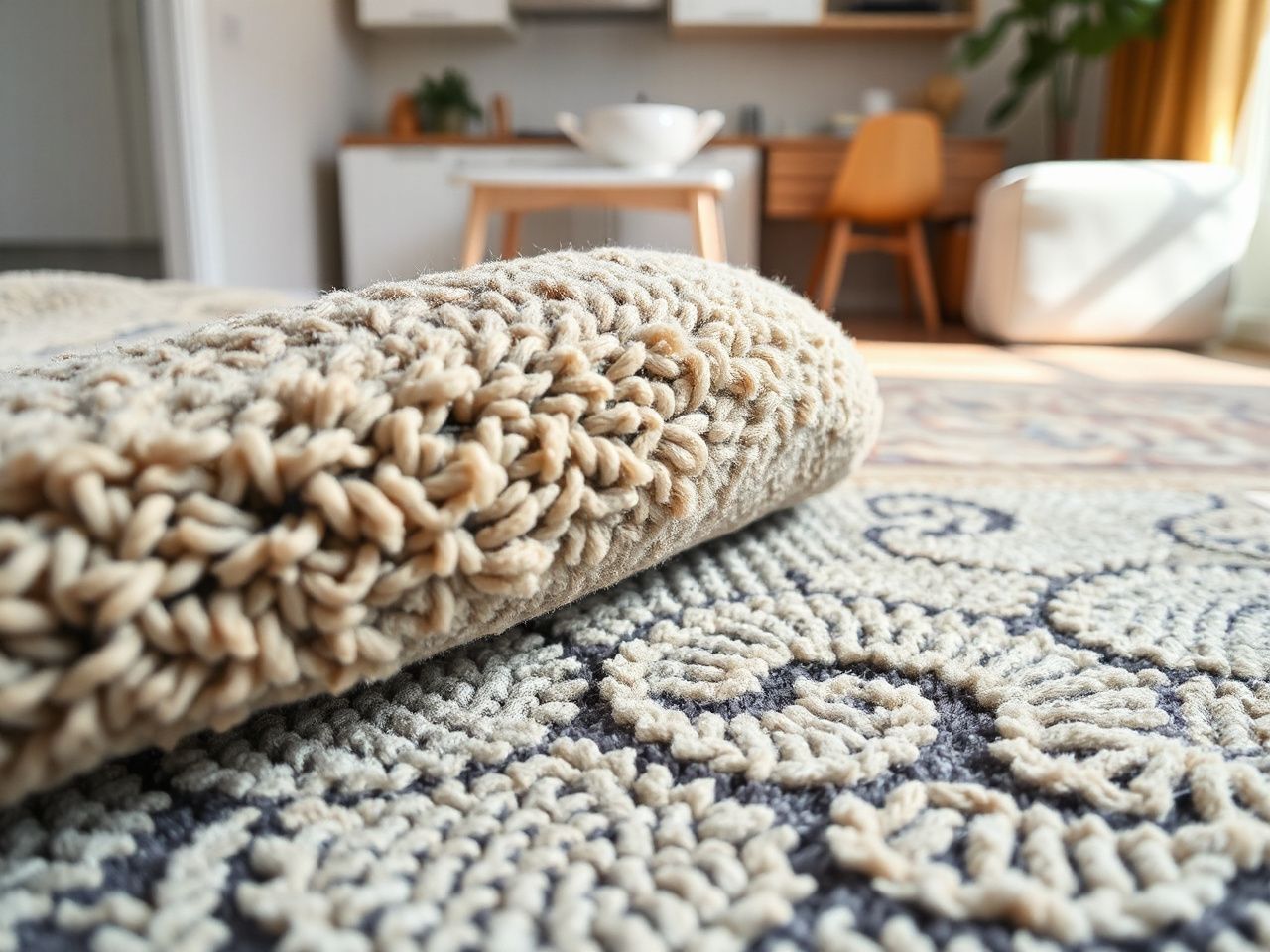
Jute, sisal, and seagrass are natural fiber rugs that provide high durability while feeling scratchy underfoot. Their texture may suit a dry decorative area better than a place where crumbs and dampness are regular problems. Natural fiber does not mean spill-proof or maintenance-free.
Backing and rug pad compatibility
A backing may add grip, protect the weave, or give the rug structure, but its behavior depends on the floor beneath it. Some combinations can leave residue or marks, particularly if moisture becomes trapped. The safest renter-first approach is to read both floor-care and rug-care instructions before adding a pad.
Rug pads can help reduce movement, but they are not a substitute for correct sizing. A pad that shows beyond the rug can catch feet and collect debris. Trim or select the pad so the rug lies flat and the pad remains concealed.
The U.S. Consumer Product Safety Commission publishes consumer safety information at CPSC.gov, including guidance relevant to household products and fall hazards. Use that public guidance as a general safety reference, while treating the rug maker’s care instructions and your flooring manufacturer’s instructions as the controlling information for the specific materials in your kitchen.
Advanced planning: size, placement, and access
Measure the open floor that can safely receive a rug rather than measuring from wall to wall. Cabinet doors, dishwasher doors, refrigerator doors, stools, and appliance clearance all reduce the usable area. A rug that fits beneath furniture or appliances can be harder to remove and clean, so access for regular maintenance matters as much as appearance.
Choosing a runner
Common kitchen runner dimensions range from 2 to 3 feet in width and 6 to 14 feet in length. Those ranges describe common formats, not a rule for every kitchen. Measure the walkway and check the full swing of nearby doors before settling on a size.
When placing a runner inside a kitchen, subtract 4–8 inches from the island’s full length. Ensure there is a minimum of 3–4 inches of empty floor on both sides of the runner. That border keeps the rug from visually and physically crowding the island or cabinets.
A runner should follow the main working path without forcing feet onto a curled edge. If the kitchen is open to another room, align the runner with the kitchen’s working zone rather than allowing it to drift into a dining or living area without a clear purpose.
Choosing a sink mat
A standard size of 2 feet by 3 feet is common for rectangular mats positioned before a sink. It can work when the available floor supports that footprint, but the sink location does not guarantee that size will fit. Check the cabinet line, dishwasher door, and the space needed to stand comfortably without stepping onto an edge.
The best rug for a kitchen sink area is one that can be lifted quickly, dries according to its care instructions, and does not slide during ordinary movement. A small rug that blocks a dishwasher or traps water below its backing creates more work than it removes.
Choosing a rug beneath a dining table
For a rug beneath a dining table, add roughly three feet of extra space on all sides of the table’s footprint. The added area allows chairs to remain on the rug as they move. Measure the table and chair zone, not only the tabletop.
Dining rugs are exposed to crumbs and chair movement, so a flatter surface usually makes clearing and vacuuming simpler. Keep the rug accessible from at least one side rather than wedging it beneath heavy furniture that must be moved for every cleaning.
Shape and open-plan placement
Rectangular runners suit long galley kitchens and linear island layouts. A smaller rectangle can define a sink station without spreading textile across the room. Round or irregular shapes may work in open areas, but their edges still need to stay clear of door swings and walking routes.
Open-plan kitchen flooring benefits from deliberate boundaries. A rug should clarify where the kitchen activity happens without becoming an obstacle between the cooking, dining, and living zones. In a rental, a movable textile is useful only if it remains easy to remove when the layout changes.
ASTM International develops voluntary consensus standards for products and practices, and its public site is available at ASTM.org. A rug does not become suitable for a particular kitchen merely because a listing mentions a standard; ask what the claim covers and check whether the material and use match your floor-care needs.
Inspect the rug as a renter
Before regular use, look at the rug’s underside and the floor. Check for loose threads, raised seams, curled corners, a strong odor, or a coating that transfers when rubbed according to the care instructions. Keep packaging and care information until the placement has proved workable.
Renters should avoid assuming that adhesive strips, glue, or a permanently bonded pad are harmless. A temporary floor covering should come away cleanly, and any removable grip should be used only if the flooring instructions allow it.
For a closer look at how different kitchen rug constructions are described, the Ikea kitchen rug review can help you focus on construction and placement rather than pattern alone. A roundup is useful only after the floor, size, and maintenance limits are clear.
Advanced maintenance: spills, grease, crumbs, and moisture
Cleaning begins with the care label, not with a favorite household chemical. Follow the rug maker’s directions, remove loose debris, and address wet or greasy spots before they spread. Test any permitted cleaner on an inconspicuous area first if the instructions call for testing.
Dry crumbs and loose debris
Shake or vacuum the rug using a setting suitable for its construction. Pay attention to the perimeter and the area beneath the rug, where crumbs can collect and affect grip. Lift the rug rather than pushing debris toward its edges.
Flatweave and low-pile rugs generally present less surface depth for crumbs than thick pile, but every weave has seams and borders that need inspection. A rug that looks clean from standing height may still have food particles beneath it.
Food stains and grease
Blot a fresh spill with a clean cloth if the care instructions permit it, working from the outside of the mark toward the center so the stain does not spread across a larger area. Do not scrub aggressively unless the manufacturer specifically allows that method. Friction can disturb fibers or push grease deeper into the weave.
Grease needs particular care because a damp cloth alone may not remove it. Use only the cleaning product and method named by the rug maker. If the instructions require professional cleaning, follow them rather than experimenting on a rental floor and textile.
Moisture and drying
Remove a wet rug from the floor as soon as practical and inspect both sides. Clean the floor separately, then allow the rug and flooring to dry according to their instructions before replacing the textile.
Trapped moisture can create odors or damage. This risk is higher near sinks, dishwashers, and food preparation areas because small splashes may happen repeatedly even when no single spill seems serious.
Long-term costs beyond the initial price
The purchase price is only one part of the cost. Consider the pad, cleaning supplies permitted by the care label, professional cleaning if required, replacement of a damaged pad, and the time needed to lift and dry the rug.
A rug that requires frequent special handling may cost more in effort than a simpler washable or low-pile option. A cheaper textile can also become a poor value if it needs replacing after staining, curling, backing failure, or floor damage. For renters, potential cleaning or repair of the floor beneath the rug belongs in the calculation.
The Ruggable area rug review offers another way to think about removable kitchen textiles, but the useful question remains practical: can the rug be lifted, cleaned, dried, and returned without obstructing the kitchen or compromising the floor?
Prevent curling, odors, staining, and premature wear
- Curling edges: Flatten the rug according to its care instructions and avoid storing it tightly folded if the manufacturer warns against that method.
- Odors: Remove damp textiles from the floor, clean them as directed, and replace them only when the rug and floor are dry.
- Staining: Deal with spills promptly using the permitted method instead of applying an unapproved cleaner.
- Premature wear: Rotate or reposition the rug only if the construction and room layout allow it, and keep dragging furniture off the textile.
- Sliding: Check for crumbs and moisture below the rug, then confirm that the backing and pad suit the floor.
- Door interference: Replace a thick or poorly placed rug if cabinet and appliance doors cannot open freely.
A kitchen rug is ready for regular use only when the surface lies flat, the edges stay clear, nearby doors move freely, and the floor beneath remains clean and dry. Those checks matter more than matching a pattern to a countertop.
Frequently Asked Questions
What type of rug works best in a kitchen with frequent spills and crumbs?
A low-pile or flatweave rug is usually easier to manage around crumbs, cabinet doors, and routine vacuuming. A washable construction can simplify stain care if its instructions suit your routine. Near a sink, prioritize a rug that can be lifted and dried easily, has suitable backing, and does not slide on the flooring.
Should I choose a low-pile, flatweave, or washable rug?
Choose based on the main problem. Low pile helps with clearance, flatweave helps create a flatter debris-friendly surface, and washable construction helps when the care instructions allow practical cleaning and drying. These features can overlap, but none replaces a compatible pad, secure placement, or regular moisture checks.
How do I size a kitchen runner without blocking cabinets?
Measure the usable floor between cabinets, appliances, and island edges. For a runner inside the kitchen, subtract 4–8 inches from the island’s full length, leave at least 3–4 inches of empty floor on both sides, and keep no less than three inches between the rug and cabinets. Open every nearby door before final placement.
Do I need a rug pad under a kitchen rug?
A rug pad can help reduce sliding, but the pad must be compatible with the floor and concealed beneath the rug. Check the floor-care instructions first because some combinations can stain, scratch, trap moisture, or leave residue. A non-slip backing also needs inspection; backing alone does not guarantee safe placement on every surface.
How should I clean a rug with grease, food stains, or moisture?
Follow the rug’s care label, remove loose crumbs, and address spills promptly with the approved method. Blot rather than scrub unless the instructions say otherwise. Lift a wet rug, clean the floor separately, and let both surfaces dry before replacing it. Use professional cleaning when the manufacturer requires it.
What long-term costs should I consider besides the rug’s price?
Include the pad, approved cleaning products, professional cleaning if required, storage or drying space, and the risk of floor residue or damage. A rug that is difficult to remove may also take more time to maintain. For renters, a simple textile that lifts cleanly can reduce the chance of repair or replacement costs later.
What common mistakes create kitchen rug hazards?
Frequent mistakes include choosing thick pile beside cabinets, allowing edges to curl, placing a rug over damp flooring, using an incompatible pad, and fitting a textile beneath appliances that must be moved for cleaning. Correct those problems by choosing a flatter construction, keeping clearance, checking the underside, and preserving access for routine maintenance.