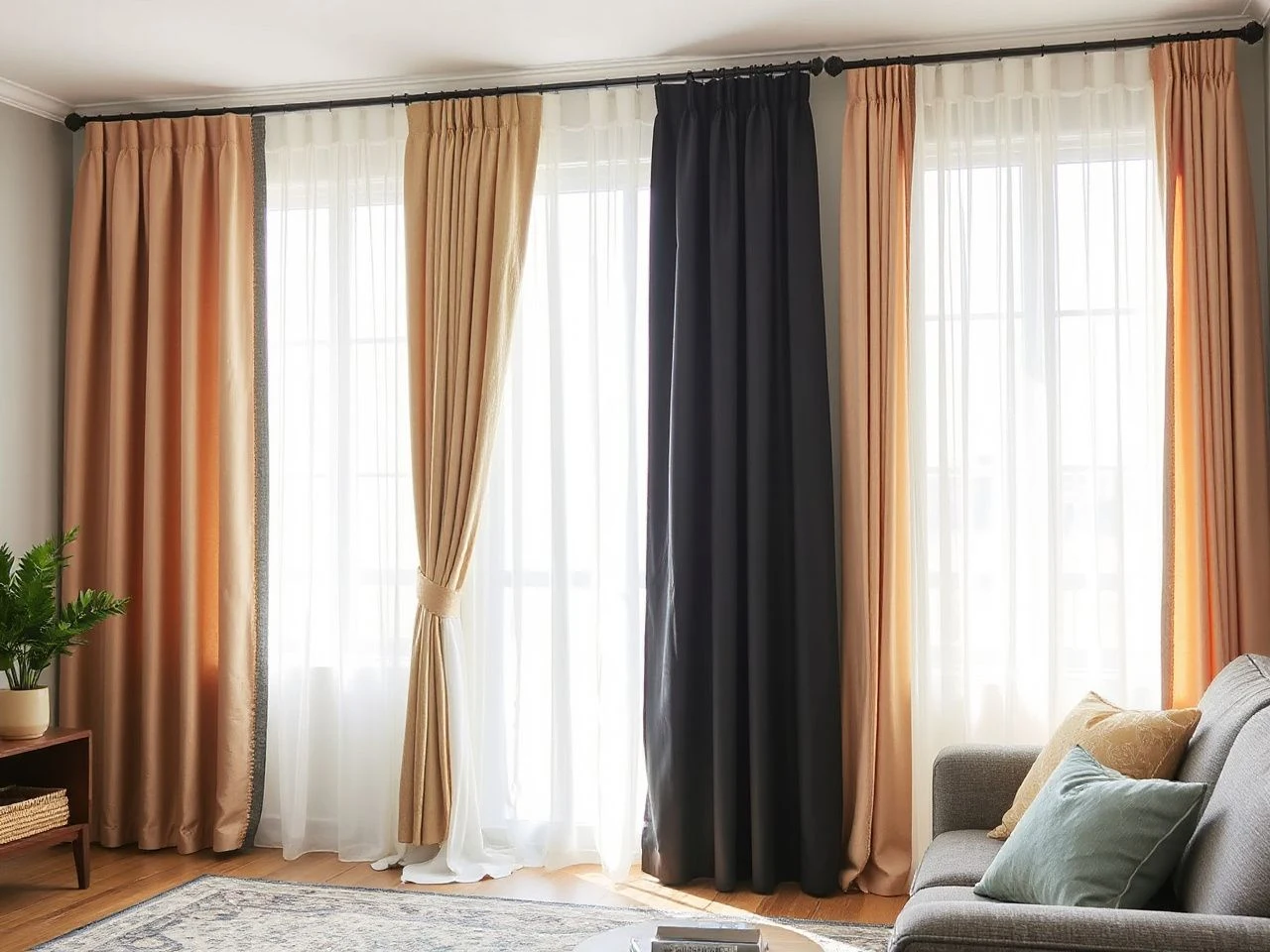
Home decorating has shifted toward window treatments that do more than cover glass: they shape daylight, soften a room, and help small spaces feel considered rather than crowded. The useful distinction is between how a curtain is constructed at the top and what the fabric is intended to do: pleats, tabs, grommets, and pockets control hanging and movement, while sheerness, lining, and opacity control light and privacy.
That distinction makes different curtain styles easier to compare. A clear guide should judge each option by appearance, movement, hardware compatibility, maintenance, and room suitability rather than treating every named curtain type as a completely separate category. I start with the doorway, the window recess, and the hardware path before admiring any fabric because a beautiful heading that cannot open smoothly is still the wrong choice.
Key Takeaways
- Curtain headings determine how panels hang and move; fabric functions determine light control and privacy.
- Hardware, curtain length, fullness, and weight must work together to prevent dragging, sagging, or uneven bunching.
- Choose formal pleats for structured rooms, relaxed tabs or cafe curtains for casual spaces, and sheers or blackout layers according to daylight needs.
How to Read the Main Curtain Categories
The names used for curtains often describe only one part of the design. Pinch pleat curtains describe a folded heading, while blackout curtains describe a light-blocking function. Those two labels can belong to the same panel because a curtain may have both a particular heading and a particular fabric treatment.
Heading style controls appearance and movement
A heading is the upper edge that connects a curtain to a rod, track, rings, or hooks. It controls the way the fabric gathers, the size of the folds, and the effort required to open the panel. A curtain heading must be compatible with the hardware used to hang it.
Pinch pleat curtains have three tight fabric folds that create a fan-like detail at the top. Their orderly shape gives a room a formal, tailored appearance, especially when the folds remain evenly spaced across the panel.
Pencil pleat curtains use drawstrings incorporated into pleating tape to form gathered folds. The gathered appearance can be adjusted through the tape, but the result depends on the fullness being distributed evenly rather than pulled into irregular clumps.
Box pleat curtains use broad, structured folds that read as clean and architectural. They suit rooms where a straight, orderly line matters more than a soft, gathered effect, although their structured appearance needs enough room to remain visible.
Goblet pleat curtains have rounded folds at the top and often include padding to help maintain their shape. The heading is decorative and formal, so rough handling or unsuitable hardware can spoil the intended profile.
Grommet curtains have large metal rings pressed directly into the material along the upper border. The rod passes through those openings, giving the panel a simple, contemporary line and allowing movement along the rod when the rings and rod fit properly.
Rod pocket curtains have a sewn-in casing at the top that forms a channel for the curtain rod. The rod sits inside the casing, so these panels generally do not move like curtains designed for rings or gliders.
Tab top curtains use fabric loops spaced at regular intervals along the upper edge. The loops are visible, which makes the style feel relaxed and decorative rather than concealed and tailored.
Curtain headings are attachment systems, not measures of opacity. A pinch pleat panel may be sheer, lined, or blackout, just as a rod pocket panel may use a light fabric or a heavier one.
Fabric function controls light and privacy
Sheer curtains soften daylight and provide a degree of visual screening while allowing light to pass through. Their transparent or lightweight appearance works well in rooms where the goal is a brighter atmosphere rather than full privacy or room darkening.
Lined curtains add another layer behind the face fabric. Lining changes the way the panel looks from the room side and can affect how much light passes through, so the heading and the fabric function should be chosen together.
Blackout curtains use a thickly woven lining to stop light from filtering through, making maximum light obstruction their primary purpose. A blackout panel can help a room feel darker, but the result still depends on gaps around the curtain and the way the panel fits the window area.
Thermal curtains provide thermal insulation intended to help maintain interior warmth during winter and coolness throughout summer. Thermal function belongs to the fabric and lining, not to a particular heading style.
Light control and privacy are separate decisions. Sheers may preserve daylight but offer less privacy than an opaque or blackout layer, while blackout fabric may solve darkness without giving a small room the airy quality that a sheer provides.

Choosing a Style for the Room and Window
A curtain should suit the room’s visual language and the window’s practical demands. A formal heading on a casual window can look overworked, while a relaxed heading in a highly structured room may appear unfinished.
Formal rooms and tailored arrangements
Pinch pleat, box pleat, and goblet pleat curtains create more structure than tabs or pockets. Pinch pleats introduce a fan-like rhythm, box pleats keep the folds broad and straight, and goblet pleats add rounded detail at the top.
These headings suit dining rooms, sitting rooms, and other spaces where the window treatment is meant to look composed even when the curtain is closed. They can also work in a bedroom if the fabric function supports the need for privacy or darkness.
Track hardware often pairs naturally with headings that use hooks or gliders, while rods may work with rings, pockets, tabs, or grommets depending on the construction. The curtain heading, not the room label, determines the actual connection.
Relaxed rooms and compact windows
Tab top curtains and rod pocket curtains create a less formal appearance. Their visible loops or simple casing can suit bedrooms, cottages, casual living spaces, and small windows where an elaborate heading would dominate the wall.
Cafe curtains cover only part of a window, so they can provide privacy while leaving some upper glass open to daylight. They are particularly useful where a room needs screening at the lower portion of the window without losing all natural light.
A cafe curtain is a partial window covering that balances lower-window privacy with continued daylight. Its success depends on placing the coverage where privacy is actually needed rather than assuming that every section of glass requires the same treatment.
Small rooms and narrow windows
Small spaces punish excess fabric and poorly placed hardware. A bulky heading can make a narrow window feel heavier, while insufficient fullness can leave a panel looking thin and unable to close neatly.
Measure the window area, the available wall, and the path the curtain needs when open. The doorway matters too: a panel that projects into a narrow passage or catches on nearby furniture can be impractical even if the fabric looks attractive.
For a small window, a simple rod pocket, tab top, or restrained pencil pleat may keep the visual line calm. A cafe curtain can also preserve wall space because it does not require a full-height panel arrangement.
Window treatments such as Roman shades and blinds may suit a tight recess where a fabric panel would interfere with furniture or a walkway. The choice should follow the clearance and movement available, not a rule that every window needs full curtains.
For another way to compare compact-window solutions, see this guide to different types of window blinds and mistakes to avoid. Blinds and curtains solve similar privacy problems through different movement and stacking arrangements.
Kitchen, bathroom, and high-use areas
Kitchen curtains need careful placement near cooking surfaces, heat sources, and work areas. Fabric should not hang where it can brush a cooking surface or obstruct ordinary movement, and cords need safer installation choices where young children may be present.
Bathrooms and utility spaces also require attention to moisture, ventilation, and cleaning instructions. A delicate heading may look attractive but become inconvenient if the panel needs frequent handling or cannot be removed easily.
For window-covering safety information, consult the U.S. Consumer Product Safety Commission rather than relying on decorative advice alone. Safety guidance should take priority over a preferred heading or room style.
Matching Hardware, Fullness, and Curtain Length
The heading tells you how the curtain connects, but the hardware determines how it travels. Rods, tracks, rings, and hooks create different movement paths, and a panel designed for one path may not behave properly on another.
Rod or track?
A rod is visible hardware that can become part of the room’s decoration. Grommet curtains, tab top curtains, and rod pocket curtains are commonly read as rod-based designs because their construction relates directly to the rod passing through or supporting the top edge.
A track places the movement path along a fixed channel. Headings that connect with hooks or gliders can move along a track, which may be useful where the hardware needs to appear less prominent or where the curtain must follow a precise line.
Neither option is automatically suitable for every panel. The heading must match the connection method, and the hardware must support the fabric without forcing the top edge to twist or bear weight in the wrong place.
Track curtains need compatible gliders or hooks, while rod curtains need a rod that suits the opening in the heading. A curtain cannot slide smoothly if its attachment point does not match the hardware path.
Why curtains sag, drag, or bunch
Sagging can result from hardware that is not properly supported for the curtain’s weight or from a panel that is too broad for the available support. Heavy curtains may require stronger, properly supported hardware, while delicate fabrics and decorative headings can be damaged by rough handling.
Dragging usually means the curtain length does not suit the floor, sill, or furniture below it. A panel that touches the floor where clearance is needed can catch dust, interfere with movement, or create an untidy line.
Uneven bunching often begins at the heading. Pencil pleat drawstrings that are gathered unevenly, rings that are spaced irregularly, or a rod pocket that is difficult to slide can make one part of the panel look fuller than another.
Excessive bunching can also occur when a curtain has more fullness than the available space can accommodate. Fullness affects how a style hangs, opens, and closes, so the wall space beside the window is part of the measurement.
Curtain length and fullness determine whether a panel hangs neatly, opens effectively, and avoids dragging or excessive bunching. Those factors deserve attention before fabric colour or decorative trim.
Layering sheers, lined panels, and blackout curtains
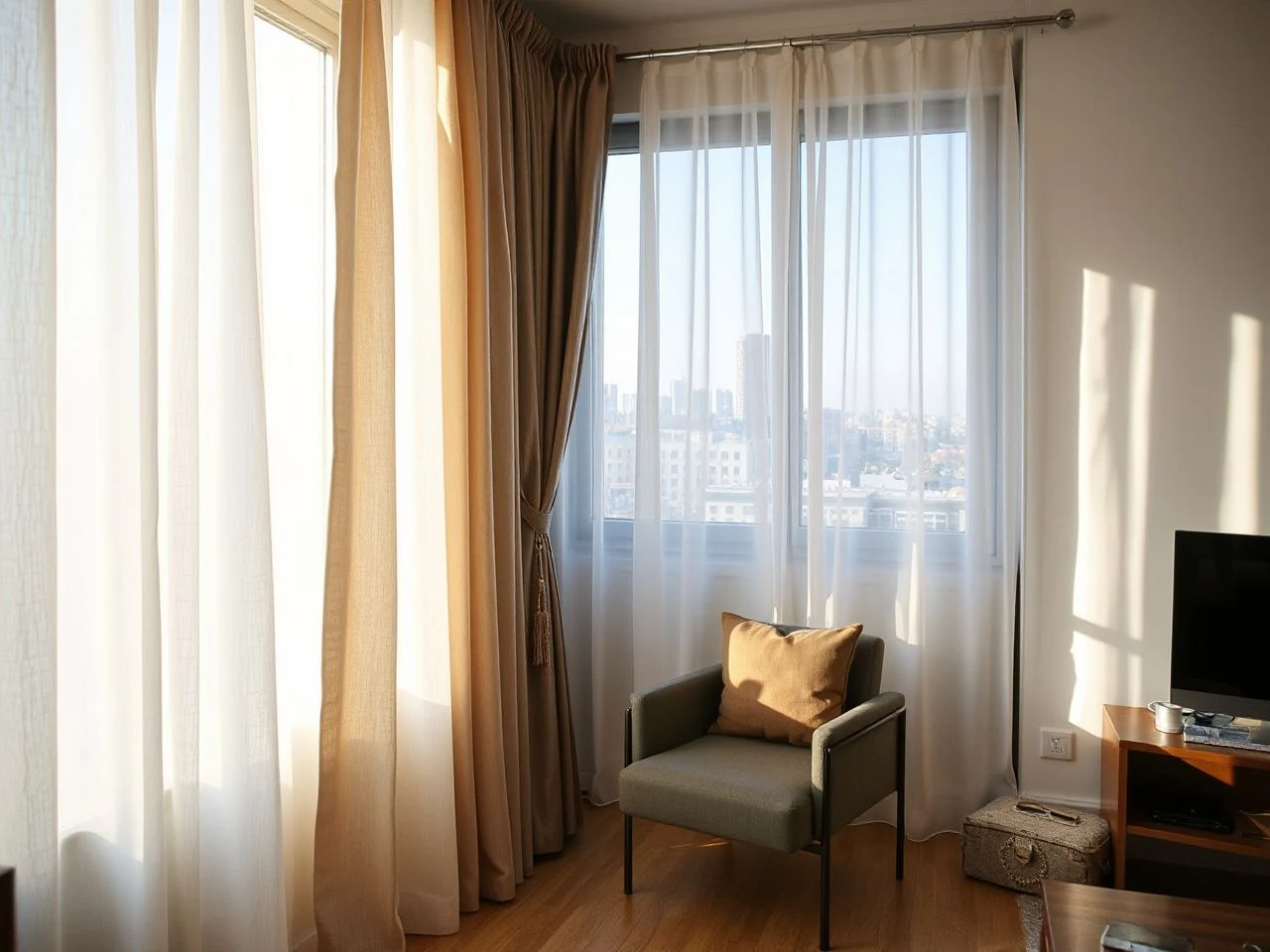
Layering can separate daylight control from privacy. A sheer panel can soften bright daylight, while a lined or blackout curtain can close over it when the room needs more privacy or darkness.
The layers need compatible movement paths. A double arrangement may use separate tracks or rods so the layers can open independently, but the exact hardware must match the heading used on each panel.
Layering also increases the amount of fabric near the window. In a small room, check the side space and the projection into the room before adding a second panel, especially near a desk, bed, radiator, heater, or doorway.
Hardware and fabric care
Heavy curtains place more demand on their support points than delicate sheers. The hardware should be properly supported, and the curtain should not be dragged by the top edge when opening or closing.
Decorative headings need gentle handling because folds, padding, loops, and grommets can be distorted by force. A panel that is difficult to move should be inspected at the connection points rather than pulled harder.
The safest cleaning method is the method stated on the curtain’s care label. Sheers may need careful handling to protect their light fabric, while lined and blackout curtains may require attention to the lining as well as the face fabric.
Rod pocket curtains can be inconvenient to remove if the rod must be taken down, so maintenance should be part of the style decision. Panels attached with rings, hooks, or gliders may be easier to separate from their hardware, but the connection points still need careful handling.
Regular dust removal can reduce the need for aggressive washing, but the care label remains the authority for laundering, drying, and ironing. Avoid assuming that two curtains with the same heading can be cleaned in the same way because fabric function and lining may differ.
Common Matching Errors and Practical Fixes
Choosing by appearance alone
A curtain can look right in a photograph and still fail in a real room. The heading may not match the existing track, the panel may need more side space than the window provides, or the fabric may block more daylight than the room can spare.
Write down the job the curtain must perform before choosing its appearance. Privacy, daylight, darkness, warmth, and easy opening are different requirements, so one label rarely answers every question.
- For daylight with partial screening, consider sheer fabric or cafe curtains.
- For a formal appearance, consider pinch pleat, box pleat, or goblet pleat headings.
- For a relaxed appearance, consider tab top or rod pocket construction.
- For maximum light obstruction, consider blackout fabric with a compatible heading.
- For seasonal insulation, consider a thermal curtain function with suitable hardware.
Assuming the existing rod will work
An existing rod may be attractive yet unsuitable for the new heading. A rod pocket requires the rod to pass through its sewn casing, while grommets require the rod to pass through their rings; a track arrangement may require hooks or gliders instead.
Remove guesswork by identifying the connection before measuring the fabric. Look at the top edge, the hardware path, and the available clearance as one system.
Ignoring the open position
Many curtain decisions focus on the closed view and forget the open view. A panel may cover part of the window when pulled aside, collide with a door, or bunch into a narrow corner that makes the room feel crowded.
Mark the area where the curtain will gather and check nearby furniture, handles, heaters, cords, and walkways. A compact room needs a clear movement plan more than a dramatic stack of fabric.
Using the wrong level of privacy
Sheer fabric can preserve daylight but may not provide the privacy needed after dark. Blackout curtains can stop light from filtering through, yet a full blackout layer may feel unnecessarily heavy in a room that mainly needs gentle screening.
Cafe curtains can provide lower-window privacy without blocking all natural light. They are not a universal substitute for a full panel, particularly where privacy is needed across the whole window.
Neglecting maintenance
A heading that looks polished may need more care than a simple one. Pleats, padding, loops, rings, and linings each create areas that should be handled according to the care label and not pulled, crushed, or washed casually.
Simple maintenance usually begins with accessible hardware and a removable panel. That does not make one style suitable for every room; it simply makes cleaning part of the practical assessment rather than an afterthought.
For general information about voluntary consensus standards and product safety language, the ASTM organization provides a useful starting point for understanding how standards bodies describe technical requirements. A standards organization is a better reference for safety terminology than a decorative product description.
A small-space decision sequence
I would use the following order in a compact home because it prevents decorative details from taking over the decision.
- Check the route. Measure the doorway, walkway, furniture clearance, and space beside the window where the curtain will gather.
- Define the function. Decide whether the room needs daylight, privacy, darkness, seasonal insulation, or a combination through layering.
- Identify the hardware. Confirm whether the installation uses a rod, track, rings, hooks, or gliders.
- Choose the heading. Match the top construction to the hardware and the room’s formal or relaxed character.
- Check the care label. Confirm that the cleaning method fits the time and access available in the room.
A curtain should be selected only after its function, movement path, clearance, and care method are clear. That order protects a small room from a style choice that creates daily friction.
Frequently Asked Questions
What are the main curtain styles, and how do they differ?
Pinch pleat, pencil pleat, box pleat, and goblet pleat curtains are defined by their folded headings. Grommet, rod pocket, and tab top curtains are defined by how they attach to a rod. Cafe curtains describe partial window coverage, while sheer, lined, thermal, and blackout curtains describe fabric function. These categories can overlap in one panel.
Should I choose a rod or a track for different curtain styles?
Choose the hardware that matches the heading and the movement the room requires. Rod pocket curtains generally do not move like curtains made for rings or gliders, while track-mounted panels need compatible hooks or gliders. Check the top construction first, then make sure the open curtain has enough side space and does not interfere with a doorway or furniture.
Are cafe curtains suitable for privacy without blocking all natural light?
Yes, cafe curtains are designed to cover part of a window, so they can screen the lower area while leaving upper glass open to daylight. They work best where privacy is needed at a particular level rather than across the entire window. If the room needs full privacy or darkness, pair a suitable upper treatment or choose a fuller covering.
How do sheer, lined, and blackout curtains differ?
Sheer curtains allow more daylight through and offer lighter visual screening. Lined curtains add another fabric layer that changes the panel’s appearance and light transmission. Blackout curtains use a thickly woven lining to stop light from filtering through. The heading does not decide opacity; fabric and lining do.
Why do curtains sag, drag, or bunch unevenly?
Sagging can indicate hardware that is not properly supported for the curtain’s weight. Dragging points to a length or clearance problem, while uneven bunching may come from irregular gathering, unsuitable rings, or a tight rod pocket. Check the hardware path, panel length, fullness, and open position before replacing the fabric.
How should different curtain fabrics and headings be cleaned?
Use the care label as the controlling instruction because the face fabric, lining, pleats, loops, and grommets may respond differently to cleaning. Handle decorative headings gently, remove dust without force, and avoid pulling a panel across hardware when the fabric catches. A simple heading is often easier to remove, but care still depends on the material and lining.