A small front yard has one advantage a large one doesn’t: every plant and every square foot of hardscape is visible from the sidewalk, so small, well-executed changes read as a finished design rather than getting lost in the space. The ideas below lean on a few core principles — layering plant heights, choosing a permeable surface over solid concrete, and being honest about what “low-maintenance” actually means — that do more for a small yard than any single showpiece plant.
One framing to keep in mind throughout: layering matters more than any individual plant choice. A bed with low groundcover in front, mid-height shrubs behind it, and one or two taller anchor plants reads as intentional; a flat bed of same-height plants reads as an afterthought, no matter how nice the plants themselves are.
Here are 16 ways to put that structure to work, from planting strategy to the hardscaping and accent pieces that tie it together.
1. Use Symmetrical Plant Arrangements at the Entry
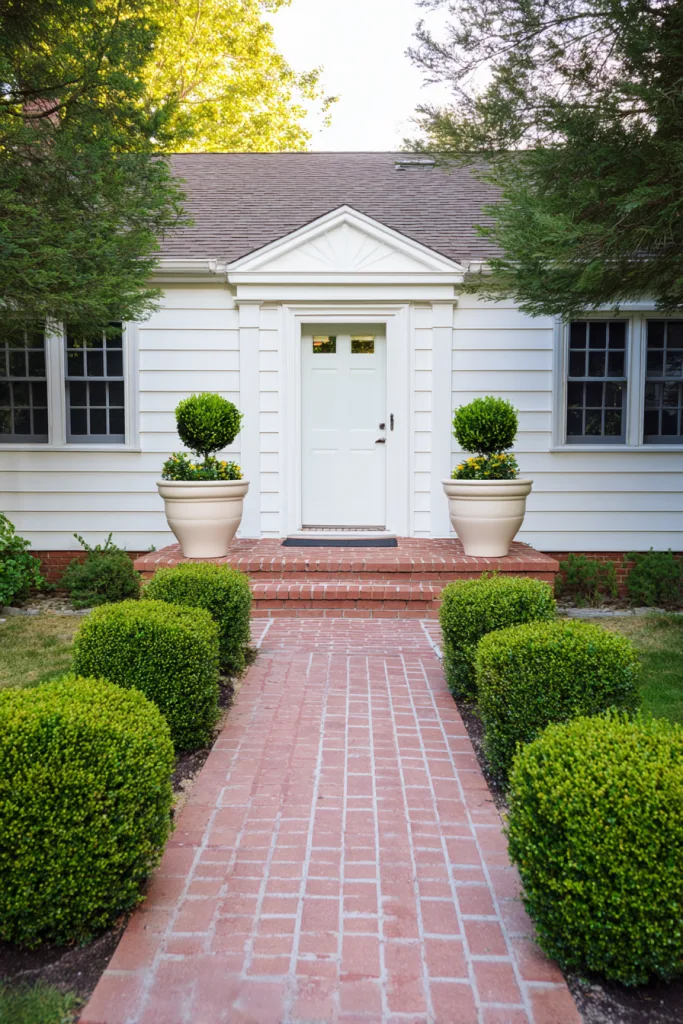
Mirroring plants or containers on both sides of a walkway or front door is one of the fastest ways to make a small space read as designed rather than accidental. The trick is picking plants that grow at similar rates so the pair stays balanced as they mature — mismatched growth rates are the most common reason a symmetrical planting stops looking symmetrical within a year or two.
Matched pairs of potted shrubs work as well as in-ground plantings and are easier to keep balanced, since a container limits how much a plant can outgrow its partner. Regular trimming, typically once or twice during the growing season and more for fast growers, keeps the pair in proportion. This works especially well flanking a front door or the start of a walkway, where it does double duty as a visual cue pointing guests toward the entrance.
2. Add a Curved Path in a Permeable Material
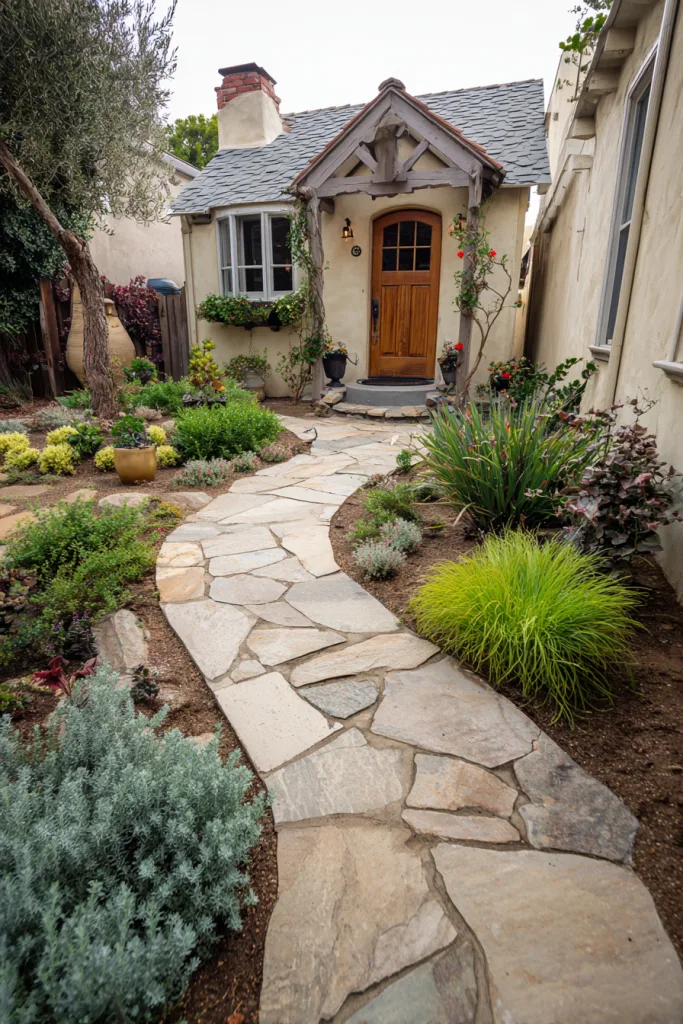
A path does two jobs in a small yard: it protects the lawn or beds from foot traffic, and it shapes how the space feels. A gentle curve reads as more intentional and makes a small yard feel larger than a straight, shortest-distance path does, since it extends the visual journey from the sidewalk to the door.
Flagstone gives an organic, irregular look; cut pavers give cleaner lines for a more contemporary yard. Either way, small gaps between stones, filled with fine gravel or a low groundcover, read as softer than a fully mortared, seamless surface. In a small space prone to pooling, permeable pavers or a gravel path handle rainwater runoff better than solid poured concrete, which sheds water rather than letting it soak in. Two to three feet wide is a comfortable width for a single-file path without overwhelming a small bed.
3. Keep Foundation Shrubs Low, With an Evergreen Backbone
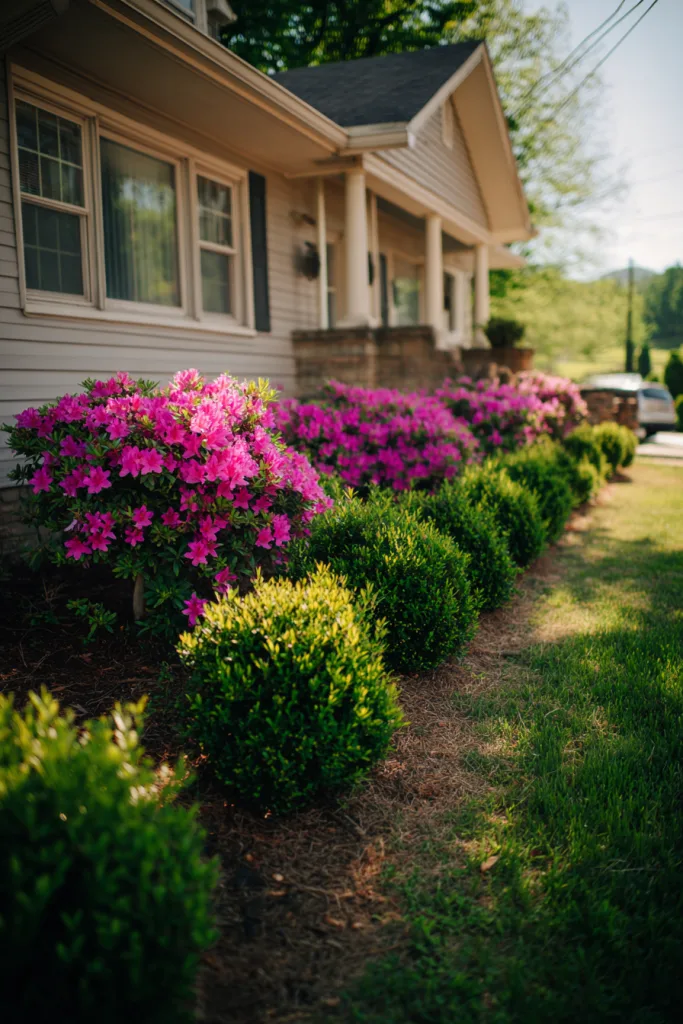
Tall foundation plantings are one of the most common mistakes in a small front yard — they block windows, shrink the sense of space, and eventually need aggressive pruning to keep in check. Dwarf and compact shrub varieties solve this: they max out at a manageable height, need less pruning to stay in bounds, and keep sightlines to the house open.
Mixing in some evergreen shrubs alongside deciduous ones matters for a different reason — a bed of entirely deciduous plants goes bare for several months a year, which is more noticeable in a small yard than a large one. A framework of evergreens keeps some structure and color through winter, with the deciduous plants adding seasonal change on top of that baseline rather than leaving nothing at all. Vary the foliage textures and shades of green between the two so the bed doesn’t read as a flat green wall.
4. Install a Low Decorative Fence
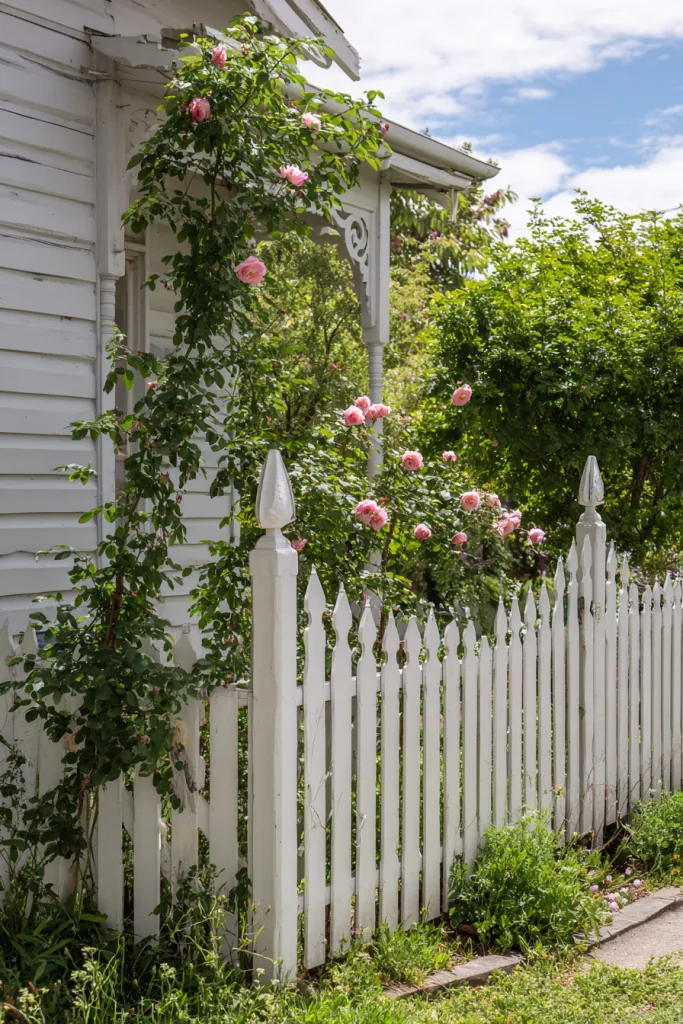
A fence in a small front yard is doing a different job than a backyard privacy fence — it’s defining the edge of the space and adding character, not blocking the view entirely. Many municipalities cap front-yard fence height around three to four feet specifically to preserve sightlines, so check local code before ordering materials; that height range also happens to be proportional for most small yards regardless of the rule.
Wrought iron, or a powder-coated metal equivalent, keeps the open, see-through quality that a taller privacy fence would lose, and works well with classic scrollwork or simple vertical bars depending on the house style. Wood picket fencing reads more cottage or traditional — cedar and redwood resist rot better than most other woods if left unsealed, though either will last longer with an occasional coat of paint or sealant. Budget for upkeep either way: wood needs refinishing every few years, and metal needs occasional rust treatment if it’s not powder-coated.
5. Place a Compact Seating Spot
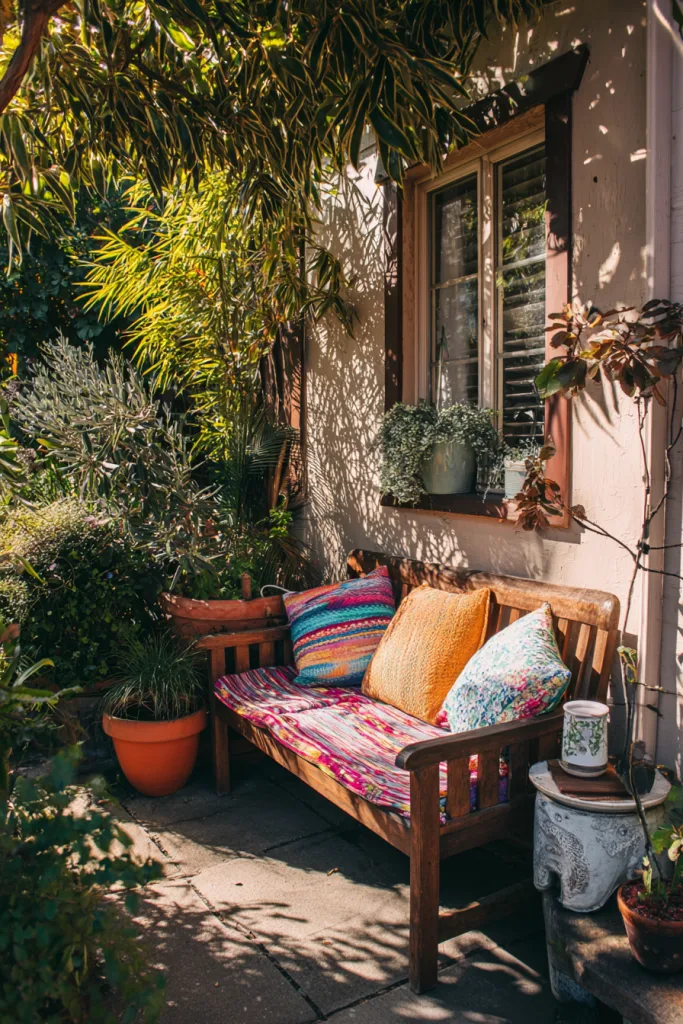
A bench or a two-chair bistro set gives a front yard an actual use beyond being looked at from the street. Scale matters more here than in a backyard — a single bench or a small bistro set fits a compact bed or a spot beside the entry without crowding the path or planting beds around it.
Position it where it gets a reasonable view: near the entrance if you want to see neighbors and street activity, tucked beside taller plantings if privacy matters more. Materials that handle weather without much upkeep, like powder-coated metal, teak, or synthetic wicker, hold up better long-term than an untreated wood piece that wasn’t built for outdoor exposure. A bench with storage underneath is worth the modest premium in a small space, since it doubles as somewhere to stash cushions or tools.
6. Go Vertical With a Trellis and Wall Planters
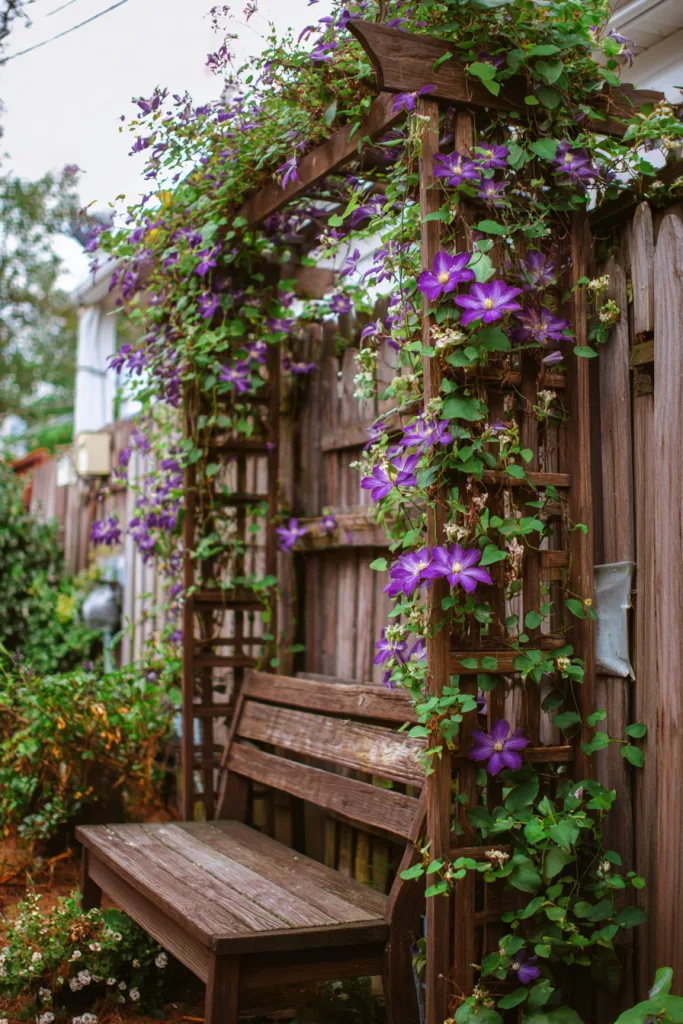
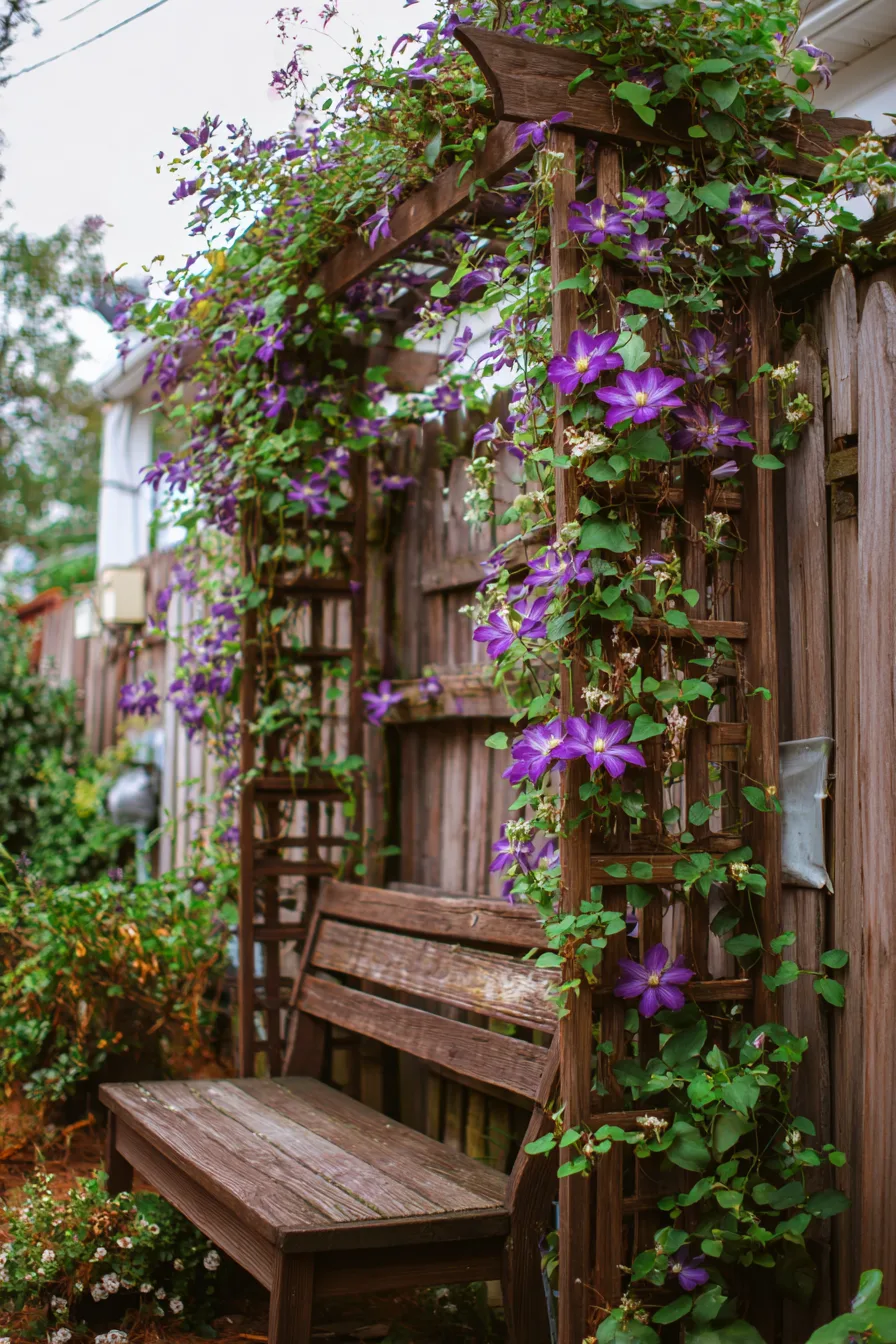
When ground space runs out, going vertical is the straightforward fix. A trellis against a wall, fence, or as a freestanding divider supports climbing plants that grow up instead of out, adding height and some privacy without consuming bed space. Choose a trellis material, wood, metal, or vinyl, rated for outdoor use and sturdy enough to carry the weight of a mature vine, which is heavier than it looks once the plant fills in.
Flowering vines add the most visual payoff, though they take a season or more to fill in; fast-growing annual vines cover a trellis in a single season if you want coverage sooner. Wall-mounted or pocket planters do a similar job on flat fence or wall surfaces — herbs, succulents, and trailing plants all work, and the vertical spacing means better air circulation around the plants than a crowded ground bed gets, which cuts down on fungal issues.
7. Add Hanging Baskets for Overhead Color
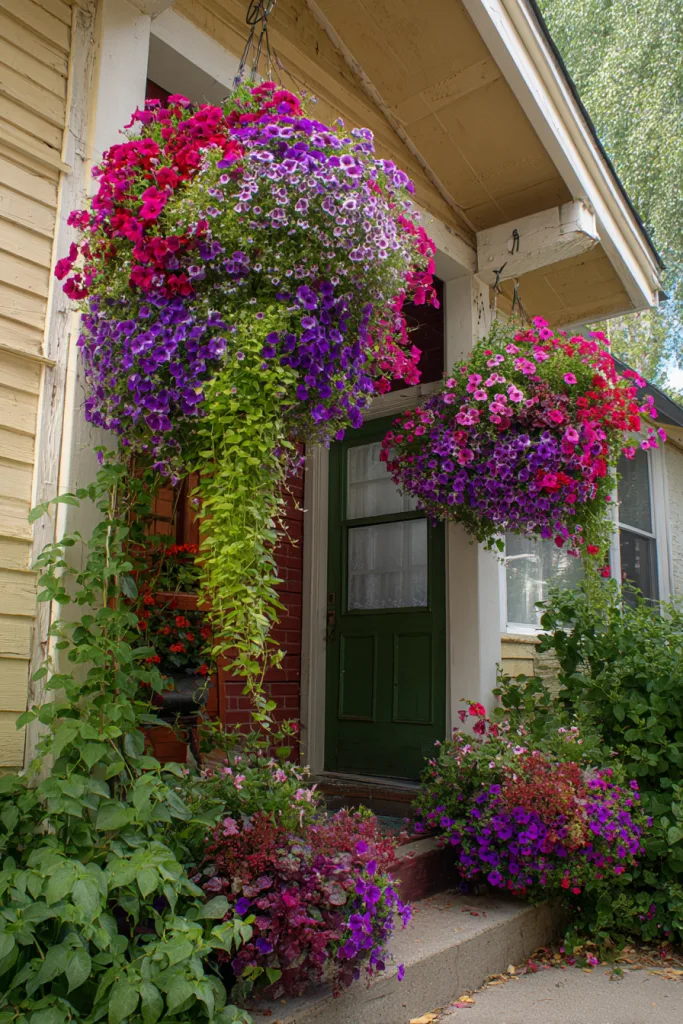
Hanging baskets draw the eye up and add fullness at a height ground plantings can’t reach — trailing plants cascading from a porch ceiling or a shepherd’s hook soften hard edges like a bare porch post or an empty stretch of siding. They’re one of the few front-yard upgrades that doesn’t touch the ground at all, which makes them useful when bed space is already spoken for.
Trailing flowering plants and trailing foliage varieties both work, and mixing the two gives more textural interest than a single plant type filling the basket. Vary the hanging height slightly if you’re using more than one basket, rather than lining them up at a single level. The tradeoff worth knowing before committing: hanging baskets dry out faster than ground plantings because they’re more exposed to air and sun on all sides, so they typically need watering more often, daily in hot weather, unless the basket has a built-in reservoir.
8. Layer in Container Color at the Entrance
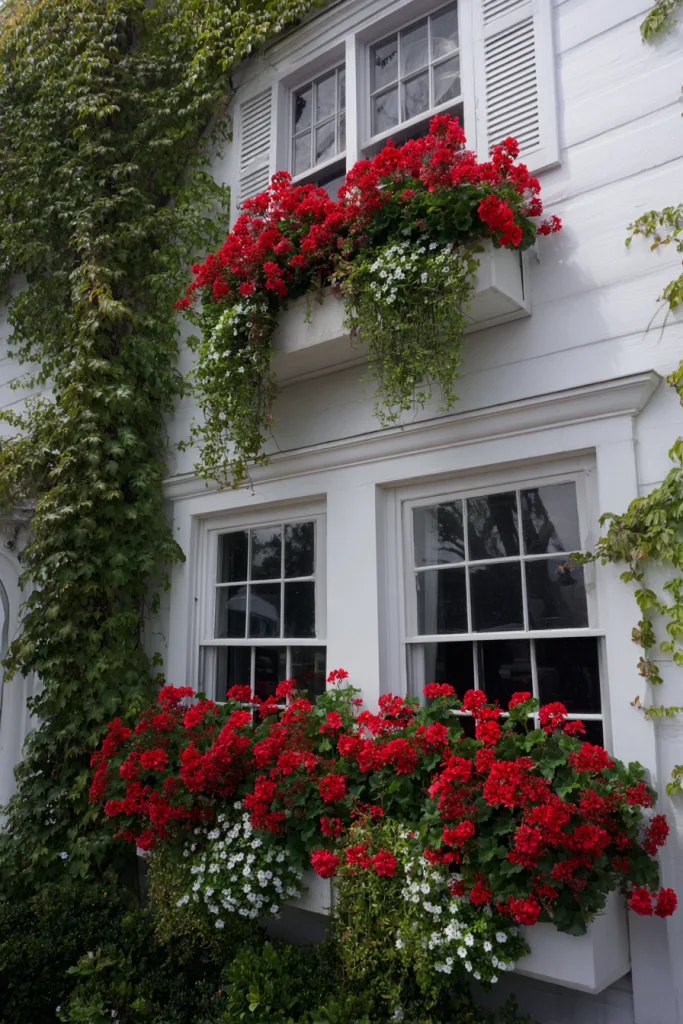
Window boxes and grouped porch pots do the same basic job, concentrated color right where people look first, without needing any ground space at all. A window box needs roughly 8 inches of soil depth at minimum for the roots to establish properly; shallower boxes dry out fast and stress the plants inside them.
Seasonal bloomers planted in spring and refreshed in fall keep the display from looking tired by midsummer, and mixing in a trailing plant along the box’s front edge softens the hard line of the container itself. For porch or step displays, group pots in a few different heights and sizes rather than lining up matching ones — taller pots toward the back, shorter in front, creates depth instead of a flat row. Drainage holes are non-negotiable in either case; a container without them will waterlog and kill most plants within a season.
9. Use Mulch or Gravel to Define Beds
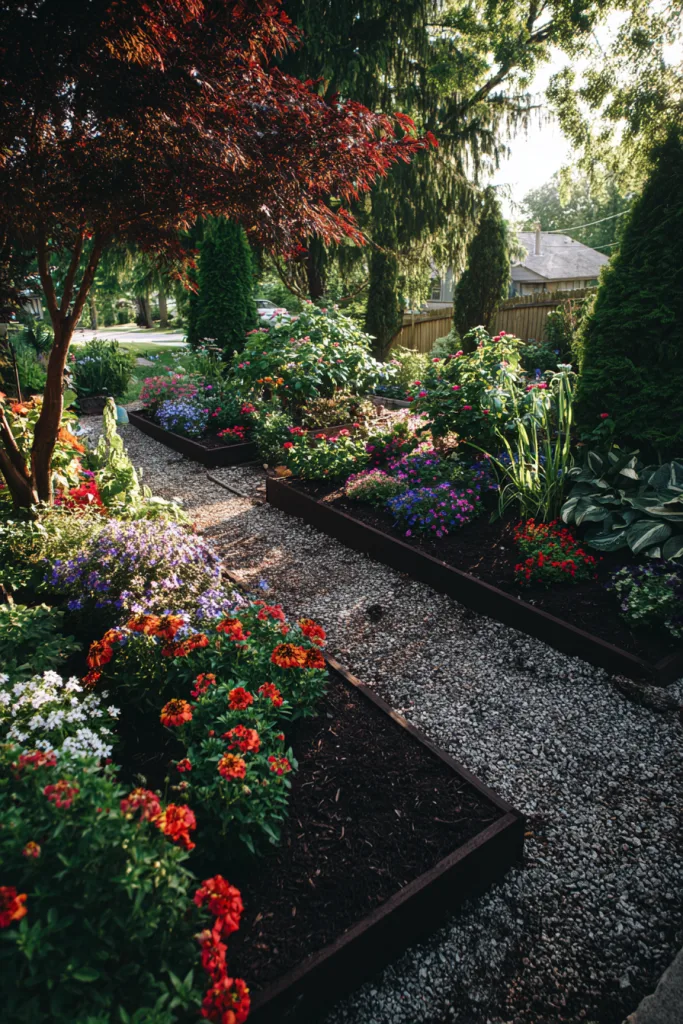
Mulch and gravel do real, unglamorous work: they suppress weeds, retain soil moisture, and give a bed a finished edge, all for a fraction of what filling the same space with groundcover plants would cost. Organic mulch, shredded bark is the common choice, also enriches the soil as it breaks down, which gravel doesn’t do.
Apply mulch about two to three inches deep, pulled back slightly from plant stems so it isn’t holding constant moisture against them. Gravel is the more permanent option and holds up better in pathways or high-traffic borders, but it doesn’t feed the soil the way organic mulch does. One honest caveat: “low-maintenance” doesn’t mean “no maintenance” — mulch breaks down and needs topping up roughly once a year to keep doing its job, so budget for that ongoing cost rather than treating it as a one-time purchase.
10. Build a No-Mow Rock Garden
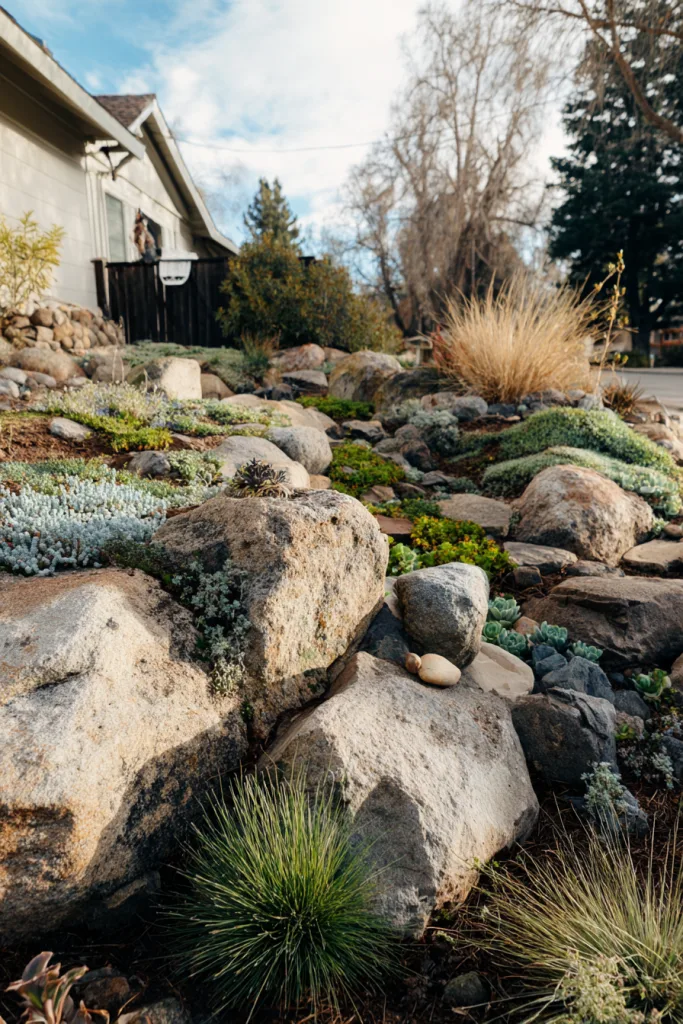
Rock gardens solve a specific problem: areas where a traditional lawn struggles, whether from poor soil, slope, or heavy sun exposure. Mixing different stone sizes, a few larger boulders as anchors with smaller stones filling the gaps between them, reads more natural than uniform gravel alone, especially if the stones are arranged irregularly rather than in an obvious pattern.
Drought-tolerant plants, succulents and similar low-water varieties, tucked between the stones soften the hardscape and add color without asking for much water or care once established. The appeal for a small yard specifically is upkeep: once planted, a rock garden needs far less regular attention than a planted bed of the same size, no mowing, minimal watering, occasional weeding. It works with both a clean, contemporary house and a more rustic one, depending on how the stones and plants are arranged.
11. Add One Anchor Water Feature
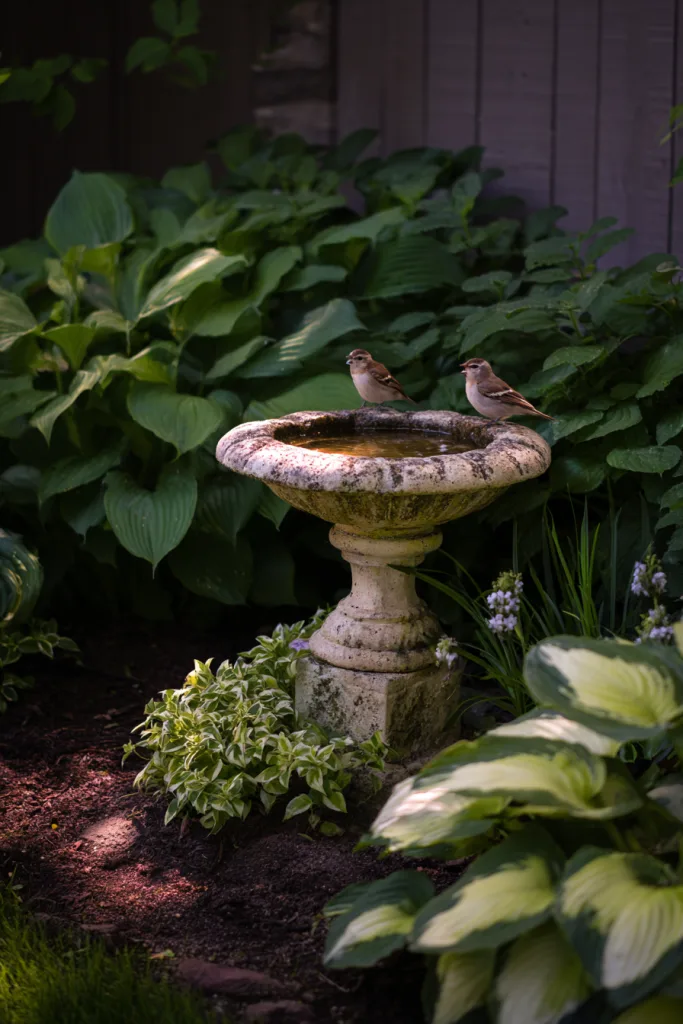
A small yard benefits more from one well-placed focal point than several competing features — a birdbath or a compact fountain does the job of drawing the eye without needing much space. A birdbath, pedestal or bowl-style, invites birds and adds vertical interest to a bed that would otherwise be all foliage at one height.
A small self-contained fountain, the kind that recirculates its own water with no plumbing hookup required, just a fill and an outlet, adds sound and movement instead, which does more to make a small space feel calm than a static piece does. Either option needs some upkeep: periodic water refills, since evaporation adds up faster than people expect, and occasional cleaning to keep the water from growing algae in warm weather. Match the material, stone, cast concrete, or metal, to whatever else is already in the yard so it reads as one piece and not an add-on.
12. Design Raised Garden Beds for Depth
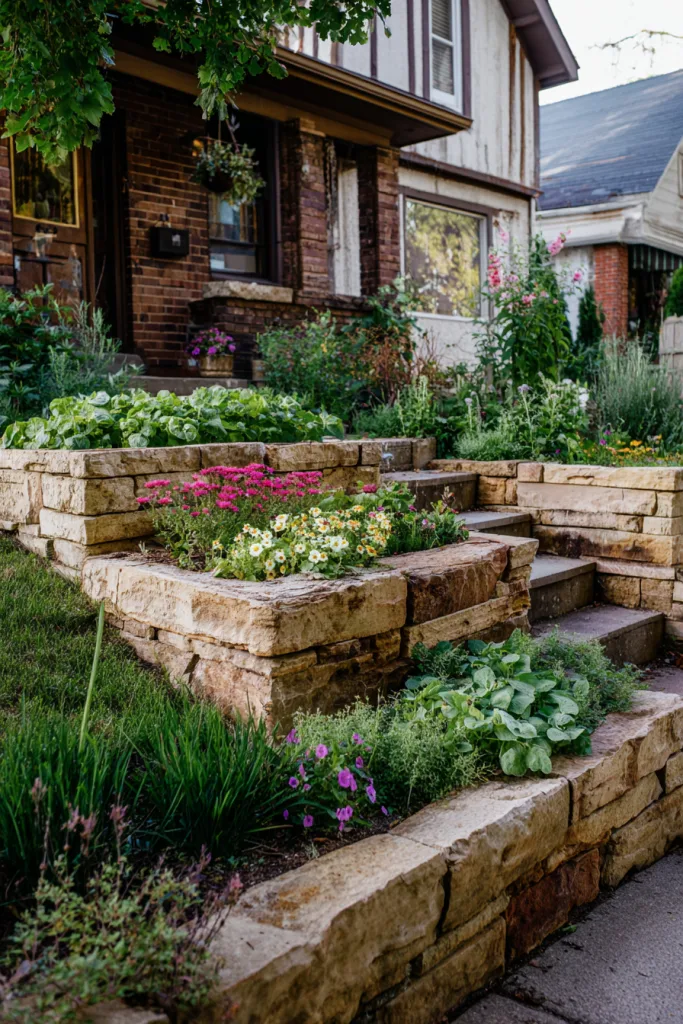
Raising a bed six inches to two feet off the ground does more for a small yard than the height difference suggests — it creates a visible layer that a flat, ground-level bed can’t, which makes the whole yard read as more dimensional. Build the frame from wood, stone, or a composite material; heights toward the lower end of that range suit most small front yards better than a knee-high or taller bed, which can start to feel like a retaining wall.
The practical upside is soil quality: a raised bed filled with good soil sidesteps whatever the native soil underneath is doing, which usually means better drainage and stronger root growth than an in-ground bed would get without significant soil amendment. It’s also easier on the back and knees than ground-level planting and weeding, a real factor if the bed is one you’ll be maintaining for years. Mixing a couple of different heights across the yard adds more depth than a single uniform bed height would.
13. Incorporate Ornamental Grasses for Movement
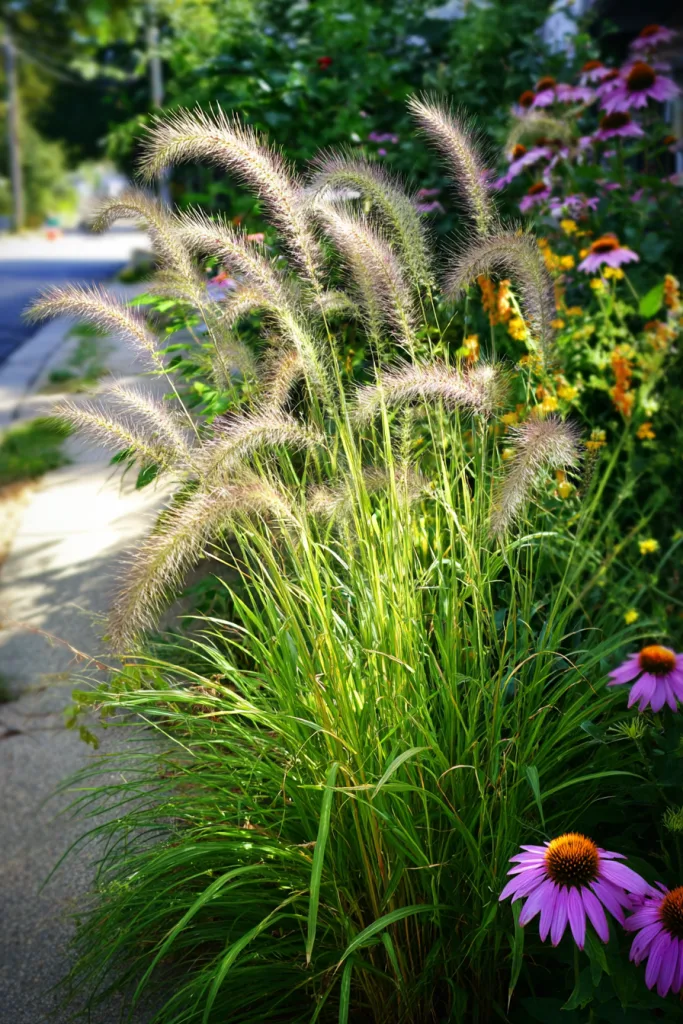
Grasses add something most flowering plants can’t: movement. Their swaying in even a light breeze brings a static bed to life in a way that’s easy to underrate until you see it next to a bed without any. They’re also genuinely low-maintenance once established, needing minimal water and infrequent dividing.
Compact varieties suit small yards better than the tall, dramatic types often pictured in landscaping photos, since those need more room to read well and can overwhelm a small bed. Grasses also carry the seasons differently than most plants: fresh green growth in spring, full plumes by summer, color changes in fall, and, depending on the variety, some standing structure through winter instead of dying back to nothing. Plant them as a border, a standalone specimen, or mixed into a bed of flowering perennials for textural contrast.
14. Choose Native and Regionally-Adapted Plantings
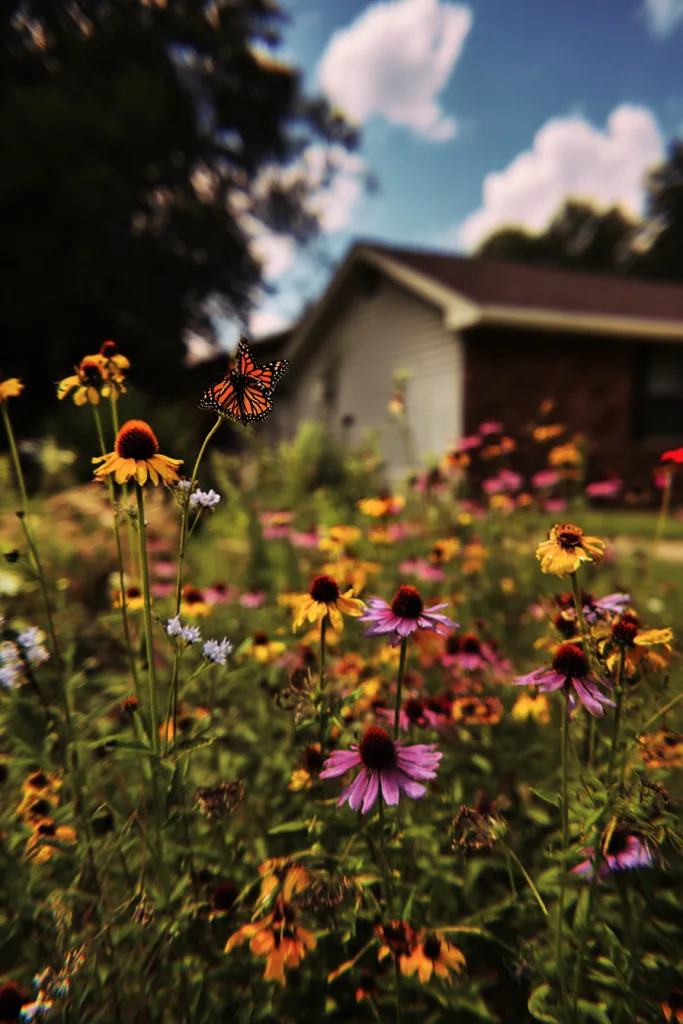
Plants native or well-adapted to the local climate need less supplemental water, fertilizer, and pest control than exotic ornamentals once they’re established — they evolved for the region’s rainfall and soil, so they’re not fighting the local conditions the way an imported ornamental variety often is. They also tend to support local pollinators and birds better than non-native species do.
The honest caveat: “drought-tolerant” and “low-water” don’t mean “no water from day one.” Even native plants need regular watering through their first growing season while the root system establishes; the water savings show up in year two and beyond, not immediately. A local nursery or extension office is the best source for what’s actually native to a specific area, since the right plant categories, wildflowers, native grasses, regional shrubs, vary significantly by climate zone.
15. Swap in a Low-Mow Groundcover Lawn
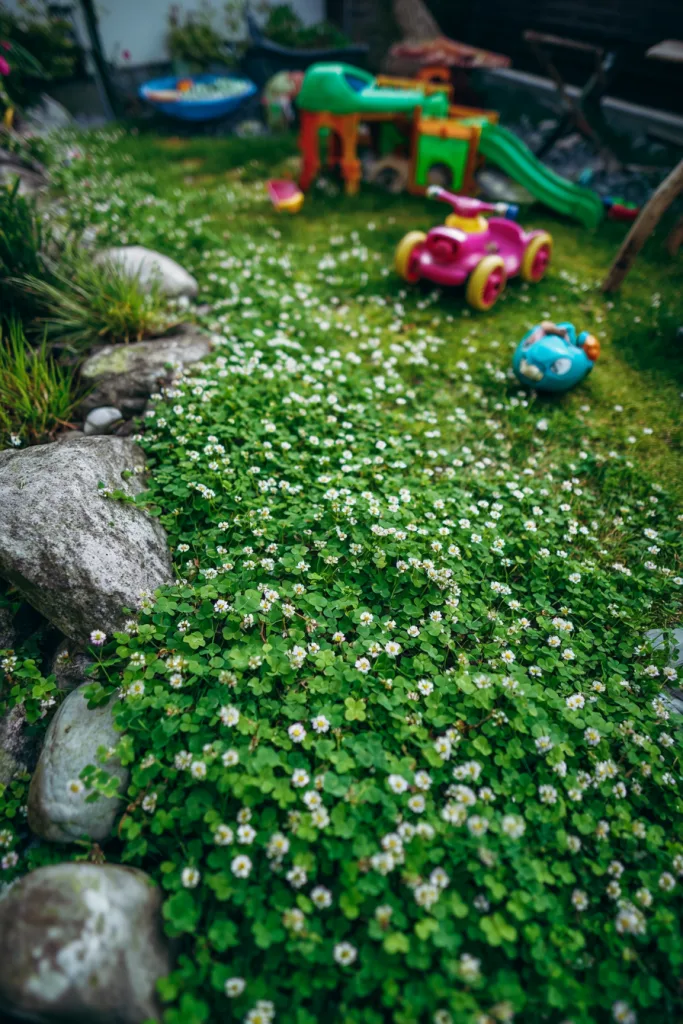
A groundcover lawn alternative, clover is the most common choice, trades the maintenance schedule of a traditional turf lawn for something closer to plant-it-and-mostly-leave-it-alone. Clover stays green through dry spells with less irrigation than turf grass typically needs, and as a legume, it fixes nitrogen in the soil naturally, which reduces or eliminates the need for fertilizer.
It tolerates light foot traffic reasonably well, though not the heavy, repeated use a play lawn gets, and its small blooms attract pollinators as a side benefit. Mixing it with other low-growing plants adds texture and extends the bloom season beyond what clover alone provides. It won’t look like a manicured turf lawn — the trade is a softer, slightly informal look in exchange for meaningfully less mowing and watering.
16. Install Clean Landscape Edging
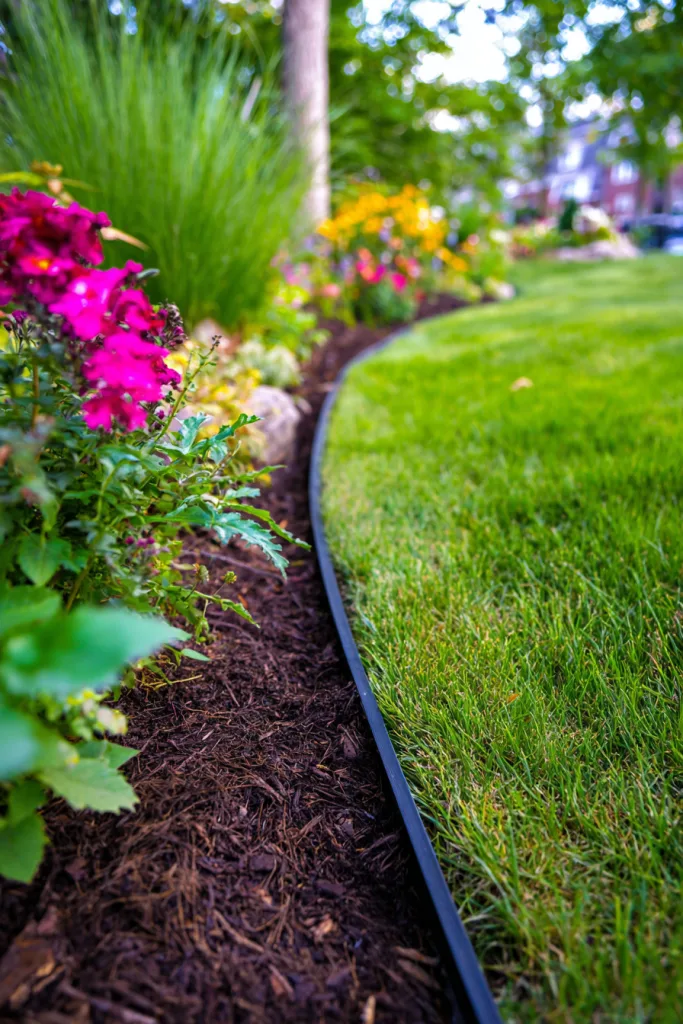
Edging is the detail that makes a yard read as maintained rather than just planted — a clean line between lawn and bed does more visual work than people expect for how little it costs. Metal edging gives the sharpest, most contemporary line; stone or brick edging reads more traditional; plastic is the cheapest option but tends to heave and shift over a few seasons of freeze-thaw cycles in colder climates.
Install edging with the top slightly below grade so a mower can pass over it without catching, and expect to reset or top off the material occasionally as soil settles or plants push against it. A well-defined edge also physically contains mulch and stops grass from creeping into beds, which cuts down on maintenance elsewhere in the yard. Curved edges read softer and make a small space feel larger; straight lines suit a more contemporary layout.
Conclusion
Not every idea here needs to happen at once, and a few done well beat all sixteen done halfway. If you’re starting from nothing, the layering principle, low plants in front, mid-height shrubs behind, one or two taller anchors, and a defined bed edge using mulch, gravel, or physical edging do more for how “finished” a small yard looks than any single accent piece.
From there, add the pieces that fit your actual routine: a water feature or seating spot if you’ll use the yard, native and low-water plantings if reducing maintenance is the priority, vertical growing or a rock garden if ground space is genuinely tight. The yard will keep evolving as plants mature and your own priorities shift, and that’s normal — treat this as a starting layout, not a finished blueprint.
Frequently Asked Questions
How much does it typically cost to landscape a small front yard?
DIY projects using mulch, perennials, and basic hardscaping, a simple path, some edging, typically run $500-$1,500 in materials. More extensive work, professional hardscaping, mature plants, a water feature or fence, can run $3,000-$8,000 or more, depending heavily on materials and whether labor is hired out. Starting with plantings and mulch, then adding hardscaping or accent features later as budget allows, is a reasonable way to spread the cost.
What are the best low-maintenance plants for a small front yard?
Succulents, ornamental grasses, and native perennials are consistently the lowest-upkeep categories, since all three are adapted to survive with minimal water once established. Evergreen shrubs add structure with infrequent pruning. The real key is matching plant categories to your specific climate zone and the amount of sun the bed actually gets — a plant that’s genuinely low-maintenance in one region can struggle and need constant attention in another, so check what’s suited to local conditions rather than assuming a plant labeled “low-maintenance” is universally so.
How can I make a small front yard look bigger?
A few design tricks reliably help: curved paths instead of straight ones extend the visual journey through the space, low-growing plants near windows keep sightlines open instead of boxing the view in, and vertical elements like a trellis or hanging baskets draw the eye upward rather than across the ground. Layering plant heights, low in front, taller toward the back or sides, also reads as more spacious than a flat bed of same-height plants, since it gives the eye more depth to travel through.
Should I remove the lawn entirely from a small front yard?
Not necessarily — a small, usable patch of lawn or a groundcover lawn alternative like clover can coexist with planted beds around it. A common approach is keeping a small lawn area for practical use, kids, pets, simple green space, and converting higher-maintenance or problem areas, deep shade, slopes, poor drainage, to mulched beds or a rock garden instead. The right balance depends more on how you’ll actually use the space than on a rule about how much lawn a small yard “should” have.