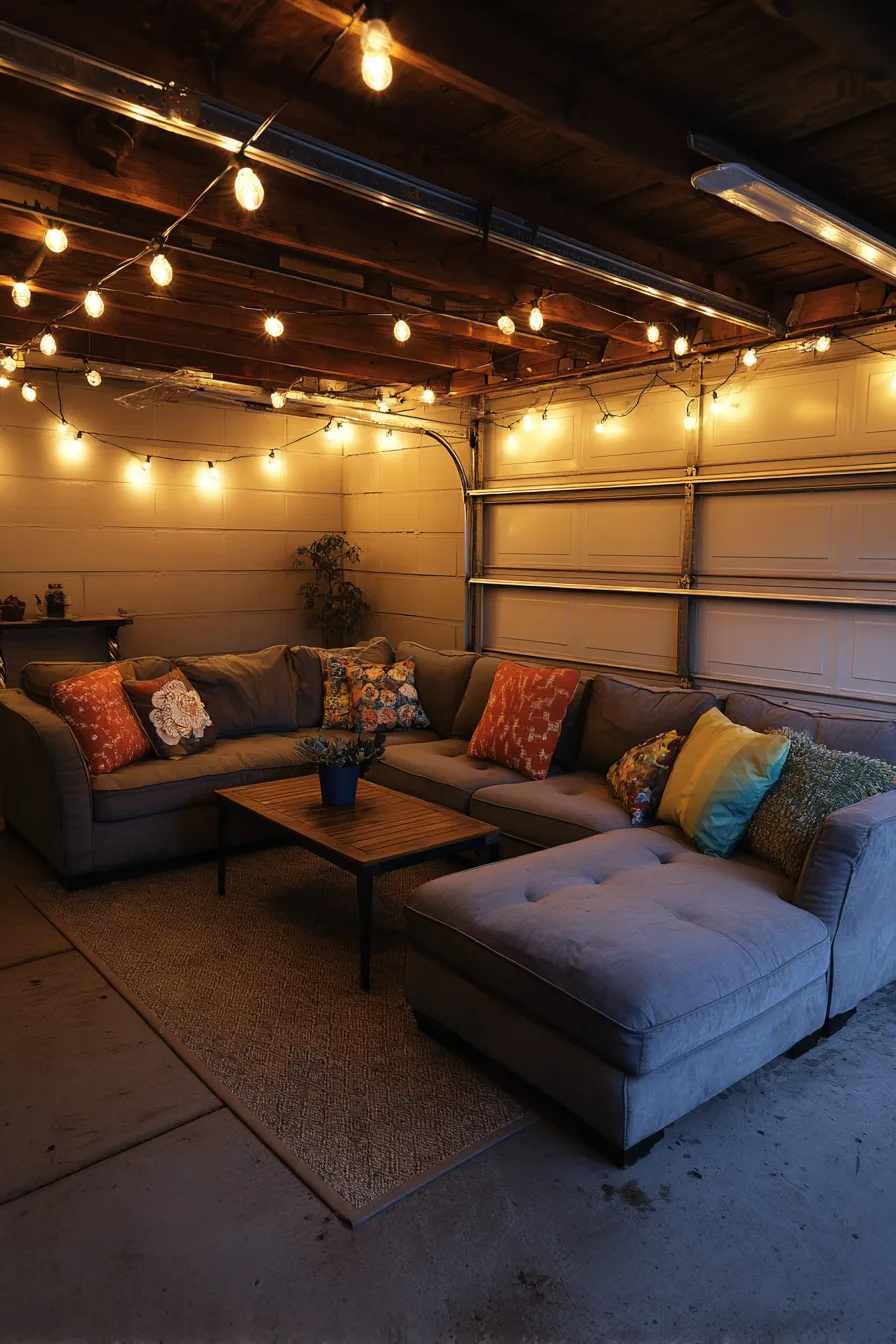
A garage hangout space starts with a real advantage: the structure, slab, and electrical are already there. What’s left is deciding how to use roughly 200-400 square feet of covered space without the cost of a full room addition.
The tradeoffs are different from a normal room, though. A typical garage isn’t insulated, the floor is bare concrete, and the lighting is built for parking a car, not relaxing in one. Getting those three things right — flooring, temperature, and light — makes more difference to how the space actually feels than any single piece of furniture.
Below are 13 ways to build out a garage hangout, from the big structural decisions down to the small stuff like where the snacks go. Pick two or three that fit your budget and how you’ll actually use the space, rather than trying to do all of them at once.
1. Create a Cozy Seating Area
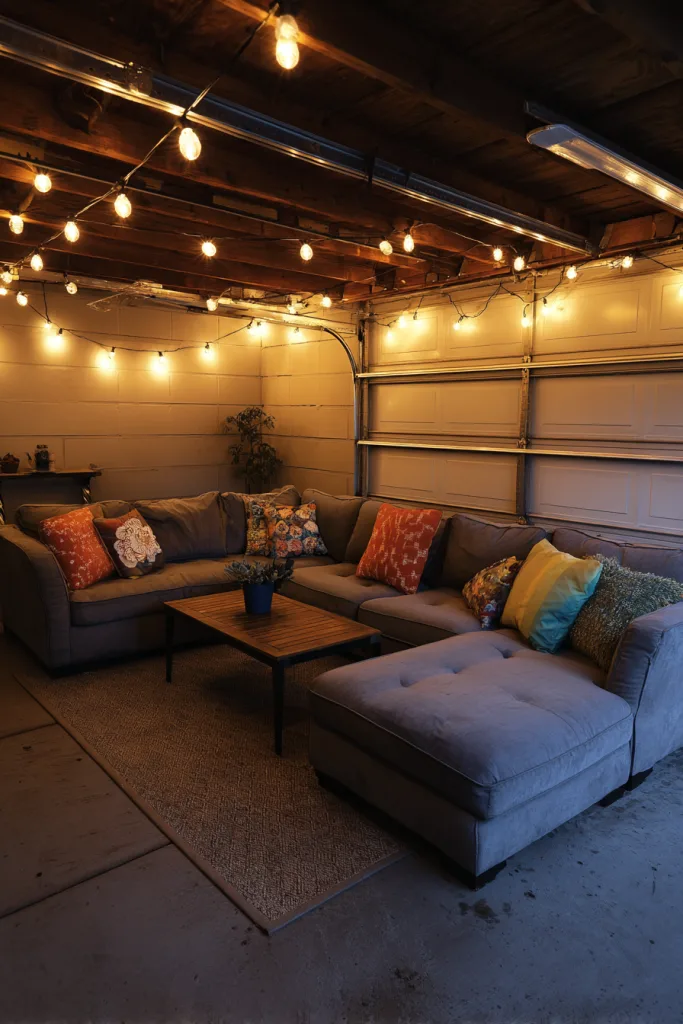
Seating is the one piece that has to work in a garage’s specific conditions — temperature swings, occasional dust, and a slab floor that’s usually a few degrees cooler than the rest of the house. Outdoor-rated or performance fabric (labeled for UV and moisture resistance) holds up far better here than an indoor sofa, which will pill, sag, or mildew faster in a space without climate control. If you’re repurposing an old couch, a fitted slipcover in the same fabric class buys you a few more years out of it.
Arrange seating in a U-shape or loose circle rather than lining it against the walls — it’s a small change that makes the space read as a room instead of storage with chairs in it. Floor cushions or a stack of folding stools are worth keeping around too, since they store flat and let you flex the seating count for a bigger gathering without buying furniture you don’t have room for day to day.
2. Install a Sport and Game Zone
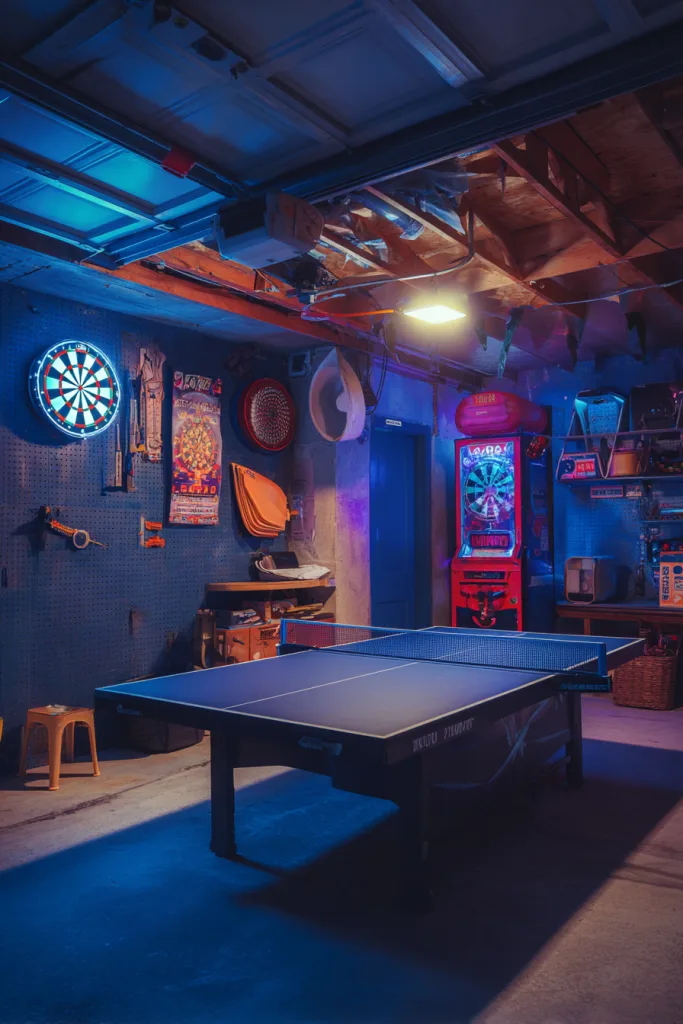
A regulation dartboard hangs with the bullseye 5 feet 8 inches off the floor, with the throw line (the oche) 7 feet 9 1/4 inches back for steel-tip darts — worth taping off before you commit to a spot, since most garages have the depth for it but not always the width once a car or workbench is factored in. Back the board with a cork or foam-core panel a few inches wider than the board itself; drywall alone won’t survive many missed throws.
A regulation ping pong table is 9 feet by 5 feet, and you’ll want roughly 5 feet of clearance on each side for players to move — call it a 19×10-foot footprint if you want to play with room to spare. Foldable tables solve this by converting to a narrow storage position between uses, which matters more in a garage that still needs to fit a car or overflow storage. Wall-mounted shelving nearby keeps paddles, balls, and darts from ending up in a bin somewhere else.
3. Set Up an Entertainment Zone
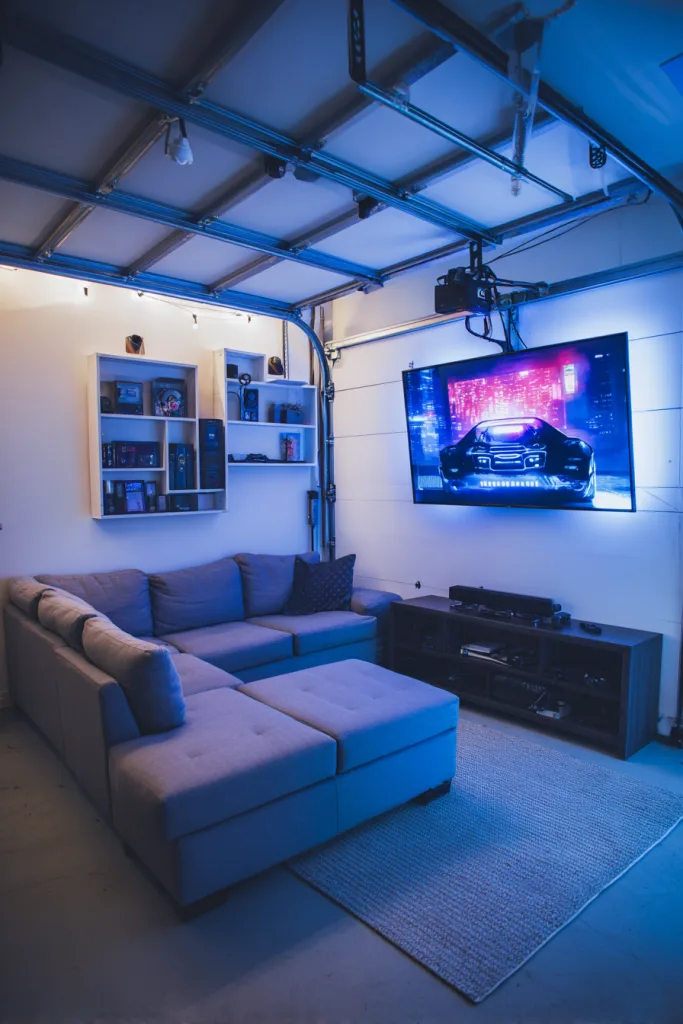
Garage temperature swings are the real design constraint here — a TV and receiver rated for indoor use only can struggle in a space that gets much hotter and colder than a climate-controlled room, so check the operating temperature range on anything you’re installing permanently rather than moving in from the living room. A swivel or tilt mount lets one TV serve multiple seating angles, which matters more in a garage’s often-irregular layout than it would in a rectangular family room.
Route cables through conduit or a cable raceway along the wall rather than leaving them loose on a concrete floor — moisture and foot traffic are harder on exposed cable in a garage than indoors. Position the screen away from any window or the garage door track opening; even indirect daylight through the gap under a door can wash out a picture badly enough that you’ll notice most during the day.
4. DIY a Simple Bar Area
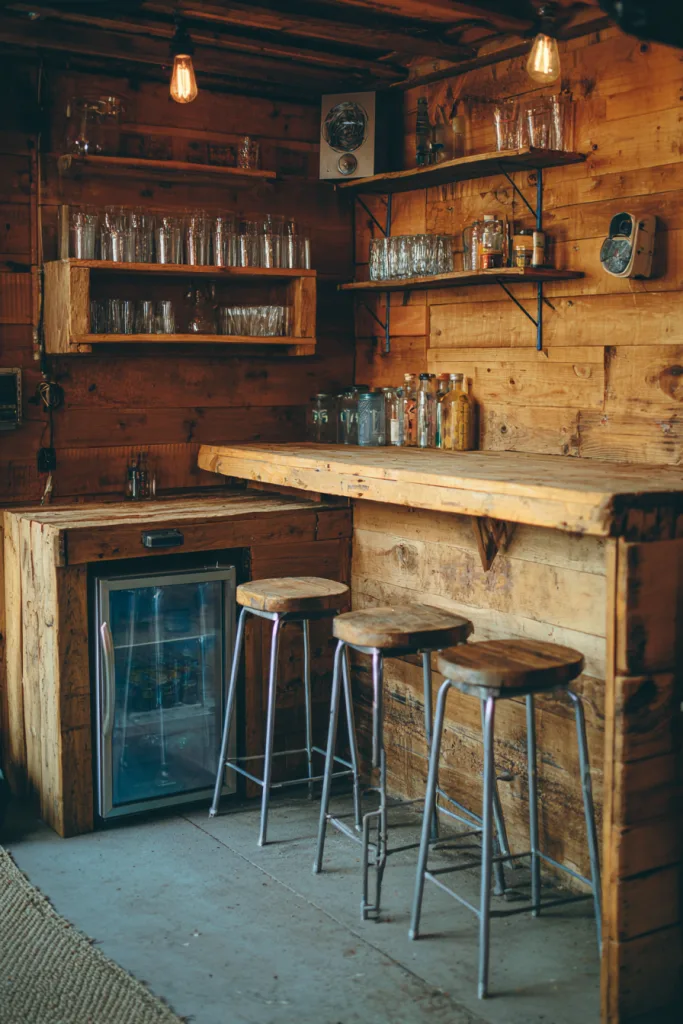
A bar-height counter runs about 40-42 inches tall, several inches above a standard 36-inch kitchen counter, which is why an old workbench (usually built closer to counter height or lower) may need risers or taller legs to feel right with bar stools. Floating shelves above hold glassware without eating counter space — mount them into studs, not just drywall anchors, since a shelf loaded with glass bottles carries real weight.
Compact fridges suited to this kind of setup run from about 1.7 to 4.5 cubic feet, enough for drinks and mixers without the footprint of a full-size unit. Undercabinet LED strip lighting does more for the space’s atmosphere than an overhead fixture alone — it’s inexpensive, and warm-white light (2700-3000K) reads far more like a bar than the cooler light typical of garage fixtures.
5. Maximize Open Space
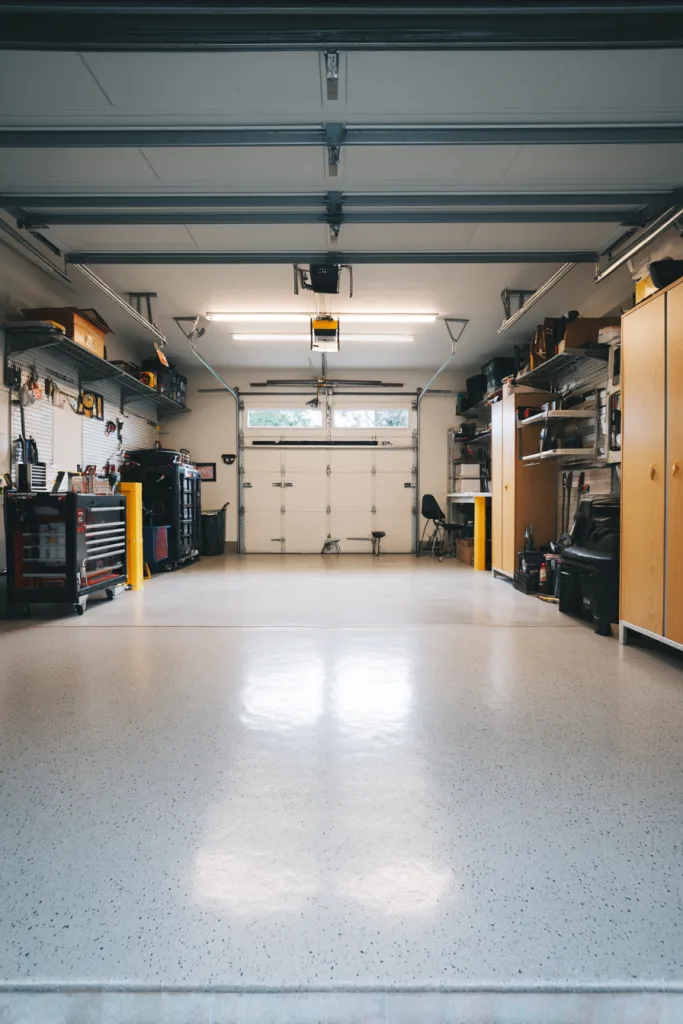
The biggest mistake in a garage hangout is letting floor-standing shelving eat the square footage you’re trying to create. Wall-mounted slat panels or pegboard hold nearly as much as a shelving unit — hooks, baskets, and small shelves all clip into either system — while giving back the floor space a built-in unit would consume.
Overhead ceiling racks are the better call for anything bulky and rarely used, like holiday decorations or off-season gear, but check the rack’s rated weight capacity before loading it up, and anchor into the ceiling joists rather than just the drywall or OSB — joists are what actually carry the load. Once wall and ceiling storage are handling the overflow, keep the center of the floor clear; that open middle is what lets the space flex between a movie night and a bigger gathering without rearranging furniture first.
6. Design a Music Corner
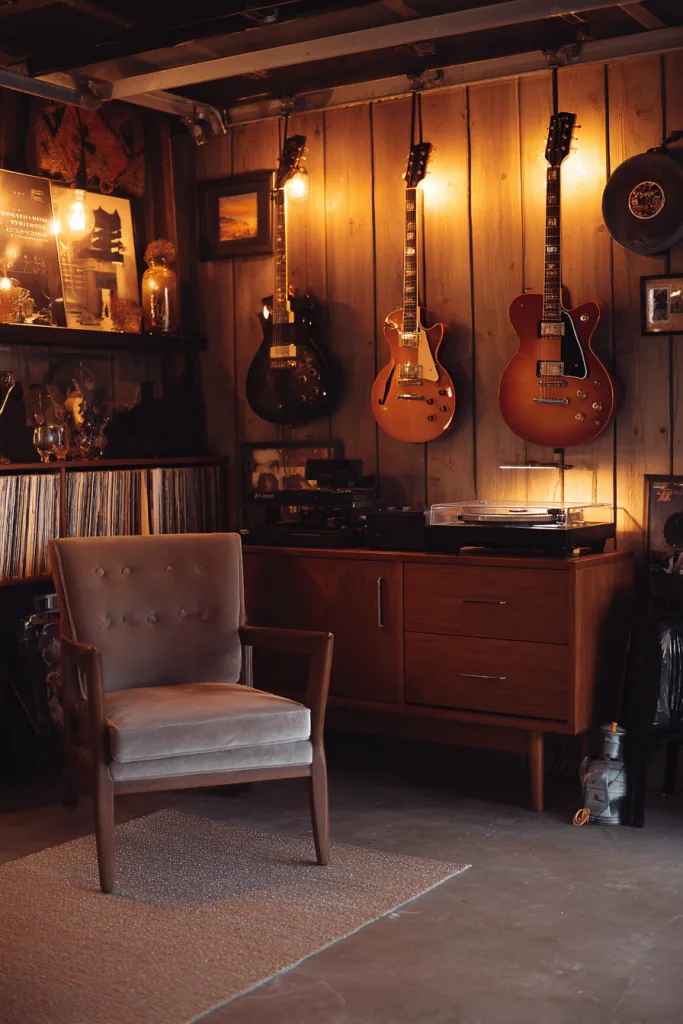
A turntable needs a level, vibration-free surface — a solid credenza or media stand works better than a lightweight stand that transmits footfall and bass into the needle. Pair it with a Bluetooth or Wi-Fi speaker system if streaming matters more than the vinyl itself; either way, keep the setup off the bare concrete floor, since cold, hard surfaces do the sound quality no favors.
If the corner backs onto a shared wall with the rest of the house, a few acoustic foam panels or a thick rug underfoot will take the edge off sound bouncing around bare concrete and drywall — a fully treated room isn’t necessary for a casual listening corner, but garages are naturally more echoey than carpeted rooms, and a little absorption goes a long way. Add a shelf or crate for records or CDs within reach of the seating, and a single warm-toned lamp does more for the mood than the garage’s main overhead light.
7. Add a Mini Library

Floating shelves need roughly 8-10 inches of depth to hold most paperbacks and magazines front-facing, though hardcovers and larger books may need closer to 12. Mount into studs if the shelf run is long or the collection is dense — a shelf loaded floor-to-ceiling with books weighs far more than an empty shelf suggests, more than drywall anchors alone reliably hold over time.
An uninsulated garage is hard on paper: humidity swings and temperature extremes will warp pages and fade covers faster than a climate-controlled room would. If the garage isn’t insulated, keep valuable or hardcover books in closed, weather-resistant bins rather than open shelving, and save the open shelf display for paperbacks and comics you don’t mind replacing eventually. A single reading lamp nearby turns the shelf into a usable nook rather than just storage.
8. Create a Reading Nook
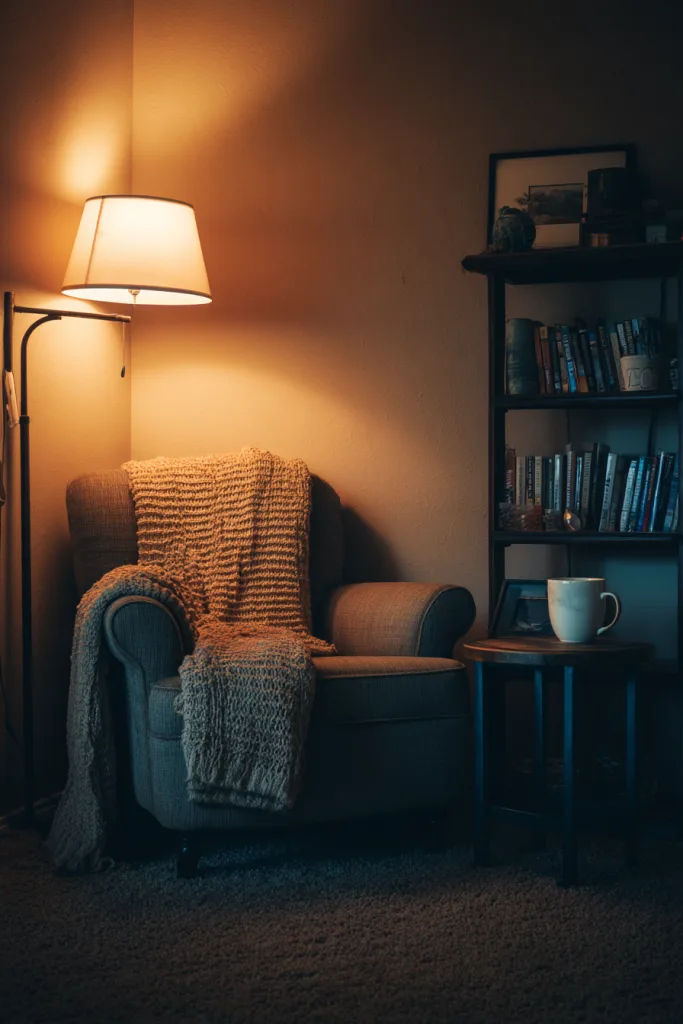
Pick a corner away from the main seating and game areas — proximity to noise is the main reason a “reading nook” ends up unused. A single armchair with real lumbar support does more for comfort than a padded folding chair, and a small side table within arm’s reach for a drink and a lamp keeps you from having to get up mid-chapter.
A rug underfoot, even a modest remnant, does two jobs at once: it visually separates the nook from the rest of the garage, and it takes the chill off a slab floor that runs several degrees colder than the rest of the house for most of the year. Adjustable-brightness lighting matters more here than anywhere else in the garage — reading calls for more direct, even light than the ambient lighting the rest of the space needs.
9. Set Up a Crafting Station
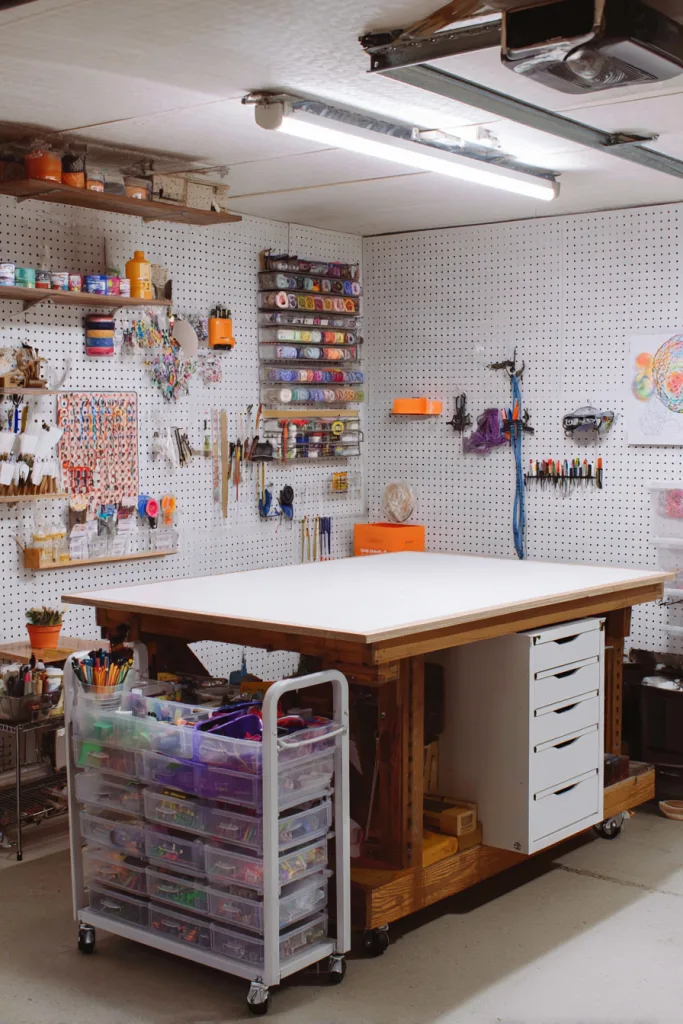
A pegboard mounted above the work surface is one of the most efficient ways to store hand tools and supplies in a garage — standard pegboard uses 1-inch hole spacing, which fits most off-the-shelf hooks and bins without custom drilling. Mount it a few inches off the wall (furring strips work) so hooks have room to seat properly.
Task lighting matters more here than in almost any other garage zone — a single overhead fixture leaves shadows exactly where your hands are working. A clamp-on or under-shelf LED light aimed at the work surface solves this cheaply. Stick to a work surface that can take glue, paint, and the occasional cut — an old solid-core door on sawhorses is a common, inexpensive stand-in for a dedicated craft table — and drawer units or labeled bins nearby keep small supplies from disappearing into general garage clutter.
10. Incorporate a Multi-Functional Workbench
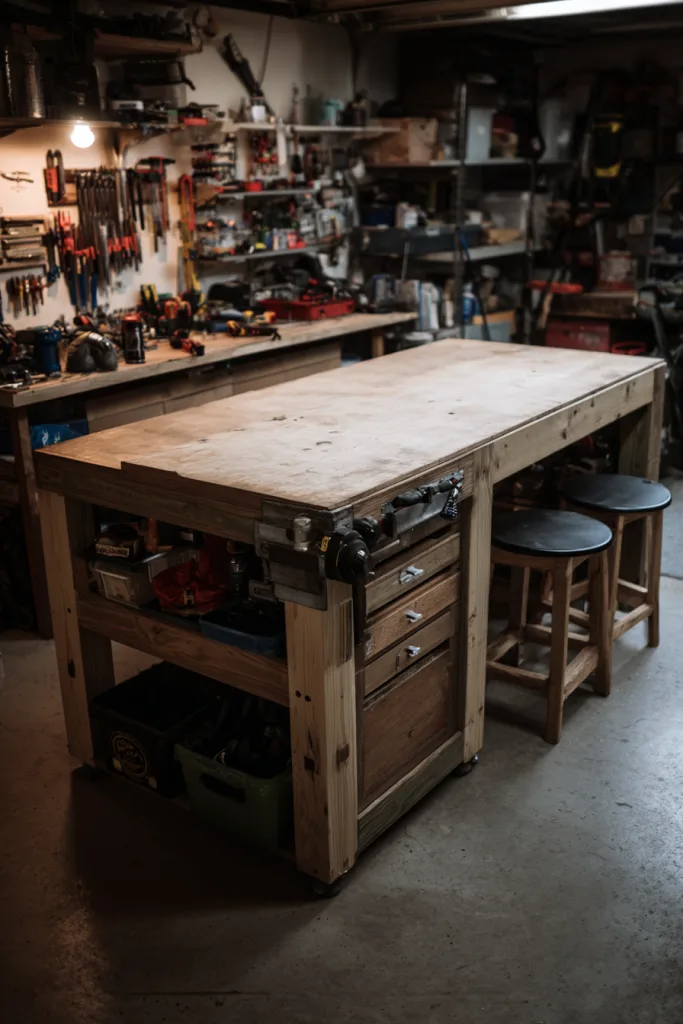
Standard workbench height runs 34-36 inches, close to kitchen counter height, which is comfortable for both standing work and as a casual eating or gathering surface. Look for a bench with a solid hardwood or heavy plywood top — MDF and particleboard tops don’t hold up as well to clamping, sanding, or the occasional dropped tool.
Built-in drawers or a lower shelf keep hand tools contained instead of loose on the surface, and a bench-mounted vise is worth adding if woodworking or repairs are a regular use case — just confirm the top is thick enough (at least 1.5 inches of solid material) to anchor one without flexing. Stools that tuck fully underneath when not in use are what actually make a workbench double as a gathering spot, rather than permanently blocking floor space.
11. Experiment with Lighting

The single bulb built into most garage door openers is bright enough to see the door track, not to make a hangout space feel finished. Overhead LED shop lights or flush-mount fixtures are the fix, and the color temperature you pick matters as much as the brightness: 4000-5000K reads bright and utilitarian, closer to a workshop, while 2700-3000K (the same warm-white range used in most living rooms) makes the same square footage feel more like a room you’d relax in.
Layering matters too — one bright overhead fixture flattens a room the same way it does in any other space. Add a floor or table lamp in the seating area, string lights or a strand of Edison bulbs for ambiance, and a dimmer switch on the main fixture if the electrical setup allows it, so the space can shift between task lighting and movie-night lighting without swapping bulbs.
12. Enhance with a Mini Gym
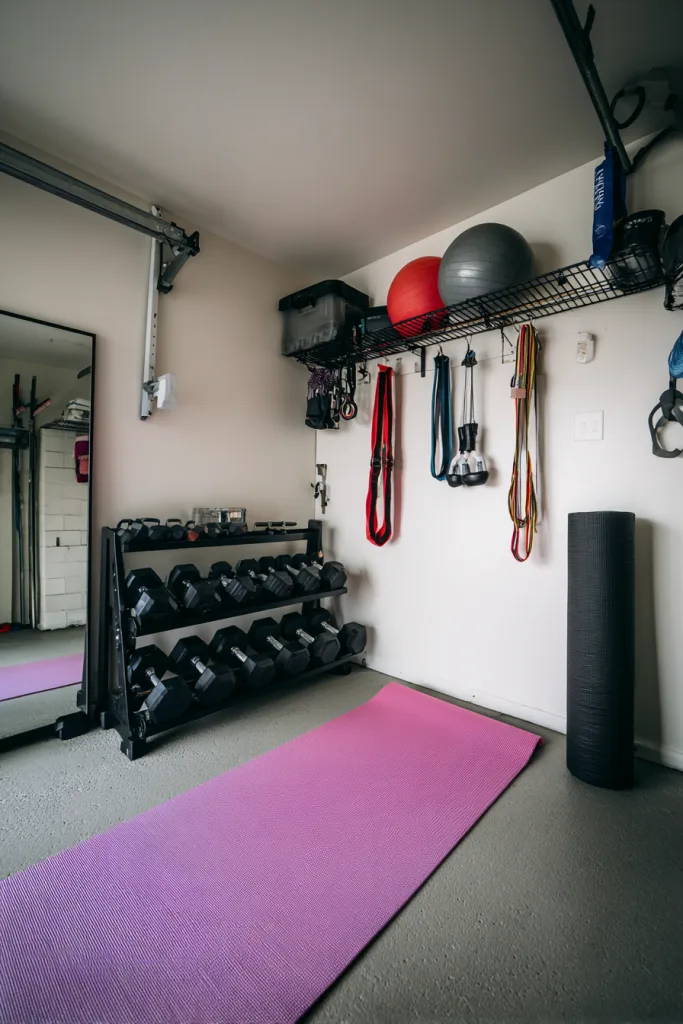
A garage fitness corner doesn’t need commercial equipment to be functional — a yoga mat, a set of resistance bands, and a set of adjustable dumbbells that cover a range of weights in one compact unit cover a wide range of strength and mobility work in a footprint of a few square feet.
A doorway pull-up bar is a common add-on, but check its weight rating against your own before mounting it, and prefer a bar that clamps into the door frame’s structural studs over one that relies on pressure-fit alone against drywall trim. A wall-mounted mirror helps with form on lifts and stretches, and — same as the music corner — a bare concrete floor gets cold and hard on joints fast, so a rubber or foam mat underfoot is worth the modest cost for anything involving jumping or floor work.
13. Include a Snack Station
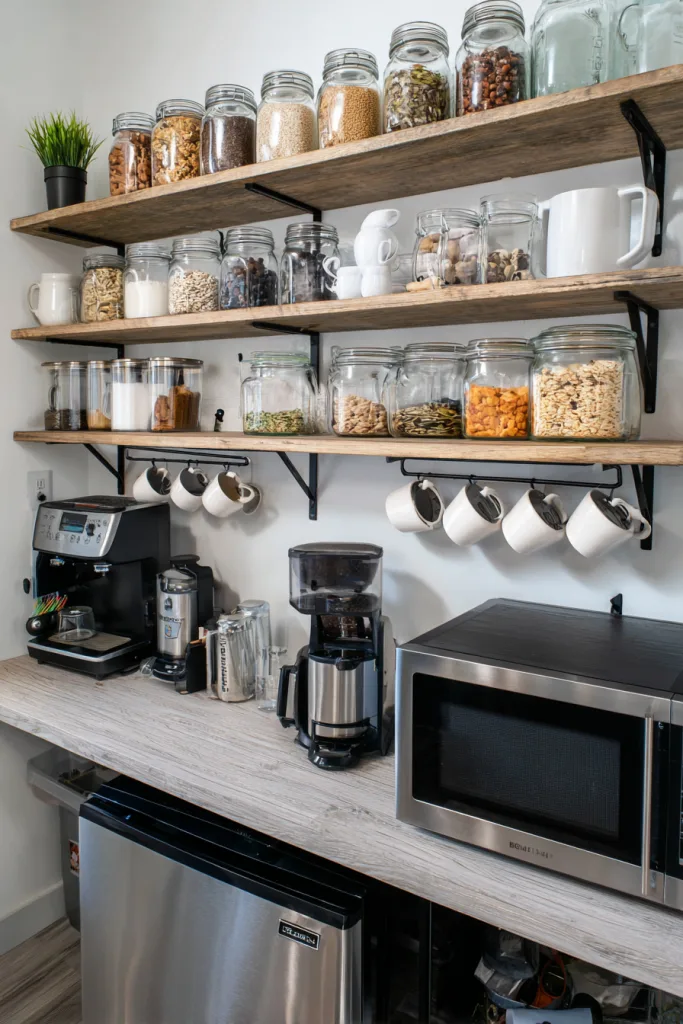
A compact fridge in the 1.7-4.5 cubic foot range, the same class as the bar-area option above, handles drinks and perishables without eating much floor space. Floating shelves or a small bookcase keep snacks visible and grabbable — clear jars or bins do more for this than closed cabinets, since people are more likely to reach for something they can see.
A countertop microwave covers reheating and popcorn duty without running a line back to the kitchen, and a small trash bin nearby is what actually keeps a snack station from generating clutter across the rest of the garage. If the space gets regular use, a coffee maker or electric kettle rounds it out — the goal is cutting the number of trips back into the house, not replacing the kitchen entirely.
Conclusion
None of these ideas require doing the whole garage at once. Flooring, lighting, and one or two functional zones — seating plus a bar, or a workbench plus a mini gym — go a long way before you’ve touched every idea on this list.
The two changes that affect comfort the most, regardless of which zones you build, are insulation and lighting. An uninsulated garage tracks the outdoor temperature closely, and a warmer color temperature of light does more to make the space feel like a room than any single piece of furniture. Start there, then build out the specific zones that match how you’ll actually use the space.
FAQ Section
How much does it typically cost to transform a garage into a hangout space?
A basic build-out using repurposed furniture, floating shelves, and a lighting upgrade typically lands in the $500-$1,500 range. Adding insulation, a dedicated entertainment setup, or new furniture throughout pushes the range closer to $3,000-$7,000. Flooring and insulation are usually the biggest line items, so it’s worth pricing those first before budgeting for furniture.
Do I need to insulate my garage for it to work as a hangout space?
Not always — in a mild climate, or if the space only gets used seasonally, you can skip it. For year-round use, though, an uninsulated garage will track the outdoor temperature closely, since the slab, framing, and usually uninsulated garage door offer little buffer. Batt insulation in the stud bays combined with an insulated garage door makes the biggest difference for the cost; portable heaters and fans are a cheaper stopgap if a full insulation job isn’t in the budget yet.
What’s the best flooring option for a garage hangout space?
It depends on budget and how much wear the floor needs to handle. DIY epoxy coating kits run about $3-7 per square foot and hold up well to furniture and foot traffic; professional epoxy installation runs $7-12 per square foot but handles surface prep and adds more durability. Interlocking rubber or PVC tiles install without cure time and forgive a slightly damp or uneven slab better than epoxy does. Paint is the cheapest option but wears fastest under regular use — a reasonable choice if you’re not ready to commit to a bigger flooring investment yet.
Do I need ventilation in a garage hangout space?
If the space will be used for anything that produces fumes — painting, engine work, refinishing furniture — yes. A single garage door left open isn’t reliable ventilation on its own; a vented exhaust fan, or opening both the garage door and a side door or window to create cross-flow, works better. For a hangout space used purely for seating, games, or media, standard airflow from opening the garage door periodically is generally enough.