
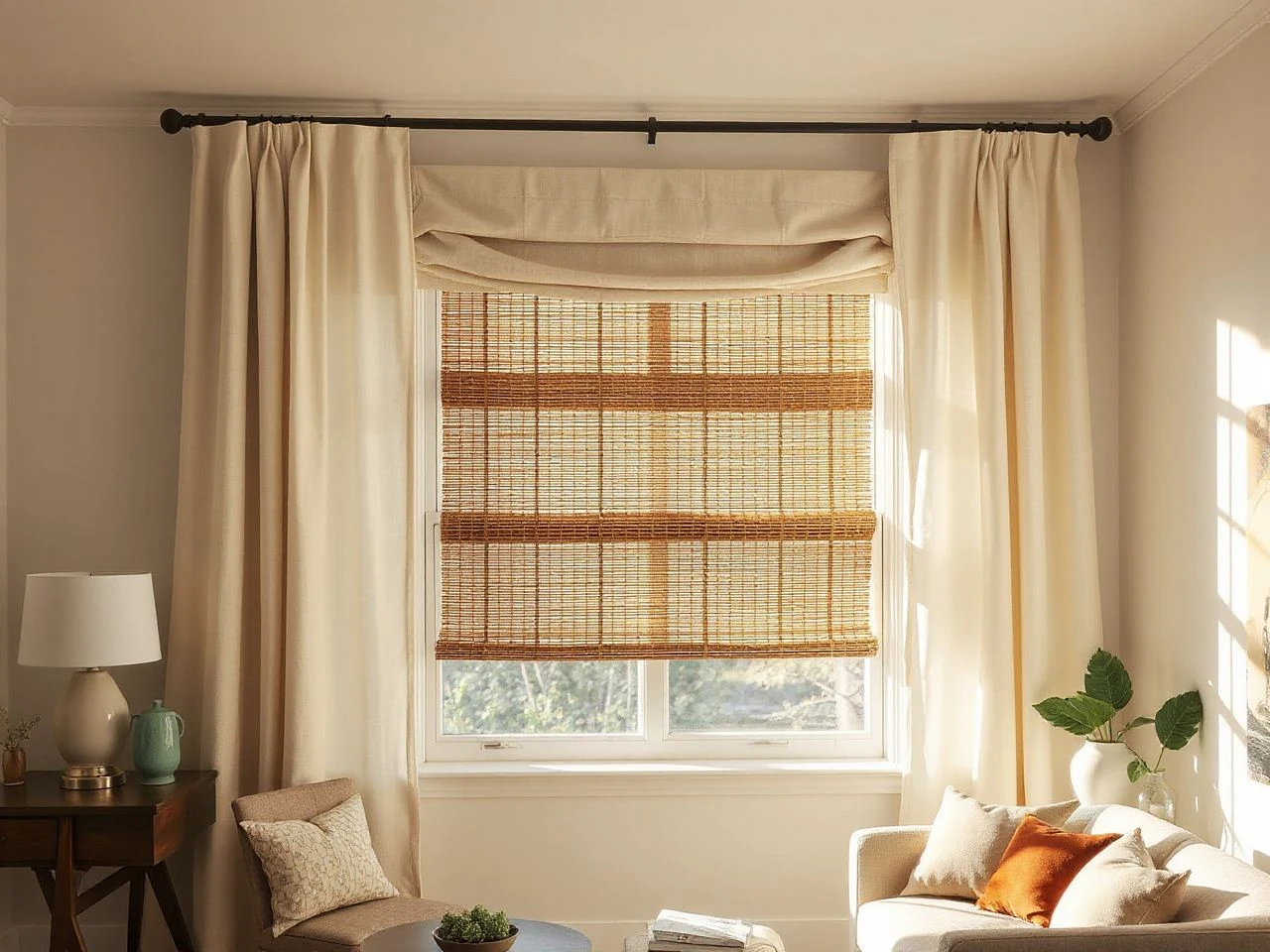
Could the prettiest window covering in a room be the wrong choice for the way that window works? Useful window treatment ideas distinguish between visual softness, light control, privacy, insulation, and access to the window rather than treating every covering as interchangeable. The strongest guidance matches the treatment to the window’s operation, room conditions, mounting constraints, and daily maintenance before considering style. As Daniel Brooks, a renter-first Home Decor and Interiors Editor, I judge every suggestion by one practical question: can it come off the wall cleanly?
That question changes the order of decisions. Start with the window, not a photograph. If you are planning a living area, the living room window treatment guide can help you connect privacy planning with furniture placement without overlooking the installation surface.
Key Takeaways
- Match the treatment to light, privacy, window operation, room moisture, and mounting limits.
- Use layers carefully: curtains, shades, or blinds need clearance so they do not interfere with handles or one another.
- Choose cordless or inaccessible operating systems around children and pets, and favour coverings you can clean without removing hardware.
Window Treatment Ideas Start With the Window
A window covering has a job before it has a look. Curtains and drapery panels add softness and can frame a broad opening. Roman shades bring fabric close to the glass. Roller shades keep the visual line quiet, while wood blinds, bamboo shades, plantation shutters, and window film solve different combinations of light and privacy needs.
A treatment must be compatible with the window operation, trim, handles, nearby walls, and available mounting surface. This is especially important in a rental, where a deep hole or damaged trim can create an avoidable repair problem.
Step 1: Identify how the window operates
Open and close the window before choosing a treatment. Check whether the sash swings, slides, tilts, or needs clear access to a handle. A shade that sits directly against the glass may obstruct movement, while a curtain may gather into the path of a door or casement window.
Note the trim and the wall around it. A narrow section beside the window may not accept a curtain rod without crowding the frame. A shallow recess may suit a close-fitting shade but leave no room for a layered arrangement.
- Mark the part of the window that needs to remain reachable.
- Check whether the sill projects into the room.
- Look for vents, radiators, shelving, artwork, and furniture that could block the treatment.
- Inspect the mounting surface before planning a removable installation.
Window operation determines whether a treatment remains useful after installation. A beautiful covering that blocks a handle will be adjusted poorly or left open.
Step 2: Decide what the room needs from daylight
Light control is more precise when you name the problem. A bedroom may need darkness for sleep. A television room may need reduced glare. A kitchen may need useful daylight without a treatment sitting where splashes and steam reach it.
Blackout curtains and blackout linings reduce incoming light, but they may not remove edge gaps, reflected light, or heat transfer through the glass. Sheer curtains soften daylight and support privacy during brighter conditions, though they do not provide the same privacy after the room becomes brighter than the exterior.
Darker fabric shades with larger openness factors are associated with increased view clarity. That may suit a room where looking outside matters, but the fabric choice should still be judged against privacy needs and the direction of glare.
Natural light changes the feeling of a room, while glare control changes how comfortably people use it. A living room may work well with a translucent layer during the day and a fuller curtain for evening privacy. A bedroom may need a more complete light-blocking layer, especially around the edges.
Step 3: Plan privacy by sightline
Privacy is not one setting. A window facing a footpath needs a different response from a high window that mainly admits sky light. Walk through the room at the times it is used and check what a person outside could see through the glass.
- Use sheer curtains when daylight and a softened view matter more than full privacy.
- Use a shade or blind when you need to adjust the visible area rather than cover the entire window.
- Use curtains over another treatment when evening privacy and a softer room feel must coexist.
- Consider window film where the glass needs a less fabric-heavy treatment, while checking whether the result suits the rental agreement.
A privacy treatment should preserve the room’s useful light rather than forcing the covering to remain closed all day. That is why adjustable layers often feel more comfortable than a single all-or-nothing panel.
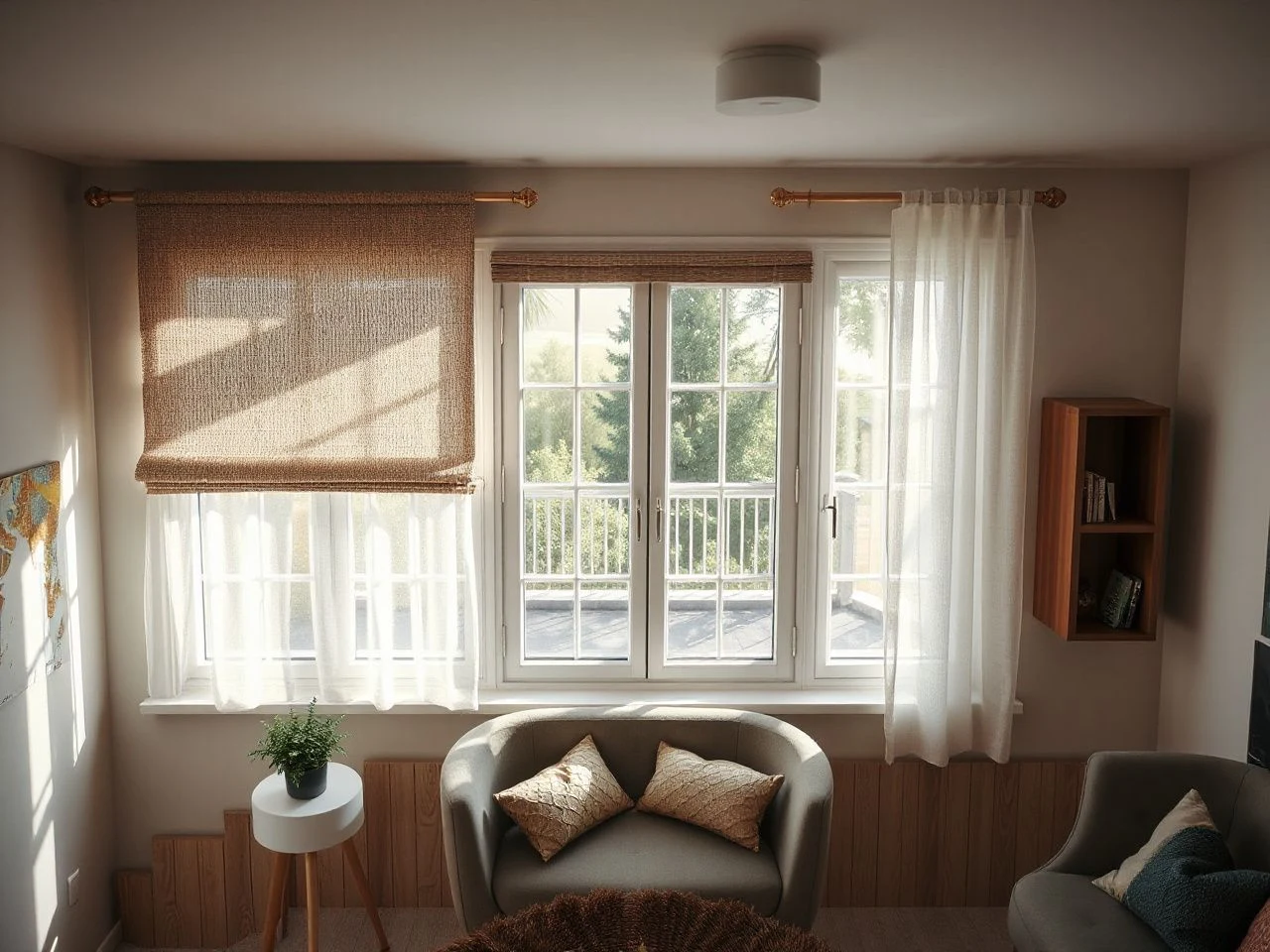
Beginner Window Treatment Ideas by Room
Room conditions should narrow the field. A living room often benefits from softness and flexible light control. A bedroom needs careful attention to darkness and privacy. Kitchens and bathrooms demand a realistic plan for moisture and cleaning.
Living rooms: soften the glass without losing access
Curtains and drapery panels can make a large opening feel finished, particularly when the room needs fabric texture or a stronger connection with its interior design style. Keep the treatment clear of handles and plan where the fabric will rest when open. A panel that stacks over a neighbouring wall may crowd shelving or artwork.
Roman shades create a tailored appearance and keep fabric nearer to the frame. Roller shades make a quieter backdrop when the room already contains patterned upholstery or artwork. Wood blinds can introduce a structured horizontal line, while bamboo shades bring visible texture to a room built around natural materials.
Complementary patterns need restraint. If the window covering has a strong pattern, keep nearby textiles calmer so the window remains part of the composition rather than competing with every other surface.
Rental-friendly installation matters in a living room because the window is often a visual focal point. I would first consider a method that uses existing hardware or a small number of removable attachment points, then check how the treatment will be supported before committing to a heavy arrangement.
Bedrooms: support sleep, privacy, and quiet visual order
Bedroom window treatment ideas should begin with the sleep setting rather than colour. Blackout curtains can reduce incoming light, but the fabric alone may leave brightness at the sides or above the window. A shade beneath the curtain can create a more controlled visual barrier, provided the two layers have enough clearance.
A bedroom treatment also needs easy daily operation. If the covering is awkward to reach, it may stay in one position and fail its purpose. Cordless or inaccessible operating systems deserve priority around children and pets because corded window treatments can create a strangulation hazard.
Keep fabric away from damp areas and provide enough clearance for air movement around the glass. Fabric treatments in moisture-prone rooms need ventilation and enough separation from wet surfaces to reduce mildew risk.
Bedroom window treatments should support darkness without making the room feel permanently closed. A sheer layer for daytime and a fuller layer for evening gives the room more than one setting.
Kitchens and bathrooms: make moisture part of the design
Moisture-prone rooms require materials and construction that tolerate humidity. Fabric treatments need enough clearance and ventilation to reduce mildew risk, and a treatment close to a sink or shower should be easy to inspect and clean.
Roller shades and blinds can keep the window line simple, but the real test is access. Can you wipe the sill, clean the glass, and operate the window without removing the covering? A complicated layer can turn ordinary maintenance into a reason to leave the window neglected.
Kitchen window treatments should also respect cooking activity. Keep fabric away from splashes, steam, and areas where it could catch on handles. In a bathroom, avoid a layout that traps dampness against the glass or wall.
Window film may suit a bathroom or overlooked kitchen window where privacy is the main concern. Check the rental agreement first, and do not treat film as a substitute for ventilation or regular cleaning.
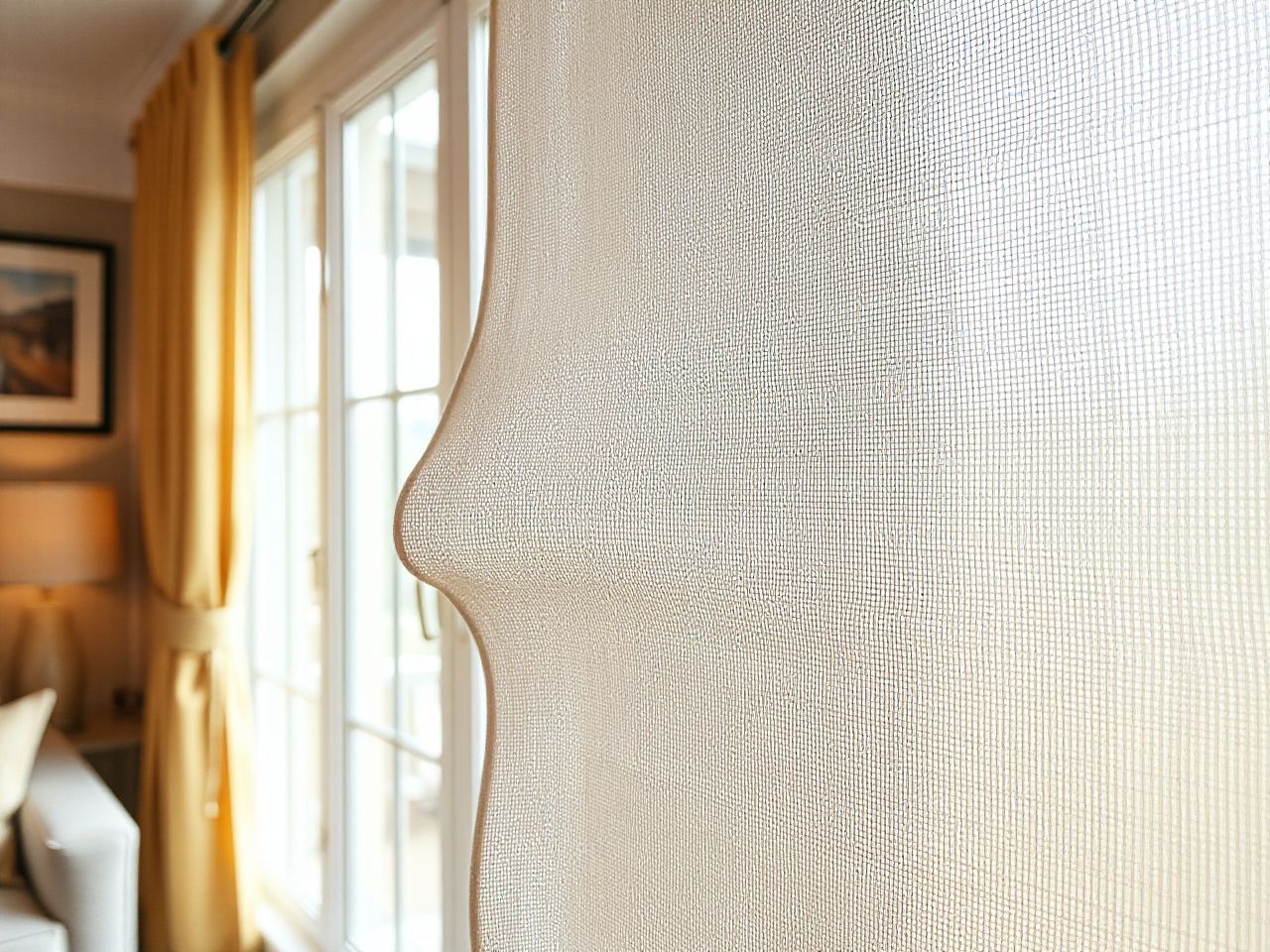
Intermediate Planning: Match the Treatment to Shape and Scale
Oddly shaped, very wide, and unusually tall windows expose weak planning quickly. The treatment has to follow the geometry without making the room feel accidental.
Very wide windows
Wide windows need a treatment that remains manageable during daily use. Several drapery panels can preserve access across the opening, while a continuous shade may create a clean line if the mounting surface and operation support it.
Divide the visual mass thoughtfully. The centre of a wide window should not be blocked by a fixed piece of furniture, and the open panels should have somewhere to rest. A curtain rod or track must also remain aligned with the wall rather than appearing to sag toward the middle.
A very wide window needs a support plan before a style plan. If the treatment cannot be opened comfortably, the room will lose daylight and the window will become harder to clean.
Unusually tall windows
Tall windows can make a room feel generous, but a treatment that stops awkwardly may emphasise the wrong proportion. Curtains can reinforce height, while a shade closer to the glass can keep the arrangement visually controlled.
Check the full travel of the window before selecting a fixed layer. A treatment should not collide with a high handle, door swing, ceiling fixture, or nearby wall. In a rental, avoid assuming that the strongest-looking mounting point is safe for the wall or trim.
Bay windows, corner windows, and unusual angles
Corner and bay windows need attention to the meeting points. Separate shades can preserve each window’s operation, while a curtain track may create a softer continuous frame if there is enough clearance around the corners.
Odd shapes often suit treatments that follow each pane rather than forcing one covering across the entire opening. Plantation shutters can give a built-in appearance, but they require careful compatibility with trim, handles, and the available mounting surface.
Why curtains sag, look uneven, or miss the window
Uneven curtains usually point to a planning or support problem rather than a decoration problem. The rod may not sit level, the panels may not be arranged evenly, or the treatment may be too narrow for the opening.
- Check the rod or track from across the room before adjusting the fabric.
- Confirm that each panel reaches the same visual height.
- Look for a handle, sill, or wall return pushing one side outward.
- Open and close the panels to see whether they travel equally.
- Inspect whether the chosen treatment actually covers the window when closed.
Fabric can also appear uneven when the floor, sill, or ceiling line is not visually level. Follow the strongest reference in the room and let the treatment operate freely rather than forcing every edge into a rigid alignment.
Advanced Layering and Rental-Safe Installation
Layering curtains with shades or blinds can improve light and privacy control, but it also requires enough clearance to prevent interference and an overcrowded appearance. The two treatments should have separate jobs. A shade can manage the glass during the day, while curtains provide softness and a fuller privacy setting in the evening.
Build layers with a clear order
Start with the treatment closest to the glass. Check its handle clearance, operating path, and cleaning access. Add the outer layer only after confirming that the first layer can move without catching.
- Use a sheer curtain to soften daylight.
- Use a roller shade or blind to adjust privacy and glare.
- Use a fuller curtain when the room needs a stronger evening screen.
Those layers should not all compete for attention. Keep the colours related, repeat one texture elsewhere in the room, and leave enough wall around the window for the arrangement to breathe.
Layering fails when every component is treated as equally bulky. A close-fitting shade paired with a simple curtain usually reads more clearly than several deep treatments stacked into a narrow recess.
Prioritise clean removal
Renters need to consider the exit as carefully as the installation. Avoid any method that depends on uncertain wall strength, blocks a window latch, or leaves a large mark when removed. Read the instructions for the chosen mounting system and test a small, hidden area when the manufacturer permits it.
Do not attach a treatment to painted trim simply because the position looks convenient. Paint can lift, trim can split, and a narrow surface may not support the movement of a curtain or blind.
A removable installation still needs a stable operating path. If a treatment shifts, rubs against the wall, or pulls at its attachment points, stop and reassess rather than adding more force.
Safety around children and pets
Corded window treatments can create a strangulation hazard for children and pets, so cordless or inaccessible operating systems should be addressed before colour or fabric. The U.S. Consumer Product Safety Commission provides consumer safety information that can guide a household review of window-covering cords.
Keep operating parts away from places where a child or pet could become entangled, and think about furniture placement as part of the safety plan. A chair, bed, or pet perch can change access to a cord or control.
For broader information about voluntary technical standards that may apply to consumer products, consult ASTM International. Check the actual instructions and safety information supplied with the treatment rather than assuming that a familiar appearance means the operating system is safe.
Maintenance: Choose a Treatment You Can Live With
The easiest treatment to live with is the one you can operate, inspect, and clean without resentment. Maintenance begins with the room conditions. Kitchens collect airborne residue, bathrooms hold moisture, and bedrooms collect dust from textiles and bedding.
Cleaning curtains and drapery panels
Follow the care instructions attached to the fabric. Remove dust regularly with a suitable soft brush or vacuum attachment if the care information allows it, and inspect the top edge, hem, and folds for dust accumulation.
Do not leave damp fabric compressed against a wall or glass. Air circulation matters in rooms where condensation is common. If a panel develops a persistent musty smell or visible mildew, stop treating the issue as ordinary dust and follow appropriate cleaning guidance for that fabric.
Cleaning shades and blinds
Dust shades and blinds gently, supporting the slats or fabric so the treatment does not flex unnecessarily. Avoid saturating materials unless the care instructions specifically allow it.
Wood blinds, bamboo shades, and fabric Roman shades should not be assumed to tolerate the same cleaning method. Read the care label and inspect an inconspicuous area before using any cleaner.
Cleaning shutters and window film
Plantation shutters need attention at the louvres, hinges, and frame. Keep the operating path clear, and use only the cleaning method allowed for the material and finish.
Window film needs a clean, accessible surface around its edges so you can inspect whether it is lifting or collecting residue. Do not scrape at the film with a sharp object, and check the installation guidance before using a cleaner.
Keep the window accessible
A window treatment should not make basic glass cleaning impossible. If a layer must be removed for every inspection, the design may be too complicated for the room.
Schedule maintenance around visible signs rather than an invented timetable. Dust, sticking movement, damp fabric, uneven travel, and blocked handles are all reasons to intervene.
Maintenance is part of the design decision because a treatment that cannot be cleaned will eventually look less intentional. I would choose a simpler, accessible arrangement over a dramatic layer that requires dismantling the window every time it needs attention.
Preventive Checks Before You Commit
Check proportion from several positions
View the treatment from the room entrance, the seating area, and the side of the window. A covering can appear balanced straight on yet look crowded from the sofa or interfere with a walkway.
Use the room’s existing lines as guides. Furniture placement, shelving, artwork, and ceiling height all affect whether the window treatment appears calm or forced. A complementary pattern should relate to the room without copying every nearby textile.
Check glare, privacy, and evening light
Observe the room at the time it will be used. A window may feel pleasant in the morning but send glare across a screen later. A sheer layer may preserve daylight yet reveal silhouettes after interior lights are switched on.
Blackout fabric can reduce incoming light without sealing every edge. If darkness matters, inspect the perimeter and consider how reflected light and heat transfer through the glass will affect the room.
Check access and removal
Open the window fully, operate the treatment, and reach the sill. Then consider how the arrangement will come down when the lease ends. The cleanest rental solution is not always the smallest treatment; it is the one that fulfils its job without demanding permanent alteration.
Before installation, record the condition of the wall and trim. After removal, follow the mounting instructions for taking away adhesive, brackets, or other hardware. Never pull forcefully at a surface that begins to lift.
Check whether the room needs one treatment or two
One treatment is often clearer when the privacy and light requirements are modest. Two layers make sense when the room must shift between daylight, glare control, and evening privacy.
Layer only when each piece has a distinct purpose. A shade and curtain that perform the same job can make the window look heavy and reduce access without adding useful control.
For adjacent storage planning, the guide to small walk-in closet organization ideas shows how careful clearances can keep a compact space usable; the same principle applies around a window.
Frequently Asked Questions
How do I choose a window treatment for the amount of light in a room?
Start by naming the light problem: glare, excessive brightness, unwanted evening visibility, or a need for softer daylight. Sheer curtains filter the visual effect of daylight, while blackout curtains and linings reduce incoming light. Check the edges, because blackout fabric may still allow light through gaps. A shade, blind, or layered curtain can give you more than one setting.
Which window treatment ideas give privacy without making a room dark?
Use an adjustable layer rather than a permanently closed covering. Sheer curtains can soften the view while retaining daylight, and a shade or blind can be adjusted as the sightline changes. Privacy depends on the difference between indoor and outdoor brightness, so check the room after interior lights come on. Window film may also suit a glass area where fabric would feel heavy.
What works best for unusually wide or tall windows?
Choose a layout that preserves operation and gives each section a manageable path. Wide windows may suit several drapery panels or separate shades, while tall windows can use curtains for a strong vertical frame or a close-fitting shade for a quieter line. Inspect handles, trim, nearby walls, and furniture before deciding. The treatment should cover the glass without blocking access.
How can I make window treatments safe around children and pets?
Address operating cords before style. Corded window treatments can create a strangulation hazard, so use cordless or inaccessible operating systems where possible and keep furniture from creating an easy route to controls. Review the safety information supplied with the treatment and consult the U.S. Consumer Product Safety Commission for household guidance. A safe arrangement also leaves the window and surrounding floor clear of entangling clutter.
The most successful window treatment plan is specific to the room, the glass, and the person who must live with it. Curtains, shades, blinds, shutters, and film all have a place, but none should be selected before the window’s operation, light, privacy, moisture, maintenance, and mounting limits are clear. In a rental, clean removal is part of good design—not an afterthought.