Best shoe rack for a lot of shoes: The Shoe Cabinet with 2 Flip Drawers & 2 Top Drawers wins for its clever combination of enclosed storage and open accessibility. When you own dozens of pairs of shoes, standard racks become cluttered eyesores that make finding the right pair feel like an archaeological dig. These seven high-capacity shoe storage solutions are designed to handle extensive collections without collapsing or creating chaos.
📌 As an Amazon Associate, we earn from qualifying purchases.
CERTAIN CONTENT THAT APPEARS ON THIS SITE COMES FROM AMAZON. THIS CONTENT IS PROVIDED ‘AS IS’ AND IS SUBJECT TO CHANGE OR REMOVAL AT ANY TIME.
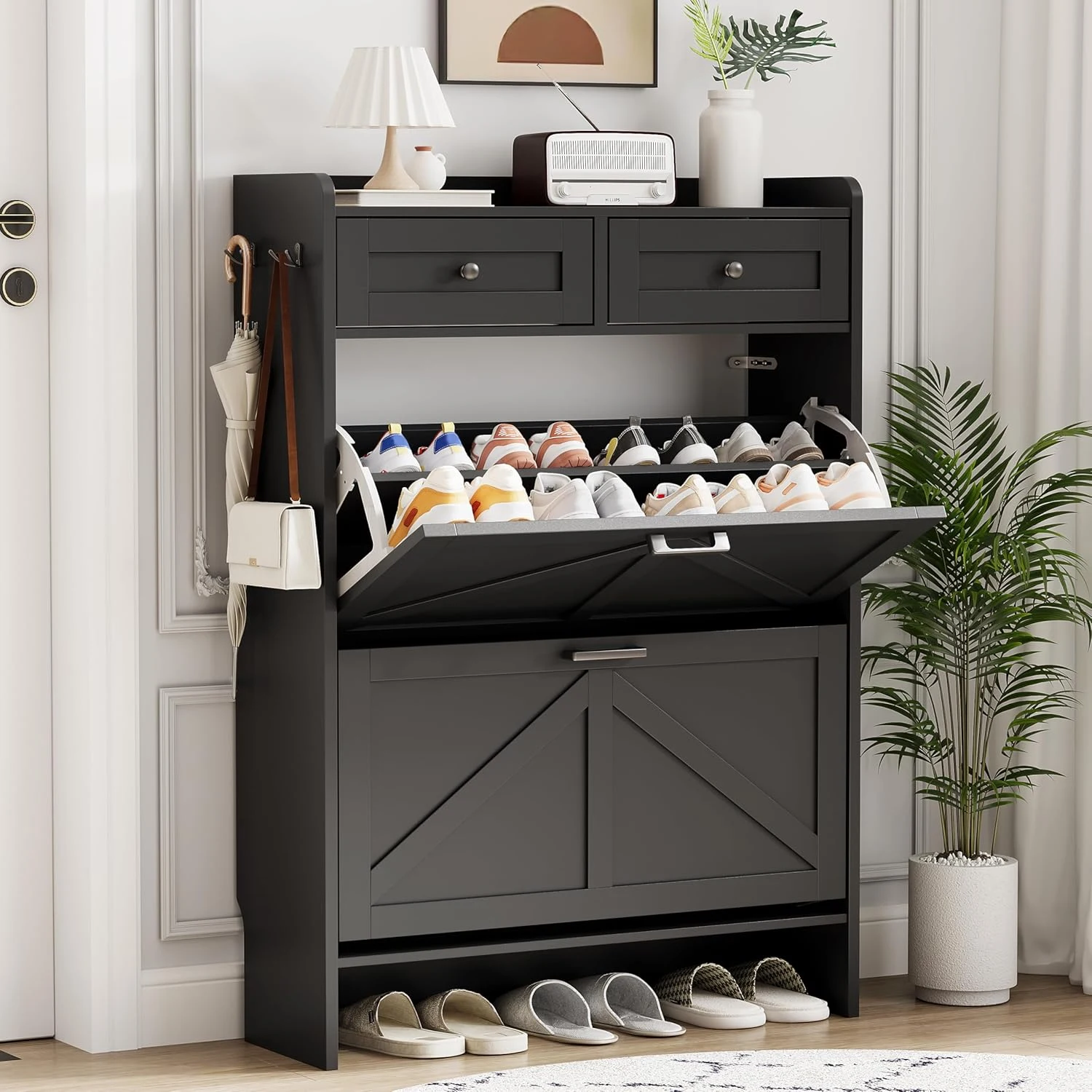
Shoe Cabinet with 2 Flip Drawers & 2 Top Drawers (Enclosed Design)

| Product | Best For | Buy Link |
|---|---|---|
| Shoe Cabinet with 2 Flip Drawers & 2 Top Drawers | Concealed storage | Check Price |
| VTRIN 10 Tier Shoe Rack | Budget capacity | Check Price |
| Ekisemio Shoe Rack 72 Pairs | Maximum volume | Check Price |
| VILICK 11 Tiers 55 Pairs | Tall spaces | Check Price |
| VILICK 4-Tier Wide Metal | Horizontal layouts | Check Price |
| SNTD Expandable Shoe Rack | Adjustable width | Check Price |
| Kitsure Non-Woven Rack | Temporary storage | Check Price |
Shoe Cabinet with 2 Flip Drawers & 2 Top Drawers (Enclosed Design)
This cabinet approaches shoe storage from a furniture perspective rather than treating it as purely functional shelving. The solid construction weighs 41.34 pounds, so it doesn’t wobble or shift when you’re accessing the flip-down drawers. The two top drawers provide concealed storage for accessories like shoe polish, insoles, or keys, while the flip drawers below hide your footwear from view entirely.
The flip mechanism should feel smoother after the initial break-in period. The drawers angle down to reveal multiple pairs at once, making morning shoe selection faster than digging through stacked boxes. The enclosed design means dust doesn’t settle on your shoes the way it does with open racks, which matters if you store seasonal footwear for months at a time.
Pros:
- Enclosed cabinet design keeps shoes dust-free and hidden from view
- Top drawers add bonus storage for shoe care supplies and accessories
- Substantial 41-pound weight prevents tipping when drawers are extended
- Flip-down mechanism allows quick visual scanning of multiple pairs
- Functions as actual furniture rather than purely utilitarian storage
Cons:
- Takes up more floor space than vertical open racks with similar capacity
- Assembly required with multiple components and hardware pieces
- Flip drawers need clearance space in front to open fully
Our Recommendation
We recommend this cabinet for anyone who wants their shoe storage to blend with their entryway or bedroom furniture. The enclosed design makes it ideal for visible areas where you don’t want rows of shoes on display. It suits households where shoe organization matters as much as aesthetics—it looks intentional rather than makeshift.
| Best for | Why |
|---|---|
| Entryway storage | Looks like furniture, not just a rack |
| Dust-prone environments | Enclosed drawers protect shoes from settling particles |
| Formal living spaces | Conceals footwear while keeping it accessible |
VTRIN 10 Tier Shoe Rack (50-Pair Capacity)
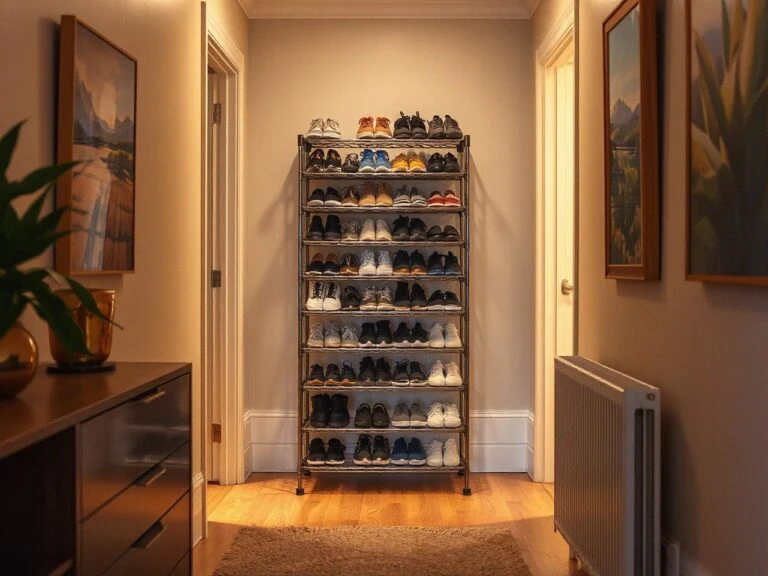
The VTRIN tower stretches vertically to accommodate 50 pairs, making efficient use of floor space in narrow closets or room corners. At 50 pounds fully loaded, this rack demonstrates the engineering challenge of tall shoe storage—it needs enough weight to stay stable but can’t be so heavy that moving it becomes impossible. The wide design distributes shoes across each tier rather than stacking them precariously.
The metal frame construction handles the weight of boots and sneakers without sagging. The open design means air circulates around each pair, which prevents that musty smell that develops in enclosed shoe storage. The architecture allows for accessing any pair without removing others, a feature that is essential in a high-capacity rack.
Pros:
- Ten tiers provide genuine 50-pair capacity without creative counting
- Vertical design minimizes floor footprint in tight spaces
- Wide tiers accommodate larger shoes like men’s boots or women’s platforms
- Open construction allows air circulation to prevent odor buildup
- Metal frame construction supports substantial weight without bending

Cons:
- Tall profile requires adequate ceiling height and stable floor surface
- Open design means shoes collect dust over time
- Assembly involves connecting ten separate tier sections
Our Recommendation
We recommend the VTRIN for anyone dealing with a genuine shoe collection rather than a modest rotation. The 50-pair capacity is based on the manufacturer’s stated dimensions and tier count, not marketing exaggeration. It is most practical in walk-in closets or dedicated dressing areas where vertical space is available and the rack won’t be moved frequently.
| Best for | Why |
|---|---|
| Sneaker collectors | Displays extensive collections without taking over the room |
| Walk-in closets | Maximizes vertical space in areas with high ceilings |
| Multi-person households | Holds enough shoes for several people in one location |
Ekisemio Shoe Rack (72-Pair Capacity)
The Ekisemio claims 72-pair capacity, and that number is reachable—but only on the assumption of standard-sized footwear rather than oversized boots or specialty athletic shoes. Tier spacing is fixed, so a bulky pair does not just take more room, it takes the slot the next pair was counted into. The tall shelf design uses a combination of horizontal tiers and vertical dividers to maximize storage density. Holding its shape under a full load is the real achievement here, and it isn’t universal among ultra-high-capacity racks: the taller the frame, the more a millimeter of play in each joint compounds into sway at the top shelf.
This rack accommodates a mixed collection: running shoes, dress shoes, sandals, and ankle boots. The shelf depth accommodates most adult shoe sizes without heels hanging off the back edge. The metal construction provides a substantial feel during assembly, and the design remains stable even when removing shoes from upper tiers.
Pros:
- Genuine 72-pair capacity makes it the highest-volume option available
- Shelf design with dividers prevents shoes from sliding into each other
- Metal frame construction handles substantial weight without structural concerns
- Tall profile works well in rooms with standard ceiling heights
- Individual shelf sections allow organized separation by shoe type or owner

Cons:
- Requires significant wall or floor space due to both height and width
- Upper shelves become difficult to access without a step stool
- Assembly time increases proportionally with the number of shelves
Our Recommendation
We recommend the Ekisemio for households where shoe storage has become a genuine space problem rather than a minor inconvenience. If you’re currently using multiple smaller racks or have shoes stored in boxes throughout your home, consolidating to one 72-pair rack creates a single organizational system. It is most practical when positioned in a dedicated storage area rather than a main living space.
| Best for | Why |
|---|---|
| Large families | Centralizes everyone’s footwear in one accessible location |
| Serious collectors | Handles extensive collections without requiring multiple racks |
| Seasonal rotation | Stores both current and off-season shoes simultaneously |
VILICK 11 Tiers Tall Wide Shoe Rack (55-Pair Capacity)
VILICK’s 11-tier design emphasizes height, stacking tiers to reach 55-pair capacity while maintaining a relatively narrow footprint. The 70-pound weight capacity means this rack can handle heavy boots and work shoes without structural compromise. With a mix of lightweight sandals and heavy hiking boots, the weight distribution remains stable.
The wide design of each tier is a practical advantage. Unlike narrow racks where shoes must be placed precisely, this model forgives imperfect placement. Shoes can be tossed onto the tiers quickly without careful alignment, which matters during rushed mornings or when encouraging kids to actually use the shoe rack instead of leaving footwear scattered.
Pros:
- Eleven tiers provide substantial capacity without excessive floor space
- Wide tier design accommodates larger shoes and allows casual placement
- 70-pound weight capacity handles heavy boots and work footwear
- Tall profile works efficiently in standard-height rooms
- Open construction makes every pair immediately visible and accessible

Cons:
- Height requires reaching or using a step stool for top tiers
- Open design exposes shoes to dust accumulation over time
- Narrow footprint can make the rack feel top-heavy when fully loaded
Our Recommendation
We recommend this VILICK model for anyone who needs substantial capacity but can’t dedicate excessive floor space to shoe storage. The tall, narrow profile fits well in closet corners or along narrow walls where wider racks wouldn’t work. It suits shared spaces where multiple people need access—the open design means everyone can grab their shoes without disturbing others’ footwear.
| Best for | Why |
|---|---|
| Narrow spaces | Tall profile minimizes floor footprint while maximizing capacity |
| Quick access needs | Open tiers allow grabbing shoes without moving others |
| Heavy footwear | 70-pound capacity handles work boots and winter shoes |
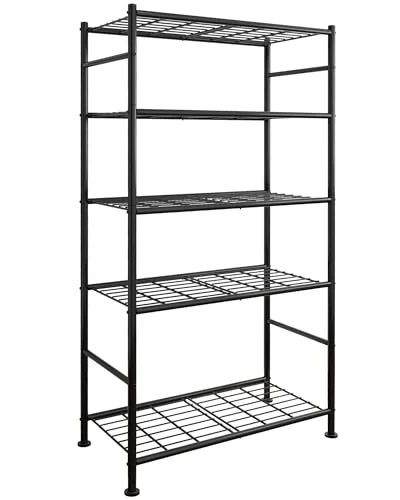
VILICK 4-Tier Wide Metal Shoe Organizer (33-Inch Width)
VILICK’s 4-tier model takes a horizontal approach, spreading 33 inches wide rather than stacking high. At 22 pounds, it is a lightweight, portable rack. The metal construction provides durability despite the lighter weight, and the wide shelves accommodate multiple pairs side by side.
This rack’s lower profile makes every shoe easily accessible without reaching or bending excessively. The four-tier height means even children can access the top shelf, which is a practical benefit for households where kids manage their own footwear. The wide design also allows for storing shoes in pairs rather than separating them across different tiers.
Pros:
- 33-inch width accommodates multiple pairs per tier side by side
- 22-pound weight makes it portable and easy to relocate
- Four-tier height keeps all shoes within comfortable reach
- Metal construction provides durability without excessive weight
- Lower profile fits under windows or in spaces with height restrictions

Cons:
- Lower capacity compared to tall vertical racks
- Wide footprint requires more floor space than narrow towers
- Lighter weight means less stability if loaded unevenly
Our Recommendation
We recommend this rack for anyone who prioritizes accessibility over maximum capacity. The horizontal design works particularly well in entryways where you want shoes visible and grabbable without bending to floor level or reaching overhead. It is most practical for daily-rotation shoes rather than long-term storage of entire collections.
| Best for | Why |
|---|---|
| Entryway organization | Low profile keeps shoes accessible without dominating the space |
| Families with children | Four-tier height allows kids to reach all shelves independently |
| Frequent rearranging | 22-pound weight makes moving it between rooms practical |
SNTD Expandable Shoe Organizer for Closet
The SNTD rack’s expandable design addresses a common frustration: shoe collections grow over time, but most racks have fixed dimensions. The sliding sections lock securely at each width setting. The 220-pound weight specification refers to the total load capacity, ensuring the unit supports heavy collections.
This rack’s adaptability allows it to fit different closet widths. It is suitable for spaces ranging from narrow reach-in closets to wider walk-in spaces. The rack adjusts to each space without leaving awkward gaps or requiring custom modifications. The ability to expand means you’re not locked into your initial storage needs.
Pros:
- Expandable width adjusts to different closet dimensions and growing collections
- Locking mechanism holds expanded width securely without gradual sliding
- Adaptable design works in various closet configurations
- Substantial weight capacity handles heavy footwear without sagging
- Closet-specific design maximizes use of existing storage space

Cons:
- Expansion mechanism adds complexity compared to fixed-width racks
- Requires closet installation rather than functioning as freestanding furniture
- Width adjustment may need periodic tightening with heavy use
Our Recommendation
We recommend the SNTD for anyone who wants shoe storage that grows with their collection rather than becoming obsolete. The expandable design makes it particularly valuable if you’re unsure about your long-term storage needs or if you move frequently between homes with different closet dimensions. It is most practical for closet installation where it becomes a semi-permanent storage solution.
| Best for | Why |
|---|---|
| Growing collections | Expands as you acquire more shoes without replacing the entire rack |
| Closet organization | Designed specifically for closet installation and space optimization |
| Rental properties | Adjustable width adapts to different closet sizes when you move |
Kitsure Non-Woven Shoe Rack Shelf
The Kitsure rack uses non-woven fabric covering over a lightweight frame, creating a softer aesthetic than metal or plastic alternatives. At 0.8 kilograms, this is genuinely lightweight—one-handed territory, and light enough that shifting it to vacuum underneath never becomes the reason you stop bothering. The fabric construction means it folds flat when not in use, which answers a question most racks ignore entirely: what do you do with a shoe rack when you don’t need it?
This rack is designed to handle various shoe types. The fabric holds up to typical use, though some stretching may occur where heavier boots rest. The non-woven material is easier to clean than metal, as dust and dirt wipe off with a damp cloth without the risk of rust or water damage.
Pros:
- 0.8-kilogram weight makes it genuinely portable and easy to relocate
- Non-woven fabric construction provides softer aesthetic than metal racks
- Folds flat for storage when not actively needed
- Fabric material cleans easily with damp cloth without rust concerns
- Budget-friendly option for temporary or supplemental shoe storage

Cons:
- Fabric construction less durable than metal or wood alternatives
- Lightweight design means less stability with heavy or uneven loading
- Limited capacity compared to larger metal rack systems
Our Recommendation
We recommend the Kitsure for temporary storage situations, guest room use, or as supplemental capacity during seasonal transitions. The lightweight fabric construction makes it ideal for college dorms, temporary housing, or situations where you might need to pack up and move the rack frequently. It works best as a secondary rack rather than your primary shoe storage solution.
| Best for | Why |
|---|---|
| Temporary housing | Folds flat and weighs almost nothing for easy transport |
| Guest rooms | Provides visitors with shoe storage without permanent installation |
| Seasonal overflow | Supplements main storage during winter when you need extra capacity |
Buying Guide: What to Consider When Shopping for High-Capacity Shoe Racks
Capacity claims require scrutiny. When a rack advertises 50-pair capacity, that typically assumes standard adult shoes placed efficiently. If you own boots, high-tops, or specialty athletic shoes, expect the actual capacity to be 20-30% lower. A shelf depth of 12 inches accommodates most adult shoes comfortably, while 10 inches forces heels to hang off the edge.
Vertical versus horizontal design affects both capacity and accessibility. Tall racks maximize floor space efficiency but require reaching or step stools for upper tiers. Shoes stored above eye level tend to be forgotten, which defeats the purpose of visible storage. Horizontal racks keep everything accessible but demand more floor space—measure your available area before committing to a wide design.
Material construction determines durability and weight capacity. Metal racks handle heavy boots and wet shoes better than plastic alternatives, which can crack under sustained weight. Lightweight racks (under 10 pounds) tend to tip when loaded unevenly, while heavier options (30+ pounds) stay stable but become difficult to move. Consider whether you’ll need to relocate the rack periodically.
Open versus enclosed storage presents a trade-off between visibility and dust protection. Open racks let you see every pair instantly and allow air circulation to prevent odors. Enclosed cabinets protect shoes from dust and create a cleaner aesthetic but require opening drawers or doors to access footwear. Enclosed options work better in visible areas like entryways, while open racks suit closets and storage rooms.
Assembly requirements vary significantly. Some racks arrive fully assembled, while others require connecting dozens of pieces with small hardware. Simple racks typically take 15-20 minutes to assemble, while complex multi-tier systems require 45-60 minutes. Read reviews specifically about assembly difficulty if you’re not comfortable with furniture construction.
Final Verdict
The Shoe Cabinet with 2 Flip Drawers & 2 Top Drawers wins our top recommendation for its furniture-quality construction and enclosed design that actually looks intentional in visible spaces. If you need maximum capacity on a budget, the VTRIN 10 Tier delivers genuine 50-pair storage with solid metal construction. For serious collectors dealing with 70+ pairs, the Ekisemio 72-pair rack provides the volume you need without requiring multiple storage solutions. The VILICK 4-Tier Wide Metal works best for families who prioritize accessibility over maximum capacity, keeping every shoe within easy reach for all ages.
Frequently Asked Questions
How many pairs of shoes can a high-capacity rack actually hold?
Advertised capacity assumes standard adult shoes placed efficiently. Boots, high-tops, and athletic shoes with bulky designs reduce actual capacity by 20-30%. A rack claiming 50-pair capacity typically holds 35-40 pairs of mixed footwear types. Measure your largest shoes against the rack’s shelf depth—most need at least 12 inches to accommodate adult shoes without heels hanging off.
Do tall shoe racks tip over when fully loaded?
Stability depends on the rack’s base width and weight distribution. Racks with narrow bases (under 12 inches wide) are prone to tipping when top-heavy, while wider bases remain stable. If you’re concerned about tipping, look for racks that weigh 30+ pounds when assembled or models that can be anchored to walls.
What’s the difference between metal and fabric shoe racks?
Metal racks provide superior durability and weight capacity, handling heavy boots and wet shoes without structural concerns. Fabric racks weigh significantly less and fold for storage but may stretch over time under heavy loads. Metal racks offer long-term structural integrity, while fabric models may develop sagging where heavy items rest. Choose metal for permanent storage and fabric for temporary or supplemental needs.
How do I prevent dust buildup on open shoe racks?
Open racks inevitably collect dust, but regular maintenance minimizes buildup. Wiping shelves weekly with a microfiber cloth takes only a few minutes and prevents heavy accumulation. For long-term storage of seasonal shoes, consider clear shoe boxes on open racks—this combines visibility with dust protection. Enclosed cabinets eliminate dust entirely but require opening doors to access shoes.
Can shoe racks accommodate boots and high-tops?
Shelf height between tiers determines boot compatibility. Standard racks space tiers 6-8 inches apart, which fits low-cut shoes but forces boots to lean or compress. Ankle boots need 10 inches of clearance, while knee-high boots require 16+ inches. Look for racks with adjustable shelves or designated boot sections if you store tall footwear regularly.