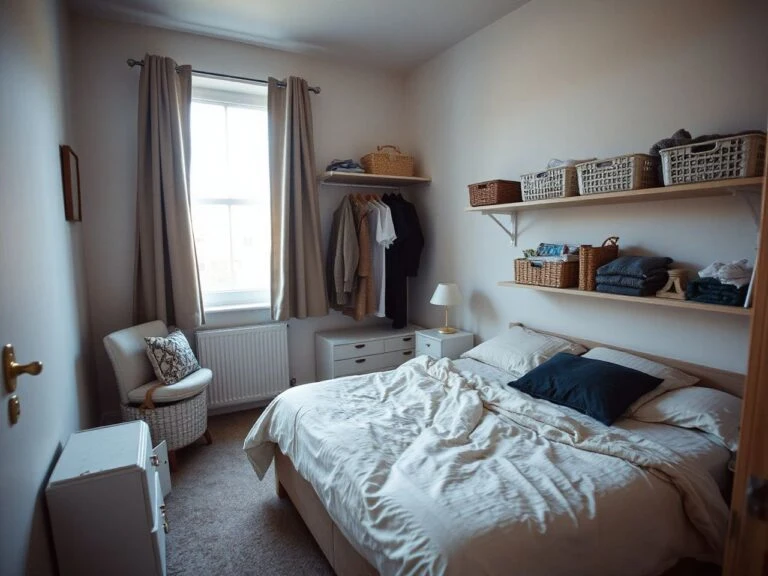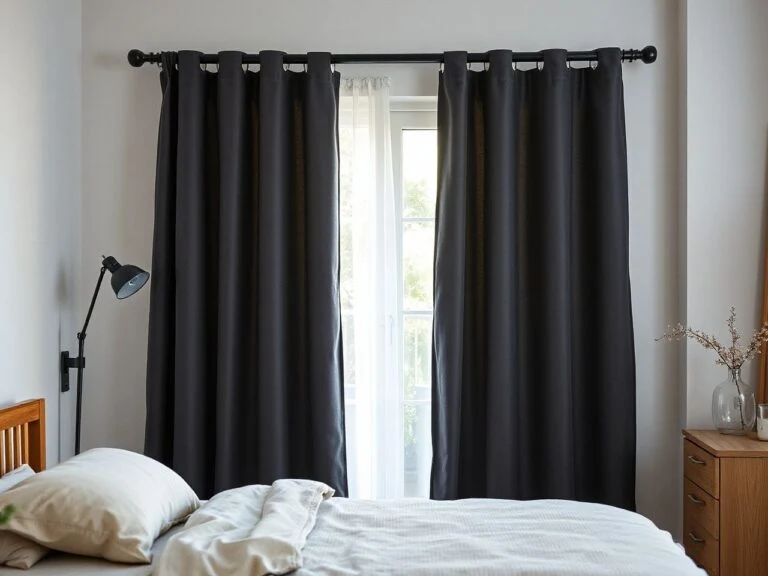

Two beds pushed together can sleep almost like one big bed, and in a guest room, a shared room or a bedroom where two people sleep very differently, that is often better than one big mattress. Two twin XL mattresses side by side make exactly the footprint of a king. Two queens side by side make a bed ten feet wide that a whole family can share. The trouble is the seam: the mattresses drift apart, one sits higher than the other, the sheets pull loose in the middle and someone ends up sleeping in the gap.
This guide fixes those problems one at a time. It starts with the sizes each pairing makes and the sheets and duvet that fit them, then gives eleven ways to make the pair feel like one bed: closing the gap, locking the frames, levelling the mattresses and dressing the whole thing so it looks planned. If the two beds are not in the room yet, our guide to two beds in one room for adults covers the layouts first.
What Size Do Two Beds Pushed Together Make?
Add the two widths and keep the shorter length. Most pairings land close to a standard size, which decides the bedding you can buy off the shelf:
| Two beds | Combined size | Closest standard size | What fits on top |
|---|---|---|---|
| Two twin XL (38 x 80 in each) | 76 x 80 in | King, exactly | King topper, king duvet, king flat sheet |
| Two twin (38 x 75 in each) | 76 x 75 in | King width, 5 in short | King duvet and topper; twin fitted sheets |
| Two UK singles (90 x 190 cm each) | 180 x 190 cm | Close to a UK super king width | Super king duvet; single fitted sheets |
| Twin + full (38 + 54 in) | 92 x 75 in | Wider than a king | King or oversized king duvet |
| Two full (54 x 75 in each) | 108 x 75 in | No standard size | Two full duvets, or an oversized coverlet |
| Two queen (60 x 80 in each) | 120 x 80 in | No standard size (a “family bed”) | Two queen duvets or two king duvets |
The twin XL pair is the easiest by far, because it is the same footprint as a king and every king product fits it. That pairing is usually called a split king. Two standard twins come within five inches of a king, close enough for a king duvet and topper, but a king fitted sheet will hang loose at the foot. For the exact sheet sizes behind every row, see our bed sheet dimensions chart, and for duvet sizes, the duvet sizes chart.
Two rules of thumb before pushing anything together:
- The mattress tops should be within half an inch of each other. More than that and the lower mattress forms a step you feel all night. A topper can hide a small difference, not a large one.
- The lengths should match. A 75 inch twin beside an 80 inch queen leaves a five inch notch at the foot. If the lengths differ, line up the heads against the wall and accept the notch at the foot, where it is easy to hide under a duvet.
11 Ways to Make Two Beds Pushed Together Feel Like One
1. Pair Two Twin XLs to Make a King
If you are buying the beds for this purpose, buy two twin XLs. Together they measure 76 by 80 inches, the same as a king, so a king topper, a king duvet and a king headboard all fit with no guessing. Apart, each one is a full-length single for a guest or a teenager. That flexibility is why hotels, dorms and couples with different sleep needs use the split king setup.
A split king also lets each sleeper choose a different mattress firmness, or use two adjustable bases that raise the head of one side only. If the two mattresses are different models, check that their heights match before ordering, because firmness and height often change together.

2. Close the Gap With a Bed Bridge
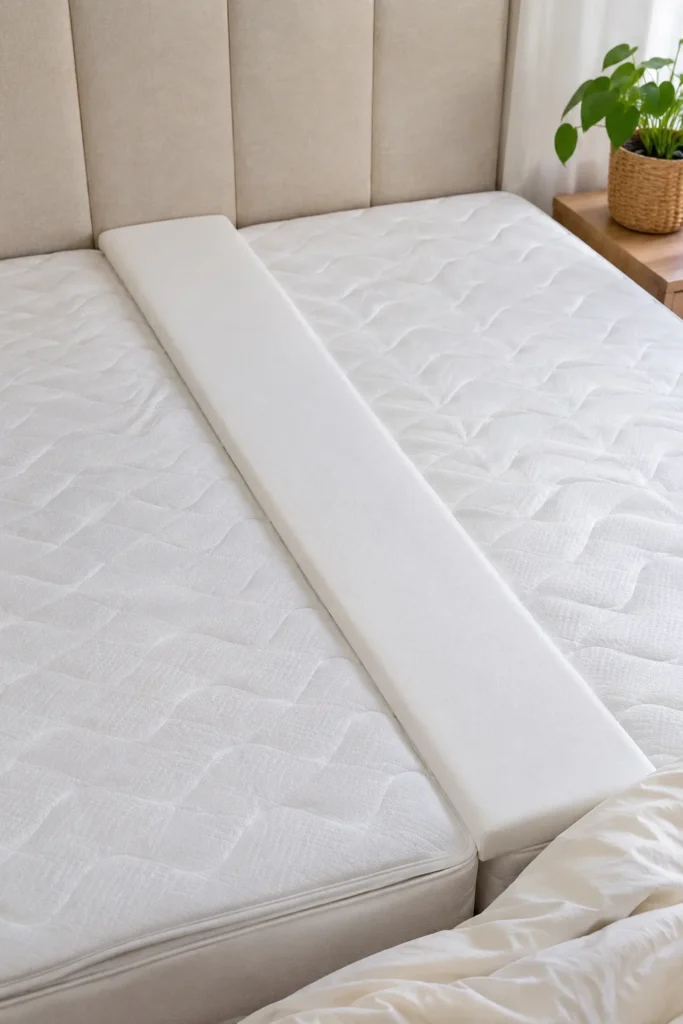
Even two identical mattresses pushed tight together leave a soft trough where their rounded edges meet. A bed bridge fills it. It is a long foam strip shaped like a T: the flat top lies across the seam, and the narrow stem drops into the gap between the mattresses. Fitted sheets go over it, so it disappears.
Buy one as long as the mattresses, 75 or 80 inches, and about 10 to 12 inches wide across the top. A bridge does most for mattresses with soft, pillow-top edges and less for firm foam mattresses with square edges, where the trough is already small.
3. Strap the Two Mattresses Together
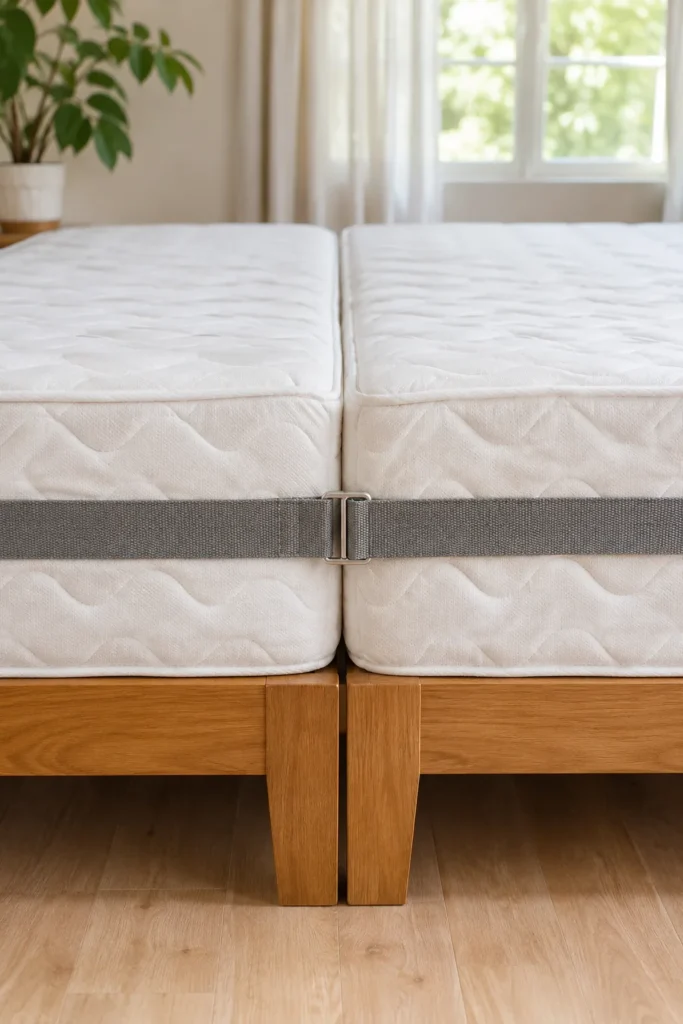
Mattresses on two frames creep apart a little every time someone sits on the edge or turns over. A bed connector strap stops it. It is a wide fabric band that wraps around both mattresses at about the middle of their height and tightens with a buckle, so the two mattresses move as one block.
Use a strap together with a bed bridge, not instead of it: the strap keeps the gap closed, and the bridge fills the dip on top. The strap sits under the fitted sheets and is hidden once the bed is made.
4. Stop the Frames From Drifting
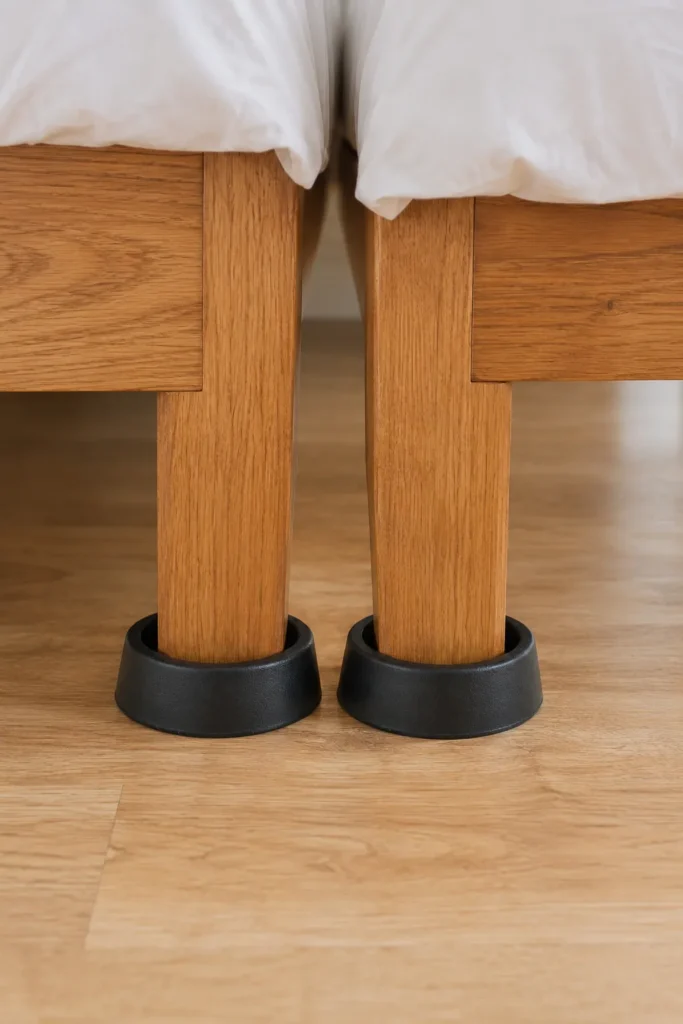
If the frames slide, the mattresses go with them. On a hard floor, put the inner legs of both frames in rubber furniture cups or on non-slip pads, and lock any casters. Metal frames can be joined with a pair of frame connector brackets or a couple of heavy zip ties around the two inner legs at the head and foot. Wooden frames that stand side by side can share one rug, which grips the legs better than bare boards.
Check the frames before buying connectors: the inner side rails must be at the same height and the legs in the same positions, or the brackets will not line up.
5. Lay One Topper Across Both Mattresses
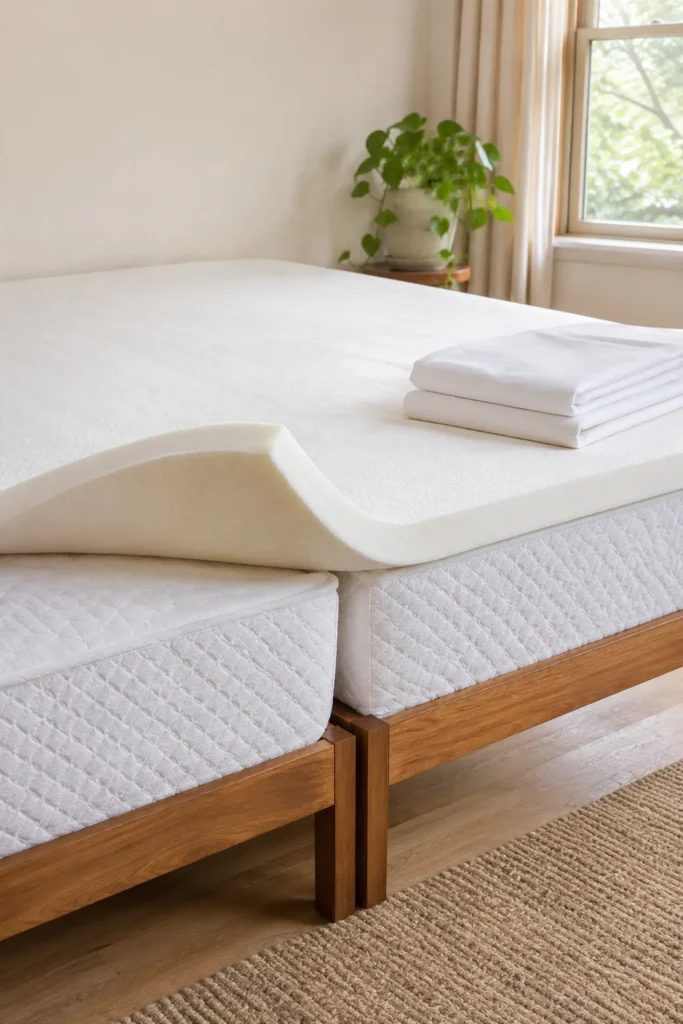
A single topper over both mattresses is the most effective way to make two mattresses feel like one surface. A 2 to 3 inch memory foam or latex topper spreads your weight across the seam and hides a small height difference of up to about half an inch. For two twin XLs, buy a king topper. For two twins, a king topper works and hangs a little past the foot, which can be tucked under.
Put the topper on before the fitted sheet and use a deep-pocket sheet to cover both layers. A topper turns two beds into one bed, so it only suits a setup that stays together; pulling it off every time the beds are separated gets old quickly.
6. Use Separate Fitted Sheets Under One Duvet
This is the simplest way to make the bed. Give each mattress its own fitted sheet, so each one can be changed or washed on its own and the sheets never pull loose over the seam. Then lay one king flat sheet and one king duvet across both. From the foot of the bed, it looks like a single king bed.
If a topper joins the two mattresses, use one king fitted sheet over the lot instead, so the sheet holds the topper in place. Without a topper, a king fitted sheet over two separate mattresses tends to pull the seam open, which is the opposite of what you want.
7. Give Each Sleeper Their Own Duvet
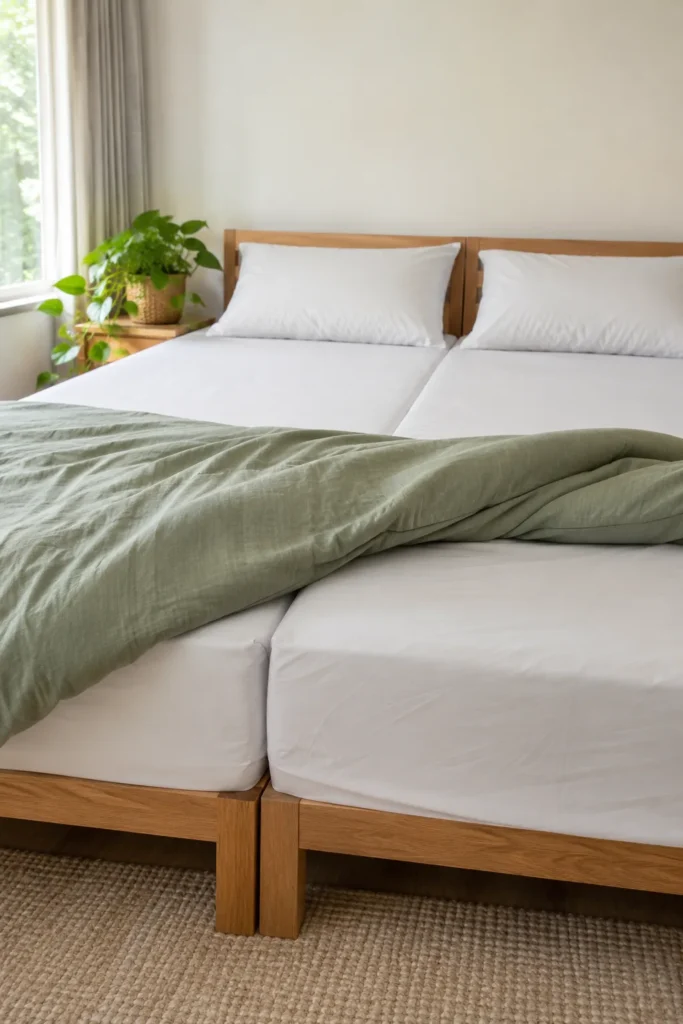
Two people who share a bed but not a temperature can each have their own duvet, which is normal in much of Scandinavia and Germany. One person can use a light summer duvet and the other a warm one, and nobody steals the covers. On two beds pushed together, this also means each side can be made up on its own.
Use two duvets the size of the mattresses underneath, a twin or twin XL duvet on each, and fold each one in half lengthwise or in thirds at the foot for a neat look in the daytime. Choose duvet covers in the same fabric and in colors that go together, so the bed still reads as one. Our guide to TOG ratings for duvets explains how to pick two different weights.

8. Run One Wide Headboard Across Both Beds
Two separate headboards side by side keep telling the eye that this is two beds. One headboard that spans both makes it one. For two twin XLs, a king headboard fits exactly. For anything wider, mount upholstered panels on the wall behind the beds, or a single wooden board, so the headboard can be wider than any standard size.
A wall-mounted headboard also stops the beds from tapping the wall, and it lets the frames be pulled apart later without unbolting anything. Hang it so its bottom edge sits 2 to 4 inches below the mattress tops; that way, no gap shows between the headboard and the pillows.

9. Place the Pillows Across the Seam
The way the pillows sit tells the eye whether the bed is one bed or two. Four sleeping pillows in a single row across the full width, with no space at the middle, make it one. Add a long lumbar cushion centered over the seam in front of them, and the line where the mattresses meet is hidden completely.
On a king-width bed, two king pillows or three standard pillows per side fill the width. Keep the decorative cushions to two or three in total, because every one of them ends up on the floor at bedtime. For more on making a big bed look finished, see how to make a bed look hotel quality.

10. Push Two Queens Together for a Family Bed
Two queen beds pushed together make a bed 120 inches wide, which fits two adults and two small children with room to spare. That pairing is common in hotel rooms already furnished with two queens, and in homes where young children end up in the parents’ bed most nights. The room needs a wall at least 12 to 13 feet long, and the frames should be low, so a child who rolls off the edge does not fall far.
There is no standard bedding for a bed this wide. Use two queen fitted sheets and two king duvets laid side by side and overlapping at the middle, which covers the seam. A wall-mounted headboard is the only way to span the full width. If the room already has two queens apart, our guide to two queen beds in one room shows the other layouts.

11. Move the Nightstands to the Outer Sides
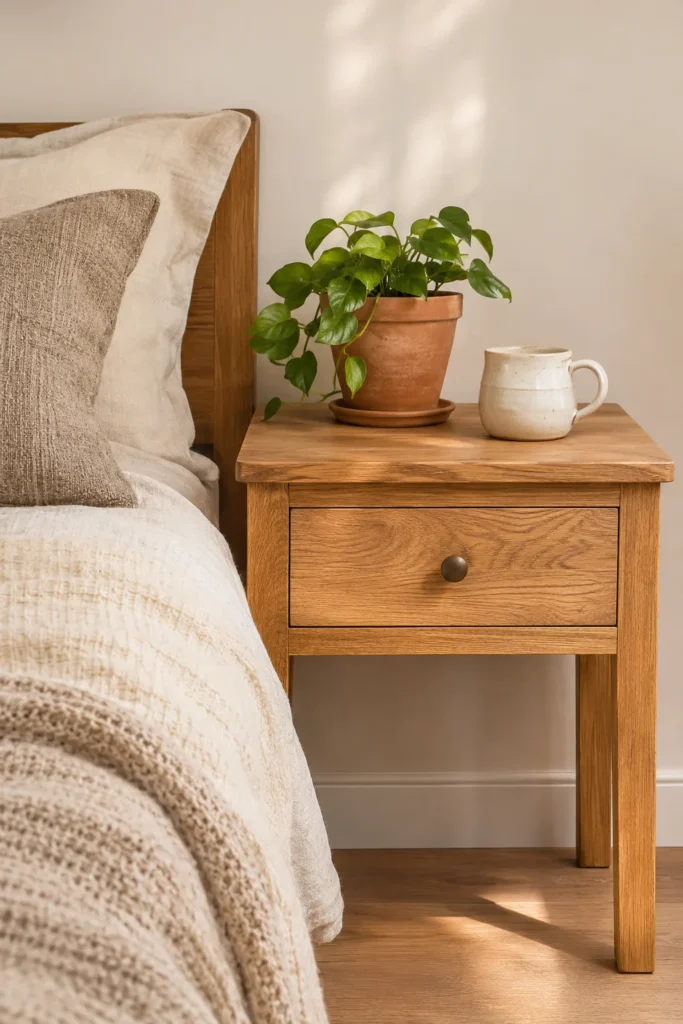
When two beds stand apart, the nightstand usually goes in the middle. When they are pushed together, that spot is gone, so give each sleeper a nightstand on their outer side, with a lamp or wall light of their own. Matching nightstands at the same height make the wide bed look symmetrical and planned.
Leave at least 24 inches between the outer edge of each bed and the wall or furniture beside it, so both people can get in and out. In a narrow room where that is not possible, a small wall-mounted shelf at mattress height can stand in for a nightstand.
When Not to Push Two Beds Together
Pushing two beds together is not always the right answer. Keep them apart when:
- The heights differ by more than about an inch. No topper fully hides a step that size. Bed risers can lift the lower frame, but only if both mattresses are the same thickness.
- One bed is a bunk, a loft or a daybed with sides. Rails and side panels leave a gap you cannot close.
- The beds are on very different frames. A platform bed beside a frame with a box spring will drift and rock at different rates, even when strapped.
- The room is shared by two older children or two adults who are not a couple. They usually sleep better with an aisle and a nightstand between them. Our guide to two single beds in one room covers those layouts.
For a mixed pair, such as a twin beside a full, it can still work. Line up the heads, put the taller mattress on the side away from the wall and use a topper only if the heights are already close. Our guide to a full and twin bed in one room covers that pairing when it stays apart.
Common Mistakes With Two Beds Pushed Together
- Using one fitted sheet over two bare mattresses. It pulls the seam open. Use one fitted sheet per mattress, or a topper under one king sheet.
- Skipping the strap. Without one, the gap opens a little every night, and the person nearest the middle slips into it.
- Ignoring the height difference. Measure both mattress tops from the floor before buying anything. Half an inch is fine, an inch is not.
- Keeping two headboards. Two headboards make the pair look like a hotel room. One wide headboard makes them look like one bed.
- Leaving a nightstand trapped behind the beds. Move it to an outer side, where someone can reach it.
Frequently Asked Questions
What size do two twin beds pushed together make?
Two standard twin beds pushed together measure 76 by 75 inches, the width of a king and 5 inches shorter. Two twin XL beds measure 76 by 80 inches, which is exactly a king, so king toppers, duvets and headboards fit them.
How do you keep two beds pushed together from separating?
Wrap a bed connector strap around both mattresses, join metal frames with connector brackets or heavy zip ties on the inner legs, and stand the legs in rubber furniture cups on hard floors. A shared rug under both frames also helps.
How do you get rid of the gap between two mattresses?
Use a T-shaped foam bed bridge in the seam, held in place by a connector strap. For the smoothest surface, add a 2 to 3 inch king topper across both mattresses and cover it with one deep-pocket king fitted sheet.
What sheets do you use on two beds pushed together?
Use one fitted sheet per mattress so the seam stays closed, then a king flat sheet and a king duvet over both. If a topper joins the mattresses, one king fitted sheet over the topper works instead.
Can you push two queen beds together?
Yes. Two queens make a bed about 120 by 80 inches, which suits a family bed. There is no standard bedding that size, so use two queen fitted sheets, two king duvets overlapping at the middle and a wall-mounted headboard.