A cozy bedroom with two beds is harder to pull off than a cozy room with one. Two beds take up most of the floor, they split the room into two halves, and two sets of bedding, two pillows stacks and two nightstands can look busy or bare very quickly. The layout decides whether the beds fit. The styling decides whether the room feels warm, quiet and easy to fall asleep in, and that part comes down to bedding, light, texture and color rather than more furniture.
This guide is about that second part. It gives the measurements that make a shared room comfortable, then eleven ideas for a cozy bedroom with two beds, from layering the bedding to choosing bulbs and hanging curtains. If the beds are not in place yet, start with our guide to two beds in one room for the layout, then come back here to make it feel warm.
What Makes a Room With Two Beds Feel Cozy
Cozy is not the same as full. A room with two beds already has a lot of furniture in it, so adding more pieces usually makes it feel crowded, not warm. Most of the warmth comes from five things:
- Soft layers on the beds. A quilt or coverlet, a folded duvet or blanket and a throw on each bed give the eye depth and give each sleeper a way to adjust warmth without getting up.
- Low, warm light. Light below eye level from bulbs of 2700K or lower makes a room feel calmer than one ceiling fixture lighting everything evenly.
- Texture under hand and foot. Wool, linen, cotton knits and wood feel warm. Shiny surfaces, bare floors and thin polyester feel cold even when the room is warm.
- One color story. Two beds in two unrelated colors split the room in half. Two beds in the same palette make it read as one calm space.
- Clear walkways. A room you have to squeeze through never feels relaxing. Keep at least 24 inches beside each bed and 30 inches in front of drawers.
Measurements for a Cozy Room With Two Beds
The soft pieces that make a cozy bedroom with two beds all have a right size. These are the numbers worth checking before buying anything:
| Item | Two twin beds | Two full beds | Why it matters |
|---|---|---|---|
| Rug under both beds | 8 x 10 ft | 9 x 12 ft | Reaches under the lower two thirds of both beds, so feet land on rug, not floor |
| Rug between the beds only | 3 x 5 ft runner or 4 x 6 ft | 4 x 6 ft | Covers the aisle without sliding under the frames |
| Throw on each bed | 50 x 60 in | 50 x 70 in | Large enough to cover one sleeper, small enough to fold at the foot |
| Coverlet or quilt | Twin: about 68 x 90 in | Full: about 86 x 90 in | Hangs 12 to 15 inches past each side of the mattress |
| Nightstand height | Within 2 in of mattress top | Within 2 in of mattress top | A cup or book is reachable without stretching |
| Bulb color | 2200K to 2700K | 2200K to 2700K | Warm white looks like candlelight; 4000K and above looks like an office |
For bed-by-bed sheet and duvet sizes, the bed sheet dimensions chart lists flat, fitted and duvet measurements for every mattress.
11 Ideas for a Cozy Bedroom With Two Beds
1. Layer the Bedding the Same Way on Both Beds
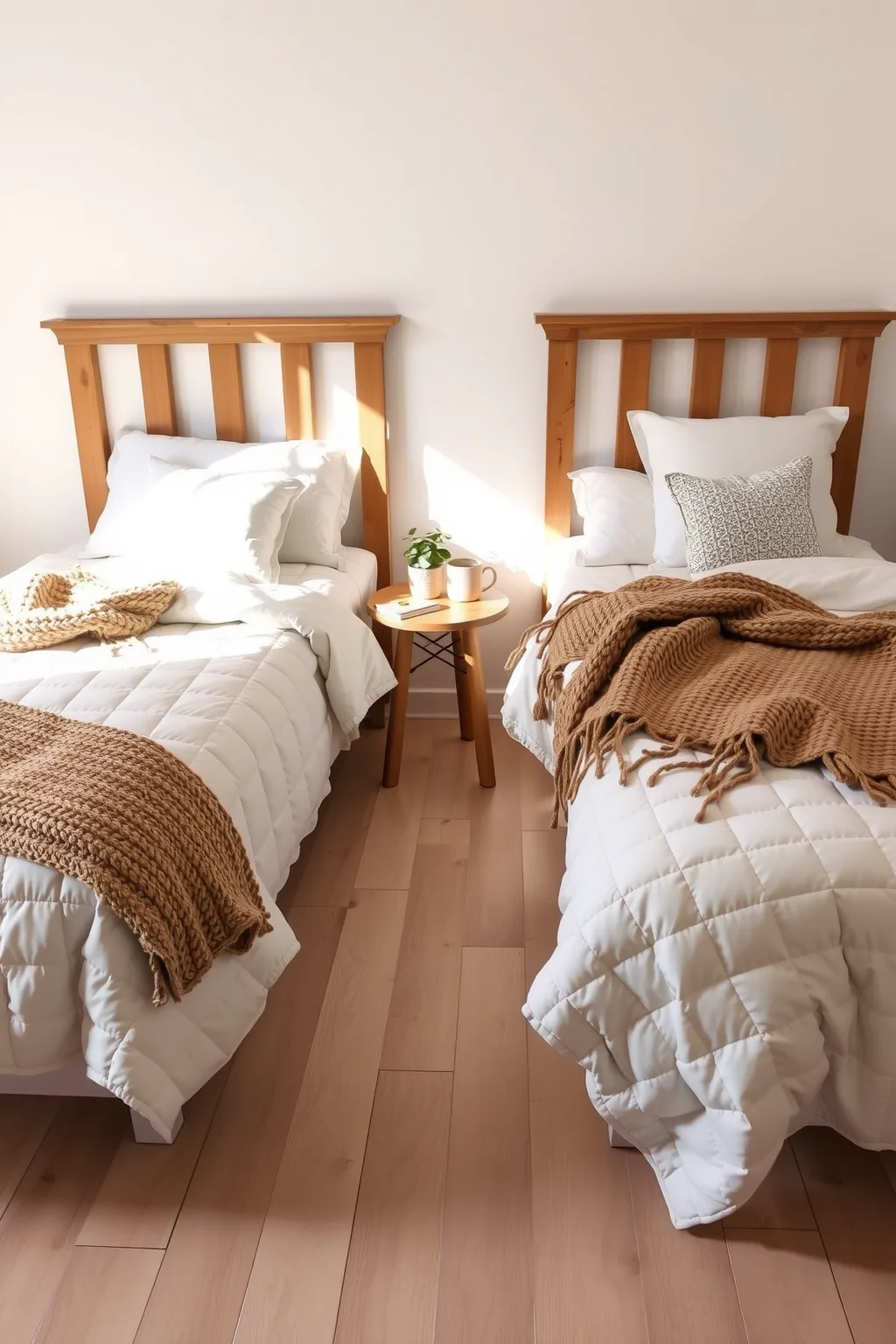
Layering is what turns a flat, made bed into an inviting one, and with two beds the order of the layers matters more than the colors. Pick one recipe and repeat it on both beds: a fitted sheet, a lightweight quilt or coverlet pulled up to the pillows, a duvet or blanket folded in thirds across the bottom third of the bed, and a throw draped at an angle over one corner. Finish with two sleeping pillows and one decorative cushion per bed.
Repeating the same structure makes the two beds look planned even if the fabrics are not identical. It also helps the people sleeping there: whoever runs warm can push the duvet off and sleep under the quilt, and whoever runs cold can pull everything up. Keep the cushion count low. Two cushions per bed is plenty, because every extra one has to go somewhere at bedtime, and in a room with two beds that is usually the floor.
2. Coordinate the Two Beds Instead of Matching Them
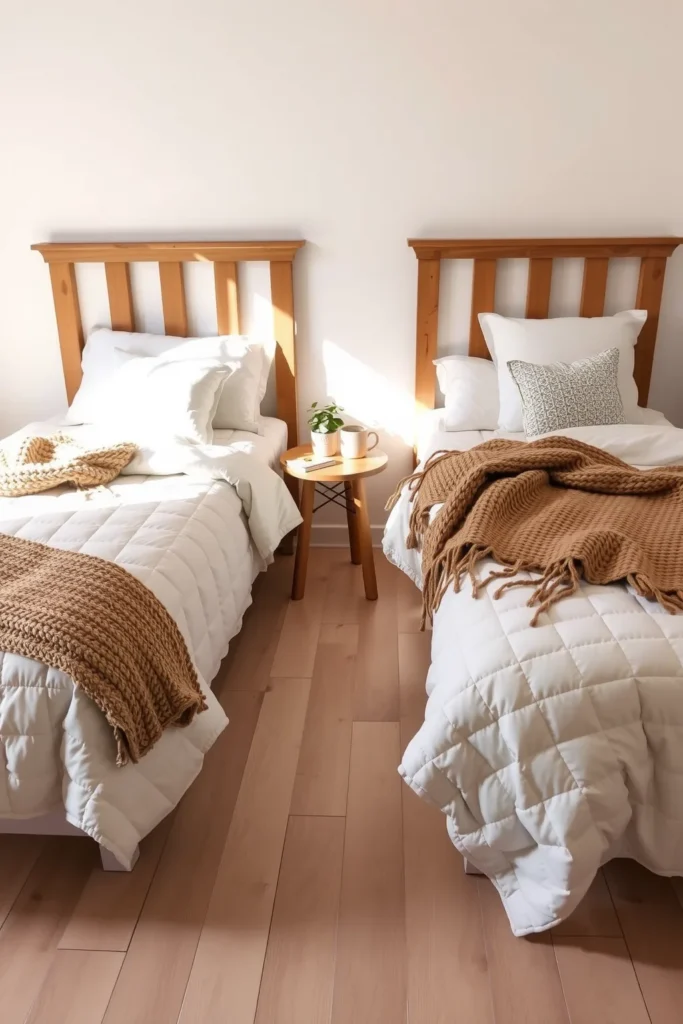
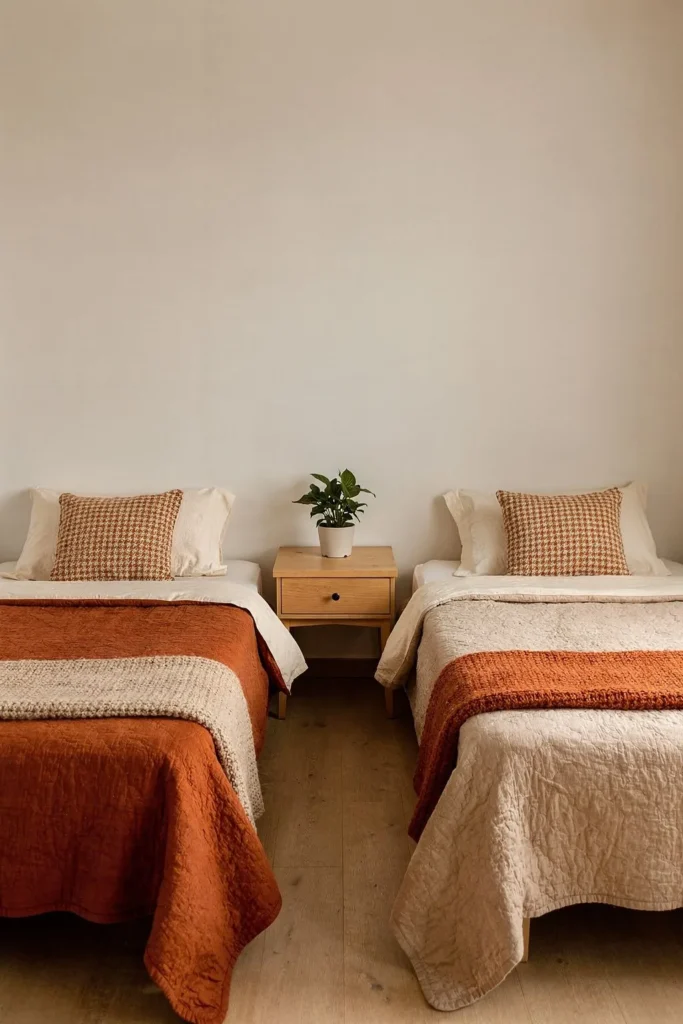
Identical bedding on both beds is tidy, but it can look like a hotel room. Coordinated bedding feels more lived-in and lets two people each have a bed that feels like theirs. The rule that keeps it calm: choose a palette of three colors, then give each bed a different lead color from that palette, with the other two as accents.
A warm example is rust, cream and oatmeal. One bed gets a rust quilt with cream sheets and an oatmeal throw; the other gets an oatmeal quilt with cream sheets and a rust throw. Both beds share the cream sheets, so they still read as a pair. Keep patterns in one family too: two small checks, or a stripe and a plain weave, rather than a floral next to a geometric. If one person wants a bold print, put it on the cushion, not the whole bed. Our guide to guest room twin beds covers when matching bedding makes more sense, such as in a room that changes guests every week.
3. Give Each Bed a Soft Headboard
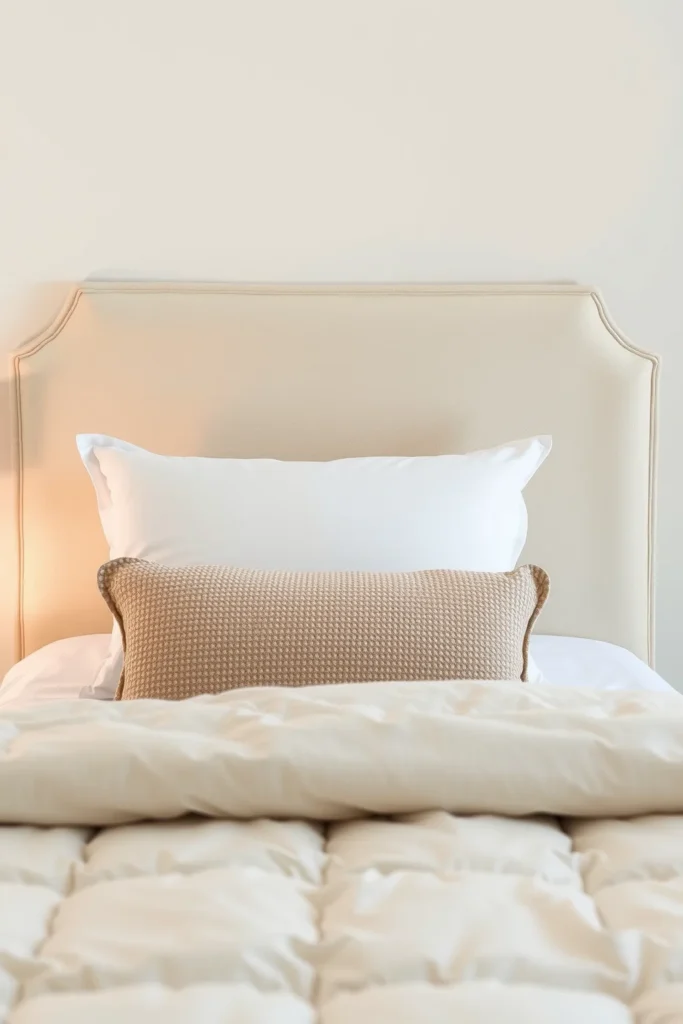
A bed pushed against a bare wall looks temporary. A headboard frames each bed, gives the room a line at the same height on both sides and gives the sleepers something soft to lean on when reading. Upholstered headboards in linen, boucle or velvet add the most warmth, and a fabric in the same color family as the walls keeps two of them from overpowering the room.
Set both headboards at the same height so the tops line up; on two twin beds that is usually 48 to 54 inches from the floor, high enough to show above two stacked pillows. Wall-mounted panels work if the frames have no headboard brackets: hang them so the bottom edge sits about 2 inches below the mattress top, so there is no gap for pillows to fall through.
4. Light the Room Low and Warm
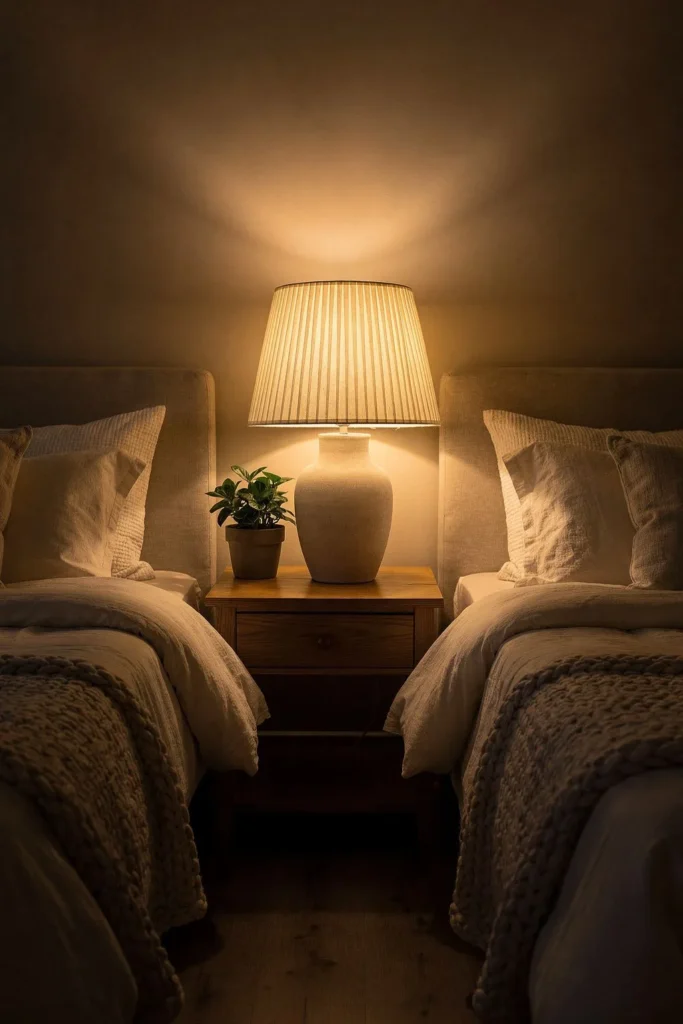
Nothing makes a room with two beds feel less cozy than one bright ceiling light. It flattens textures, it lights both beds at once, and it means one person cannot read while the other sleeps. Plan the room around three layers instead: a dimmable ceiling light for cleaning and finding things, a lamp or wall light at each bed for reading, and one soft light elsewhere for the evening, such as a small lamp on the dresser.
Use warm white bulbs, 2700K or lower, in all three. For a lamp on a shared nightstand between two beds, a shade 14 to 16 inches wide spreads light toward both pillows; the bottom of the shade should sit roughly at shoulder height of someone sitting up in bed, which is usually 20 to 24 inches above the mattress top. A fabric shade in linen or cotton glows; a metal or glass one throws hard light, which is better for task lighting than for mood.
5. Hang Warm String Lights Above the Beds
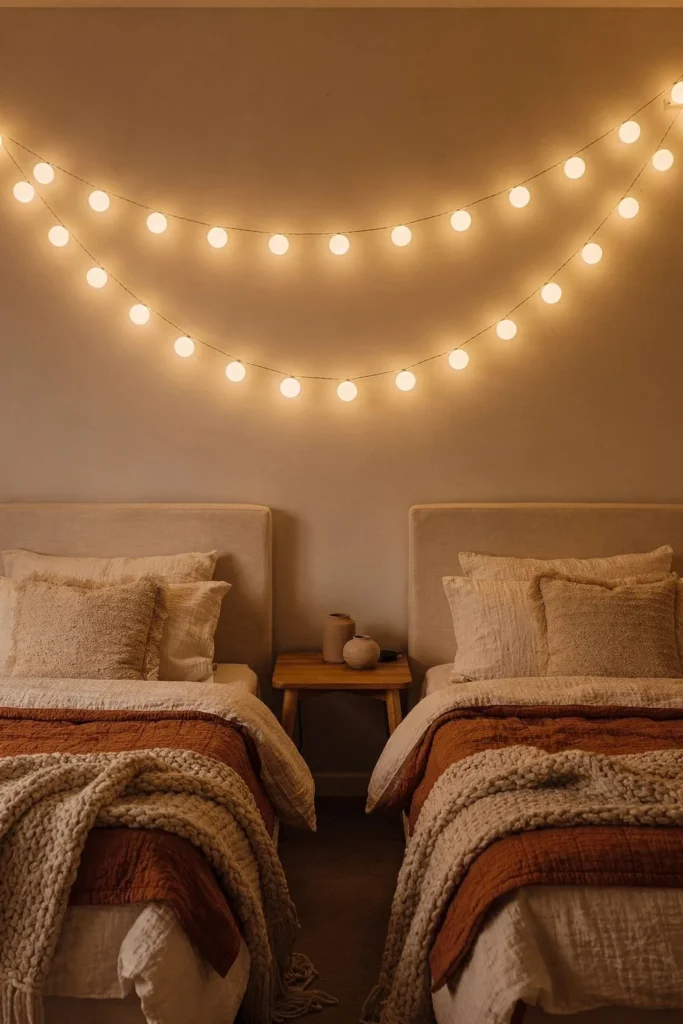
String lights are the cheapest way to add a soft evening glow, and in a room with two beds they also tie the two sleeping areas together. Swag one strand across the wall above both headboards, or run a single straight line along the top of the wall, so the light connects the two beds instead of marking each one separately.
Choose warm white bulbs at 2200K to 2700K, and a strand with a plug-in dimmer or timer so nobody has to climb across a bed to switch it off. Small bulbs, sometimes sold as fairy lights, give a sparkle; round globe bulbs 1 to 2 inches across give a softer, steadier glow that suits a bedroom better. Hang the strand at least 12 inches above the headboards so nobody bumps it when sitting up, and use removable adhesive hooks rather than nails if the walls are rented. Our guide to hanging things without damaging walls lists which hooks hold which weights.
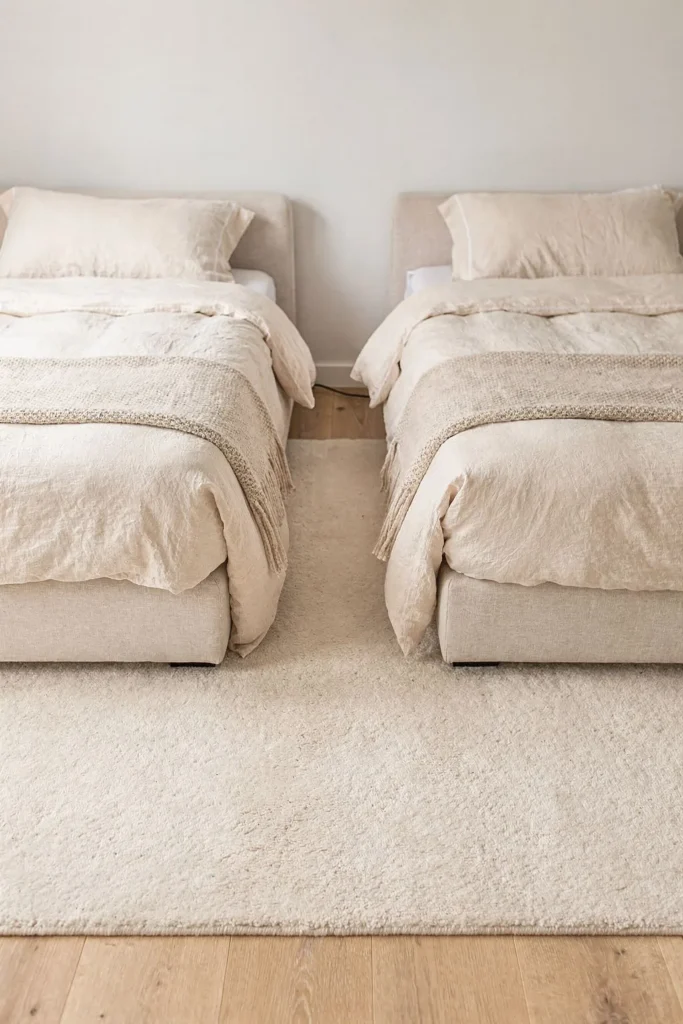
6. Lay One Large Rug Under Both Beds
Two small rugs, one beside each bed, chop the floor into pieces. One large rug under both beds does the opposite: it pulls the two beds onto one surface and makes the room read as a single space. It also gives warm feet a landing spot on both sides of each bed.
For two twin beds standing side by side with an aisle between them, an 8 by 10 foot rug laid across the room reaches under the lower two thirds of both beds and leaves about 18 to 24 inches showing past the foot. Leave the top third of each bed and the nightstands off the rug, so they stand level on the floor. A wool or wool-blend rug with a low pile is warmer and wears better than a flat synthetic one, and a thick rug pad underneath adds cushion and stops it creeping. Our guide to cozy area rugs compares piles and fibers.
7. Keep Throws and Extra Pillows Within Reach
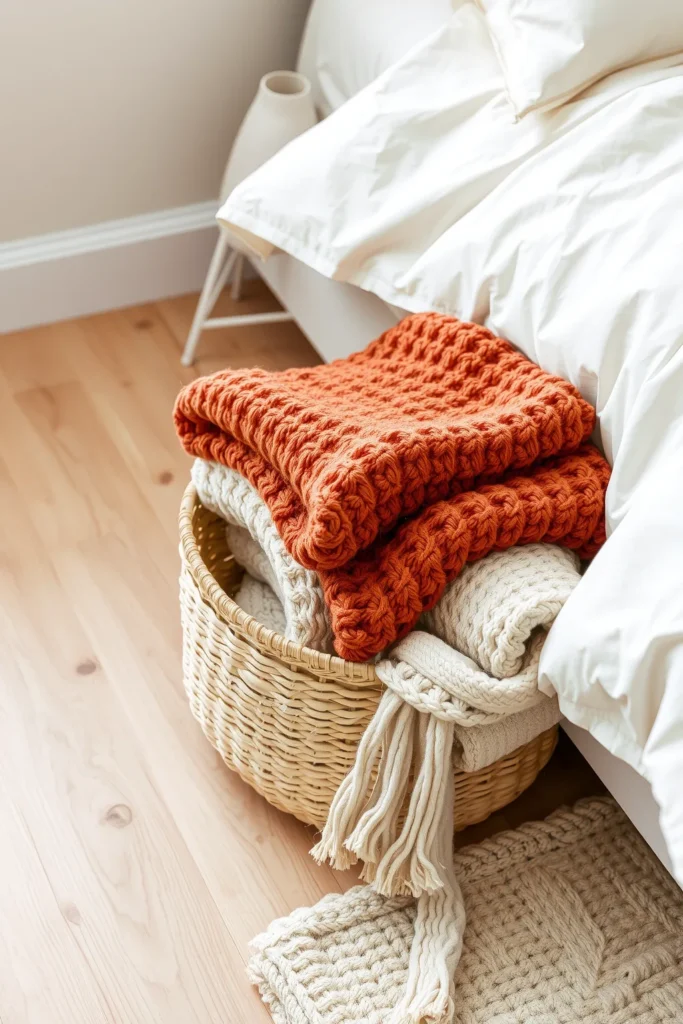
A room that is warm in the evening is often cold at 3 a.m. Give each bed a spare layer it can reach without getting up: a knit throw folded at the foot of each bed, or a lidded or open woven basket between or beside the beds holding two throws and a spare pillow. The basket doubles as the place cushions go at bedtime, which keeps them off the floor.
A basket about 16 by 12 inches and 12 inches deep holds two folded throws. Chunky cotton knits and wool blends look the coziest; acrylic knits pill quickly and can feel slippery. If two people share the room, two different throws, one in each bed’s lead color, make it clear whose is whose.
8. Choose Wood, Linen and Wool Over Shine
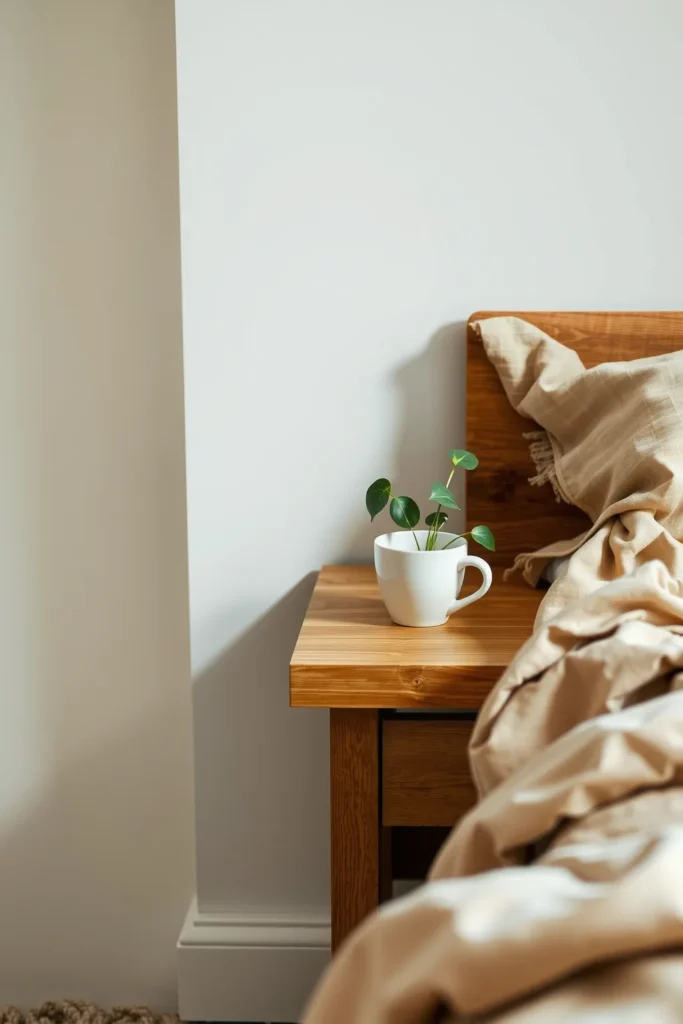
Texture does as much for warmth as color. Natural materials catch light unevenly, which gives a room depth, while glossy laminate, high-shine metal and mirrored furniture bounce light around and make it feel cooler. In a room with two beds the nightstand is the easiest place to start, because it sits right next to each pillow.
A solid wood or wood-veneer nightstand, a linen or cotton runner, a ceramic cup or bowl and a small plant make a nightstand look warm without clutter. Repeat the same materials on both sides: if one bed has a wooden nightstand and a woven basket, the other should too. Rattan, cane and jute also work, especially in a lighter room.
9. Paint the Wall Behind the Beds a Warm Color
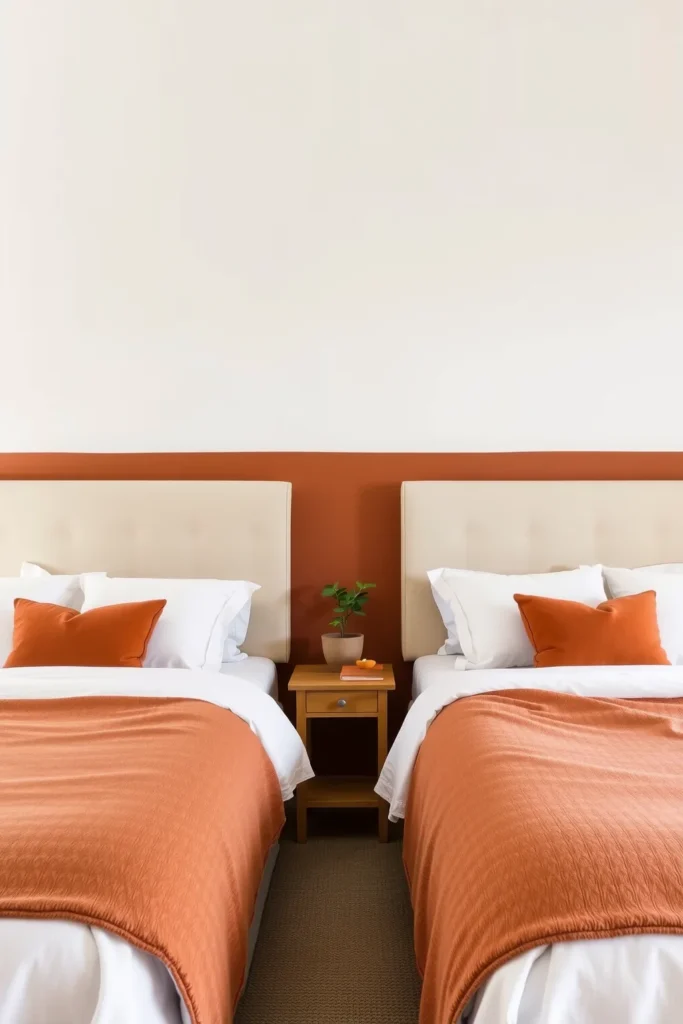
The wall behind the headboards is the biggest single surface in the room and the one everyone sees when they walk in. A warm color there changes the feel of the whole room for the price of one can of paint. Clay, terracotta, warm olive, soft rust and mushroom brown all read as cozy; cool grays and bright whites read as fresh but rarely as warm.
If a full wall of color feels too strong, paint the lower part only, up to about 40 to 48 inches from the floor, and leave the upper wall in a warm white. The headboards then sit against the color and the room stays light above. A matte or eggshell finish looks softer than satin, and it hides the scuffs that headboards and pillows leave. The bedroom paint colors guide has more warm shades and the undertones to check before buying.
10. Make a Small Reading Corner
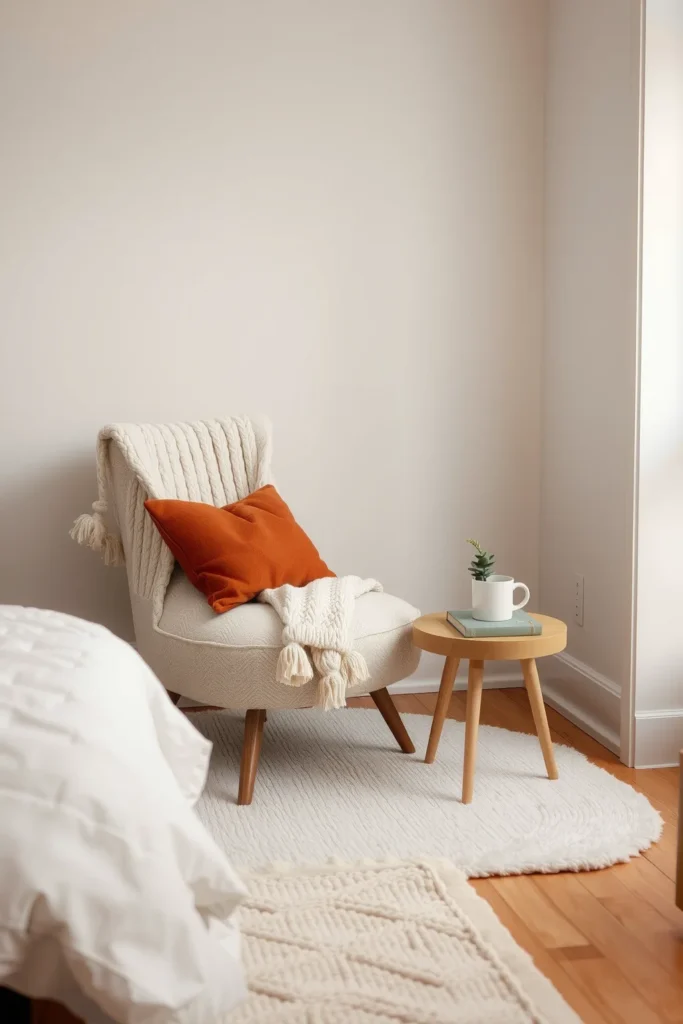
When the beds are the only place to sit, the room feels like a dormitory. A small reading corner, even one chair, gives the room a second, softer zone and gives one person somewhere to go while the other sleeps. A compact armchair about 28 to 32 inches wide fits in most corners that the walkways do not cross, usually beside a window or at the foot of the beds.
Add a small side table about the height of the chair arm, a throw over the back and a cushion that matches one of the bed’s accent colors, so the corner looks like part of the same room. If the floor is too tight for an armchair, a floor cushion or a low pouf on the rug does the same job and slides out of the way.
11. Hang Floor-Length Curtains High and Wide
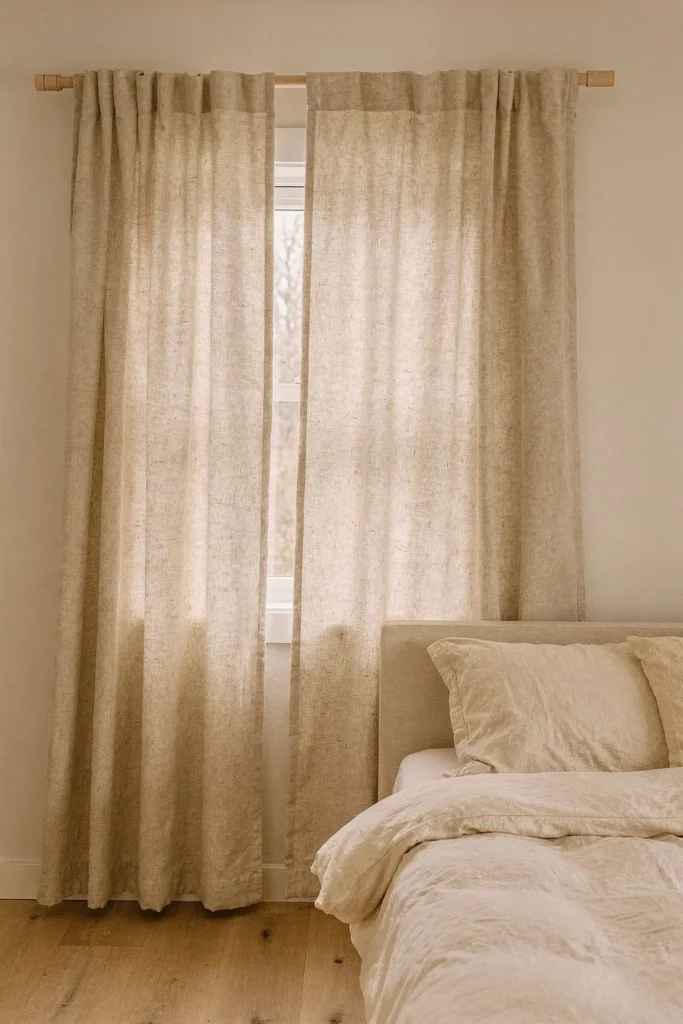
Curtains soften the hard edges of a window, absorb sound and keep warmth in at night, and they do all three better when they are long and full. Hang the rod 4 to 6 inches above the window frame, or halfway between the frame and the ceiling, and extend it 8 to 12 inches past each side so the curtains frame the glass instead of covering it. Let the fabric just touch the floor.
Linen, cotton or a brushed fabric in a warm neutral looks cozier than a shiny or crisp one. For fullness, the total width of the curtain panels should be about two times the width of the window. If one person sleeps later than the other, a blackout lining keeps the morning light off both beds. Our guide on hanging curtains to make a room look taller covers rod heights in more detail.
Small Touches That Finish a Cozy Bedroom With Two Beds
- A plant on each side. A small trailing plant on each nightstand or a taller one in a corner adds life and softens the straight lines of two bed frames.
- A shared nightstand with two of everything. If the beds share one nightstand, give it two coasters, two small trays or two drawers, one per person, so it does not turn into a pile.
- Scent and sound. A linen spray on the pillows and a quiet fan or white-noise machine make a room feel calm at night as much as anything you can see.
- Bedding changed with the season. Swap a linen quilt for a wool blanket and a cotton throw for a heavier knit in winter. The duvet tog ratings guide explains which weight suits which season.
Common Mistakes in a Bedroom With Two Beds
- Too many cushions. Six cushions per bed look styled for a photo and end up on the floor every night. Two per bed is plenty.
- Cool white bulbs. Bulbs of 4000K and above make even warm bedding look gray. Check the box for 2700K or lower.
- Two small rugs instead of one large one. Small rugs split the floor and slide. One rug under both beds pulls the room together.
- Bedding in two unrelated palettes. Different beds are fine; unrelated colors are not. Keep both beds inside one three-color palette.
- Filling every wall. Two beds already fill the room. Leave at least one wall mostly bare so the eye has somewhere to rest.
Frequently Asked Questions
How do you make a bedroom with two beds feel cozy?
Layer the bedding the same way on both beds, use warm white bulbs of 2700K or lower in lamps rather than one ceiling light, lay one large rug under both beds and keep both beds in the same three-color palette. Natural materials such as wood, linen and wool add warmth without adding clutter.
Should two beds in one room have matching bedding?
They do not have to match. Coordinated bedding often looks warmer: choose three colors, give each bed a different lead color from that set, and share one element, such as the same sheets, across both beds. Matching bedding suits guest rooms that change occupants often.
What size rug goes under two twin beds?
An 8 by 10 foot rug fits under two twin beds standing side by side with an aisle between them. Laid across the room, it reaches under the lower two thirds of both beds and leaves 18 to 24 inches past the foot. For two full beds, use a 9 by 12 foot rug.
What color makes a bedroom with two beds feel warm?
Warm, muted colors such as clay, terracotta, soft rust, warm olive, mushroom brown and warm white make a room feel cozy. Painting only the wall behind the beds, or only its lower part up to about 40 to 48 inches, adds warmth without making the room feel smaller.
Where should the lamp go between two beds?
On a shared nightstand centered between the beds, use a lamp with a fabric shade 14 to 16 inches wide so light reaches both pillows. The bottom of the shade should sit about 20 to 24 inches above the mattress top. For separate reading, give each bed its own wall light instead.