A TV doesn’t have to dominate a room or hide behind cabinet doors — it just needs a plan. The screen itself is a fixed black rectangle you can’t really disguise, but everything around it — shelving, lighting, color, cable routing, the furniture underneath — is up for design decisions, and those decisions are what separate a wall that looks intentional from one that just happens to have a television on it.
The ideas below range from an afternoon of shelf styling to a weekend of cabinetry work. Start with whichever fits your budget and lease terms, and treat cable management as non-negotiable no matter which look you choose — it’s the one detail that makes or breaks the finished wall.
1. Frame the TV With a Curated Gallery Wall
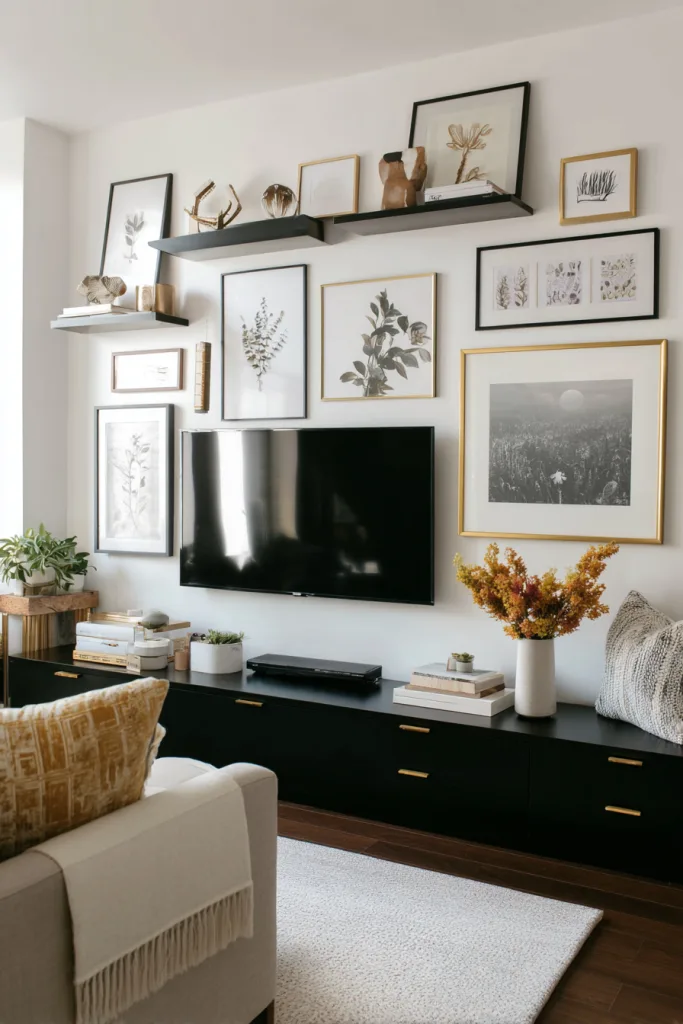
Treating the TV as one piece in a larger art arrangement takes the pressure off the screen to be the whole show. Build outward from the TV with frames, prints, and a few dimensional objects — a small shelf, a clock, a woven piece — rather than hanging art only above it. A wall that’s all art on top and blank TV below tends to look lopsided.
Keep spacing consistent: aim for 2-3 inches between frames, and between the outermost frames and the TV bezel, so the whole grouping reads as one composition instead of art plus an appliance. Limit yourself to two or three frame finishes — say, black metal, warm wood, and one accent color — so the arrangement stays cohesive even with mismatched frame sizes. Paper templates taped up before you commit to nail holes save a lot of patched drywall later.
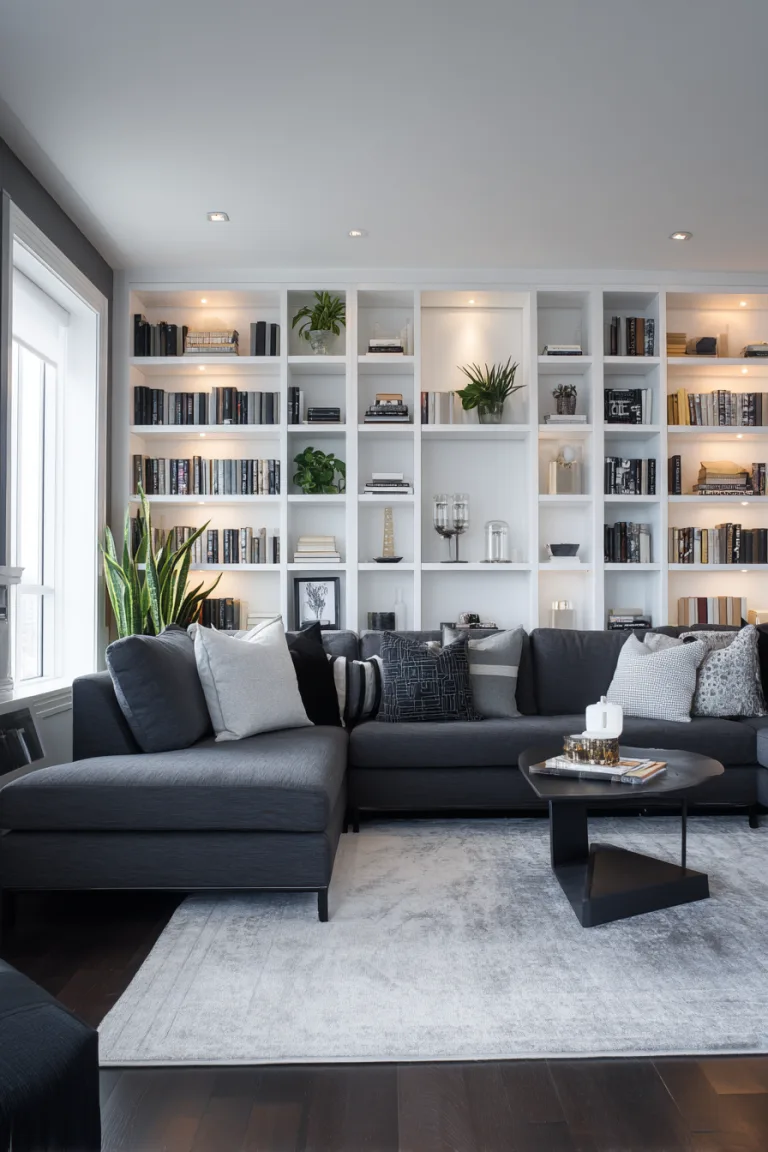
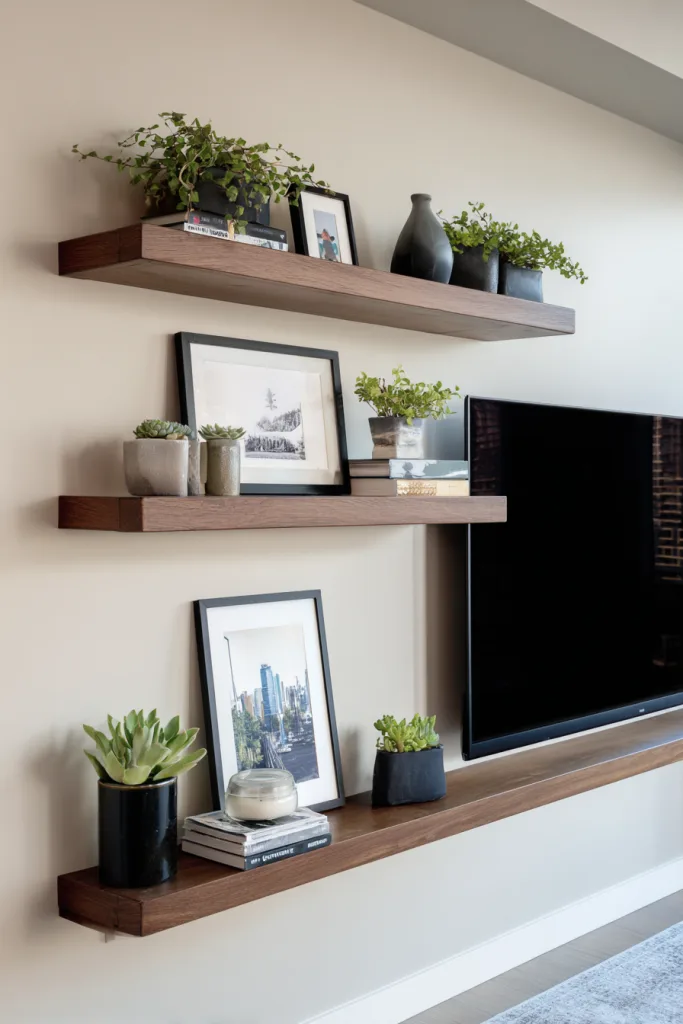
2. Add Floating Shelves for Layered Display
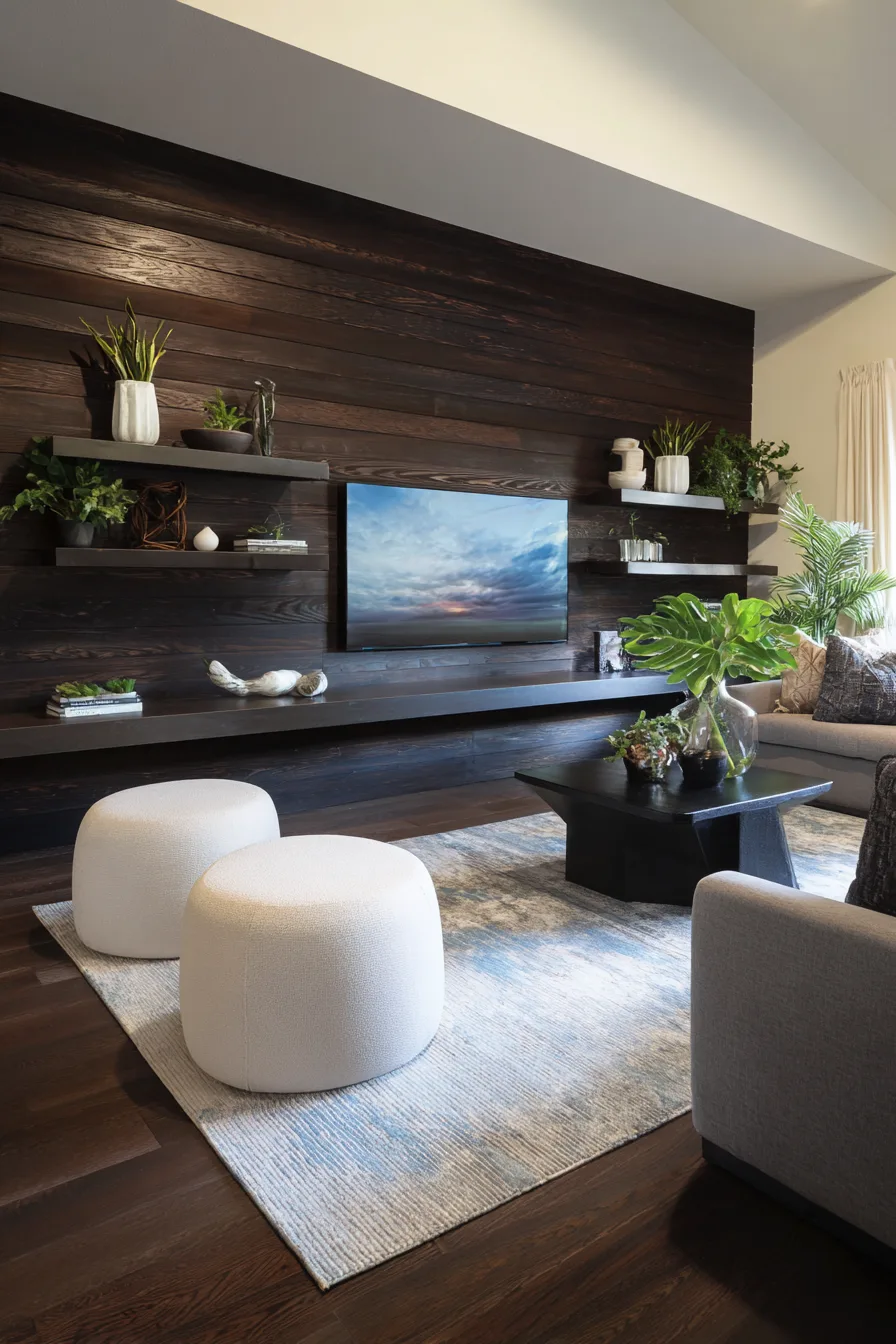
Floating shelves around a TV are one of the cheapest upgrades that still looks custom, and they don’t require touching the wall behind the screen itself. Stagger two or three shelves at different heights rather than mirroring them exactly — asymmetry tends to read as curated, while a perfect mirror image reads as a kit.
Check the hardware spec before you buy, not just the shelf material: weight capacity is almost always rated per bracket, not per shelf, so a shelf rated for 50 pounds on two brackets rated at 15 pounds each is really only good for 30 pounds total. Keep heavier items like books and ceramics toward the wall-mounted end and lighter objects like small plants or framed photos toward the front edge, since a floating shelf has less support the farther out you load it.
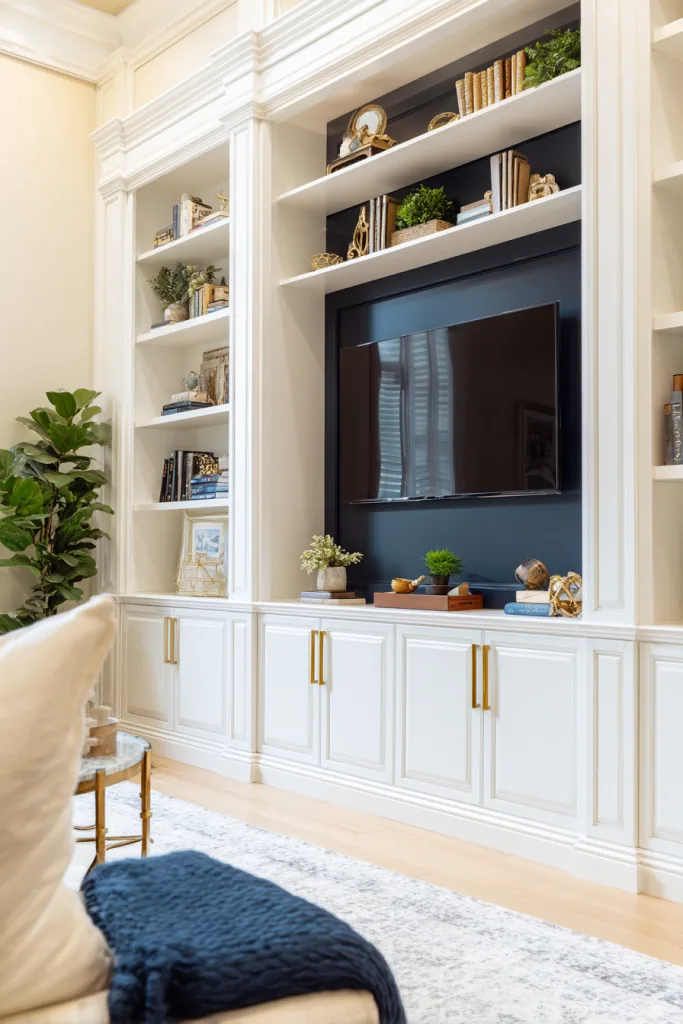
3. Build a Custom Media Wall or Built-In
A built-in works because the cabinetry around the screen shares the same material, depth, and finish as the rest of the wall, so your eye reads one piece of architecture instead of a black rectangle bolted to drywall. This is the biggest investment on this list — a modest floor-to-ceiling unit realistically starts in the low thousands and climbs well beyond that with custom millwork, integrated lighting, or premium finishes — so it’s worth living with the layout in painter’s tape for a week before committing.
Closed cabinets below hide the router, streaming boxes, and cable clutter; open shelving above or to the side gives you a place for books and objects. A common finishing trick is painting the interior back panels a shade or two darker than the exterior face, which adds depth to open shelving without changing the room’s overall palette.
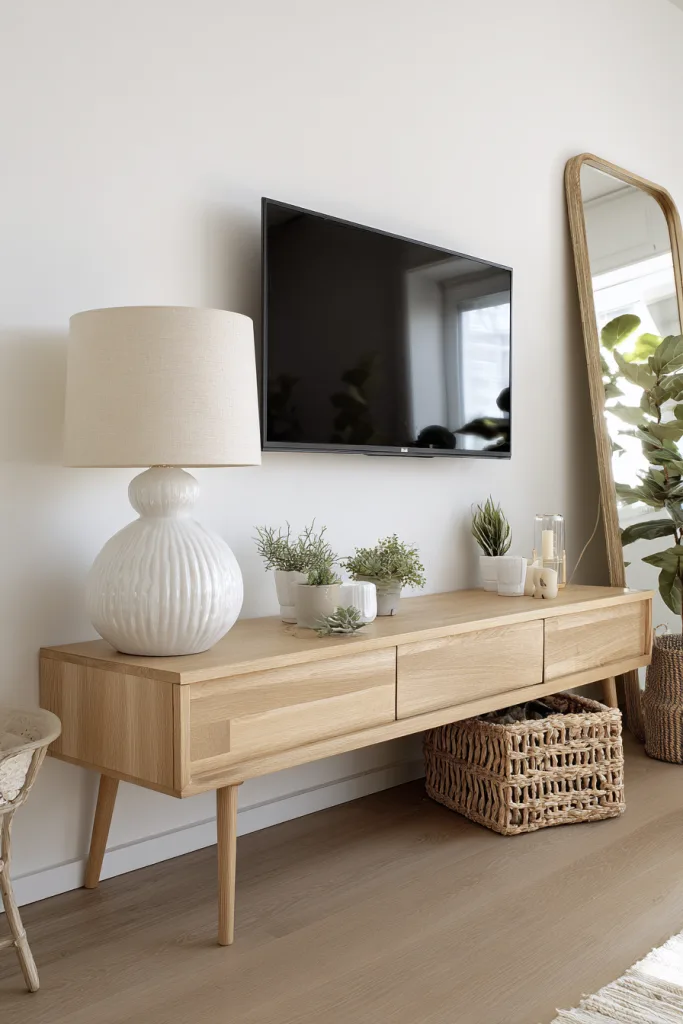
4. Choose a Properly Sized Console
A console that’s narrower than the TV above it makes the furniture and the screen look like they belong to two different setups. As a general rule, your media console should be about as wide as the TV or slightly wider — not two-thirds the width, which is a common mistake that leaves the TV visually overhanging the furniture on both sides.
Depth matters too: most media consoles run 16-20 inches deep, enough for a soundbar and streaming equipment without crowding a walkway behind it. Look for a mix of open and closed storage, and if you’re mounting the TV to the wall above a lower console, check the console’s height against your seated eye line before buying — a console that’s too tall pushes the whole arrangement, and the ideal mounting height, higher than you actually want.
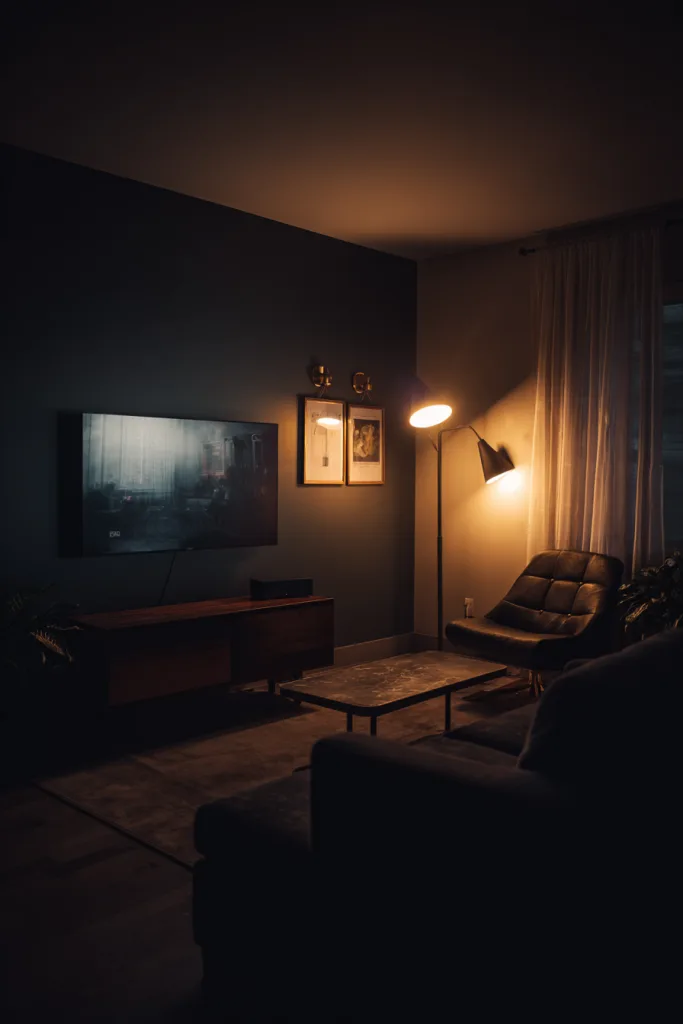
5. Layer Lighting Around the Screen
A TV wall lit only by the screen itself looks harsh at night and flat during the day. Layering two or three light sources — an LED strip behind the TV for bias lighting, a table lamp on the console, and a picture light or two if you’ve built a gallery wall — does more for the mood of the room than any single fixture could.
Bias lighting, a thin LED strip run along the back of the TV using the mounting bracket or a peel-and-stick strip, reduces eye strain by softening the contrast between a bright screen and a dark wall, and it makes the screen appear to float when the room is otherwise dim. Keep task and ambient lighting on separate switches or a smart plug so you’re not stuck choosing between movie-night dimness and everyday brightness.
6. Balance the Wall With Tall Plants
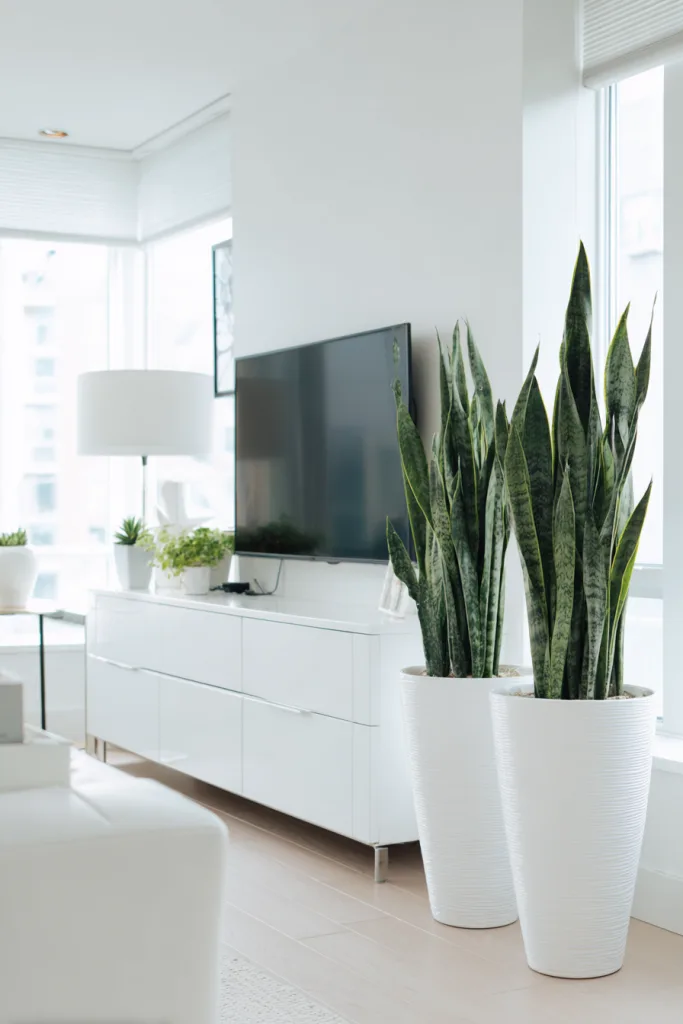
A plant, or a mirrored pair, on either side of the console softens the hard edges of the screen and console without adding more furniture to the floor plan. Snake plants and ZZ plants stay compact and tolerate the lower light typical of a TV wall that doesn’t get direct sun; fiddle-leaf figs and bird-of-paradise plants grow considerably taller, often six feet or more indoors, and need brighter light, so match the plant to the room’s actual light levels rather than the look you saw in a photo.
Use pots in the 12-16 inch diameter range for floor plants that size, in a finish that repeats a material already in the room — matte ceramic, woven rattan, or fiberglass — so the plant reads as part of the palette instead of an afterthought. A tall, upright growth habit draws the eye upward, which helps a low TV wall feel less squat.
7. Paint the Wall Behind the TV a Dark Color
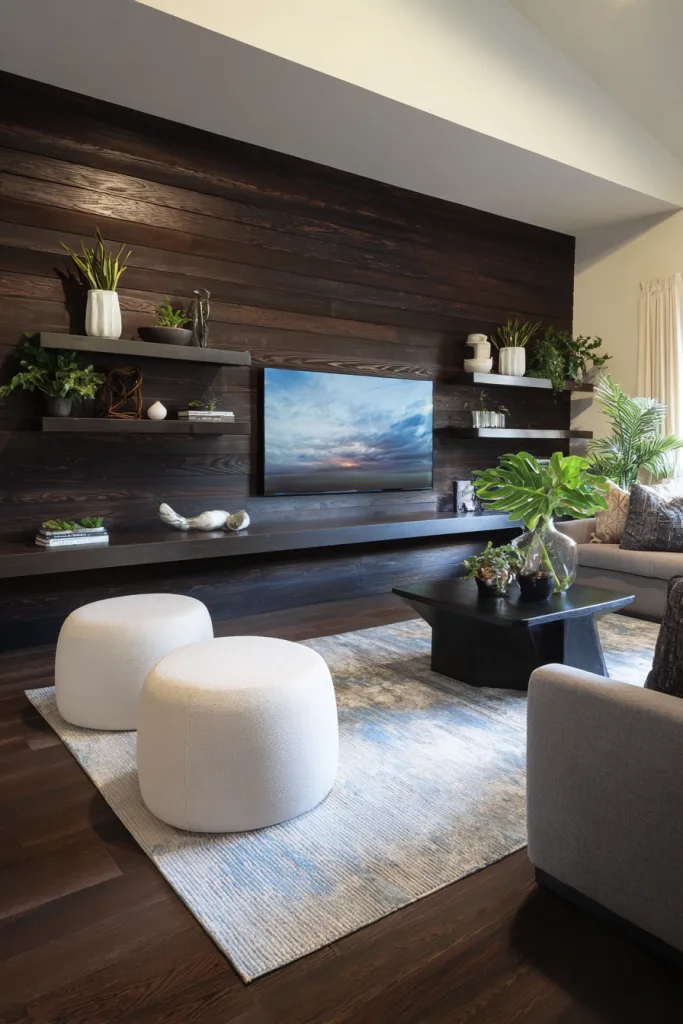
A dark wall color — charcoal, deep navy, black-green — does two things for a TV area: it visually recedes so the screen’s black bezel blends into the wall instead of standing out as a bright rectangle on a light background, and it cuts down on reflections and glare on the screen itself when the TV is off. The effect depends on the room — the same dark color that makes a large living room feel more intimate can make a genuinely small room feel closer and boxier, so weigh room size against the mood you’re after before painting a whole wall.
If painting the full wall feels like too much commitment, the same look works with a peel-and-stick wallpaper panel or a thin veneer product sized just to the TV wall, which costs a fraction of papering or painting an entire room and is easy to change later.
8. Manage Cables Like a Pro Installer
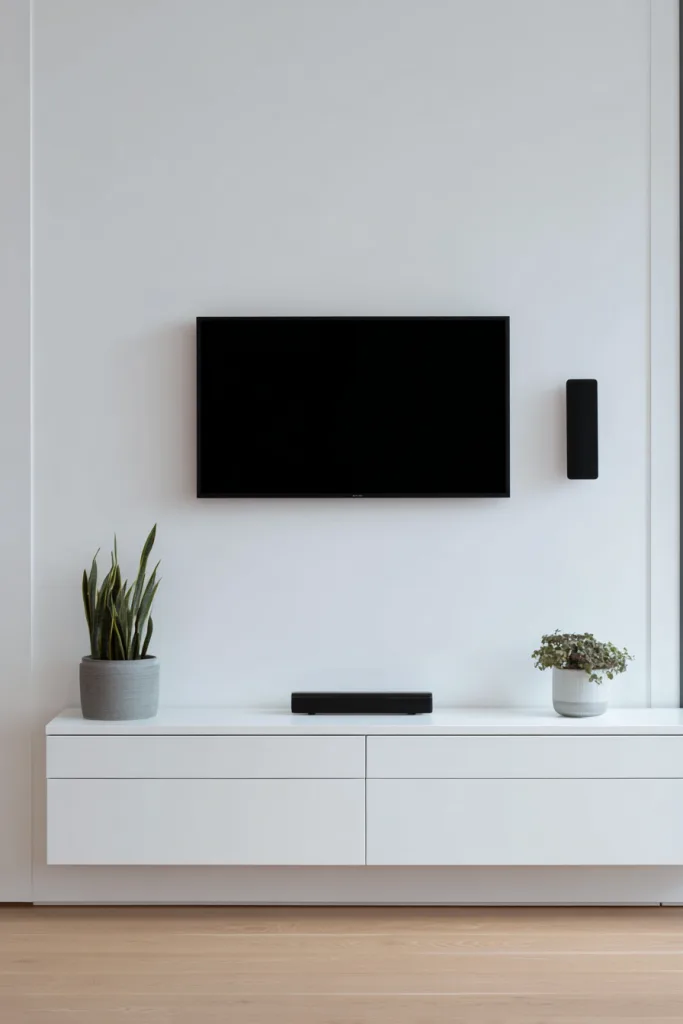
Nothing undercuts an otherwise well-styled TV wall like a visible tangle of cords running from the screen down to an outlet a few feet away. For a wall-mounted TV, the cleanest fix is an in-wall cable management kit — two low-profile plates that let you run cable inside the wall cavity between the TV and an outlet hidden behind the console. Any cable run inside a wall needs to carry an in-wall rating, typically marked CL2 or CL3 on the jacket, which is a code requirement for low-voltage cable run inside wall cavities, not just a nice-to-have.
If you’d rather not cut into drywall, a paintable cord cover channel run down the wall and painted to match is the next-best option, and it’s fully reversible for renters. Either approach is the single detail that most separates a professionally finished mount from a DIY one.
9. Anchor the Zone With a Rug and Balanced Seating
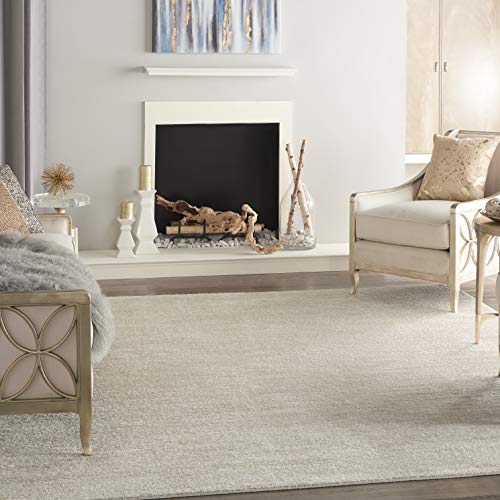
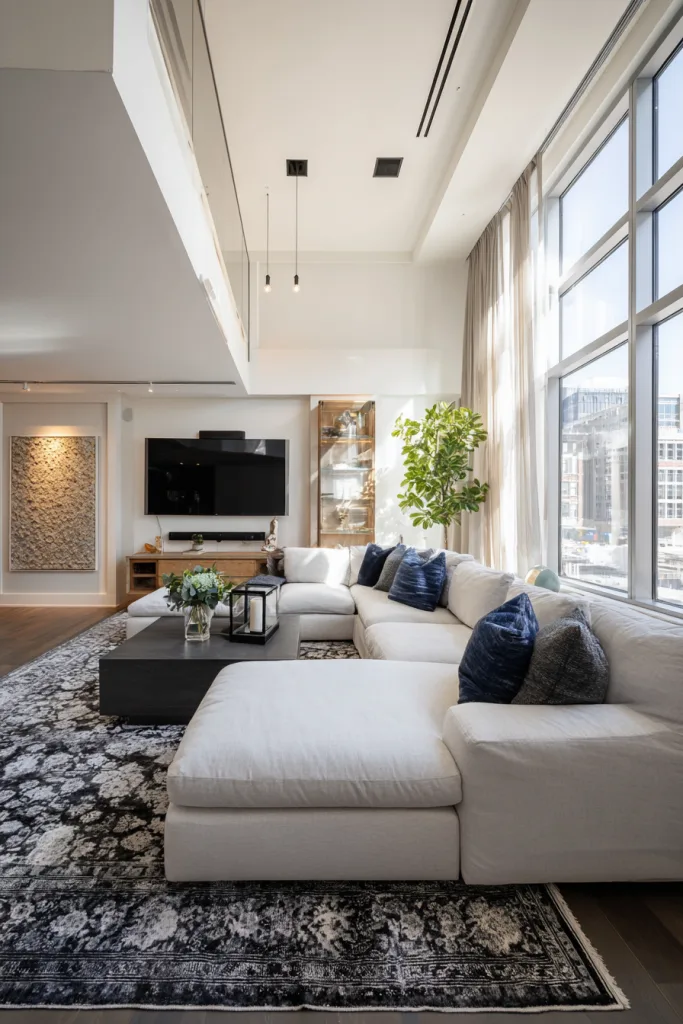
In an open floor plan, a rug does the work of defining where the TV zone ends and the rest of the room begins. Size it so at least the front legs of your main seating sit on the rug — a rug that only the coffee table touches tends to look like an afterthought rather than a zone definer.
For seating distance, a common rule of thumb is to sit roughly one and a half to two and a half times the TV’s diagonal size away from the screen, so a 65-inch TV suggests a viewing distance of roughly 8 to 13 feet for comfortable viewing without craning your neck or losing detail. Floating the sofa away from the wall, rather than pushing everything to the perimeter, usually lands an average living room in that range while also opening up the traffic path behind the seating.
10. Add Closed Storage for Everything That Isn’t Meant to Be Seen
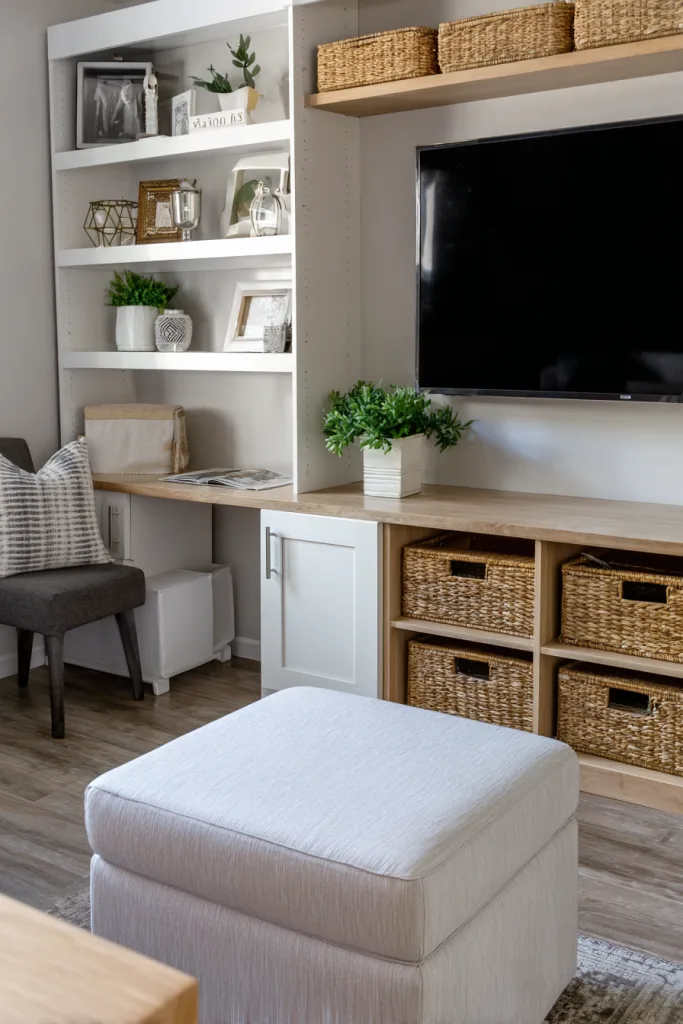
Remotes, controllers, spare cables, and the cable box itself rarely look good sitting out in the open, so build in at least one closed storage spot near the TV before you start styling the open shelves. A storage ottoman doubles as extra seating while hiding blankets and controllers; a media console with even one drawer or cabinet door keeps daily-use clutter out of sight without a trip to another room.
Decorative woven baskets on open shelves are a cheap way to add closed storage after the fact — they hide small items while keeping the material palette, wood, rattan, ceramic, consistent with the rest of the shelf styling. The goal isn’t zero visible objects; it’s making sure everything visible was placed on purpose.
11. Mix in a Vintage Piece and Varied Textures for Warmth
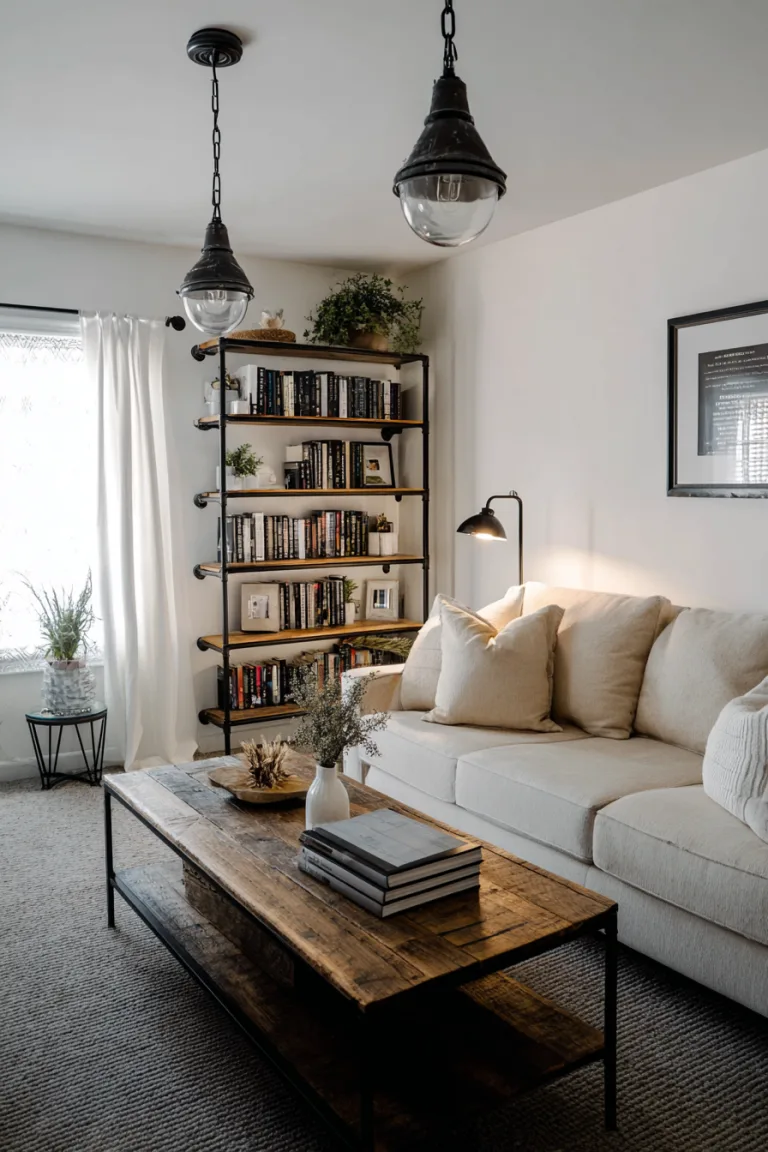
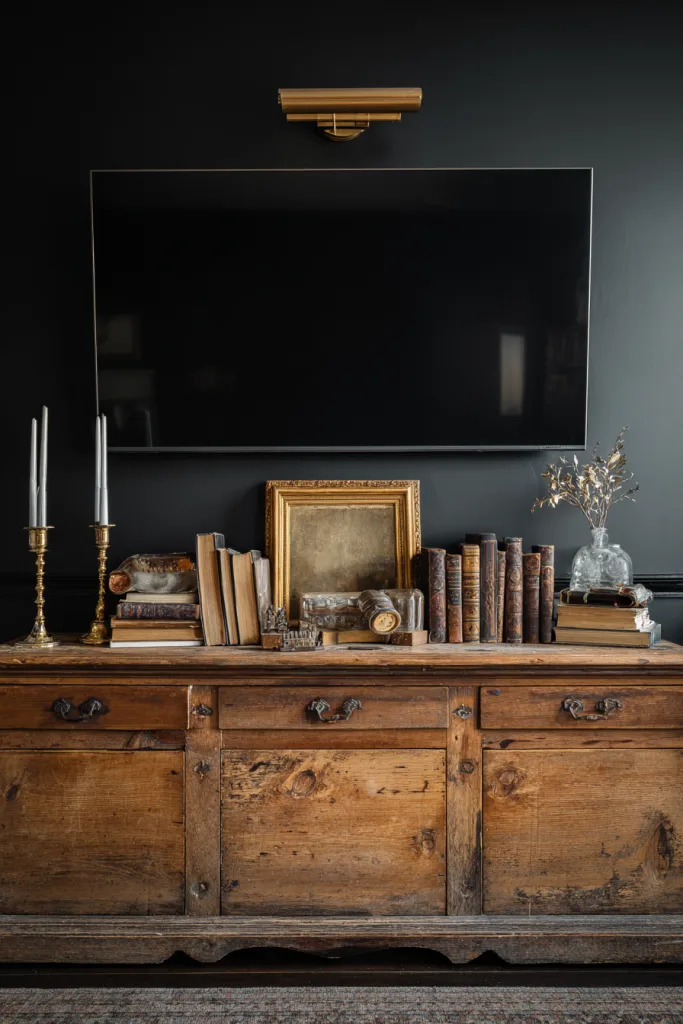
A flat screen and a media console are both hard, smooth surfaces, and a wall of nothing but hard surfaces can feel cold no matter how well it’s styled. An antique or vintage console beneath a modern TV is a straightforward way to introduce contrast — just check that any older piece can actually handle the load of modern AV equipment, since some vintage consoles have thin tops or fragile joinery that weren’t built for a soundbar and streaming box stacked on top, and confirm its height still lines up with a comfortable seated eye line for the mounted screen.
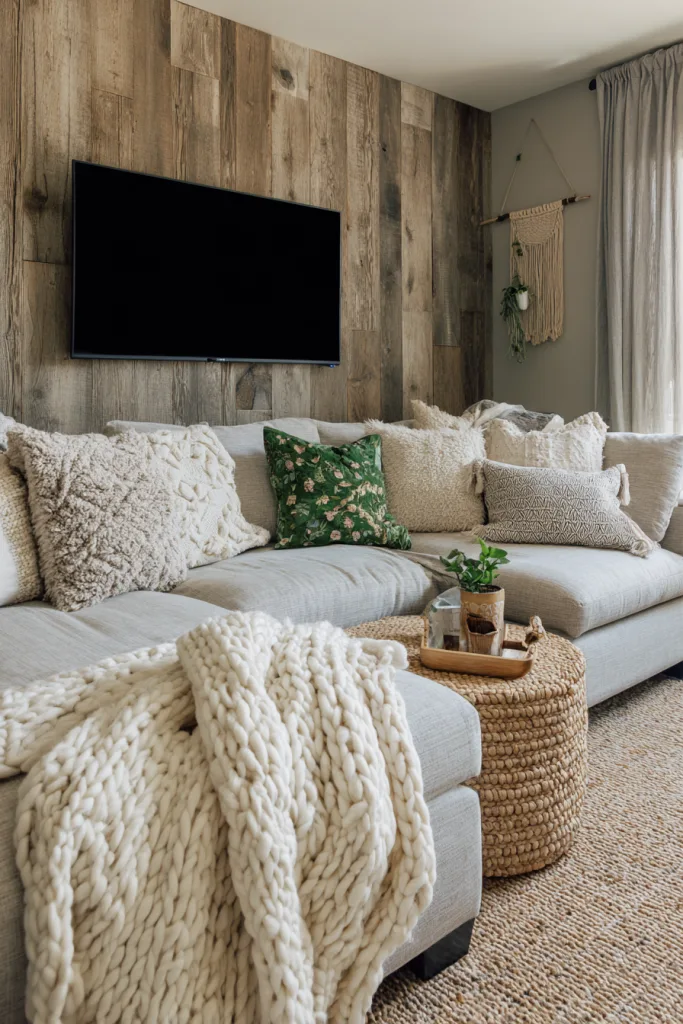
Layer in soft textures around the hard edges: a chunky knit throw over the arm of the sofa, a textured area rug, and mixed-fabric throw pillows in velvet, linen, or boucle all soften the area without touching the TV wall itself. Keep new and old pieces in a similar tone family, like warm woods or matching metal finishes, so the mix feels curated rather than accidental.
Bringing It Together
Decorating around a TV works best when you treat the screen as one element in the room rather than the room’s entire reason for existing. A gallery wall, floating shelves, or a full built-in all solve the same basic problem — turning a black rectangle into part of a considered design — at very different budgets and effort levels.
If you only do one thing from this list, make it cable management. A wall that’s otherwise perfectly styled still reads as unfinished with a visible tangle of cords running to the outlet, and it’s usually the cheapest fix here relative to the difference it makes.
Frequently Asked Questions
How much should I budget for decorating around my TV?
It depends heavily on which approach you choose. Styling with plants, a few frames, and small decorative objects is typically the cheapest option, often well under a few hundred dollars if you’re working with furniture you already own. Adding new console furniture, floating shelves, and layered lighting is a mid-range project, usually running from several hundred dollars into the low thousands depending on materials. A custom built-in entertainment wall is the biggest investment — often starting around $3,000 for a modest unit and climbing considerably from there with custom millwork, integrated lighting, or premium finishes. Start with the lower-cost changes to figure out what you actually like before committing to a built-in.
What’s the ideal height for mounting a TV on the wall?
The center of the screen should land at roughly seated eye level for your main viewing spot, which for a typical sofa works out to about 42-48 inches from the floor. Go higher if the room is mostly a standing space, like a kitchen or bar area, and lower if your seating is unusually low or deep. Mock up the height with painter’s tape before drilling — sit in your usual spot and adjust until it feels natural rather than relying on the number alone.
How do I choose artwork that won’t compete with my TV screen?
Favor muted tones, natural subjects, or abstract pieces over anything with stark white space or high-contrast graphics, since those tend to pull the eye even when the screen is on. The goal is a gallery wall where the TV feels like one more piece in the collection rather than an interruption in the middle of it.
Can these ideas work in a small apartment?
Most of them, yes. Floating shelves and a wall-mounted console keep the floor clear, which matters more in a small room than a large one. Light, reflective wall colors and a single well-placed mirror can make a compact space feel less closed-in, though as with the dark accent wall option above, a very small room usually reads better with a lighter palette than a dark one. Multi-functional pieces like a storage ottoman or a console with built-in cable management do double duty without eating extra floor space.