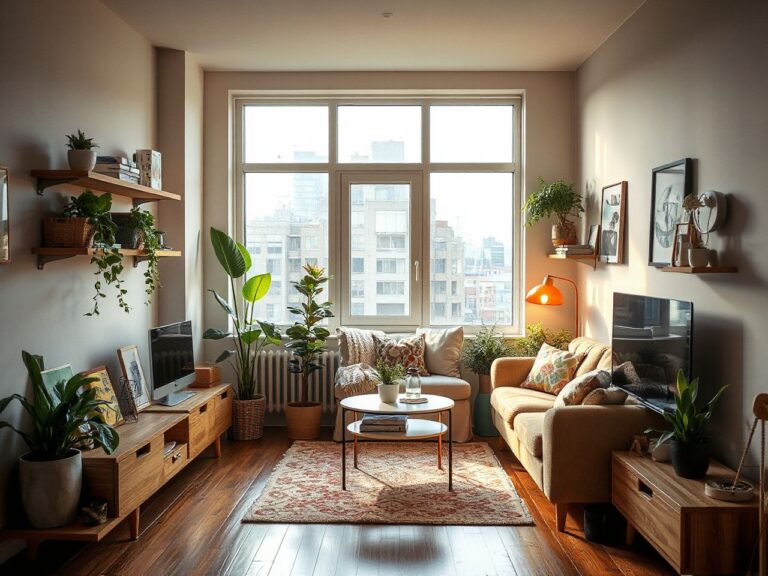
In 2026, contemporary rooms are moving away from stark showroom minimalism toward spaces with softer light, richer texture, and a clearer relationship with the building around them. The useful distinction is between a room that merely contains contemporary shapes and one that has a coherent contemporary composition: clear proportions, restrained repetition, tactile contrast, and enough visual warmth to keep the space livable. Each idea should be judged against the room’s existing architecture, natural light, circulation, maintenance demands, and the way old and new elements relate rather than treated as an isolated trend.
A considered lamp plan can make ordinary furniture feel intentional, while poor lighting can flatten an expensive room into a glare-filled display. The contemporary home decor ideas below begin with structure, then move through palette, materials, layout, lighting, storage, and upkeep.
Key Takeaways
- Let architecture, floor undertones, daylight, and circulation determine the palette and scale.
- Build warmth through layered lighting, natural materials, tactile textiles, and controlled repetition.
- Choose finishes and storage according to moisture, cleaning, fixing, and long-term maintenance needs.
Start with the room, not the trend
Contemporary design is often reduced to white walls, straight furniture, and very little decoration. That narrow reading misses the point. The style grew from functionalist thinking associated with the period between the 1930s and the 1970s, yet contemporary rooms today can include curved edges, aged timber, vintage furniture, patterned stone, and deeply coloured walls.
A contemporary room looks intentional when its parts share a visual logic. That logic may come from repeated curves, a limited colour family, a consistent timber tone, or a contrast between smooth architectural surfaces and soft furnishings. Random accumulation is the problem, not abundance itself.
Read the architecture first
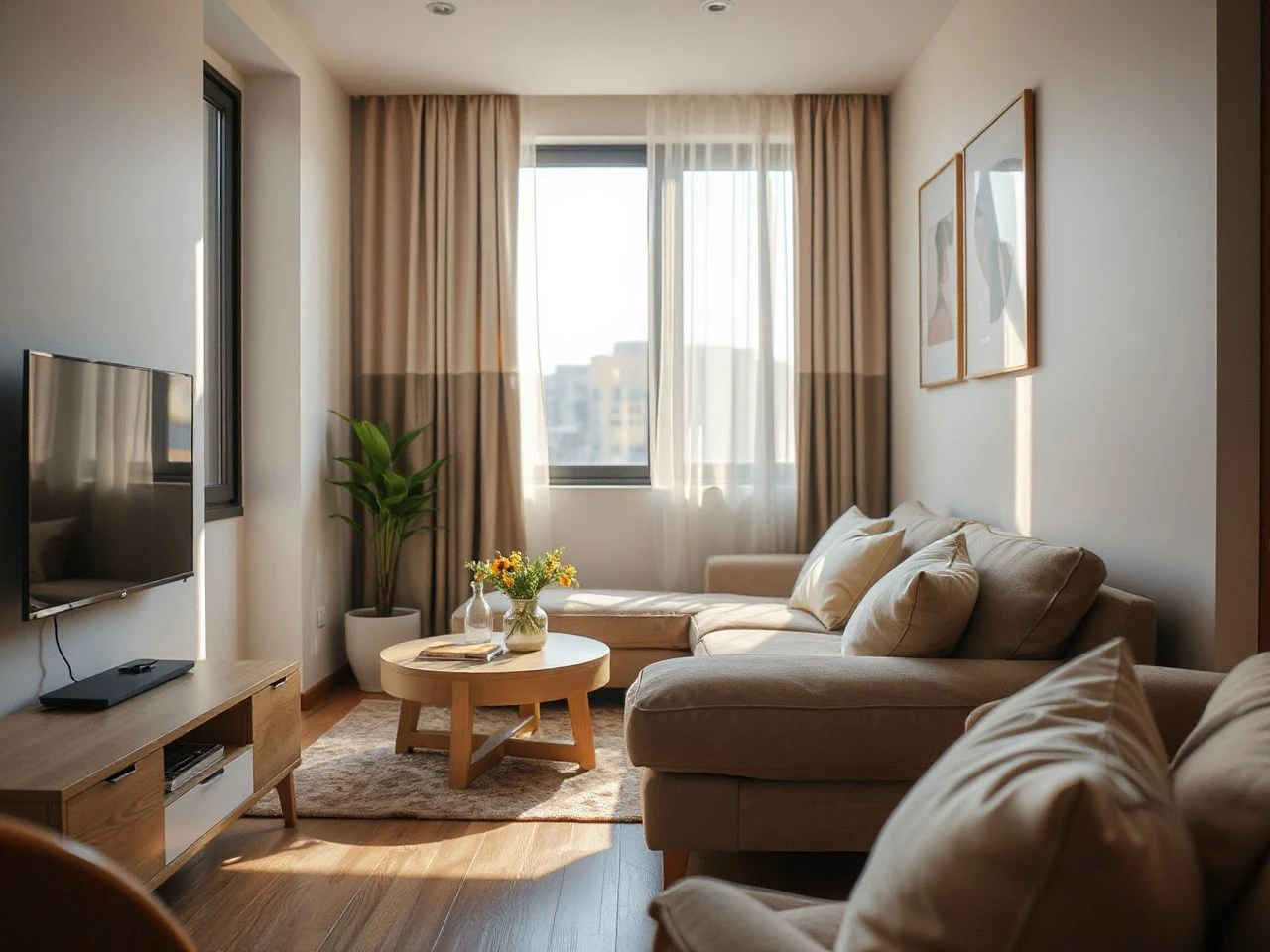
Before choosing a sofa, inspect the room’s fixed elements. Note the direction of daylight, the height and shape of windows, the floor’s undertone, the strongest sight lines, and the routes people use through the space. A long, low room may need vertical emphasis from artwork or fluted wood paneling, while a compact room may benefit from furniture that leaves more visible floor around it.
Existing architecture should guide contemporary decoration rather than disappear beneath it. A traditional cornice can sit comfortably beside a simple sofa, and an old timber floor can give a restrained room the warmth that pale paint alone cannot provide. Modern interior architecture and contemporary decoration work well together when their proportions agree.
Existing architecture determines the scale and placement of contemporary furniture more reliably than a trend image does. Measure by sight lines and walking routes, not by the isolated appearance of a piece in a photograph.
Use a simple composition test
Stand at the main entrance and identify the first three things your eye meets. If they all have the same visual weight, the room may feel flat. If every object competes, the room will feel restless. Give one element priority, then support it with quieter forms.
- Choose a primary anchor, such as a fireplace, artwork, pendant, or sofa.
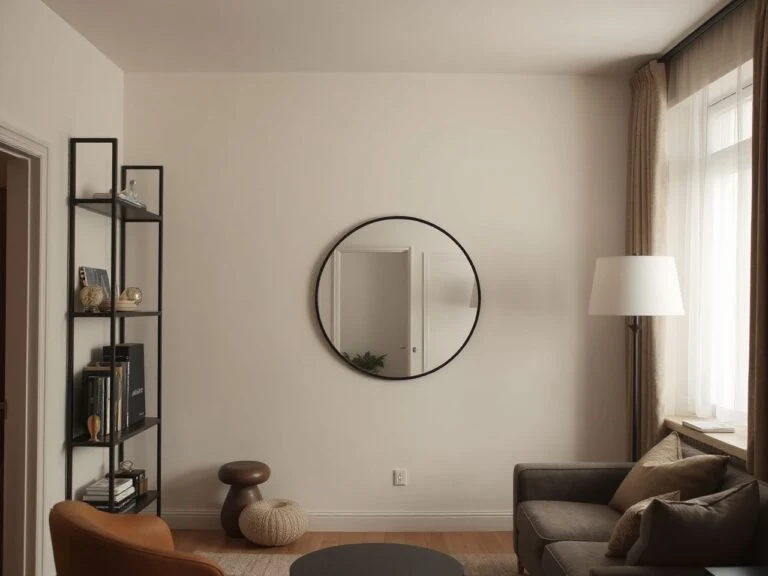
- Repeat one shape subtly through a mirror, table edge, handle, or lamp shade.
- Leave quieter areas so the strongest objects can be read clearly.
- Check that furniture does not interrupt the main route or block useful daylight.
Art Deco furnishings are associated with geometric shapes, clean lines, and curved edges. Those characteristics can inform a contemporary room without turning it into a period set. A rounded chair beside a rectilinear console is enough; repeating every curve in the room would make the theme too literal.
Bring old and new together
Traditional architecture and vintage furniture often give contemporary interiors their depth. Pair a modern lamp with an older side table, or place a simplified artwork above a carved mantel. The contrast works best when one feature is allowed to remain visibly historic instead of being surrounded by imitation antiques.
Mid-century modern design can sit naturally within a contemporary scheme because both approaches value useful form and clear proportion. Japandi interiors offer another helpful reference: calm shapes, honest materials, and a restrained palette can soften a room without making it visually empty.
Build a warm contemporary palette
A successful palette begins with what cannot easily change. Floors, brickwork, stone, cabinetry, metalwork, and large architectural features already carry colour. Paint and textiles should respond to those undertones rather than compete with them.
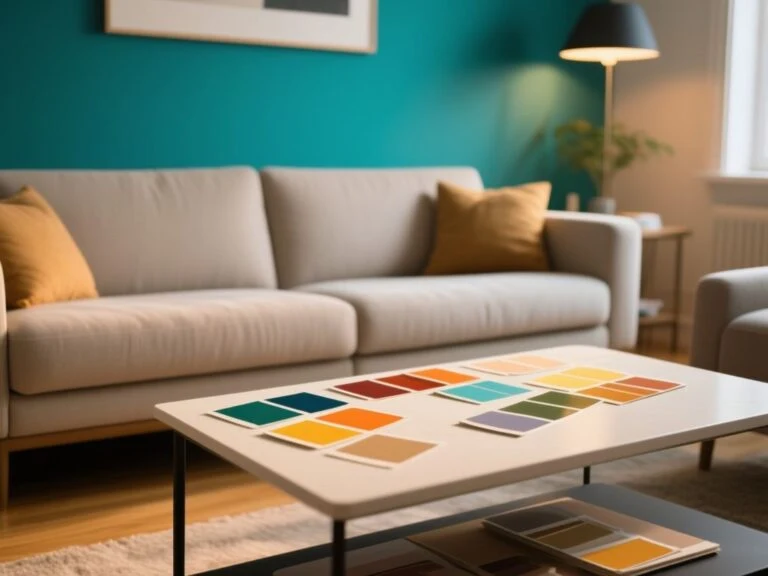
Hold a sample of the proposed wall colour beside the floor in both daylight and artificial light. Warm timber can make a cool grey appear sharper, while a pink or honey undertone in the floor may sit more comfortably beside softened cream, clay, olive, or brown. The aim is not to match every surface. The aim is to prevent accidental conflict.
Move beyond white and monochrome
White and monochrome rooms can look contemporary, but they are not requirements. Warmth can come from natural oak, woven textiles, boucle upholstery, aged metal, coloured glass, and a wall finish with visible variation. A single deep tone on joinery or an interior door can give a pale scheme a firm edge.
Use contrast with control. If the room already has strong floor grain, patterned stone, or expressive architecture, keep the wall and upholstery quieter. If the architecture is plain, introduce interest through a tactile wall treatment, sculptural pendant lighting, or large-format artwork.
Natural materials add warmth to contemporary rooms because their texture and variation interrupt a flat field of colour. The effect depends on restraint, since too many unrelated textures create noise rather than depth.
Combine wood, stone, metal, glass, and textiles
Materials need a relationship, not equal representation. Let one material lead and allow the others to support it. Natural oak may be the visual base, with stone providing weight, metal adding a fine line, glass opening a sight line, and boucle upholstery supplying softness.
- Wood: Use its grain to bring warmth and direction. Repeating several competing wood tones can make a room look accidental.
- Stone: Let veining or aggregate remain visible in a controlled area rather than pairing expressive patterns everywhere.
- Metal: Repeat a finish lightly through lighting, furniture details, or hardware so it feels connected.
- Glass: Use transparency to preserve sight lines, especially in smaller rooms.
- Soft textiles: Add comfort and sound absorption through curtains, rugs, cushions, and upholstery.
Terrazzo can bridge a plain contemporary scheme and an older building because its aggregate introduces small shifts of colour without relying on a bold pattern. Microcement can create a continuous visual field, but its suitability depends on the surface, moisture exposure, preparation, and maintenance guidance supplied for that finish. A porous finish that works in a dry living area may be a poor choice beside a frequently splashed basin.
Choose finishes by room conditions
Kitchens, bathrooms, entrances, and utility areas face more moisture, dirt, and contact than a quiet bedroom. Ask how a surface will be cleaned, repaired, and renewed before treating it as a decorative feature. Limewash paint can bring soft movement to a dry room, while a moisture-prone area requires careful attention to the finish system and the manufacturer’s instructions.
Untreated wood can mark or absorb moisture more readily than a sealed surface. Boucle upholstery can add welcome softness, but its texture means crumbs, dust, and spills need a realistic cleaning plan. Contemporary design becomes more convincing when maintenance is part of the design decision rather than an afterthought.
Make each room feel composed
Furniture and decor look collected rather than randomly assembled when their scale, spacing, and visual weight are deliberate. Begin with the room’s main activity. A living room needs comfortable conversation and useful light; a dining area needs clear movement around the table; a bedroom needs calm at the bed and practical light at storage and dressing points.
Living room ideas
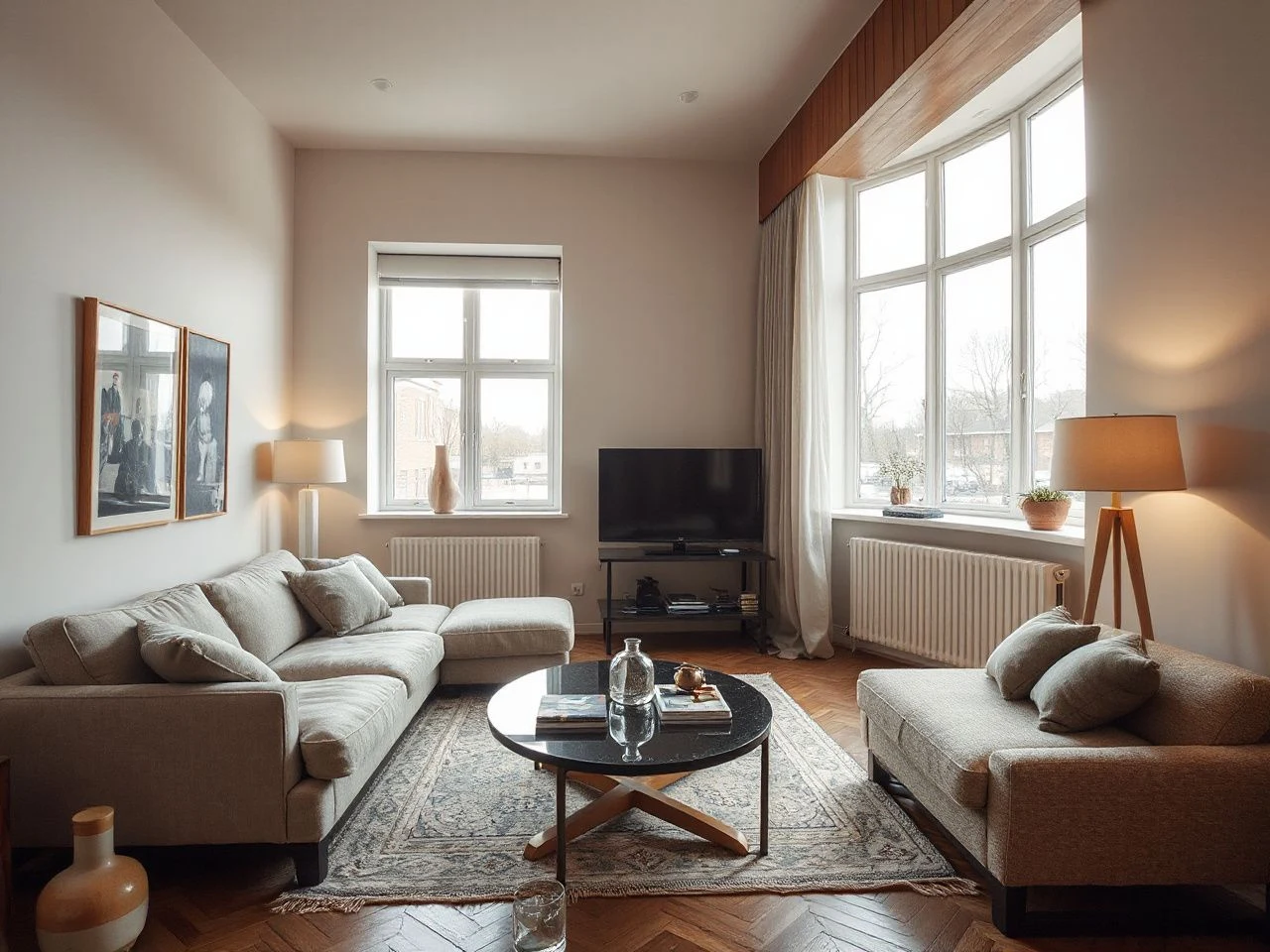
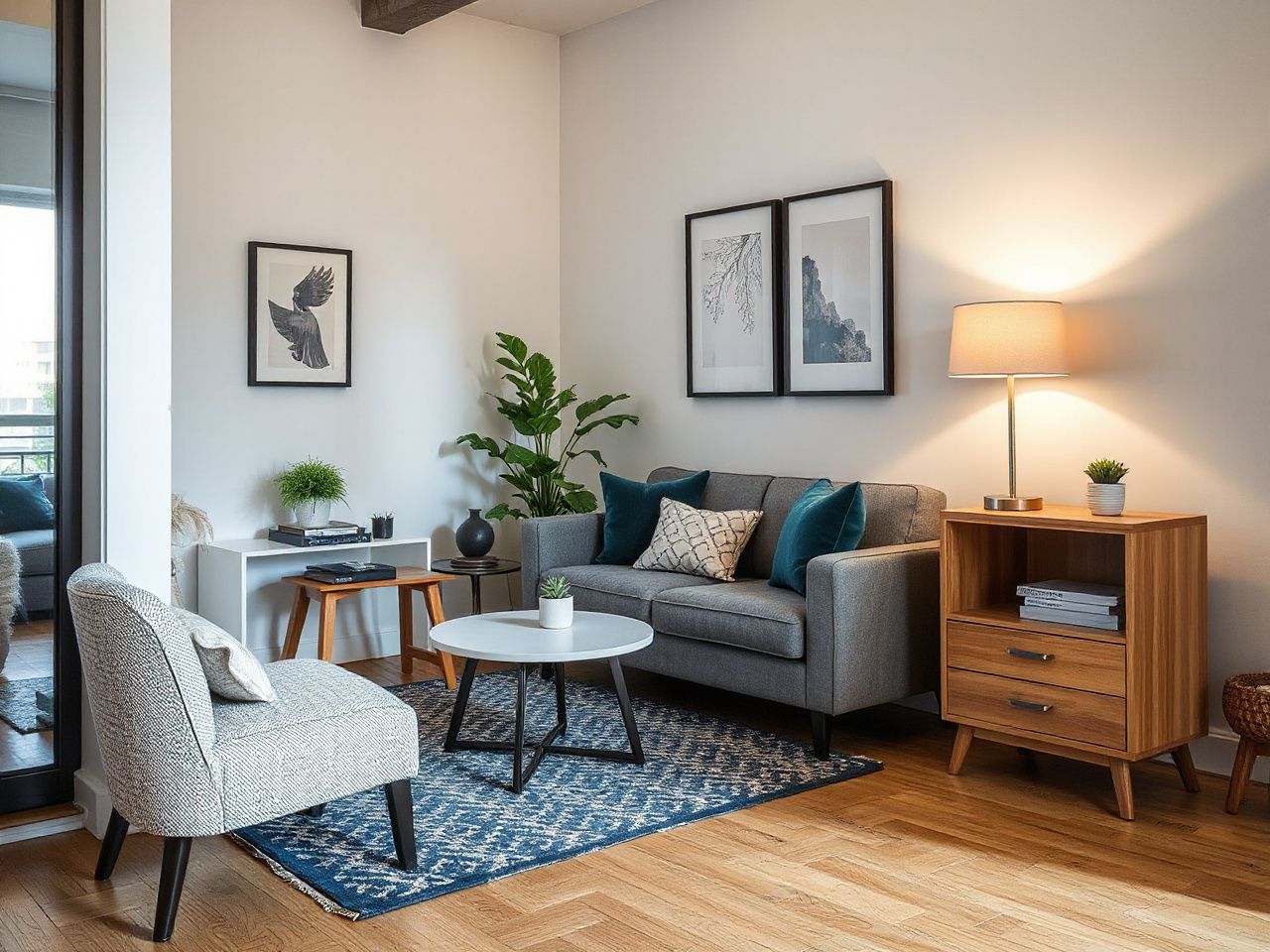
In a contemporary living room, allow the seating arrangement to define the social centre rather than pushing every piece against the walls. A low sofa can balance a tall artwork or pendant, while a round table can soften a room dominated by straight lines. Keep the strongest pattern or finish away from every focal point so the eye has somewhere to rest.
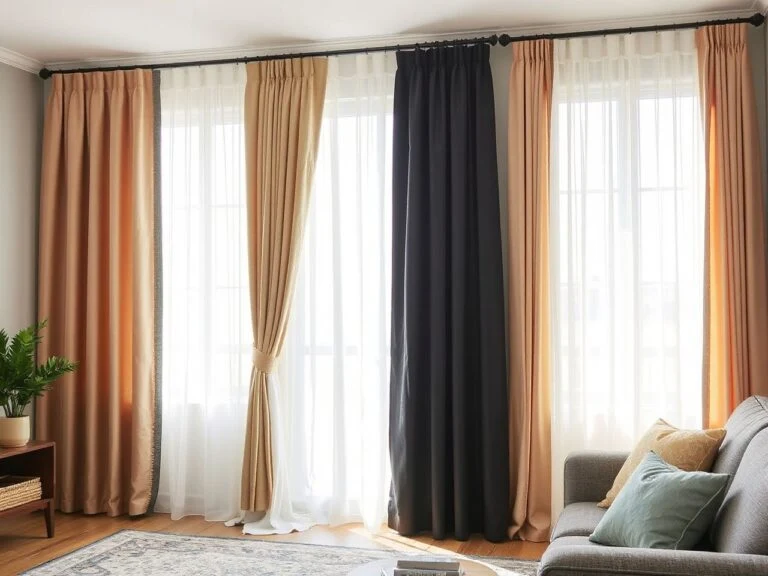
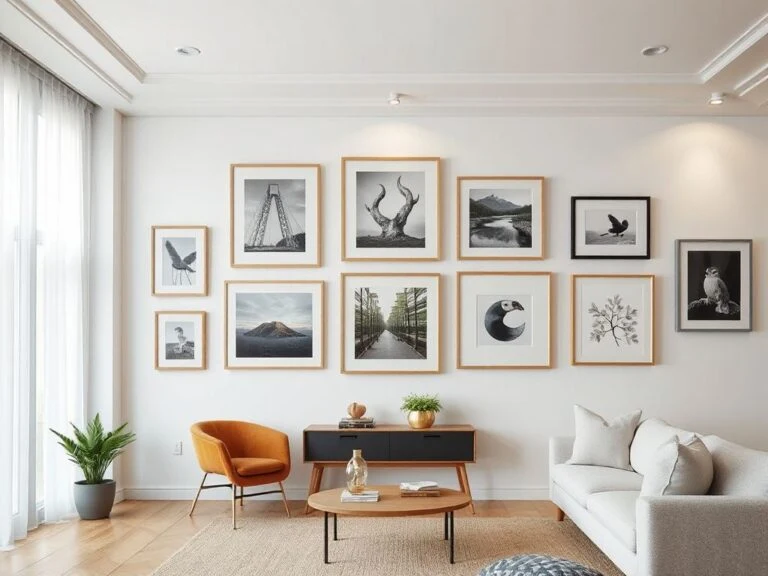
Layer a rug, curtains, cushions, and upholstery with different surface qualities rather than simply adding more colour. A smooth table beside a nubby chair creates useful contrast. A single large-format artwork often gives a wall more authority than a crowded arrangement of small pieces, provided the scale suits the wall and the fixing is secure.
For a focused treatment of seating, scale, and lighting, see these contemporary living room decor ideas alongside the broader principles here.
Kitchen and dining areas
Contemporary kitchens benefit from a clear visual hierarchy. Let cabinetry, worktops, or a central architectural feature lead, then keep smaller objects controlled. Open shelving can display useful pieces and add lightness, but it also puts dust and visual repetition on view. Closed storage is calmer where daily objects are varied or difficult to keep orderly.
Modular shelving works well when the contents are edited by category and height. It becomes cluttered when every section is filled to the edge. More than 50 percent book-related shelf space represents a cluttered environment, so leave visible breathing room if books are part of the display rather than allowing them to dominate every bay.
In a kitchen, practical finishes should be judged beside steam, splashes, grease, and repeated wiping. Terrazzo, sealed timber, tile, and microcement each create a different care routine; the right choice depends on the specific finish and the manufacturer’s instructions, not on the material name alone.
Bedrooms and small homes
Bedrooms need lower visual contrast and more forgiving texture than a reception room. Use a quiet wall colour, layered fabric, and lighting that can be softened near the bed. A single strong artwork or sculptural bedside lamp can provide character without filling every surface.
Small homes need clear sight lines more than miniature versions of large-room furniture. Choose storage that closes where visual calm matters, and reserve open shelving for objects that deserve attention. The guide to practical home organisation ideas can help with the storage side of the plan without turning the room into a display of containers.
Open shelving, closed storage, or built-ins?
Open shelving suits objects that are used often or contribute to the composition. Closed storage suits mixed household items, strong colour variation, and areas that need quick visual calm. Built-in cabinetry is useful where awkward corners, full-height walls, or a fixed architectural feature make freestanding pieces look disjointed.
- Choose open shelving when access and display are equally important.
- Choose closed storage when the contents vary in size, colour, or frequency of use.
- Choose built-ins when the wall shape or circulation calls for a unified plane.
Storage should support the room’s visual rhythm. Repeating vertical divisions can echo a window pattern, while an uninterrupted cabinet face can calm a wall with too many openings. The choice is compositional as well as practical.
Use lighting to give contemporary rooms depth
Lighting is the first correction I make in a room that feels cold, flat, or harsher than expected. A ceiling fixture alone often places light where the electrical point happens to be, not where people read, talk, cook, or look at art. Contemporary residential lighting design works through layers that give the eye different levels of brightness.
Layer ambient, task, and accent light
Ambient light establishes a comfortable general level. Task light supports a specific activity at a desk, island, bedside, or reading chair. Accent light draws attention toward artwork, a textured wall, a plant, or an architectural feature. The layers should work independently enough that the room can change character without moving furniture.
Use table lamps and floor lamps to place light at human height. Wall lights can wash a surface or frame a passage, while a pendant can define a dining area or stairwell. Recessed or concealed light may provide useful general brightness, but it should not be expected to create all the atmosphere by itself.
Layered lighting prevents contemporary rooms from looking flat because it separates general visibility from activity and emphasis. The room gains depth when surfaces receive light from different directions rather than one source shining down from the centre.
Control glare and harsh shadows
Glare often comes from a bright source reflected in glass, polished stone, a screen, or a glossy cabinet. Shift the source, soften the shade, or bounce light off a wall instead of aiming it directly at reflective surfaces. A lamp that lights the wall behind a sofa can feel gentler than a bare source aimed across the seating.
Harsh shadows can make a contemporary room feel stark. Place accent lights to reveal texture without exaggerating every edge, and avoid pointing several narrow beams at one small object. Diffused lampshades and curtains can soften contrast near windows, while darker corners may benefit from a low lamp rather than a brighter central fitting.
Plan fixtures safely
Hardwired fixtures require suitable electrical installation. A qualified electrician should assess the existing wiring, the fixture, and the location before a new connection is made. For general electrical safety information, consult the U.S. Consumer Product Safety Commission, and follow the instructions supplied with the fitting.
Heavy artwork, mirrors, shelving, and wall panels also need secure fixing suited to the wall structure. Concealed wiring and plumbing can sit behind a wall, so check the fixing location before drilling. The Consumer Product Safety Commission publishes consumer safety guidance that includes securing furniture and reducing tip-over risks; its guidance is a useful reference when planning tall storage and wall-mounted pieces.
Use sculptural fixtures with restraint
Sculptural pendant lighting can act as the room’s primary visual anchor, especially above a dining table or in a double-height space. Give it enough quiet around it to be read as a form. If the pendant already has a strong silhouette, keep nearby artwork and accessories simpler.
A lighting plan should follow the room’s sight lines. Check what is visible from the sofa, dining chair, bed, and doorway. A striking fixture may be beautiful from one angle but distracting from another if its shape cuts across a television, artwork, or window view.
Maintain the look without creating a burden
A contemporary interior is easier to live with when its care demands are visible at the planning stage. Ask which surfaces will be touched, splashed, dragged, scratched, or exposed to sunlight. Then decide where the patina of use will add character and where it will simply look neglected.
Care for common contemporary finishes
- Limewash paint: Treat the surface gently and confirm the appropriate cleaning method before wiping. Its variation is part of its appearance, so aggressive spot cleaning can create a visible change.
- Microcement: Follow the finish-specific care guidance and keep standing moisture from becoming a routine condition unless the system is intended for it.
- Natural oak: Dust with a suitable soft cloth and address spills according to the surface treatment. Untreated wood has different limitations from sealed wood.
- Terrazzo: Use the cleaning method specified for the particular seal and avoid assuming that every terrazzo surface responds identically.
- Boucle upholstery: Remove loose debris carefully and check the upholstery care label before using any liquid or stain treatment.
Cleaning, repair, and replacement costs are shaped by access and frequency as much as by the original finish. Open shelving takes ongoing editing and dusting. Delicate upholstery may need more careful spot treatment. Built-in cabinetry can be visually calm but harder to alter if the room’s needs change. Sustainable interior design begins with choosing things that can be maintained and lived with, not simply materials that look natural in a sample.
Plan for repair and change
Keep spare touch-up material, care instructions, and installation information together. Photograph concealed wiring routes and wall fixings before closing up a renovation, and record the finish used on each surface. This small record makes later repair less speculative.
Use replaceable soft goods to refresh a room rather than rebuilding its fixed elements. Curtains, lampshades, cushions, and artwork can change the atmosphere while the main composition remains stable. That approach also protects the room from trend fatigue.
Common mistakes to avoid
- Using only one central ceiling light and expecting it to create atmosphere.
- Choosing a paint colour before checking it beside the existing floor.
- Mixing many unrelated wood tones, metals, and stone patterns.
- Making every surface open storage, then treating the resulting visual noise as a styling problem.
- Using porous or delicate finishes in wet or high-traffic areas without checking their care limits.
- Hanging heavy pieces without matching the fixing to the wall structure.
- Copying a room from a photograph without adapting its scale to the actual architecture.
A room can remain contemporary while containing books, inherited furniture, colour, pattern, and signs of ordinary life. The organising work happens through proportion, repetition, light, and editing. If a scheme feels sterile, add texture and warmer light before adding more decoration. If it feels busy, remove one competing finish before buying another object.
For readers working with a tight budget or a temporary home, the ideas in these adaptable dorm decor projects show how lighting, textiles, and removable details can change a space without altering its structure.
Frequently Asked Questions
How can I make a contemporary room feel warm rather than cold?
Begin with layered lighting, especially table and floor lamps that place a softer glow around seating and corners. Add natural oak, woven textiles, boucle upholstery, curved forms, and one or two deeper tones. Keep the palette controlled instead of making every surface neutral. Existing floor colour and daylight should guide the warmth, since a shade that feels gentle in one room can look stark in another.
How do I combine contemporary decor with traditional architecture?
Keep the traditional feature visible and pair it with simpler contemporary shapes. A modern sofa can sit beneath an old cornice, while a sculptural lamp can stand on a vintage table. Repeat one proportion or material so the contrast feels deliberate. Avoid surrounding an historic feature with several imitation-period objects, because that weakens the tension between old and new.
Why does contemporary decor sometimes look flat?
Flatness usually comes from one lighting layer, limited surface variation, or furniture arranged at one height. Add task and accent light, vary smooth and tactile materials, and introduce a vertical element such as artwork, shelving, or fluted wood paneling. Large-format artwork can establish focus, while a rug and curtains give the room softer edges and help separate the main zones.
Is contemporary home decor suitable for a small home?
Yes, provided the plan protects sight lines and avoids filling every wall. Use closed storage for visually mixed belongings, open shelving for a small edited display, and furniture with a clear relationship to the room’s circulation. Glass, mirrors, and lighter visual weights can preserve openness, but lighting still matters most. A small room with several carefully placed lamps often feels more generous than one with a single bright ceiling fitting.
Which finishes work in kitchens and bathrooms?
There is no universal finish that suits every kitchen or bathroom. Moisture, steam, splashing, cleaning products, and ventilation all affect the decision. Check the care and installation guidance for the specific limewash, microcement, timber, stone, or terrazzo system rather than relying on the material name. A finish designed for a dry living space may need protection or may be unsuitable in a frequently wet area.
How should I decide between open shelves and closed cabinets?
Choose open shelves for objects used often or selected as part of the room’s composition. Choose closed cabinets for irregular household items, strong colour variation, and areas where visual calm matters. Built-in cabinetry suits awkward walls or rooms that need a continuous architectural line. The most useful choice is the one that matches both the contents and the amount of editing you can realistically maintain.