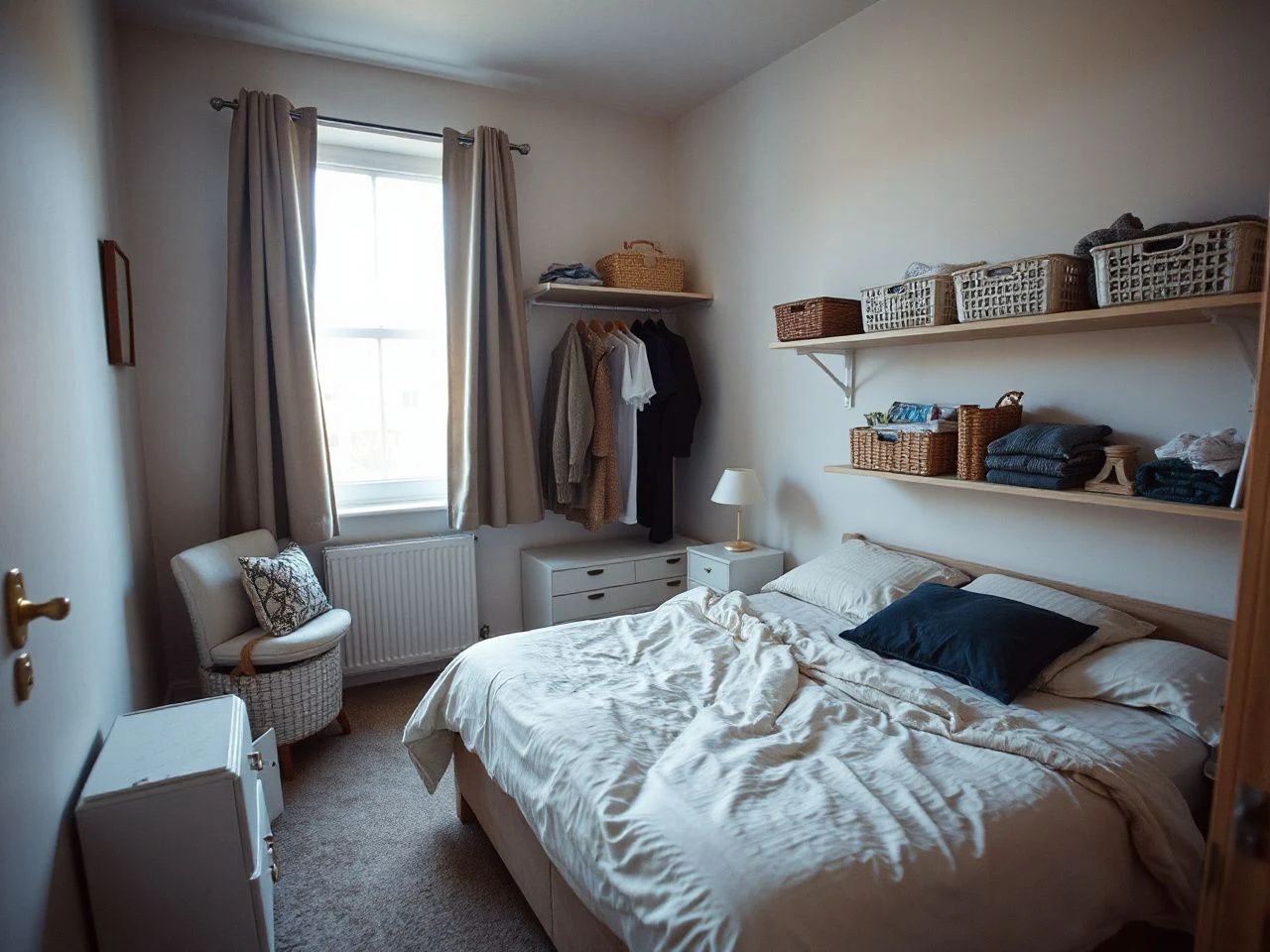
Why do carefully tidied bedrooms become cluttered again so quickly? Effective bedroom storage and organization separates storage by frequency of use, not just by item category: daily clothing needs the easiest access, while seasonal bedding and occasional items can occupy harder-to-reach areas. The system should also include a deliberate home for items in transition, such as worn-but-not-ready-for-laundry clothes, because ignoring that category is a common reason otherwise tidy bedrooms quickly become cluttered.
I judge storage by its hardware before its finish. A handsome wardrobe with weak hinges, an awkward drawer runner, or a shelf fixed without regard to its brackets will frustrate you long after the colour stops being interesting. The strongest plan begins with what you reach for, where you can safely place furniture, and how much daily effort the arrangement demands.
Key Takeaways
- Give daily clothing and in-transition items the easiest access.
- Use wardrobes, dressers, shelves, and under-bed boxes for clearly defined roles.
- Keep heavy belongings low, secure tall furniture, and protect clear paths.
- Choose storage that remains easy to maintain after laundry enters the room.
Causes: Why bedroom clutter returns
Storage fails when access does not match frequency
A storage plan can be neat and still be wrong. If frequently worn clothing sits behind a crowded stack, the drawer is likely to be left open while clothes collect on a chair or floor. Seasonal clothing can tolerate a less convenient shelf, but daily socks, sleepwear, and work clothes need a direct route from storage to dressing.
Daily clothing needs the shortest path from drawer or wardrobe to the person using it. A seasonal garment bag can occupy a higher or less accessible area, provided its contents remain clean, dry, and clearly identified.
Start by dividing belongings into four working groups:
- Daily use: clothing, sleepwear, underwear, and accessories reached repeatedly.
- Regular use: less frequent clothing, spare towels, and items used during part of the week.
- Seasonal use: clothing and bedding that can move to a higher shelf or under-bed container.
- In transition: clothing that is worn but not ready for laundry, items awaiting repair, and belongings that need to leave the room.
The fourth group deserves its own location. A single storage basket, open section of a wardrobe, or clearly marked hook can prevent worn clothing from mixing with clean garments. The location must be easy to use with one hand, or the category will be ignored.
Clutter often reflects a poor return path
Items end up on the floor when returning them requires too many actions. A lid must be removed, a tightly packed drawer must be opened, or a hanger must be threaded through crowded clothing. The obstacle may look minor, yet repeated obstacles turn a storage system into a temporary landing zone.
A bedroom floor becomes a default storage surface when nearby furniture does not offer an obvious return path. Every frequently used item needs a home that can be reached and closed without rearranging other belongings.
Watch what happens during an ordinary dressing routine. If a drawer stays open, the contents are difficult to see. If clothes land on the bed, the wardrobe may be too crowded or too far away. If accessories gather on the bedside table, the room needs a small, defined container rather than more empty surface.
Furniture placement can create hidden problems
Storage capacity cannot compensate for blocked movement. Wardrobes, dressers, and baskets should not obstruct doors, windows, heating equipment, ventilation, or clear paths around the bed. A smaller unit in the right position often serves the room better than a larger piece that forces awkward movement.
Clear paths matter especially for people with limited mobility. Place regular-use clothing between comfortable reach and standing height where possible, avoid storage that requires climbing or deep bending, and keep the route from bed to dressing area free of loose containers. Accessibility begins with the path, not with a special accessory.
Storage furniture should support the room’s bedroom layout and furniture placement rather than dictate it. Mark the swing of doors and drawers on the floor with removable tape before moving a heavy unit. The visible outline reveals conflicts that measurements alone can miss.
Solutions: Build storage around the clothing you own
Choose a wardrobe, dresser, or under-bed box by role
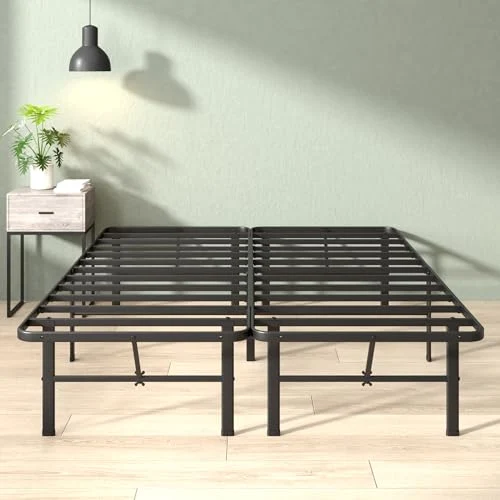
A wardrobe suits hanging clothing and items that need to remain visible. A dresser suits folded clothing, smaller categories, and belongings that benefit from drawer-by-drawer separation. An under-bed storage box suits seasonal clothing, spare bedding, or occasional items, but only when the container fits the available clearance and contents can remain protected from dust, moisture, and poor airflow.
The amount and type of clothing should decide the balance. Someone with many garments that crease easily needs more hanging space; someone with mostly folded clothing needs drawers or shelves that can be viewed without making tall piles. The right question is not how much furniture fits the wall. The right question is where each clothing group can return with the least friction.
A wardrobe should hold the clothing used most often at a comfortable reach, with occasional garments higher or farther back. A dresser should give each drawer a job rather than mixing unrelated categories. Under-bed storage should remain reserved for items that do not need constant access.
Heavy belongings belong low and evenly distributed. This arrangement lowers strain on upper shelves and makes the furniture easier to manage during ordinary use.
Use drawers as visible files
Arrange folded belongings in a horizontal file rather than stacking them in a tall pile. The front edge of each item remains visible, so one garment can be removed without disturbing everything above it. This method works particularly well for everyday clothing that would otherwise migrate to the chair.
Drawer dividers help when categories collapse into one another. Use them to separate small garments, accessories, or personal items according to the way you actually dress. A divider is useful only when it leaves enough room for the contents to be lifted out without force.
Drawer dividers reduce reshuffling by giving each category a fixed boundary. The boundary should serve a routine, not create tiny compartments for every individual possession.
Folded clothing should be clean and completely dry before storage. Clean, dry fabric is less likely to develop odors, mildew, or avoidable fabric damage while enclosed.
Make shelves readable
Shelves become difficult to maintain when every layer is the same height and depth. A shelf riser can create a second visible level for smaller items, while a storage basket can gather loose accessories or soft goods. Leave the most frequently used section open enough for a hand to reach in without pulling out an entire stack.
Do not fill shelf space simply because it exists. A little breathing room makes labels visible and reduces the temptation to place a new item on the floor when the shelf is inconveniently full. Seasonal bedding can occupy a higher shelf, while daily clothing belongs closer to the dressing route.
For a wall shelf, the hardware deserves more attention than the decorative surface. The verified installation rules here give a shelf breadth no greater than 1.4 times the bracket’s width, and a shelf no wider than 1.2 times the bracket’s height. Along an extended shelf, the gap between brackets should not exceed 4 times the shelf breadth. These figures are practical checks for a planned installation, not permission to ignore the wall, fasteners, or the shelf’s own instructions.
A screw installed into a concrete wall requires a minimum depth of one-tenth the shelf’s width under the stated installation guidance. Check the actual wall and fixing instructions before drilling; a measurement on paper cannot confirm that a particular fixing suits a particular surface.
Treat the bedside table as a small service station
A bedside table should hold only what supports the bedtime routine. Use a shallow tray or small container for personal items, leave the top surface clear enough for a lamp or book, and move rarely used objects to a drawer or another zone. The table should not become a second dresser.
Items used immediately before sleep deserve the easiest reach. Everything else should have a different home, because a bedside surface filled with unrelated belongings quickly becomes a place to postpone decisions.
Store seasonal belongings without losing them
Seasonal clothing and bedding can move to a higher wardrobe shelf, a garment bag, or an under-bed storage box. Store these items clean and completely dry, and keep the container away from moisture and restricted airflow. A label naming the contents prevents unnecessary searching during the next seasonal wardrobe rotation.
Group seasonal items by use rather than placing every spare textile together. Bedding can have one defined container, while clothing can have another location. The goal is to retrieve one group without opening every box in the room.
Do not use under-bed storage as a hiding place for undecided possessions. If an item has no likely use, decluttering and reducing possessions may solve the problem more cleanly than adding another container.
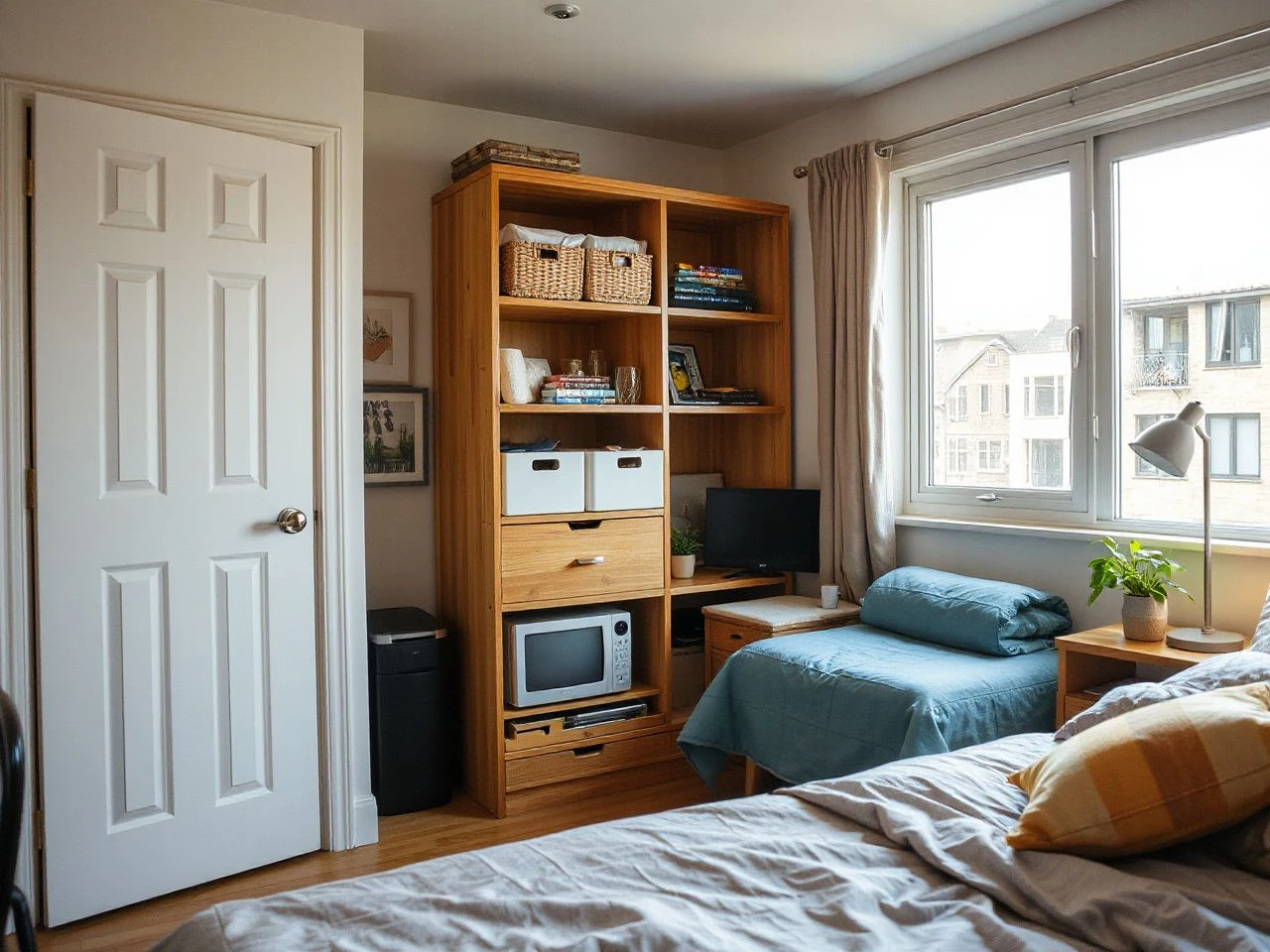
Solutions for small bedrooms and accessible layouts
Use height without making the room feel crowded
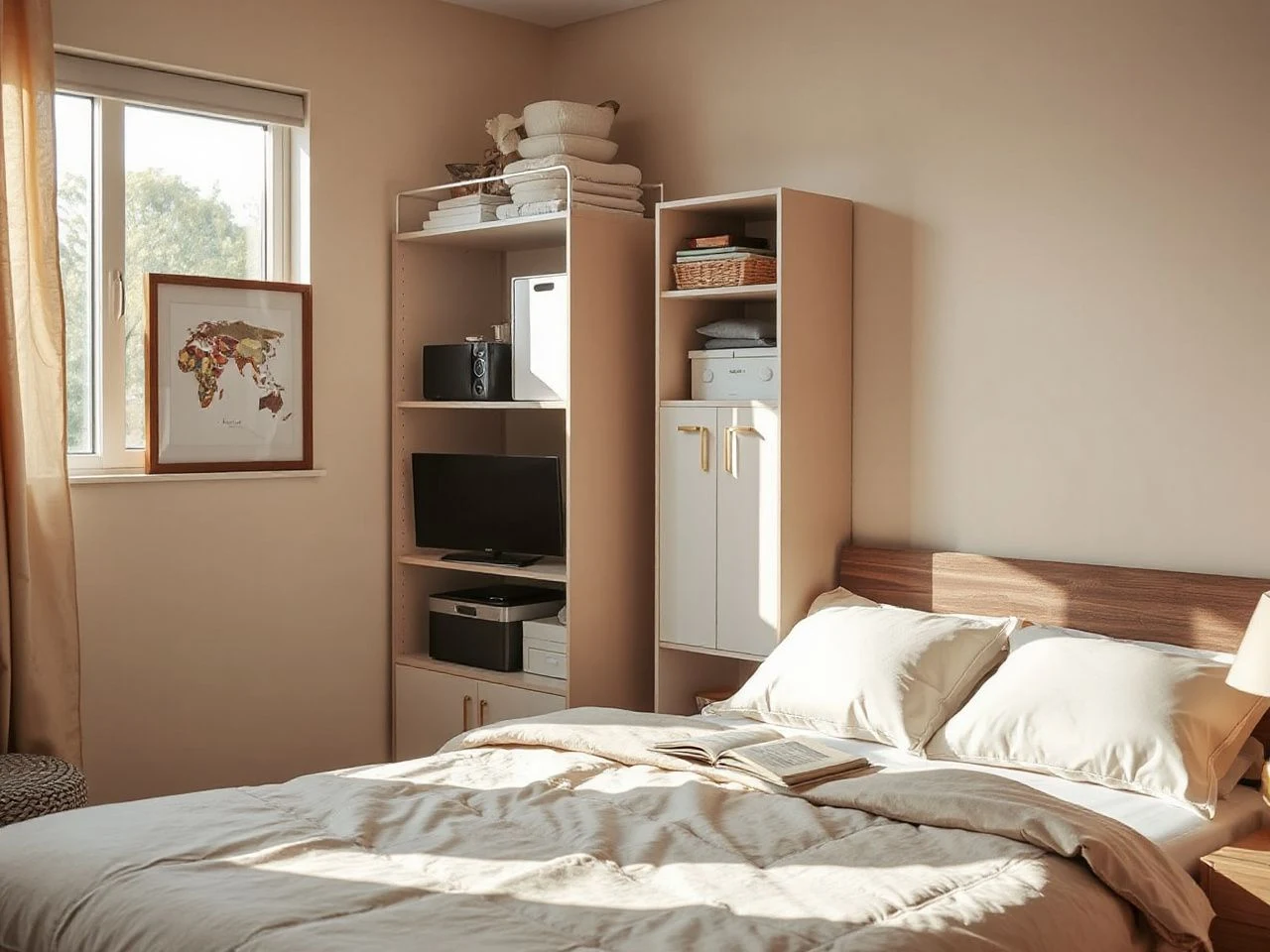
Small bedroom design benefits from storage that uses vertical space while preserving the floor route. A tall wardrobe or narrow shelving unit can keep belongings concentrated along one wall, but tall furniture must be secured against tipping, especially in homes with children or pets. The U.S. Consumer Product Safety Commission provides consumer safety information about furniture tip-over risks at cpsc.gov.
Keep the area around a tall unit visually calm. Closed storage can conceal mixed categories, while a small number of visible items give the room structure. Too many open shelves create a display surface that needs constant editing.
Furniture should never block ventilation, heating equipment, windows, doors, or the clear route around the bed. These are layout requirements, not details to solve after the room is full.
Compare storage by upkeep, not just capacity
Wardrobe storage keeps hanging clothing together and makes garment visibility straightforward, but crowded rods make selection harder. Dresser storage protects folded categories from view and can support horizontal filing, though each drawer needs a stable purpose. Under-bed storage uses otherwise idle space, but access is less convenient and contents need protection from dust, moisture, and poor airflow.
The least demanding storage system is usually the one with fewer steps between use and return. Open hooks can suit an in-transition category, a dresser drawer can suit daily folded clothing, and a closed under-bed box can suit seasonal bedding. The answer depends on the path your routine already takes.
Storage with a low upkeep burden has a visible purpose, an accessible opening, and enough spare room to accept the next item without a reshuffle. A full container is a warning that the category needs editing, not a reason to add another container immediately.
Design for limited mobility
Accessible home organization starts by placing frequent-use items within comfortable reach. Keep daily clothing in drawers or wardrobe sections that do not require climbing, deep crouching, or moving another object first. Store heavier items low and distribute them evenly.
Use handles that are easy to grasp, keep floor surfaces clear, and avoid a storage basket that must be dragged across the room. A clear path around the bed also gives a person more room to turn, dress, or transfer safely.
Storage for someone with limited mobility should reduce bending, reaching, and repeated transfers. The arrangement should be judged from the person’s actual seated and standing routines rather than from a room photograph.
Use nearby rooms carefully
Borrowing ideas from kitchen storage can help with small accessories, but a bedroom system should remain quiet and easy to maintain. A slim rolling cart may hold hair or clothing-care items if it parks without blocking a door or heating equipment. A wall hook can support an in-transition garment category, provided the hook is fixed securely and does not narrow a walking route.
Storage ideas that depend on many decorative objects often create more maintenance than they remove. If a neighbouring bathroom needs additional capacity, a separate guide to adding storage to a rented bathroom can keep that problem out of the bedroom plan.
Preventive measures: Keep the room organized after laundry day
Create a home for circulation
Laundry is not a single state. Clothing may be clean, worn, awaiting washing, drying, ready to fold, or waiting for repair. A bedroom stays orderly when those stages have distinct homes. Use a hamper for laundry, a defined in-transition zone for worn clothing, and open drawer or wardrobe space for clean items awaiting return.
Do not place the hamper where it blocks a drawer or becomes a surface for clean clothes. The hamper should sit along the route between changing and laundry removal, while the in-transition zone should remain separate from clean storage.
Clothing in transition needs a deliberate home because clean and dirty storage cannot safely serve the same role. That single distinction prevents many piles from forming on a chair or floor.
Make the return routine shorter
After laundry, return items to their assigned category before adding new storage. File folded clothing horizontally in dresser drawers, hang the garments that need hanging, and place accessories in their divider or basket. If one category will not fit, remove damaged, unused, or no-longer-worn items before expanding the furniture footprint.
Keep frequently used items easy to reach and reserve difficult locations for occasional belongings. The arrangement should make the correct action obvious when you are tired or in a hurry.
A storage system remains tidy when putting something away takes fewer decisions than leaving it out. Labels, drawer dividers, and shelf risers help only when they make the next action clearer.
Inspect hardware and stability
Tall wardrobes, dressers, and shelving should be secured against tipping, particularly where children or pets live. Follow the furniture instructions and inspect fixing points rather than trusting a heavy base or a wide footprint. For non-domestic storage furniture, stability assessments are detailed in BS 4875; the British Standards Institution provides standards information at bsigroup.com.
Hardware should be treated as part of the storage design. Check that drawer runners do not obstruct adjacent furniture, that doors can open without striking a wall or bed, and that shelves sit level before loading them. Heavy items belong low and evenly distributed.
Review the room through observable signs
A bedroom needs adjustment when clean clothes regularly land on the floor, a drawer must be opened with two hands, a shelf hides its contents, or a storage box cannot be removed without moving furniture. These signs reveal a mismatch between the system and the routine.
Review one category at a time. Start with clothing, then bedding, accessories, and personal items. This keeps the task manageable and makes it easier to identify whether the problem is excess, poor access, or a missing in-transition home.
Paint colour can support the mood of a room, but it cannot repair a storage route. If you are also changing the room’s atmosphere, these bedroom paint colour ideas can be considered separately from the practical storage decisions.
Frequently Asked Questions
How do I choose storage for the amount and type of clothing I own?
Count categories by behaviour rather than by a single total. Hanging garments need wardrobe space, folded garments need drawers or shelves, and seasonal clothing can use a garment bag or under-bed storage box. Put daily clothing in the easiest locations first. If a category will not fit, edit what you own before adding furniture, and leave room for laundry that is still in circulation.
How can I organize a small bedroom without making it feel crowded?
Concentrate storage along suitable walls, use vertical space carefully, and preserve clear routes around the bed, doors, windows, heating equipment, and ventilation. A tall wardrobe or shelving unit must be secured against tipping. Choose closed storage for visually busy categories, keep daily items accessible, and reserve under-bed storage for seasonal or occasional belongings.
Why do clothes keep ending up on the floor after I organize them?
The return path is probably too difficult, or worn-but-not-ready-for-laundry clothing has no assigned home. Create an in-transition zone near the changing area, then make clean clothing easy to return with horizontal filing, clear drawer divisions, or an accessible wardrobe section. If a drawer is crowded or a shelf is hard to reach, reduce the category or move it closer to the dressing routine.
How should I compare a wardrobe, dresser, and under-bed storage?
Use a wardrobe for hanging clothing and garments you need to see, a dresser for folded categories and small personal items, and under-bed storage for seasonal bedding or clothing used occasionally. The simplest system is the one that matches the way you dress. Keep heavy contents low, protect under-bed items from dust and moisture, and avoid storing daily essentials in hard-to-reach locations.