
A mattress should keep your body aligned.
The practical distinction is between a mattress’s surface feel and its deeper support: the goal is not to identify the firmest or most expensive option, but to assess whether the construction keeps the body aligned while relieving pressure in the sleeper’s usual position. Material labels alone are also insufficient; foam density, foam placement, coil design, layer thickness, foundation compatibility, and ventilation often matter more than whether a mattress is simply described as memory foam, latex, or hybrid. That is the useful starting point for learning how to find the best mattress for your body, room, and sleeping habits.
I approach a bedroom as I approach lighting. First, I fix the underlying structure; then I adjust the surface details. A beautiful lamp cannot correct a badly planned room, and a soft cover cannot correct a mattress that leaves the spine poorly supported.
Key Takeaways
- Choose firmness by sleeping position, body shape, and pressure points rather than by a label alone.
- Read the construction: foam placement, coil design, layer thickness, edge support, ventilation, and foundation rules matter.
- Compare trial terms, maintenance needs, frame compatibility, certifications, and replacement costs before committing.
How to find the best mattress: start with your body, not the label
Step 1: Identify the position you use most
Your usual sleeping position determines where pressure gathers and how much room your shoulders, hips, and abdomen need to settle. People change position during sleep, but the position you return to most often should guide the first firmness range you investigate.
- Side sleepers: begin around 4–6 out of 10 and look for deeper sinkage, described in the available guidance as more than 2.3 inches. The aim is to reduce pressure at the shoulder and hip while keeping the torso supported.
- Back sleepers: begin around 5–7 out of 10, with sinkage below 2.3 inches as a useful reference. The surface should allow the pelvis to settle without letting the middle of the body drop too far.
- Stomach sleepers: start around 5–7 out of 10, also looking for sinkage below 2.3 inches. A surface that gives too readily can make maintaining a neutral sleeping posture more difficult.
These ranges are starting points, not laws. Body shape, weight distribution, shoulder width, hip shape, and personal tolerance for pressure all alter the result. A lighter person may not compress the same comfort layers as a heavier person, while two people with similar weights can need different surfaces because their bodies distribute that weight differently.
Sleeping position changes the kind of support a mattress must provide. Side sleeping usually asks more of the comfort layers at the shoulder and hip, while back and stomach sleeping place greater importance on limiting excessive central sinkage.
Step 2: Separate firmness, support, and pressure relief
Firmness describes the initial surface sensation. It is the answer to the question, “How hard or soft does this feel when I lie down?” Support describes how well the deeper construction holds the body in a reasonably aligned posture. Pressure relief describes how successfully the upper layers distribute contact around prominent areas such as shoulders and hips.
A firm mattress can still create pressure points if the surface does not accommodate the body. A softer mattress can provide suitable alignment if the deeper support unit and comfort layers work together for the sleeper’s shape. The three qualities overlap, but they are not interchangeable.
Firmness ratings are not fully standardized between manufacturers or across mattress types. A 6 from one company may not feel like a 6 from another, and ILD or IFD values describe foam firmness under specified testing conditions rather than offering a universal comfort language for every finished mattress. Treat numerical ratings as clues within one range, not as direct comparisons between unrelated constructions.
Step 3: Account for shared sleeping
Couples need to assess each person separately before judging the shared surface. A mattress that suits one sleeper’s position may create pressure or excessive movement for the other. Note each person’s usual position, sensitivity to motion, preferred firmness, and need for edge space.
Motion transfer depends on construction and on how movement travels through the surface and support unit. All-foam designs may respond differently from a pocketed coil unit, while hybrid constructions can combine more localized coil movement with a foam comfort layer. The listing may describe these features, but a claim about motion control should not be treated as proof that every couple will sleep undisturbed.

Step 4: Compare mattress construction instead of material names
Memory foam and polyurethane foam
Memory foam is a type of polyurethane foam formulated for a slower, more conforming response. Its appeal is the close body contour and the way that contour can spread contact over a broader area. The trade-off depends on the density, thickness, placement, cover, and ventilation of the foam rather than on the phrase memory foam alone.
Polyurethane foam can appear in support cores, transition layers, or comfort layers. Density matters because it affects the feel and the way the material may respond over time, but a listing that omits density leaves an important part of the comparison unanswered. Foam placement matters too: a thin upper layer over a firm core will behave differently from a deep stack of conforming foam.
Heat retention deserves its own check. Dense, conforming foam can allow less air movement around the body than a more open construction, but the actual result also depends on cover fabric, ventilation, room temperature, humidity, and the other layers. The manufacturer’s description is not a substitute for a clear construction breakdown.
Latex foam: Dunlop and Talalay processes
Latex foam can be made through Dunlop or Talalay processes, and the process name helps describe how the material was produced. It does not, by itself, tell you whether the finished mattress will suit your body. Firmness, layer thickness, support beneath the latex, and the cover still determine the sleeping surface.
Latex is often discussed as a more buoyant material than slow-response memory foam, but the final feel depends on the full layer arrangement. Read the construction diagram rather than assuming every latex mattress has the same response. A latex comfort layer over a different support core is a different proposition from a mattress built with latex throughout.
Pocketed coil units and hybrid designs
A pocketed coil unit contains individually wrapped coils rather than one single connected spring surface. The coil count alone cannot explain the feel. Coil arrangement, gauge information if provided, zoning, perimeter construction, comfort layers, and the mattress’s overall thickness all influence how the surface behaves.
Hybrid mattresses commonly pair foam or latex comfort layers with a pocketed coil unit. That combination may offer a different balance of surface cushioning, movement response, edge use, and ventilation from an all-foam design. The word hybrid is a category label, not a performance guarantee.
Mattress construction determines how the body is held. A material name tells you less than its position, thickness, density, and relationship to the support core.
Thickness, edges, and ventilation
Thickness matters because a sleeper’s body interacts with the entire stack, not just the top fabric. Look for the thickness of each layer, not only the overall mattress height. A listing that gives total thickness without layer details makes pressure relief and long-term support harder to judge.
Edge support matters for people who sit on the mattress, use the full sleep area, or share a smaller surface. Check whether the manufacturer describes reinforced edges or a perimeter support system. If the listing says nothing, record that omission rather than assuming the edge construction.
Ventilation includes the mattress materials, cover, base, and bedroom conditions. A mattress placed on a poorly ventilated foundation may retain moisture, which can contribute to odors or mold. Bedding should not be packed tightly around the base, and humidity control in the room matters as much as the mattress description.
Step 5: Check the foundation and the safety information
Confirm frame compatibility
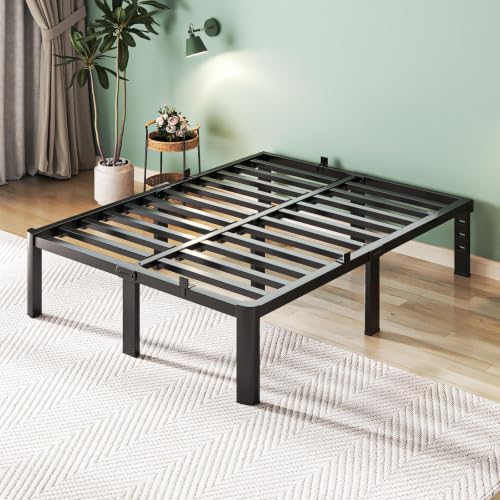
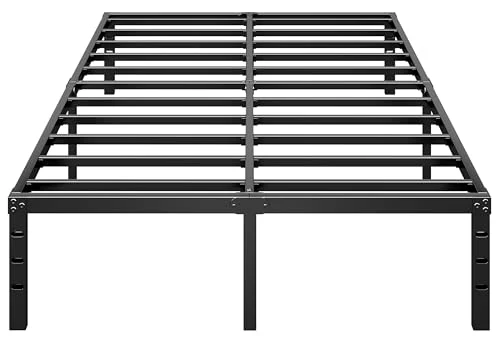
A mattress must work with its foundation or bed frame. Check the manufacturer’s rules for slat spacing, center support, ventilation, weight capacity, and adjustable movement before ordering. Slatted bases, box foundations, and adjustable bases do not provide the same conditions, so a mattress approved for one may have different requirements on another.
Frame compatibility affects more than warranty paperwork. Inadequate support can change the way the mattress bends and distributes weight. Poor ventilation can allow moisture to collect beneath the mattress. Adjustable bases also require a construction that can move without damage, and the manufacturer’s instructions should take priority.
A foundation is part of the sleeping system. The same mattress can feel different on a rigid platform, a flexible slatted base, or an adjustable base because the surface beneath it changes how the layers respond.
Read certification claims narrowly
CertiPUR-US applies to certain polyurethane foams and does not certify the overall comfort, durability, or complete mattress construction. A certification mark should be matched to the component and scope named in the listing.
OEKO-TEX STANDARD 100 addresses tested substances in certified components, while the Global Organic Textile Standard covers defined organic-fiber and processing criteria. Neither designation proves that a mattress will suit a particular sleeper’s posture or remain comfortable for a specific length of time.
Its presence does not describe firmness or pressure relief.
Certification language has limited scope. A careful comparison asks what was tested, which component carries the certification, and what the claim does not cover.
Step 6: Assess comfort claims in a disciplined way
Use a trial period as a process, not a promise
Store and online purchases offer different ways to judge a mattress. In a store, lie in your ordinary sleeping positions rather than sitting briefly on the edge. Bring the pillow height you normally use if the retailer allows it, because neck alignment can alter your impression of the mattress. A showroom visit cannot reproduce a full night, but it can reveal obvious pressure, unstable edges, or an immediate mismatch in firmness.
Online, read the trial, return, exchange, pickup, and packaging terms before paying. Check whether the trial begins at delivery, whether a waiting period applies, whether the original packaging is required, and who handles collection. Policies change, so the current written terms matter more than a general promise of easy returns.
Keep the mattress protector, fitted sheets, and bedding ventilation in mind. A thick protector can alter surface feel, while tightly packed bedding can interfere with moisture control. The trial should be judged with the sleep setup you will actually use.
Assess cooling, motion, and off-gassing without overclaiming
Cooling is not a single material feature. Consider the room’s temperature and humidity, the bedding, the cover, the foam depth, the coil unit, and how closely the surface conforms. A product listing that says breathable does not tell you how the mattress will feel in your bedroom.
Off-gassing refers to odors that may be present when some new materials are unpacked. Ask the manufacturer for clear care and ventilation instructions, and follow them. Do not place a mattress in a damp, poorly ventilated room while expecting the base to manage moisture.
Motion transfer is especially relevant for couples. Edge support is relevant for anyone who sits or sleeps near the perimeter. Neither feature should be inferred solely from price or from the word premium.
Compare the whole cost of ownership
The mattress price is only one part of the decision. Add the foundation or compatible frame, mattress protector, fitted sheets, bedding that allows suitable ventilation, delivery or removal charges, and the eventual cost of replacement or recycling. A low initial figure can become less attractive if the existing base is incompatible or if required accessories must be replaced.
Ask whether the current bed frame has adequate center support and whether its dimensions match the new mattress. Check the replacement and disposal options before delivery; mattress recycling and disposal rules vary by location, and a plan made in advance prevents the old mattress from becoming a bedroom obstacle.
The total cost of ownership includes the base, protection, bedding, disposal, and future replacement. A mattress should be judged as part of the entire sleep system.
Step 7: Prevent sagging and protect the materials
Understand impressions and uneven support
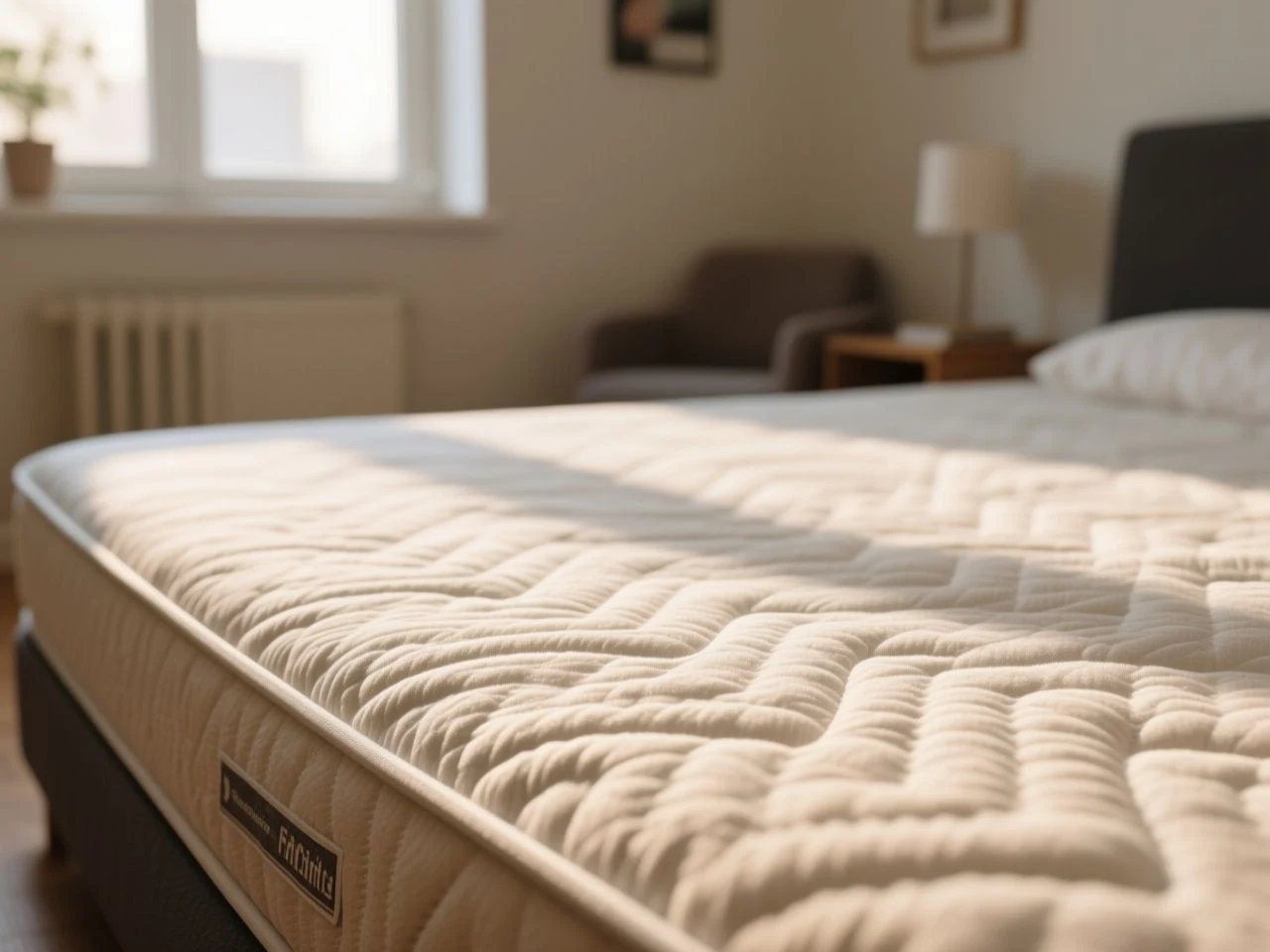
Body impressions and sagging develop when the materials repeatedly carry weight in the same areas. The risk is influenced by construction, layer thickness, foam properties, support beneath the mattress, the sleeper’s weight distribution, and how the surface is maintained. A quilted cover may show normal surface shaping without the deeper support having failed, so inspect the whole surface rather than judging one fabric wrinkle.
Uneven support can also come from the base. Broken or widely spaced slats, missing center support, an unsuitable adjustable frame, or a damp underside can affect the mattress independently of its upper materials. The foundation should be checked before blaming the comfort layer.
Rotate only when the instructions permit it
Do not flip a one-sided mattress unless the manufacturer specifically says that it is designed for two-sided use. Rotation may be permitted, but the correct direction, frequency, and handling method belong in the care instructions. A mattress with zoned construction or a shaped top may not be intended for rotation, so a generic schedule is not safe advice.
Use a washable mattress protector that fits without compressing the surface excessively. Clean spills promptly according to the care label, avoid soaking the internal layers, and allow moisture to dry fully before replacing bedding. Vacuuming the cover with a suitable upholstery attachment can remove loose dust, but aggressive scrubbing or saturated cleaning can damage fabrics and introduce moisture.
Know when comfort has changed
There is no universal replacement age that guarantees comfort for every mattress and sleeper. Usable life depends on construction, support, body weight and distribution, rotation instructions, foundation quality, moisture control, and personal tolerance for changes in pressure or alignment. A mattress may look acceptable while no longer supporting your usual posture well.
Track changes in comfort rather than waiting for a dramatic visible collapse. If the surface develops a persistent depression, the edge feels unstable, the base is damaged, or the mattress no longer allows comfortable alignment, review the construction and frame together. For a separate maintenance and replacement checklist, read how often a mattress should be replaced and what signs to check.
A practical decision sequence
Step 8: Build a comparison sheet
Use one page for every mattress under consideration. A good sheet prevents a polished showroom description from overpowering the facts that matter to your bedroom.
- Sleeping position: record whether you sleep mainly on your side, back, stomach, or in a combination.
- Firmness: write the stated scale and remember that ratings are not directly standardized.
- Pressure relief: note the upper comfort material, its thickness, and the areas where your body needs room.
- Deep support: identify the support core, pocketed coil unit, foam core, or other stated structure.
- Heat and movement: record what the listing says about ventilation, conformity, motion, and edges, while marking unverified claims.
- Foundation: write down slat, center-support, ventilation, weight-capacity, and adjustable-base requirements.
- Materials and certifications: match each certification to the specific component and scope.
- Policies: confirm trial, return, exchange, delivery, pickup, warranty, and disposal terms in writing.
- Total cost: include the base, protector, fitted sheets, bedding, delivery, disposal, and later replacement.
The strongest choice is the one that fits your posture and support needs while remaining compatible with the room’s frame and climate. A mattress with a fashionable material label can still be the wrong option if its layer arrangement or foundation rules do not suit you.
Common selection mistakes
- Choosing firmness by hand: pressing a mattress with your palm does not reproduce the pressure pattern of a sleeping body.
- Assuming firm means supportive: a hard surface can still create pressure at the shoulder, hip, or other prominent areas.
- Comparing ratings across companies: firmness scales and ILD or IFD values are not universal across constructions.
- Ignoring the pillow: pillow height affects neck alignment and can make a suitable mattress feel wrong.
- Forgetting the base: an incompatible frame can alter support and ventilation.
- Buying for one sleeper in a shared bed: each person’s position, pressure needs, and movement sensitivity deserve consideration.
- Reading certifications as comfort guarantees: certifications address defined materials or processes, not every part of the sleep experience.
My final filter is simple: the bedroom should support the body before decoration begins. Lamps can soften a room and make it calmer, but no lighting scheme compensates for a mattress that leaves you fighting the surface all night.
Frequently Asked Questions
How do I choose mattress firmness for my sleeping position?
Use your usual position as a starting point, then adjust for body shape and pressure. Side sleepers can begin around 4–6 out of 10 with deeper sinkage than 2.3 inches. Back and stomach sleepers can begin around 5–7 out of 10 with sinkage below 2.3 inches. These ranges are not universal ratings, so compare the construction and judge pressure relief alongside alignment.
What is the difference between firmness and support?
Firmness is the surface sensation you notice first. Support is the deeper structure’s ability to hold the body in a reasonably aligned posture. Pressure relief concerns how the upper layers distribute contact around shoulders, hips, and other prominent areas. A mattress can feel firm while creating pressure points, or feel softer while providing suitable support for a particular body.
Are memory foam, latex foam, and pocketed coils directly comparable?
No. Memory foam and other polyurethane foams can be placed at different depths and densities, while latex foam may use Dunlop or Talalay processes. A pocketed coil unit changes the support structure and movement response. Compare layer placement, thickness, density when listed, coil design, cover, ventilation, and foundation compatibility rather than treating a material name as a complete description.
Why can a mattress sag or develop body impressions?
Repeated loading in the same areas can change the shape of comfort and support materials. Construction, foam properties, layer thickness, weight distribution, foundation quality, moisture, and care all affect the result. Inspect the frame and center support as well as the mattress. Do not flip a one-sided design, and rotate only if the manufacturer’s instructions permit it.
How should I compare mattress certifications and safety claims?
Check the scope. CertiPUR-US applies to certain polyurethane foams; OEKO-TEX STANDARD 100 addresses tested substances in certified components; GOTS covers defined organic-fiber and processing criteria. None of these claims establishes personal comfort, overall longevity, or a universal absence of every chemical concern, so certification should be one part of a wider construction and care review.