
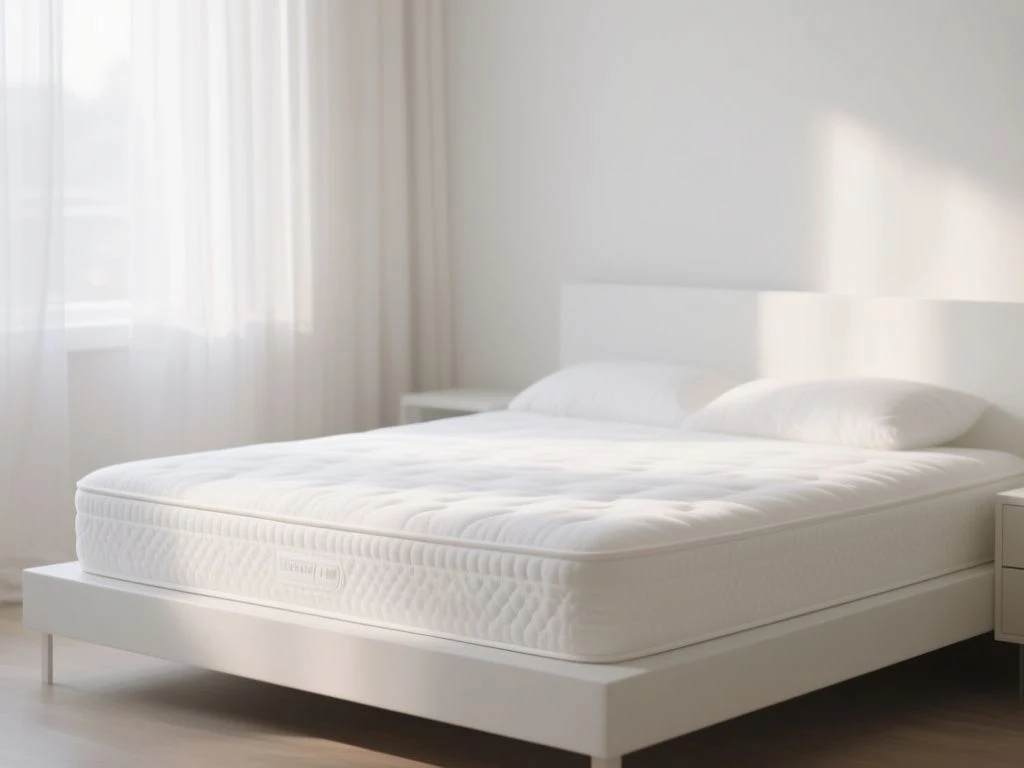
Can you actually feel the difference between a mattress that’s two years old and one that’s eight? Most people can’t until the night they wake up with a stiff neck and a foggy head. The real answer to how often you should replace a mattress has less to do with a calendar and more to do with what’s happening under the sheets.
A fixed replacement schedule works for some household textiles, but not this one. The same logic applies to how often you wash bath towels—a calendar matters less than the condition of the fibers. For a mattress, the supporting core fails long before the fabric shows obvious wear, and that failure shows up in your spine and your sleep quality, not in a date on the tag.
As someone who obsesses over how a room feels at night—the right lamp, the right dimmer, the right blackout lining—I know lighting sets the stage for sleep. But a mattress that’s lost its support core will ruin the performance no matter how well the lighting is tuned. The bed is the room’s foundation piece, and when it fails, every other design choice suffers.
Key Takeaways
- Most mattresses need replacement between 7 and 10 years—but the exact timing depends on material, body weight, and how well the support core holds up.
- Sagging is the primary sign of a failed mattress. A depression deeper than 1.5 inches in your usual sleep zone means the core can no longer support your spine.
- A warranty does not equal a lifespan. Warranties cover manufacturing defects, not the normal wear from nightly use.
- Allergens and dust mites accumulate over time. Allergy sufferers often need to replace their mattress sooner than the average sleeper.
Why Mattresses Fail: The Core Goes Before the Cover
Every mattress is a stack of layers, and those layers degrade at different rates. The top comfort layers—memory foam, polyurethane foam, or fiber—lose their resilience first, but that alone does not mean the mattress is dead. The support core, whether steel coils or a dense foam block, determines whether the mattress still holds your body in a neutral position. When the core compresses unevenly, the mattress has stopped doing its only job.
Polyurethane foam and memory foam are the most common core materials, and both soften with repeated compression. Foam durability is commonly tested by rolling a weighted drum across the surface and measuring height loss over repeated cycles, a method associated with ASTM foam testing standards. Foam that loses more than a certain percentage of its original height is considered failed. That loss translates directly to a mattress that dips under your hips and shoulders.
Innerspring coils wear differently. The coils themselves can lose tension, but more often the insulator pad above them breaks down, allowing the coils to press through. Latex cores last the longest because natural latex rubber resists compression set better than polyurethane foam. The material choice matters more than the brand name.
Certifications like CertiPUR-US and GREENGUARD Gold tell you the foam has been tested for harmful chemicals, but they do not tell you how long the foam will hold its shape. A high-density foam with a CertiPUR-US label will still outlast a low-density foam with the same label. The density matters: a memory foam core at 4 pounds per cubic foot will outlast one at 2.5 pounds by years.
Body Weight Accelerates Core Compression
A 250-pound sleeper compresses a mattress with about twice the force of a 125-pound sleeper, all else equal. That extra load accelerates core fatigue, causing deeper body impressions in less time. The same logic applies to couples: two bodies create more compression cycles and more heat, both of which break down foam faster.
If you weigh over 200 pounds, expect a memory foam or innerspring mattress to last closer to five or six years rather than eight. A latex mattress will still outlast both. This is not a defect; it is simple material science.
Heat also plays a role. Memory foam softens when warm, and chronic heat exposure from body temperature accelerates the breakdown of the foam’s cellular structure. A breathable cover or a cooler sleeping surface can slow that process, but it will not stop it.
Dust Mites and Allergens Are a Separate Clock
Even a structurally sound mattress accumulates dust mites, skin cells, and mold spores over time. A mattress accumulates dust mites over years of use, and their droppings are a common allergen. Because you cannot wash the interior of a mattress, the allergen load only increases. Allergy sufferers often notice more congestion, sneezing, or itchy eyes at night, and that alone may justify replacement sooner than the core would demand.
The International Sleep Products Association tracks average replacement cycles in the US at roughly seven years, partly because of allergen buildup and partly because of support loss. For people with dust mite allergies, that cycle often shortens to five years.
Reading the Real Signs: When the Mattress Tells You It’s Done
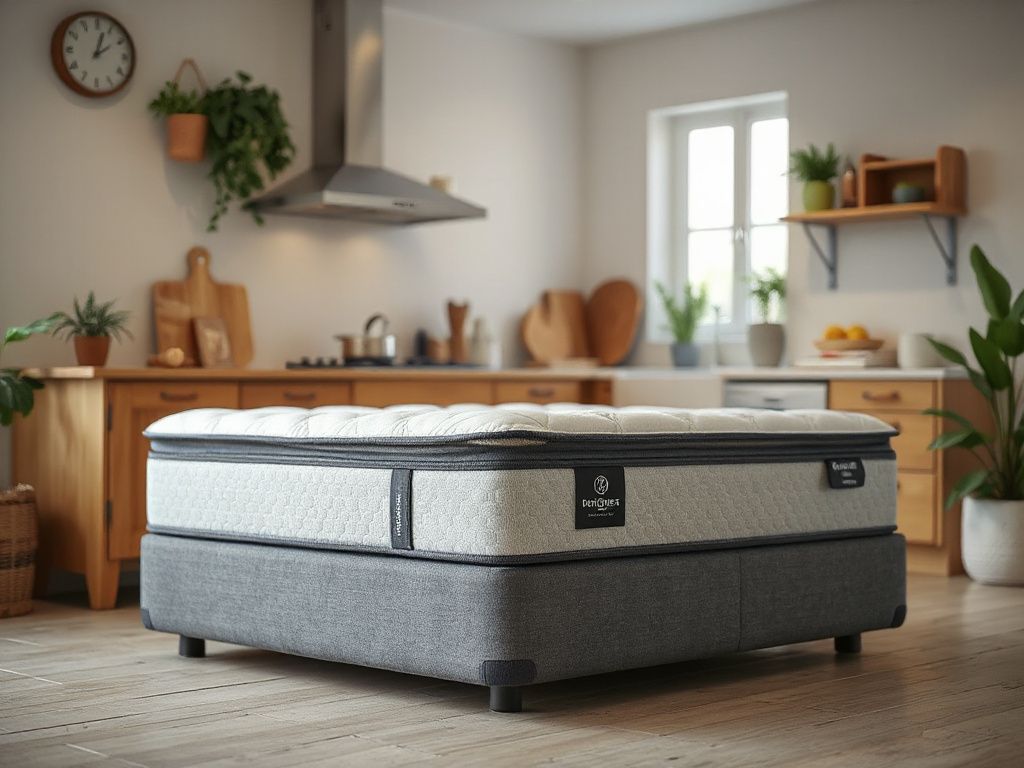
A calendar is a poor indicator. The most reliable sign that a mattress needs replacement is waking up with back pain or feeling unrested after a full night’s sleep, even when your bedtime routine and environment have not changed. A mattress that no longer supports your spine forces muscles to work all night, and that shows up as morning stiffness or pain that fades after you get up and move.
The Straight-Edge Sag Test
You can measure core failure directly. Place a long straight edge—a broom handle or a level—across the mattress widthwise where you normally lie. If the gap between the straight edge and the mattress surface is deeper than 1.5 inches, the support core has compressed beyond recovery. The Better Sleep Council recommends this test as a practical way to assess support loss. Most manufacturers consider impressions under 1.5 inches to be normal and not a warranty issue; anything deeper means the mattress is done.
A sag in the middle of the bed, even if you sleep on the edges, indicates the whole core is failing. Sagging under the hip area specifically points to destroyed comfort layers over a worn core. Either way, the mattress can no longer hold your spine in neutral alignment.
Waking Pain vs. Daytime Pain
Back pain that starts after you get out of bed and improves within 30 minutes of moving around is classic mattress-induced pain. If the pain persists all day, the cause is more likely an injury or a different condition. The distinction matters because replacing a mattress will not fix a herniated disc, but it will fix the morning-only stiffness caused by a sagging core.
Shoulder or hip pain in side sleepers is another red flag. Side sleepers need the mattress to compress under the shoulder and hip to keep the spine straight. Once the top comfort layers pack down, the mattress can no longer cushion those pressure points, and pain follows.
Visible Wear Is Cosmetic—Until It Isn’t
Stains, small tears, or a frayed edge are cosmetic issues. They look bad but do not necessarily affect support. What matters is the shape of the mattress when unloaded. If the surface looks like a hammock or has visible dips, the damage is structural. A mattress with a clean cover but a visible crater in the middle is just as worn out as one with stains—more so, because the stain might be cleanable while the crater is not.
One self-contained fact: A mattress warranty covers manufacturing defects, not the gradual loss of support from nightly use.
Replacement Timelines by Mattress Type
Different materials fail at different rates. The following ranges are based on typical use by an average-weight adult, and they come from industry data on durability testing rather than marketing claims.
- Innerspring mattresses: 5 to 7 years. The coils may survive longer, but the padding above them wears thin, and the mattress loses its comfort layer well before the springs break.
- Memory foam mattresses: 6 to 8 years. High-density foams (4 pounds per cubic foot or more) last longer than low-density foams, which can break down in as little as 4 years under a heavy sleeper.
- Latex mattresses: 8 to 12 years, sometimes longer. Natural latex resists compression set and does not soften as dramatically as polyurethane foam.
- Hybrid mattresses: 6 to 8 years, similar to memory foam. The coil core holds up, but the foam comfort layers on top degrade first.
The Better Sleep Council suggests a general replacement range of seven to ten years, but that range assumes average use and a mid-range mattress. Cheaper mattresses with low-density foam often need replacement closer to five years, while a high-quality latex mattress can go past ten. Your own body weight and sleep position shift these numbers more than any brand chart.
One thing most guides skip: the mattress foundation also wears out. A sagging box spring or slatted base will cause a good mattress to fail early because the support underneath is uneven. Before you blame the mattress, check the foundation. A mattress sitting on a solid platform will outlast one on a worn-out box spring by years.
And while you’re at it, look under the mattress the way you’d look under a bath mat—the backing matters. The bath mat buying guide emphasizes that a thick pile means nothing if the backing crumbles, and the same is true for a mattress: a plush top means nothing if the support core has given out.
Does the Warranty Have Anything to Do with Lifespan?
No. A warranty is a legal guarantee against defects, not a promise about how long the mattress will stay comfortable. Many 10-year warranties are pro-rated, meaning after the first few years the manufacturer only covers a portion of the replacement cost. The warranty also requires you to have a proper foundation and to have rotated the mattress as directed, and it almost never covers sagging under 1.5 inches. You can have a mattress that is completely worn out for sleeping but still within warranty because the failure is gradual, not a sudden break.
How to Extend a Mattress’s Life—Without Fooling Yourself
You cannot stop a mattress from wearing out, but you can slow the process. The biggest factor is managing compression and moisture, because both break down foam and fabric.
Rotate, Don’t Flip—Unless the Mattress Is Double-Sided
Most modern mattresses are one-sided and should never be flipped. Rotating the mattress 180 degrees every three to six months evens out the wear patterns, especially if you sleep in the same spot every night. A double-sided mattress can be flipped, but those are now rare. If the label says “no flip,” flipping it will damage the foam layers and void the warranty. Rotating works, but only if you do it consistently; most people forget after the first month.
Set a recurring reminder every season—not every six months. Rotating the mattress with each daylight saving time change is an easy habit to keep. And while you’re at it, vacuum the mattress surface and let it air out for an hour before putting sheets back on.
A Mattress Topper Is a Patch, Not a Cure
Adding a two-inch memory foam topper can improve the comfort of a mattress that has lost its top cushioning, but it cannot fix a broken support core. If the mattress sags in the middle, a topper just follows the sag. It might reduce pressure points for a few months, but the underlying problem—the compressed core—remains. A topper is a reasonable stopgap while you save for a new mattress, not a permanent solution. Using a topper on a mattress with deep impressions is like putting a bandage on a broken bone.
There is no repair for a worn support core. Unlike a sofa cushion that can be refilled, a mattress core cannot be rebuilt at home. When the core goes, the only real fix is a new mattress.
Cleaning and Protection
Dust mites and skin oils accelerate fabric and foam degradation. Use a waterproof, breathable mattress protector from day one, and wash it monthly. Vacuum the mattress surface every time you rotate it, and spot-clean spills immediately with a mild detergent. Never saturate the mattress—moisture trapped inside leads to mold and breaks down adhesives. A clean mattress lasts longer because the cover stays intact and the foam is not attacked by body oils.
How often should you clean a mattress? A full deep clean is impractical for the interior, but surface vacuuming every three months and protector washing every month significantly reduces allergen buildup. For allergy sufferers, consider a zippered allergen encasement that seals the entire mattress, and replace that encasement every two to three years.
Warranty Coverage: What It Actually Protects
Most mattress warranties cover defects like a coil poking through, a split seam, or a foam layer that separates. They do not cover normal wear, and they specifically exclude sagging less than a set depth (usually 1.5 inches). If your mattress has a visible dip of 2 inches, you might have a claim—but only if you have followed the care instructions: proper foundation, rotation schedule, and a clean, dry mattress. Before you file a claim, measure the sag with a straight edge and photograph it. Then check the warranty terms. Many claims are denied because the sag is under the threshold or because the foundation was not adequate.
The Biggest Mistakes That Shorten a Mattress’s Life
- Skipping rotation. Uneven wear creates deep body impressions that fail the core faster.
- Using the wrong foundation. A sagging box spring or too-wide slats lets the mattress bend and stretch beyond its design.
- No mattress protector. Body oils and moisture soak into the foam, breaking down the polymers and inviting dust mites.
- Letting the room get too hot. Excessive heat accelerates foam softening and adhesive breakdown.
- Jumping or standing on the bed. Concentrated point loads can permanently deform coils and foam.
Each of these mistakes is avoidable, and avoiding them can add two to three years to the life of a mid-range mattress.
Frequently Asked Questions
How do I know if my mattress needs replacing or just a new topper?
Measure the sag first. If the depression under your usual sleep position is less than 1.5 inches and the surface still feels flat across the whole width, a topper may add enough cushion to buy you another year. If the sag is deeper than 1.5 inches or you can see a visible crater, the support core has failed. A topper will only follow the sag and will not restore proper spinal alignment. In that case, replacement is the only honest fix.
Can I extend my mattress’s life beyond the typical range?
Yes, within limits. Rotating every three to six months, using a quality protector, keeping the room cool, and placing the mattress on a solid foundation can stretch a mid-range memory foam mattress from six years to eight or nine. But you cannot overcome the material’s inherent fatigue curve. A low-density foam core will still break down regardless of care. High-density foams and latex respond best to good habits and can outlast their average ranges by several years.
Does body weight really change how often I should replace a mattress?
Absolutely. A heavier sleeper applies more force per square inch every night, which accelerates compression of the foam layers and core. For a memory foam mattress, a 150-pound person might get eight years, while a 250-pound person might get five or six from the same model. The same principle applies to innerspring and hybrid mattresses, though latex is more resistant to weight-related breakdown. If you are over 200 pounds, plan to replace your mattress on the shorter end of the material’s typical range.