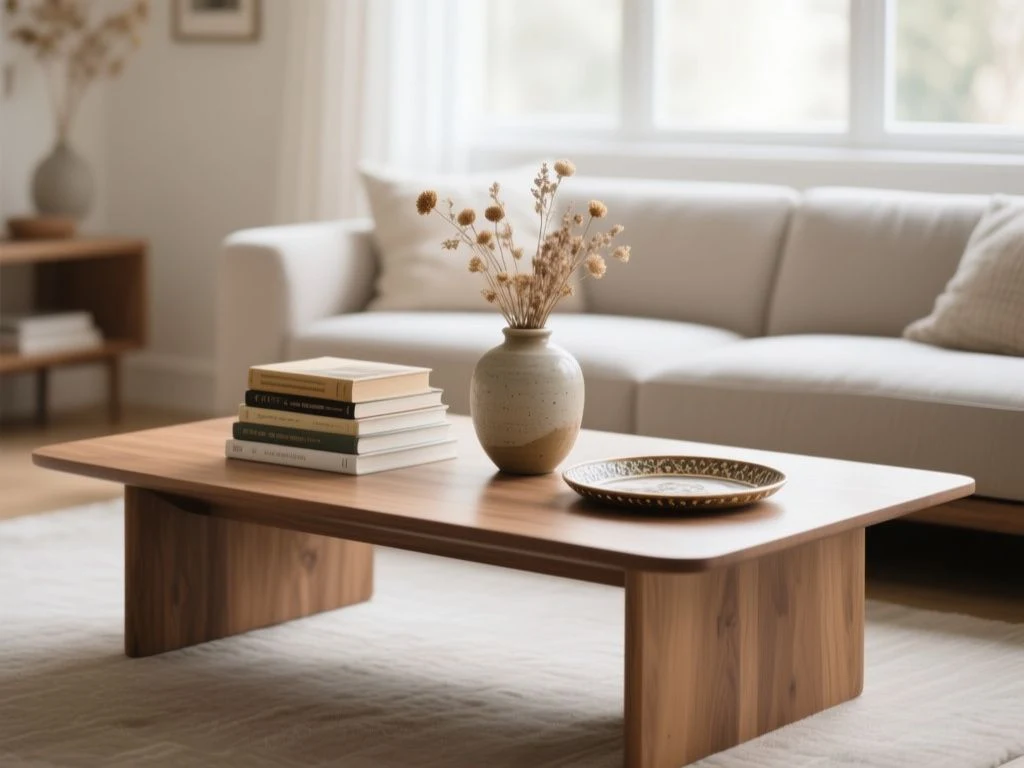
Forget everything you think you know about styling a coffee table. The problem isn’t that you have too many books or too few candles. The problem is you’re styling a surface, not a light catcher. The way light hits your coffee table changes everything, so it pays to fix the lamps before touching a single piece of furniture. When you learn how to style a coffee table, you’re really learning how to shape the way light moves through your living room.
A coffee table sits at the visual center of most living spaces, directly in the path of your floor lamps, table lamps, and window light. The objects you place on it either absorb that light, reflect it, or cast interesting shadows. That’s the lens this guide uses. So before you grab a stack of books or a ceramic bowl, turn on every lamp in the room and watch where the pools of light land. That tells you more about where to place a tray than any magazine spread ever will.
Key Takeaways
- Start with function: a coffee table needs clear zones for drinks, remotes, and books, not just display space.
- The rule of three—grouping objects in odd numbers, often three—creates visual balance without symmetry.
- Use a tray as the anchor for your vignette; it protects the surface and corrals smaller items.
- Edit ruthlessly: a styled coffee table should look intentional but breathable, never like a storage shelf.
The Function-First Foundation: What Your Coffee Table Actually Needs to Do
Before you place a single object, think about how this table is used daily. A coffee table that looks stunning in a photo but leaves no room for a mug of tea is a failed coffee table. The most common mistake is treating it like a shelf: covered edge to edge with trinkets, books, and candles. That kills both function and style.
Set Clear Zones for Daily Use
Divide the surface mentally into zones. You need at least 30% of the table left completely clear for actual use. That might mean one end stays empty for a laptop or a plate of snacks, while the other end holds the styled vignette. If your table is large, you can carve out two separate zones: one for display, one for function. But never let the display swallow the function.
A practical layout looks like this: one tray with remotes and coasters, one stack of two or three books, one small plant or sculptural object, and everything else open. That leaves room for drinks without knocking anything over. The table should feel like it breathes.
Choose the Right Table for the Job
If your current table is too small, too fragile, or the wrong shape for your needs, no styling trick will fix it. A storage ottoman versus a coffee table decision matters here: an ottoman with a tray on top can serve double duty if you need hidden storage. But a true coffee table with a hard surface gives you more styling flexibility. Consider the material and size before you commit to a styling plan.
Glass tables show every fingerprint and water ring, which means you’ll lean heavily on trays and coasters. Wood tables can take more abuse but still need protection from hot mugs. Marble is gorgeous but porous and stains easily. Your styling choices must respect the table’s material limits.
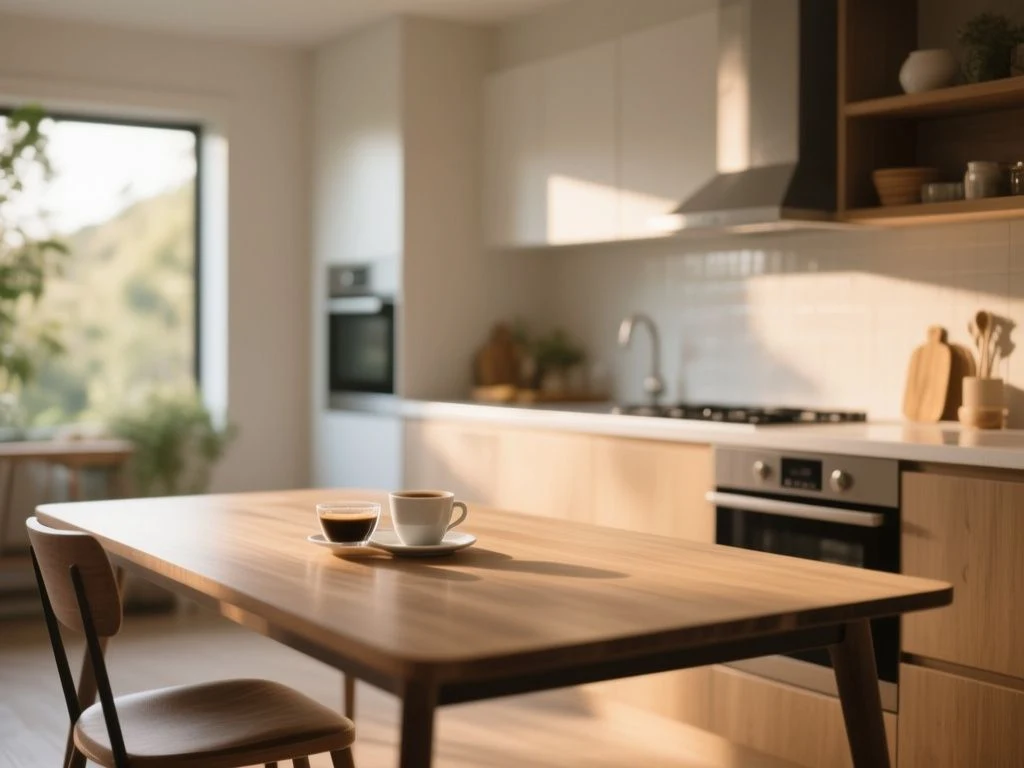
The Styling Framework: Rule of Three and Asymmetry
Here’s the core principle that separates a thoughtful vignette from a pile of stuff: the rule of three. It’s not a hard law, but it works because odd numbers create visual tension that feels organic. Two identical objects next to each other look like a store display. Three objects—varying in height, texture, or shape—look like a deliberate composition. You can use three, five, or seven items, but never an even number unless you’re deliberately going for symmetry, which rarely reads as relaxed.
The Rule of Three Explained
The rule of three is a design principle rooted in how our eyes process visual information. An odd number of elements forces the eye to move between them, creating a dynamic composition. Three objects naturally form a triangle, which is the most stable yet visually interesting shape. You can group objects in threes: a tall vase, a medium stack of books, and a low bowl. Or you can layer three different materials: wood, ceramic, and metal. The key is that no two objects should be the same height, same texture, or same visual weight.
Vary Heights and Textures
Flat surfaces look boring because everything sits at the same level. You need vertical variation. A common formula: place a tall item (like a vase with branches or a table lamp) at one corner, a stack of two or three books in the middle, and a low tray or bowl at the front. That three-tier arrangement gives the eye a path to travel. But don’t block the sightline across the room: nothing on the coffee table should be taller than about two-thirds the height of the table itself. A 16-inch-tall table can handle items up to about 10-12 inches. Taller than that and you’re creating a visual wall between seats.
Texture matters as much as height. Combine a smooth ceramic piece with a rough woven basket or a stack of books with a brass object. The contrast is what makes each piece stand out. Avoid lining up three identical candles in a row—that’s a retail shelf, not a styled table.
Odd Numbers and Negative Space
Negative space is your best friend. Do not fill every square inch. A styled coffee table should have at least as much empty surface as occupied surface. The empty space gives the objects room to breathe and makes the whole arrangement feel intentional rather than accidental. When in doubt, remove one item. The table will look better without it.
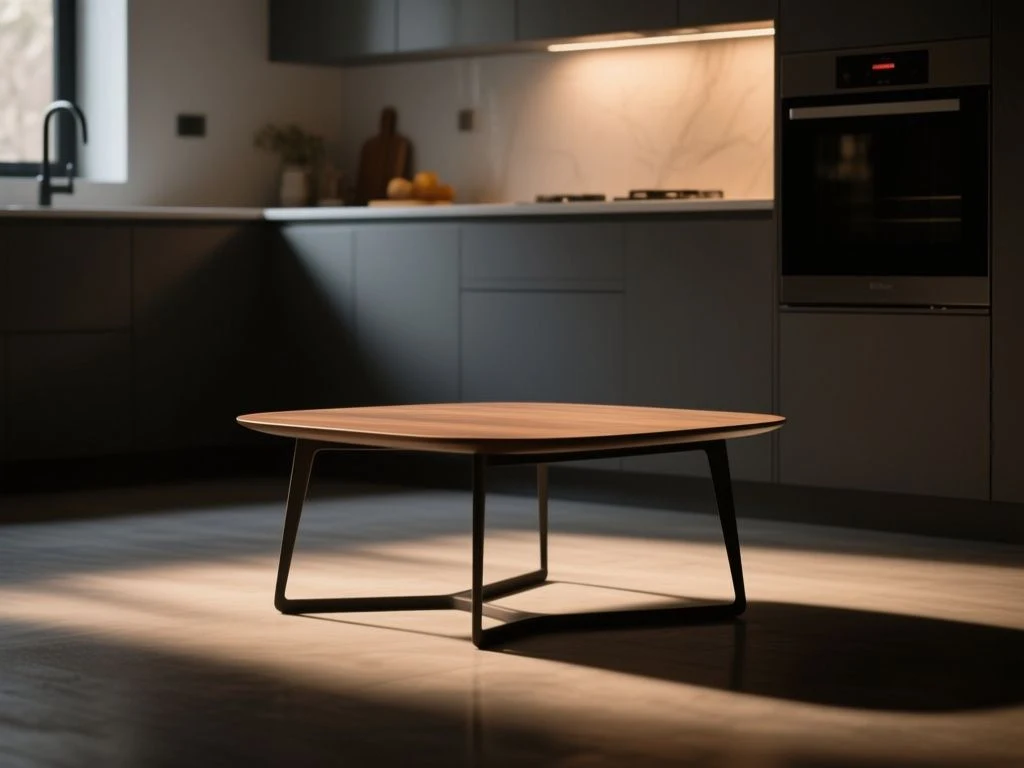
Building Your Vignette: Step-by-Step
Now for the actual how-to. Follow these steps in order, and you’ll end up with a coffee table that looks curated but not crowded.
Step 1: Start with a Tray (or a Baker’s Tray)
A tray is the single most useful styling tool for a coffee table. It anchors the arrangement, corrals small items like remotes and coasters, and makes the whole thing look deliberate. Choose a tray that fits your table’s proportions: for a rectangular table, a rectangular or oval tray works best; for a round table, use a round tray. The tray should occupy no more than one-third of the table’s width. If you’re working with a very small table—under 30 inches wide—skip the tray and use a single wide, shallow bowl instead.
A baker’s tray with raised edges is especially practical because it keeps small objects from sliding off. On a glass table, a tray is non-negotiable; it hides the inevitable smudges and prevents scratches from heavier objects.
Step 2: Layer Books as a Foundation
Books are the easiest way to add height and structure. But do not stack a dozen books you’ve never opened. Choose two or three books that you actually like—art books, travel books, or anything with a beautiful cover and substantial size. Stack them horizontally in a short pile. The top book should be large enough to hold a small object like a candle or a tiny bowl. That stack becomes a mini pedestal that raises whatever you place on it into the light.
If you want the table to feel less formal, stack the books vertically and lean a single book against the side. The key is to avoid a row of identical spines facing forward. That’s a bookstore display, not a living room.
Step 3: Add a Sculptural or Organic Element
Every coffee table needs one element that isn’t functional—something purely for visual interest. That could be a small piece of sculpture, a handmade ceramic vessel, a chunk of travertine or Carrara marble, or a plant. A low-maintenance plant like a monstera in a small pot works beautifully, but be sure the pot has a saucer so water doesn’t seep onto wood or marble. If you have kids or pets, choose a fake plant or a sturdy objet that won’t shatter.
A single dramatic object—a large brass bowl, a sculpted piece of driftwood, or a stack of stone spheres—can carry the whole vignette. The object should be the tallest thing in the arrangement, but still no more than two-thirds the table height.
Step 4: Include a Personal or Unexpected Object
This is what separates a catalog photo from a home. Add one thing that means something to you: a small matchbox from a favorite restaurant, a vintage game piece, a photograph in a simple frame. It doesn’t have to be expensive. The point is that it breaks the “too perfect” look and makes the table feel lived in. Don’t overdo it—one personal object is enough. If you have a collection of small items, rotate them seasonally rather than displaying them all at once.
Material Matters: Protecting Your Table and Choosing Compatible Pieces
Your coffee table’s material dictates what you can safely place on it. Ignoring this leads to water rings, scratches, and cracked surfaces. The table’s material is not just a backdrop; it’s a constraint that shapes your styling choices.
Wood, Glass, Marble: What Each Surface Can Handle
Wood tables—whether walnut, oak, or something painted—are forgiving but vulnerable to heat and moisture. Never set a hot mug directly on the wood; use coasters or a tray. Felt pads under any heavy object prevent scratches. Wood can handle a fair amount of weight, but avoid dragging items across the surface.
Glass tables are the most delicate. Thick stone objects, like a chunk of marble or a heavy brass sculpture, can crack thin glass. ASTM F2057 covers tip-over stability testing for clothing storage units like dressers, not coffee tables, but the same commonsense stability principle applies, and glass tops have their own risk profile: a sharp impact can shatter them. Keep heavy items off the edges, and always place a tray or felt pad underneath anything with a rough bottom. Glass also shows every smudge, so a tray with a lip is your best friend.
Marble tables are porous and stain easily. Acidic liquids like coffee or wine can etch the surface. Always use coasters, and wipe up spills immediately. Marble can handle weight but not heat—a hot pan from the kitchen will leave a permanent mark. Travertine is similar: porous and easily stained, but it hides scratches better than polished marble.
Trays, Coasters, and Heat Protection
You don’t need a tablecloth, but you do need a system for protecting the surface. A tray with a cork or felt bottom is ideal for grouping items and catching condensation from glasses. Coasters should be in every seating zone—within arm’s reach from the sofa. If you don’t like the look of coasters scattered around, keep them stacked inside the tray and pull them out when needed.
The Consumer Product Safety Commission (CPSC) recommends anchoring heavy furniture to the wall to prevent tip-overs, especially in homes with children. While that’s more about the table itself than the styling, it’s a good reminder that the objects you place on top shouldn’t make the table top-heavy. A heavy stone sculpture at the edge of a small, lightweight table is an accident waiting to happen. Keep the heaviest items near the center and avoid placing anything sharp at the edges.
Styling for Specific Table Shapes and Sizes
Your table’s shape changes the layout rules. A round table needs a central focal point; a rectangular table works better with an asymmetrical zone.
How to Style a Round Coffee Table
Round tables have no corners, so the eye naturally goes to the center. Place your largest item—a tray, a stack of books, or a bowl—slightly off-center, not dead center. Dead center looks like a bullseye. Then add two or three smaller items around it, keeping the arrangement low and wide. Because a round table often sits in a circular seating arrangement, you don’t want a tall vertical object in the middle; it would block conversation. Keep the tallest item under 10 inches for a 30-inch-wide table.
How to Style a Rectangular Coffee Table
Rectangular tables give you more flexibility. You can create a vignette at one end and leave the other end clear, or span the table with a long tray that holds a row of objects. The most common mistake is lining everything up in a straight row down the center. Instead, cluster your objects into one or two groups and leave open space around them. A long rectangular table can handle two separate zones: one for styling, one for everyday items like newspapers or a laptop.
How to Style a Small Coffee Table (Under 30 Inches Wide)
Small tables demand extreme editing. One tray, one small plant, and one book. That’s it. Anything more and the table looks cluttered before you’ve even sat down. If you need remote storage, choose a tray with a compartment or a small lidded box. A single dramatic object—a beautiful bowl or a small sculpture—can be enough on its own. The rule of three still applies, but the three items must be tiny: a matchbox, a small candle, and a tiny vase with a single stem. Less is more here.
Styling for Your Life: Kids, Pets, and Everyday Use
If you live with small children or enthusiastic pets, your coffee table styling needs a different set of rules. Function and safety override aesthetics, but you can still make it look good.
Pet and Kid-Proof Styling
Assume everything will be knocked over. Choose objects that won’t shatter: wood, metal, resin, or woven materials instead of glass or thin ceramic. Skip anything with sharp corners. Anchor tall items so they can’t be pulled down. A tray with raised edges keeps small items from rolling off when a tail swishes by. And remember: a toddler will use the table edge to pull themselves up, so the table itself must be stable. The ASTM F2057 standard exists specifically to test furniture tip-over resistance; if your table is lightweight, secure it to the floor or wall.
For pets, avoid placing anything edible-looking on the table—a bowl of potpourri or a decorative fruit bowl will be investigated. A faux plant in a heavy pot is safer than a real one that might get knocked over and spill soil. If you must have a real plant, choose a low-water succulent in a wide, stable pot and place it in the center where it’s less likely to be bumped.
The Art of Editing: Avoiding Overcrowding
Overcrowding is the number one styling mistake, and it’s even more tempting when you have a large table. You think, “I have all this space, I should use it.” But negative space is part of the design. A large table does not mean you need more objects; it means your existing objects can be larger or more spread out. Two or three well-chosen, substantial pieces will always look better than twelve tiny trinkets. Step back, look at the table, and ask yourself: what would I remove if I had to? Then remove it.
Common Mistakes and How to Avoid Them
Even after following all the steps, a few traps remain. Here’s what to watch for.
The Yard Sale Effect
Too many small items—candles, figurines, coasters, remotes, stray pens—create visual noise. The eye doesn’t know where to land. Fix it by grouping small items into a tray or bowl. One tray full of small objects reads as one object. That’s the power of containment.
Too-Perfect Syndrome
Making everything symmetrical, aligning every spine, placing every object at a precise angle—this creates a sterile, unlived-in look. Your coffee table should look like someone actually lives there. Leave a book slightly askew, a remote on the edge of the tray, a candle that’s been burned. Perfection is the enemy of style.
Ignoring the Lighting
Back to the starting point. If you style a coffee table without considering where the light comes from, you’re missing half the effect. A beautiful ceramic piece placed in a shadow will disappear. A stack of books placed directly under a lamp will catch the light and become a focal point. When you place a floor lamp versus a table lamp near the coffee table, the angle of light changes how the objects look. A floor lamp with an upward shade will wash the table in soft light; a table lamp on the table itself creates a pool of light that draws attention downward. Adjust your arrangement after the lamps are on, not before.
Frequently Asked Questions
How do I pick a coffee table book that doesn’t look like it’s just pretending to be smart?
Choose books you actually open. The point of a coffee table book is to invite browsing, not to signal intellect. Pick ones with large, vivid images—art monographs, travel photography, architecture—and avoid anything that looks pristine and untouched. A book with a worn spine or a dog-eared page tells guests it’s been read, which makes it feel approachable rather than pretentious.
What’s the right height and size for items on a coffee table compared to the table itself?
The tallest item should be no more than two-thirds the height of the table. For a 18-inch-tall table, that means nothing over 12 inches. The base items—trays, books—should be flat and low, under 4 inches. This keeps the table from blocking sightlines across the room and ensures the arrangement feels grounded rather than teetering.
How many things should I actually put on a coffee table without it looking like a yard sale?
Aim for three to five items total, grouped into one or two clusters. On a small table, one or two items. On a large table, you can go up to seven items if they’re grouped into two distinct zones and at least one-third of the surface is empty. The moment you can’t see the tabletop, you’ve added too much.
Should I use a tray on my coffee table, and if so, what kind of tray works best?
Yes, almost always. A tray corrals small objects, protects the surface, and anchors the arrangement. For wood tables, use a tray with felt or cork on the bottom to prevent scratches. For glass tables, choose a tray with a lip so items don’t slide off. For marble, use a non-porous tray that won’t transfer moisture. The tray should occupy no more than one-third of the table’s width.
How do I style a coffee table when I have kids or rowdy pets that might knock things over?
Switch to durable materials: wood, metal, resin, or thick stone. Avoid glass and thin ceramic. Use a tray with raised edges, and choose objects with a low center of gravity. Place heavy items near the table’s center, not the edges. If the table itself is light, anchor it or replace it with a heavier piece. Function over form, but you can still make it look intentional with a few well-chosen pieces.