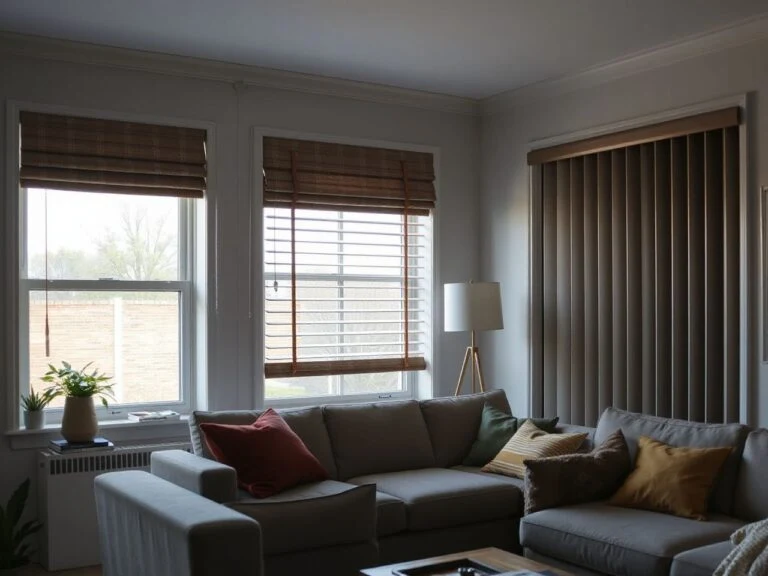

Searching for the cost of blinds per window can be frustrating because the number shown for the blind alone rarely describes the finished job. The useful comparison is the complete installed cost per window rather than the price printed for the blind alone, because measuring, mounting, operating mechanisms, and site conditions can shift the total substantially. Costs should be compared on a like-for-like basis that separates custom work from ready-made products and accounts for ownership factors such as cleaning, repairs, replacement parts, and suitability for the room.
I would also assess the lighting before the furniture. A room with poor light control can feel unfinished even after the sofa, rug, and paint are settled, so the window treatment deserves attention early.
Key Takeaways
- A useful per-window estimate separates the blind, measuring, installation, delivery, removal, and disposal.
- Window shape, recess depth, obstructions, mounting choice, and operating mechanism can change both compatibility and total cost.
- The lowest starting price may not produce the lowest ownership cost if cleaning, moisture, fading, repairs, or replacement parts become difficult.
How to Read the Cost of Blinds Per Window
Start with the complete installed figure
A meaningful estimate names every service and component included in the work. The blind itself is only one line. A written estimate may also need to separate measuring, professional installation, delivery, removal of existing coverings, and disposal.
Installation is the labor involved in securing and adjusting the covering. The installer may supply the blind, or the homeowner may purchase it separately before arranging fitting. Those are different transactions, and combining them into one vague total makes comparisons unreliable.
A per-window estimate is incomplete if it does not state whether measuring and installation are included. The same rule applies to delivery and the removal of an old headrail.
- Blind price: the covering, headrail, brackets, and operating mechanism where supplied as part of the product.
- Measuring: checking the window opening, recess depth, frame, and nearby obstructions before an order is placed.
- Installation: fitting the brackets, securing the headrail, and checking operation.
- Delivery: transport of the ready-made or custom-sized covering.
- Removal and disposal: taking down existing blinds and dealing with the old materials.
Taskrabbit lists blind setup under its Mounting section, where U.S. projects typically run at $38 hourly. That figure describes an hourly service listing, not a universal installed price for every window, room, or blind type. A job with several matching windows may have a different practical cost from one unusual opening that requires careful mounting.
Ready-made and custom work are separate comparisons
Ready-made blinds are produced in standard sizes and may need fewer ordering decisions. Custom blinds are made for the stated window dimensions and can involve more measuring, material selection, and fitting detail. The two are not directly comparable unless the materials, operating mechanism, mounting method, and installation scope match.
Custom-sized blinds can cost more than ready-made blinds because the order includes window-specific sizing and may require more precise measuring and fitting. The exact difference depends on the supplier, material, window, and service scope, and no single figure can represent every project.
Ask for the estimate in a form that lets you compare like with like:
- Ask whether the dimensions are based on an inside mount or outside mount.
- Ask whether the quoted material and operating mechanism are the same as the alternative estimate.
- Ask whether brackets, delivery, fitting, old-blind removal, and disposal are included.
- Ask which adjustment or repair work is excluded if the window frame is uneven or obstructed.
For a broader look at material and style decisions, this guide to different types of window blinds and common mistakes can help clarify what should be compared before prices are placed side by side.
Costs people commonly forget
A low online price can look attractive until the missing work appears. The overlooked items are often connected to the room or the window rather than the blind itself.
- Professional measuring for windows that are not square or have limited access.
- Extra fitting work around handles, locks, vents, radiators, trim, or deep sills.
- Removal and disposal of an existing covering.
- A cordless operating mechanism or motorized window-covering control.
- Replacement brackets, clips, chains, slats, or other parts after damage.
- Cleaning supplies or specialist cleaning for delicate materials.
- Repairs after moisture exposure, fading, incorrect operation, or an unsuitable mounting position.
These items do not always appear in a calculator for the cost of blinds per window. A calculator can organize a budget, but it cannot judge whether a recess is deep enough, whether a handle blocks the slats, or whether a bathroom environment suits the selected material.

What Changes the Price from One Window to the Next
Dimensions, shape, and recess depth
Two windows can appear similar from across a room while requiring different work. Width and height affect the covering itself, but unusual shapes, a shallow recess, an uneven frame, or an obstruction can affect the mounting plan as well.
An inside mount places the blind within the window recess. It can give a fitted appearance, but the recess must offer suitable depth and clearance for the headrail, slats, fabric, or other moving parts. An outside mount sits on the wall or surface around the opening and may be needed where the recess is too shallow or contains an obstruction.
Inside-mount blinds depend on usable recess space, while outside-mount blinds depend on a suitable surface around the window. A mounting choice can therefore affect both compatibility and the amount of fitting work required.
Check the opening before requesting a final estimate. Look for:
- Handles that project into the recess.
- Locks, vents, or window controls near the glass.
- Trim, molding, or a sill that changes the available surface.
- A recess that narrows or changes shape from one side to the other.
- Nearby curtains, drapery, furniture, or radiators that limit movement.
Professional window measuring can be useful where the frame is irregular or the fitting position is unclear. A measurement taken only across the visible glass may not describe the space available for the headrail and brackets.
Material and operating mechanism
Budget-friendly blinds commonly use polyester, aluminum, or PVC construction. Other choices include wood blinds, faux wood blinds, roller blinds, Venetian blinds, Roman shades, and cellular shades. Each material brings different cleaning, moisture, appearance, and repair questions.
Faux wood combines natural wood particles with synthetic ingredients. Faux wood blinds can be suitable for locations exposed to high moisture or extreme temperature swings, and some are available with UV ratings up to 500. A stated rating should still be considered alongside the room, the window, and the cleaning instructions supplied with the product.
Tailor-measured aluminum blinds made from 6 gauge material are available in standard decorator hues and can be supplied with brackets for either surface or recessed installation. The stated material and fitting options belong in the estimate because they affect what is being compared.
Operating mechanisms affect more than the opening price because they also influence maintenance, repair options, and daily use. A basic manual system may be easier to inspect and replace, while a cordless or motorized system introduces different parts and decisions.
Cordless and motorized systems
Cordless operating mechanisms remove hanging cords and additionally decrease strangulation dangers for small children. The U.S. Consumer Product Safety Commission provides current window-covering safety information at CPSC.gov, so households with children should check the latest guidance rather than rely only on a sales description.
Motorized window coverings can affect the initial estimate, maintenance needs, and repair options. The comparison should name the control method, the power arrangement, and what happens if the operating system needs service. Do not treat a motorized mechanism as a minor add-on when calculating ownership cost.
For any cordless or motorized covering, ask these practical questions:
- Can the operating parts be replaced separately?
- Are repairs handled by the installer, the manufacturer, or another service?
- What cleaning method is permitted around the mechanism?
- Does the mounting position leave enough clearance for safe operation?
Number of windows and installation complexity
Several windows with matching sizes may allow the work to follow a consistent pattern. A single bay, corner, high, or unusually shaped window can demand more attention even if the covering looks simple.
The number of windows also changes the estimate because measuring and installation may be organized as one project rather than separate visits. That does not guarantee a lower total, so the quote should state whether service is priced per window, hourly, or as a broader project.
Installation complexity rises when the mounting surface, window shape, access, or nearby obstructions require extra adjustment. A plain roller blind and a more detailed Roman shade can also involve different fitting considerations, even at the same window.

Choosing Blinds for Bedrooms, Bathrooms, and Living Rooms
Bedroom windows
A bedroom usually benefits from dependable light control and a quiet, straightforward operating method. Roller blinds can provide a simple visual field, while cellular shades, Roman shades, or Venetian blinds may suit a room where texture and softness matter.
The decision should begin with the sleeping environment rather than the furniture arrangement. Consider how early light enters, whether the window is beside the bed, and whether the operating mechanism can be reached without moving furniture.
Bedroom blinds should be judged by light control, ease of operation, and the clearance available around the bed. A low initial price does not compensate for a covering that is awkward to use every morning.
Bathroom windows
Bathrooms expose window treatments to moisture and temperature changes. Faux wood blinds may suit such locations because they are associated with high-moisture or extreme-temperature settings in the verified product information. Aluminum and PVC are also budget-friendly materials, but the exact cleaning and moisture instructions belong to the product documentation.
Inspect the window area for condensation, splash exposure, vents, and limited clearance before selecting an inside or outside mount. A covering that sits too close to a damp surface may require more care than one positioned with suitable clearance.
Bathroom blinds should be assessed for moisture exposure before appearance or initial price. Cleaning difficulty and replacement access can make an inexpensive covering costly to own if the room is unsuitable.
Living-room windows
Living rooms usually require a balance between daylight, privacy, furniture placement, and visual weight. Wood blinds, faux wood blinds, roller blinds, Roman shades, and Venetian blinds can all create different relationships with curtains and drapery.
Large openings, multiple adjacent windows, and nearby seating can make control placement important. Check that slats or fabric can move without striking furniture, handles, or decorative objects.
Window film may be relevant where the main concern is glare or solar exposure, while blinds offer adjustable control and a stronger decorative presence. Energy-efficient window treatments should be assessed by their stated construction and suitability rather than by a broad label.
If the choice is between soft fabric and a harder blind surface, this curtains-versus-blinds comparison for different rooms gives useful context for coordinating light control with the rest of the space.
Installation, Measuring, Cleaning, and Ownership Cost
What happens when measuring is wrong
Incorrect measuring can produce a blind that does not fit the recess, leaves unwanted gaps, strikes the frame, or cannot move freely. A mistake can also force a change from inside mount to outside mount after the order has been placed.
Measure the space where the blind will actually sit, not simply the visible pane. Record handles, trim, sills, vents, and any point where the headrail or fabric could collide with the frame.
What happens when installation is wrong
Incorrect installation can leave brackets loose, place the headrail out of alignment, restrict the blind’s movement, or make the covering difficult to operate. A covering may also sit too close to a handle or another window treatment.
Check the finished installation by looking for an even headrail, secure brackets, smooth movement, and clearance from nearby hardware. The blind should operate according to its instructions without rubbing against the frame or surrounding objects.
A correctly installed blind should remain aligned and clear of nearby obstructions during normal operation. If the covering catches, tilts, or requires force, stop using it and ask the installer or supplier to inspect the fitting.
Cleaning by material
Cleaning instructions should come from the manufacturer because the same visual style can use different materials or finishes. Avoid treating every blind as if it were washable fabric or sealed wood.
- Aluminum blinds: Use the cleaning method stated for the finish, and avoid bending slats while dusting or wiping.
- Faux wood blinds: Check whether the product permits a damp cloth and keep moisture away from operating parts unless the instructions allow it.
- Wood blinds: Follow the finish-specific guidance and avoid assuming that water is harmless to the surface.
- Roller blinds: Check the fabric instructions before using liquid, especially where the material has a backing or coating.
- Roman shades and cellular shades: Use the recommended dusting or vacuum attachment method and avoid crushing folds or cells.
Cleaning difficulty belongs in the ownership comparison. A blind that is easy to dust and has accessible replacement parts may be less troublesome to maintain than a delicate covering that requires specialist handling.
Repair, replacement, and fading
Blind repair and replacement can become part of the total cost when cords, slats, brackets, fabric, or operating mechanisms are damaged. Cordless and motorized systems may have fewer visible hanging parts but can require specific replacement components.
Sun exposure, moisture, incorrect cleaning, and forceful operation can all change the condition of a covering. The estimate should therefore be read alongside the room’s exposure and the product’s care instructions.
Ownership cost includes the effort and parts required to keep a blind usable after installation. A low starting price may not remain low if the material fades, the mechanism is hard to repair, or replacement parts are unavailable.
Safety information and responsible fitting
Window coverings with cords require particular care in homes with small children. The U.S. Consumer Product Safety Commission publishes safety information for window coverings at the agency’s official website, and that guidance should be checked before fitting a corded product in a child’s room or play area.
Keep operating parts accessible to the intended user while avoiding positions where furniture creates a hazard or prevents the blind from opening properly. A professional installer should be told about children, pets, unusual access, and nearby furniture before the fitting plan is finalized.
Building a Reliable Per-Window Estimate
Use a simple estimate worksheet
A calculator is useful only if each line has a clear meaning. Record the information for every opening rather than applying one assumed figure across the whole home.
- Window description: note the room, shape, access, and nearby obstructions.
- Mounting method: record inside mount or outside mount.
- Blind or shade: name the type, material, size basis, and operating mechanism.
- Product price: separate the covering from service charges.
- Measuring: mark whether the homeowner or a professional supplies the dimensions.
- Installation: record the hourly or project charge and the included work.
- Delivery: check whether transport is included in the stated figure.
- Removal and disposal: add these only if the existing covering needs to be taken down.
- Ownership: note cleaning, repair access, replacement parts, fading risk, and moisture exposure.
This worksheet prevents a ready-made product price from being compared with a custom-installed price as if the two services were identical. It also shows which windows deserve professional measuring before the order is placed.
Questions to ask before accepting an estimate
- Is the price for the blind only, or does it include fitting?
- Are brackets and the headrail included?
- Is the measurement for an inside mount or an outside mount?
- What happens if the recess is too shallow or an obstruction is found?
- Are delivery, removal, and disposal included?
- Does the quote cover a cordless or motorized operating mechanism?
- Who handles repairs if a bracket, slat, fabric, or operating part fails?
- Which cleaning methods are allowed for the selected material?
Do not assume an installer supplies the blinds. Some services fit customer-supplied coverings, while others coordinate the product and installation as one order. The written scope should make that distinction clear.
DIY fitting versus hired installation
DIY fitting can make sense when the window is accessible, the mount is clear, the measurements are reliable, and the instructions are easy to follow. Hiring help becomes more useful when the window is unusual, the recess is uncertain, the covering is custom-sized, or the mounting surface needs careful assessment.
The decision is not simply about labor. A measurement error can affect the product order, while an installation error can damage the covering or leave it difficult to operate. Compare the risk of rework with the stated service charge.
DIY installation is most suitable when the window, mounting surface, and product instructions are straightforward. A difficult opening can justify professional measuring or fitting even when the blind itself is not expensive.
Should installation be tipped?
Any tip is a personal choice rather than a required part of the per-window estimate. First confirm that the agreed labor charge covers the service, adjustments, and cleanup described in the written scope. If extra work is requested during the visit, ask how that work changes the charge before it begins.
Frequently Asked Questions
What does the cost of blinds per window usually include?
The total may include the blind, headrail, brackets, operating mechanism, measuring, installation, delivery, removal, and disposal. These items are not automatically included together. Ask for each line separately, then check whether the estimate describes a ready-made or custom-sized product and whether the mount is inside or outside the recess.
How much more can custom-sized blinds cost than ready-made blinds?
Custom-sized blinds can cost more because they are made for the stated window dimensions and may require more precise measuring and fitting. No single extra amount applies to every window. Compare the same material, operating mechanism, mounting method, delivery arrangement, and installation scope before treating one estimate as cheaper.
Are cordless or motorized blinds worth including in a per-window comparison?
Include them whenever safety, access, or daily operation makes the mechanism relevant. Cordless systems remove hanging cords, while motorized systems can change maintenance and repair needs. The estimate should identify the mechanism, control method, included fitting, and repair arrangements. A lower manual price is not a fair comparison if the required function is different.
The cost of blinds per window is clearest when every opening is treated as a small installation project rather than a product line on a shopping page. Start with the light problem, inspect the window, separate the service charges, and then consider cleaning and repair before choosing the finish. Rooms feel more settled when their light is controlled well, and that decision deserves attention before furniture takes over the plan.