A slippery bathroom floor is one of the most dangerous spots in any home, and the right best non slip bath mats can turn a hazard into a non-issue. If you’re standing in a puddle right now, toweling off with one hand, this list is for you. Our top pick goes to the H.VERSAILTEX Chenille Bath Rug — it pairs a thick, absorbent surface with a hot-melt spray backing that stays put on smooth tile. Here is exactly why.
If you just want to skip the research, grab the H.VERSAILTEX Chenille Bath Rug. On the numbers that matter here — grip security, cushioning, and moisture management — nothing else on this list comes close for floor use outside the tub.
📌 This article contains affiliate links. As an Amazon Associate I earn from qualifying purchases, at no extra cost to you. Full disclosure.
CERTAIN CONTENT THAT APPEARS ON THIS SITE COMES FROM AMAZON. THIS CONTENT IS PROVIDED ‘AS IS’ AND IS SUBJECT TO CHANGE OR REMOVAL AT ANY TIME.
| Product | Best For | Buy Link |
|---|---|---|
| H.VERSAILTEX Chenille Bath Rug | Plush floor safety | Check Price |
| Hargiis Non Slip Bathtub Mat | Budget tub mat | Check Price |
| TEESHLY Bath Tub and Shower Mats | Large pebble texture | Check Price |
| MontVoo Diatomaceous Earth Bath Mat | Fast-drying alternative | Check Price |
| YINENN Bath and Shower Safety Mats 40×16 inch | Heavy-duty suction | Check Price |
| OTHWAY Bath Mat for Tub Non Slip | Hair catcher tub mat | Check Price |
| Linoows Bathtub and Shower Mats | Maximum suction grip | Check Price |
How We Chose These Non Slip Bath Mats
We narrowed this list by comparing published specifications, materials, and documented features against what actually fails in a wet bathroom. The grip mechanism got the most weight because that’s where mats die: suction cups lose their seal on soapy, textured tubs, and rubber backings harden or curl at the edges after repeated wet-dry cycles. Absorbency versus drying speed matters: a mat that traps water in its fibers is a mold farm, while a too-thin mat offers no cushioning. Diatomaceous earth, TPE, PVC, and chenille all behave differently, and these picks make a clear trade-off instead of pretending to do everything. Before you order, check your tub or floor surface: suction cups only work on smooth, non-porous material. If your shower base has a pebbled or grippy texture, skip the suction models entirely and look for a rubber-backed floor mat instead.


TEESHLY Bath Tub and Shower Mats (Large Pebble-Texture Coverage)

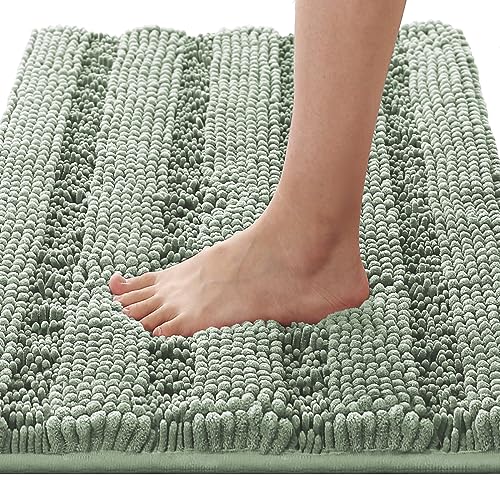
H.VERSAILTEX Chenille Bath Rug (Best All-Round Floor Mat)
Quick take: This is the mat you want right outside the shower door — thick, absorbent, and stable on smooth tile.
The chenille surface is the first thing that stands out. At 1350 grams per square meter, it’s noticeably heavier than most bath rugs, and that density translates to real cushioning underfoot. The listing touts a GLOBAL RECYCLED STANDARD certificate, which is a nice touch if you’re trying to keep plastics out of the waste stream. The updated SBE/hot melt spray backing grips smooth floors without the brittleness of cheap PVC that cracks after six months.
Where this mat will disappoint is if you expect to use it inside the tub. Chenille is a floor material; it soaks up water like a sponge, which is great for drips but terrible for standing water. Over time, if you don’t hang it to dry thoroughly between uses, the loops can flatten and the backing can develop a musty odor. Also, the hot melt backing is not designed for machine washing on hot — cold water and air drying only. This is a floor mat, not a tub mat, and the listing makes no claims for tub use. Our guide to common non-slip bath mat mistakes explains why using the wrong mat in the wrong spot is the number one cause of slips.
Pros:
- Extra thick chenille — at 1350g/sm, it cushions feet and soaks up far more water than a standard 800g/sm mat.
- Hot melt spray backing — grips smooth tile and vinyl without suction cups, so it won’t shift when you step off.
- Recycled material certification — good for anyone reducing single-use plastics in the home.
Cons:
- Not usable inside a tub — chenille absorbs water and becomes slippery on a wet, curved bathtub floor.
- Slow drying — the thick fibers hold moisture, so this mat needs a towel bar or shower rod to air out properly.
- Edge curling risk — if the backing gets folded or washed in hot water, the corners can lift and become a trip hazard.
Our Take
Best for: Anyone who wants a plush, floor-hugging bath mat for the space outside a shower or tub. Skip if: You need a mat that works inside the tub itself, or you’re dealing with a heavily textured bathroom floor where the spray backing may not bite.
Hargiis Non Slip Bathtub Mat (Value Pick for Smooth Tubs)
Quick take: A budget PVC mat with a pebbled surface and a plaid backing — good enough for light use if your tub is already smooth and clean.
The Hargiis is made from BPA-free PVC and is 0.4 inches thick, which gives it a decent amount of cushion without feeling like a trampoline. The top has a pebble-like texture that is supposed to massage your feet, and the listing mentions a plaid backing rather than explicit suction cups. That’s a critical distinction: without a stated number of suction cups, this mat is likely relying on that textured backing to grip by friction alone. On a perfectly smooth, dry tub floor that can work. Add soap and water, and friction drops fast.
The 0.4-inch thickness is a double-edged sword. It provides soft support, but thicker PVC mats often trap water between the pebbles if you don’t rinse and hang them after every shower. The listing says cleaning is easy — just spray and rinse — but that assumes you’ll actually do it daily. If you skip a few days, the crevices start to smell. This is a fine starter mat for a guest bath used once a week, but not for a family bathroom with daily use. And if your tub floor has any texture at all, pass on this one and look at something with real suction cups.
Pros:
- BPA-free PVC — safer material than older vinyl mats that could leach plasticizers.
- 0.4 inch thick — enough cushion for feet without being bulky.
- Easy to rinse — the pebbled surface doesn’t trap hair or lint as badly as fabric mats.
Cons:
- No listed suction cup count — the plaid backing alone may slide on a wet, soapy tub floor.
- Water pools in pebble grooves — if not hung to dry, mildew odor develops quickly.
- Thick PVC can harden over time — especially if exposed to hot water repeatedly, which reduces flexibility and grip.
The Real Deal
Best for: A spare bathroom or rental where you need an inexpensive, no-frills tub mat and the tub floor is smooth fiberglass or acrylic. Skip if: You have a textured tub, mobility issues, or want a mat that will hold up for more than a year of daily use.
TEESHLY Bath Tub and Shower Mats (Large Pebble-Texture Coverage)
Why it made our list: The 40 x 16-inch size covers far more of a standard tub floor than the typical 27-inch mat, and the domed pebble design is genuinely comfortable for some people.
TEESHLY uses soft-touch PVC, which is a step up from the hard, shiny PVC you find on cheaper mats. The surface has a series of raised domes that resemble pebbles, and those do provide a massage-like feel underfoot. At 40 inches long, it extends from the drain to the far end of most standard tubs, which means you’re less likely to have a bare slippery patch right where you step out. That extra coverage is a real safety advantage in a tub with a center drain.
The problem is that the listing doesn’t mention drain holes, and a pebbled PVC surface without drainage will hold water in all those low spots between the domes. You’ll need to peel it up after every shower, rinse it, and hang it over the tub edge or a rack. If you forget once, the next morning you get that sour, mildewy smell that never quite washes out of PVC. Also, soft-touch PVC feels nice but is more prone to tearing than harder vinyl — if you have pets or kids who like to play in the tub, check for punctures regularly.
Pros:
- Extra large 40 x 16-inch footprint — reduces exposed slippery areas compared to shorter mats.
- Soft-touch PVC — more comfortable and less likely to crack than rigid vinyl.
- Domed pebble surface — offers a mild foot massage and helps channel some water away from your feet.
Cons:
- No drain holes specified — water sits in the low areas, inviting mildew between uses.
- Soft PVC tears more easily — sharp objects or rough play can puncture the surface.
- Grip depends on suction cups not detailed in the listing — if the tub is textured, this mat may not stick at all.
In a Nutshell
Best for: Standard smooth tubs where you want more coverage and don’t mind the daily rinse-and-hang routine. Skip if: Your shower floor is textured, you hate maintenance, or you’re looking for a mat that dries quickly on its own.
MontVoo Diatomaceous Earth Bath Mat (Fast-Drying Alternative)

Quick take: This isn’t your typical fabric or PVC mat — it’s a rigid diatomaceous earth slab that absorbs water on contact and dries in minutes, making it the best choice for anyone fighting mold.
The MontVoo mat has a nano-porous smooth surface that pulls water away from your feet instantly. Diatomaceous earth is the same material used in cat litter and industrial absorbents, and it works because the microscopic pores create a huge surface area relative to its size. The listing says it’s stain resistant and easy to clean, which is true for most spills — a quick wipe is usually enough. Unlike chenille or PVC, there are no fibers or grooves for mold to hide in.
But the trade-off is comfort and grip. A diatomaceous earth mat is hard, like standing on a thin slate tile. If you have foot pain or just like a soft landing after a shower, this may not be suitable. More importantly, the listing doesn’t specify a non-slip backing. Some diatomaceous mats come with a separate rubber pad, others rely on the natural roughness of the material. On a smooth tile floor, that roughness may not be enough to keep the mat from sliding when stepped on. It is advisable to buy a separate non-slip underlay if choosing this one. And if dropped, expect it to crack — diatomaceous earth is brittle.
Pros:
- Dries within minutes — the nano-porous surface doesn’t hold water, so mold and mildew never get a foothold.
- Stain resistant — liquids bead up and wipe away without leaving marks.
- Low maintenance — no washing machine, no hanging; just wipe down and walk away.
Cons:
- Hard surface — zero cushioning, which can be uncomfortable for elderly users or anyone with joint pain.
- No built-in non-slip layer listed — on smooth tile, the mat itself may slide without an additional rubber pad.
- Brittle material — a hard drop onto a tile floor can crack or chip the diatomaceous earth.
Final Thoughts
Best for: High-humidity bathrooms, renters with mold allergies, or anyone who is tired of washing fabric mats. Skip if: You want a plush, cushioned feel, or you have mobility issues that require a softer landing.
YINENN Bath and Shower Safety Mats 40×16 inch (Heavy-Duty Suction for Standard Tubs)

What stood out: The YINENN has 200 suction cups, which is nearly double what you get on most budget tub mats, and the vinyl material is heavy-duty enough to lie flat without curling.
Two hundred suction cups is a serious number. On a clean, smooth fiberglass or acrylic tub floor, each cup creates a small vacuum seal, and together they hold the mat firmly in place. The listing says there’s no chemical smell, which matters because many vinyl mats off-gas noticeably for the first week. The pebble design is the same as the TEESHLY, but here the cups do the work — the pebbles are just for comfort and water channeling.
The failure mode is the same as all suction cup mats: if the tub floor is textured, sealed, or coated with non-slip spray, the cups never form a proper seal, and the mat slides. Even on a smooth tub, soap scum and mineral buildup will gradually coat the cups and reduce their grip. You have to scrub the underside weekly and press each section down firmly after every cleaning. Also, 200 cups means 200 little rings of trapped water — if you leave the mat flat, mold will grow under each cup. Hang it over the tub edge or a rack after every use.
Pros:
- 200 suction cups — holds securely on clean, smooth surfaces without shifting.
- No chemical smell — a common complaint with vinyl shower mats is absent here according to the listing.
- Heavy-duty vinyl — less likely to curl at the edges than thin PVC mats.
Cons:
- Fails on textured tubs — suction cups simply won’t stick to pebbled or anti-slip coated surfaces.
- Traps water under each cup — if left flat, mold builds up quickly and destroys the cups’ grip.
- Requires weekly scrubbing — soap film on the cups renders them useless far faster than most people expect.
The Bottom Line
Best for: Standard smooth tubs or shower pans where you need maximum slip protection for a household member with balance concerns. Skip if: Your tub has any texture, you’re unwilling to remove and hang the mat after each shower, or you’re looking for a floor mat for outside the tub.
OTHWAY Bath Mat for Tub Non Slip (Hair Catcher + Extra Long)
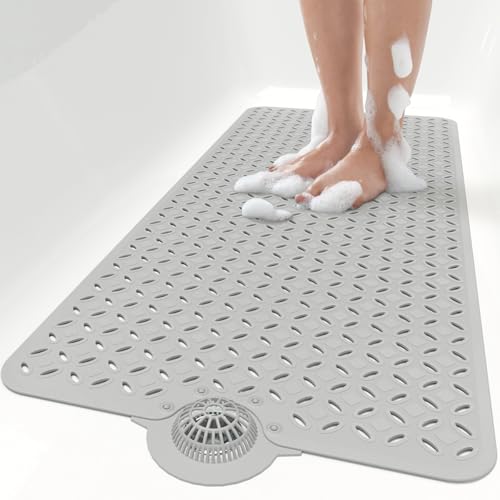
Why it’s recommended: The OTHWAY solves two problems at once — it grips the tub floor and has a built-in detachable hair catcher that prevents clogs, all in a longer 39 x 17-inch format made from recyclable TPE.
TPE (thermoplastic elastomer) is a smarter choice than PVC for tub mats because it stays flexible longer and doesn’t off-gas the same plasticizer smell. OTHWAY says the material is recyclable, odorless, and thick — all good signs. The hair catcher is the real differentiator: it sits over or near the drain and traps hair before it goes down, which is a blessing for anyone with long hair or a household where drain snakes are a monthly ritual. The mat is 35% larger than standard models, which means fewer bare spots on the tub floor.
The catch is the hair catcher itself. It adds a layer of bulk right where you stand, and if it’s not emptied regularly, water will pool around it and the mat will start to smell. TPE is naturally anti-slip due to its rubbery texture, but the listing doesn’t specify suction cups — so on a very slick tub, it may rely on the weight of the mat and the texture of the material. If you have a center drain tub, the larger size is great; for a side drain, the mat may not align as well.
Pros:
- Detachable hair catcher — blocks hair from clogging the drain without needing a separate strainer.
- Recyclable TPE material — safer and more durable than PVC, with no chemical odor.
- 39 x 17-inch oversized coverage — reduces slippery gaps in longer tubs by 35% compared to standard 27-inch mats.
Cons:
- Hair catcher requires daily emptying — if you forget, water backs up and the mat gets slimy.
- No suction cup count listed — grip depends on TPE texture and mat weight, which may not hold on a very slick surface.
- Bulkier than flat PVC mats — the hair catcher protrudes, so it’s less comfortable to stand on directly over the drain.
Who Should Buy This
Best for: Households with long-haired residents or frequent drain clogs, especially if you have a longer-than-average tub. Skip if: You have a textured tub floor, a side drain that won’t align with the catcher, or you find the extra bulk annoying underfoot.
Linoows Bathtub and Shower Mats (300 Suction Cups, Lychee Texture)
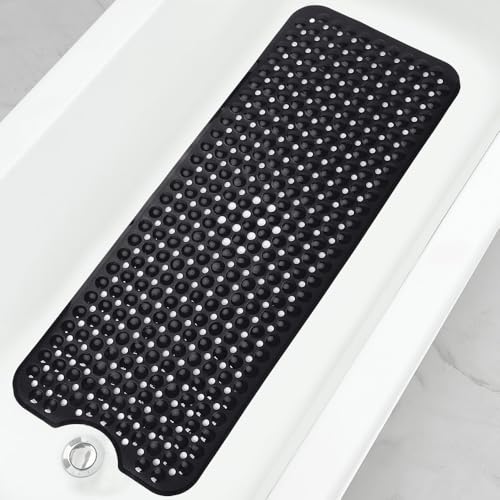
Here’s the deal: Linoows went all-in on grip with 300 suction cups — 30% more than most competitors — plus a lychee-textured surface that keeps your feet from sliding even when the cups are less than perfect.
The 300 suction cups are the headline, and by the numbers, this is the strongest gripping tub mat on our list. The lychee texture on top is a smart addition because even if a few cups lose suction, the raised bumps provide friction for your feet. The mat is 40 x 16 inches, 30% longer than standard, so it covers nearly the entire tub floor. The material is unspecified in the listing beyond ‘premium’, but given the heavy-duty cup count, it’s likely a thick PVC or similar vinyl that can support the repeated flexing of the cups.
The flip side of 300 cups is exactly what you’d expect: this mat is a pain to remove and clean. Each cup traps a little ring of water, and if you leave it flat, you’ll get mold in 300 tiny circles. The strong suction also means the mat can leave marks on acrylic tubs if left in place for weeks at a time — those marks can be permanent on softer surfaces. And like all suction mats, it only works on smooth, non-porous tubs. If your shower has a textured base, this is an expensive paperweight.
Pros:
- 300 suction cups — maximum grip on clean, smooth tubs, reducing slip risk dramatically.
- Lychee-textured top surface — adds secondary friction even if some cups lose their seal.
- Extra large 40 x 16-inch size — covers more of the tub floor than standard mats.
Cons:
- Extremely difficult to remove — the strong suction makes it hard to pull up for cleaning, especially for anyone with limited hand strength.
- Can leave permanent marks on acrylic tubs — the cups create suction rings that may not fade on softer surfaces.
- Water traps under 300 cups — without daily hanging, mildew is inevitable.
Our Take
Best for: Standard smooth bathtubs in homes where a slip would be catastrophic — elderly users, post-surgery recovery, or anyone with balance disorders. Skip if: You have a textured tub, an acrylic tub you care about, or you want a mat you can remove without wrestling.
Buying Guide: What to Look For in a Non Slip Bath Mat
Choosing the right mat comes down to three things: the grip mechanism, the material’s drying behavior, and the size relative to your tub or floor space. Most people buy the prettiest mat and then wonder why it slides or smells. Let’s break down each factor using the products above as examples.
Grip Mechanism: Suction Cups vs. Rubber/TPR Backing
Suction cup mats (like the YINENN, Linoows, and TEESHLY) work by creating a vacuum seal against a smooth, non-porous surface. The critical word there is smooth. If your tub has a textured bottom or a factory-applied anti-slip coating, the cups never seal, and the mat will slide worse than no mat at all. The Consumer Product Safety Commission publishes bathroom safety guidance that stresses the importance of matching the mat to the surface type. Rubber or TPR-backed mats (like the H.VERSAILTEX floor rug) rely on friction instead of vacuum. They work on tile and vinyl floors but aren’t designed for standing water inside a tub. The failure mode for both is edge curling: suction cups lose seal when soap film builds up, and rubber backings harden or peel after repeated hot-water exposure. Check the underside of any mat after a month — if the edges lift, it’s a trip hazard.
Material and Drying Speed: Chenille, PVC, TPE, and Diatomaceous Earth
Chenille is the most comfortable and absorbent, but it dries slowly and needs to be hung. PVC and TPE are waterproof but trap water in their grooves and under suction cups. Diatomaceous earth (the MontVoo) dries fastest but is hard and brittle. The sweet spot for most bathrooms is a mat that drains or evaporates within a day. If you can’t hang a mat after every shower, avoid thick chenille and choose a TPE mat with drain holes (though neither the OTHWAY nor Linoows explicitly list drain holes). Our roundup of bath mats under $100 shows how different materials perform at lower price points, but the trade-offs remain the same.
Size and Placement: Inside the Tub vs. On the Floor
A mat that works on the bathroom floor will not work inside the tub. Floor mats need a rubber or hot-melt backing and a low profile so the door doesn’t catch. Tub mats need suction cups or a super-grippy TPE texture and should be at least 27 inches long; the 39-40 inch models from OTHWAY, YINENN, and Linoows cover more of a standard 60-inch tub and leave fewer slippery gaps. Measure your tub floor before ordering. If you’re also dealing with a hardwood bathroom floor, read our guide to bath mats for hardwood floors — the same non-slip backing that grips tile can trap moisture against wood and warp it.
Our Final Recommendation
For the floor outside your shower, the H.VERSAILTEX Chenille Bath Rug is the clear winner: thick, absorbent, and stable on smooth tile. For a budget tub mat that works on smooth surfaces, the Hargiis is the value pick, though you’ll sacrifice suction strength. If you need maximum grip inside a standard tub and can handle the maintenance, the Linoows with 300 suction cups is the premium choice. The MontVoo diatomaceous mat is a niche pick for mold allergy sufferers who accept the hard surface. Match the mat to the surface, and you won’t slip.
Frequently Asked Questions
Why does my suction cup bath mat slide around after a few weeks even though it’s advertised as non slip?
Suction cups fail because soap scum, body oils, and mineral deposits coat the rubber and break the vacuum seal. Each time you step on the mat, the cups flex, and that flexing gradually loosens the grip. The fix is simple: scrub the underside with a stiff brush and dish soap every week, rinse thoroughly, and let the mat dry completely before placing it back. Also check that your tub floor is smooth — if it has any texture, suction cups were never a good choice.
Can I use the same non slip bath mat on both the tub floor and the bathroom floor outside?
No. Tub mats are designed to sit in standing water and use suction cups or a water-resistant TPE texture. Floor mats use a rubber or hot-melt backing that grips dry tile but becomes slick when wet. Using a floor mat inside the tub is dangerous because the fabric absorbs water and loses all friction. Using a tub mat outside the shower leaves an awkward, hard ridge underfoot. Buy two separate mats for two separate jobs.
How often should I replace a non slip bath mat to maintain its grip?
Replace a tub mat when the suction cups crack, flatten, or stop sticking after cleaning, which typically happens after one to two years of daily use. Floor mats should be replaced when the backing starts to peel, harden, or curl at the edges — usually every two to three years. Diatomaceous earth mats last indefinitely if not dropped, but the surface can become smooth and less absorbent over time. If a mat smells musty even after washing, that’s mold in the material; throw it out.