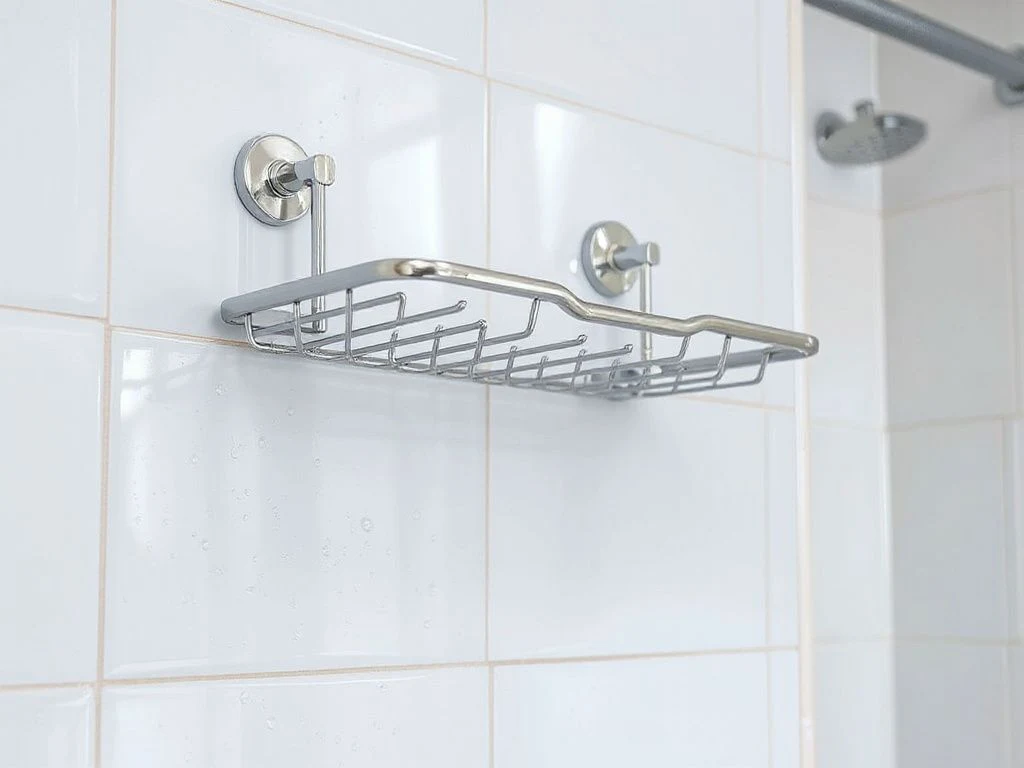
The Environmental Protection Agency reports that showers account for nearly 17% of residential indoor water use, which means your shower caddy gets handled twice a day, 730 times a year. A shower caddy buying guide might feel like overkill until a single hook fails on a Tuesday morning and your shampoo bottle explodes on the tile. Measure doorways before admiring sofas, so the first consideration is this: if your caddy does not fit your specific shower, nothing else matters.
I have walked into too many bathrooms where the caddy sags within a year because the owner never checked the grade of stainless. The guide I always return to separates the four main mounting systems—tension, over-the-door, suction, and wall-mount—each with its own trade-offs in installation permanence and weight capacity. It also clarifies that not all stainless steel is created equal: the 304 grade is markedly more corrosion-resistant than 201, though many budget options use 201. A caddy’s lifespan is dictated by the material grade and the quality of its finish, not just the brand name.
If you are also refreshing the rest of the bathroom, our roundup of the best bath towel sets for 2026 pairs well with a properly mounted caddy. But first, let’s get the caddy right.
Key Takeaways
- Tension pole and wall-mount caddies hold the most weight, but both require precise measurements and either ceiling contact or drilling.
- 201 stainless steel will rust in a humid shower within months; only 304 or 316 grades resist corrosion long-term.
- Suction cup caddies fail on textured or porous tile and rarely hold more than 8 pounds safely.
- Bamboo caddies need a waterproof sealant reapplied every few months or they will warp, split, and grow mildew.
Beginner Basics: Understand the Four Mounting Systems
Every shower caddy falls into one of four mounting categories. None is universally better. Each one solves a different problem, and choosing the wrong one for your bathroom layout is the most common mistake I see. Before you buy, stand inside your shower with a tape measure. Know your shower’s width, the height from floor to ceiling, the door thickness if you have a door, and whether your tile is smooth or textured. That last detail matters more than anything for suction cups.
Tension Pole Caddies: The Freestanding Workhorse
A tension pole caddy runs from the shower floor to the ceiling and uses a spring-loaded pole to lock itself in place. No drilling, no adhesive. The pole often includes adjustable shelves that slide along the shaft. On paper, this is the best option for renters who need serious storage. The weight capacity can exceed 20 pounds if the pole is properly tensioned and the ceiling is solid.
The trade-off is installation precision. Tension poles require a perfectly flat ceiling and a non-slip floor surface. If your shower floor is sloped or your ceiling has texture, the pole can slip over time. The American Society for Testing and Materials (ASTM) sets standards for metal tubing strength, but even a well-made pole will leave slight marks on the ceiling and floor after months of pressure. That matters if you have a deposit to protect.
A self-contained fact: a tension pole caddy that slowly loses tension will start leaning into the shower stream, putting constant lateral force on the ceiling pad. That is why I check the tension knob every two weeks, not just once after installation.
Over-the-Door Caddies: The Renter’s Friend
Over-the-door caddies hang from the top of a shower door or curtain rod, using two hooks and a basket assembly that rests against the outside or inside of the door. They require zero installation. You lift, hang, and load. For anyone in a leased apartment, this is often the only option that causes no damage whatsoever.
The cons are real, though. Over-the-door caddies will not fit every door. Most hooks are designed for doors between 1 and 2 inches thick. Check your door thickness first. A hook that is too narrow will not grip; a hook that is too wide will slide side to side and scratch the door frame. The other major drawback is weight distribution. The basket hangs off one side of the door, which can make the door swing unevenly or bang against the frame. A padded hook protector is non-negotiable for metal doors. For wooden doors, the constant pressure can dent the top edge over time.
Suction Cup Caddies: The Quick Fix with Limits
Suction cup caddies use vacuum pressure to stick to smooth, non-porous surfaces like glass or polished tile. They are cheap, removable, and perfect for a temporary setup or a guest bathroom. But here is the hard truth: most suction cup caddies on the market list a weight limit of 6 to 8 pounds, and that assumes a perfectly smooth, clean, dry surface before installation. In a real shower, with steam and soap film, that capacity drops quickly.
Suction cups fail on textured tile, on grout lines, and on any surface with even microscopic porosity. Air slowly leaks in, the vacuum weakens, and one morning you hear the crash. If you have stone tile or tumbled travertine, do not bother. Suction cups are for glass and high-gloss ceramic only. And even then, you must clean the surface with rubbing alcohol and let it dry completely before pressing the cup on. One drop of water behind the cup cuts the hold by more than half.
Wall-Mount Caddies: The Permanent Solution
Wall-mount caddies attach directly to the shower wall using either screws, adhesive strips, or epoxy. Screws require drilling into tile, which is permanent and risky on glass or natural stone. Adhesive versions use heavy-duty double-sided tape or construction adhesive, which can hold surprisingly well if the wall is perfectly clean and the adhesive is rated for wet environments.
The advantage is stability. A properly installed wall-mount caddy can hold 15 to 30 pounds without flexing, sagging, or shifting. The disadvantage is that removal often damages the tile or leaves residue. If you own your home and plan to stay put for years, wall-mount is the most secure choice. If you are in a rental, this is the one option you should avoid unless you get written permission from your landlord.
Intermediate Considerations: Materials, Sizing, and Rust Prevention
Once you know which mounting system fits your bathroom, the next decision is what the caddy is made of. Material choice dictates everything about longevity, cleaning ease, and appearance. And this is where most buyers get fooled by a shiny finish on a cheap alloy.
Stainless Steel Grades: 304 vs 201 and Why It Matters
Stainless steel is the default recommendation for bathroom hardware, but that term hides a big difference. 304 stainless contains 18% chromium and 8% nickel, which gives it excellent corrosion resistance in humid, salty, and soapy environments. 201 stainless contains less nickel and more manganese, which makes it cheaper but far more prone to pitting and rust. Many budget shower caddies use 201 stainless, and the listing will simply say “stainless steel” without specifying the grade. If the product page does not state the grade, assume it is 201.
Rust on a 201 caddy usually appears first at welds, screw holes, and basket corners, where the protective chromium oxide layer is thinnest. Once rust starts, there is no way to reverse it. You cannot scrub it off and expect the metal to resist again. The only real fix is to replace the caddy or sand and respray it with a marine-grade clear coat, which is more work than the caddy is worth. Brands like Simplehuman and some InterDesign lines use 304 stainless, but you must verify the grade on the packaging, not the brand name.
Other Materials: Anodized Aluminum, Powder Coating, and Bamboo
Anodized aluminum is lighter than steel and naturally corrosion-resistant because the anodizing process creates a hard oxide layer. However, aluminum is softer, so it dents and bends more easily under heavy bottles. The anodized finish can also chip if struck by a dropped bottle, exposing raw aluminum that will oxidize into a dull gray powder.
Powder-coated steel looks great in matte black or white and is common in lower-cost caddies. But powder coating is only as good as the metal underneath. If the base is cheap steel and the coating gets scratched, moisture seeps in and the caddy rusts from the inside out. Powder coating on 304 stainless is fine, but powder coating on plain carbon steel is a ticking clock in a shower.
Bamboo caddies have a warm, spa-like look, but they are the highest-maintenance option in a wet bathroom. Bamboo is a grass, not a wood, and it absorbs water readily. Without a waterproof sealant applied every two to three months, bamboo will warp, split, and grow mildew in the joints. If you love the look, buy a bamboo caddy that has a marine-grade urethane coating and commit to re-sealing it seasonally. Otherwise, choose metal.
Measure Your Shower Before You Buy (or Regret It)
Small-space realism means measuring the actual space, not guessing. Here is the baseline checklist I use every time: shower width at the widest point, height from floor to ceiling, distance from the showerhead to the nearest wall, door thickness if you have a door, and the tile texture on all three walls. A caddy that is a half-inch too wide will not fit in a corner. A tension pole that is two inches too short will not reach the ceiling. An over-the-door hook that is half an inch too narrow will not grip the door at all.
Do not trust the product dimensions alone. Some listings give the shelf depth but not the overall width including the mounting brackets. Some poles state a minimum and maximum height, but that range assumes a flat ceiling. Measure twice, buy once. And if your shower is unusually small—say, 28 inches wide or less—look for a corner caddy specifically designed for tight angles. Standard straight caddies will block your elbow room.
Advanced Tactics: Installation Tricks, Cleaning, and Problem-Solving
You have chosen the mounting system and the material. Now the real work begins. Installation is where most caddies go wrong, either immediately or six months later. This section covers the fine points that separate a caddy that stays put from one that ends up in the recycling bin.
Installing Without Drilling: Adhesive and Suction Upgrades
If you cannot drill into tile, you have three non-permanent options: industrial adhesive strips, silicone sealant, or upgraded suction cups. Adhesive strips work on smooth tile and glass but not on stone or textured surfaces. The key is surface preparation. Wipe the tile with isopropyl alcohol, let it dry for five minutes, press the adhesive strip firmly for 30 seconds, and then wait 24 hours before loading any weight. Most failures happen because people load the caddy immediately.
Silicone sealant is a stronger alternative for wall-mount caddies without screws. Apply a bead of 100% silicone to the back of the caddy, press it against the wall, and hold it in place with painter’s tape for 24 to 48 hours. Silicone bonds to glass, ceramic, and even some natural stone, but it is semi-permanent. Removing it requires a razor blade and patience, and it can leave a residue that needs mineral spirits to clean. Only use silicone if you own the place or are willing to lose your security deposit.
For suction cup caddies that keep falling, the problem is almost always air leakage through porous tile or dirty cups. You can upgrade to suction cups with a locking lever or a twist-tight mechanism, which create a stronger initial vacuum. But if the surface is porous, no suction cup will hold for long. The only permanent fix is to switch to adhesive or silicone.
Preventing Soap Scum and Rust: A Maintenance Schedule
Soap scum is a mixture of soap, hard water minerals, and body oils. It builds up fastest on metal shelves that are repeatedly splashed with soapy water. The main defense is a weekly wipe-down. Keep a squeegee or a microfiber cloth in the shower and wipe the caddy after your last shower of the day. That takes ten seconds and removes the soap film before it hardens.
For rust prevention on stainless steel, avoid abrasive cleaners like steel wool or scouring powder, which scratch the surface and destroy the passive chromium oxide layer. Use a non-abrasive bathroom cleaner or a paste of baking soda and water. Rinse thoroughly and dry the caddy with a towel once a week. If you see a tiny rust spot appear, remove it immediately with a paste of baking soda and white vinegar, then apply a thin coat of mineral oil to re-passivate the surface. Left untreated, a pinprick of rust will spread under the finish and ruin the caddy within months.
Bamboo caddies need a different routine. Every two months, wipe the bamboo with a solution of one part white vinegar to four parts water to kill mildew spores, let it dry completely, then apply a thin coat of food-safe mineral oil or a spray-on urethane sealant. Do not let standing water pool in the joints. If you see black spots, that is mildew, and it means the sealant has failed. Sand the affected area lightly with fine-grit sandpaper, then re-seal.
What to Do When Things Go Wrong: Rust, Stuck Suction, and Marks
Rust is the number one problem. If your caddy has rusted through in less than a year, it was almost certainly 201 stainless or powder-coated carbon steel. There is no repair for structural rust. Replace the caddy with one that specifies 304 or 316 grade, and if you want a guarantee, look for a manufacturer that offers a lifetime warranty against rust. That warranty exists only because the material can back it up.
A stuck suction cup can be removed by sliding a thin plastic card (like an old credit card) between the cup and the tile to break the vacuum seal. Do not pull straight out, or you risk chipping the tile. For adhesive-backed caddies that have bonded too strongly, use a hair dryer on low heat to soften the adhesive, then work dental floss behind the mount to saw through the glue. Residual adhesive comes off with rubbing alcohol or a citrus-based solvent. Test any solvent on an inconspicuous tile area first.
Tension pole caddies can leave circular marks on the ceiling and floor. To prevent this, place a small rubber furniture pad or a piece of adhesive felt between the pole end and the surface. If a mark has already formed, a paste of baking soda and water can remove light scuffs on painted ceilings; for vinyl flooring, use a pencil eraser or a small amount of mineral spirits on a cloth. Always patch-test in a hidden corner.
If you are dealing with a door that gets scratched by an over-the-door caddy, slide soft adhesive felt pads onto the hook arms where they contact the door edges. Replace the pads every few months as they compress. For a door that swings into the caddy and knocks bottles over, add a door stop on the hinge side or reposition the caddy so the basket sits flat against the door rather than at an angle.
Frequently Asked Questions
How much weight can a suction cup caddy actually hold?
Most suction cup caddies are rated for 6 to 8 pounds when installed on a perfectly smooth, clean, non-porous surface. In a real shower with steam and soap residue, expect half that. Never load more than two full-size shampoo bottles plus a bar of soap onto a suction cup caddy. If you need more capacity, choose a tension pole or a wall-mount caddy instead.
Can I use a shower caddy in a corner?
Yes, corner caddies are designed specifically for tight spaces. A corner caddy uses a triangular or quarter-round shelf profile that fits into the angle where two walls meet. Look for a caddy with adjustable arms or a curved back plate that matches your corner radius. Measure the distance from the corner to the nearest obstruction, like the showerhead or door, before buying.
How do I clean a shower caddy to prevent rust?
Wipe the caddy dry after every shower with a squeegee or microfiber cloth. Once a week, wash it with a non-abrasive bathroom cleaner and warm water, then dry thoroughly. For stubborn soap scum, make a paste of baking soda and water, apply it with a soft cloth, and rinse. Never use steel wool or scouring powder, which scratch the surface and invite rust. For tiny rust spots, use baking soda and white vinegar immediately.
Are bamboo caddies durable in a wet bathroom?
Bamboo caddies can last for years if you re-seal them every two to three months with a waterproof urethane or marine-grade oil. Without that maintenance, bamboo absorbs water, warps, splits, and grows mildew. Bamboo is not naturally waterproof. If you are not willing to commit to a seasonal sealing routine, choose 304 stainless steel or anodized aluminum instead.
What should I do if my caddy rusts?
First, determine the material. If the caddy is 201 stainless or powder-coated carbon steel, remove the rust with a baking soda paste, then apply a clear rust-inhibiting spray paint or a thin coat of food-grade mineral oil. But this is a temporary fix. Structural rust means the caddy will fail eventually. Replace it with a 304 stainless model and keep it dry after each shower. If the rust is cosmetic and caught early, you can extend the life for several months with diligent care.
How do I remove a stuck caddy from the shower wall without damaging tile?
For suction cups, slide a thin plastic card under the cup to break the vacuum, then peel slowly. For adhesive strips, heat the area with a hair dryer on low for 30 seconds, then saw through the adhesive with dental floss. Clean residual glue with rubbing alcohol or a citrus solvent. Test any chemical on a hidden tile area first. Never pull directly outward, as that can chip the tile or crack the grout.
If you are upgrading other parts of your bathroom at the same time, our Umbra wall art guide offers ideas for decorating around a newly organized shower. And if the small-space decisions are getting overwhelming, remember that even a chair for a compact home office faces the same dimensional challenges; our Vari office chair review discusses how to choose furniture that fits a tight footprint.