Something changed in home organizing over the last couple of years. The scorched-earth purge, the black bags by the curb, the whole “if in doubt, chuck it out” mood has cooled off, and in its place people are asking a harder question: how do you clear a room without sending half of it to landfill? Learning how to declutter without throwing everything away is really about routing, not willpower. You are not being gentler on your stuff. You are deciding, before you touch a single shelf, exactly where each category is allowed to go.
That distinction matters more than any folding technique. Clutter that leaves through donation, resale, gifting, or repair has genuinely left the building. Clutter with no assigned destination just circles back into a drawer and waits.
Key Takeaways
- Decluttering without discarding is a redistribution job: define the exit routes (donate, sell, gift, repair, relocate, timed hold) before you start sorting, or items just migrate to a new pile.
- Relocating is not resolving. Moving something to a spare room, a bin, or a paid storage unit feels like progress but only defers the decision until you forget you made it.
- Sentimental objects get their own track. Testing them by pure usefulness is exactly what makes people quit the whole project.
Why “Not Throwing It Away” Is a Sorting Problem, Not a Feelings Problem
The trap sits right at the start. Most people begin by pulling things off shelves and asking, item by item, “do I keep this?” Within an hour they have three vague heaps and no idea what any of them mean.
Flip the order. Decide the destinations first, then sort into them. The same logic applies to flat-pack furniture: check the hardware before you admire the veneer, because the joints decide whether the thing survives. Here, the destinations are your joints.
Six exits cover almost everything you own:
- Keep — earns a real home in daily-use space.
- Donate — usable, clean, and something a charity will actually accept.
- Sell — worth enough to justify the effort of listing it.
- Gift to a named person — you already know who wants it.
- Repair — broken but genuinely fixable, with a deadline.
- Timed hold — a labeled box with a date, not a limbo.
Notice what is missing from that list: “put it somewhere for now.” That phrase is how clutter reproduces. A kept item that has no assigned spot in the space you use every day is not kept, it is stored, and stored is just deferred.
Marie Kondo’s KonMari Method gets criticized for the “spark joy” line, but the underlying move is sound: you handle each object and make a decision instead of letting it sit unexamined. Where this article differs is that we are pre-committing to the exits so that a “no” doesn’t become a black bag by default.

Step 1: Build the Exit Stations Before You Sort a Single Drawer
Set up physical stations. Not mental categories, actual containers or floor zones with labels you can read from across the room.
Use whatever you have: laundry baskets, a couple of sturdy boxes, painter’s tape marking squares on the floor. Label every one — Donate, Sell, Gift, Repair, Hold-until-[date]. The labeled hold box is the quiet hero here.
Give yourself a resale reality check before the Sell box fills up. Listing on eBay consignment or a local resale platform makes sense for items above roughly the price of a takeaway meal, in demand, and easy to ship or hand over. Below that, the hour you spend photographing and messaging is worth more than the item.
This is where a lot of good intentions die. People pile the Sell box high, never list anything, and six months later the box itself is clutter. Be honest about which things you will actually list this week.
Step 2: Decide What to Keep When Everything Feels Useful
“But I might need it” is true of almost anything. That is why usefulness alone is a broken test. Nearly every object is useful to someone in some scenario, so the question isn’t whether it could be used, it’s whether you use it, here, in this life.
Three questions cut through most of it:
- Have I reached for this in the last 12 months? Seasonal gear gets a pass; the third garlic press does not.
- If it vanished, would I buy it again at full price? A surprising number of “useful” things fail this instantly.
- Does it have a home, or does it live on a surface? Homeless items are the ones cluttering the room.
Swedish death cleaning — döstädning, the practice of steadily paring down so you’re not leaving a mess for others — reframes the same idea without the morbid packaging. You are not deciding what to bin. You are deciding what earns a place.
The keep pile is a budget, not a bucket. If your shelves hold 40 books comfortably, 40 is the number. Keeping 60 means 20 live in stacks on the floor, which is the clutter you started with wearing a literary disguise.
Step 3: The Line Between Decluttering and Just Moving the Mess
Here is the failure mode that fools everyone. You clear the kitchen counter by carrying the pile to the spare room. The kitchen looks incredible. Nothing left your home. In three weeks the spare room is a warehouse and the counter is filling up again.
Relocation is not resolution. Moving items into a bin, a spare room, or a paid unit feels like progress but only defers the decision. A kept item must earn an actual home in daily-use space, not a limbo.
This is also the honest test for a self-storage unit. Renting one to hold seasonal or genuinely-needed-but-bulky things — a cot between babies, tools for a renovation with an end date — can be sensible. Renting one because you can’t decide is the most expensive procrastination in the home.
Step 4: Route Each Item — Donate, Sell, Gift, or Repair
Once something is a clear “not keeping,” the destination is a matter of value and effort, not sentiment.
Donate when the item is clean, working, and modest in value. Goodwill and the Habitat for Humanity ReStore are the obvious homes for furniture, housewares, and clothing in good shape. The ReStore in particular takes building materials, cabinets, and larger furniture that regular thrift shops turn away.
Gift to a named person when you already know someone who genuinely wants it. “Someone might like this” is not a name. The Buy Nothing Project and the Freecycle Network are built for exactly the middle case — good stuff, no resale value, and a neighbor who’ll come collect it within the day.
Sell only when the math works, as covered above.
Repair when the thing is broken but worth fixing and you’ll actually book the repair. Put a date on it. A “to be repaired” pile with no deadline is a graveyard.
One caution that saves charities a lot of grief: donation is not a bypass for the bin. Thrift stores reject stained or torn textiles, expired products, recalled goods, and most old electronics. Before you assume a broken lamp or a car seat is “donatable,” check whether it’s actually usable and legal to pass on — the U.S. Consumer Product Safety Commission maintains recall listings, and items under active recall cannot be donated or resold. An overstuffed donation bag full of rejects just becomes the charity’s landfill run instead of yours.
Step 5: Handle the Things Nobody Will Take
Some things are genuinely done. Broken beyond repair, expired, or simply unwanted by every channel. Throwing these away responsibly is not a failure of the “don’t throw it away” project — it’s the correct end for objects that have no life left.
The word matters, though: dispose correctly, don’t just bin everything. Old electronics, batteries, and paint carry chemicals that don’t belong in household trash. The U.S. Environmental Protection Agency publishes guidance on electronics recycling and household hazardous waste, and most municipalities run drop-off days for exactly this. Textiles too worn to donate can often go to fabric recycling rather than landfill.
Expired medications, old paint, dead smoke detectors, and lithium batteries each have their own disposal route — none of them the kitchen bin. Two minutes checking your local rules keeps a genuinely responsible declutter from ending in a chemical spill under the sink.
Step 6: Sentimental Items Get Their Own Rulebook
This is the section that decides whether you finish. Apply the “used it in the past year?” test to your grandmother’s letters and you’ll either keep everything out of guilt or quit the whole exercise by lunchtime.
Sentimental objects are not storage problems. They are memory anchors, and the usefulness test doesn’t apply to them at all. Give them a separate track with its own rules:
- Photograph the memory, keep the photo. The children’s artwork, the concert tickets, the worn-out shirt from a trip — a good photo preserves the memory while freeing the shelf. Digital decluttering is its own parallel project, but scanning is where the two meet.
- Keep a representative few, not the set. Three of your father’s ties, not thirty. The few carry the meaning; the rest are just volume.
- Designate one memory box, and let it be full. One good box with a lid is a boundary. When it’s full, keeping something new means choosing what leaves — which is a much kinder decision than “throw out Grandpa’s things.”
The same restraint applies when you’re helping aging parents downsize or clearing an estate. Heirlooms deserve the representative-few approach, not a purge, and the decisions belong to the family, not to the most organized person in the room.
Step 7: Shared Spaces and Other People’s Stuff
One rule, and it’s non-negotiable: you do not declutter other people’s possessions. Deciding for a partner, a roommate, or a teenager is how decluttering damages relationships instead of homes.
Sort your own things freely. For shared items, make a pile and talk about it. For someone else’s, the most you do is gather it neatly and hand it back with a gentle ask. The satisfaction of a clear shelf is never worth the resentment of a tossed-out keepsake.
In genuinely shared zones — the garage, the hall closet — divide by owner first, then each person routes their own. It’s slower. It’s also the only version that doesn’t end in an argument.
Room-by-Room or Category-by-Category — And How Long It Really Takes
Two schools of thought. KonMari sorts by category — all clothing at once, then all books — because it shows you the true scale of what you own. Room-by-room is gentler on your schedule and lets you finish a whole space in one sitting.
Realistic timing: a single drawer or shelf, 15–20 minutes. A small room done properly, 2–4 hours. A full category like all clothing across the house, most of a day. Anyone promising a whole home in a weekend is selling the fantasy, not the work.
The honest recommendation: go room-by-room if you need visible wins to stay motivated, category-by-category if you keep discovering you own six of the same thing. Both work. Neither works if you skip Step 1 and sort before the exits exist.
Keeping It From Coming Back
An initial clear-out is the easy part. Preventing re-accumulation is where most projects fail three months later.
The one-in-one-out rule is the simplest guard: a new sweater means an old one leaves. It holds your keep-budget steady instead of letting it creep upward.
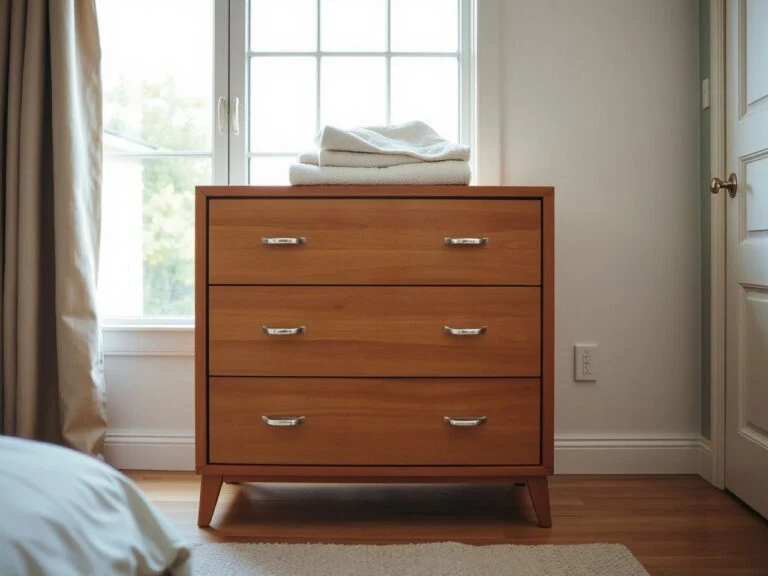
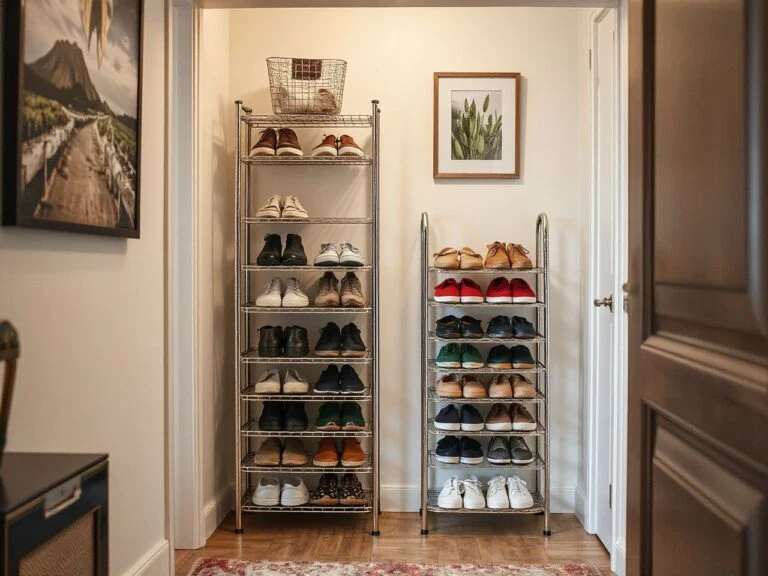
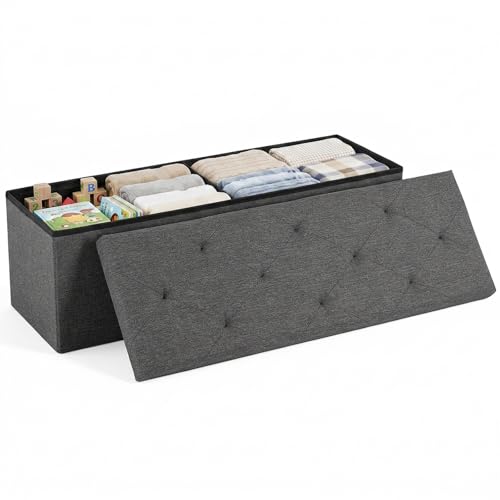
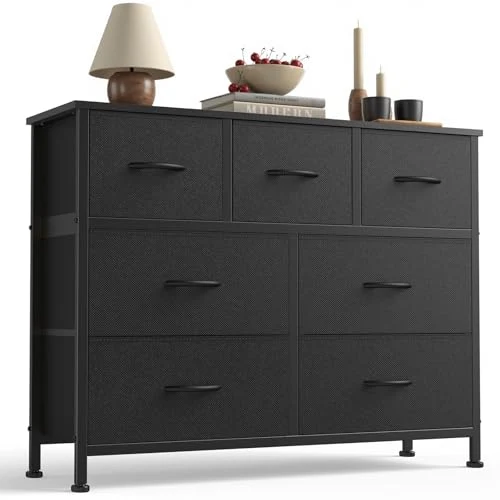
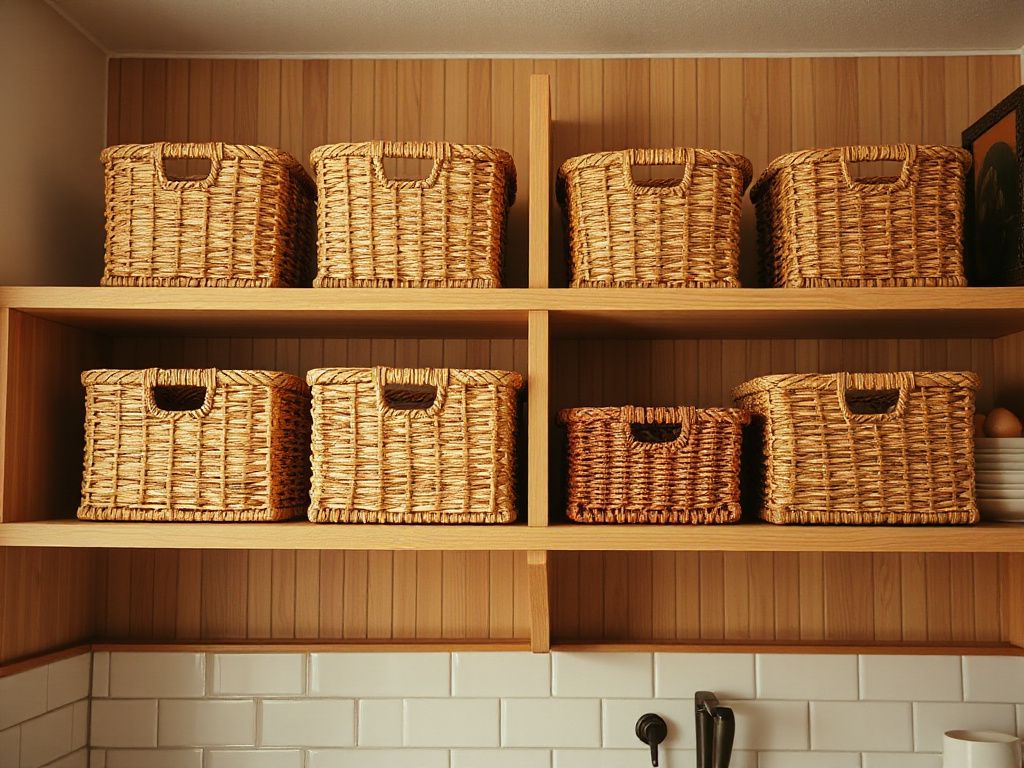
Give the things you keep proper homes, because clutter is mostly homeless objects landing on the nearest flat surface. This is where storage furniture and vertical space earn their keep — and where flat-pack quality comes down to its joinery. A cabinet that clears your counters is only useful if it survives being loaded. Check the hardware: cam-lock fittings and particleboard shelves sag under books within a year, while dowelled or screwed joints into solid ply hold. The ASTM International F2057 standard for clothing storage stability exists precisely because loaded, poorly-anchored furniture tips — anchor tall units to the wall and the vertical space becomes safe to use.
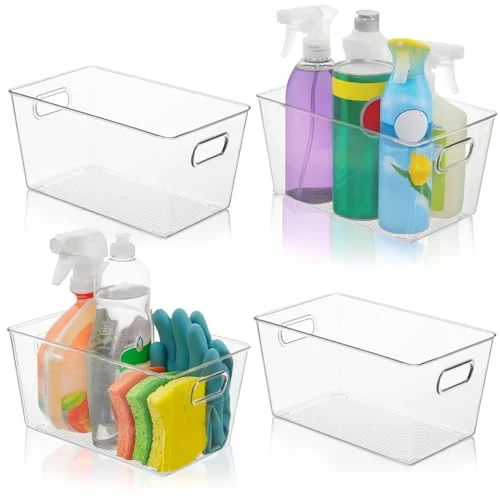
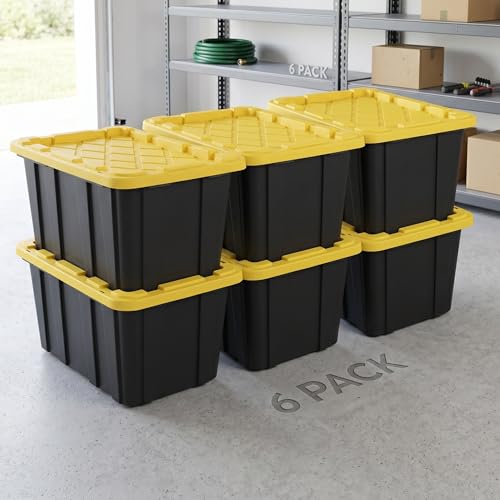
The Container Concept popularized by The Home Edit works on the same principle: the container defines the limit. When the bin is full, that category is at capacity. It’s the physical version of the keep-budget, and it’s genuinely effective at holding a line once you’ve drawn it.
Even the small stuff follows this logic. If you’re rethinking a bathroom, the fittings and mats are part of the storage picture too — our guide to choosing the right bath mat covers how the small textiles either add to surface clutter or quietly disappear into a routine, which is exactly the keep-versus-clutter question in miniature.
Facing the Guilt Over Money Spent
Loss aversion is real. Keeping a $200 jacket you never wear doesn’t get the $200 back — it just costs you closet space on top of the money already gone. That’s the sunk-cost trap dressed up as thrift.
Reframe it: the money left when you bought the thing, not when you let it go. Selling recovers a little; donating converts the guilt into use by someone who’ll actually wear it. Either beats a monument to a purchase you regret taking up the space you’re paying rent or a mortgage on.
Frequently Asked Questions
How do I declutter without throwing everything away if I don’t have time to sell things?
Skip selling entirely and lean on free channels. Donate usable items to Goodwill or a Habitat for Humanity ReStore, and post the rest to a Buy Nothing group or Freecycle where neighbors collect from your porch. This clears items in days without the photographing, listing, and shipping that resale demands. Reserve selling for a handful of genuinely valuable pieces, if any.
What’s the actual difference between decluttering and just moving my stuff to another room?
Decluttering means an item either leaves your home through a named exit or gets a permanent home in space you use daily. Moving it to a spare room, garage, or storage unit only relocates the decision. The clean surface fools you into thinking it’s resolved, but relocated clutter reliably migrates back within weeks because nothing was actually decided.
How do I handle sentimental items I don’t use but can’t part with?
Give them a separate track from everything else, because the usefulness test doesn’t apply and forcing it makes people quit. Photograph items to keep the memory without the object, keep a representative few rather than the whole set, and designate one memory box as the limit. When that box is full, adding something new means choosing what leaves.
When does renting a storage unit actually make sense versus just avoiding a decision?
A unit makes sense for genuinely needed, bulky items with a defined end date — renovation tools, gear between life stages, business inventory. It becomes avoidance the moment it holds things you can’t decide about, since the monthly invoice quietly turns undecided clutter into permanent paid-for clutter. If you can’t name what leaves the unit and when, you’re deferring, not storing.
What do I do with broken or expired things nobody will accept?
Dispose of them correctly rather than forcing them on a charity that will just bin them. Old electronics, batteries, and paint go to designated recycling or hazardous-waste drop-offs, which the EPA and most municipalities provide. Worn-out textiles can go to fabric recycling. Check the CPSC for recalls before assuming an item can be resold or donated — recalled goods can’t legally be passed on.