You open the door, shove two hangers apart to see what’s behind them, and something slides off the shelf onto your head. The rod sags in the middle. Half the floor is a pile of shoes and a laundry basket you keep meaning to move. If that’s your morning, the problem with organising a small closet is almost never that you own too much for the space, it’s that most of the space is sitting empty in a place you can’t see.
The real constraint in a small closet is rarely floor area. It’s the dead vertical air above the rod and below your hanging shirts, and that gap is where a second rod, stacked shelving, or door-back storage recovers the most usable room. Every fix in here is rated on one thing: whether it comes off the wall clean when the lease ends.
Key Takeaways
- Pare down first, then measure interior depth and door swing before buying a single bin, because standard organisers routinely don’t fit shallow or narrow closets.
- The biggest gain is vertical: cluster short garments to double-hang them and reserve one full-drop zone for coats and dresses, rather than spreading everything evenly across one rod.
- Renters can add a second rod, door storage, and shelving with tension rods, hooks, and freestanding units that leave no holes to patch.
Step 1: Empty it, pare it down, then measure
Organising around clothes you never wear just relocates the clutter into a tidier arrangement. Take everything out. Every hanger, every bin, every odd shoe.
Sort as you go into keep, donate, and repair. If you want a framework rather than gut feel, the KonMari folding method and the keep-only-what-you-use approach both cut the total item count before you spend anything, and a smaller wardrobe is far easier to house than a clever layout wrapped around too much stuff.
Now measure the empty box. You want three numbers.
- Interior depth from back wall to the inside face of the closed door. A standard reach-in runs about 24 inches deep, but older homes and box rooms come in far shallower.
- Rod height and the clear space above and below it.
- Door swing clearance, meaning how far the door opens and what it clips on the way.
Those three numbers decide everything else. A closet only 14 inches deep won’t take a standard hanger squarely, so garments hang on an angle and eat width you don’t have. Measure the actual interior depth and door swing before choosing any bin or over-door rack, since most organisers are built for a full-depth closet and simply won’t sit flat in a narrow one.
Working out hanging space versus shelf space
Count what has to hang and what folds better. Shirts, blazers, dresses, and anything that creases go on the rod. Knitwear, jeans, and t-shirts fold smaller than they hang and don’t stretch on their shoulders.
A quick rule: measure the linear width of your hanging clothes on the rod, then compare it to the rod you’ve got. If your clothes need 60 inches and the rod is 40 inches, you already know shelving or a second rod has to make up the difference. Do this maths before buying hardware, not after.
Step 2: Reclaim the dead vertical air
Stand and look at a single-rod closet from the side. Shirts hang down maybe 36 inches. Below them sits two feet of nothing before the floor, and above the rod another foot or more of nothing before the ceiling. That empty column is your extra closet, and it costs nothing to claim.
The most effective move in a short-garment section is to add a second rod underneath the first. A double-hang closet rod converter hangs off your existing rod on two straps and drops a second bar roughly 20 inches lower, instantly doubling the hanging capacity for shirts and folded trousers. No tools, nothing drilled, and it lifts straight off when you move.
Double-hanging only works for shorter garments. Dresses, coats, and long items still need a full-height section, so plan one uninterrupted vertical drop for them and double up everywhere else.
Above the rod: the shelf you’re not using
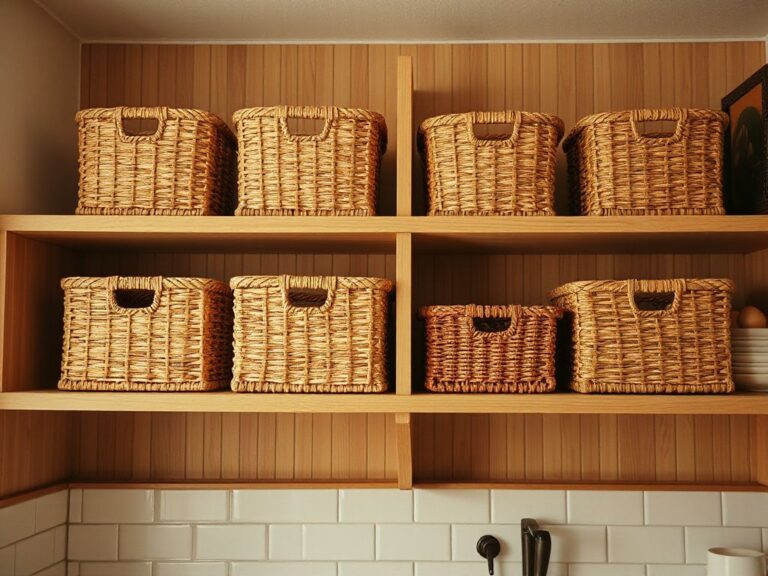
The space over the rod usually holds one wire shelf and a lot of air. Stack a set of freestanding shelf risers or a slim standalone cube unit up there for things you reach for weekly rather than daily. Boxes with lids keep that top zone from becoming an avalanche of loose items.
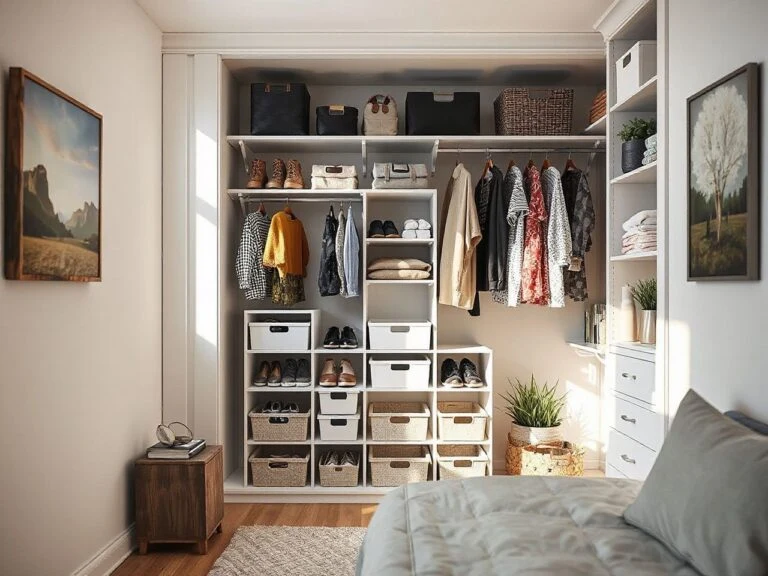
If you’re renting and want the look of a fitted system without the fittings, freestanding shelving that stands on the closet floor gives you the storage of a rail system with none of the wall commitment. Systems like ELFA adjustable shelving or IKEA’s ALGOT and BOAXEL rails are excellent, but the wall-mounted versions mean anchors and holes. Weigh that against your deposit.
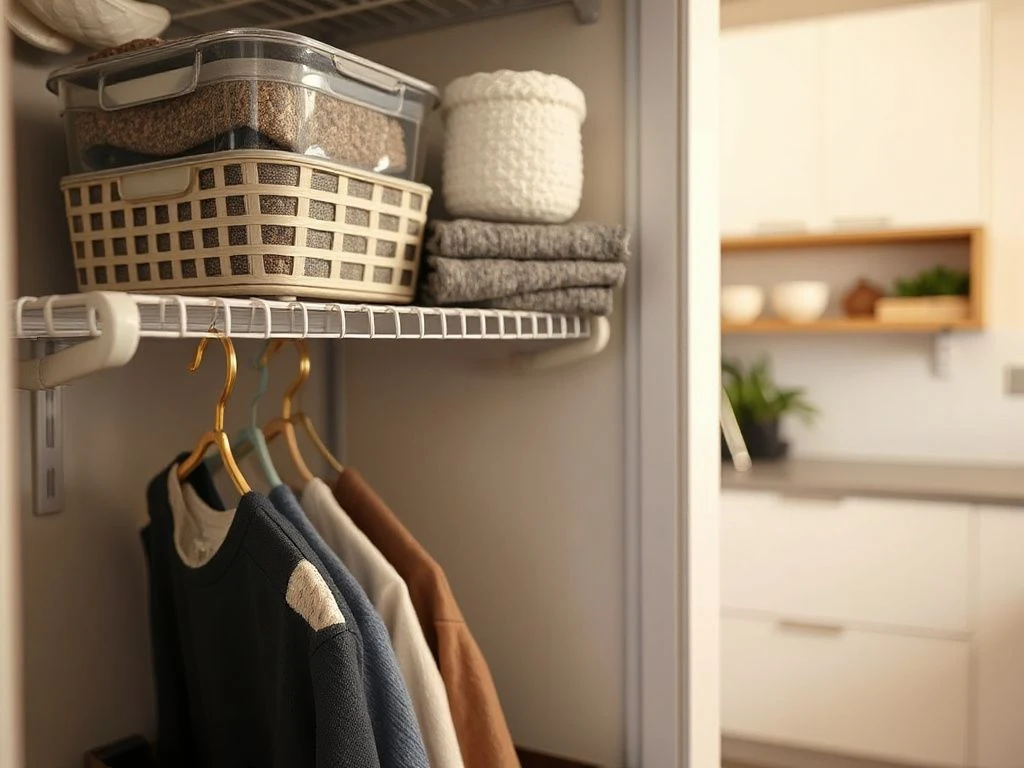
Step 3: Fold or hang, and matching layout to length
Getting this split right is what stops a small closet feeling full when it’s half air. The principle is simple: hang what wrinkles or stretches when folded, fold what wrinkles or stretches when hung.
- Hang: button shirts, blouses, blazers, dresses, structured trousers, anything linen.
- Fold: sweaters and knitwear (hanging stretches the shoulders into points), t-shirts, jeans, activewear, pyjamas.
Fold using a file system, not a stack. Folded items stood on their edge in a drawer or bin, spines up like books, let you see every piece at once and pull one without collapsing the rest. This is the core of the KonMari folding method, and it’s the difference between a drawer you use and a drawer you dig through.
Are slimline hangers actually worth it?
Uniform slimline hangers matter less for the tidy look than for the horizontal inches they give back. Velvet flocked slimline huggable hangers are roughly a third the thickness of a chunky plastic or wooden hanger, so a rod that held 20 mixed hangers holds closer to 30 of these.
That reclaimed width is often equivalent to gaining a whole extra section of rod. The flocking also grips fabric, so wide necklines stop sliding to the floor. It isn’t a gimmick, and it’s the cheapest capacity upgrade in this whole article.
Step 4: Renter-friendly hardware that comes off clean
This is where it pays to be particular, because a small closet tempts you into drilling, and drilling is exactly what costs renters their deposit. Almost everything here can be done without a single anchor.
Tension rods are the renter’s best friend. Wedged between two side walls, a tension rod adds a second hanging bar, a scarf rail, or a shelf support with zero holes. For anything holding real weight, size up and check the rod’s stated load rating rather than trusting it to hold a full winter coat lineup.
Over-the-door organizer racks turn the back of the door into shoe, bag, or accessory storage, and the good ones hook over the top edge with no screws. Measure the door thickness and the swing clearance first, because a loaded rack adds bulk and a door that already clips the frame will jam.
When you do have to mount something
Sometimes a rail or shelf genuinely needs the wall. If so, verify the wall type and find the studs before you drill, because drywall anchors have real weight limits and a loaded rod that tears out takes a chunk of plasterboard with it and can hurt someone standing under it.
The U.S. Consumer Product Safety Commission tracks tip-over and mounting-failure injuries and publishes anchoring guidance for exactly this reason, and its advice at the CPSC is worth two minutes before you load any wall-mounted storage. A stud will hold; a plastic anchor in hollow drywall is a guess.
If your closet can take fitted storage and you plan to stay, our roundup of expert small closet organisation ideas covers built-in and semi-permanent systems in more depth than a renter setup needs.
Step 5: Floor, door, and off-season overflow
The floor of a small closet is prime real estate that usually holds chaos. Give it a job.
Reclaiming the closet floor
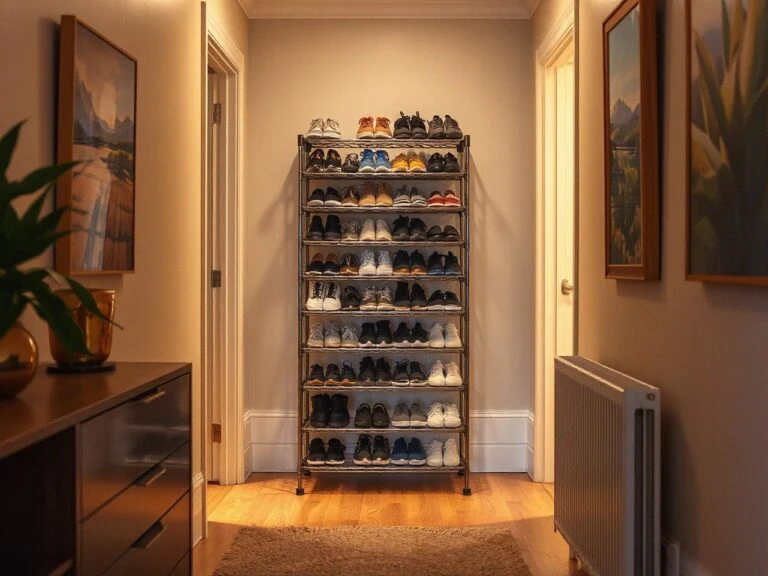
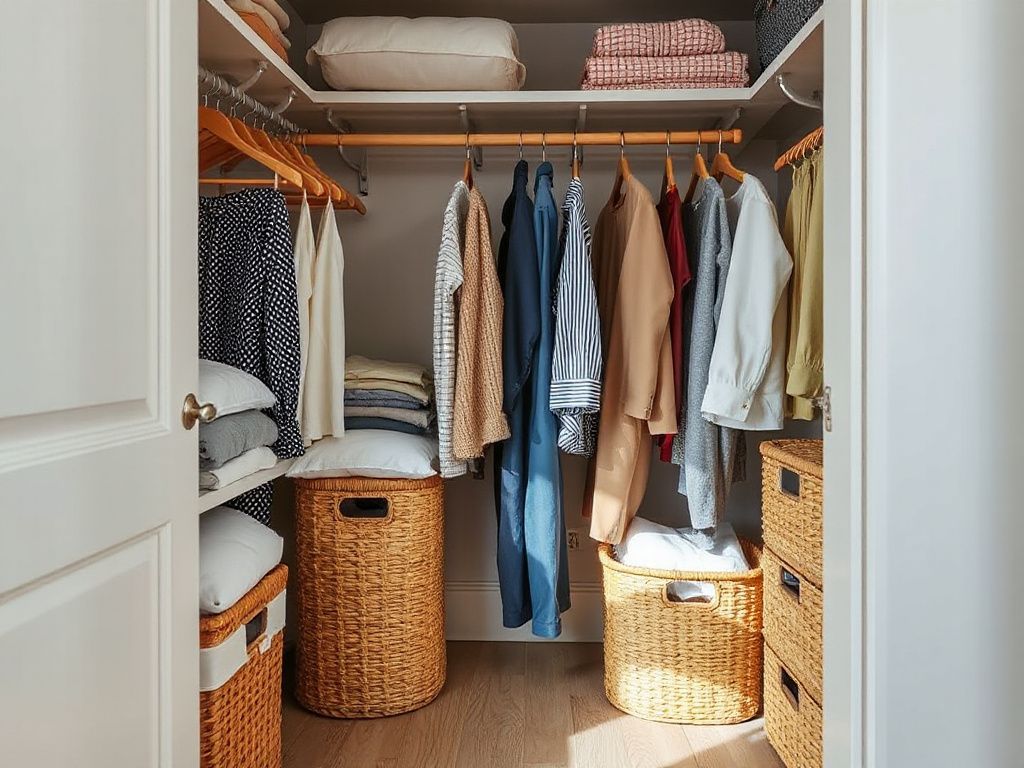
Low, open shelving or a row of matching bins turns the floor from a pile into a system. Shoes go on a tiered rack or in clear stackable boxes; bags stand upright in a bin so they don’t slump and crease.
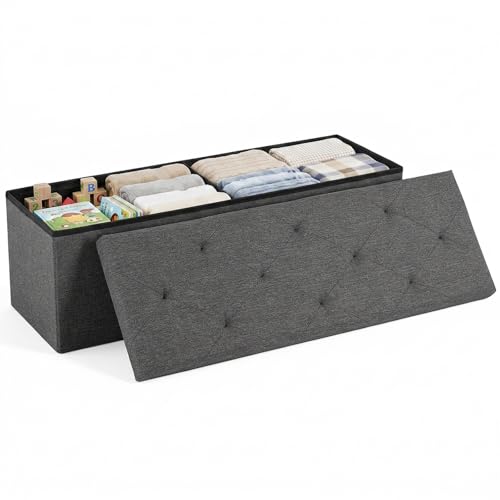
If there’s a full 18 to 24 inches of clear height down there, a small chest of shallow drawers or wire mesh drawer inserts fits neatly and handles the fold pile you moved off the rod. Wire mesh lets you see the contents and lets air move, which matters in a closet that doesn’t breathe well.
Using the inside of the door
The door interior is a whole wall most people ignore. Beyond over-door racks, adhesive hooks and slim pocket organisers handle belts, jewellery, caps, and the small stuff that has no natural drawer. Keep the load light on adhesive hooks and follow the weight limit on the packet, or you’ll come home to hooks and paint on the floor.
Storing off-season clothes
Off-season clothing shouldn’t sit at eye level competing with what you wear this week. Rotate it out to the top shelf, under-bed boxes, or a separate overflow spot, and bring it forward when the season turns.
Vacuum compression storage bags shrink bulky duvets and puffer coats dramatically, but they come with a firm limit. Compression and airtight storage are unsuitable for down, leather, and natural fibres over the long term, because compression crushes the loft out of down permanently and any trapped moisture in a sealed bag invites mildew. The EPA’s guidance on controlling indoor moisture and mould is blunt on this point: seal damp fabric in plastic and you’re building a mould incubator. Use vacuum bags for synthetics and cottons you’ve fully dried, and store down and wool loose in a breathable box.
Keeping moths and must out
Cedar blocks and sachets help keep natural fibres fresh and deter moths, though the aromatic oil fades and needs a light sanding every few months to work. They’re a nice-to-have, not a substitute for storing wool clean, since it’s the residue on worn clothes that draws moths in the first place.
Step 6: Making it stay organised past the first month
Most systems collapse because they demand more effort to maintain than to abandon. A realistic small-closet setup survives by being lazy-proof, not by being perfect.
Three habits carry it:
- One in, one out. A new jumper means an old one leaves. This is capsule-wardrobe thinking in miniature, and it’s what stops the item count creeping back up.
- A landing spot for the daily churn. A hamper or hook near the closet so clean and dirty clothes don’t collide on the floor and clog the space.
- A five-minute reset weekly. Rehang, refold the file, return strays. Five minutes stops the slow slide that turns into a full re-do.
Stacked shelves turn into unstable piles when the stacks are taller than they are stable and nothing separates the layers. Keep folded stacks under about 10 inches high, use shelf dividers or bins to hold each column upright, and file-fold so you pull from the front instead of the top. A pile you pull from the top always collapses; a row you pull from the front doesn’t.
Doing it without an expensive built-in
You do not need a fitted system to organise a small closet well. A double-hang converter, a set of slimline hangers, one tension rod, an over-door rack, and a few bins will out-perform an empty single rod for a fraction of a built-in’s cost, and every piece of it lifts out and moves with you. Spend on the converter and hangers first, since those two changes alone recover the most space per pound.
When the closet genuinely can’t hold everything even after paring down, that’s a whole-room storage question, not a closet one. An under-bed system or a slim standalone wardrobe takes the pressure off rather than forcing the closet to do the impossible.
Frequently Asked Questions
How do I figure out how much hanging space versus shelf space I need before I start?
Push all your hanging clothes together on the rod and measure that width in inches, then measure your actual rod length. If the clothes are wider than the rod, the surplus has to go to a second rod or folded onto shelves. Separately, set aside everything that folds better than it hangs, like knitwear and jeans, and measure that pile’s footprint so you know how much shelf or drawer space it needs.
How do I add a second hanging rod without drilling into the wall?
Use a double-hang closet rod converter, which hangs off your existing rod on two adjustable straps and drops a second bar about 20 inches below. It needs no tools and lifts straight off. For a side-to-side second bar, a tension rod wedged between the closet walls works, provided you check its load rating and don’t overload it with heavy coats.
Are slimline velvet hangers actually worth switching to?
Yes, and not mainly for looks. Velvet flocked slimline hangers are roughly a third as thick as bulky plastic or wooden ones, so you fit around 30 where 20 used to go, which can reclaim a whole section of rod. The flocking also grips fabric so wide necklines stop sliding off. It’s the cheapest real capacity gain when organising a small closet.
Can I store off-season coats in vacuum bags to save space?
Only synthetic and cotton items, and only when they’re completely dry. Down, leather, and wool should never live compressed long-term, because compression permanently crushes down’s loft and any trapped moisture in a sealed bag causes mildew, a risk the EPA flags clearly in its indoor moisture guidance. Store those in a breathable box instead, ideally with a cedar block to deter moths.