
You found a nightstand you love online, ordered it, and now the drawer sticks on day three. Or the top sits a full inch below your mattress, so your phone slides behind the bed every single night. Frustrating. The problem isn’t the color or the style—it’s that most people shop with their eyes instead of a tape measure and a checklist. This nightstand buying guide cuts past the pretty product photos and focuses on the details that actually determine whether a nightstand lasts ten years or starts wobbling in ten weeks.
Start by measuring the doorway before admiring the sofa. In a small bedroom, every inch counts, and a nightstand that doesn’t fit the space or the bed becomes an obstacle you’ll curse every morning. The most overlooked factor in nightstand selection is not the wood species but the drawer construction and hardware—full-extension slides and dovetail joints outlast everything else. Beginners focus on finish color, but experienced buyers inspect how the drawer is attached and whether the box is screwed or glued, because a wobbly nightstand is a common failure. Also, off-gassing from engineered wood is a real concern, so CARB certification matters more than the brand name.
Key Takeaways
- The nightstand top should align with the top of your mattress—not above or below—for easy reach and to prevent things from slipping behind the bed.
- Full-extension drawer slides and dovetail joints beat pretty finishes: inspect these before buying or you’ll face sticking drawers within a year.
- MDF and particleboard can off-gas formaldehyde; look for CARB Phase 2 or TSCA Title VI compliance labels to keep your bedroom air safer.
Start with the Bed: Height and Size Rules
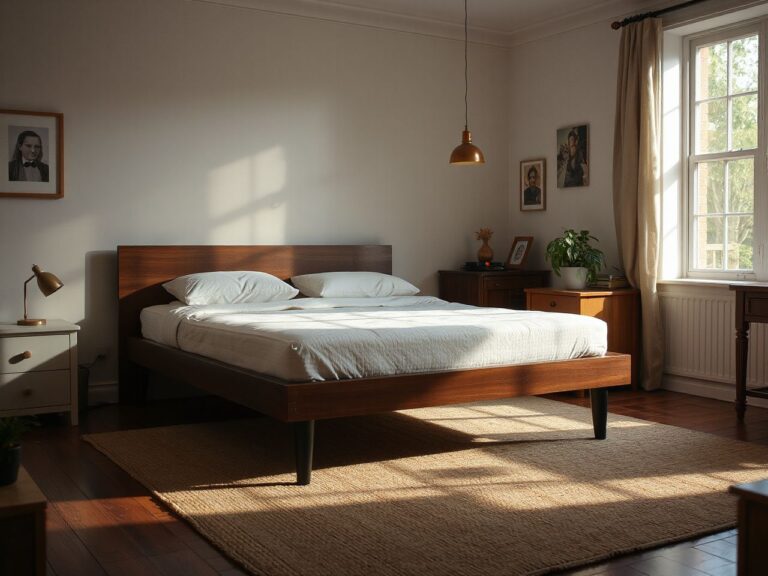
Your nightstand exists to serve the bed, not the other way around. Measure your mattress height first, then work backward. The top of the nightstand should sit roughly level with the top of your mattress—within an inch either way. If the nightstand is too low, you’ll be reaching down blind for your glasses at 2 a.m. If it’s too high, your phone and water glass become a tipping hazard.
The Mattress Alignment Rule
Measure from the floor to the top of your mattress (not the bed frame). That’s your target height range. A nightstand that’s 2–3 inches shorter than that still works if you prefer a lower profile, but anything more than that becomes a deep dive every time you need something. For platform beds without a box spring, the mattress often sits lower, so a standard 24–26 inch nightstand might feel towering. Conversely, a tall upholstered bed with a thick mattress might need a 28–30 inch piece.
Pro tip: Bring a tape measure when you shop—yes, even online. Write down the nightstand height from the listing and compare it to your mattress measurement. A 26-inch nightstand next to a 30-inch mattress is a recipe for a permanently lost remote.
Width and Depth for a Queen Bed
For a standard queen bed (60 inches wide), each side has about 30 inches of wall space if the bed is centered. A nightstand wider than 24 inches starts to crowd the room. The sweet spot for most queen bedrooms is a nightstand between 18 and 22 inches wide. Depth matters less than width, but anything deeper than 18 inches can block a closet door or jut into a walkway. If you have a tighter space, our Vari office chair roundup shows how compact furniture can still function well—the same logic applies to narrow nightstands.
A self-contained fact worth taping to your wall: A nightstand wider than half the distance between your bed and the nearest wall will make the room feel cramped and the bed off-center.
Common Nightstand Dimensions to Know
Most mass-produced nightstands fall into a narrow range. Heights cluster around 24–26 inches, widths around 16–20 inches, and depths around 15–18 inches. Knowing these helps you spot outliers. A 21-inch-wide nightstand on one side and a 15-inch on the other creates visual imbalance—fine if that’s your style, but understand that symmetry usually reads as calmer in a bedroom.
If you’re also adding an area rug under the bed, keep the nightstand height in mind: a very low nightstand next to a very tall bed makes the lamp placement awkward. Our Ruggable rug guide touches on furniture-to-rug proportions, and the same visual weight principles apply to nightstands.

Your Nightstand Buying Guide: Materials and Construction
This is where most buyers go wrong. They see “oak” or “walnut” in the description and assume solid wood. Then the nightstand arrives and the drawer bottoms are cardboard-thin and the legs are stapled. The material name in a listing often refers to the veneer or the color stain, not the structural core. Here’s how to read a spec sheet like someone who’s been burned before.
Solid Wood vs. Veneer vs. MDF
Solid oak and solid walnut are the gold standard. They dent rather than crumble, they can be sanded and refinished, and they gain character over decades. Expect to pay more. Baltic birch plywood is an excellent mid-tier option: layered and dense, it resists warping and holds screws well. MDF (medium-density fibreboard) is everywhere in budget furniture. It’s smooth and paints well, but it swells if it gets wet and its edge grain is weak—screws can strip out after a few reassemblies.
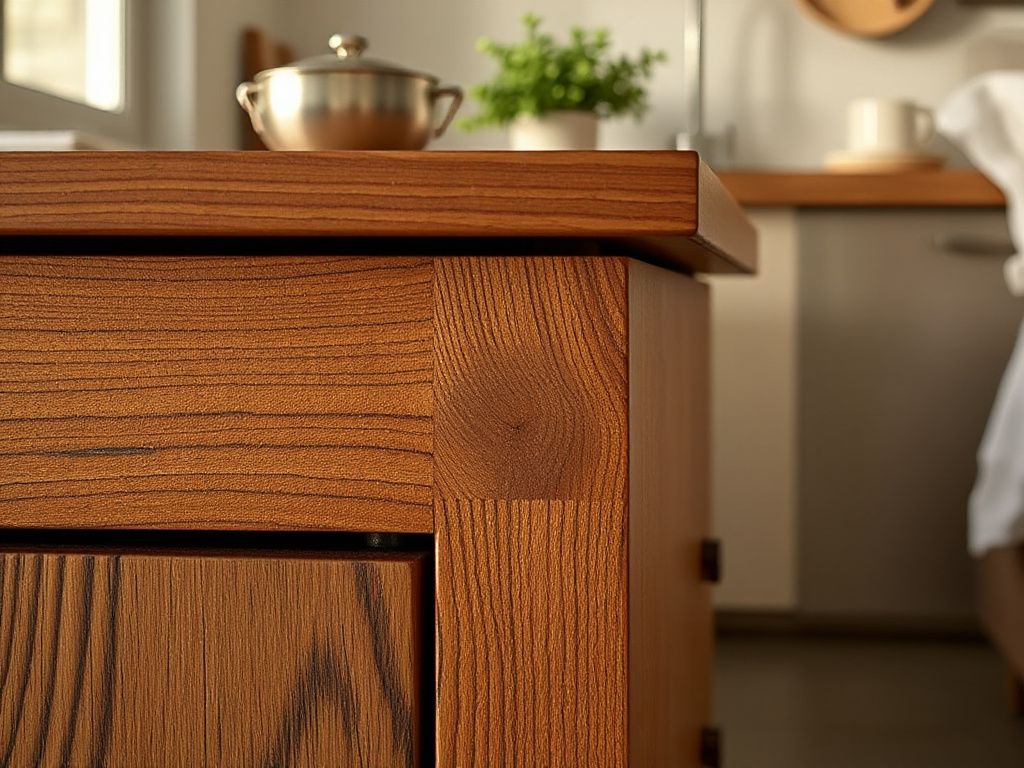
How do you tell solid wood from veneer? Look at the end grain. On a solid wood drawer front, the grain pattern continues around the edge. On a veneered piece, the edge shows a thin line where the veneer meets the core. Also weigh it: solid wood feels heavier than you expect for its size. A solid oak nightstand of 16×18×24 inches typically weighs 30–40 pounds; an MDF version might be half that. The listing often won’t say “solid wood” outright—if it says “rubberwood” or “manufactured wood,” that’s not the same as solid oak.
The Drawer Quality Test
Open the drawer if you can—or ask the seller for a video. Look at the slides. Full-extension drawer slides let the drawer pull out all the way, so you can reach the back without groping. Cheap nightstands use epoxy-coated side-mount slides that stop at three-quarters extension, leaving a dead zone where your phone case disappears forever. Even better are soft-close slides, which prevent the drawer from slamming shut at midnight.
Then check the joints. Dovetail joints at the drawer corners lock together mechanically and won’t pull apart over years of use. Stapled butt joints hold for a while but eventually loosen. Also look at the drawer bottom: a solid wood or plywood bottom that fits into a groove is far stronger than a thin hardboard panel stapled underneath and sagging already.
Off-Gassing and Emissions Standards
Here’s the part nobody puts in product photos. Engineered wood—MDF, particleboard, plywood—is made with adhesives that contain formaldehyde. That chemical slowly releases into your bedroom air for months or even years. The concentration matters. Look for CARB Phase 2 compliance, which limits formaldehyde emissions from composite wood products sold in California and is often the default for better manufacturers nationwide. The California Air Resources Board maintains the standard, and the EPA’s TSCA Title VI regulation mirrors it at the federal level.
If the listing doesn’t mention CARB or TSCA compliance, assume the glue is cheap. In a small bedroom with the door closed, off-gassing can cause headaches, eye irritation, and a persistent chemical smell. This is not a theoretical concern: a nightstand made from uncertified MDF can keep releasing formaldehyde for over a year. For a piece that sits inches from your face while you sleep, certification is not optional.
Form and Function: Open Shelves, Drawers, or Both?
A nightstand isn’t just a table. It’s where you stash a book, a charger, lip balm, and whatever else lives within arm’s reach. The storage configuration determines whether your surface stays clear or becomes a junk pile.
Drawers vs. Open Shelves
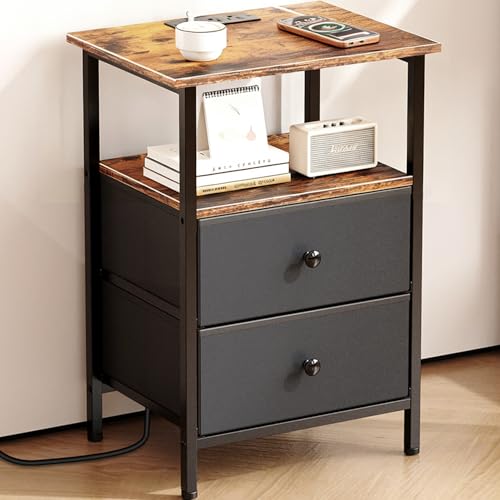
Open shelves make the room feel lighter and work well in small spaces because they don’t add visual weight. But they expose everything to dust and eyes. If you’re the person who leaves a dehumidifier manual out for a week, open shelves will betray you. Drawers hide clutter and keep dust out, but they add cost and weight. A single drawer paired with an open shelf below is often the best compromise: the drawer holds small private items, the shelf holds a stack of books or a basket.
For a queen bed, a nightstand with one drawer and one open shelf is the most versatile. Two drawers can be overkill unless you have no dresser. Zero drawers means everything sits on top, which works only if you’re a minimalist with nothing to hide. If you’re also refreshing the wall above the bed, our Umbra wall art guide has ideas for hanging pieces that won’t compete with a busy nightstand surface.
Stability and Tipping Safety
A nightstand that tips over when a child leans on it is a serious hazard. The U.S. Consumer Product Safety Commission has long-standing warnings about furniture tip-overs, and nightstands are no exception. Look for a nightstand with a solid back panel—not just a thin cardboard sheet stapled on—and a base that’s wider than the top. A nightstand with tapered legs and a narrow footprint is more likely to tip than one with a boxy silhouette.
How much weight can a typical nightstand hold safely? A well-built solid wood nightstand can support 50–60 pounds on top without bowing, but an MDF one might start to sag at 20 pounds. The listing rarely states a weight capacity, so judge by materials and construction. If you plan to put a heavy lamp, a stack of books, and a water carafe, buy the solid wood version or accept that the top will eventually warp. For homes with kids or large dogs, anchor the nightstand to the wall with a furniture strap—most come with one, and if not, a pack costs under ten dollars.
Advanced Nightstand Selection: Fine-Tuning Your Choice
You’ve measured, you’ve checked the materials, and you’ve decided on storage. Now the refinements that separate a forgettable nightstand from one you’ll keep through two moves.
Matching Your Headboard and Bedroom Style
The nightstand doesn’t have to match the bed frame exactly, but it should share a visual language. A mid-century walnut bed frame paired with a white farmhouse nightstand creates dissonance unless you’re deliberately mixing. Wood tone matters more than style: warm oak, cool walnut, and painted white each set a different mood. Pull one wood tone from the bed frame or the floor and echo it in the nightstand. If your bed frame is upholstered, you have more latitude—match the nightstand to the wall color or the other wood furniture in the room.
Bed frame height also matters for floor clearance. A platform bed sitting low to the ground pairs poorly with a nightstand that has a closed bottom reaching to the floor, because the visual weight feels heavy. Conversely, a tall bed with a high clearance looks better with a nightstand that has legs rather than a solid box.
Cleaning and Long-Term Care
Wood nightstands need almost no maintenance if you treat them right. For dust, a dry microfiber cloth works. For occasional cleaning, use a barely damp cloth with a drop of mild dish soap, then dry immediately. Never use all-purpose spray cleaners on bare wood; they can strip the finish. If the nightstand has a water-based polyurethane finish, it’s more resistant to water rings than a Danish oil finish, which is beautiful but requires re-oiling every year or two.
To prevent water rings, use a coaster—always. A glass of ice water left directly on a Danish oil-finished top will leave a white ring within 30 minutes. If a ring does appear, rub it gently with a soft cloth and a dab of mayonnaise or petroleum jelly, then wipe clean. Works surprisingly well on light rings. For deep scratches on solid wood, a wood filler stick matched to the grain masks the damage well enough that only you will notice.
When Drawers Stick or Sag: Prevention and Fixes
Sticking drawers are almost always a humidity problem or a misaligned slide. In a dry winter, wood shrinks; in a humid summer, it swells. A drawer that slides perfectly in the store might stick in your bedroom because the moisture level is different. To prevent this, keep the bedroom humidity between 30% and 50%. A small hygrometer tells you where you stand. If a drawer starts sticking, rub a candle or a bar of soap along the slide and the drawer sides—cheap, effective, and no chemicals.
Sagging drawer bottoms are usually a sign of a thin hardboard panel that wasn’t meant to carry weight. You can fix this by cutting a piece of 1/4-inch plywood to size and laying it inside the drawer over the existing bottom. Instant reinforcement. If the drawer front is pulling away from the sides, tighten the screws or replace them with longer ones—but if the joint was stapled, the fix is temporary at best. That’s why you inspect the joinery before buying, not after the drawer falls apart.
Common Nightstand Buying Mistakes
Let’s consolidate the errors that send people back to the store. First: buying by color instead of construction. A pretty gray stain hides particleboard. Second: ignoring height. A nightstand that’s too low or too high makes every bedtime routine awkward. Third: assuming all drawers are equal. Full-extension slides and dovetail joints are non-negotiable for a piece you’ll open twice a day for years. Fourth: forgetting off-gassing. MDF without CARB certification is a slow-release chemical emitter in your sleeping space. Fifth: not anchoring it, especially if you have kids or pets.
Avoid those five and you’ll end up with a nightstand that works as hard as you do. The good news is that solidly built nightstands from oak, walnut, or Baltic birch plywood don’t have to cost a fortune—they just require you to read the spec sheet instead of the sales copy.
Frequently Asked Questions
Here are the questions people ask most often when they search for a nightstand buying guide, answered directly.
How high should a nightstand be compared to my bed?
The nightstand top should align with the top of your mattress, within an inch. Measure from the floor to the top of the mattress, then look for a nightstand that height. If your mattress is 24 inches high, a 23–25 inch nightstand works. A 28-inch nightstand would feel towering.
What size nightstand works best for a standard queen bed?
For a queen bed (60 inches wide), a nightstand between 18 and 22 inches wide on each side leaves comfortable walking room. Depth of 15–18 inches is typical. Avoid anything wider than 24 inches unless your bedroom is unusually large; it will crowd the bed and the wall.
How do I tell if a nightstand is made of solid wood or just a veneer?
Look at the end grain on the top edge or drawer front. Solid wood shows continuous grain wrapping around the edge; veneer shows a thin seam line. Also check the weight: a solid wood nightstand of typical size feels notably heavier than an MDF version. The listing should say “solid rubberwood” or “solid oak” if it’s real; “wood” alone often means veneer over MDF.
Should I worry about off-gassing from MDF in a nightstand?
Yes, especially in a small bedroom. MDF and particleboard use formaldehyde-based adhesives that release gas for months. Look for CARB Phase 2 or TSCA Title VI compliance on the spec sheet. If the manufacturer doesn’t mention it, assume the emissions are higher than you’d want six inches from your pillow.
How much weight can a typical nightstand hold safely?
A solid wood nightstand can hold 50–60 pounds on top without bowing. An MDF or particleboard nightstand may start to sag at 20–30 pounds. The listing rarely gives a number, so use materials as your guide. If you plan to stack books and a heavy lamp, buy solid wood or add a support board underneath a thin top.