
The past few years have brought a quiet change to the bedroom: memory foam and hybrid mattresses now outsell traditional innerspring models, and that shift has made the bed frame more important than ever. A modern mattress can weigh over 100 pounds in a king size, and it needs a frame that supports it evenly across the entire surface. This bed frame buying guide focuses on the part most shoppers skip—the hardware underneath the finish, because that hardware decides how long your mattress and your frame will last. If you are also rethinking the rest of the bedroom, our memory foam vs cotton bath mat comparison applies a similar logic to floor coverings.
Key Takeaways
- A frame’s support geometry matters more than its material: slat spacing and a center rail determine mattress longevity.
- Queen and king frames without a center support rail will sag, no matter how thick the wood looks.
- Platform frames usually eliminate the need for a box spring, but only if the slats are spaced 3 inches apart or less.
- Assembly quality starts with the hardware: check bolt diameter, threading, and the presence of washers before you buy.
Beginner Basics: Matching the Frame to Your Mattress and Room
Get the Size Right First
Measure the room before you worry about aesthetics. A queen bed frame needs a footprint of roughly 60 by 80 inches, plus clearance for a headboard and footboard if included. Leave at least 24 inches of walking space on at least one side, and 36 inches at the foot if the room is a main bedroom. The frame’s external dimensions are always larger than the mattress dimensions, usually by 2 to 4 inches per side depending on the design. A queen mattress is 60 inches wide and 80 inches long, but a queen bed frame with a built-in headboard can add up to 8 inches to the total length. A too-large frame can overwhelm a small room, while a too-small frame (a common mistake when buying a ‘full’ frame for a full mattress with thick sides) will leave the mattress hanging over the edge.
Platform vs Traditional Frame: Do You Need a Box Spring?
Traditional frames are metal rails that hold a box spring; the box spring then supports the mattress. Platform frames have a solid or slatted surface that supports the mattress directly, so no box spring is needed. Most modern memory foam and latex mattresses are designed for a solid, firm base; a box spring (which has springs inside) actually creates uneven support that can damage foam over time. Check your mattress warranty: many foam mattress warranties require a platform base with slats no more than 3 inches apart. A traditional metal frame with a box spring is still fine for innerspring mattresses, but those are now a smaller share of the market. If you already own a box spring and want to switch to a platform, you can, but the combined height of mattress plus platform may be lower than you expect.
Look Past the Finish to the Support Structure
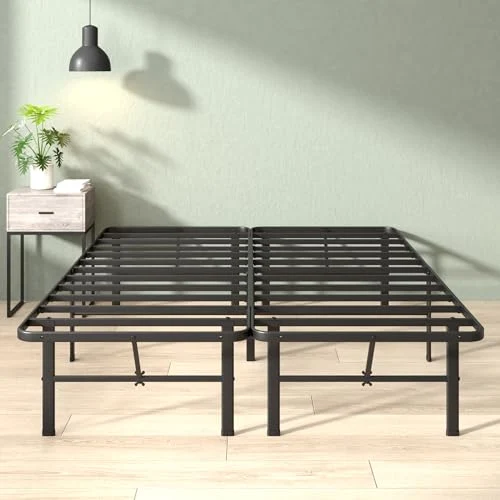
A beautiful hardwood footboard means little if the rails underneath are thin and the slats are spaced 6 inches apart. The critical distinction in bed frames is not between wood and metal, but between the support system: a frame with properly spaced slats and a center rail for larger sizes will outlast a visually impressive but structurally thin frame. Material choice affects weight capacity and durability, but the geometry of the support structure determines how well the mattress wears over time. When you look at a frame online or in a showroom, ask one question first: what is the distance between slats? If the answer is more than 3 inches, that frame is unsuitable for memory foam or latex without a bunkie board or solid foundation added on top.

Intermediate Skills: Evaluating Hardware Before You Swipe Your Card
Check Slat Spacing Like a Mattress Inspector
Slats run perpendicular to the length of the mattress and hold up the surface. For innerspring mattresses, slat spacing can be up to 4 inches without noticeable issues, because the coils spread load. For memory foam, latex, and most hybrids, slats must be no more than 3 inches apart, and ideally 2 inches for very heavy foam or a heavier sleeper. Wider spacing allows the foam to sink between slats, creating permanent divots and reducing support. A slatted platform with 2.5-inch spacing and slats at least 3 inches wide (so they don’t dig into the foam) works well. The standard maximum slat spacing for a memory foam mattress is 3 inches; anything wider risks permanent compression marks in the foam. If you already have a frame with wider spacing, you can add a bunkie board or a sheet of plywood, but that reduces ventilation.
Demand a Center Support Rail for Queen and King Sizes
Width is the weak axis for a bed frame. A queen frame spans roughly 60 inches across, and a king spans 76 inches. Without a vertical support post or rail running down the center from head to foot, the slats and side rails must carry all the weight at their midpoints, where they bend most easily. Two adults on a queen bed routinely put 400 to 500 pounds of live load on the frame, and a 100-pound memory foam mattress adds dead load. The math is unforgiving: unsupported 60-inch slats will bow. Look for a frame with either a center rail that touches the floor via a foot or leg, or extra support legs under the middle third of the slats. Many cheap metal frames skip this to save $5 in steel, and that omission is why they fail within two years. ASTM International publishes F1427, a voluntary bunk bed safety standard, and separately maintains stability testing standards that apply to other bedroom furniture; the Consumer Product Safety Commission enforces mandatory tip-over rules for clothing storage furniture but does not author ASTM’s bed frame standards itself. Most frames sold online are not independently tested to any of these; ask the manufacturer if they comply.
Read the Weight Capacity and Material Specs
A typical metal bed frame lists a weight capacity somewhere between 500 and 1,500 pounds. That number includes the mattress, bedding, and sleepers. Ignore marketing claims like ‘heavy duty’ and look for the actual number in pounds. For a queen size with two adults and a heavy hybrid mattress, choose a frame rated for at least 800 pounds. Solid wood frames made of oak or walnut are strong, but pine is soft and can dent or crack under point loads from heavy foam. Steel tubing is generally the strongest for the weight and price, but cheap steel is thin; look for tubing at least 1 inch in diameter with a wall thickness of 16 gauge or thicker (lower gauge numbers mean thicker steel). Manufacturers that don’t list steel gauge are often using 20-gauge or thinner, which flexes under body weight.
Wood vs Metal: Durability Beyond the Showroom Shine
The honest answer is that a well-built steel frame will outlast most wooden frames under identical use. Steel does not warp with humidity changes, does not split at joints, and does not harbor dust mites as easily. But steel can bend if the design is poor or the gauge is thin, and cheap powder coating can chip, exposing rust-prone metal. Wood frames, especially solid oak or walnut with mortise-and-tenon joints, can last decades if kept in a stable environment. The problem is that many ‘solid wood’ frames sold online are actually pine or rubberwood with glued dowel joints, which loosen over time. Look for FSC certification if you care about sourcing: the Forest Stewardship Council label confirms the wood came from responsibly managed forests, not that the joinery is strong. For indoor air quality, a GREENGUARD Gold certification means the adhesives and finishes emit low levels of volatile organic compounds, which matters if you sleep next to the frame for eight hours a night.
Assembly Is Not a Personality Test—It’s a Hardware Inspection
Your skepticism about flat-pack furniture is correct. The difference between a frame that stays tight for ten years and one that wobbles after six months comes down to three hardware details. First, bolt diameter: a 1/4-inch bolt is standard; anything smaller (like 5mm machine screws) will loosen. Second, thread engagement: bolts should pass through both metal plates and into a threaded insert or nut with at least three full threads visible after tightening. Third, washers: split washers or nylon locking nuts prevent vibration loosening. When you open the box, check whether the hardware is compartmentalized and the instructions use exploded diagrams with torque specifications. If the instructions say ‘hand tighten only,’ walk away. That is a red flag for under-engineered joints.

Advanced Moves: Preventing Squeaks, Protecting Your Mattress, and Planning for the Long Haul
Stop a Squeak Before It Starts
Squeaks come from two sources: metal-on-metal friction and wood-on-wood rubbing. Most frames fail at the joints where the side rails meet the headboard and footboard, or where slats rest on the side rails. The fix for metal is simple: apply a thin film of lithium grease to the bolt threads and between any overlapping metal plates, then add felt pads or rubber washers at contact points. For wood, rub the mating surfaces with paraffin wax or a silicone-free furniture polish. But prevention beats repair: if the frame uses interlocking hooks instead of bolts at the headboard joint (common on cheap metal frames), the hooks will wear and squeak within months. Choose a frame with bolted connections at all four corners.
Reinforce for Heavy Mattresses and Heavier Sleepers
If your mattress weighs more than 100 pounds (common for king-size memory foam and latex), check the frame’s center support. Many frames list a total weight capacity but fail to specify how the load is distributed. Add support legs under the center rail if the frame has one; if it doesn’t, install a plywood sheet (minimum 3/4 inch thick) over the slats to spread the load. For sleepers over 250 pounds each, or couples exceeding 500 pounds combined, look for a frame specifically rated above 1,000 pounds and with extra legs in the middle third.
Match the Frame to Your Mattress Warranty
Mattress warranties are contracts with fine print. Most foam mattress brands require a foundation that is solid, flat, and non-yielding. Slatted bases are acceptable only if the slats are no more than 3 inches apart and, in some cases, at least 2 inches wide. If you put a new memory foam mattress on a frame with 4-inch slat spacing and it develops a sag, the warranty claim will be denied because the support was insufficient. Read the warranty before you buy the frame, not after. A platform bed with a solid surface (like a bunkie board over slats) is always the safest choice for warranty compliance.
Plan for Adjustable Base Compatibility
If you think you might switch to an adjustable bed base within the next few years, buy a frame that can accommodate one. Many modern bed frames have fixed slats or a solid panel that cannot be removed. Look for a frame with removable slats or a design that allows you to drop an adjustable base inside the outer frame. Also check the headboard and footboard clearance: adjustable bases lift the head and foot of the mattress by up to 70 degrees, which can hit a low footboard or push the mattress into a headboard with sharp edges. The frame’s side rails should be low enough that the adjustable base’s legs clear them when extended.
Consider Storage, Ventilation, and the Floor Beneath
Under-bed storage drawers add convenience but restrict airflow. A mattress needs air circulation underneath to dissipate moisture from body heat; a solid platform with drawers can trap humidity and encourage mold in humid climates. If you want drawers, choose a frame with a slatted base above the drawers, not a solid panel. Ventilation also matters for wooden frames: in a damp basement or coastal home, solid wood can warp and steel can rust. Use felt pads under the legs to protect hardwood floors from scratches, and check that the frame’s leg design does not concentrate weight on small points that can dent vinyl or cork flooring. For area rugs that can handle the weight of a heavy bed frame without crushing, our West Elm area rug review covers durability and density.
Frequently Asked Questions
What size bed frame should I choose for my room?
Measure the room’s floor area and doorways. A queen frame needs about 60 by 80 inches for the mattress, plus at least 24 inches of space on one side and 36 inches at the foot. King frames add another 16 inches in width. Check that the frame can fit through your door; many headboards are too tall to pass through a standard 80-inch door, so assembly inside the room may be required.
Do I need a box spring with a platform bed frame?
No. Platform frames have built-in slats or a solid surface that supports the mattress directly. Adding a box spring on top of a platform raises the bed unnecessarily and can create an unstable surface. However, if your platform has slats spaced wider than 3 inches, you may need a bunkie board (a thin solid foundation) instead of a box spring to provide support for memory foam.
What is the best slat spacing for a memory foam mattress?
Keep slats no more than 3 inches apart, and ideally 2 to 2.5 inches for heavier foam or sleepers. Slats themselves should be at least 2 to 3 inches wide to prevent pressure points. Any spacing wider than 3 inches allows the foam to sink between slats, causing permanent indentations and voiding many mattress warranties.
How much weight can a typical queen bed frame hold?
Most queen metal frames are rated for 500 to 1,500 pounds total weight, including mattress, bedding, and people. A conventional steel frame with a center support rail usually holds 800 to 1,000 pounds. For couples over 400 pounds combined or a heavy hybrid mattress, choose a frame rated at least 1,000 pounds with a center rail and extra legs.
How do I stop my wooden bed frame from squeaking?
Tighten all bolts and screws first; loose joints are the main cause. Then rub paraffin wax or a silicone-free polish on the mating surfaces where wood meets wood, especially at the headboard and footboard joints. For slat connections, add thin felt pads or rubber washers between slats and side rails. Re-tighten hardware every six months.