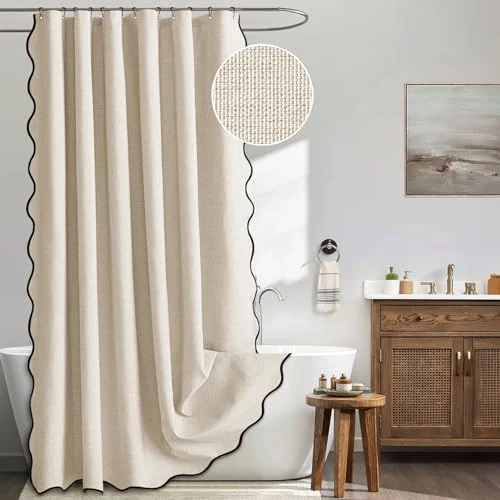
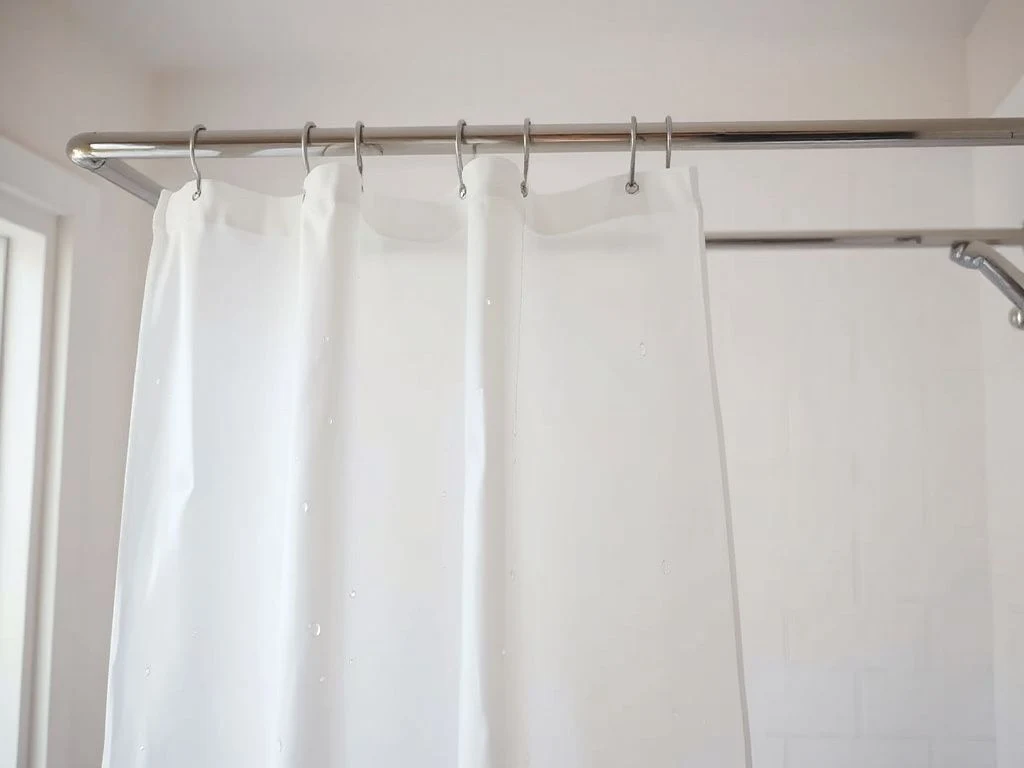
Mold grows fast. A shower curtain is not a decoration you hang and forget; it is a water-management tool with two distinct parts. Get this wrong and you will be scrubbing black spots off fabric within a month. This shower curtain buying guide distills key points about the joinery, the hardware, the material choices—and applies that same inspection to a humble bathroom essential.
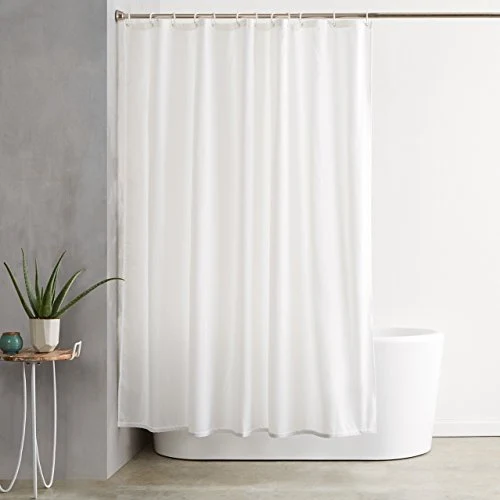
The core distinction is that a shower curtain is a two-part system: a water-blocking liner and a decorative outer curtain. Beginners often buy only one or treat a waterproof outer curtain as sufficient, which leads to mold growth on the curtain itself. A liner—a separate, water-blocking layer—is what actually keeps water in the tub. The decorative curtain hangs outside for looks. Treating a waterproof outer curtain as sufficient is like using a tablecloth as a raincoat.
Material choice then determines how much maintenance you sign up for. A polyester fabric curtain feels more premium and drapes better, but it will require frequent machine washing. A PEVA liner can be wiped down in seconds, but it typically cracks or stiffens within a year or two. And here is a detail most people never check: the hem. A curtain with a weighted bottom hem—often a strip of magnets or a thicker seam—stays put and keeps water from escaping. If your curtain billows inward every time the water runs, the problem is not the curtain; it is that the rod is set too far from the tub edge. Checking that distance before selecting fabric samples is important. For a deeper dive on stopping that inward cling, read our guide on how to stop a shower curtain sticking to you.
Key Takeaways
- A shower curtain is a two-part system: a water-blocking liner plus a decorative outer curtain. Never use only a waterproof outer curtain.
- Fabric curtains (polyester or cotton) are machine washable but need a separate liner; PEVA curtains are wipe-clean but wear out faster.
- Measure your tub or shower before buying—standard 72×72 inches often falls short on width or height for taller or wider enclosures.
- Weighted bottom hems and correct rod placement prevent billowing, mold, and water on the floor.
The Beginner Guide to Shower Curtains: Two Parts, Not One
Most curtain failures start with the same misunderstanding: the buyer treated it as a single item. A shower curtain is a system. The liner is the water barrier. The decorative curtain is the face. Skip the liner and you are asking the fabric to do a job it cannot sustain.
Liner vs Curtain: The Water Barrier
A shower curtain liner is typically made from PEVA (polyethylene vinyl acetate) or a heavier polyester with a water-resistant coating. PEVA is a non-PVC plastic that is lighter and less smelly than vinyl. It hangs on a separate set of hooks, often behind the decorative curtain. The liner gets wet every time you shower. That is its job. A decorative curtain, by contrast, should stay dry. If you only have one layer and it is absorbent fabric, you will eventually see mildew. According to the Environmental Protection Agency, mold thrives on any damp surface that stays wet for more than 24 to 48 hours. A soaked fabric curtain left hanging in a humid bathroom meets that condition perfectly.
The liner is not an optional accessory. It is the primary defense against water damage. Even if the outer curtain claims to be ‘waterproof’, that coating will wear off at the seams and around the grommets within a few months. A separate liner costs less than a replacement decorative curtain and is easier to swap out.
Why Waterproof Labels Do Not Excuse You from a Liner
A label that says ‘waterproof’ on a fabric curtain usually means the manufacturer applied a polyurethane or acrylic coating to one side. That coating is thin. Every time you pull the curtain open or closed, the grommets rub against the hooks, wearing microscopic holes in the coating. Steamy water penetrates. Before long, the fabric itself is damp, and the coating traps moisture inside. This is worse than no coating at all, because the fabric cannot dry out.
I have taken apart old ‘waterproof’ curtains to inspect the coating. In every single one, the area around the grommets had flaked off. The rest of the fabric was fine, but those points of failure were enough to start mold growth. A separate liner avoids this entire problem. The liner takes the water, the decorative curtain stays dry, and you only have to worry about the liner’s lifespan.
The Weighted Hem: A Sign of Quality Hardware
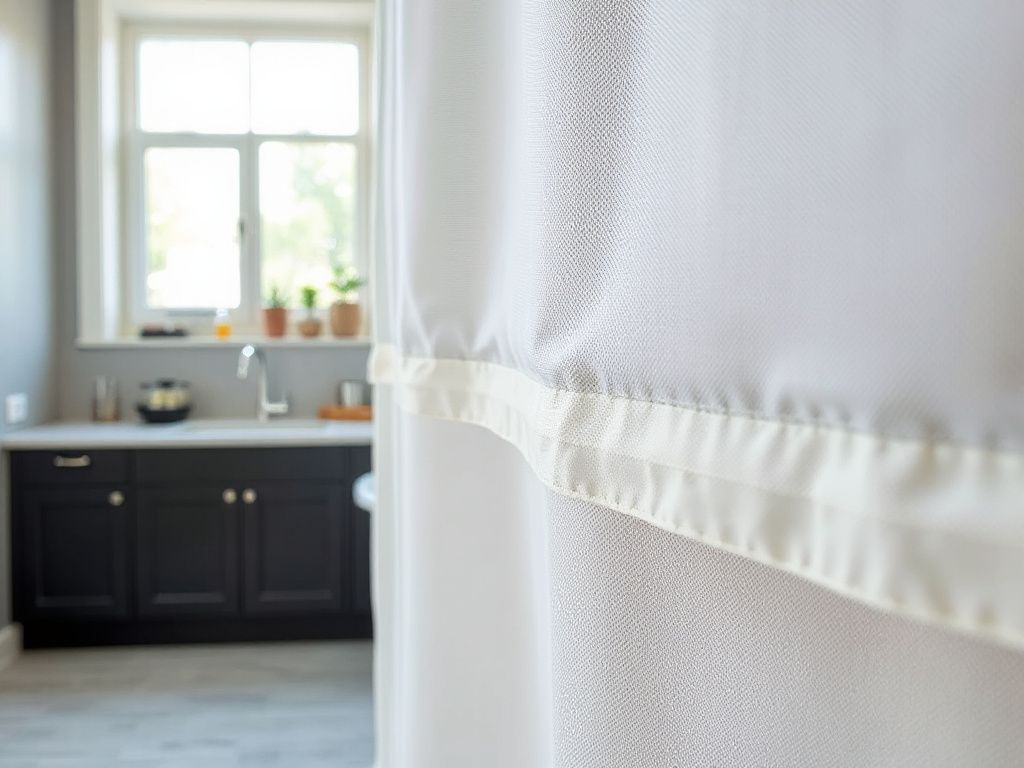
Look at the bottom edge of a curtain before you buy. A weighted hem matters more than the pattern. Manufacturers use several methods: a row of magnets sewn into a pocket, a chain weight, or extra stitching with a heavier material. Without any weight, a curtain will billow inward every time you turn on the shower. That inward billow is not just annoying; it pushes water past the tub edge onto the floor.
An experienced eye also checks the hem. A curtain that lifts inward signals a rod placed too far from the tub edge. The rod should sit so that the curtain hangs straight down, with the liner inside the tub and the decorative curtain outside. If the rod is more than an inch beyond the tub lip, the curtain will swing inward. Fix the rod position before you blame the curtain.
Intermediate: Choosing Materials That Will Not Fight You
Once you accept the two-part system, the next decision is material. Your choice determines how often you clean, how long the curtain lasts, and whether you will be fighting mildew every week. There is no single ‘best’ material, only a trade-off between upkeep and lifespan.
Polyester: The Fabric Option
Polyester is the most common decorative curtain fabric. It is lightweight, dries quickly, resists wrinkling, and can be machine washed. A polyester curtain will last a decade if cared for. But it is not water-blocking by itself. You will always need a liner behind it. Polyester also absorbs less heat than cotton, so it feels cooler against your skin in a steamy bathroom. Look for curtains certified to OEKO-TEX Standard 100. That certification means the fabric has been tested for harmful substances, which matters because a wet curtain sits next to your skin every day.
One practical benefit of polyester: it can handle a hot machine wash with detergent and a little bleach alternative. Once a month on the sanitary cycle is enough to keep mildew off a polyester curtain. It comes out clean and dries in about an hour on a line, because the fiber itself holds almost no water. Cotton, by contrast, takes longer to dry and shrinks if you are not careful.
PEVA: The Plastic Alternative
PEVA stands for polyethylene vinyl acetate. It is a chlorine-free plastic, unlike PVC, so it does not off-gas that harsh chemical smell you get from cheap vinyl curtains. PEVA is the standard choice for liners because it repels water completely and wipes clean with a damp cloth. A PEVA liner requires almost no maintenance: after a shower, you can rinse it and leave it to dry. But PEVA has a shorter lifespan than polyester. The plastic will eventually stiffen, crack, or develop permanent creases where it folds. Most PEVA liners last six months to a year under daily use before they need replacing.
If you want a decorative curtain in a plastic material, PEVA works. It is available in printed designs. But remember that plastic cannot be machine washed. You are limited to wiping it down, which removes surface dirt but not embedded mildew stains. Once PEVA develops black spots, those spots are there for good. Replacement is the only fix.
Cotton and Organic Cotton: When Natural Matters
Cotton curtains look and feel better than polyester. They hang with more weight, drape more elegantly, and absorb less heat—so the bathroom does not feel like a sauna when you open the curtain. The downside is maintenance. Cotton holds moisture longer than polyester. You need to wash a cotton curtain every two weeks in hot water to prevent mildew. Organic cotton certified by the Global Organic Textile Standard (GOTS) adds an environmental guarantee, but it does not change the moisture problem. If you choose cotton, make sure the bathroom has strong ventilation. A fan that runs for 20 minutes after each shower will help the curtain dry before mold spores can settle.
I would not use cotton in a family bathroom with daily use. The drying time is too long, and even with a liner, ambient humidity from steam will keep the cotton damp. Cotton is a better choice for a guest bathroom that gets used twice a week. In a high-use bathroom, polyester with a PEVA liner is the safer combination.

Advanced: Measurements, Hardware, and Installation
This is where an assembly sceptic earns their keep. The hardware matters as much as the fabric. A poorly installed rod will ruin even the most expensive curtain. Measure before you buy, and choose the rod type that matches your bathroom’s construction.
The 72×72 Standard and When to Ignore It
A standard store-bought shower curtain measures 72 inches by 72 inches. That works for a typical tub-and-shower combo where the tub is 60 inches long and the curtain rod sits at 72 inches high. But measure your own tub or shower stall before assuming the standard works. If your tub is 66 inches wide or your ceiling is higher than 84 inches, a 72-inch-long curtain will leave gaps at the ends or hang too short to stay inside the tub. For a walk-in shower with no tub, you may need a longer width—up to 96 inches—or a curved rod that adds extra elbow room. The curtain should overlap the tub edge by at least 6 inches on each side to prevent splash-out. I use a fabric measuring tape to mark the exact width from wall to wall, then add 12 inches to that number.
Height matters too. If the rod is set at 72 inches but the tub rim is only 14 inches off the floor, the curtain will hang 58 inches above the rim. That leaves 14 inches of space below the hem for water to escape. You want the curtain to hang inside the tub by at least 4 to 6 inches. If your rod is higher than 72 inches, buy an extra-long curtain—some come in 84-inch length. Do not assume you can just let the curtain puddle on the floor. A puddled hem traps moisture and invites mold.
Rod Types: Tension, Fixed, and Curved
A tension rod works without drilling. It uses a spring mechanism to press against two opposing walls. Tension rods are fine for lightweight curtains, but they have a limit: if you pull the curtain too hard, the rod can slip and fall. A tension rod rated for a shower curtain should hold at least 20 pounds of force. Check the manufacturer’s weight limit. For a heavier fabric curtain or a liner plus decorative curtain, I would not trust a tension rod unless it has a thick internal spring and rubber pads that grip the wall. Heavier fabric curtains and two layers of material can exceed 10 pounds total, and a cheap tension rod will collapse.
A fixed rod mounts with brackets and screws. It is more secure but drills into the wall. If you are renting, a tension rod may be your only option. A curved rod is a fixed rod bent outward, adding about 6 to 8 inches of interior space. A curved rod also reduces the inward billow problem because the curtain hangs farther from your body. However, a curved rod requires mounting brackets at the correct angle; installation is more finicky than a straight rod.
Grommets, Hooks, and Hookless Designs
Most curtains come with grommets—metal or plastic rings set into the top hem. Metal grommets, ideally stainless steel, will not rust in a humid bathroom. Plastic grommets are lighter and cheaper, but they crack after a year or two of yanking. Check the grommet hole size before buying hooks. Hooks come in two main styles: C-hooks that slide over the rod and snap into the grommet, and S-hooks that just hang. C-hooks are more secure but harder to remove. S-hooks are easier to take down for washing, which matters if you wash the curtain monthly.
Hookless designs eliminate the separate hooks entirely. The curtain has built-in slots or buttons that slide directly onto the rod. Hookless curtains reduce water leakage at the top because there are no gaps between hooks. They are also easier to remove for cleaning. But hookless curtains only work with a rod that fits the slot dimensions exactly. If your rod is 7/8 inch in diameter and the slot is cut for 1 inch, the curtain will bind. Always check the rod diameter compatibility before choosing a hookless curtain.
Troubleshooting: Mold, Mildew, and That Inward Billow
You can buy the right material and install it perfectly, but neglect airflow and you will still end up with a black-spotted curtain. Moisture control is a bathroom issue, not just a curtain issue. A curtain is only one part of the system that includes the fan, the vent, and your cleaning schedule.
How to Stop Mold Before It Starts
Mold needs three things: moisture, warmth, and food. The curtain provides the food—soap scum and skin cells. Your shower provides the moisture and warmth. The only variable you can control easily is moisture. After every shower, pull the liner and curtain closed fully, not bunched up. A bunched curtain stays wet in the folds. Spread the curtain wide across the rod so air can circulate. Run the bathroom exhaust fan for 20 to 30 minutes after each shower, or leave the window cracked. If your bathroom does not have a working fan, install a small dehumidifier or use a squeegee on the liner before you leave.
Mildew-resistant treatments help but do not eliminate mold. Many PEVA liners come with a mildew-resistant coating advertised on the package. The coating slows mold growth, but it wears off after a few months of scrubbing. According to the EPA mold guide, the only reliable prevention is moisture control. A coating is not a substitute for ventilation.
Removing Mildew Stains and Smells
Fabric curtains—polyester or cotton—can go in the washing machine. Use hot water (at least 130°F) and a detergent with enzymes, which break down the proteins in soap scum. Add one cup of white vinegar to the rinse cycle to kill mildew spores and remove odor. Do not use fabric softener; it leaves a residue that mold loves. Dry the curtain on a line or on low heat. High heat can shrink polyester and distort the hem weights.
For a smelly curtain that will not come clean, soak it in a solution of one part white vinegar to four parts warm water for an hour before washing. If the smell persists after washing, the mildew has likely penetrated the fibers. At that point, replacement is the only honest fix. PEVA liners cannot be machine washed; wipe them down with a spray of half vinegar and half water, then rinse. If the PEVA has black spots that do not wipe away, throw it out. The plastic is porous enough that mold has colonized it permanently.
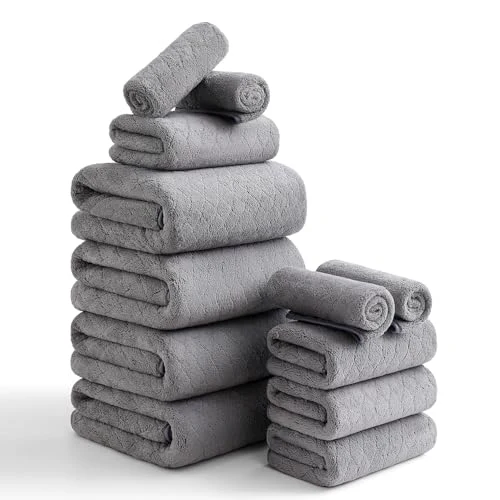
If you are also dealing with a musty bathroom generally, coordinate your curtain replacement with a deep clean of the tub and walls. While you are at it, consider refreshing your towels—a fresh set makes the whole room feel cleaner. Our roundup of the best bath towel sets for 2026 can help you pick something that dries as fast as your new curtain.
Why Your Curtain Blows Inward and How to Fix It
The inward billow is not a curtain defect; it is a physics problem. When you run hot water, the air inside the shower warms and rises, creating a low-pressure zone. Cooler air pushes in from outside, and the curtain is the only flexible barrier. The curtain bows inward because the pressure difference is stronger than the weight of the fabric. A weighted hem reduces but does not eliminate the billow. The real fix is to widen the gap between the curtain and the shower body. Two easy solutions: move the rod outward by an inch or two, or switch to a curved rod that bows away from the shower. A curved rod creates more space between you and the curtain, which makes the low-pressure zone less focused on the curtain. For more detail on this exact annoyance, read our guide on how to stop a shower curtain sticking to you.
Another trick: leave a one-inch gap between the liner and the tub rim at the top. That gap lets air flow into the shower, equalizing the pressure and reducing the inward pull. Do not leave a gap at the bottom—water will escape. The top gap is safe because water splashes sideways, not straight up.
Frequently Asked Questions
How often should I wash my shower curtain and liner?
Wash a fabric decorative curtain every two weeks if it is cotton, or once a month if it is polyester. A PEVA liner only needs a wipe-down after each shower and a full replacement every six to twelve months. If you shower multiple times a day or live in a humid climate, wash more frequently. The goal is to remove soap scum before mold spores settle into the fibers.
Do I still need a liner if my curtain is labeled waterproof?
Yes. A waterproof label on a decorative curtain means the fabric has a thin coating that will wear off quickly around the grommets and seams. Once water penetrates that coating, it gets trapped inside the fabric and mold follows. A separate liner—PEVA or coated polyester—is always the correct water barrier. The decorative curtain stays dry and lasts years longer.
What is the difference between a shower curtain and a liner?
A liner is the water-blocking layer that hangs inside the tub. It is made from PEVA or coated polyester and gets wet every shower. A curtain is the decorative layer that hangs outside the tub and stays dry. The two are separate pieces hung on the same rod with two sets of hooks. You need both, unless you use a single PEVA curtain with no fabric layer.
How do I measure for a shower curtain and choose the right rod?
Measure the width of your tub from wall to wall, then add 12 inches for overlap. Standard curtains are 72 inches wide, so if your tub is wider than 60 inches, buy an extra-wide curtain. For height, measure from the rod to the tub rim; the curtain should hang inside the tub by 4 to 6 inches. Choose a tension rod for rentals or lightweight curtains, a fixed rod for permanent installation, or a curved rod to reduce inward billow.