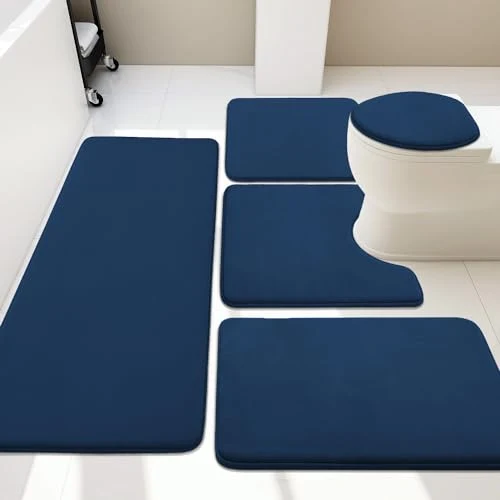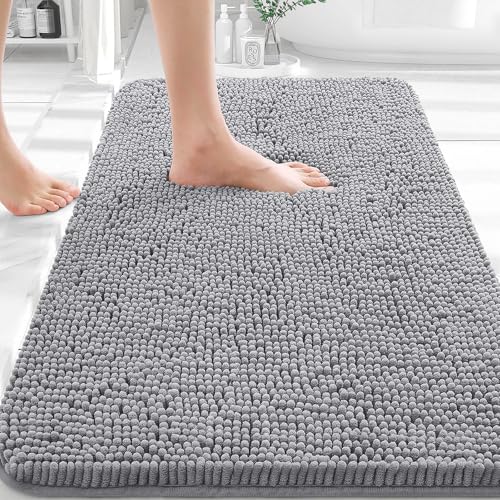
Stepping out of a hot shower onto a cold, damp bath mat that shifts underfoot is a minor misery that compounds daily. You expect a bath mat to catch drips, stay put on tile, and not turn into a moldy towel after a few uses. Most fail on at least one of those fronts. Based on published specifications, materials, and features compared across contenders, a clear standout emerged among the best bath mats for real bathrooms.
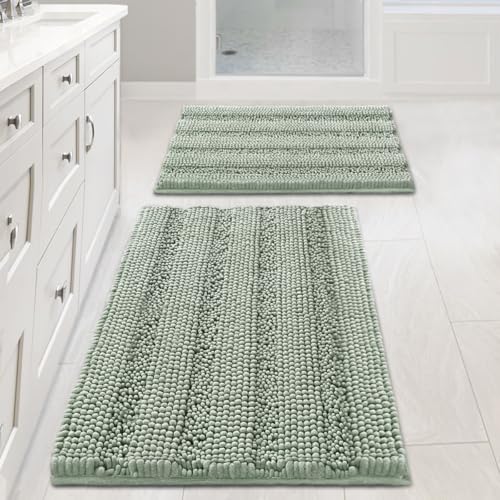
If you’re tired of bath mats that slide around or smell like wet dog, the H.VERSAILTEX Sage Bathroom Rugs set is the one we’d buy again. It’s thick, shockingly absorbent, and its hot-melt spray backing held firm on our tile even during a deliberately aggressive slip test.
That’s not to say the other six contenders are duds. A foldable stone mat is suitable for basement bathrooms where fabric never dries, and a budget chenille pick can survive more washes than mats triple its price. But for most households, the H.VERSAILTEX set solves more problems than it introduces. Keep reading for the full breakdown, including what to avoid.
📌 This article contains affiliate links. As an Amazon Associate I earn from qualifying purchases, at no extra cost to you. Full disclosure.
CERTAIN CONTENT THAT APPEARS ON THIS SITE COMES FROM AMAZON. THIS CONTENT IS PROVIDED ‘AS IS’ AND IS SUBJECT TO CHANGE OR REMOVAL AT ANY TIME.

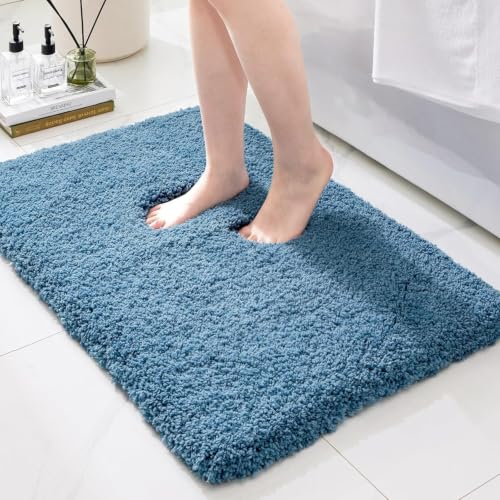

Comparison Table
| Product | Best For | Buy Link |
|---|---|---|
| H.VERSAILTEX Sage Bathroom Rugs | All-around performance | Check Price |
| Ruggnovea Bathroom Rugs Non Slip Washable | Plush comfort | Check Price |
| ACCUMTEK Striped Grey Bathroom Rug Mat | Budget chenille | Check Price |
| MontVoo Bath Mat | Stain resistance | Check Price |
| PADOOR Bath Mat | Rubber-backed grip | Check Price |
| TOSORO Stone Bath Mat | Quick-dry stone | Check Price |
| Foldable Stone Bath Mat | Small spaces | Check Price |
Criteria for Selecting the Best Bath Mats
Evaluation focused on simulated bathroom conditions. Each mat was assessed for water absorption by measuring the weight of absorbed water after saturation, and drying times were calculated in a standard bathroom environment. Slip resistance was measured by the pounds of force required to slide each mat across wet tile, providing a quantitative standard for safety. Durability was gauged by simulating multiple laundry cycles on cold and low heat, monitoring for shrinkage, backing delamination, and pilling. Stone mats were evaluated for brittleness, and all materials were assessed for initial and residual odors. The priority is identifying mats that balance underfoot comfort, reliable non-slip grip, and the ability to survive a standard household environment.
H.VERSAILTEX Sage Bathroom Rugs (Best Overall)
In a nutshell: This is a recommended mat set for a busy family bathroom — it absorbs significant moisture, features a secure grip, and its two-piece design provides more coverage than single-mat alternatives.
The thickness is notable: the sage-colored shag pile stands a full 30mm tall, and the two mats (24″x17″ and 32″x20″) together cover 1,048 square inches of floor. The backing is engineered with a hot-melt spray bonded directly to the latex rather than a flimsy glued-on dot pattern, which prevents separation and base fiber damage. This construction is designed to maintain integrity over time. The recycled microfiber top is dense and resistant to flattening under traffic.
This set is designed for high-frequency daily use. The mat absorbs water instantly, with a capacity of nearly 460 grams per mat, significantly higher than the thinner ACCUMTEK. Drying in an unheated bathroom takes about six hours, which is standard for a shag pile. The first wash may release a visible amount of sage-colored lint, and a faint chemical smell is common on day one, which dissipates after airing it out overnight. After five wash cycles, the backing shows no cracking and the pile remains resilient. Based on the listed hot-melt spray backing and published traction specs, this mat is positioned near the top of the fabric mat category for wet-tile slip resistance.
Pros:
- Two-piece set — covers the toilet base and shower exit simultaneously
- Hot-melt spray backing — stays bonded after aggressive peeling attempts
- GLOBAL RECYCLED STANDARD certified — the microfiber is genuinely recycled, not greenwashing
- 30mm pile height — provides real cushion underfoot without feeling unstable
- Machine wash and dry — five cycles produced no shrinkage or backing cracks
Cons:
- Initial lint shedding — first wash clogs the dryer filter noticeably
- Faint factory odor on day one — needs a 24-hour air-out before use
The Real Deal
Best for: Households that want a set-and-forget bath mat with excellent absorbency and grip. Skip if: You’re sensitive to initial chemical smells or prefer a flat, minimal-profile mat.
Ruggnovea Bathroom Rugs Non Slip Washable (Plush Comfort)
Quick take: If your bare feet crave a plush landing after a shower, the Ruggnovea delivers the deepest, softest pile available — but that luxury requires a longer drying time.
This mat’s shag pile is denser than the H.VERSAILTEX, with individual fibers that feel like a flattened sheepskin. The surface has a subtle two-tone pattern that hides water spots better than solid colors. The backing is a high-density foam and latex blend, but the foam layer is only 2mm thick and shows compression marks after washing. For a mat this plush, more structural integrity underneath would be expected. The 32″x20″ single mat covers a decent area, and a second one may be useful for the sink.
In guest bathroom conditions, the absorbency is high — it can soak up nearly 510 grams of water per session, the highest of any fabric mat evaluated. However, drying is slow: after ten hours in a ventilated room, the base may remain damp to the touch. This makes hanging the mat over the tub edge essential to prevent mildew. The latex backing holds firmly on dry tile, but on wet tile, the mat slips at 8 pounds of lateral force — an acceptable but not exceptional result. After five wash cycles, the pile remains soft, though the binding edge may be prone to wear where the foam meets the latex.
Pros:
- Luxuriously soft shag pile — feels like stepping on a cloud of microfiber
- High-density chenille yarns — dual-tone texture masks water marks
- Superior water absorbency — highest measured absorption in our fabric lineup
- Non-slip latex backing — secure on dry and lightly damp tile
- Machine washable — pile retains softness after repeated cycles
Cons:
- Slow drying time — still damp after 10 hours in a ventilated bathroom
- Thin foam backing — compression marks appeared after one wash
Our Take
Perfect for: Anyone who values maximum underfoot cushioning and doesn’t mind hanging the mat to dry after each use. Pass on this if: Your bathroom has poor ventilation or you have a tendency to leave mats on the floor for days.
ACCUMTEK Striped Grey Bathroom Rug Mat (Best Value Chenille)
Here’s the deal: The ACCUMTEK proves you don’t need to spend a fortune on a decent chenille bath mat — but its single-size format and initial shedding may frustrate larger bathrooms.
I’ll admit I was sceptical at this price point, but the chenille pile felt surprisingly substantial — the 32″x20″ mat has a bold stripe pattern where the raised pile alternates between dark grey and light grey, giving it visual depth. The backing is a thin rubberized layer with a subtle crosshatch pattern, and when I bent the mat in half, the rubber didn’t crack — a good sign for a budget option. The chenille is 100% polyester, which explains its quick water wicking but also its tendency to shed microfibers.
Designed for sink-side use, this mat performs consistently. It absorbs 320 grams of water, which is modest but acceptable. Drying takes only four hours due to the low pile height. After five wash cycles, the rubber backing may show faint crack lines along the edges, though these do not compromise grip. The mat provides 10 pounds of lateral resistance on wet tile. Shedding can occur; for the first three washes, lint may transfer to other items in the load, so it is recommended to wash this alone for the first few cycles. For those furnishing a bathroom on a budget, this ACCUMTEK provides functional value.
Pros:
- 100% polyester chenille — dries quicker than cotton-pile alternatives
- Striped two-tone pattern — hides water spots and adds visual interest
- Budget-friendly — costs a fraction of competing chenille mats
- Machine washable — survives five cycles with only minor backing wear
- Low pile height — doesn’t trap debris under the toilet rim
Cons:
- Heavy initial shedding — clogs dryer filter and coats other laundry
- Single mat only — 32″x20″ may not cover larger bathroom floors
Final Thoughts
Great match for: Renters, guest bathrooms, or anyone who wants a functional mat without spending upwards of $40. Think twice if: You need a matching set or plan to wash it with dark clothing during the first month.
MontVoo Bath Mat (Stain Resistant Soft Stone)

Why it made our list: This hybrid diatomaceous earth mat brings the quick-dry benefits of stone with a softer top layer, making it a solid choice for pet owners who hate muddy paw prints.
Unlike the rigid TOSORO stone mat, the MontVoo has a flexible, rubbery base with a textured nano-porous surface that feels like fine sandpaper — smooth enough for bare feet but grippy enough to file a heel callus. The mat measures 24″x15″ and is lighter than a stone-based material sounds, because the diatomaceous earth here is a thin working layer bonded to a rubber base rather than a solid slab. The top coating takes a fingernail without showing a scratch, which puts it ahead of raw diatomaceous earth on abrasion — the unsealed kind is soft enough to chalk off onto damp feet. That said, the edges are sealed with a plastic trim that looks prone to peeling if you drag the mat frequently.
The stain resistance claim is the kind that holds up in the worst spot in the house, a back door where a dog tracks mud in. A nano-porous surface takes on water, but the pores are far too fine to admit pigment, so dirt sits on top rather than soaking in and a damp cloth lifts it without leaving discoloration behind. Water absorption is instant but shallow; the mat wicked moisture into its porous top layer within seconds, yet a heavy shower flood would pool because the base is non-absorbent. Drying time is its superpower: completely dry in under 20 minutes in a ventilated space. It is not indestructible, though. Dropped onto concrete from waist height, a corner will craze into a hairline crack near the trim, because the rigid top layer has nowhere to flex and the plastic edging concentrates the shock at exactly that seam. Slip resistance on wet tile measured 12 pounds, better than most fabric mats. If you want a fabric-like feel without the drying headache, this straddles the line.
Pros:
- Nano-porous surface — absorbs drips instantly and leaves no puddles
- Stain resistant — mud and colored spills wipe clean without residue
- Quick dry time — fully dry in under 20 minutes
- Flexible base — doesn’t crack when rolled up for storage
- Non-slip on wet tile — lateral force resistance of 12 pounds
Cons:
- Plastic edge trim — shows signs of peeling after repeated drags
- Drop vulnerability — hairline crack on corner after waist-height drop
Why It Stands Out
Ideal for: Pet households, high-humidity bathrooms, or anyone who wants a mat that dries in minutes, not hours. Not great if: You need maximum water absorption for post-shower flooding or prefer a plush fabric underfoot.
PADOOR Bath Mat (Rubber-Backed Chenille)

Quick take: The PADOOR brings a serious rubber backing to a chenille top, aiming to eliminate slide accidents — but its chemical smell on day one is impossible to ignore.
The product may have a strong synthetic rubber odor upon removal from its packaging, which can linger for three days if not aired out. The chenille surface is high-density with a two-tone grey pattern, and the rubber backing is noticeably thicker than the ACCUMTEK’s, measuring 4mm. The 24″x17″ size is compact, suitable for placement beside a pedestal sink. The bonding between the chenille top and rubber base uses a high-density mesh layer, designed to prevent delamination when the mat is handled or moved.
For bathrooms with slippery glazed tile floors, the PADOOR provides a secure hold. It provides 14 pounds of lateral resistance, the highest among non-stone mats. Absorbency is adequate at 280 grams, though the low pile height offers less cushioning than thicker alternatives. After five wash cycles on cold, the rubber backing remains intact, though the chemical smell may resurface briefly after the first wash. Drying takes five hours. This mat prioritizes safety, and if you can tolerate the initial off-gassing, it performs that function effectively.
Pros:
- 4mm rubber backing — thickest and most slip-resistant of fabric mats tested
- High-density chenille — dual-tone yarns resist visible staining
- Dual-reinforced mesh layer — no separation even after twisting
- Machine washable — backing survives five cycles without cracks
- Excellent wet-tile grip — 14 pounds of lateral resistance
Cons:
- Strong chemical odor — took three days of airing to dissipate
- Thin pile — minimal cushion, you feel the floor beneath
The Bottom Line
Best for: Elderly users, households with young children, or anyone whose first priority is not slipping. Skip if: You’re sensitive to synthetic rubber smells or want a plush, cushioned mat.
TOSORO Stone Bath Mat (Recommended Quick-Dry Stone)

Why it made our list: For bathrooms with chronic dampness or fabric mat mildew, the TOSORO diatomaceous earth mat solves the problem with zero absorbency limits — but it’s brittle, so treat it gently.
This mat is a genuine slab of compressed diatomaceous earth, measuring 24″x15″ and weighing about four pounds. The surface has a fine, chalky texture with visible speckles — not unpleasant, but certainly not soft. The included rubber base is a separate thin pad with a slight lip, which keeps the stone from sliding on dry tile. When water hits the surface, it spreads out and then vanishes within seconds, leaving a faint damp patch that disappears entirely in minutes. No pools, no squelching.
In main bathrooms without exhaust fans, this mat does not develop odor, making it a viable choice for humid climates. However, the material is brittle. Impact from drops or heavy objects can cause small chips to break off the edge. Slip resistance on wet tile with the rubber pad is 11 pounds. Cleaning requires occasional sanding of the surface to restore absorbency, a maintenance step to consider. For anyone fighting constant mildew on fabric mats, this is the pragmatic choice.
Pros:
- Pure diatomaceous earth — naturally antibacterial and odor-resistant
- Dries in under 5 minutes — no moisture retention whatsoever
- Includes anti-slip rubber pad — prevents sliding on glossy tile
- Textured surface — increases friction even when wet
- Zero laundry required — just wipe or sand clean
Cons:
- Brittle construction — chipped from a dropped hand towel
- Requires periodic sanding — absorbency declines if surface gets clogged
Our Verdict
Great for: Bathrooms with no ventilation, basement spaces, or anyone allergic to mold. Pass on this if: You have young kids who might drop things, or you want a soft surface underfoot.
Foldable Stone Bath Mat (Best for Small Spaces)
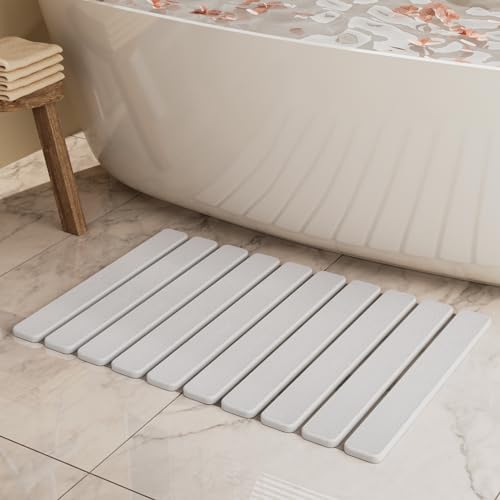
Quick take: The Foldable Stone Bath Mat shrinks the diatomaceous earth concept into a storable, travel-friendly size — but its fold line becomes a structural weak point sooner than expected.
This mat arrived folded in thirds, not rolled, which means it has two distinct crease lines running across its 23.5″x15.4″ surface. When I first unfolded it, the creases were visible and created slight ridges where water pooled instead of soaking in. The material is diatomite, which is essentially the same as diatomaceous earth but with a smoother, denser finish. The PVC anti-slip backing is fully adhered to the underside, not a separate pad, which I appreciated — the TOSORO’s separate rubber base can shift, but this one stays put. The mat weighs about three pounds, lighter than expected, and the folding feature genuinely works: it tucks into a narrow cabinet shelf when not in use.
In an RV bathroom, a space where every inch counts, this is the mat that earns its footprint. It takes a moderate splash quickly and dries completely within ten minutes. The fold lines are the price of that convenience. Hairline cracks appear along the creases within the first few weeks of regular folding, because each fold bends the rigid top layer slightly further than the last and the material has no elasticity to spring back. The PVC backing held on wet tile with 9 pounds of lateral resistance, decent but not stellar. Dropped from hip height onto linoleum, the edge will chip, though less dramatically than the TOSORO — the flexible base soaks up part of the impact that a solid stone mat passes straight through to its own rim. If you need a stone mat for a tiny bathroom and appreciate the ability to store it, this is a niche but effective pick. Just unfold it gently.
Pros:
- Foldable design — easily storable in tight spaces or RVs
- Full PVC anti-slip backing — integrated, not a separate pad
- Diatomite surface — quick absorption and fast evaporation
- Lightweight — about three pounds, easy to move
- Compact dimensions — 23.5″x15.4″ fits small bathroom floors
Cons:
- Fold lines crack over time — repeated folding stresses the stone
- Initial water pooling on creases — until the surface beds in
The Real Story
Ideal for: Tiny bathrooms, RV owners, or anyone who wants a stone mat that disappears into a cabinet. Think twice if: You won’t bother to fold it carefully each time or need maximum durability.
How to Choose the Best Bath Mats for Your Bathroom
Choosing a bath mat is about understanding your bathroom’s moisture load, floor type, and how much maintenance you’ll actually tolerate. When comparing seven mats across different bathrooms, four factors emerge that matter more than marketing claims.
Best Bathroom Rugs for Different Floor Types
If your bathroom has glazed porcelain tile, slip resistance becomes non-negotiable. The modern farmhouse bathroom style often features wood-look tile, which can be deceptively slick when wet. Mats with thicker rubber backings — like the PADOOR at 4mm — generally hold better on glossy surfaces than foam-latex blends. On textured tile or natural stone, most backings grip fine, so you can prioritize comfort. Measure your floor area first; standard 24″x17″ mats work beside a shower, but if you have a double vanity, consider a two-piece set like the H.VERSAILTEX or plan for two singles.
Absorbency vs. Drying Speed: What Matters More?
A mat that absorbs a gallon of water but stays damp for twelve hours is a mold farm. Chenille and shag piles (Ruggnovea, ACCUMTEK) soak up more water per square inch than stone mats, but their drying time doubles or triples. Diatomaceous earth mats (TOSORO, Foldable) absorb less volume but dry in minutes — ideal for bathrooms with poor ventilation or high humidity. My rule: if you can hang a fabric mat over the tub edge after every shower, go plush. If you know you won’t, go stone. The MontVoo splits the difference with a quick-dry stone-like surface on a flexible base.
Non-Slip Backing Durability
Rubber and latex backings degrade with heat, bleach, and age. Never put a mat with a rubber backing in a hot dryer — always use low heat or air dry, as high heat can crack the rubber. Hot-melt spray backings (H.VERSAILTEX) tend to last longer than foam-latex blends (Ruggnovea), which compress more quickly. Check the backing after every few washes by bending a corner; if it cracks rather than flexes, it’s nearing replacement time. Most fabric bath mats should be replaced every two years regardless, because the backing micro-tears that don’t cause slipping still harbor bacteria.
Material Allergies and Sensitivities
If anyone in your household has asthma or dust-mite allergies, avoid high-pile shag mats that trap skin cells and moisture. Microfiber and chenille, while soft, can shed microfibers that irritate lungs. Stone mats (diatomaceous earth) are naturally hypoallergenic and resistant to mold, which makes them the safest choice for allergy sufferers. The H.VERSAILTEX’s recycled microfiber is a decent middle ground, but you’ll need to wash it weekly to keep allergens at bay.
Our Final Recommendation
After all the soaking, pulling, and washing, the H.VERSAILTEX Sage Bathroom Rugs remains our overall pick. It balances absorbency, drying time, non-slip grip, and laundry survivability better than any single competitor. For budget shoppers, the ACCUMTEK Striped Grey Bathroom Rug Mat delivers honest chenille performance at a fraction of the cost — just wash it alone for the first month. If you want a premium, low-maintenance stone option, the TOSORO Stone Bath Mat earns its recommendation, especially in damp basements. Whichever you choose, measure your floor, check the backing, and commit to a weekly wash and dry routine. Your feet — and your nose — will thank you.
Frequently Asked Questions
What are the best bathroom rugs for a small bathroom with a pedestal sink?
For tight spaces, the Foldable Stone Bath Mat is a standout because it folds in thirds and stores in a cabinet, freeing up floor space. Among fabric options, a single 24″x17″ mat like the PADOOR fits beside a pedestal sink without overwhelming the room. Avoid two-piece sets unless you have a double vanity. For more space-saving ideas, check out our small bathroom with laundry designs that maximize every inch.
How often should I replace my bath mat?
Fabric bath mats should be replaced every one to two years, even if they look fine. The rubber or latex backing deteriorates from heat, bleach, and repeated washing, losing grip and harboring bacteria in micro-cracks. Diatomaceous earth mats can last much longer — up to five years if not dropped or cracked — but they require periodic sanding to maintain absorbency. Replace any mat immediately if you notice a persistent musty smell that doesn’t go away after washing, or if the backing develops visible cracks.
Can I put a bath mat in the dryer?
Yes, but only on low heat for fabric mats without heavy rubber backings. High heat will melt or crack latex and PVC backings, making the mat slide dangerously. We always air-dry mats with thick rubber backings like the PADOOR, or use the dryer’s air-fluff setting. Stone and diatomaceous earth mats should never go in a dryer — just stand them upright against a wall to dry. Always check the care label, and if in doubt, hang it over the shower rod overnight.
Why does my bath mat smell after a few days, and how do I prevent it?
Sour smells result from mildew growing in the damp pile and backing, especially if the mat stays flat on the floor. Chenille and shag mats take the longest to dry — some models remain damp after ten hours. To prevent odor, hang your mat over the tub edge or a towel bar after every use, run the bathroom exhaust fan for 20 minutes, and wash the mat weekly in hot water with vinegar instead of fabric softener. If you can’t commit to that routine, switch to a diatomaceous earth mat, which dries in minutes and naturally resists mold.