Lanai garden ideas work best when they start from one fact: a lanai is not one growing space but three. The outer edge beside the screen gets real sun for part of the day, the middle under the roof gets bright light but little direct sun, and the back wall against the house sits in shade most of the time. Put each plant in the zone that suits it and a lanai garden stays green with very little fuss. Put a sun lover against the back wall, or a fern out on the hot edge, and it struggles all season.
This guide starts with how to read the light and the sizes, weights and clearances that keep plants from damaging the screen, the floor or the roof beams. Then it gives eleven ways to bring plants onto and around a lanai, from a layered corner of tropical pots to a planting bed around the outside of the cage. If you are still planning the room itself, our backyard lanai ideas post covers fifteen complete styles, and this one is about the plants that finish them.
Lanai Garden Ideas Start With the Light
Before buying a single plant, spend one sunny day noting where direct sun actually lands on the floor of the lanai, and for how long. A roof overhang that looks generous at noon can let low morning or afternoon sun reach well inside. Then sort the space into three zones.
| Zone | Typical light | Plants that suit it |
|---|---|---|
| Outer edge, beside the screen | 3 to 6 hours of direct sun, often hot afternoon sun | Herbs, succulents, bougainvillea, mandevilla, crotons, hibiscus |
| Middle, under the roof | Bright indirect light, little direct sun | Palms, bird of paradise, Boston fern, pothos, philodendron |
| Back wall, against the house | Shade or low indirect light | Cast iron plant, ZZ plant, peace lily, bird’s nest fern |
A screen also cuts the light reaching the plants by roughly 20 to 30 percent, depending on the mesh. Plants labeled “full sun” often do fine just inside a screen, and plants labeled “part shade” are usually the safest choice for most of the lanai.
Sizes, Weights and Clearances
Every one of the lanai garden ideas below shares a problem: plants on a lanai sit on finished floors and hang from a roof that was built for shade, not for weight. A few measurements prevent most of the damage.
- Keep pots 6 to 12 inches off the screen. Leaves pressed against the mesh hold moisture, stain the screen and give insects a bridge inside. The gap also leaves room to clean the screen.
- Keep a 36 inch path clear between the door, the seating and any outdoor kitchen. Plants are the first thing to creep into a walkway.
- Raise every pot off the floor. Pot feet or a saucer with a quarter inch of air underneath stop the rings and stains that standing water leaves on pavers, tile and concrete.
- Know the wet weight of a hanging basket. A 10 inch basket weighs about 8 to 12 pounds after watering, a 12 inch basket about 15 to 20, and a 14 to 16 inch basket 25 pounds or more. Hang it from a solid beam or joist with a hook rated for at least twice that weight, never from the screen frame or a gutter.
- Hang baskets high over a walkway. The bottom of a basket over a path should sit at least 78 inches above the floor so nobody walks into it. Over a corner or behind furniture it can come lower.
- Group pots in odd numbers and three heights. A tall pot, a medium one and a short one (for example 20, 14 and 10 inches across) look planned. A row of equal pots looks like storage.
Most of the plants below are tropical and do best in warm climates, roughly USDA zones 9 to 11. In cooler areas they can still spend the summer on a lanai or covered patio, as long as they come indoors before nights fall below about 50 degrees.
11 Lanai Garden Ideas for Pots, Beams and Borders
1. A Layered Corner of Tropical Pots
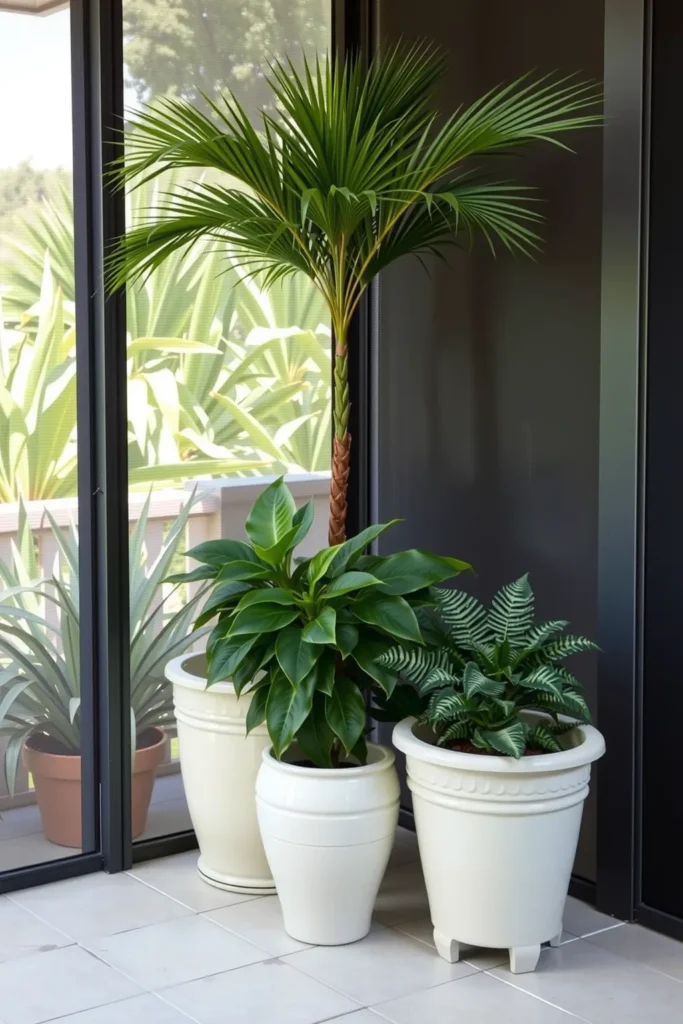
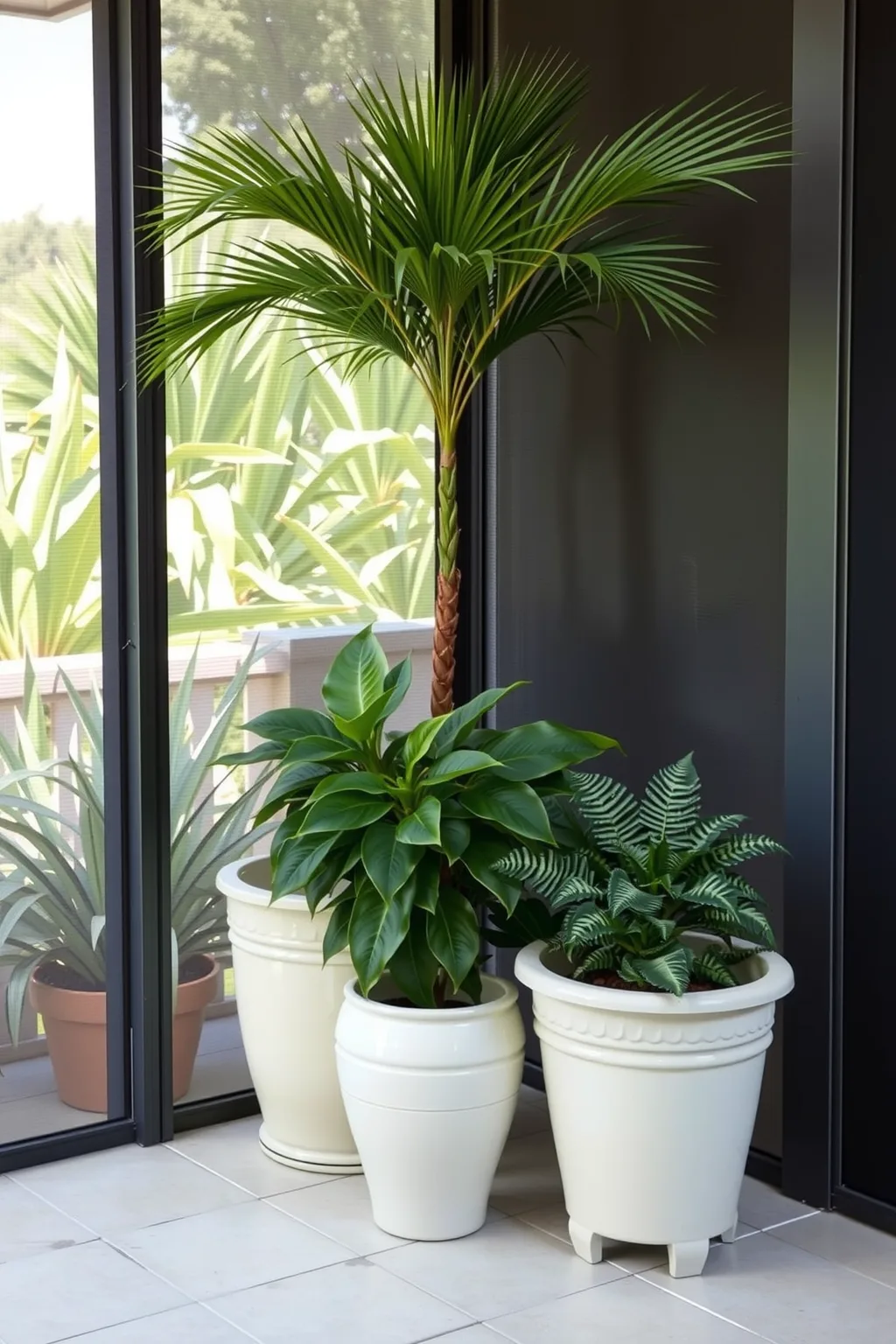
Of all the lanai garden ideas here, the quickest way to make a lanai feel like a garden is one full corner rather than plants scattered along every wall. Start with one tall plant at the back, such as a kentia palm, a majesty palm or a bird of paradise, in a pot 18 to 20 inches across. In front of it, add a medium plant with broad leaves (a philodendron or a peace lily) in a 12 to 14 inch pot, and finish at the front with something low and soft, like a Boston fern or a trailing pothos.
Keep the pots in one material or one color family so the plants, not the containers, read as the display. Glazed ceramic in cream, gray or deep green suits most lanais; terracotta dries out quickly on a sunny edge but looks right in a Mediterranean scheme. A corner that gets bright indirect light suits nearly every plant in this group.
2. Hanging Baskets From the Beams
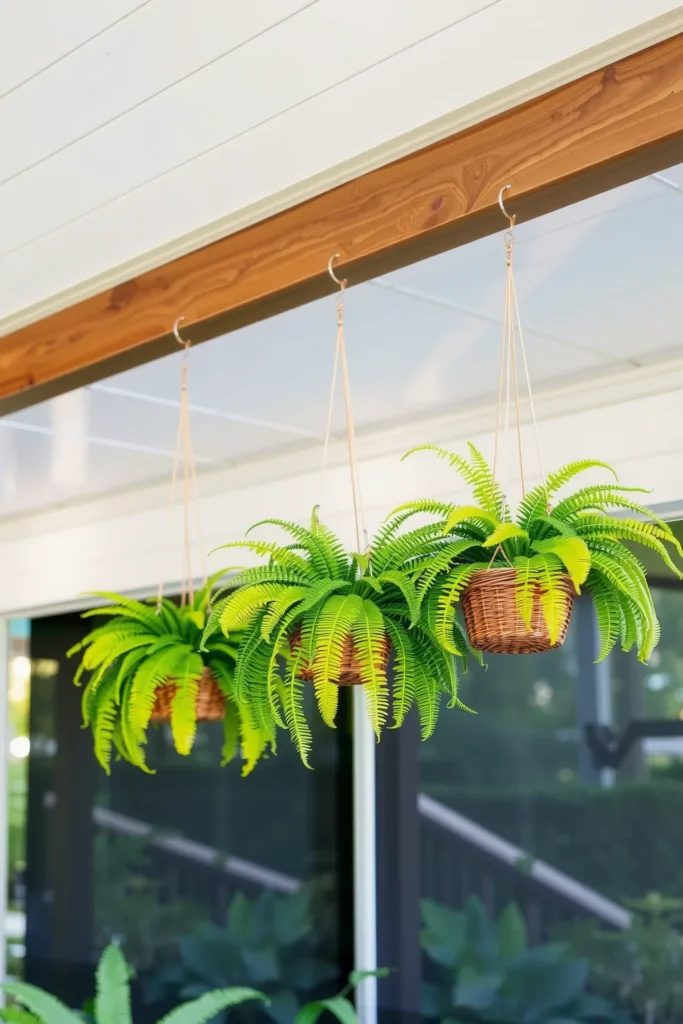
Hanging baskets use the one space a lanai always has spare: the air under the roof. Boston ferns are the classic choice, because they like the humid, bright shade under a lanai roof and fill out into a full ball of fronds. Pothos, string of hearts and spider plants trail longer and need less water. For color on the sunny edge, a basket of trailing petunias or calibrachoa works through the warm months.
Hang baskets at staggered heights, for example 12 to 18 inches apart in height, so they read as a group rather than a row. Space them at least 2 feet apart so each gets light and air on every side. Baskets dry out faster than floor pots; in hot weather a fern basket may need water every day, so hang them where a watering can or hose wand reaches without moving furniture. A simple rope-and-pulley hook lets you lower a high basket to water it.
3. Planters Along the Knee Wall
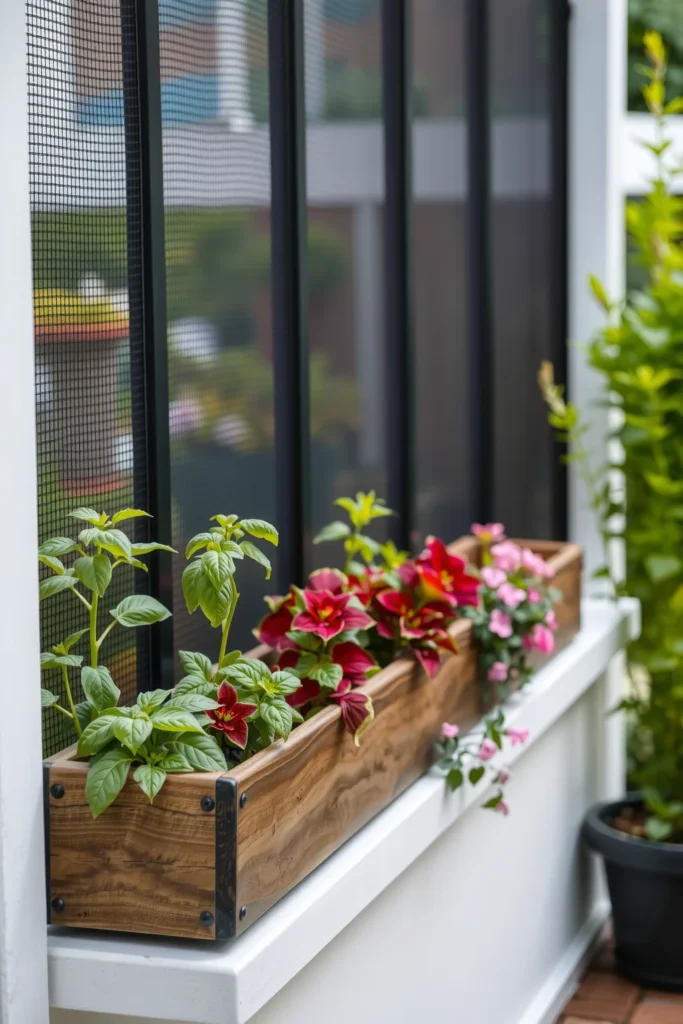
Many screened lanais have a low knee wall or a wide ledge under the screen panels. A row of long, narrow trough planters along that ledge turns it into a window box garden at seated eye level. Troughs 6 to 8 inches deep and wide are enough for herbs, coleus, begonias, small ferns or flowering annuals.
Check that the ledge is wide enough for the planter to sit flat with no overhang, and keep the planter back from the screen itself by a couple of inches. Choose troughs with drainage holes and a matching tray, or water lightly so runoff does not run down the wall and stain it. This idea also suits a deck railing, with railing planters on brackets made for the rail width.
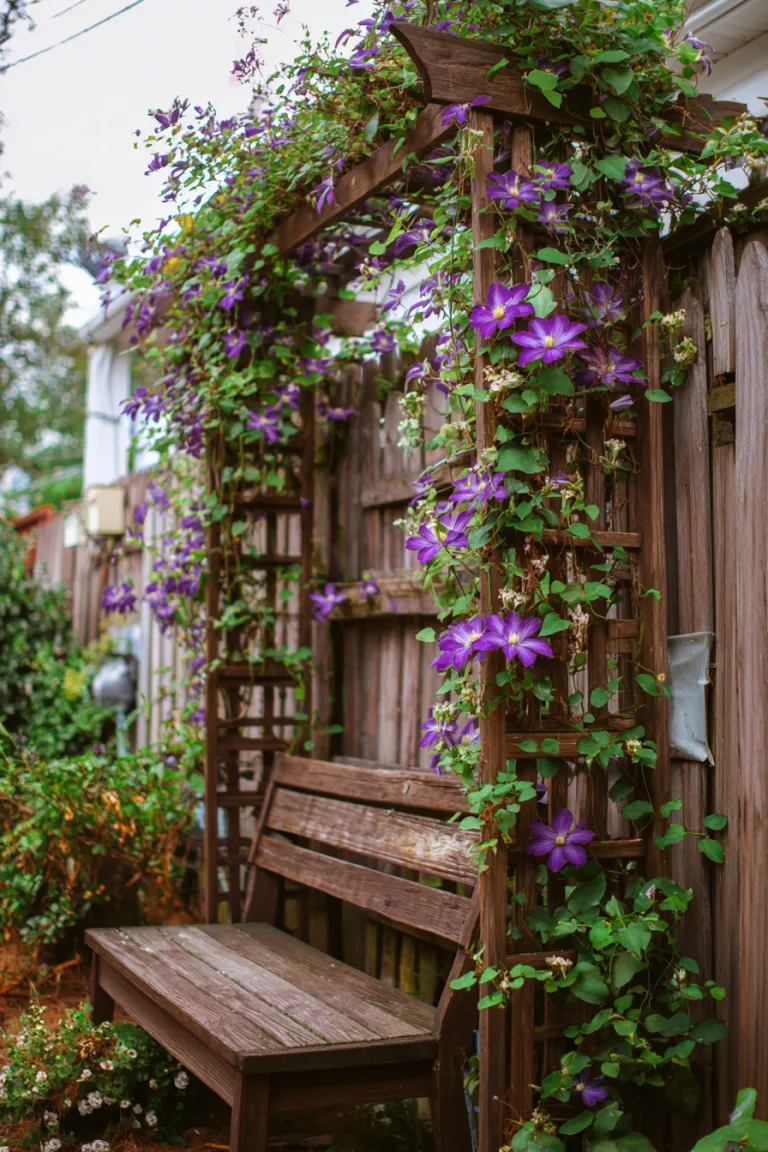
4. A Trellis and Climbing Vine by a Post
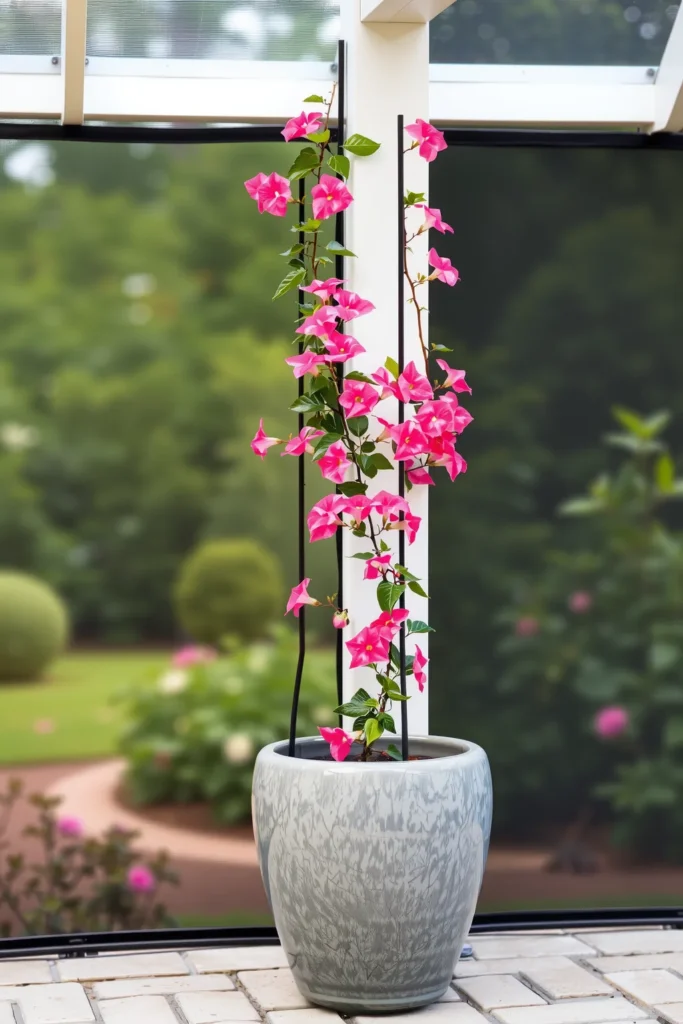
A flowering vine climbing a lanai post softens the hard lines of the frame and adds height without taking floor space. Mandevilla is the easiest choice for a pot: it flowers from spring into fall in pink, red or white, climbs without becoming huge, and suits the bright, sunny edge of a lanai. Jasmine adds scent near a seating area.
Plant the vine in a pot at least 14 to 16 inches across and give it its own freestanding trellis, set into the pot or right behind it. Do not tie a vine to the screen or the screen frame: the tendrils work into the mesh and the weight pulls on the aluminum. Heavy woody climbers such as wisteria or bougainvillea need a structure anchored to the ground or the house, so they belong outside the cage rather than in a pot on the floor.
5. A Rolling Herb Garden Near the Door
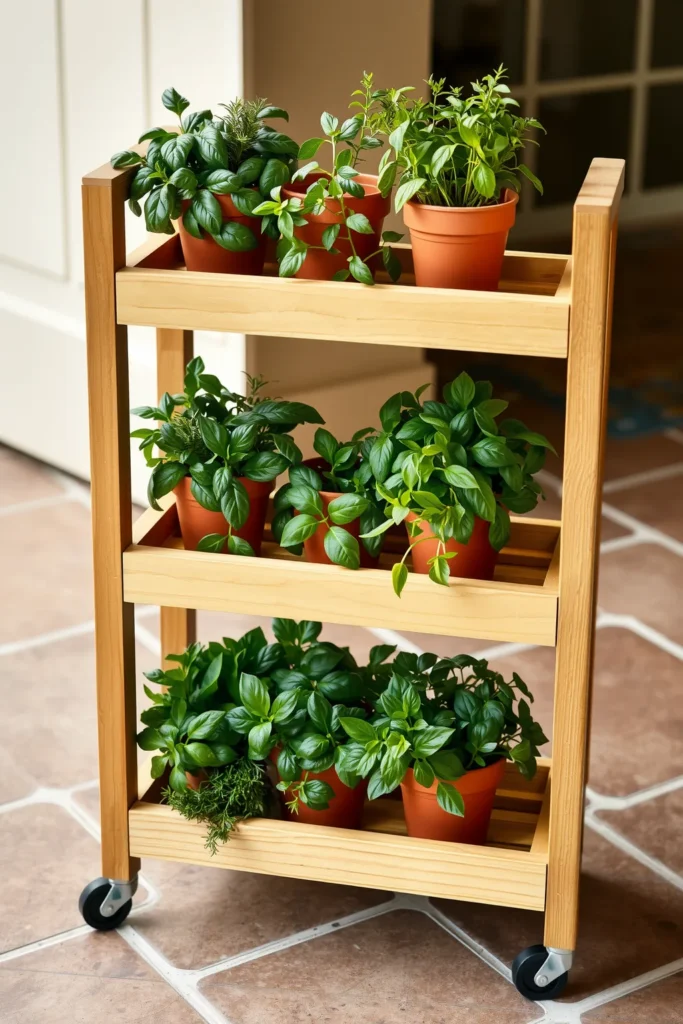
A lanai is the obvious place for a kitchen herb garden, because it sits a few steps from the kitchen and the grill. Most cooking herbs, including basil, rosemary, thyme, oregano and parsley, need about 4 to 6 hours of direct sun. On a lanai that only gets sun at one end, a rolling cart or a planter on casters lets you move the herbs into the sun in the morning and out of the hottest afternoon light.
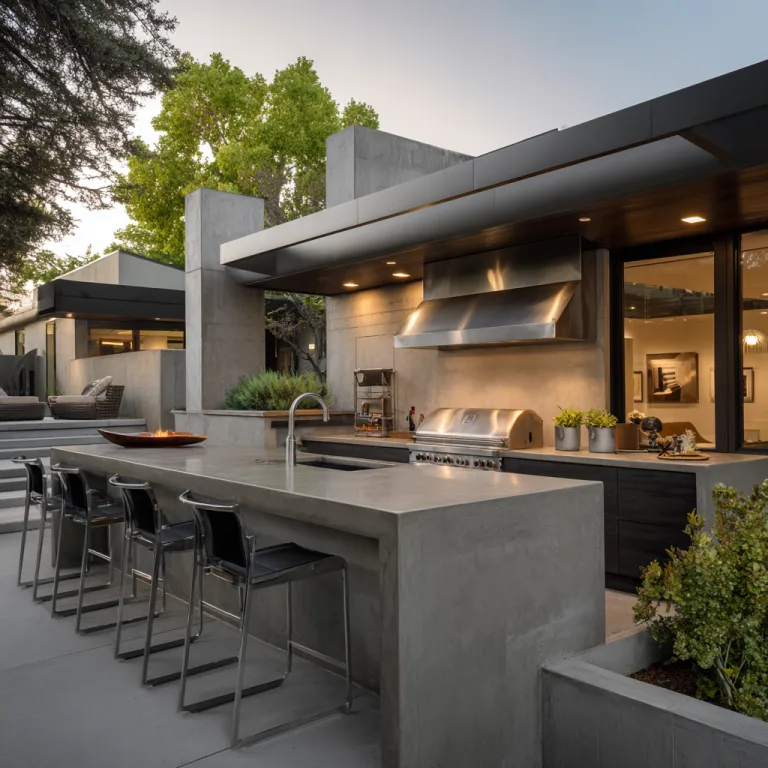
Give each herb its own pot of 6 to 8 inches, and keep mint in a pot on its own because it crowds out its neighbours. Group the herbs you use together, such as basil and parsley, on the side of the cart nearest the door. If your lanai has an outdoor kitchen, our lanai design guide covers how to place cooking, seating and planting so they do not fight for the same space.
6. A Planting Bed Around the Outside of the Cage
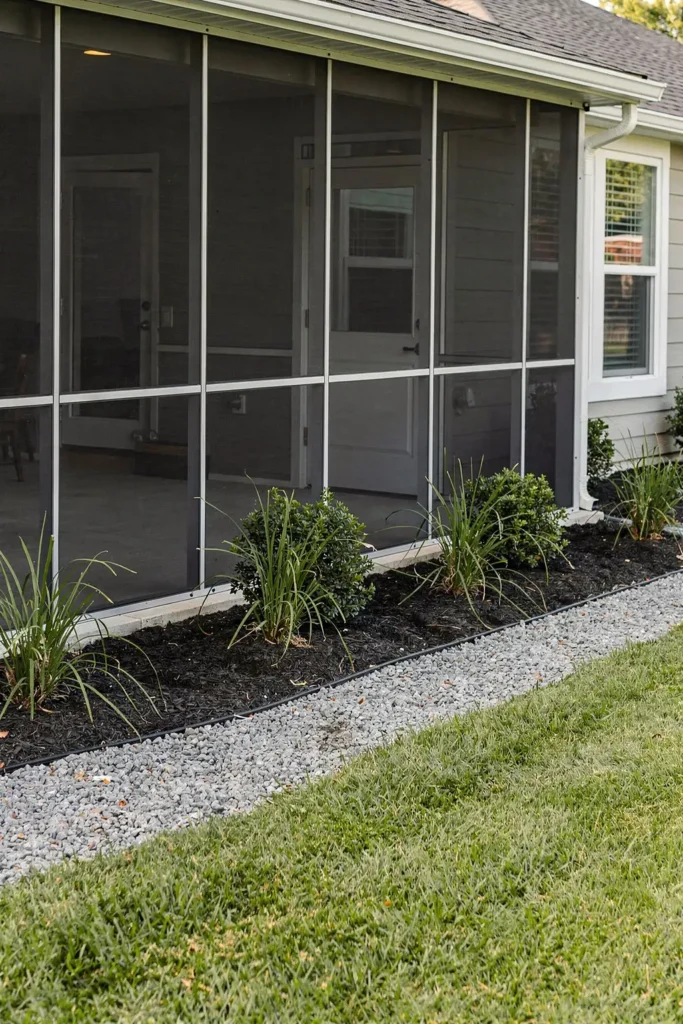
Landscaping around the edge of a lanai does as much for the view from inside as any plant on the floor. A planting bed along the outside of the screen frames the lanai, hides the bottom rail and the slab edge, and gives you something green to look at from the seating. Keep the plants low near the screen, ideally under about 3 feet, so they do not block the view or the breeze.
Leave a strip of gravel or mulch 12 to 24 inches wide between the screen and the first plants. That strip lets air move along the screen, keeps soil and sprinkler spray from splashing onto the lower panels, and gives you room to walk along the cage to clean or repair it. Ornamental grasses, liriope, dwarf firebush, coontie and low flowering shrubs suit most warm-climate lanai borders. Point any irrigation away from the screen and the slab. A second band of gravel along the lawn side of the bed, as pictured, makes a clean mowing edge and a dry path for walking the length of the cage. The same layering of tall, medium and low plants used in small front yard landscaping ideas works here.
7. A Small Water Garden in a Bowl
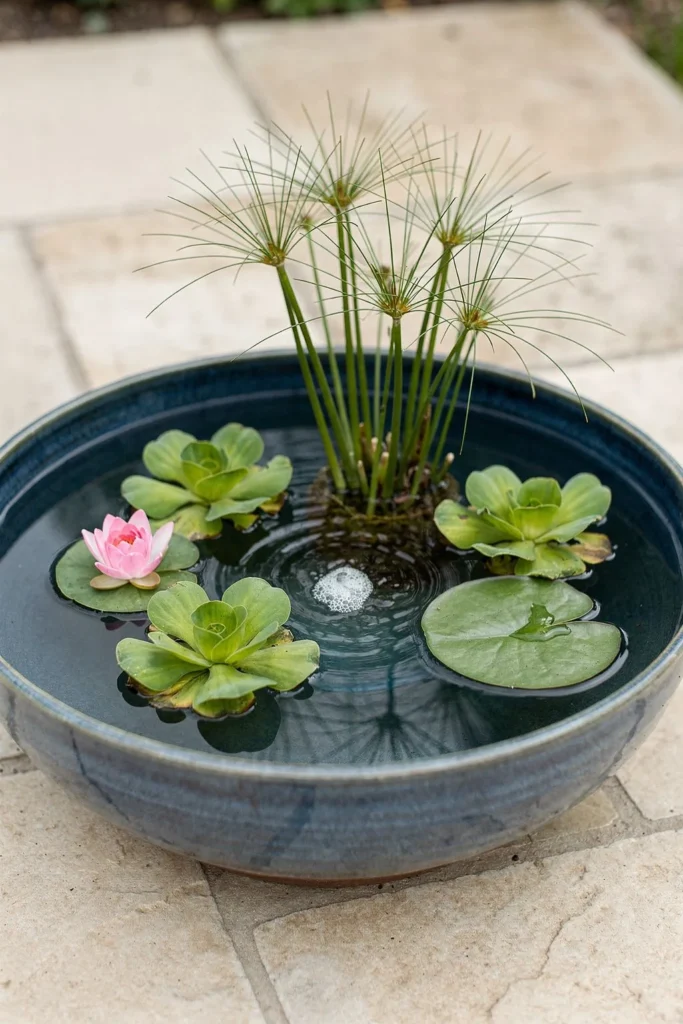
A lanai without a pool can still have the sound and shine of water. A wide glazed bowl 18 to 24 inches across, filled with water and a few floating or marginal plants such as water lettuce, dwarf papyrus or a small water lily, becomes a water garden that fits on the floor or a low stand. A small pump or a solar bubbler keeps the water moving, which keeps it clearer and stops mosquitoes breeding in it.
Water is heavy: each gallon weighs about 8.3 pounds, so a 10 gallon bowl with stones weighs well over 100 pounds when full. Place it before you fill it, on a level floor, and not on a deck section that already carries a hot tub or a heavy grill. Top it up weekly in hot weather, and empty and clean it at the end of the season.
8. Shade-Tolerant Plants for the Back Wall
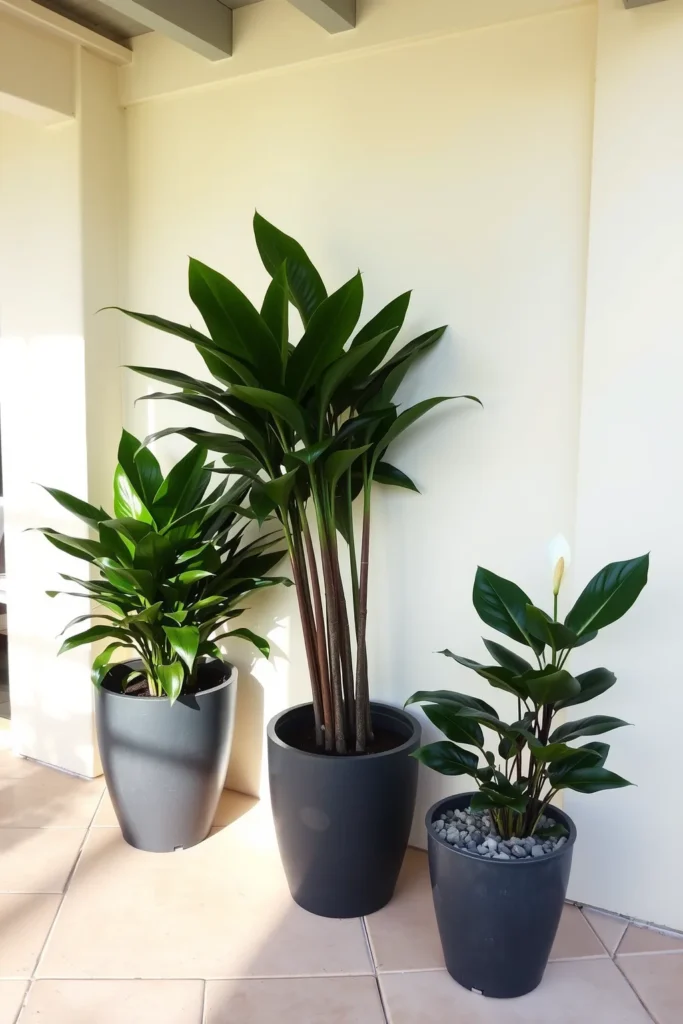
The wall against the house is the hardest spot on most lanais, because it rarely sees direct sun. That is exactly where tough, low-light plants belong. The cast iron plant earns its name in deep shade, the ZZ plant tolerates dim light and missed watering, a peace lily flowers in bright shade, and a bird’s nest fern adds wide, glossy fronds. Calatheas and prayer plants add patterned leaves if the air is humid.
Group them along the wall in two or three pots of different heights, and turn the pots a quarter turn every couple of weeks so they do not lean toward the light. Peace lilies and ZZ plants are toxic to pets if chewed, so put them out of reach if a cat or dog uses the lanai. If one corner is too dark for any living plant, a good quality faux plant is a reasonable answer there; our roundup of faux plant sets covers realistic options, and only UV-rated ones should go anywhere the sun reaches.
9. A Succulent Shelf for the Sunniest Edge
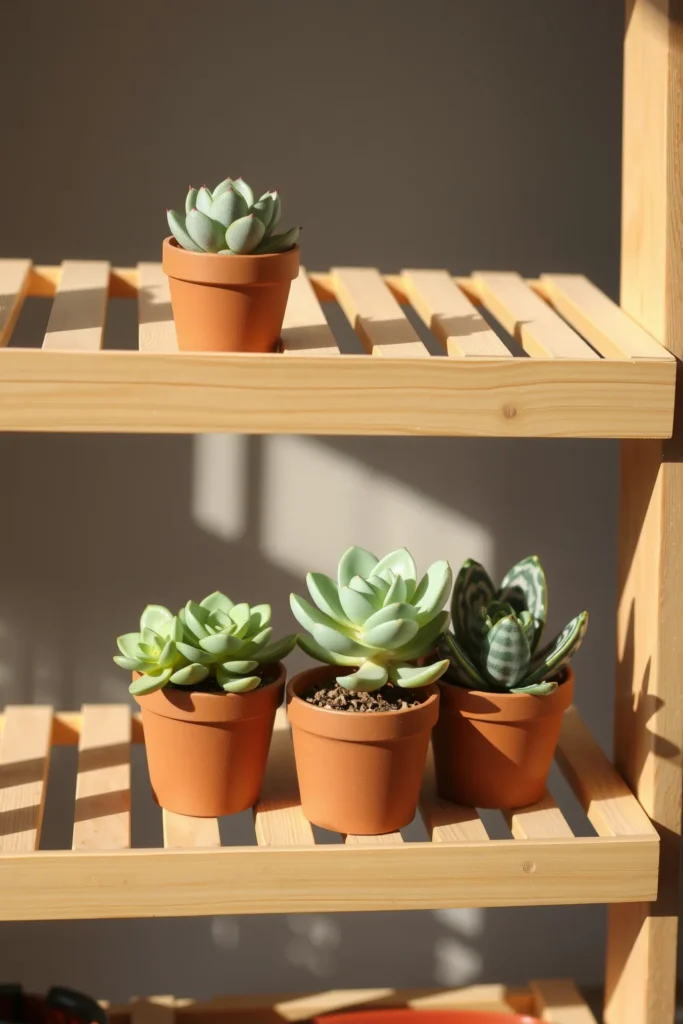
The hottest spot on a lanai, usually the west-facing edge, is where succulents and cacti thrive and most other plants scorch. A slatted wooden or metal plant stand along that edge, with small terracotta pots of aloe, echeveria, jade, haworthia and sedum, makes a low-water display that looks good for months without much attention.
Use a gritty cactus mix and pots with drainage holes; terracotta helps because it lets the soil dry between waterings. The one risk on a lanai is rain blowing in through the screen and keeping the soil wet for days, so set the shelf a foot or two back from the screen if storms often come from that side. Water only when the soil is dry an inch down.
10. A Planter Box at the End of a Bench
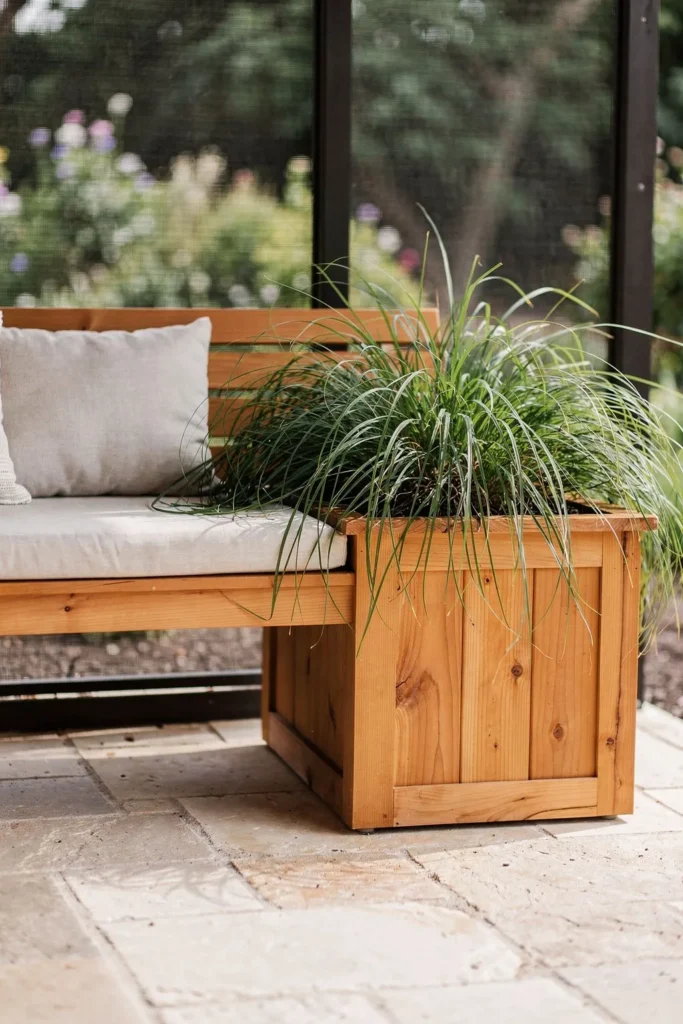
A planter box built or set at the end of a bench joins seating and greenery in one piece of furniture, which suits a narrow lanai where separate pots would crowd the floor. Build the box to the same height as the bench seat, usually 17 to 19 inches, and make it at least 14 to 16 inches deep inside so plant roots have room. Cedar and teak handle outdoor moisture well; line the box with a plastic liner that has drainage holes, so the wood does not sit wet.
Plant it with something upright and tidy, such as ornamental grass, rosemary or a small dwarf palm, so leaves do not spill onto the seat. Leave a gap of a quarter inch or so between the box and the bench, so water drains away rather than soaking the joint. For more on sizing and arranging seating on a lanai, see our guide to lanai furniture.
11. Planters Around a Pool Cage
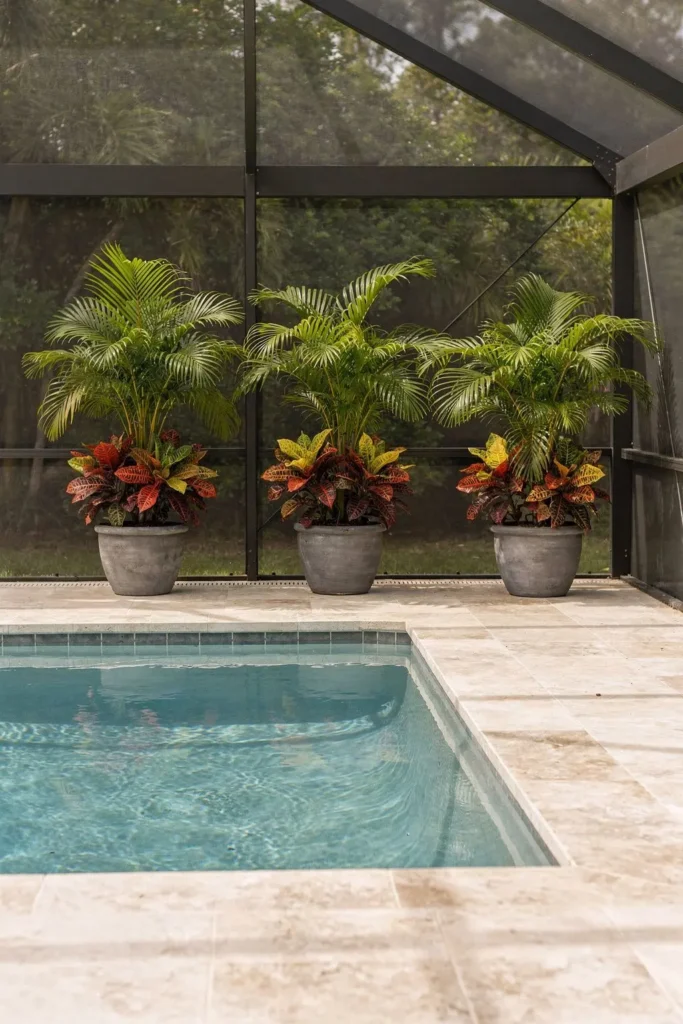
When the lanai encloses a pool, plants soften the large expanse of deck and screen, but the choice of plant matters more than it does anywhere else. Avoid plants that drop leaves, petals or seeds, because they end up in the skimmer and the filter. Bougainvillea, which sheds papery bracts constantly, is the usual mistake. Avoid spiny plants such as agave near walkways and the pool edge, where wet feet and bare skin pass close.
Clean, evergreen plants work better: dwarf palms like the pygmy date palm, crotons, cordylines, sago palms set well back from traffic, and ornamental grasses. Keep pots at least 3 feet back from the pool edge so splashing water and pool chemicals do not reach the soil, and so the walkway around the pool stays clear. Use heavy, wide-based pots that will not tip in a storm or when someone brushes past.
Watering and Upkeep on a Lanai
A lanai protects plants from heavy rain, so even the simplest lanai garden ideas depend on regular care. It means they depend on you for water more than garden plants do. A few habits keep a lanai garden healthy:
- Water by zone, not by schedule. Baskets and pots on the sunny edge may need water daily in summer, while shade plants against the back wall may go a week. Check the soil an inch down before watering.
- Use a drip tray or a watering wand with a gentle flow so water does not splash onto upholstery, screens or the floor.
- Feed lightly during the growing season with a slow-release or diluted liquid fertilizer. Potted plants run out of nutrients faster than plants in the ground.
- Clear fallen leaves weekly. Leaf litter in corners holds moisture, attracts insects and stains floors.
- Watch for pests that like sheltered spaces, such as mealybugs, scale and spider mites. A shaded, still corner suits them, so look under leaves when you water.
- Before a storm, lower hanging baskets and move light pots away from the screen so wind cannot throw them into it.
Putting It Together
The best lanai garden ideas are combined, not stacked: most good lanai gardens use three or four of the ideas above rather than all eleven. A common mix is a layered corner of tropical pots for the main view, two or three hanging baskets to fill the space under the roof, a herb cart near the kitchen door, and a low planting bed outside the screen. Plan the plants around the furniture, not the other way round, and the lanai stays a room to live in rather than a greenhouse.
If your space is an open covered patio rather than a screened lanai, the same zones and clearances apply; our covered patio ideas show how to use them without a cage. And for evenings out among the plants, a set of patio string lights strung along the beams lights the garden without crowding it.
Frequently Asked Questions
What plants grow well on a lanai?
It depends on the zone. Palms, bird of paradise, Boston ferns, pothos and philodendrons suit the bright middle of a lanai. Herbs, succulents, mandevilla and crotons suit the sunny edge beside the screen. Cast iron plants, ZZ plants, peace lilies and bird’s nest ferns handle the shady wall against the house.
How do you make a garden on a lanai?
Map where direct sun falls and for how long, then place each plant in the zone that suits it. Group pots in odd numbers at three heights, keep them 6 to 12 inches off the screen, raise them off the floor on pot feet, and hang baskets only from solid beams or joists.
Can you hang plants from a lanai screen frame?
No. The aluminum screen frame is not built to carry a wet hanging basket, which can weigh 15 to 25 pounds or more. Hang baskets from a solid roof beam or joist with a hook rated for at least twice the wet weight.
What can you plant around the outside of a lanai?
Low plants under about 3 feet, such as ornamental grasses, liriope, dwarf firebush and coontie, with a strip of gravel or mulch 12 to 24 inches wide between the screen and the first plants. The strip keeps soil off the screen and leaves room to clean it.
Do plants need more water on a covered lanai?
Usually yes, because the roof keeps rain off them. Pots and baskets on a sunny edge may need water every day in summer, while plants in deep shade need much less. Check the soil an inch down before watering rather than watering on a fixed schedule.
What plants should you avoid around a pool lanai?
Plants that shed leaves, petals or seeds, such as bougainvillea, because the debris clogs the skimmer and filter, and spiny plants such as agave near walkways. Choose clean evergreens such as pygmy date palms, crotons and cordylines, set at least 3 feet back from the pool edge.