Mixing vintage character with modern function is one of the trickier balancing acts in kitchen design. Lean too far one way and the room reads like a theme-park diner; lean too far the other and the “vintage” shrinks to a single accent shelf lost in a sea of white cabinets. The kitchens that actually work share one trait: one era supplies the personality — a shape, a material, a color — while the other quietly supplies the plumbing, storage, and countertops that make the room usable every day.
Below are twelve distinct ways to combine old and new, from Art Deco marble to Scandinavian simplicity, each with real materials, finishes, and cost ranges that make the look achievable rather than aspirational. A few overlap in spirit — reclaimed wood and brass hardware show up more than once — but each entry has its own defining move, so pick the one or two that fit your space rather than trying to blend all twelve into a single kitchen.
A couple of numbers apply across every style here: base cabinets run about 34.5 inches tall (36 inches once a countertop is on top), and upper cabinets typically sit 18 inches above the counter. Keep those in mind as you plan — in most of these styles, vintage character comes from finishes and hardware, not from resizing the actual bones of the room.
1. Industrial Vintage Fusion
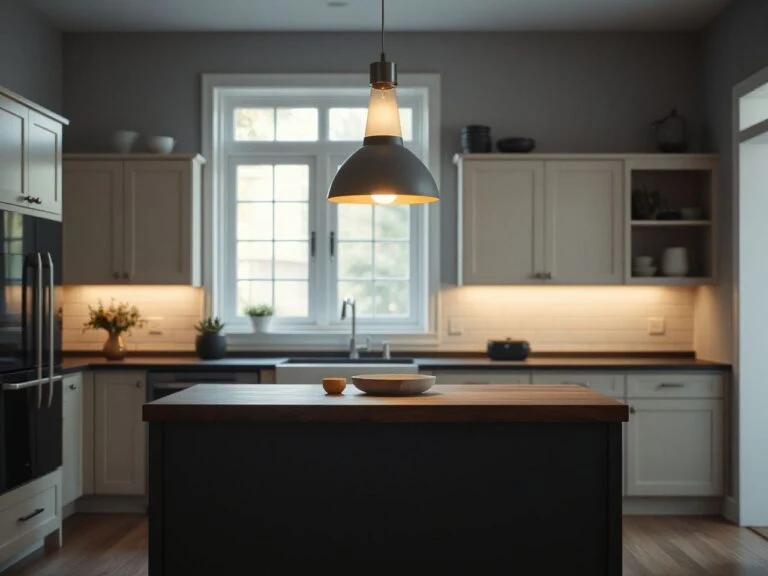
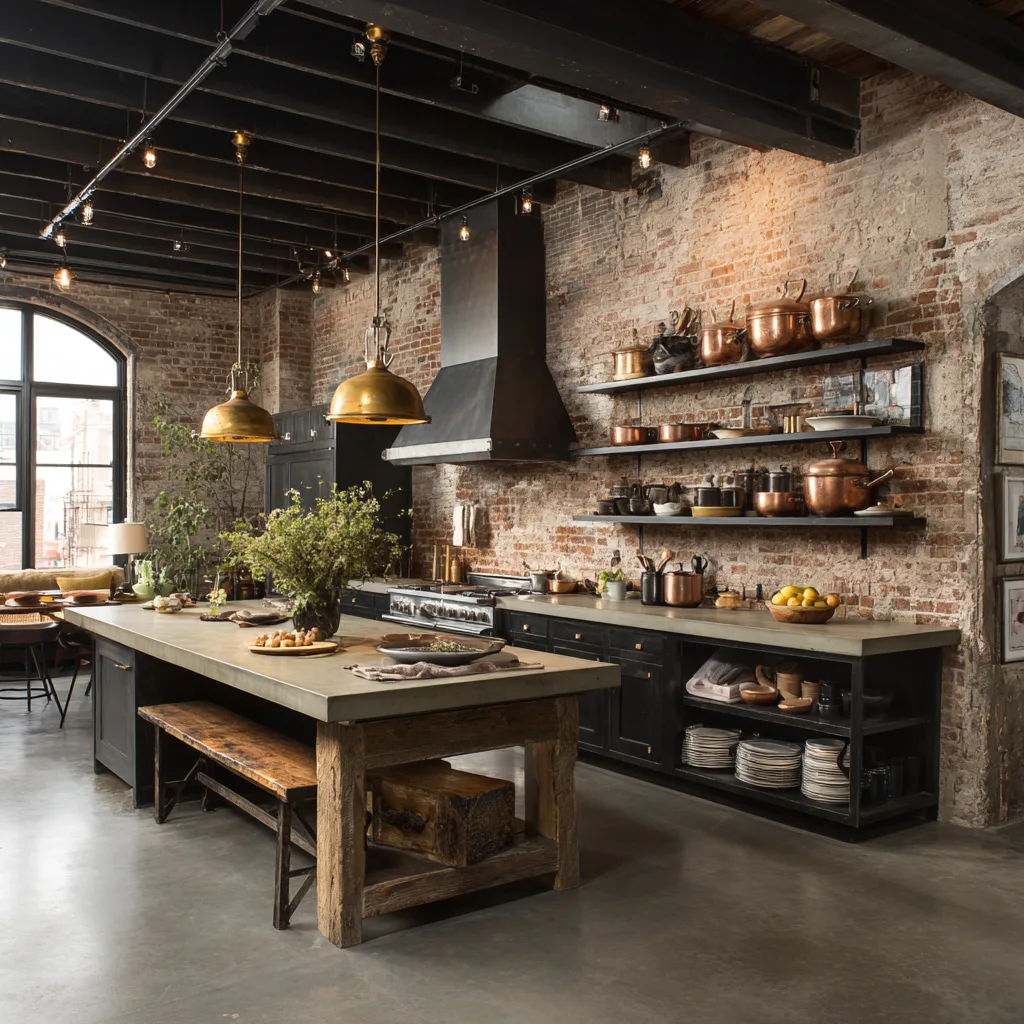
This pairing works because industrial materials are inherently neutral — exposed brick, black steel, and concrete countertops don’t compete with vintage pieces, they frame them. Poured concrete counters run roughly $65-135 per square foot installed, more than butcher block or quartz since they’re typically formed on-site, so if budget is tight, a butcher block island on simple steel legs gets you most of the look for a fraction of the cost. Edison-bulb pendants or cage-style fixtures over the island are the fastest way to signal “vintage” without touching a single cabinet.
Balance the cold materials with warmth: unlacquered brass fixtures, which develop a natural patina over months of use unlike lacquered brass that stays shiny, leather counter stools, and open steel shelving for mismatched vintage dishware. The trade-off with open shelving is real — everything on it collects kitchen grease and dust and needs wiping down weekly, so reserve it for pieces you actually use, not just display.
2. Mid-Century Modern with Walnut and Brass
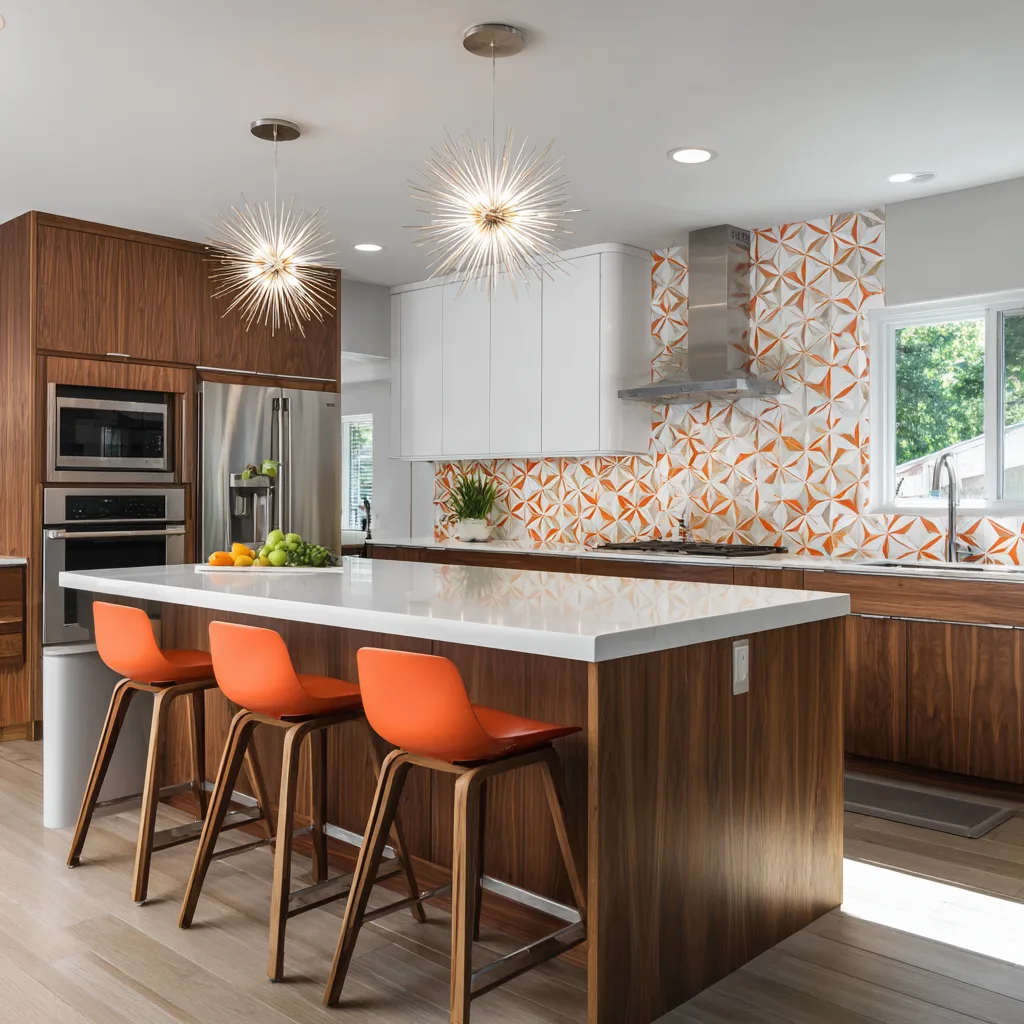
Mid-century kitchens read as vintage-modern almost automatically, because the style’s core ideas — flat-panel doors, tapered legs, minimal ornamentation — were already halfway to contemporary minimalism in the 1950s and 60s. Walnut veneer or solid walnut cabinet fronts with simple bar-pull or finger-pull hardware, and no ornate knobs, is the fastest route to the look. Walnut costs noticeably more than oak or maple, so a common compromise is walnut on a single island or a run of open shelving, with painted or laminate cabinets everywhere else.
Keep the palette restrained: warm wood, white or cream walls, and one accent color used sparingly — mustard, teal, or burnt orange on a backsplash or a set of bar stools — rather than across the whole room. A two-tone geometric tile backsplash reinforces the era without a full cabinet replacement, and at roughly $8-20 per square foot for standard ceramic, it’s one of the more affordable ways to commit to the style.
3. Art Deco Glamour with Modern Efficiency
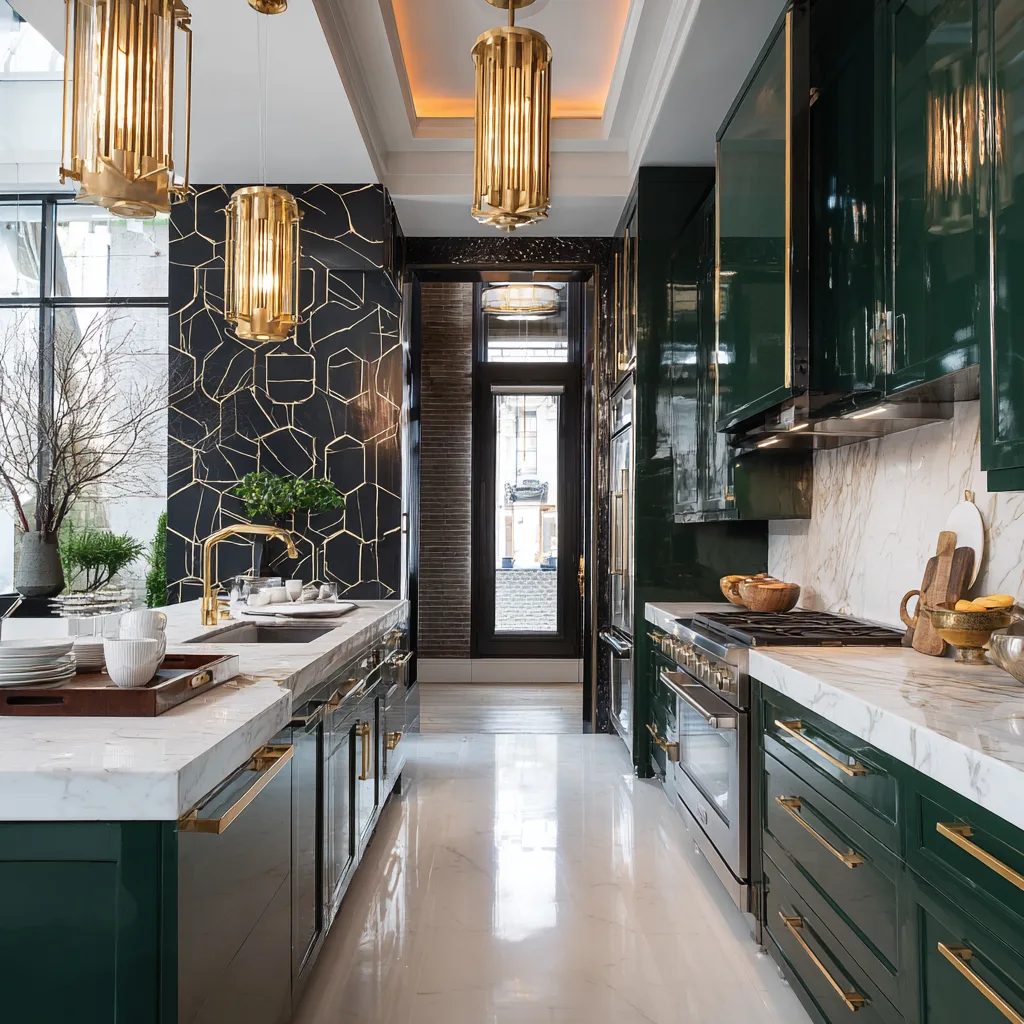
Art Deco is the one vintage style built around dramatic materials rather than folksy ones, which is exactly why it pairs cleanly with a modern kitchen’s smart appliances and integrated storage. The core moves: bold-veined marble or marble-look quartz on countertops and a waterfall island edge, brass or black hardware with geometric rather than floral detailing, and cabinetry in a deep jewel tone — emerald, navy, or aubergine — with a high-gloss or lacquered finish.
Real marble is porous and etches with acid from lemon juice, wine, or vinegar unless it’s sealed regularly, which is the honest trade-off for the look. Quartz gives a similar dramatic vein pattern for about $50-100 per square foot installed with none of the sealing upkeep. A black-and-gold geometric tile backsplash, used as a single accent wall rather than wall-to-wall, keeps the drama contained and the cost reasonable.
4. Scandinavian Vintage Simplicity
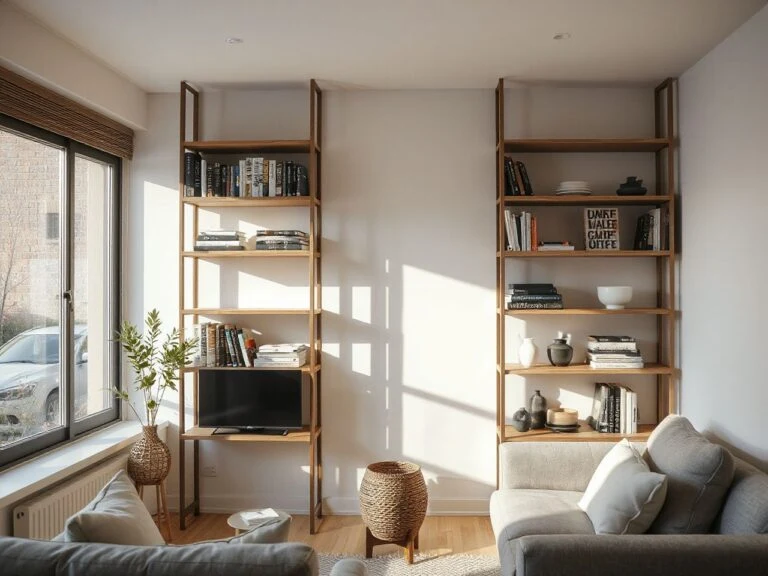
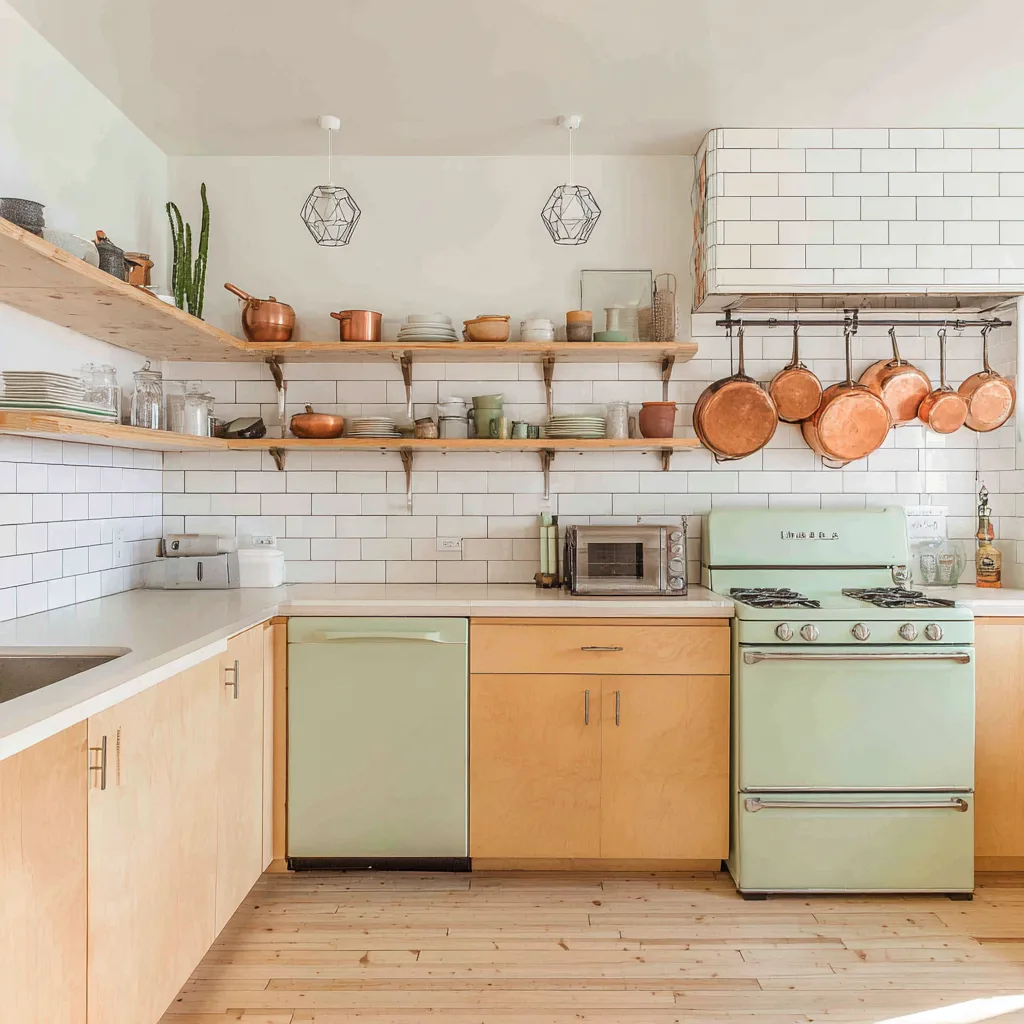
This is the easiest vintage-modern style to get wrong by overdoing it — the whole point is restraint. Light woods, such as birch, ash, or pine, paired with white or off-white surfaces form the base; vintage character comes in through a small number of well-chosen objects — a single copper pot rack, a set of antique cutting boards used as functional wall art, an old enamel pitcher — rather than a collection.
Because the palette is so light, material choice does most of the visual work: choose cabinets in a matte or satin finish, since high-gloss white can read sterile rather than warm, and stick to two or three finishes total — one wood tone, one metal, one paint color. This approach genuinely shines in small kitchens, since a tight, uncluttered palette reads as bigger than the same square footage filled with contrasting colors and busy patterns.
5. Coastal Vintage with Modern Lines
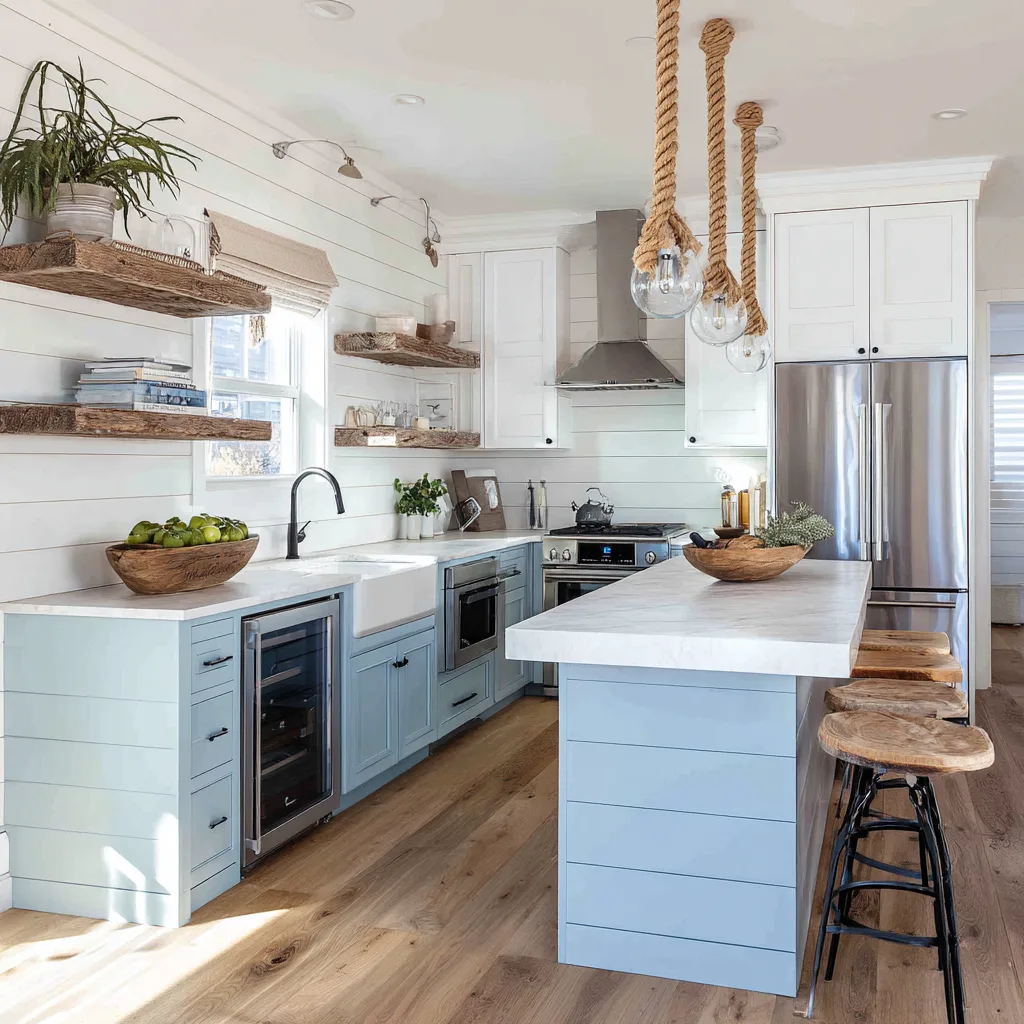
Coastal vintage leans on texture more than color: whitewashed or painted shiplap, rope or jute pulls on drawers, and weathered or driftwood-finish open shelving, all set against clean modern cabinetry and hardware. Soft blues, sandy beiges, and sea-glass green work as accent colors on an island or backsplash, but the base palette should stay mostly white or off-white so the room doesn’t read as themed.
Shiplap costs relatively little to install — roughly $4-9 per square foot for material and basic labor on a single accent wall — which makes it one of the more budget-friendly ways to add vintage texture. Pair it with a simple, unornamented modern faucet and stainless or matte-white appliances so the vintage cues stay in the finishes, not the function.
6. French Country Romance with Contemporary Function
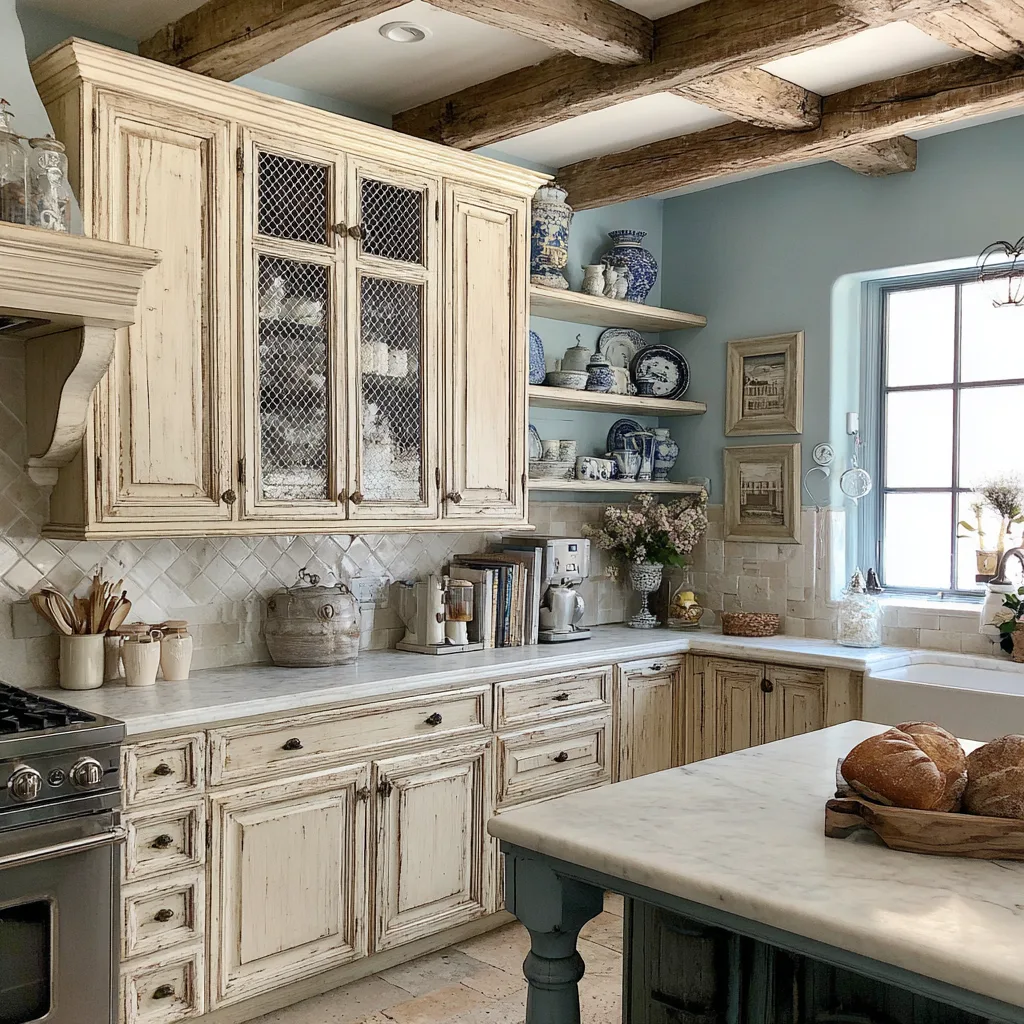
French country style is defined by curves and softened edges: arched cabinet openings, curved corbels under open shelves, and cabinet doors with a raised or beaded panel rather than a flat modern slab. Distressed or glazed painted finishes in soft sage, lavender, or cream read as authentically old without actually being old, and they’re achievable with a cabinet-grade paint plus a hand-applied glaze coat, which most painters can add to a standard cabinet repaint for a modest upcharge.
The modern half of the equation lives entirely in the layout and appliances: an efficient work triangle between sink, stove, and refrigerator, integrated or panel-covered appliances, and pull-out organizational drawers hidden behind the ornate doors. A wrought-iron pot rack and simple pendant lights add period detail without any structural changes.
7. Victorian Elegance with Modern Technology
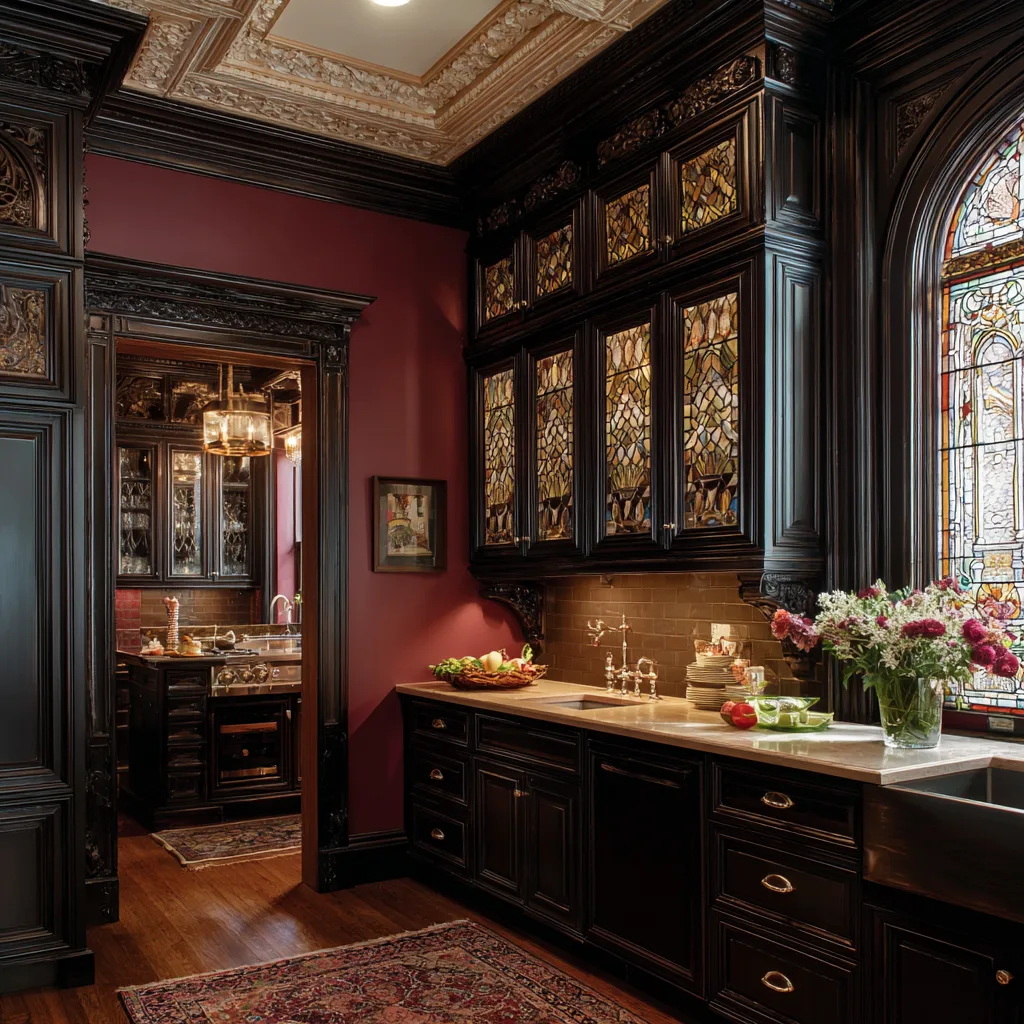
Victorian kitchens work as a vintage-modern base only if the home has some of the bones already — high ceilings, original molding, or a butler’s pantry — since the style depends on architectural detail more than surface finishes. Where those details exist, keep them and build around them: deep colors like burgundy, forest green, and navy on lower cabinets, brass or aged-copper hardware, and a single stained-glass or leaded-glass cabinet insert as a focal point rather than covering every door.
The modern-technology half should stay mostly invisible — an integrated panel-front refrigerator, a hidden charging drawer, or a slide-out trash and recycling system tucked behind a period-appropriate door front. The goal is a kitchen that reads as historic at a glance but functions like any other, with concealed storage and an efficient appliance layout.
8. Retro Americana with Smart Storage
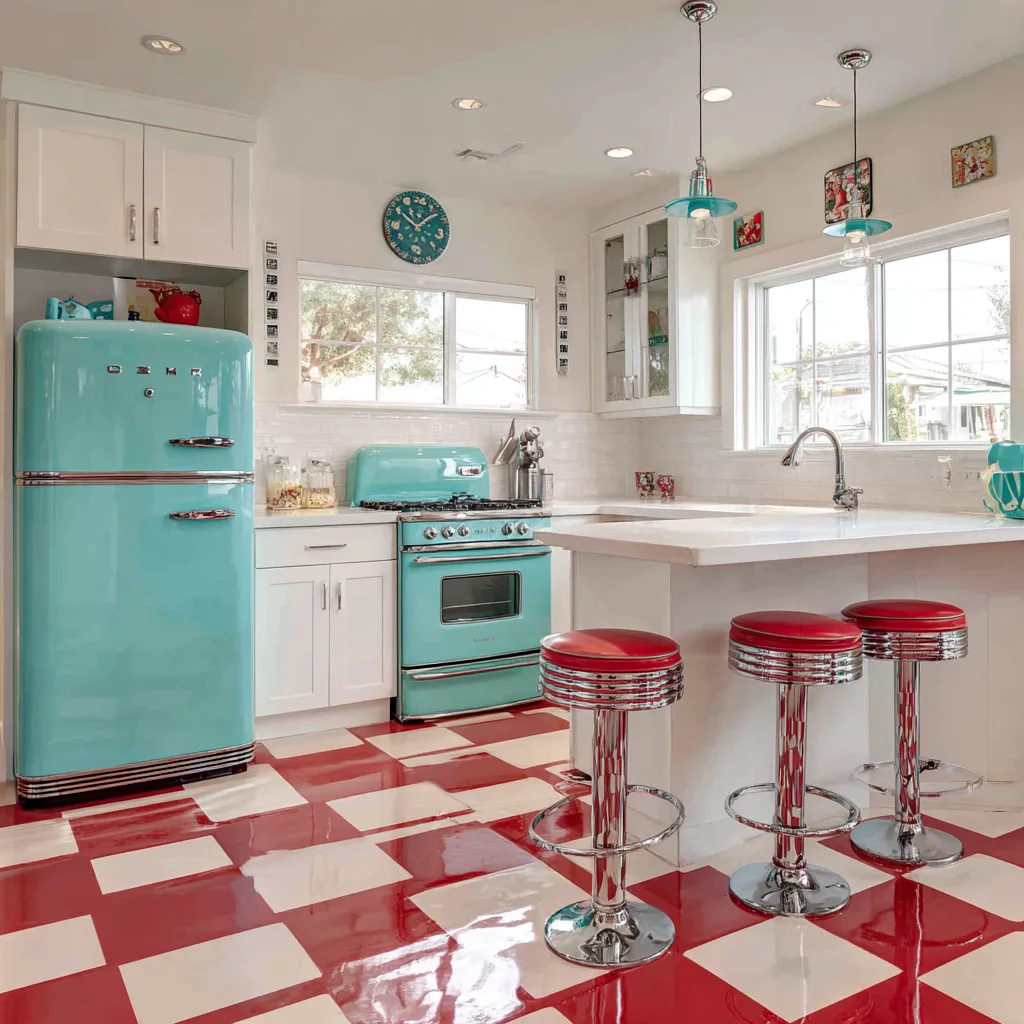
This is the boldest color option on the list, closer to a 1950s diner than a traditional vintage look: black-and-white or red-and-white checkerboard flooring, chrome-trimmed bar stools, and appliances or accents in turquoise, red, or yellow. Because the palette is so saturated, the safest approach is to commit fully in a contained area — the flooring, or a run of lower cabinets — while keeping counters, upper cabinets, and walls neutral so the look doesn’t overwhelm the room or date quickly.
Vinyl composition tile in a checkerboard pattern costs considerably less than ceramic and is genuinely period-accurate for the era, at roughly $2-7 per square foot for material. Behind the retro surfaces, build in real function: a pull-out pantry, dishwasher drawers under the counter, and a deep drawer for pots rather than a lower cabinet with a single shelf.
9. Bohemian Eclectic Meets Modern Minimalism
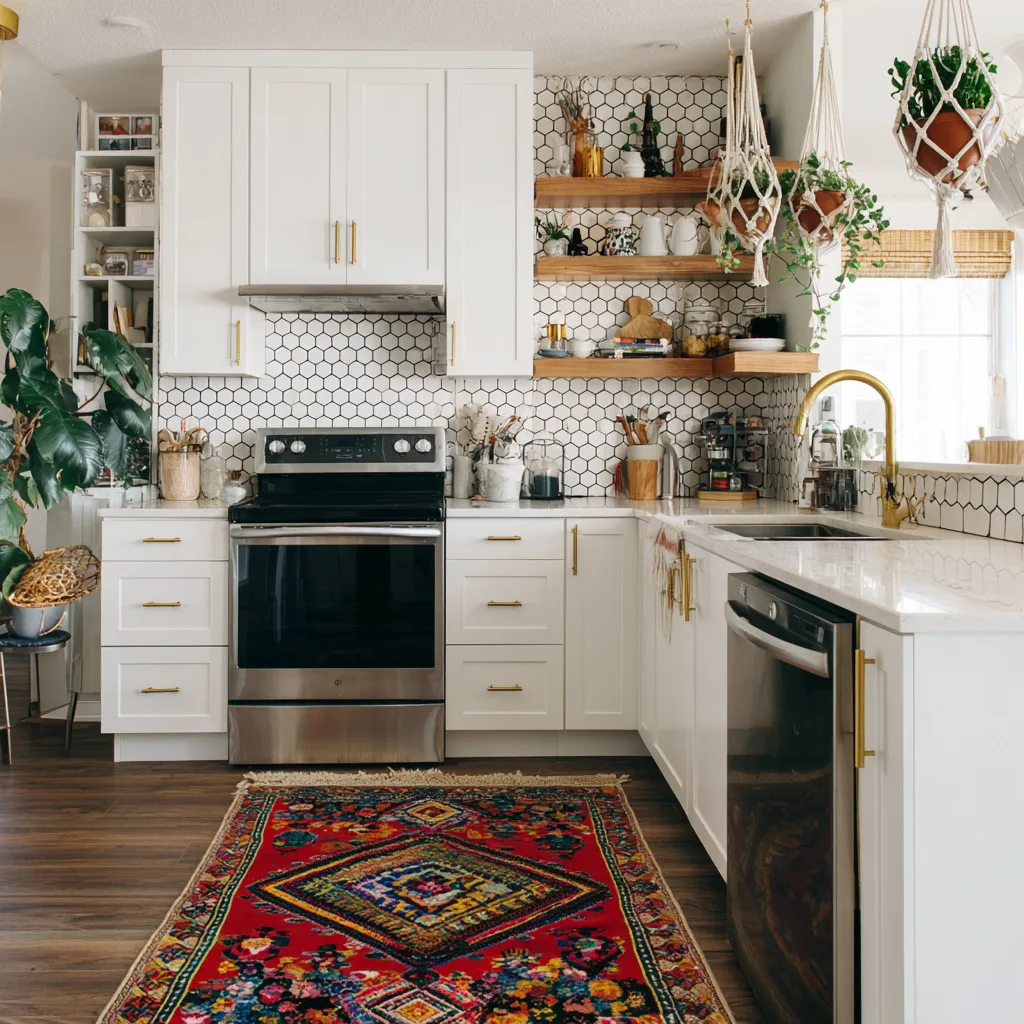
Boho kitchens rely on pattern and warmth: a vintage kilim runner on the floor, hand-painted or zellige tile on the backsplash, a macramé plant hanger by the window, all set against otherwise simple, flat-front cabinetry so the space doesn’t tip into visual overload. Zellige and other handmade tile cost meaningfully more than machine-made subway tile — roughly $15-40+ per square foot versus $5-15 — and have more grout lines to clean, since each tile is slightly irregular by nature.
A practical middle ground is using the handmade or patterned tile as a smaller accent, behind the range only or as a single shelf backsplash, and keeping the rest of the kitchen in plain paint or subway tile. Warm terracotta, teal, and mustard work well as the one or two pattern colors; resist adding a third.
10. Mediterranean Vintage with a Contemporary Layout
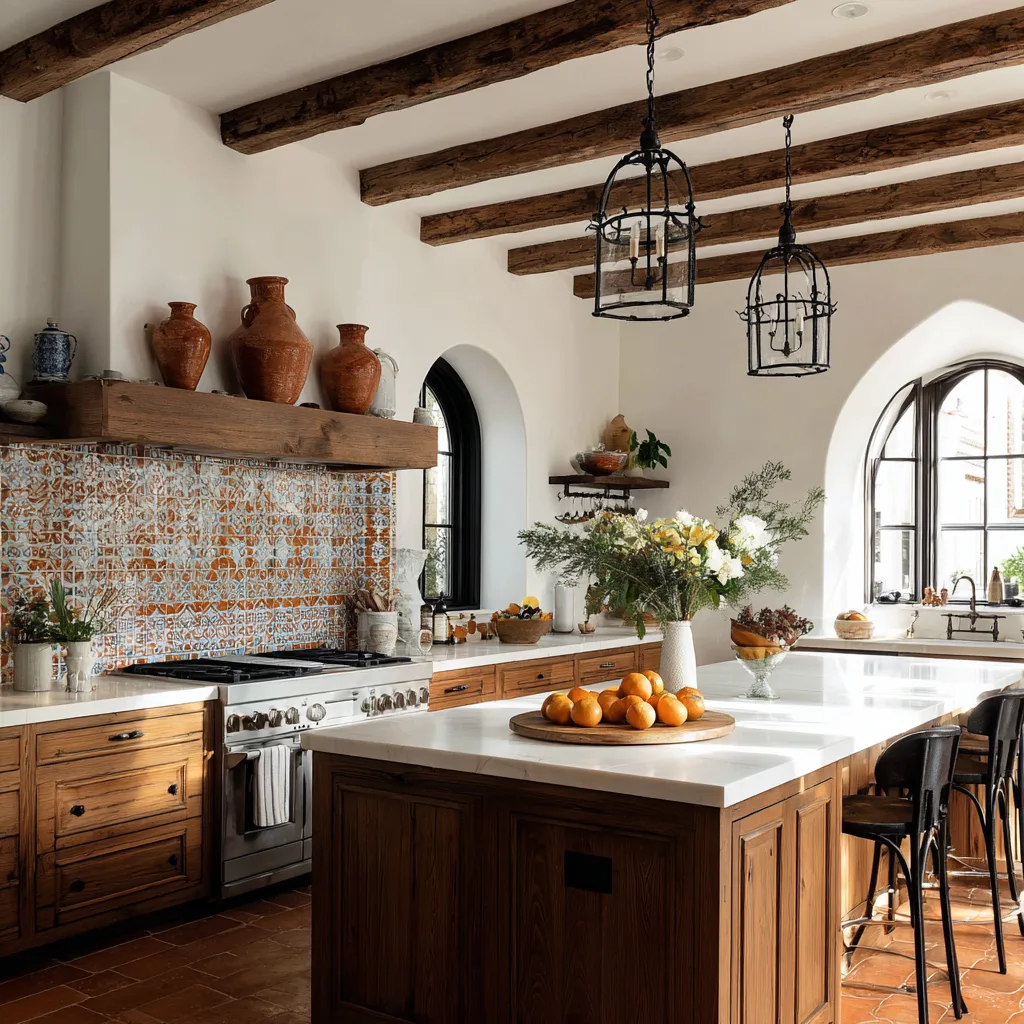
Mediterranean style leans on warm, sun-baked materials — terracotta tile, hand-painted ceramic accents, wrought iron, and exposed wood beams — paired with a straightforward, efficient modern layout. Terracotta flooring and backsplash tile is porous like natural stone and typically needs sealing at installation and again every year or two, which is the real maintenance trade-off for its warmth and texture. A terracotta-look porcelain tile skips the sealing requirement entirely if low maintenance matters more than authenticity.
Keep cabinetry simple and light, in a warm white or muted sage, so the terracotta, tile, and iron details carry the vintage character rather than fighting with an equally busy cabinet finish. A single wrought-iron pot rack or light fixture is usually enough — Mediterranean style overdone quickly starts to look like several unrelated styles stacked together.
11. English Cottage Meets Contemporary Clean
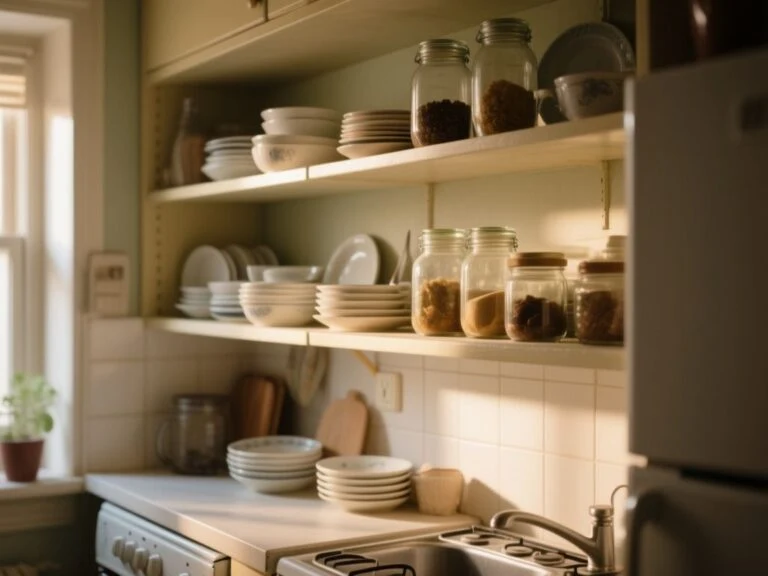
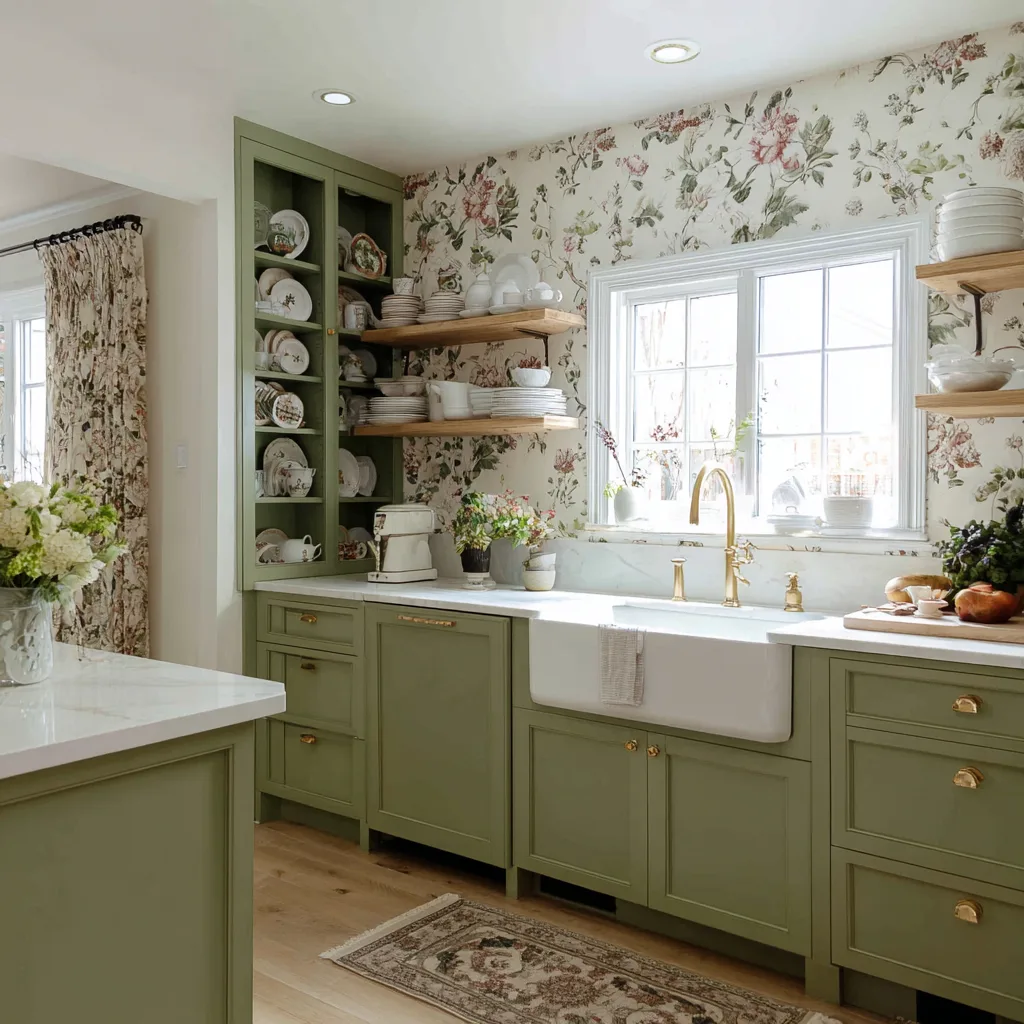
The English cottage look is built on open shelving displaying real, used china rather than decorative-only pieces, a farmhouse or apron-front sink, and soft, worn-in colors — dusty pink, sage, or cream — rather than crisp modern white. Open shelving does double duty as storage and display here, but the same trade-off applies as in any style: dishes on open shelves collect dust and airborne grease and need a rinse before use even when they look clean.
An apron-front sink is the single most identifying element. A 30 to 36-inch cast iron or fireclay farmhouse sink runs roughly $600-1,800 depending on material, plus a base cabinet modified to fit it, since standard base cabinets need retrofitting for an apron sink’s different mounting. Pair it with a simple modern faucet in brass or matte black rather than an ornate period reproduction, which keeps the contemporary-clean half of the equation intact.
12. Minimalist Vintage with Smart Technology
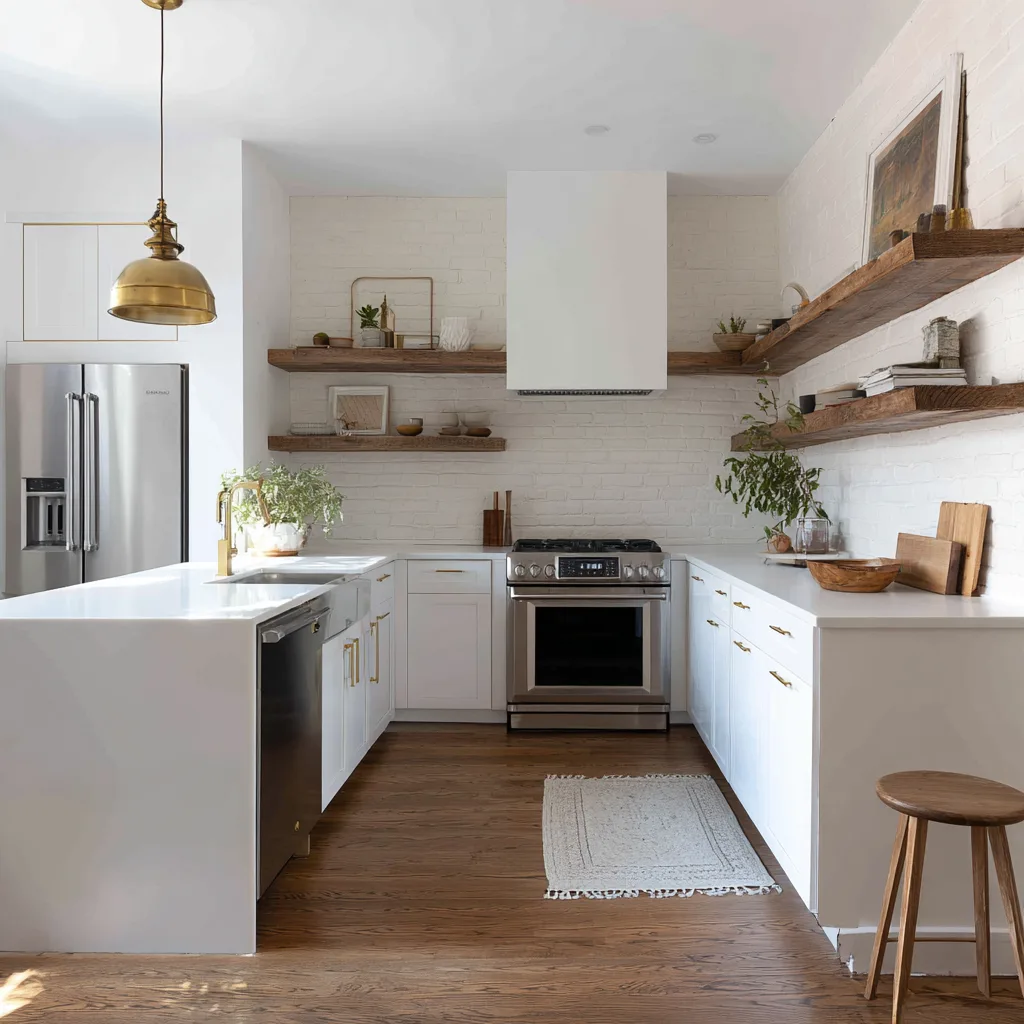
This approach flips the usual vintage-modern ratio: instead of a modern shell with vintage accents scattered throughout, it’s a genuinely minimal, mostly modern kitchen with one or two carefully chosen vintage objects doing all the character work — a single aged brass pendant, a reclaimed wood island top, or one antique scale left out as a functional object rather than décor.
Because there’s so little going on, material quality matters more here than in any other style on this list. A cheap laminate next to a genuine vintage brass fixture reads as mismatched immediately, while real wood, stone, or well-made reproduction hardware holds up next to the vintage piece. Keep the palette to white, gray, and one wood tone, and resist adding a second statement vintage piece — the whole approach depends on restraint.
Bringing It Together
The common thread across every style here is proportion, not the age of the objects. Vintage-modern kitchens work when one era handles character — a color, a material, a fixture — and the other handles function: layout, appliances, and storage. Pick a lane rather than borrowing a little from all twelve, and let the practical bones of the room, like standard cabinet heights, an efficient work triangle, and good task lighting, stay modern even when the finishes look decades old.
Start with one high-impact, lower-cost change — a lighting swap, a hardware update, or a single accent wall — before committing to a full cabinet or countertop replacement. It’s the cheapest way to test whether a style actually suits how you use your kitchen day to day, not just how it photographs.
FAQ
How much does a vintage-modern kitchen update typically cost?
It depends almost entirely on scope. Paint, hardware, and lighting changes on existing cabinets can run a few thousand dollars total; a full renovation with new custom cabinetry, stone countertops, and vintage or reproduction fixtures more commonly lands in the $25,000-$60,000+ range, with cabinetry usually the largest single line item. Starting with hardware and lighting is a standard, lower-risk way to test a direction before committing to full cabinetry.
Where do I find genuinely old vintage pieces versus reproductions?
Architectural salvage yards, estate sales, and antique shops are the usual sources for authentic vintage lighting, hardware, and small fixtures. Reproduction pieces from lighting and hardware manufacturers are a reasonable substitute when you want a consistent finish or can’t find the real thing — they cost less than true antiques and skip the maintenance or rewiring concerns that genuinely old electrical fixtures can carry.
Should vintage or modern elements dominate the space?
As a rule of thumb, let one era do most of the work — usually modern, since it handles daily function — and treat the other as the accent. A kitchen that’s roughly 70-80% one style, with the rest as vintage or modern counterpoint, tends to read as intentional; splitting closer to 50/50 more often reads as visually busy rather than curated.
What’s the most common mistake when mixing vintage and modern?
Spreading vintage touches evenly across every surface instead of concentrating them in one or two focal points. A kitchen with a vintage light fixture, vintage hardware, a vintage rug, and vintage dishware all competing for attention usually looks cluttered rather than curated. Choosing one or two vintage focal points and keeping everything else clean and modern almost always reads better.