
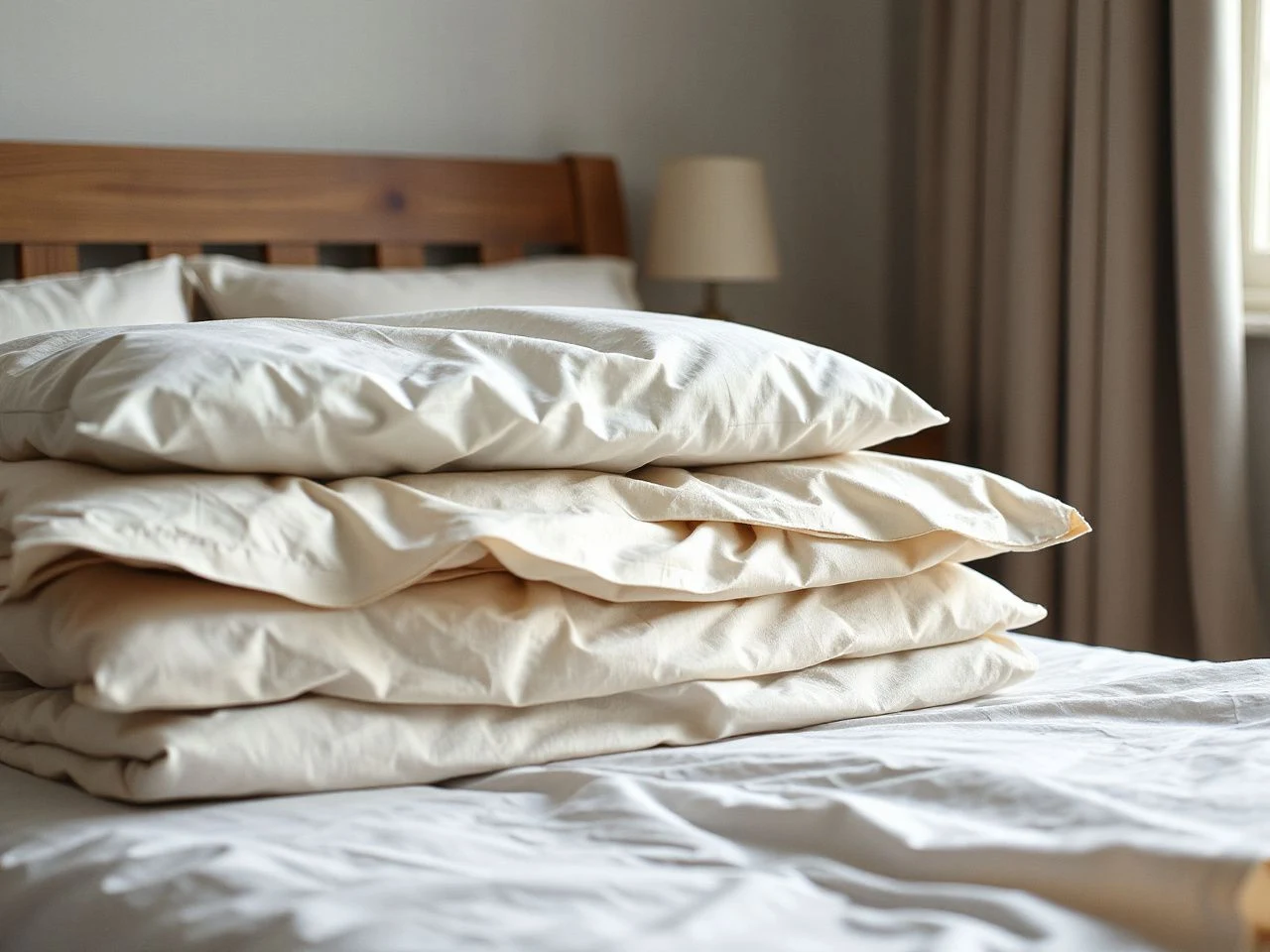
Bedding conversations have shifted from simple fiber labels toward the details that determine how a bed actually works in a small home: weave, fabric weight, moisture handling, washing, and layering. A useful comparison separates the raw fiber from the finished fabric: cotton percale, cotton sateen, linen, and lyocell can behave very differently because weave, weight, and finishing change airflow, moisture handling, texture, and care needs. It also treats sheets, insulating layers, and duvet fills as separate decisions, because a material that feels cool and comfortable next to the skin may be a poor choice for warmth, loft, or repeated washing. That is the practical starting point for choosing the best bedding material for your room rather than chasing a universal winner.
As a small-space realist, I start with the bed’s job and the room around it. A compact bedroom with limited laundry storage needs bedding that can be washed, dried, folded, and stored without creating a second furniture problem. The label matters, but the construction matters just as much.
Key Takeaways
- Sheets, blankets, and duvet fills need different materials because skin comfort, insulation, loft, and care are separate requirements.
- Cotton percale, cotton sateen, linen, and Tencel lyocell offer different textures and moisture behavior even when their fiber labels sound equally appealing.
- Choose by sleeping climate, sensitivity, laundry routine, and available storage; certifications can add useful information but do not replace the care label.
What the best bedding material depends on
The phrase “best bedding material” hides several decisions. A sheet sits against the skin and needs a pleasant hand feel, manageable moisture, and a construction suited to regular laundering. A blanket needs body and insulation. A duvet or comforter fill needs loft, warmth, and a construction that keeps the fill distributed. Treating all three as one category leads to predictable mistakes.
A fiber is the basic material used to form yarn. Cotton, linen, hemp, wool, and regenerated cellulose are fiber categories. A fabric is the structure made from those yarns or filaments. Percale and sateen describe cotton fabric constructions, while a knit structure behaves differently from a woven sheet. A duvet filling is separate again: down and feather fill, wool, or a synthetic filling sits inside a shell and performs a different job from the fabric touching your body.
Fiber content alone cannot predict the finished bedding experience. Yarn quality, thread count, fabric weight, weave, knit structure, finishing treatments, and stitching can alter texture, airflow, moisture handling, shrinkage, pilling, and care demands.
Start with the bedding component
For sheets, focus first on surface feel, breathability, moisture management, and washing instructions. For blankets, look for the insulation and weight that suit the room. For duvet inserts, consider fill construction, loft, warmth, and how the item will be stored in a small closet.
Down and feather fill can provide substantial warmth and loft, but those materials may be unsuitable for people with particular allergies, animal-fiber sensitivities, or ethical concerns. Wool can also provide substantial warmth, while its animal origin makes the care label and personal tolerance important. A duvet cover changes the surface touching the sleeper, but it does not change the fill’s core characteristics.
A duvet cover should be selected for skin comfort and laundry practicality, while the insert should be selected for warmth, loft, and fill preferences. That separation prevents a breathable sheet from being asked to solve a cold-room problem or a thick duvet from being blamed for a rough sheet.
Climate is a better starting point than trend language
Hot sleepers generally need a sheet fabric that allows air movement and handles moisture without feeling heavy. Cotton percale and linen are sensible places to begin comparing because their fabric structures are associated with a crisp or textured hand rather than a dense, smooth surface. Tencel lyocell is another option to examine when a smooth feel and moisture handling matter.
No fiber guarantees a cool night’s sleep. A dense weave, heavy finishing, thick mattress protector, warm duvet, or poorly ventilated room can change the result. The complete sleep system matters more than a label printed on the fitted sheet.
Cold bedrooms require more insulation than a sheet can provide. Cotton sateen may feel smoother and more substantial than percale, but a warm blanket or duvet insert does the main insulating work. Wool and down and feather fill can provide substantial warmth, yet personal sensitivity, care requirements, and ethical preferences remain part of the decision.
The best bedding material for a cold bedroom is often a combination rather than one fiber: a comfortable sheet, an insulating middle layer, and a duvet fill suited to the sleeper. The mattress, protector, room temperature, and layering system all influence the final result.

How cotton, linen, hemp, lyocell, and bamboo differ
The most useful comparison stays close to the finished fabric. Cotton percale, cotton sateen, linen, hemp fabric, Tencel lyocell, and bamboo viscose are not interchangeable simply because each appears in bedding descriptions.
Cotton percale
Cotton percale is a cotton fabric construction commonly associated with a crisp, lighter-feeling surface. Its appeal is straightforward: the fabric gives sheets a fresh hand feel and suits sleepers who dislike a slick surface. The cotton fiber itself does not tell you the entire story, because yarn quality, weight, finishing, and construction still affect the result.
Machine washing is suitable for cotton, but the care label remains the controlling instruction. Cotton can shrink or become rough when laundering conditions do not suit the specific finished fabric, and fabric softener can leave a coating that changes the hand feel. A small-space laundry routine should account for drying space and folding volume rather than focusing only on the first touch.
Cotton percale is a fabric construction, not a separate fiber. That distinction explains why two cotton sheet sets can feel noticeably different despite having similar labels.
Cotton sateen
Cotton sateen is a cotton fabric construction with a smoother, more polished hand feel than percale. It may appeal to sleepers who prefer softness and a less crisp surface. Its feel can also make a bed seem visually fuller, which matters in a compact room where the bed occupies much of the visible space.
Sateen should not be treated as a guaranteed warmth solution. The finished weight and the rest of the bedding system still determine how the bed behaves. Check the care label, avoid assuming that a high thread count means better construction, and consider how the fabric will feel after repeated washing rather than judging only by showroom smoothness.
Linen
Linen has a distinctive texture and a relaxed appearance. That texture can be appealing when a bedroom needs visual interest without adding bulky decoration. Linen may also suit sleepers who prefer a less polished surface, but comfort is personal: a textured fabric can feel inviting to one person and distracting to another.
Linen bedding often needs careful attention to the label because shrinkage, drying, and finishing can change the final feel. Do not assume that a rumpled appearance signals poor care, and do not assume that a smooth finish will remain unchanged after laundering. In a small home, linen’s storage needs deserve the same attention as its appearance.
Hemp fabric
Hemp fabric belongs in the comparison because it is a plant-based textile with a distinct hand feel. The finished bedding can vary according to yarn, weave, weight, and finishing, so the fiber name alone cannot tell you whether the surface will feel soft, textured, crisp, or dense.
Read the full fiber and care information rather than relying on a short sustainability phrase. Hemp fabric may be blended with other fibers, and the blend changes both the feel and the maintenance routine. The listing should make that clear; if it does not, the missing information is a reason to pause.
Tencel lyocell
Tencel lyocell is a regenerated cellulose fiber used in smooth bedding fabrics. The term describes the fiber category and branded fiber name, while the final sheet still depends on weave, weight, yarn, and finishing. Lyocell can appeal to sleepers who prefer a soft, smooth surface and moisture-aware bedding.
A smooth hand feel is not proof that a sheet is naturally cooler, safer, or easier to care for. Follow the care label, wash with suitable detergent, and avoid assuming that all lyocell sheets can be treated like cotton. The manufacturer does not always provide enough detail about finishing, so the label and complete fiber content deserve close attention.
Bamboo viscose
Bamboo sheets are generally made from regenerated cellulose, such as bamboo viscose, rather than woven directly from raw bamboo stalks. The same naming issue applies to eucalyptus-branded sheets: the finished textile usually refers to a regenerated cellulose process, such as viscose or lyocell, rather than fabric made directly from the named plant.
Bamboo sheets have moisture-wicking properties, but that description does not settle every comfort question. Weave, weight, finishing, mattress protection, and duvet layers still affect how a sleeper experiences the bed. The fiber story and the finished fabric story need to be read together.
Microfiber and other synthetic fabrics
Microfiber sheets are made from finely woven synthetic fibers. They can offer a smooth surface and a straightforward care routine, but natural fiber is not automatically cooler or safer, and synthetic fiber is not automatically inferior. The relevant questions are the finished fabric’s feel, moisture handling, care label, finishing treatments, and response to your skin.
People with sensitive skin may want to limit fragrances, dyes, residual detergent, and certain finishing chemicals regardless of whether the fabric is natural or synthetic. A natural fiber can still be irritating if the finish or laundry residue does not suit the sleeper.

How weave, finishing, and washing change bedding
Fiber is only the raw material. Weave determines how yarns intersect, knit structure determines how loops behave, and finishing can change the surface. Those details influence whether bedding feels crisp, smooth, textured, dense, fluid, or brushed.
Why cotton percale and sateen feel different
Cotton percale and cotton sateen can begin with the same fiber but produce different surface experiences because they are different fabric constructions. Percale is commonly chosen for a crisp hand, while sateen is commonly chosen for a smoother hand. Neither label alone tells you the final weight or exact finishing treatment.
Thread count can provide context, but it is not a complete quality measure. Yarn quality and fabric construction matter alongside the count. A higher number cannot rescue a poor fit, unsuitable care routine, or uncomfortable finish.
Why bedding pills, sheds fibers, shrinks, or turns rough
Pilling happens when loose fibers work their way to the surface and form small balls through friction. Friction can come from sleeping, washing, contact with rough surfaces, or rubbing against another layer. A fabric’s fiber mix, yarn quality, construction, and finishing influence how noticeable pilling becomes.
Shedding can occur when loose surface fibers remain after manufacturing or laundering. Shrinkage reflects changes in the textile during washing and drying, while roughness can result from residue, harsh care, finishing changes, or the natural surface of a textile. The precise cause cannot be identified from a short product description alone.
Follow the care label, use the recommended wash setting, and avoid adding fabric softener unless the manufacturer allows it. Fabric softener can coat fibers and alter absorbency and surface feel. Do not use a hotter setting, longer cycle, or harsher product simply to make laundry feel more thorough.
Care by material category
- Cotton: Machine washing is suitable for cotton, but the care label sets the appropriate cycle, temperature, and drying method for the finished item. Allow enough room for sheets to move freely rather than compressing them into an overloaded drum.
- Linen: Follow the label closely and expect the finished texture to be part of the fabric’s character. Avoid treating a linen item as though it were a heavy cotton towel.
- Lyocell and bamboo viscose: Check the label before washing or drying because regenerated cellulose fabrics can have specific care requirements. Smoothness does not mean the textile can tolerate every laundry setting.
- Hemp fabric: Review the blend and construction because care can differ between a pure textile and a blended one. Store it dry and fully aired before folding.
- Wool: Use only the care method stated by the manufacturer. Wool bedding may require more careful handling than a machine-washable sheet.
- Down and feather fill: Care depends on the shell, fill construction, and label. Do not treat a duvet insert like a sheet simply because both are part of the same bed.
A small-space laundry plan should include the fitted sheet, top sheet, cover, blanket, and insert as separate loads or care categories. If a large item cannot dry properly in your available space, the care routine may become the main source of discomfort and replacement expense.
Choosing bedding for heat, cold, skin, and allergies
For hot sleepers
Hot sleepers should begin with a breathable sheet fabric and then inspect the layers above it. Cotton percale, linen, and Tencel lyocell are useful materials to compare because they offer different combinations of surface feel and moisture handling. Bamboo viscose may also appeal to someone seeking a smooth sheet with moisture-wicking properties.
The sheet cannot compensate for a heavy duvet insert, thick protector, or dense pile of decorative layers. Remove unnecessary layers first, then compare the remaining sheet fabrics. A cool-looking bedroom can still contain a warm bed if the cover, insert, and mattress layers trap heat.
For cold bedrooms
Cold sleepers should evaluate the insulating layer separately from the sheet. Wool and down and feather fill can provide substantial warmth, but the right choice depends on personal sensitivities, ethical preferences, fill construction, care instructions, and available storage.
Cotton sateen may provide a smooth, more substantial surface, but sheets are not the main source of loft. A duvet insert or blanket supplies that function. Choose a sheet for contact comfort and a fill for insulation rather than expecting one material to do both jobs.
For sensitive skin
People with sensitive skin may prefer a simple, clearly labeled fabric with few added treatments and a laundry routine that removes residue. Natural fiber is not automatically safer, and synthetic fiber is not automatically unsuitable. Residual detergents, fragrances, dyes, and finishing chemicals can matter regardless of fiber origin.
OEKO-TEX Standard 100 addresses harmful substances in tested textile components; the organization provides information through its main site at OEKO-TEX. The certification is useful context, but it does not tell you whether percale, sateen, linen, or lyocell will feel comfortable against your skin.
GOTS addresses organic textile processing requirements across its defined supply chain and is distinct from OEKO-TEX Standard 100; details are set out by the Global Organic Textile Standard. Certification language should be read alongside the exact fiber content and care instructions.
For allergies and animal-fiber concerns
Down and feather fill and wool may be unsuitable for people with particular allergies or animal-fiber sensitivities. The shell, fill construction, and care label matter because a duvet’s surface fabric does not erase the nature of the material inside.
If animal fibers are a concern, compare non-animal alternatives by their full fiber content, surface feel, care needs, and warmth description. Do not infer suitability from the words “natural,” “plant-based,” or “hypoallergenic” without checking what the listing actually defines.
For general household product safety information, the U.S. Consumer Product Safety Commission is the relevant government body for consumer product safety oversight. Certification and government information can clarify claims, but neither replaces the bedding manufacturer’s care label.
Long-term cost, storage, and replacement decisions
Long-term cost is more than the purchase price. A material that needs special washing, careful drying, or extra storage space may demand more time and equipment. A fabric that pills, shrinks, or becomes uncomfortable may also be replaced sooner, although a product listing rarely provides enough evidence to predict its lifespan.
Start with the laundry system you already have. Measure the storage space, consider where a duvet insert will be kept, and check whether large bedding can dry fully without blocking a doorway or radiator. In a small bedroom, a bulky warm layer can be useful at night and awkward every other hour.
Care instructions should be treated as part of the material specification. A sheet that requires gentle handling is not necessarily a poor choice, but it may be a poor fit for a household that needs straightforward machine washing. Cotton is suitable for machine washing, yet the finished item still needs its own label followed.
Replacement planning also affects which bedding belongs in the home. One versatile sheet system may be easier to store than several seasonal sets. A washable cover can protect a duvet insert from frequent laundering, while a mattress protector adds another layer that changes the feel and moisture path of the bed.
For a wider look at how bedding labels, construction, and household fit affect a purchase, the best bedding brands guide for 2026 can sit alongside this material-first approach. Use it to investigate construction and care details, not as a substitute for reading the individual specification.
A practical selection sequence
- Identify the layer: Decide whether you are choosing a sheet, blanket, duvet cover, or duvet fill.
- Identify the climate: Note whether the room and sleeper run warm, cool, or change across seasons.
- Read the construction: Check fiber content, weave or knit, fabric weight if listed, finishing language, and fill construction.
- Check sensitivity: Review animal fibers, dyes, fragrances, finishing claims, and certifications that address your concerns.
- Check the care label: Confirm washing, drying, and storage requirements before deciding that the material fits your household.
- Check the room: Measure storage space and laundry capacity, especially for bulky inserts and blankets.
The strongest choice is the one that solves the actual problem without creating a new one. A breathable sheet will not warm a cold bedroom. A lofty duvet will not make a rough pillowcase pleasant. A certified textile will not automatically match your preferred texture.
Frequently Asked Questions
What is the best bedding material for hot sleepers?
Hot sleepers should compare cotton percale, linen, Tencel lyocell, and bamboo viscose by finished fabric rather than fiber label alone. Weave, weight, finishing, mattress protection, and duvet layers affect the final result. Cotton percale and linen offer distinct, less polished surfaces, while lyocell and bamboo viscose provide smooth options with moisture-related claims. The coolest choice is the one that suits the complete bed system.
What bedding material works best in a cold bedroom?
A cold bedroom usually needs a warm blanket or duvet fill rather than a different sheet alone. Wool and down and feather fill can provide substantial warmth, but allergies, animal-fiber sensitivities, ethical concerns, fill construction, and care labels matter. Choose the sheet for contact comfort and the insulating layer for loft and warmth. Cotton sateen may suit a smoother surface preference but is not a replacement for insulation.
Are bamboo and eucalyptus sheets made directly from those plants?
Usually, those labels refer to regenerated cellulose such as bamboo viscose or eucalyptus-related lyocell rather than fabric woven directly from raw plant material. The process and finished construction matter. Check the full fiber content, weave, finishing, and care label. A plant name does not prove that the sheet is cooler, safer, more durable, or easier to wash.
Which bedding material is suitable for sensitive skin or allergies?
No single fiber suits every sensitive sleeper. Review the full fiber content and avoid unwanted fragrances, dyes, residual detergent, or finishing chemicals. OEKO-TEX Standard 100 and GOTS address different parts of textile information, so read their claims carefully rather than treating either as a comfort guarantee. Down, feather, and wool may be unsuitable for people with specific animal-fiber allergies or sensitivities.