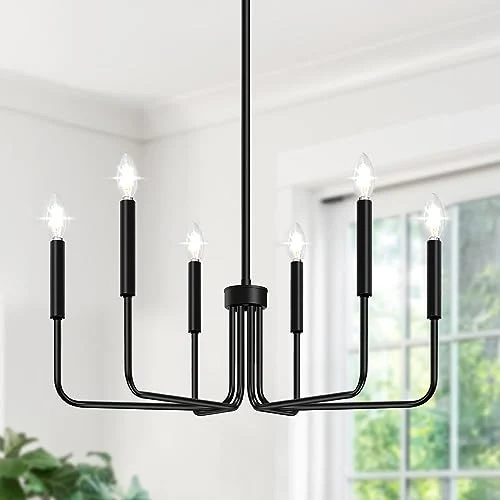
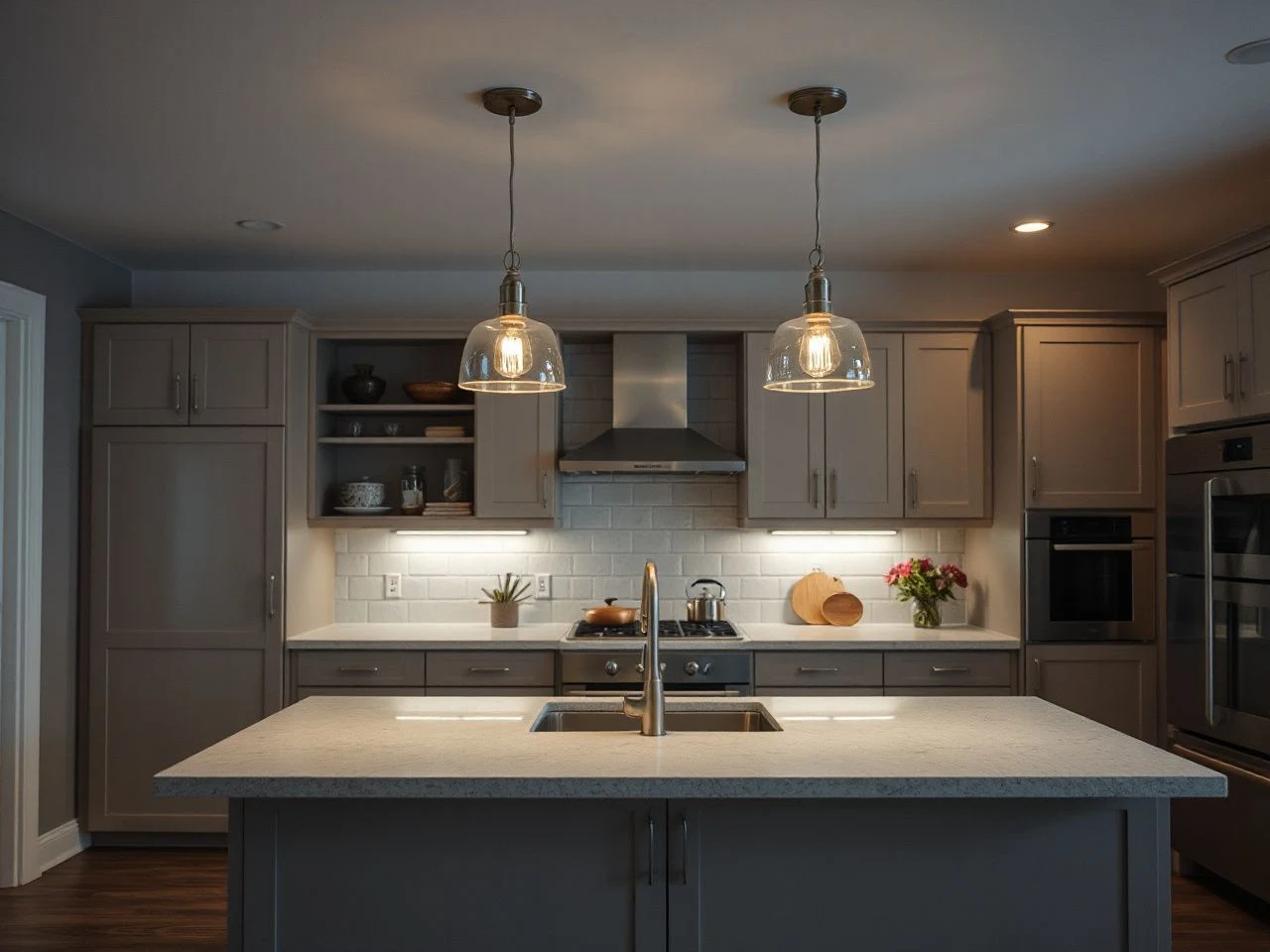
A pendant can clear the countertop and still feel wrong. A low shade may interrupt conversation, an exposed lamp may glare into seated eyes, and a canopy can leave the fixture visually disconnected from the island. For pendant-light height over an island, the key distinction is between a pendant’s measured clearance above the island and the visual sightline created by its shade, lamp, and canopy; a technically clear fixture can still feel intrusive or produce glare. The guide should evaluate the island’s working surface, seated and standing views, ceiling and fixture proportions, and the location of the junction box as one installation rather than treating hanging height as an isolated figure.
Use the countertop as the main reference point, then check the floor clearance and the ceiling junction box. The general starting range is 28–38 inches above the countertop, with 30–32 inches often serving as a sensible first placement for an island installation. My assembly-sceptic rule is simple: judge the hardware and adjustment method before trusting the polished photograph.
Key Takeaways
- Measure from the countertop to the base of the pendant, not from the ceiling.
- Begin within 28–38 inches above the island surface and refine the position for sightlines.
- Shade depth, exposed lamps, ceiling shape, and the junction box affect the final hanging position.
- Use adjustable cord or stem hardware where possible, and ask a qualified electrician to handle wiring changes.
Beginner: Set the pendant-light height over an island
Step 1: Measure from the countertop
The useful measurement is from the finished countertop surface to the lowest part of the pendant. That lowest point may be the bottom of a shade, the end of a diffuser, or an exposed lamp. Measuring from the ceiling tells you how much cable or stem is visible, but it does not tell you how much working clearance remains above the island.
Kitchen island pendants are commonly positioned 28–38 inches above the island surface. A starting point of 30–32 inches gives you a practical place to assess the room before making a final adjustment. Treat that figure as the beginning of the installation, not a substitute for checking the shade and sightline.
A countertop-to-fixture measurement is the clearest way to compare pendant positions because the countertop is the surface the light serves. Floor height can still help as a secondary check: a commonly accepted pendant placement leaves 72 inches of clearance from the floor. The countertop measurement remains more useful for judging the relationship between the light and the island.
A kitchen island pendant should be measured from the countertop to the fixture’s lowest point because that distance controls working clearance and visual interruption.
Step 2: Check the standing and seated views
Stand at the island and look toward the opposite side. Then sit in the usual seating position and look across the countertop. The bottom of the shade should not sit directly across the line of sight between people who use the island. A pendant that looks balanced from the room entrance may feel low when someone is seated beneath it.
Check the lamp from each approach rather than from one central position. An exposed lamp can create glare even if the pendant has adequate clearance, while an opaque or deep shade can block conversation across the island. The visible hardware also matters: a long stem, oversized canopy, or heavy shade can make the pendant feel lower than its measured position suggests.
Step 3: Read the ceiling and island together
Ceiling height changes how much cable, stem, and canopy the eye sees, but the correct countertop clearance does not become automatic just because the ceiling is high. A tall ceiling may tolerate a more substantial fixture visually, while a lower ceiling can make the same shade feel crowded. The island’s width, seating arrangement, and task-lighting needs must be considered at the same time.
Sloped or vaulted ceilings require a separate check. The canopy needs to sit correctly against the ceiling, and the cord or stem must hang in a way that keeps the pendant visually aligned with the island. Do not assume that a centered ceiling point is centered over the working surface; the ceiling junction box may have been placed for an earlier layout.
Ceiling height, island size, and pendant scale should be evaluated as one composition because a technically correct clearance can still produce a heavy or disconnected appearance.
Step 4: Locate the junction box before fixing the position
Find the ceiling junction box before deciding where the pendant will hang. The box determines where the electrical cable is available, and the existing support may not align with the island’s current centre. A pendant can be visually centred over the countertop while the junction box sits elsewhere, but that change may require new wiring, support, or a different installation method.
Ask a qualified electrician to check the ceiling junction box, wiring method, structural support, and any relocation work. The U.S. Consumer Product Safety Commission publishes consumer electrical-safety information at cpsc.gov, and that government guidance is a useful reference alongside the fixture instructions.
Do not treat a decorative canopy as a solution to every wiring problem. The canopy may conceal a connection point, but it does not automatically make an off-centre box safe or structurally suitable. The hardware must match the ceiling condition and the fixture’s instructions.
A ceiling junction box that is not centred over the island should be assessed by a qualified electrician before the pendant position is changed.
Intermediate: Refine the height for shade, glare, and conversation
How shade shape changes the visual position
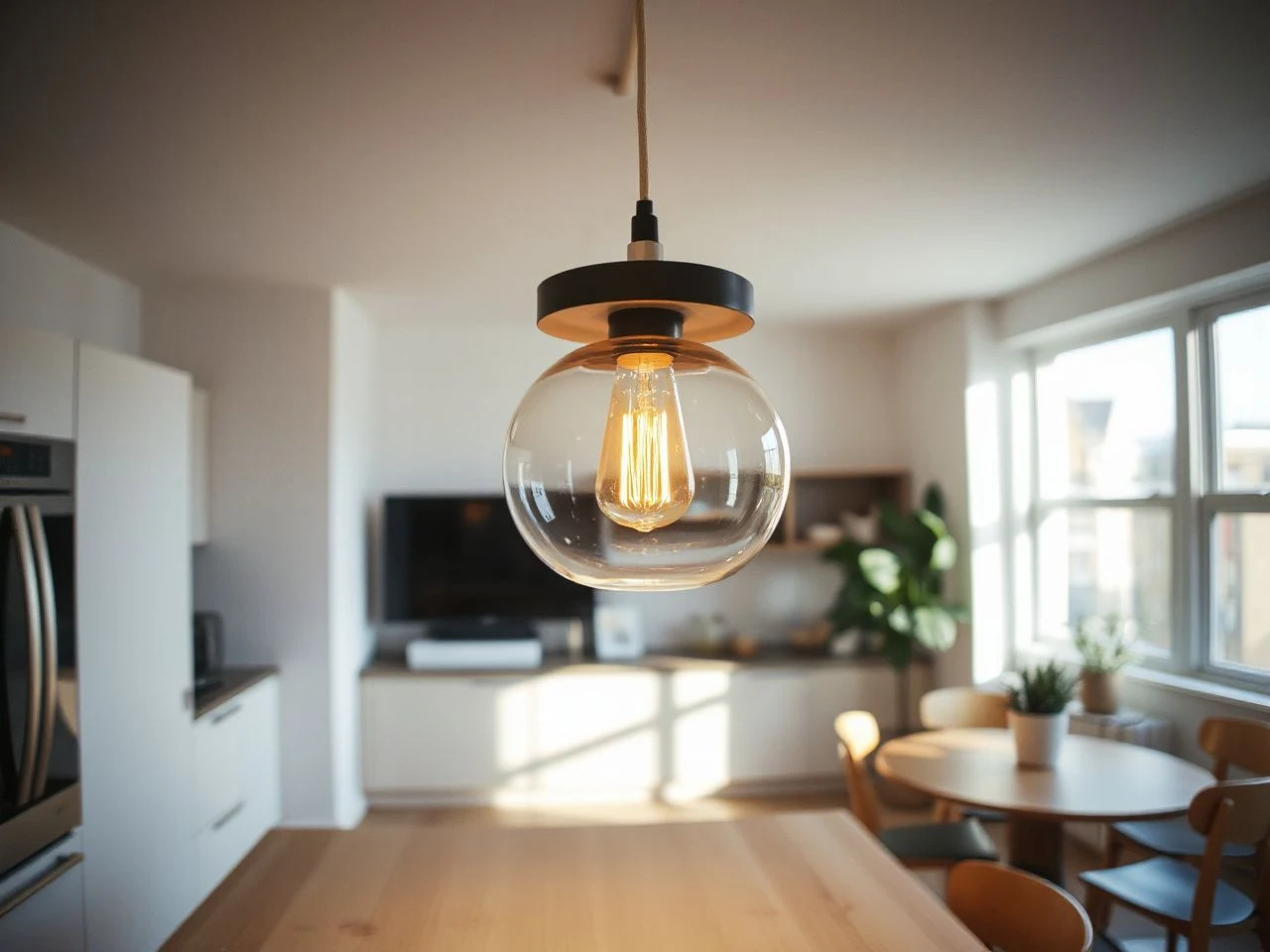
The shade’s lowest edge is the point that most affects sightlines, but its width and shape change how prominent that edge feels. A broad shade occupies more of the visual field, while a narrow shade may leave conversation clearer at the same countertop clearance. A deep shade can hide the lamp from some angles and create a darker underside; an open shade may spread light widely but expose the lamp to direct view.
Consider the shade dimensions before shortening or lengthening the cord. The measured distance from countertop to shade is only one part of the decision. The pendant canopy, visible cable, stem, shade profile, and lamp all contribute to the fixture’s overall hanging position.
A large pendant should not be judged by its clearance alone because its visual weight and shade profile can make the island feel crowded even when the measurement sits within the accepted range.
Control glare before lowering the fixture
Glare often leads people to lower or raise a pendant without identifying the real source. Start by checking whether the lamp is visible from seated eye level, whether the shade directs light toward the eyes, and whether a glossy countertop reflects the lamp. The result can be uncomfortable even when the island surface is well lit.
Changing height may move the lamp out of one person’s view while placing it into another’s. A dimmer switch can help when the pendants provide task lighting during food preparation and softer ambient light at other times, but dimming does not correct a lamp that remains directly visible or a shade that blocks conversation.
Layered kitchen lighting should be considered alongside island pendants. If the pendant is doing all the work, owners may keep it brighter than the room needs, increasing glare. If other lighting is available, a lower setting may make the island comfortable while retaining useful light on the countertop.
Keep multiple pendants visually consistent
Multiple pendants should normally hang at the same height when they share one island and one visual role. Matching heights make the installation read as a deliberate line, while uneven positions can look accidental unless the ceiling or fixture design clearly calls for variation.
Spacing is a separate decision from height. A commonly used centre-to-centre separation for multiple pendants is 75–80 cm, or approximately 30 inches. Measure from the centre of one pendant to the centre of the next rather than from shade edges, because different shade widths can make edge-to-edge gaps misleading.
Check the total arrangement against the island rather than spacing fixtures only from one another. A row can have consistent centre spacing and still sit too close to an end, too far toward one side, or directly over a seating position that needs a clear view.
Multiple pendants over one island usually look more orderly when their lowest points align and their centre spacing is judged against the island’s usable length.
Use the assembly hardware as a design clue
This is where I become sceptical. A pendant with a beautiful shade but a crude adjustment system can create more trouble than its appearance suggests. Inspect the cord grip, stem connection, canopy fasteners, strain relief, and any locking mechanism before deciding that the fixture is easy to position.
An adjustable cord or stem system makes later height changes easier. A fixed installation may require rewiring or replacement parts, so the initial position deserves more careful checking. Look for instructions that explain how excess cable is handled and whether the canopy can sit securely after adjustment. The finish is visible, but the hardware determines whether the pendant stays where it was placed.
An adjustable suspension system is valuable because kitchen layouts and sightlines can change after seating, stools, or other lighting are added.
For a broader discussion of the central measurement, see Island Pendant Light Height Explained: A Practical Guide. Use that reference to confirm the basic clearance, then return to the room and judge the actual sightline created by your shade.
Advanced: Solve difficult layouts and installation conditions
When the junction box is off-centre
An off-centre ceiling junction box creates two separate questions: where the pendant should appear visually, and how the electrical connection can reach that position safely. A decorative canopy may cover a limited area, but moving the fixture away from the box can involve cable routing, structural support, and ceiling repair.
Mark the island’s visual centre on the countertop and project that point upward. Compare it with the junction box. If the points do not align, pause before drilling, extending, or hiding cable. A qualified electrician should determine whether the box can be relocated or whether another approved method suits the ceiling and fixture.
The U.S. Consumer Product Safety Commission provides public electrical-safety resources through its official website; those resources do not replace an electrician’s assessment of a particular junction box or support arrangement.
Sloped and vaulted ceilings
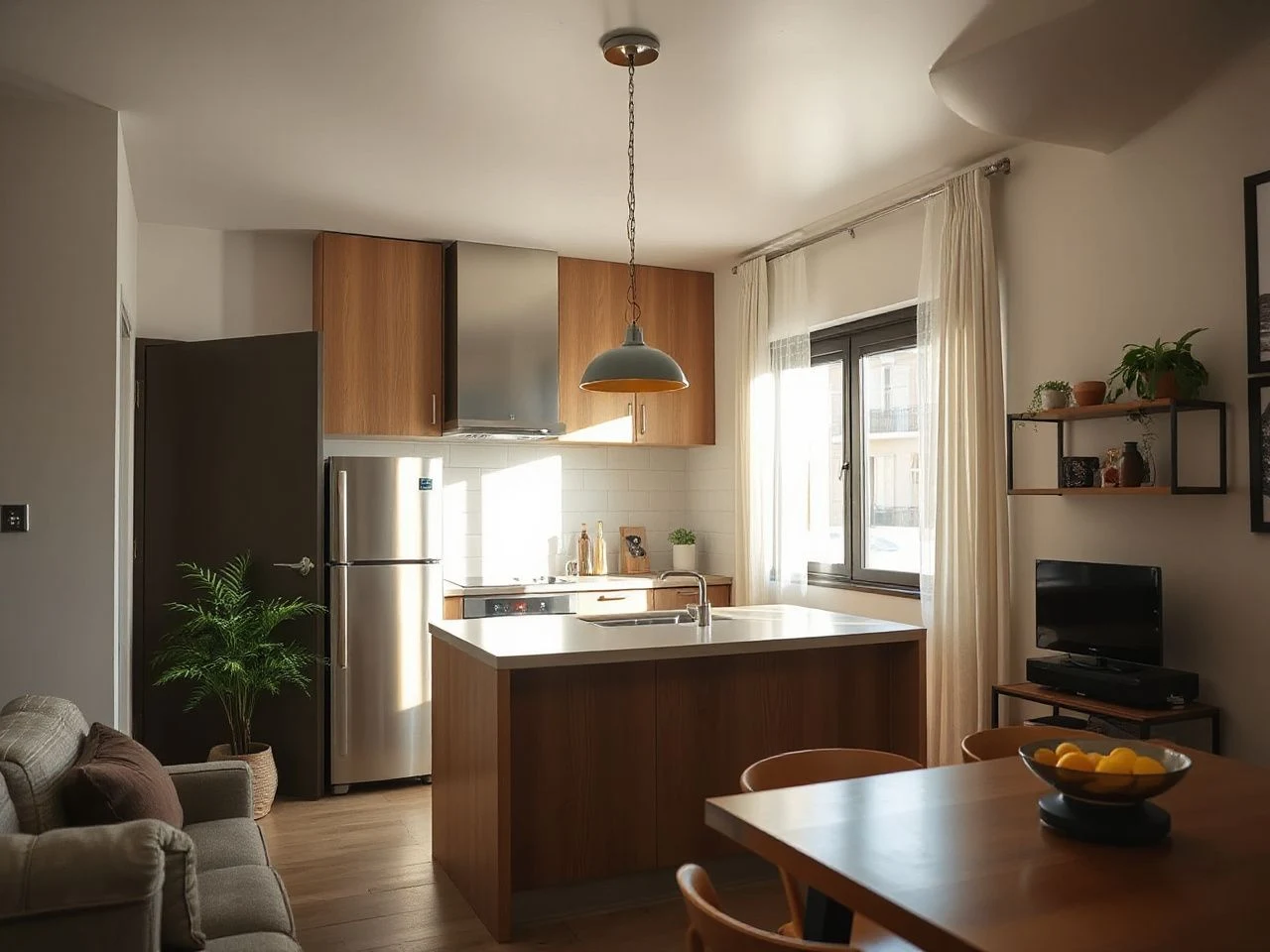
A sloped ceiling can make a pendant appear off-centre even when the island and fixture are aligned on the floor plane. The canopy angle, suspension hardware, and visible length of the stem or cord all affect the result. A vaulted ceiling can also make a modest pendant seem visually lost, while a large shade may dominate the room.
Use the same countertop clearance as the starting reference, then inspect the fixture from the main approach to the kitchen. The pendant should relate to the island below rather than to the highest point of the ceiling. If the canopy cannot sit correctly or the suspension hardware cannot follow the ceiling condition, stop and ask an electrician to assess the installation.
A sloped or vaulted ceiling requires a canopy and suspension arrangement that keeps the pendant aligned with the island and securely connected to the ceiling.
Open-plan rooms and long sightlines
Open-plan kitchens expose pendants to views from the dining area, sitting area, and circulation routes. A height that works directly over the island may look too low from the side of the room because the shade interrupts a longer sightline. Walk through the surrounding space and check whether the fixture cuts across the view toward the kitchen.
The island’s role matters here. If people gather around it, conversation sightlines deserve priority. If it is mainly a preparation surface, task lighting may carry more weight, but the lamp should still not cause direct glare. A dimmer can support the change from food preparation to social use without requiring a new hanging height.
Coordinate with other island lighting
Pendant spacing and height should be considered with recessed lighting, under-cabinet lighting, daylight, and any other source serving the countertop. A pendant can cast a shadow from a person working at the island, particularly when the light comes from behind that person. Observe where hands and cutting boards fall in relation to the fixture rather than judging brightness from across the room.
Layered kitchen lighting works best when each source has a clear job. Pendants can define the island and support task lighting, while other sources can reduce the need to run them at an uncomfortable brightness.
A pendant should support the island’s working surface without creating a shadow pattern or glare problem that another light source could avoid.
If you are deciding between ceiling-mounted sources and pendants, the discussion in this guide to pendant lights and recessed lighting can help frame the layout choice without reducing the decision to a single fixture height.
Maintenance and later height adjustments
Adjust the suspension, not the electrical connection
Height changes should be made through the fixture’s intended cord or stem adjustment, not by pulling on the electrical cable or shifting the canopy without understanding the connection. Turn off the relevant power before any work and follow the manufacturer’s instructions. If the adjustment requires opening the canopy, altering wiring, or moving a junction box, use a qualified electrician.
Adjustable systems make later changes more manageable when a shade blocks a new seating arrangement or glare appears after the room is furnished. Fixed systems may require rewiring or replacement parts, and forcing a fixed stem or cord can damage the hardware.
A pendant’s height should be changed through its designed adjustment hardware because the electrical cable is not a substitute for structural support.
Clean without changing the position
Cleaning can disturb a pendant if the shade is pushed, twisted, or pulled while dust is removed. Support the shade as you clean it, avoid placing force on the cable, and check that the canopy and visible hardware still look level afterward. The manufacturer’s care instructions take priority because shade materials and finishes differ.
After cleaning, repeat the seated and standing sightline check. A small change in angle can place an exposed lamp into view or make the shade appear lower from one end of the island. Maintenance is therefore part of position control, not merely surface care.
Use a final installation checklist
- Measure from the countertop to the lowest point of the pendant.
- Confirm that the starting clearance sits within 28–38 inches unless the room’s sightlines require careful adjustment.
- Check the commonly used 72-inch floor-clearance reference as a secondary guide.
- View the shade from seated and standing positions on both sides of the island.
- Look for exposed-lamp glare and reflections on the countertop.
- Confirm that multiple pendants align at the same height and that centre spacing is measured consistently.
- Inspect the canopy, cord grip, stem connection, and adjustment hardware.
- Compare the visual centre of the island with the ceiling junction box.
- Ask a qualified electrician to handle relocation, rewiring, or support questions.
- Test the dimmer at the settings used for task lighting and evening ambience.
The final installation should be judged from the island, not only from the room entrance. Hardware that holds the position securely is as important as a shade that looks attractive in place.
For questions about the number of fixtures and their overall arrangement, read how many pendant lights belong over an island. Fixture count and height interact, so separating those decisions can produce an uneven result.
Frequently Asked Questions
How high should pendant lights be above a kitchen island?
Begin with 28–38 inches from the countertop to the lowest part of the pendant. A starting position of 30–32 inches is practical, but the final height should protect seated and standing sightlines, prevent direct glare, and suit the shade’s visual weight. Check the floor clearance as a secondary reference, not as a replacement for measuring from the countertop.
Should pendant lights hang at the same height over one island?
Usually, yes. Pendants serving one island generally look more deliberate when their lowest points align. Check centre-to-centre spacing separately; a commonly used distance is 75–80 cm, or approximately 30 inches. If the ceiling slopes or the shades differ greatly, visual alignment may require more careful adjustment than simply matching cord lengths.
What should I do if the ceiling junction box is not over the island?
Mark the island’s visual centre and compare it with the junction box before changing the installation. Do not assume that a canopy can conceal every offset. Relocation may involve wiring, structural support, and ceiling work, so a qualified electrician should assess the proposed position and complete any electrical changes.
Can I adjust pendant height after installation?
Adjustable cord or stem systems make later changes easier because the fixture has hardware intended for repositioning. A fixed installation may require rewiring or replacement parts. Never use the electrical cable as support or force a fixed stem. If the canopy must be opened or the junction box moved, follow the instructions and use a qualified electrician.
How does a dimmer help with pendant lights over an island?
A dimmer allows the same pendant to serve different lighting needs, from brighter task lighting on the countertop to a softer setting during conversation. Dimming cannot remove direct glare from an exposed lamp or correct a shade that blocks a sightline. Check that the fixture and control are compatible according to the manufacturer’s instructions.
How can I clean a pendant without changing its position?
Follow the manufacturer’s care instructions, support the shade while cleaning, and avoid pulling the electrical cable or twisting the canopy. Afterward, check that the fixture remains level and repeat the seated and standing sightline test. A shade that has shifted slightly may create glare or interrupt conversation even if its countertop measurement appears unchanged.